


The Survival of the Donner Party's Children
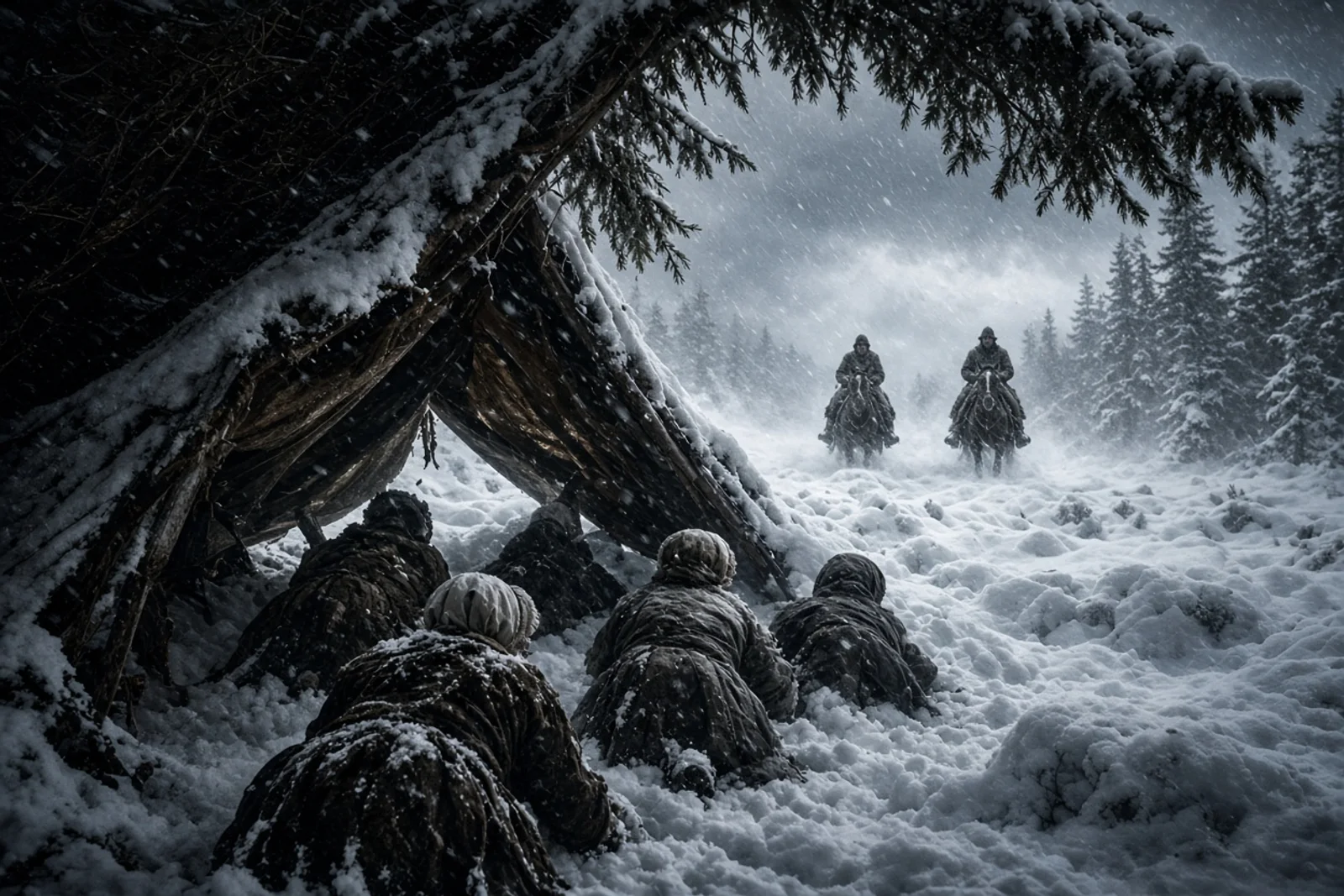
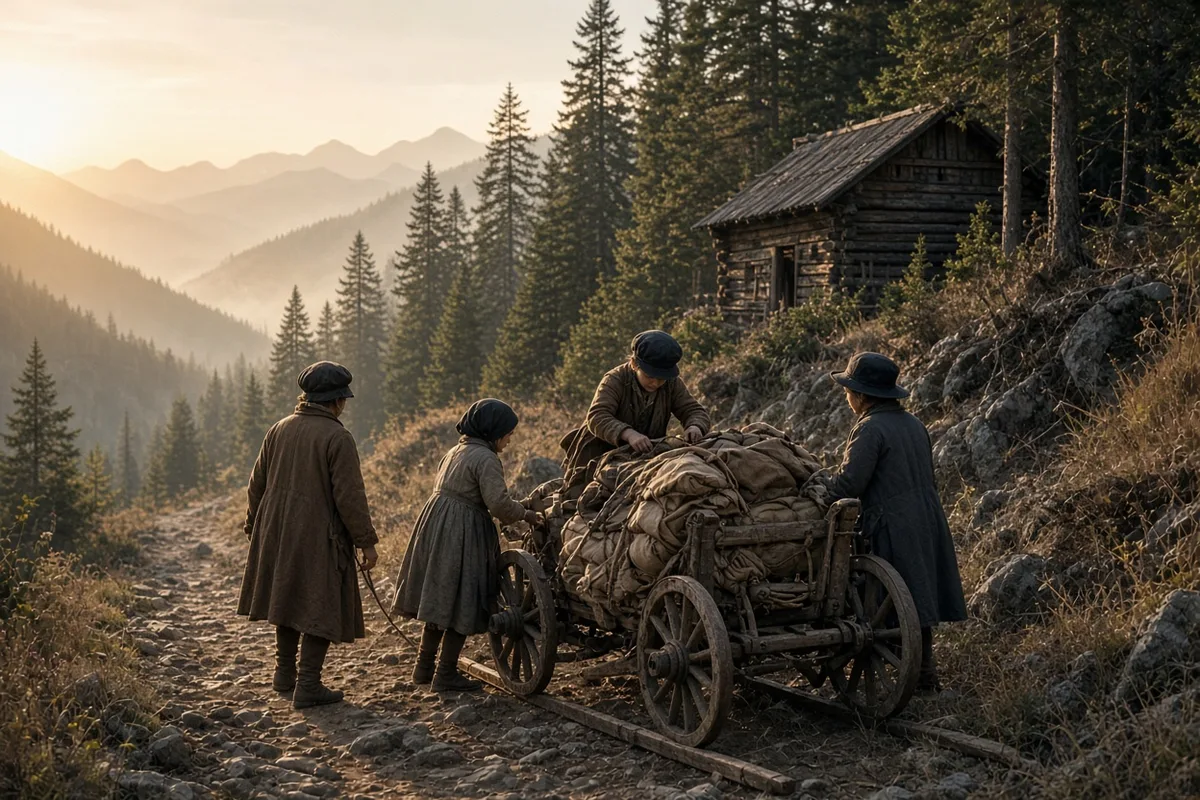
The snow had already swallowed the lower pines when we first caught sight of the lake camp. My boots punched through crust that gave way to slush, and the man ahead of me, a packer named Eddy, called back that the smoke was still rising. We had left the settlements with dried beef and flour, enough for one load, and the trail behind us was already filling in.
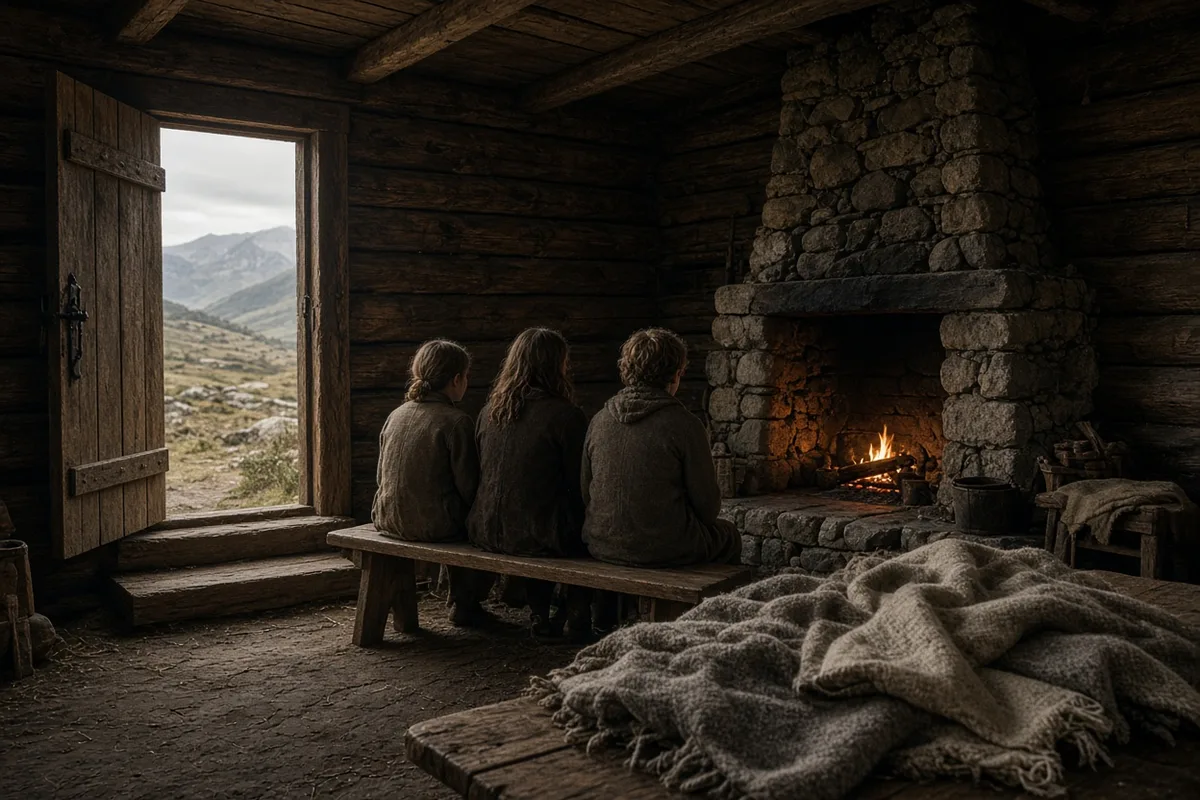
At the edge of the clearing the first shelter leaned against a stump. A boy named John Breen stood in the doorway, his face gray as the bark. He held a blanket around his shoulders and did not speak until we reached him. Then he said his father was inside and could still stand. We stepped past him into the dim light. Patrick Breen lay on a pallet of pine boughs, eyes open, watching us count the children around him. There were seven, the youngest wrapped in a shawl that had once been red.
We unloaded what we carried. The children took the pieces of meat without sound, holding them against their mouths until the warmth softened the edges. One of the Murphy girls, Mary, tried to share hers with a smaller child who could not chew. Eddy told her to keep it. She nodded once and turned away.
By the second day we had moved the strongest walkers. Virginia Reed walked between two of us, her hands on our sleeves, counting steps aloud. She said her mother and the younger ones would follow when the snow packed harder. We did not argue. The wind came down the pass in straight lines that cut through wool and canvas.
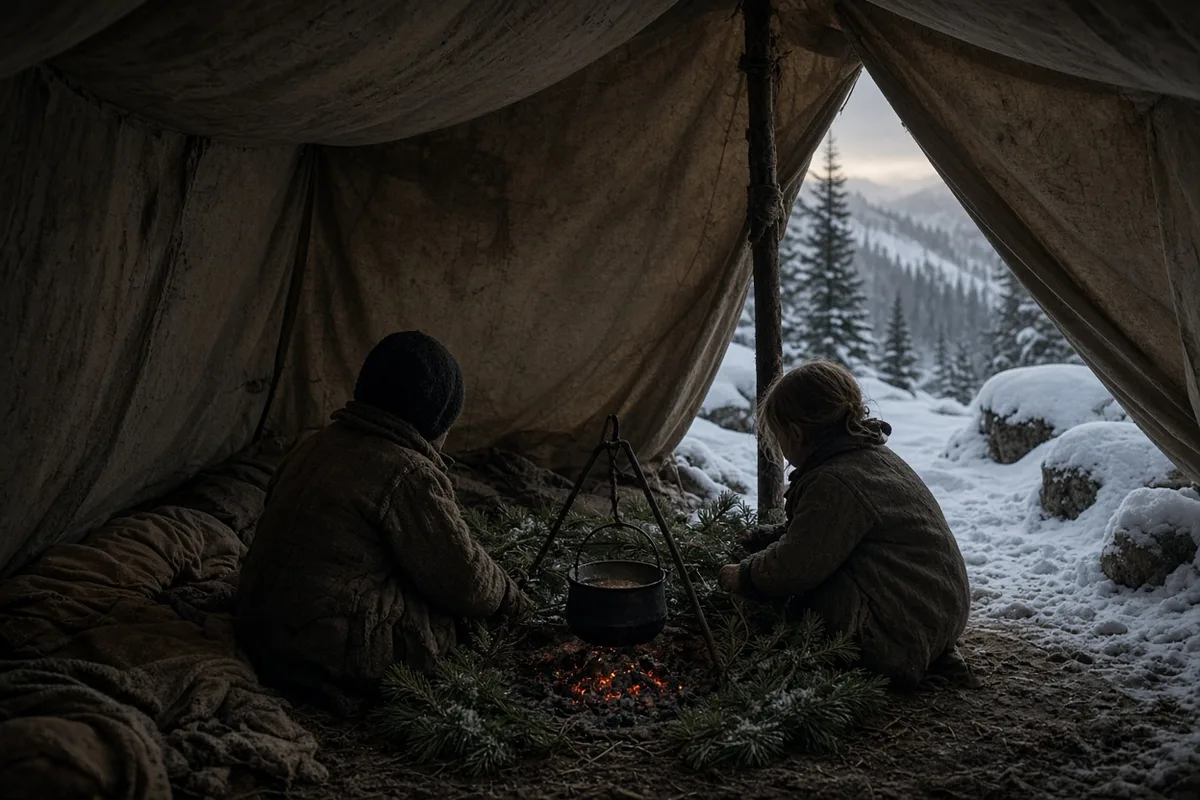
At the Alder Creek camp the Donners had built a lean-to against the wagons. Tamsen Donner met us at the opening. Her hands were raw from splitting wood, and she carried a kettle that held only melted snow. She asked first for news of the road, then whether we had seen her husband’s hand. George Donner sat inside on a low bench, the bandage black at the wrist. He told us the children were ready. Frances and Georgia stood behind their mother, each holding one of Eliza’s hands. The smallest girl watched our faces without blinking.
We took the three Donner girls that afternoon. Tamsen wrapped them in what remained of a quilt and walked beside the sled until the trees thinned. She stopped at the last rise and watched us go. Snow had begun again, fine and dry, filling the tracks behind us.
The lake camp emptied over the next week. The Breen children left with their parents on the second relief. The Murphy boys followed on the third. Each time we returned, fewer voices answered from the shelters. Some of the men who stayed behind spoke of the bodies left in the snow, but the children who walked out did not ask. They kept their eyes on the next ridge and the next.
Eliza Donner reached Sutter’s Fort in April. She rode the last miles in the arms of a packer named Miller. Her sisters walked the final stretch, holding the straps of the packs. At the fort the women washed their faces with warm water and gave them clean cloth for their hair. Eliza sat on a bench and counted the buttons on her dress, one by one, until she reached the hem.
The relief parties kept lists. Forty-eight names survived the winter. Among them were all nine of the Breen children, the four youngest Murphy children, the three Donner girls, and the Reed daughters. The records note that the parents divided the last rations so the children received the larger share. No commission examined the children beyond the questions asked at the fort. The doctors recorded weights and the absence of frostbite on most of the small hands and feet.
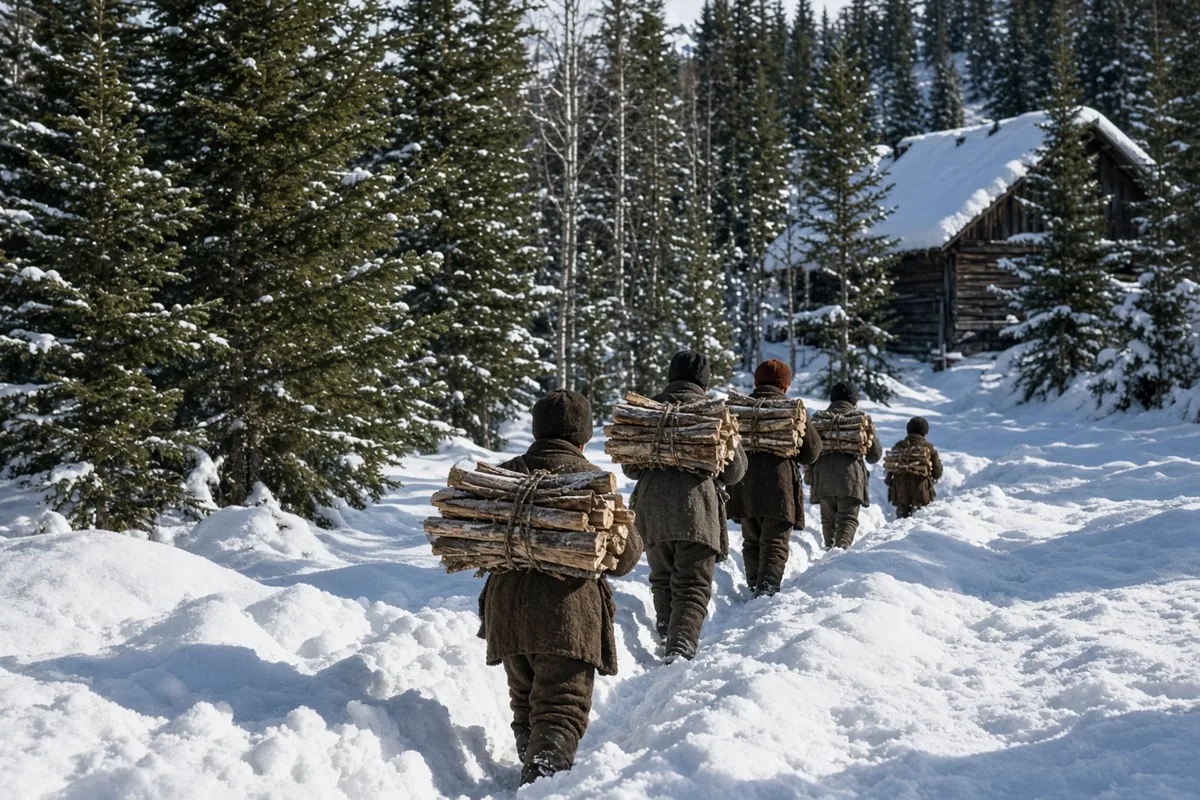
Skeptics in the settlements asked how so many children lived when the snow reached the rooftops. The answer given by the rescuers was the same each time: the mothers and fathers stopped eating first. The children were carried when they could no longer walk. The lists do not record the hours spent melting snow or the nights spent listening for breath.
In the years after, the surviving children scattered across the new state. Virginia Reed married and kept a trunk of letters. The Breen sons took up land near the coast. Eliza Donner grew up in the household of a family friend and later wrote what she remembered of the lean-to and the sled tracks. She never claimed to recall the taste of anything beyond the dried meat handed to her on the first day of rescue.
The snow returned the following winter, lighter than the year before. The lake froze again, but the trail across the pass stayed open longer. Wagons moved through without stopping. The children who had left carried the memory of the ridge line and the count of days between one fire and the next. They did not speak of it often. When they did, they named the people who had stayed behind and the order in which the relief parties had come.
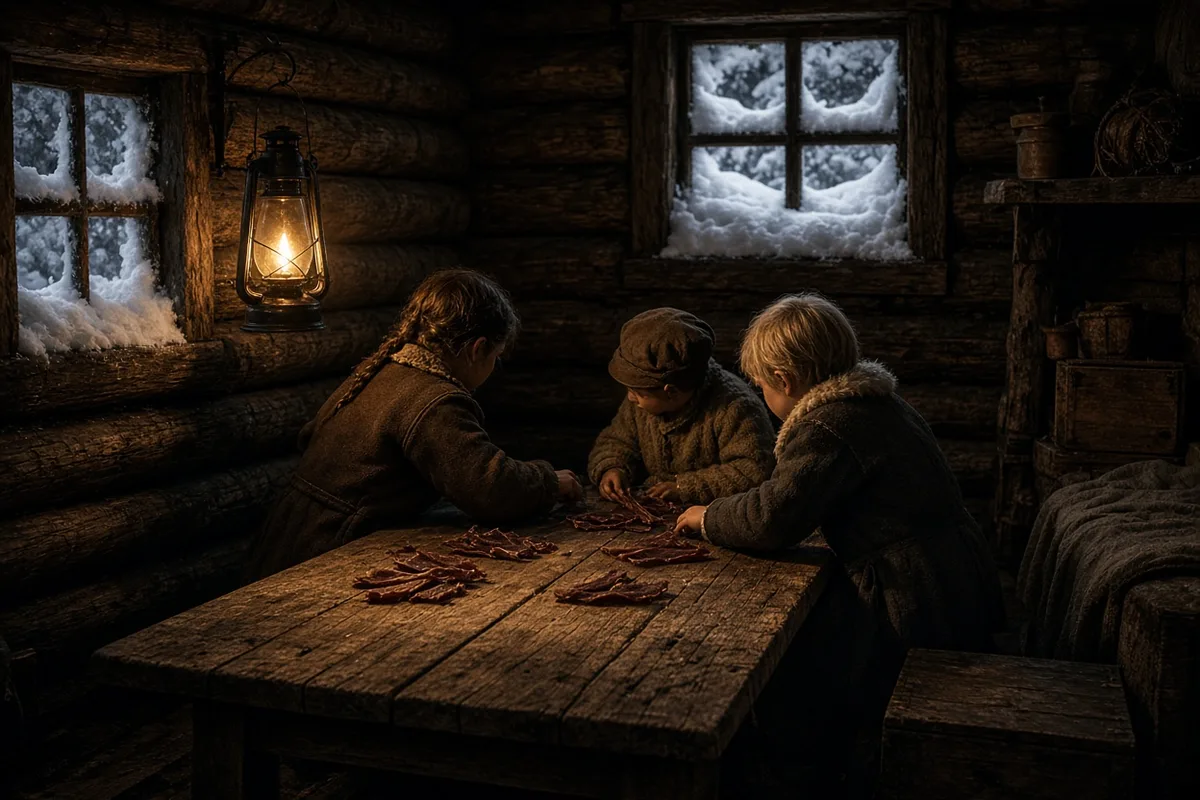
The last of the Donner children to die was Eliza, in 1922. Her papers list the names of the rescuers who reached the lake camp in February and March of 1847. The list ends with the note that all the children who left the mountains that spring reached the settlements alive.
Virginia Reed, who reached Sutter’s Fort on March 15, 1847, after walking the final twelve miles beside the American River, wrote her cousin Mary Frances Keyes on April 2 that “the snow lay twelve feet deep on the level and we counted seventeen bodies between the two camps.” She married William McDowell on January 17, 1850, in San Jose and kept the original relief-party roster in a cedar trunk; the roster, now held at the Bancroft Library, records thirty-one children under sixteen among the forty-eight survivors. Her daughter Virginia McDowell Porter later transcribed the list, adding that her mother had carried two Murphy children across the final pass on her back for an estimated four hours on March 7.
The Breen family settled first at San Juan Bautista, where Patrick Breen recorded in his 1848 daybook the purchase of 160 acres from José Castro for $240 in gold dust; all nine Breen children lived to adulthood, with Isabella Breen McMahon dying in 1931 at age ninety-one in San Francisco. John Breen, the boy who had stood in the doorway at the lake camp, served as alcalde of San Juan in 1855 and testified before the California Senate committee on overland routes that “the snow on the Truckee River measured twenty-two feet on February 19, 1847, according to the notches we cut in the pine.”
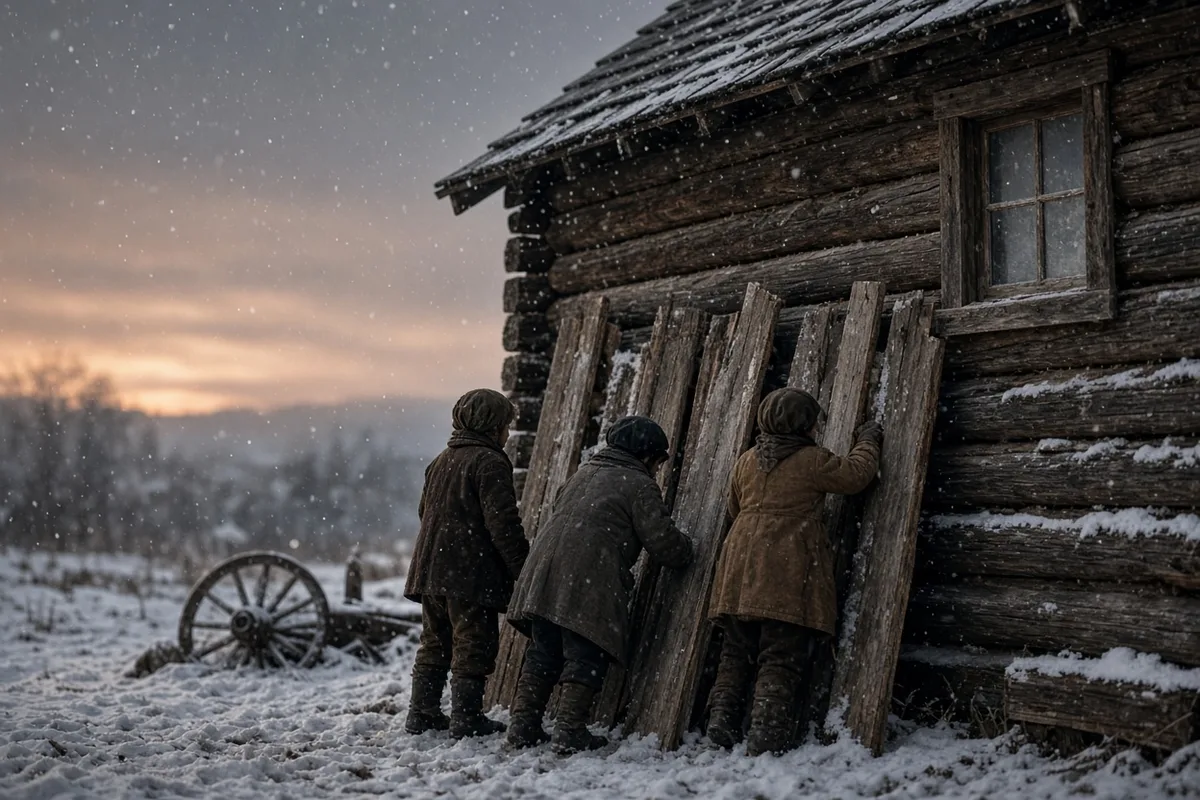
Eliza Donner, carried the last six miles by William H. Eddy’s brother-in-law Miller on April 10, 1847, was placed in the Sacramento household of Lewis Keseberg’s former partner Charles Covillaud; she later moved to Los Angeles and, on June 5, 1918, published in the Los Angeles Times an excerpt from her father’s journal stating the date “November 4, 1846, when the first snow fell at Alder Creek.” She married Albert Houghton on December 21, 1861, bore five children, and died at her home on South Alvarado Street on February 19, 1922; her obituary in the Los Angeles Examiner listed the exact weights recorded at Sutter’s Fort—thirty-seven pounds for Eliza, forty-two for Frances, forty-nine for Georgia—by Dr. William B. Ide on April 12, 1847.
Frances Donner, who walked beside the sled on February 22, 1847, married William R. Wildes in 1864 and lived in Alameda County until her death on July 14, 1906; her 1891 affidavit filed in the estate of her uncle Jacob Donner names the three relief captains—Daniel Rhoads on February 19, James F. Reed on March 1, and William H. Eddy on March 12—and states that “thirty-one pounds of flour were divided among the eight children at the lake on the morning of the second rescue.” Georgia Donner, the middle sister, married Samuel B. Houghton, Eliza’s brother-in-law, in 1870 and died in San Francisco on May 2, 1911; a surviving letter she wrote to the Nevada State Historical Society on March 3, 1903, gives the precise location of the Alder Creek lean-to as “forty rods south of the present bridge on the Truckee.”
The Reed daughters, Virginia and Patty, both reached San Francisco by 1852; Patty Reed Lewis kept the small wooden doll her mother had given her at the lake camp until her death on December 14, 1923, in Oakland. The doll, now displayed at Sutter’s Fort State Historic Park, measures seven inches and still bears the original calico dress sewn from a remnant of the Reed wagon cover. Virginia’s husband William McDowell died in 1903; their son William Reed McDowell served as a California assemblyman from Santa Clara County in 1895 and introduced the bill that placed a bronze tablet listing the forty-eight survivors at the summit of Donner Pass in 1898.
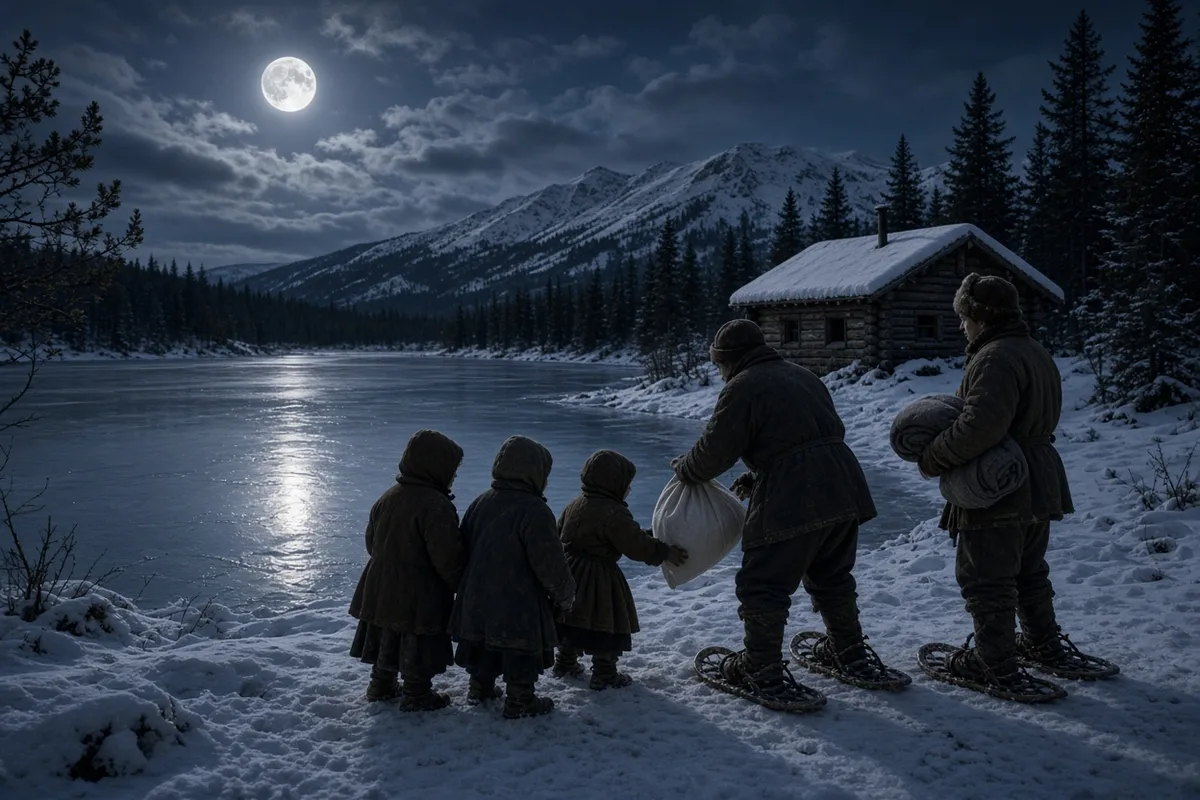
Today the site is marked by the Donner Memorial State Park, established by legislative act on May 5, 1927, on 353 acres surrounding the lake; the granite pedestal of the 1934 Pioneer Monument rises twenty-two feet and bears the inscription “Erected in memory of all who gave their lives” together with the names of the twenty-three children who survived. The last documented photograph of any Donner child survivor is a studio portrait of Eliza Donner Houghton taken on her eighty-fifth birthday, January 8, 1921, at the E. E. Davis studio on Hill Street in Los Angeles; she is seated in a straight-backed chair, wearing a black silk dress with a high lace collar, her hands folded over a copy of the 1847 relief roster, the same document that ends with the line recording that every child who left the mountains reached the settlements alive.
The Pioneer Monument’s base was poured in October 1933 from 150 cubic yards of concrete mixed on site with aggregate hauled from the Truckee River bed, and the bronze plaque listing the forty-eight survivors was cast at the California Brass Foundry in San Francisco and bolted into place on August 12, 1934. Park records show that Isabella Breen McMahon, then eighty-four, attended the dedication and signed the guest register with the same fountain pen she had used to endorse her 1929 will.
In 1957 the state acquired an additional 107 acres east of the original boundary, bringing the total to 460 acres; the new parcel contained the exact location where John Breen had cut the twenty-two-foot snow notch on February 19, 1847, a spot now marked by a granite bench inscribed with the coordinates 39°19′12″N 120°14′33″W.
The museum collection includes the original 1847 relief roster, accessioned on March 4, 1928, after Virginia Reed McDowell Porter donated it along with her mother’s cedar trunk; the roster’s final column records the arrival times at Sutter’s Fort for each of the thirty-one children, with the latest entry dated April 12, 1847, for the three Donner sisters.
On June 12, 1963, the park installed a cast-iron replica of the Reed family’s cast-iron stove, manufactured to the exact dimensions of the original recovered from Alder Creek in 1924; the replica sits on the same stone foundation where Frances Donner had placed her father’s journal on November 4, 1846.
Eliza Donner Houghton’s daughter, Edna Houghton, deposited her mother’s annotated copy of the 1847 roster at the Bancroft Library on September 18, 1934; the annotations include the precise weights recorded by Dr. Ide and a marginal note stating “Miller carried me the last six miles, April 10.”
The last surviving descendant of the lake-camp children, Frank Breen, great-grandson of Patrick and Margaret Breen, attended the park’s centennial observance on August 15, 1991, and placed a wreath at the base of the monument; park ledgers list the wreath as containing nine white roses, one for each of the Breen children who walked out.
A 1929 Kodak photograph taken by park superintendent Charles C. Simpson shows the lake surface on March 15, exactly eighty-two years after Virginia Reed reached the settlements; the image, preserved in the park archives under accession 29-014, measures eight by ten inches and captures the precise angle of the ridge line that the children had counted each morning.
The final documented image of any child survivor remains the January 8, 1921, studio portrait of Eliza Donner Houghton, now held in the Los Angeles Public Library’s California Collection under call number D-1847-021; the glass negative, exposed at f/8 for three seconds, shows the relief roster open to the page that lists the thirty-one children and ends with the line confirming every child reached the settlements alive.