


The Thai Cave Rescue
The rain had not stopped for three days when they told me to bring more sandbags up the hill. I was already soaked through, mud past my ankles, and my back ached from hauling pump hoses that snaked from the cave mouth down into the trees. Somewhere behind me a radio crackled with a name I didn't recognize yet — Tham Luang — and I remember thinking, before I knew anything, that the mountain looked like it was drinking the whole sky.
It started, they said, with a birthday. Peerapat — they called him Night — turned seventeen on the twenty-third of June, and his family had a SpongeBob cake waiting at home in Mae Sai, candles unlit, presents wrapped and stacked by the door. Night never made it back for the cake. He and eleven of his teammates from the Wild Boars football club had gone into the cave after practice with their assistant coach, a quiet young man named Ekkapol Chantawong everyone called Ake. They'd done it before, wandered deep into Tham Luang for team rituals, writing their names on the cave walls in the dark. An hour, maybe two. That was the plan.
By evening their parents were standing at the cave entrance in the rain, staring at a pile of bicycles and shoes and school bags nobody had come back for.

I got there on the second day, one of maybe a hundred volunteers who showed up before the officials even had a system for us. The cave breathed cold air out of its mouth, and somewhere past that darkness, past a low crawl the local guides called the T-junction, the water had already swallowed the passage the boys would have used to walk out. Monsoon season had arrived early and hard. What was normally a dry, walkable chamber four kilometers in had become a churning brown river, and nobody — not the park rangers, not the divers arriving from Chiang Rai, not the boys' own families standing in ponchos under the trees — knew if there was a boy alive on the other side of it.
I spent those first nights running fuel canisters to the generators and boiling rice for men who hadn't eaten since morning. Word moved through the camp like weather. Thai Navy SEALs arrived, then more of them, then engineers from a regional water authority, then men in accents I couldn't place, unloading gear from unmarked trucks. Someone said American soldiers had landed. Someone said the British were coming, cave-diving specialists, men who did this for a living in places most of us would never see. I didn't believe it until I watched two of them — John Volanthen and Richard Stanton — wade past me into the entrance chamber with lines of rope coiled over their shoulders, moving like men who had done this before and lost people doing it.
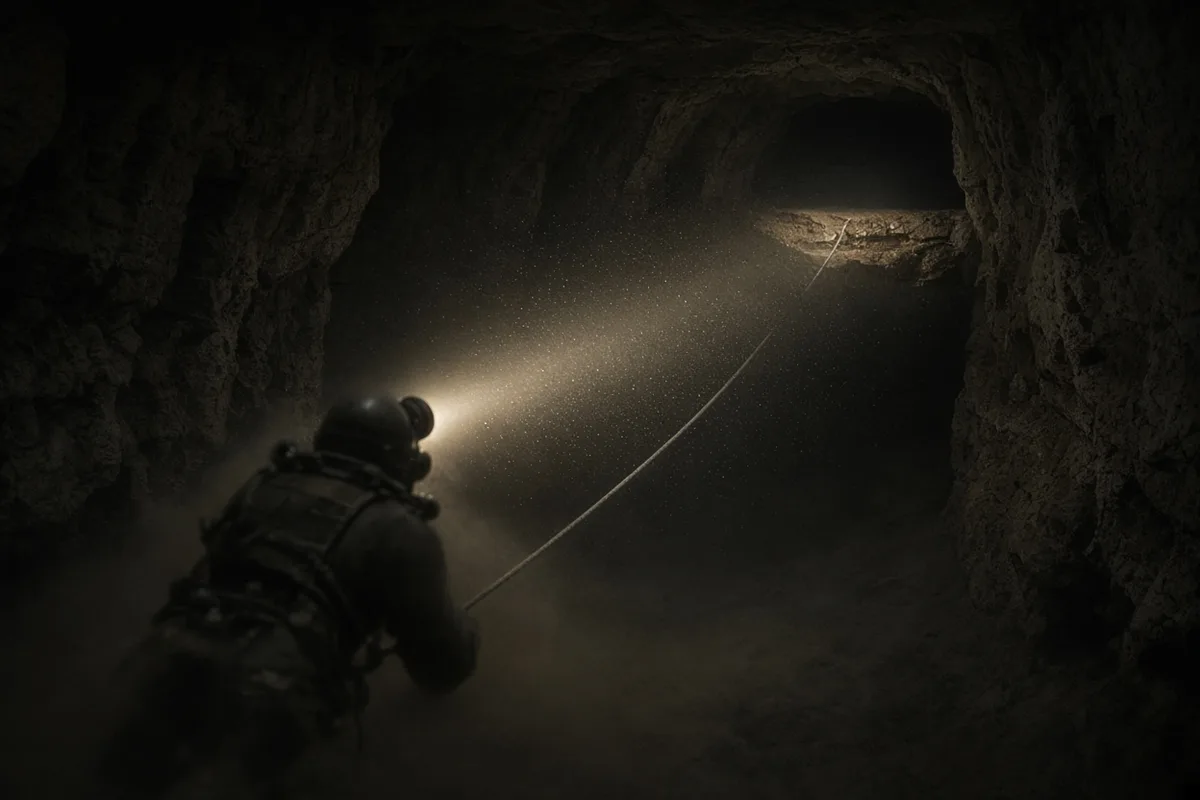
The days blurred into a single wet gray hour. Pumps ran around the clock, drawing water out of the mountain by the ton, and still it rose faster than we could take it away. Local farmers let the runoff flood their rice fields rather than let it back into the cave — I watched a man stand ankle-deep in his own ruined paddy and wave the water on, like it was nothing, like feeding a mountain his whole season's harvest was just what you did. Divers went in and came back defeated by zero visibility, silt so thick they said it was like swimming through coffee, hands out in front of their faces and still seeing nothing. Every night the families lit incense near a shrine by the entrance. Every morning it was still raining.
Nine days. That was how long it took.

On the second of July, in the evening, word came down the line of volunteers faster than any radio could carry it. The two British divers, Volanthen and Stanton, had pushed past the flooded sections, guided a rope through the black water, and surfaced in a chamber they didn't expect to find anyone alive in. Their torch beams found thirteen shapes huddled on a muddy slope above the water, filthy, thin, and blinking into the light like something newly born.
I heard it secondhand, the way everyone did, but I have never stopped picturing it. One diver asking how many. A boy's voice answering thirteen. And the diver's reply — brilliant — landing in that black water like the single most enormous word ever spoken.
They were alive. All twelve boys. Coach Ake. Nine days without food, drinking water dripping off the cave walls, huddled together on a ledge the width of a doorstep while a flood raged twenty feet below them. When I heard the news at camp, grown men who hadn't slept in three days sat down in the mud and wept without any embarrassment at all.
But finding them was not the same as bringing them home. That truth settled over the camp within hours, sobering everyone who'd allowed themselves one night of pure relief.

The boys were four kilometers inside a mountain, past chambers a trained adult diver found terrifying, none of them able to swim in zero visibility with a full air tank on their back, some as young as eleven. The water wasn't dropping — if anything, more rain was forecast. Doctors who reached them by a thin communication line worried about oxygen levels inside the chamber, which had begun falling as the boys' own breathing consumed what air was left in that sealed pocket of rock. Every plan anyone floated sounded like a fantasy or a funeral. Drill a shaft down through solid mountain — too slow, and no one could say exactly where to dig. Wait for the dry season — that was four months away, and the air wouldn't last four days. Someone even suggested an inventor's mini-submarine, flown in and left, ultimately, unused at the cave mouth, a curiosity rather than a solution.
In the end the only door out ran straight through the flooded rock the boys had come in through, and the only people who could take them there were divers.
I remember a night around the sixth of July when the whole camp went quiet in a way that had nothing to do with rain. Word passed through in low voices: a former Thai Navy SEAL named Saman Gunan had died delivering air tanks along the route the rescuers would need. He had been placing oxygen canisters through the flooded tunnels for the divers still to come, doing the unglamorous, exhausting work of keeping the line alive, and the cave had taken him instead. He was thirty-eight. I didn't know him. I don't think many of us at the pumps did. But something changed in the men working that hillside after his name went around — a kind of grim, focused quiet, the sound of people deciding a thing was going to be finished no matter the cost, because the cost had already been paid once.
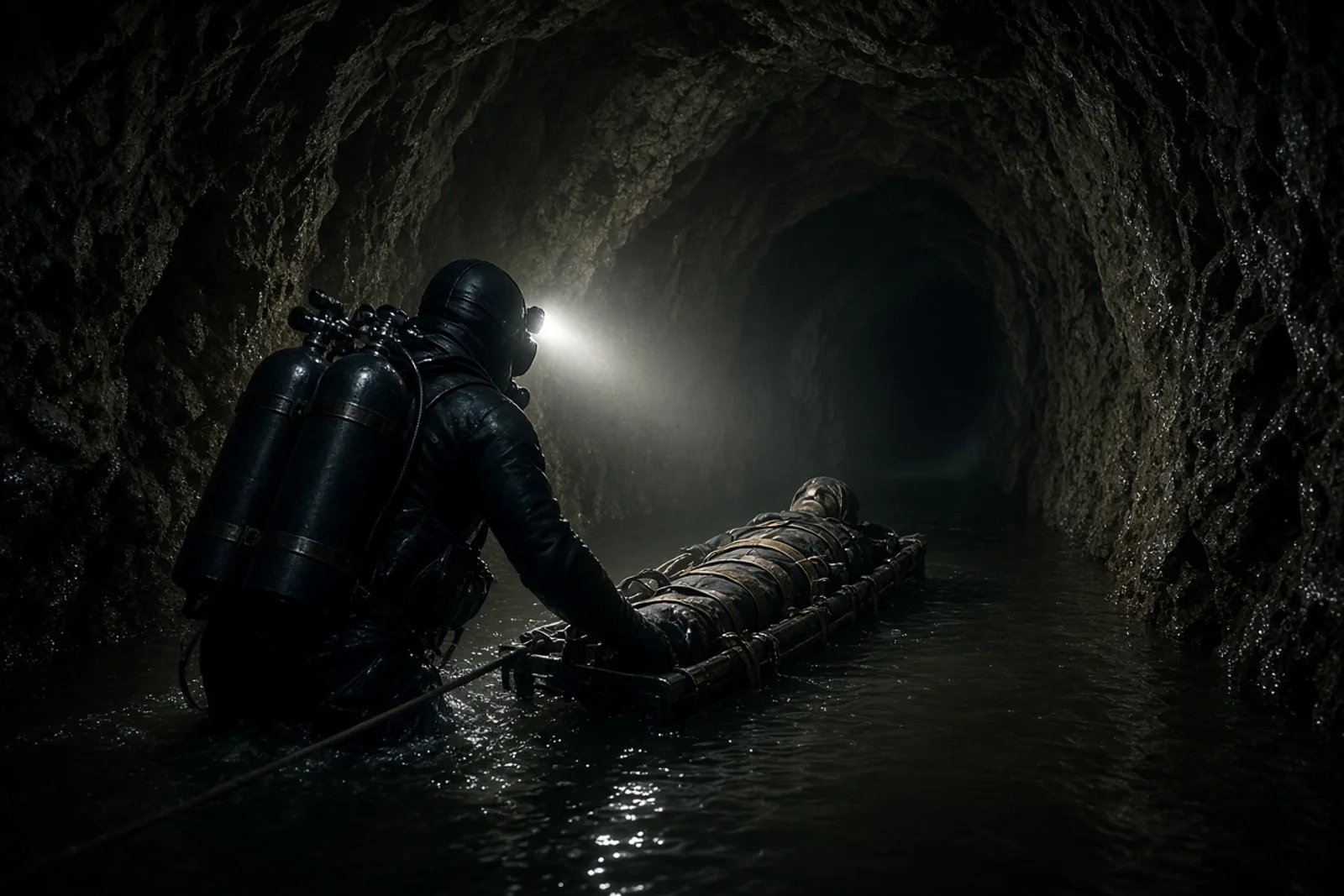
The plan they settled on sounds, even now, almost too strange to have worked. Each boy would be sedated — not lightly calmed, but properly anesthetized, so they could not panic in water they could not see through, could not thrash and dislodge a mask or tear a line loose in blind fear a kilometer inside a mountain. An Australian anesthetist and cave diver, Dr. Richard Harris, would be the one to administer it, chamber by chamber, boy by boy, a decision no medical textbook had ever quite prepared him for. Each unconscious child would then be fitted with a full face mask, wrapped tight against his body, and guided hand over hand through the flooded passage by a diver, through choke points barely wide enough for a grown man's shoulders, past drop-offs where a wrong current could mean losing the line in the dark.

It should not have worked. Any doctor outside that cave would have told you the risk of drowning, or of a sedated child swallowing water, or simply of a diver losing his grip in a current, was too high to accept. But the alternative — leaving them there while the water kept rising and the air kept thinning — was no alternative at all.
On the eighth of July, they began.
I stood near the entrance most of that day, not allowed anywhere close to the operation itself, just watching ambulances line the muddy track in a row that seemed to stretch on forever, watching helicopters idle on a nearby field with their blades slack, waiting. Thirteen divers went in. Somewhere past all that rock, in air pockets we'd only heard about through radio chatter, boys who hadn't seen daylight in over two weeks were being lifted, one at a time, strapped and masked and utterly still, and carried through a mountain by strangers who had trained their whole lives for exactly this kind of impossible hour.
The first word that came out that evening was that four boys had made it. Four. I remember the sound the camp made when that number moved through it — not a cheer, not yet, something quieter and more disbelieving, the sound of people afraid to hope out loud in case the mountain was listening. They were carried out on stretchers, wrapped in silver blankets, faces slack from the sedative, and driven straight to hospital in Chiang Rai under lights that lit up the whole wet road.

The operation could not continue nonstop. The divers needed to rest, the tanks needed replacing, and so the mountain and the water and the twelve hours of waiting began again the next day, the ninth of July, four more boys emerging into the gray afternoon light the same way — sedated, masked, carried hand over hand through darkness by men who by now had made the run enough times to know exactly where the mountain would try to take something from them.
Eight boys out. Five left inside — four boys and their coach, Ake, who by every account had stayed calmest of all of them in that ledge above the flood, who had taught the boys to meditate to slow their breathing and their fear, who by his own choice went last.
The final push came on the tenth of July. I was back at the pumps that morning, doing work that no longer mattered as much as it had a week before, because the water level had finally begun to drop — not because the rain had stopped, but because of every hour those pumps had run since the boys went missing, dragging the flood down inch by inch while nobody was watching the number, only the boys. By afternoon the word came through camp in the same low relayed voices as before, and then all at once it wasn't low anymore. The last four boys were out. Then the doctor. Then Ake.
Eighteen days. That was the whole length of it, from the birthday cake nobody ate to the last stretcher carried into the light.
I stood at the edge of the crowd near the ambulances that final afternoon and watched people who had been strangers to each other two and a half weeks earlier hug like family — Thai soldiers, foreign divers still in their wetsuits, farmers whose fields were still standing in floodwater they'd sacrificed without complaint. Someone rang a bell. Somewhere further down the hill I could hear car horns, and then more of them, spreading out across Mae Sai like the whole town had decided to celebrate at once.
The cost of those eighteen days stayed with the place long after the trucks and satellite vans pulled away. Saman Gunan's name was spoken at the entrance of Tham Luang for years afterward, and a second former SEAL, Beirut Pakbara, who had also been part of the effort, died from a blood infection contracted during the operation the following year. Every boy survived. Every one of the twelve, and Ake, walked or was carried out of that mountain alive, and doctors who examined them afterward found them, remarkably, in reasonable health given what eighteen days in the dark on almost no food should have done to a growing body.
I went back up to the cave mouth once more before I left, weeks later, when the crowds were gone and the mud had mostly dried. The entrance looked exactly as it had the first day I saw it — a dark seam in green rock, unremarkable, the kind of place you'd walk past on a hike without a second glance. Water still trickled out of it, thin and constant, the last of the mountain letting go of what it had been forced to give back.
Twelve boys and their coach went in on a Saturday afternoon to write their names on a wall in the dark. The mountain kept them for eighteen days and then, against every reasonable expectation, gave every single one of them back.