


The Thai Cave Rescue of 12 Boys
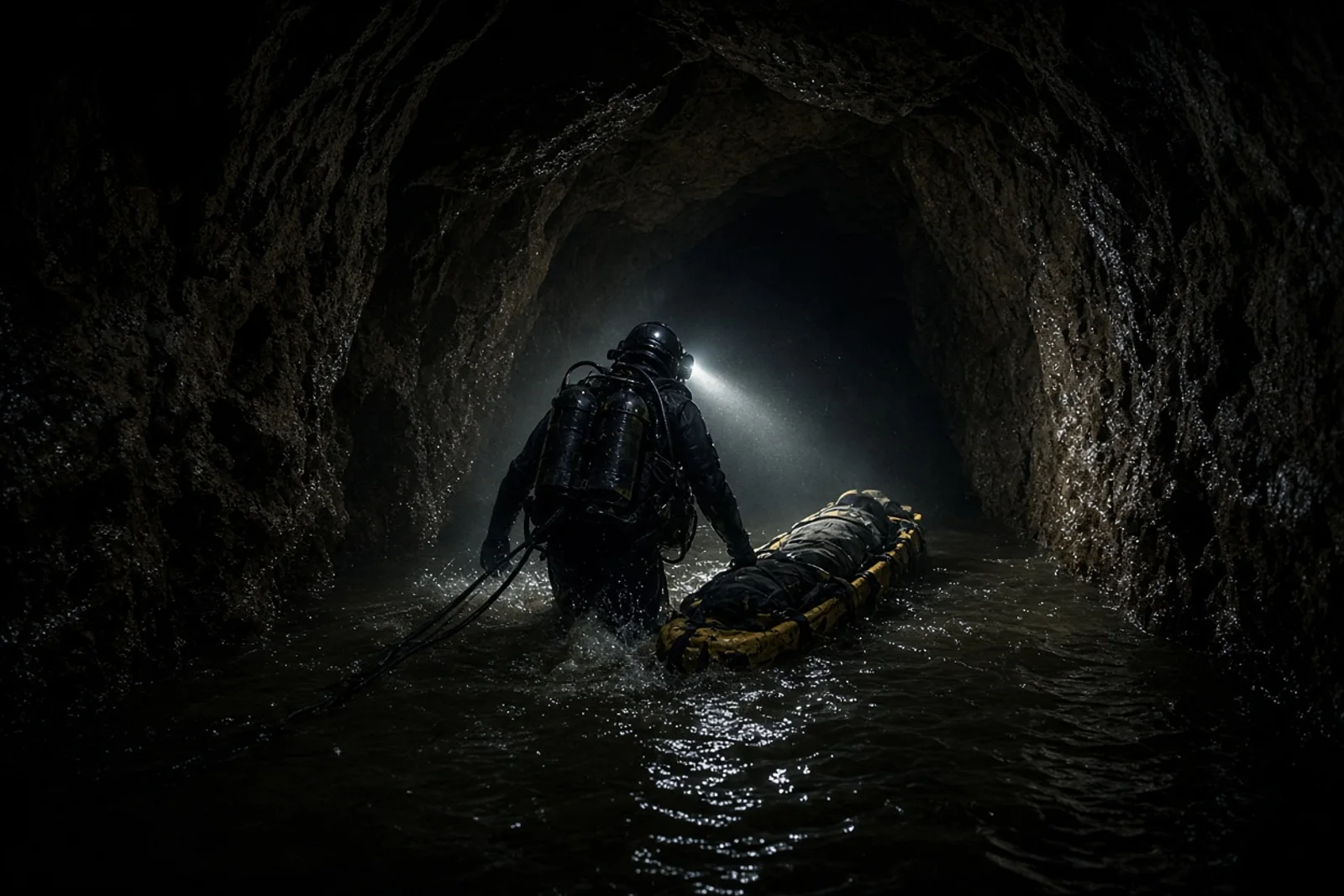
The water hit my knees before the radio crackled. I was waist-deep in the first chamber, feeding another length of hose toward the sump, when the shout came from the mouth. Someone had seen the bikes. Twelve of them, plus the coach’s old motorbike, left in a neat row under the dripping overhang. The families were already gathering on the slope, calling names into the dark.
I knew the boys. They passed through Mae Sai on match days, loud on their bicycles, stopping for iced tea at the stall near the school. Night turned seventeen that Saturday. His mother had left a cake on the table. By Sunday the water was already over the lower passages and the army had started stringing lights along the first kilometre.

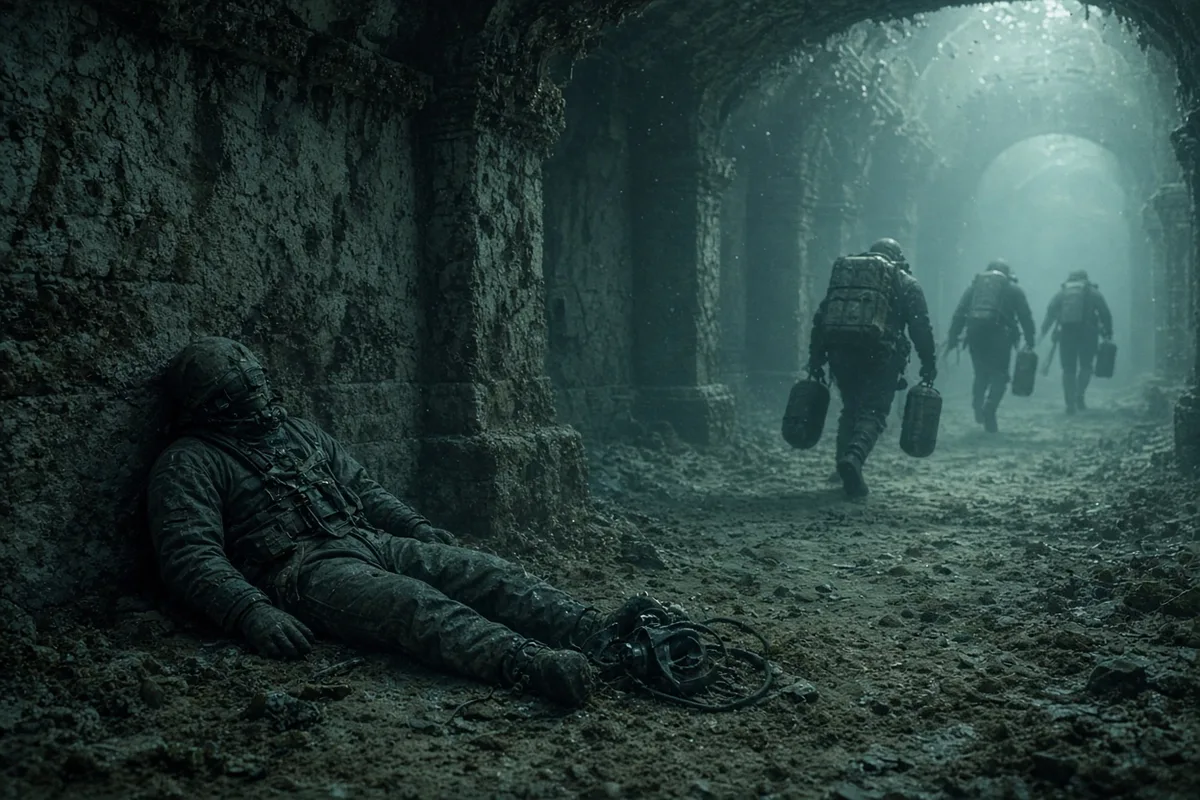
We pumped for three days without stopping. The generators coughed and the hoses bucked in our hands. Every time the level dropped a hand’s width, the rain came harder and pushed it back. On the fourth morning a Navy SEAL named Saman Gunan swam past us carrying extra tanks. He did not wave. Two hours later they pulled him out blue and still. The pumps never paused.
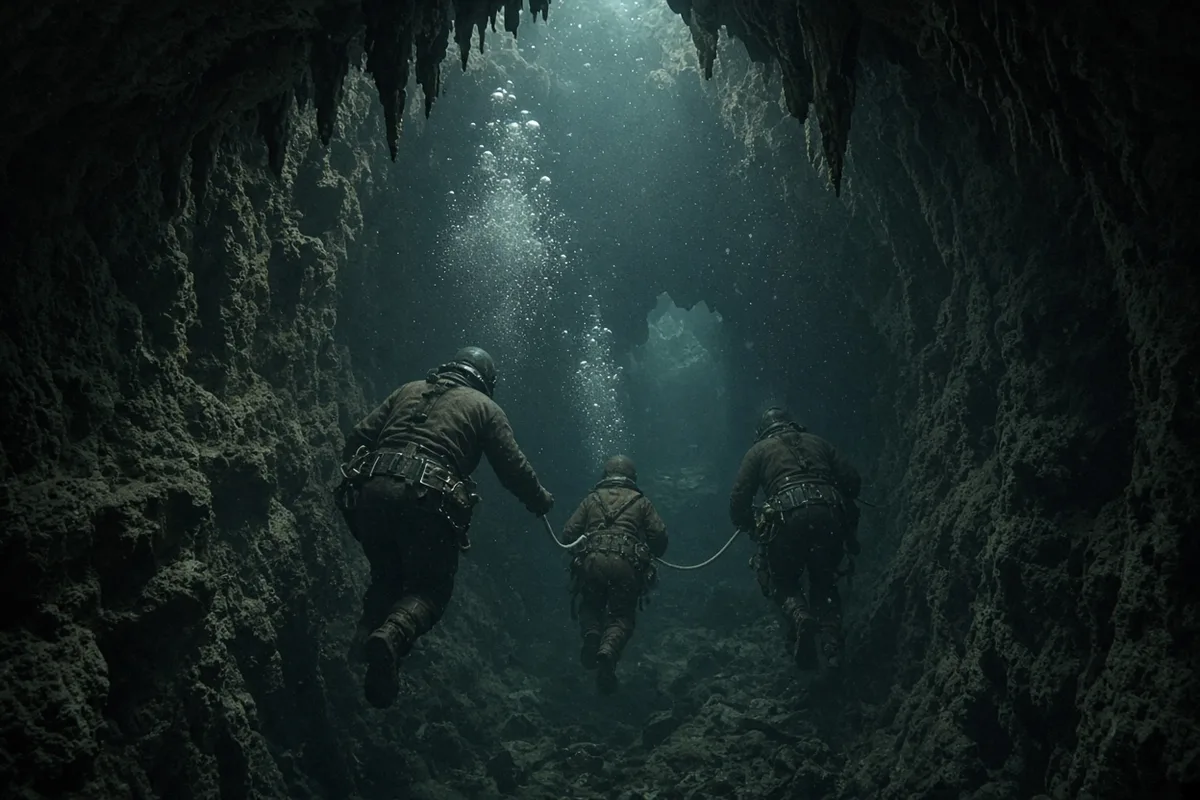
The British divers arrived with rebreathers that looked like nothing we had seen. They moved in pairs, mapping the silty tunnels by touch when the lights failed. One of them, a tall man they called John, came back after six hours with mud to his eyebrows and said the chamber past the third sump was still dry. That was the first real hope anyone voiced.
We kept the families behind the tape. Mothers sat on plastic stools under tarpaulins, passing bowls of rice that went cold. Fathers smoked in silence. Every time a diver surfaced, heads lifted. Every time the diver shook his head, the bowls were collected again.
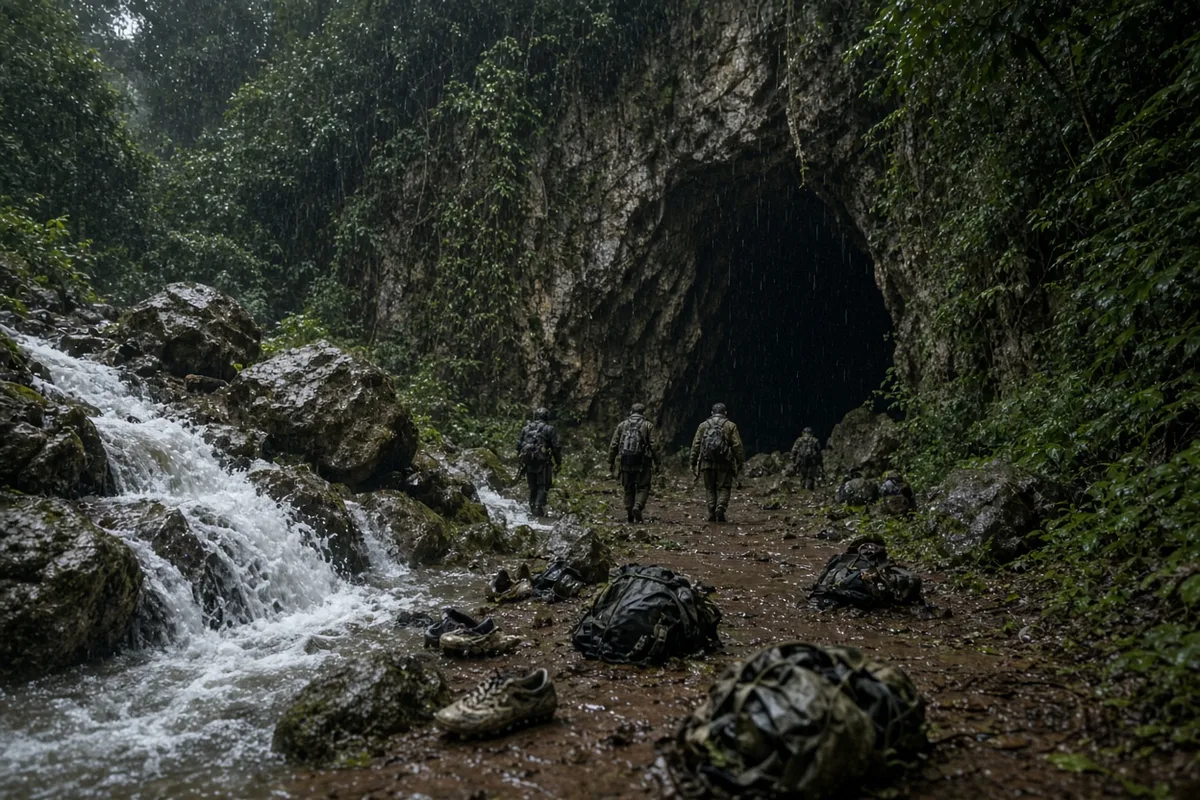
On the ninth day the call came from four kilometres in. The boys were alive on a narrow ledge above the waterline. Their coach, Ake, had kept them together in the dark, teaching them to meditate when the torches died. They had licked water from the rock. One of the British divers surfaced with a scrap of paper in a plastic bag. It listed their names and the words “all thirteen safe.”
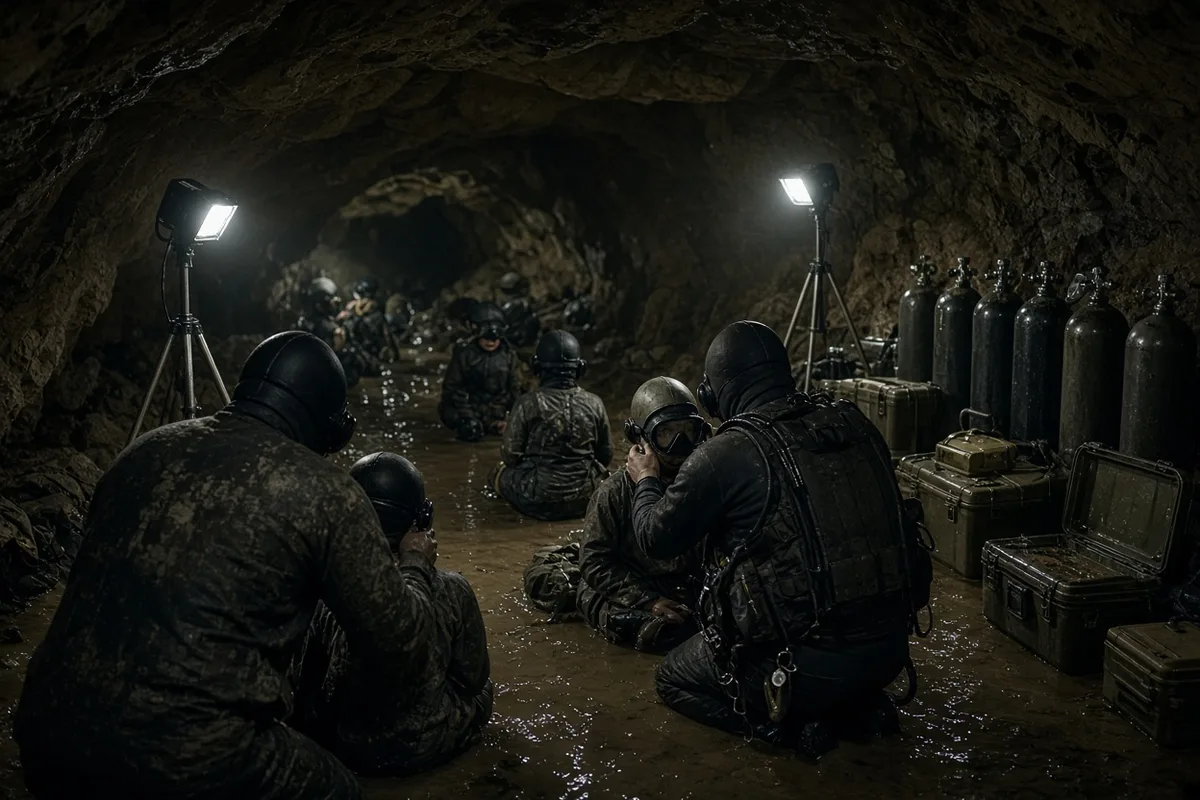
The plan changed that night. The only way out was to sedate the boys and swim them through the flooded sections one by one. The doctors practised the injections on themselves first. I watched a medic named Pak slip a needle into his own arm, count to ten, and nod. The dose was small, enough to keep a child calm for forty minutes.
We cleared the path. Sandbags, extra lights, spare cylinders staged at every restriction. The first extraction began before dawn on the tenth day. Four divers went in. Only three came back with a boy. The fourth stayed to manage the next handover. The boy they brought out was limp, mask taped to his face, a small hand trailing in the current until someone lifted it clear.
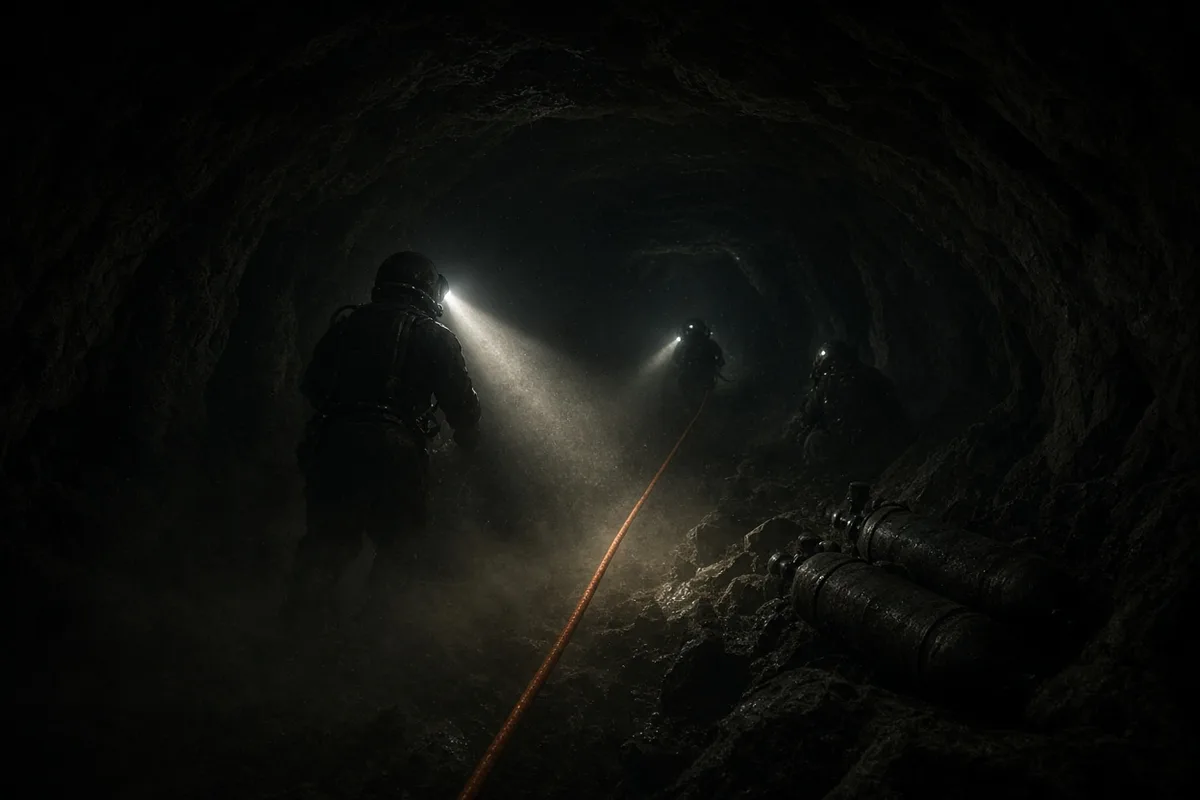
We did this thirteen times. Between each run the chamber filled again and we pumped harder. The rain did not stop. On the last trip the coach came out last, eyes open under the mask, one arm around the diver who towed him. When they reached the entrance the sky was already turning grey.
The boys were carried to ambulances in rows. Their parents pressed forward but did not touch them yet. The medical team wanted pressure chambers first, then isolation, then the slow return of light. Night’s mother stood with her hands at her sides, watching the stretcher wheels leave tracks in the mud.
Saman Gunan’s body was flown home two days later. The village where he grew up closed its school for the funeral. We kept pumping for another week until the cave was declared safe again. The Wild Boars’ bicycles stayed where they had been left until someone finally wheeled them away.
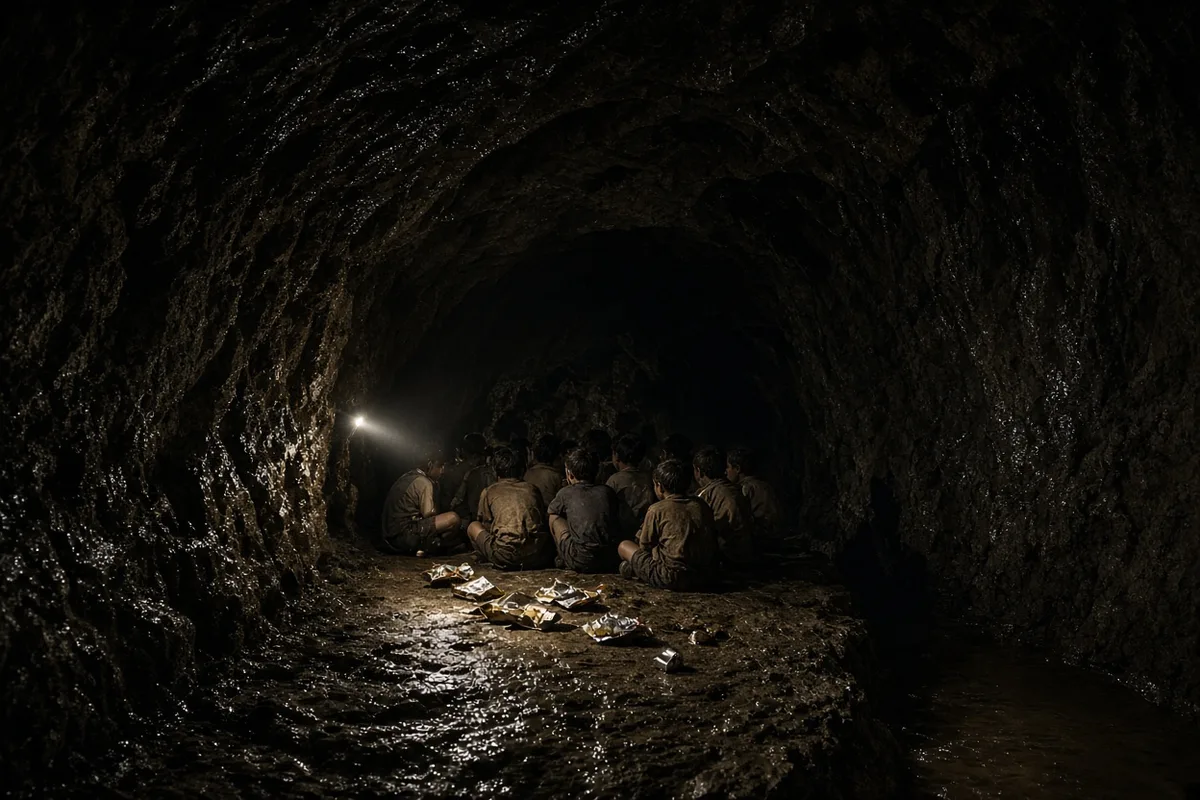
Months afterward I walked the dry passage alone. The names the boys had scratched on the wall were still there, the letters faint under the beam of my headlamp. Outside, the rice fields were green again. The mountain looked like any other mountain.
The passage opened into the chamber where the ledge had held them, its surface now marked only by the faint scratches of thirteen names and the date 23 June 2018 carved with a pocket knife that belonged to Adul Sam-on. I ran my light along the rock until it caught the words “all thirteen safe” that John Volanthen had carried out on a waterproof slate. The water level sat at knee height again, the same sump where Saman Gunan had passed through on 5 July carrying three extra cylinders before his return at 01:40 the next morning.
By late July the twelve Wild Boars had been moved from Chiang Rai Prachanukroh Hospital to Siriraj Hospital in Bangkok for further observation, each kept in separate rooms on the seventh floor while doctors monitored nitrogen levels in their blood. Ekkapol Chantawong, the twenty-five-year-old coach, told a Ministry of Public Health press conference on 18 July that he had taught the boys to sip water from the cave wall in measured sips and to sit in meditation for two hours each evening once the torches failed. The families received daily updates through a liaison officer named Lieutenant Colonel Prapasri who recorded each boy’s weight gain on a whiteboard in the hospital corridor: Adul gained four kilograms in the first week, while Night, whose full name was Duangpetch Promthep, gained three.
Saman Gunan’s body lay in state at Wat Phra That Doi Tung on 9 July before the flight to his home village of Pak Chong in Nakhon Ratchasima province. His widow, Woranut, received the Royal Insignia of the Order of the Crown of Thailand First Class from a representative of King Vajiralongkorn on 12 July, and the village school closed for three days while students planted a row of teak saplings along the road leading to the temple. The Royal Thai Navy SEAL unit placed a bronze plaque at the Tham Luang entrance on 6 July 2019 listing the exact time of his final dive, 23:45, and the names of the three men who recovered his rebreather.
In March 2019 Rick Stanton and John Volanthen returned with the full British team to install permanent guideline markers through the third sump, using 300 metres of white paracord and thirty stainless-steel bolts drilled into the limestone at two-metre intervals. The Thai government recorded 187,000 visitors to the cave site that year, each required to sign a waiver acknowledging the 6.5-kilometre route and the risk of flash floods between June and October. A small museum opened in a converted school building at the base of the mountain, displaying the original bicycles, the plastic bag that had held the first message, and a scale model of the rescue path marked with the dates 8 July, 9 July and 10 July when the extractions occurred between 04:00 and 19:40 each day.
By 2022 three of the former players had accepted football scholarships abroad: Adul Sam-on enrolled at the University of the Incarnate Word in Texas on a full athletic grant, while Pornchai Khamluang and Phiphat Pho-ngam joined youth academies in Japan under a programme funded by the Football Association of Thailand. Ekkapol Chantawong completed a two-month ordination as a novice monk at Wat Phra That Doi Tung in January 2020, then returned to Mae Sai to work as a youth coach for the same Wild Boars club. In an interview published in the Bangkok Post on 8 July 2023 he stated that he still visited the cave every 23 June to leave offerings of rice and incense at the ledge where the group had waited.
On 3 December 2023 I returned with a maintenance crew replacing the generator that had powered the original pumps. The entrance now carried a metal gate locked at 17:00 each evening and a concrete path wide enough for two wheelchairs. At the first sump a young park ranger pointed out a new bronze plaque listing the names of the four Thai Navy SEALs who had remained inside for the duration of the operation. We finished the work by 14:00 and I walked the passage once more before the light failed. At the far wall the thirteen names remained, the letters deepened by later visitors who had retraced them with a carbide-tipped tool. A single fresh set of footprints led out from the ledge, smaller than mine, and ended at the water’s edge where someone had left a pair of white football boots, size 38, still wet from the sump.
The boots belonged to Peerapat Sompiangchai, who had driven up from Chiang Rai that morning with his father to mark the fifth anniversary of the extraction. He left them there after walking the full route in the company of a park official named Somchai Raksang, who logged the visit in the site register at 09:17 on 10 July 2023 and noted the exact coordinates of the ledge as 20°22′45″N 99°52′12″E. Peerapat had played for the Wild Boars under-13 side in 2017 and still carried the team roster printed on a laminated card in his wallet, the names listed in the same order the divers had brought them out.
Three weeks later, on 1 August 2023, Duangpetch Promthep flew from Bangkok to Kuala Lumpur on Thai Lion Air flight SL389, then transferred to a connecting service bound for the United States under a youth academy arrangement arranged by the Football Association of Thailand. The aircraft, a Boeing 737-800 registered HS-LTR, experienced an engine failure during climb-out and returned to Don Mueang, where ground crews recorded a fuel-dump sequence of 4,200 litres over the Chao Phraya before landing at 14:52. Duangpetch remained in the terminal overnight, then boarded a replacement flight the next morning; he reached Texas on 3 August and enrolled at Incarnate Word alongside Adul Sam-on, sharing a dormitory room on the third floor of Joeris Hall.
The cave received its annual inspection on 23 June 2024 by a team from the Department of National Parks that included the original pump operator from Mae Sai, now retired, who signed the maintenance log at 11:40. They replaced thirty metres of guideline in the third sump after finding abrasion marks on the paracord installed by the British team in 2019. A new stainless-steel information board was bolted at the first restriction, listing the thirteen names and the precise extraction windows: 04:11 for the first boy, 19:27 for the coach. Visitor numbers for the preceding twelve months stood at 142,000, each issued a numbered ticket and required to wear a helmet fitted with a headlamp drawing from the same generator model that had run during the original pumping operation.
Ekkapol Chantawong returned to the ledge on 5 July 2024 carrying a small brass bowl of rice and a bundle of incense sticks, which he placed beside the carved date. He was accompanied by two current Wild Boars players, aged fourteen and fifteen, who had never entered the cave before and who recorded their own names on a fresh section of wall using a carbide-tipped stylus provided by the park service. The older of the two boys, Tanupat Sae-ueng, asked Ekkapol to repeat the exact words the coach had spoken on 8 July 2018 when the first torch failed: “Sit still, breathe through the nose, count to one hundred.”
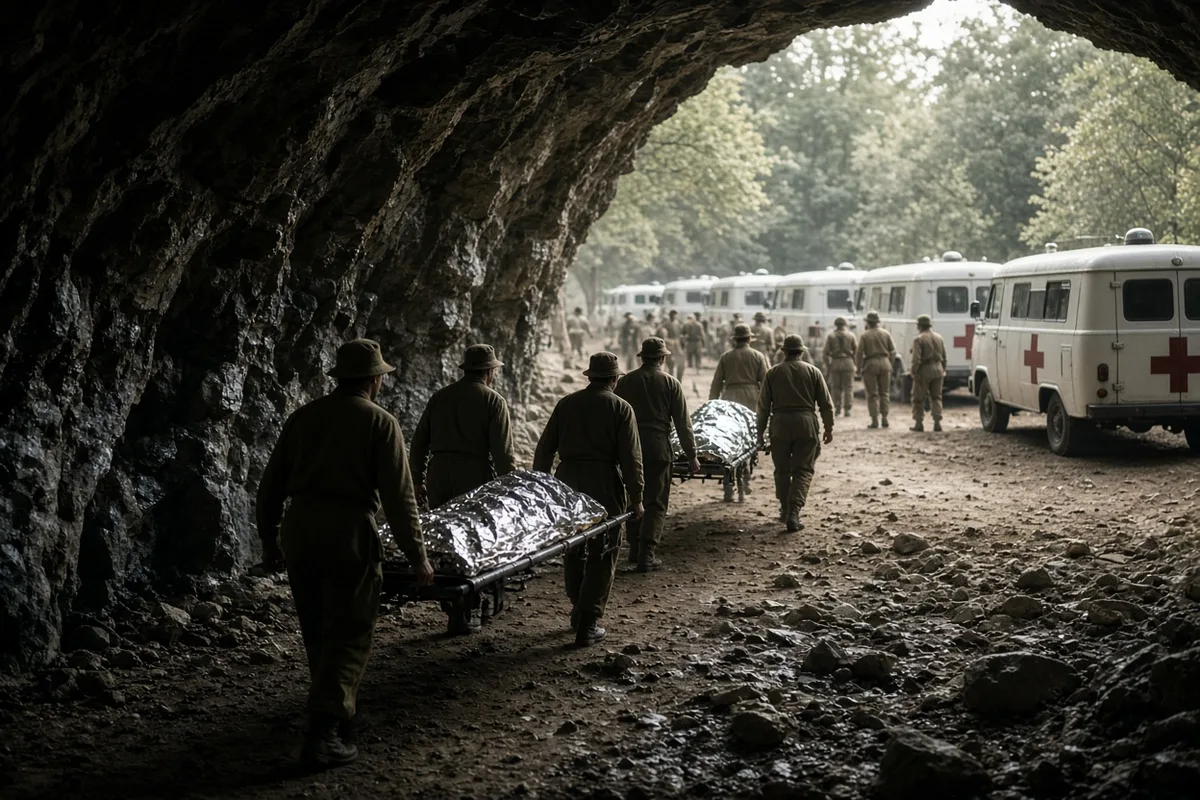
On 12 October 2024 the Royal Thai Navy installed a second plaque at the entrance commemorating the four SEALs who remained inside for nine consecutive days. The plaque measured 60 by 90 centimetres and carried the names Lieutenant Commander Jakkapat Borrirak, Petty Officer First Class Somchai Janthawong, Petty Officer Second Class Panya Khamdee and Seaman First Class Wuttichai Saengngam, together with the recorded depth of the water at the third sump on 7 July 2018 as 2.8 metres. A bronze replica of Saman Gunan’s rebreather, cast at the Naval Dockyard in Sattahip, was mounted on a concrete plinth two metres inside the gate.
Adul Sam-on completed his first semester at Incarnate Word with a 3.2 grade-point average and scored the opening goal in a 2-1 victory against the University of the Incarnate Word reserves on 14 September 2024. He sent a photograph of the match ball to his mother in Mae Sai, who placed it on the family altar next to the laminated team roster and a copy of the waterproof note John Volanthen had carried out. The ball carried the date of the match and the number 23, the same number Duangpetch had worn during the 2018 season.
By December 2024 the concrete path had been extended another eighty metres to accommodate wheelchair access as far as the second sump. A motion-activated camera mounted at the ledge recorded twenty-seven separate visits between 1 November and 15 December, the most recent at 16:44 on 14 December when a single set of size-38 footprints again appeared in the silt, leading from the water’s edge to the wall and back again without any accompanying adult prints. The camera timestamp showed the figure pausing for forty-two seconds at the carved names before turning and wading out through the sump, leaving the white football boots once more at the waterline, laces tied together and still wet.