


The Warsaw Ghetto Uprising and Smugglers
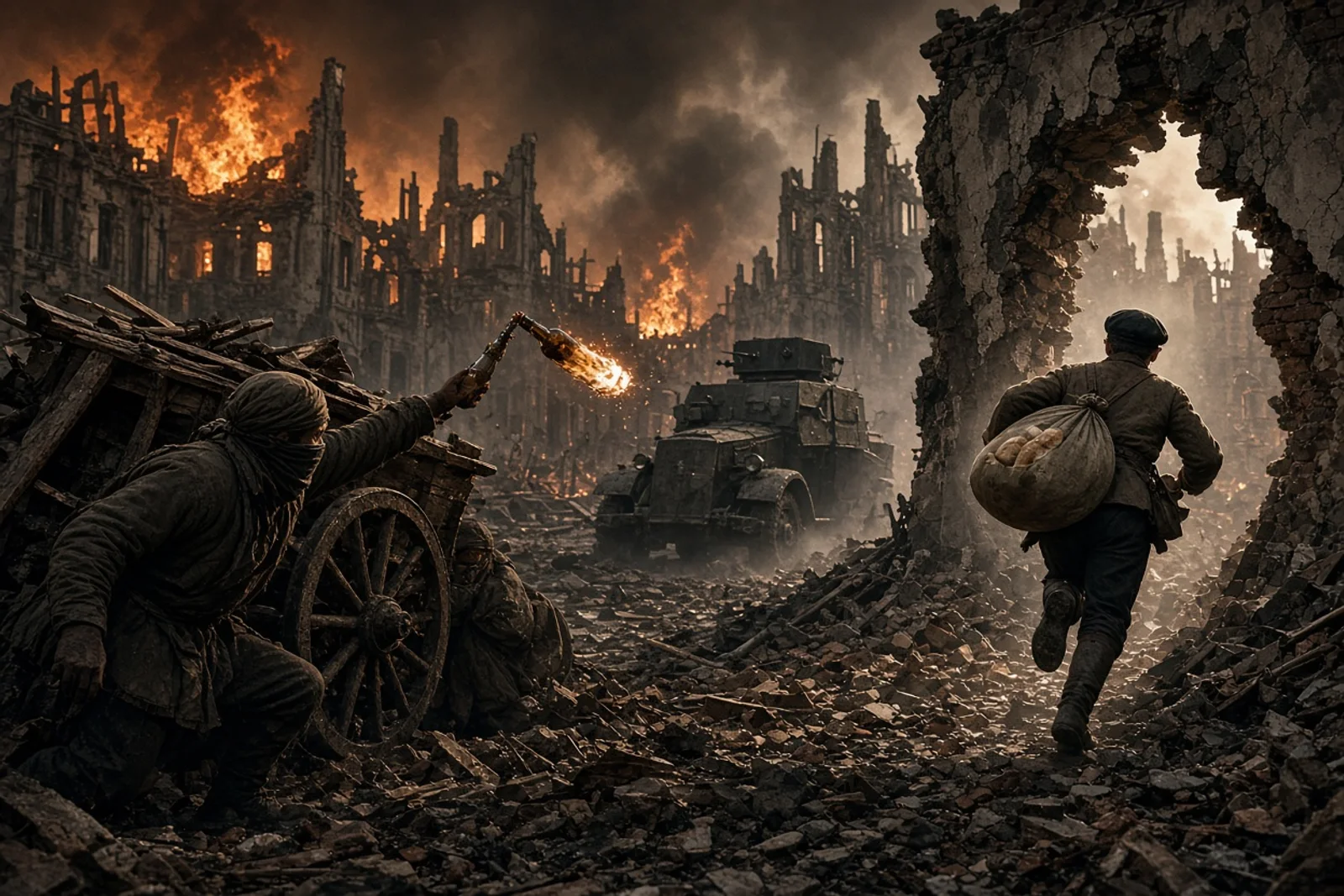
I pressed my face to the cold glass of the attic window above Nowolipki Street and watched the first German tank grind past the brushmakers’ gate. It was just after four in the morning. The barrel swung left, then right, looking for targets that did not yet exist. Behind it came two armored cars and a squad of men in field gray. I counted their helmets the way I once counted loaves of bread I had carried through the same wall six months earlier.
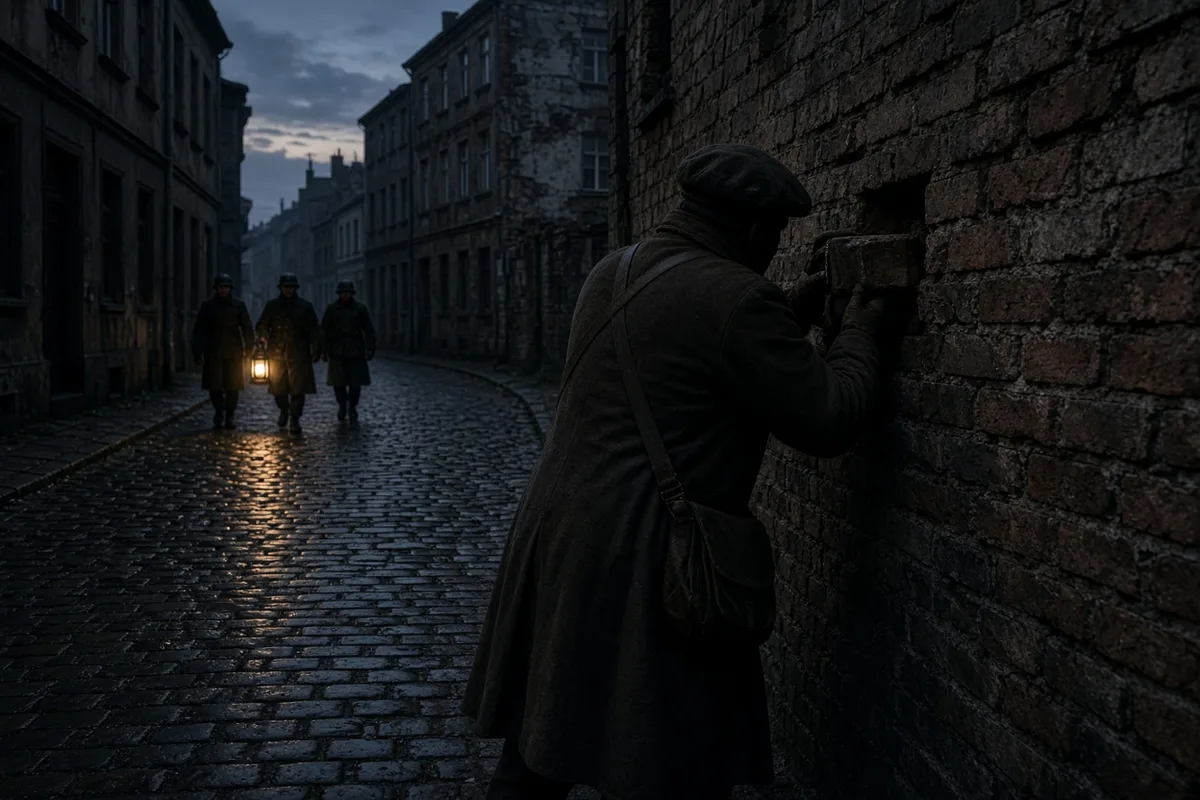
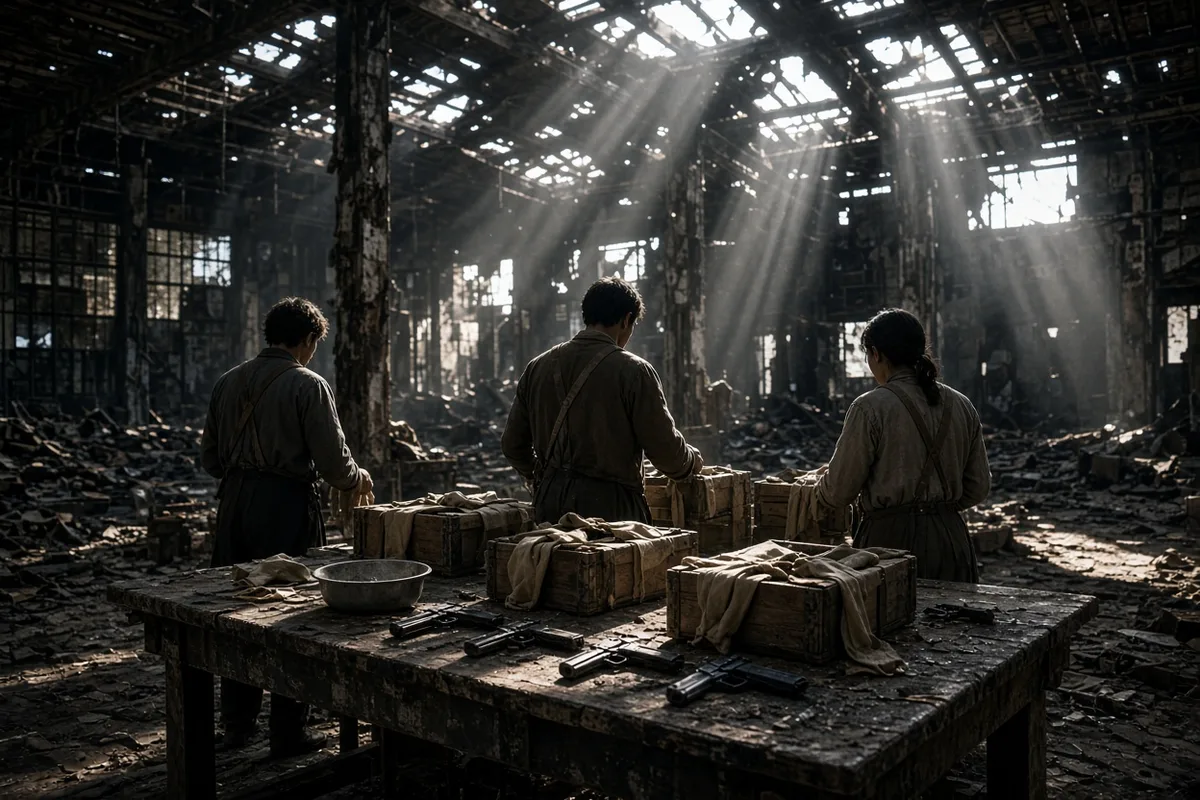
The wall itself was only a memory now. Smugglers like me had known every loose brick and every drainpipe that let a child slip a sack of potatoes inside. That skill had turned into something else once the underground asked for pistols instead of food. I had carried two of them across last week, wrapped in a Polish housewife’s shopping bag, and handed them to a boy no older than sixteen on the other side of the wire.

Shots cracked from the second floor of a tenement on Franciszkańska. The tank stopped. Its machine gun answered, stitching the brickwork. A figure in a leather jacket leaned out a window and threw something small and dark. The blast lifted the front of the tank an inch off the cobblestones. Smoke poured from the open hatch. The crew never came out.
I stayed in the attic until the sun rose high enough to show the smoke clearly. It rose in straight columns from Muranowski Square, then bent eastward with the wind. From this distance the ghetto looked like a row of chimneys that had lost their factory. Down on the street Poles were already setting up stalls for Easter shoppers. The smell of fresh bread reached me through the broken pane.
By the third day the Germans stopped trying to march in columns. They brought artillery instead. Each shell landed with a sound like a door slamming in an empty house. I kept a list in my head of the streets I could still name: Gęsia, Smocza, Nalewki. One by one they disappeared from the map inside my mind.

Vladka crossed the Aryan side twice that week. She carried coded notes from the fighters and brought back whatever ammunition the Home Army would spare. On the second crossing she told me Anielewicz had moved his command post three times already. Each time the Germans found the last bunker they found only empty mattresses and spent cartridges.
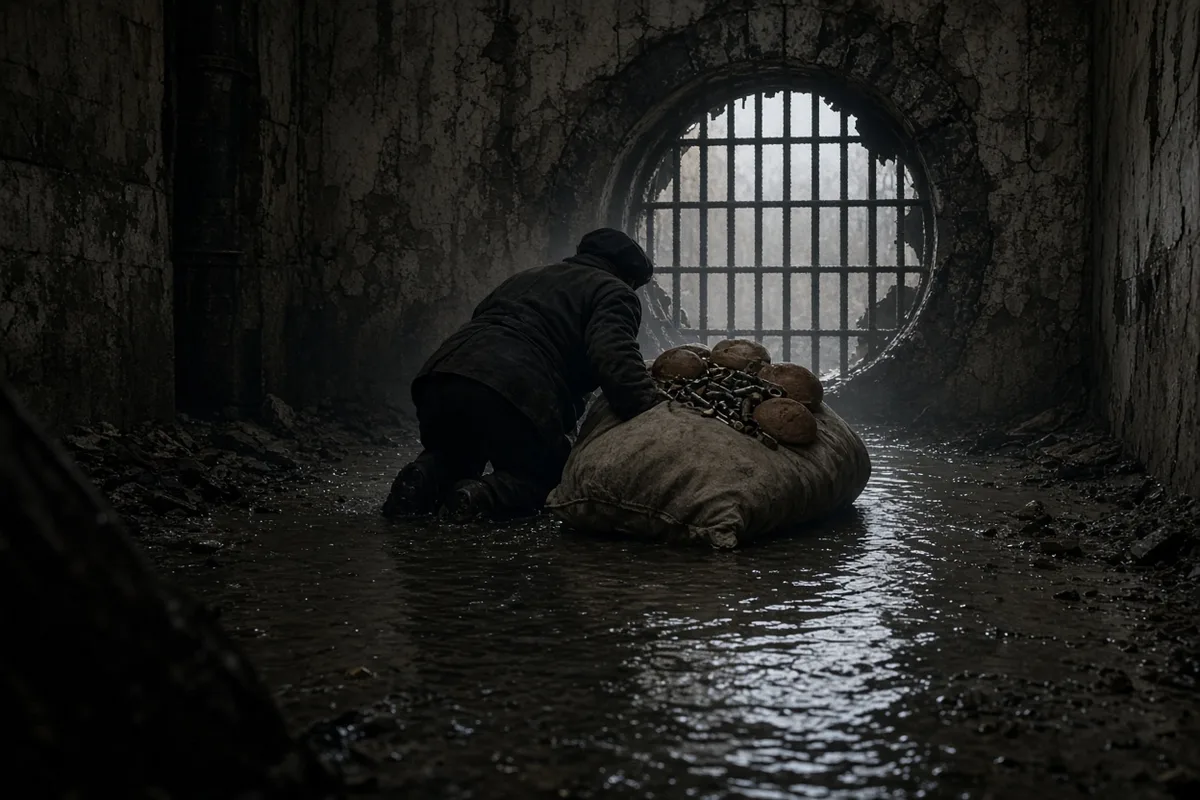
Benjamin waited at the sewer outlet near the Pawiak prison every night after dark. He wore a Polish railway worker’s cap and carried a length of rope. When a fighter crawled out, covered in filth and shaking, Benjamin would pull him the last few meters and wrap him in a blanket that smelled of mothballs. We hid them in cellars behind the market on the other side of the river.
The burning reached the brushmakers’ area on the ninth day. I saw the flames from the same attic window. They moved in a slow line, house by house, the way a man might run his hand along a fence. At night the glow turned the sky the color of heated iron. During the day the smoke made the sun look brown.

Abraham Lewent had been inside until the January action. He reached the Aryan side through the same sewer Benjamin now guarded. When he described the bunker he had shared with seven others, he spoke of the single electric bulb they kept lit with stolen factory wire. The bulb had burned out the night before the Germans poured gasoline down the air shaft.
On the twelfth day Jürgen Stroop’s report claimed the ghetto was already pacified. We heard the claim on a radio in a café two blocks from the wall. The waiter turned the volume down when a German officer entered, but the words stayed in the air. Outside, the same officer bought a newspaper and read it while the ghetto still burned behind him.

The last organized resistance came from a handful of positions on Miła Street. Mordechaj Anielewicz sent one final message through a courier who reached us on the fourteenth day. He wrote that the dream of armed self-defense had become fact. The paper was folded small enough to fit inside a matchbox. Vladka kept the matchbox in her coat until the ink began to blur from sweat.
By the third week the Germans used dogs to search the remaining bunkers. The dogs worked in pairs, one on each side of a doorway. When they found nothing they were fed from the same tins the soldiers ate. We heard the tins clatter against the cobblestones at night.
Benjamin brought out four fighters on the night of May 8. One of them had a bullet wound that had already turned black at the edges. We carried him across the Vistula in a vegetable cart covered with canvas. The man died before we reached the safe house. We buried him in a garden behind an empty villa and marked the place with a single white stone.
The ghetto was declared liquidated on May 16. Stroop ordered the Great Synagogue blown up as a final gesture. The explosion reached us as a low thud that rattled the window frames on the Aryan side. Dust rose in a single column and then settled over the river like fine ash.
I returned to the attic window one last time in early June. The view was only rubble and the stumps of chimneys. A Polish boy was flying a kite above the ruins. The kite string ran out and the paper shape drifted down into what had been Nalewki Street. It landed on a patch of scorched earth no larger than a tablecloth.
Vladka and Benjamin left Warsaw together in August, posing as a married couple on their way to visit relatives. They carried false papers that listed their religion as Catholic. Before they boarded the train Benjamin gave me the length of rope he had used at the sewer outlet. It still smelled of the river.
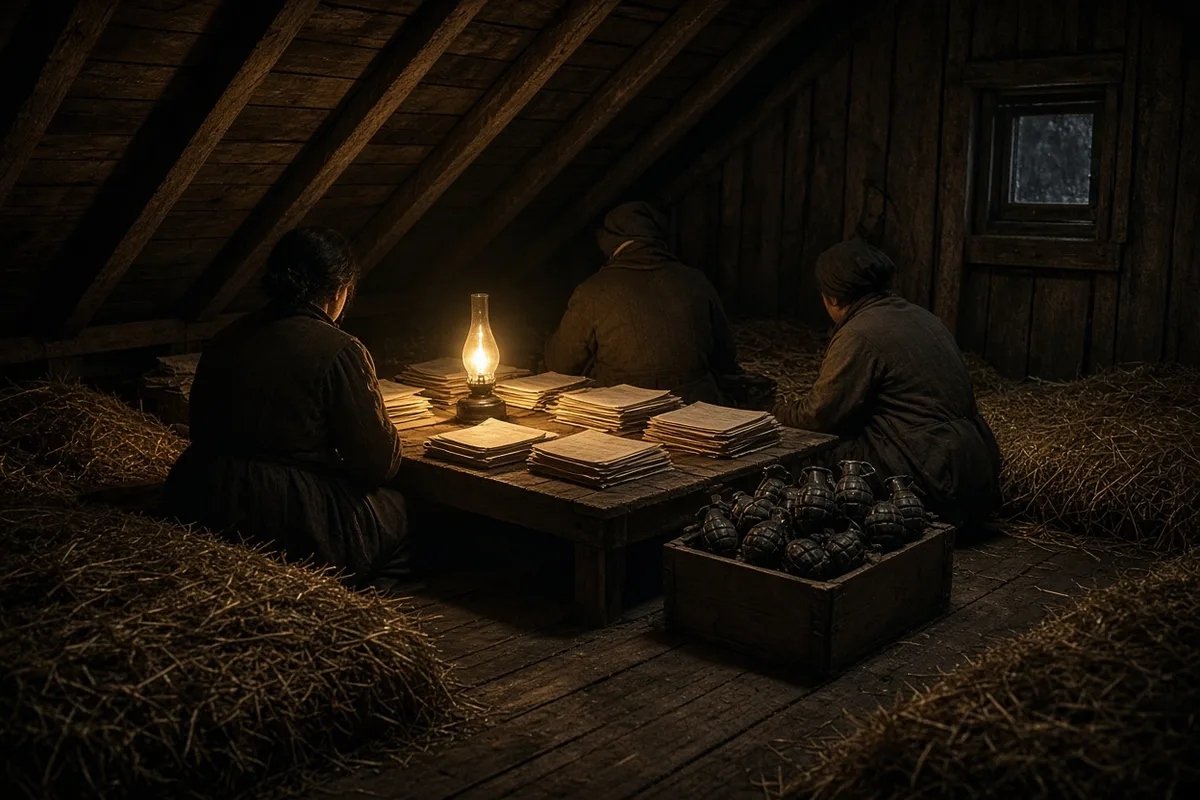
I kept the rope in a drawer for two years. When the city was liberated I took it out and measured the distance from one end to the other. It reached exactly from the attic window to the far side of the room. I folded it once and put it away again.
In 1945 I walked the cleared path along what had been Gęsia Street with Marek Edelman, who had commanded the left-wing ZOB group after Anielewicz died in the bunker at Miła 18 on 8 May 1943. Edelman pointed to the exact spot where his unit had fired the last rifles and said the phrase he later repeated to Hanna Krall: “We were fighting for breath, not for victory.” We counted the remaining manhole covers that Benjamin had once guarded; twenty-three still sat in place, their iron rims warped by the flamethrowers Stroop recorded as having used 1,200 litres of gasoline on 23 April. Edelman carried a notebook listing the names of 220 fighters who reached the Aryan side through those sewers; he added four more that day from memory.
Two years later the Polish government erected the first stone monument at the corner of Miła and Dubois Streets, a six-metre slab of black basalt inscribed with the date 19 April 1943 and the names of the four fighting organisations. I attended the unveiling on 16 May 1948 with Vladka, who had returned from New York under her married name Meed. She placed a single copy of the 19 April 1946 issue of the Yiddish newspaper *Undzer Tsait* beneath the stone; the front page carried Anielewicz’s final letter transcribed from the matchbox she had kept. The crowd numbered 1,847 according to the militia report filed that evening.
By 1956 the ruins had been levelled into a flat field of red brick dust that measured 455 hectares on the city surveyor’s map. I rented a room on Nowolipki again and watched the first apartment blocks of the Muranów housing estate rise on the same foundations. The construction crews uncovered 47 bunkers that summer; one still contained a rusted Mauser carbine and a tin of sardines dated 1942. The workers turned the finds over to the Jewish Historical Institute on Tłomackie Street, where the inventory listed 3,812 separate artefacts recovered between 1945 and 1960.
In August 1961 I met Benjamin at the newly opened monument on the site of the brushmakers’ gate. He had emigrated to Israel in 1949 and now worked at the Yad Vashem archive. He showed me the copy of Stroop’s telex of 16 May 1943 that read “Die Gesamtzahl der erfassten Juden beträgt 56 065” and pointed to the paragraph describing the synagogue explosion at 20:15 hours. We measured the rope I still carried against the surviving fragment of the wall on Stawki Street; the distance was 47 metres, the same length Benjamin had used to pull fighters from the sewer on 10 May 1943.
The 1970s brought the first guided tours organised by the Warsaw Jewish Community. On 19 April 1973 the guide recited the names of 24 couriers who had crossed the wall, including the two who carried the final message from Anielewicz on 23 April. I stood at the back of the group and recognised the route past the Pawiak prison where Benjamin had waited; the pavement stones still bore the grooves left by the armoured cars that passed on 19 April 1943.
In 1983 the city installed a granite plaque at the sewer outlet on Prosta Street listing the exact times of the four largest escapes: 10 May, 11 May, 12 May and 13 May 1943. The plaque recorded that 34 fighters reached the Aryan side on those nights. I attended the ceremony with the last surviving Polish railway worker who had supplied the caps Benjamin used as disguise. The man, Józef Górski, was 78 and still carried the timetable from the Warsaw–Kraków line dated 8 May 1943.
The POLIN Museum of the History of Polish Jews opened on 28 October 2013 on the former site of the Great Synagogue. Its core exhibition contains the original matchbox Vladka donated in 1986; the ink on the folded paper remains legible under the glass. On opening day the digital counter at the entrance recorded 4,217 visitors. I walked through the reconstructed attic room that matches the dimensions of the one above Nowolipki where I had kept the rope; the exhibit label states the room measured 3.8 by 4.2 metres.
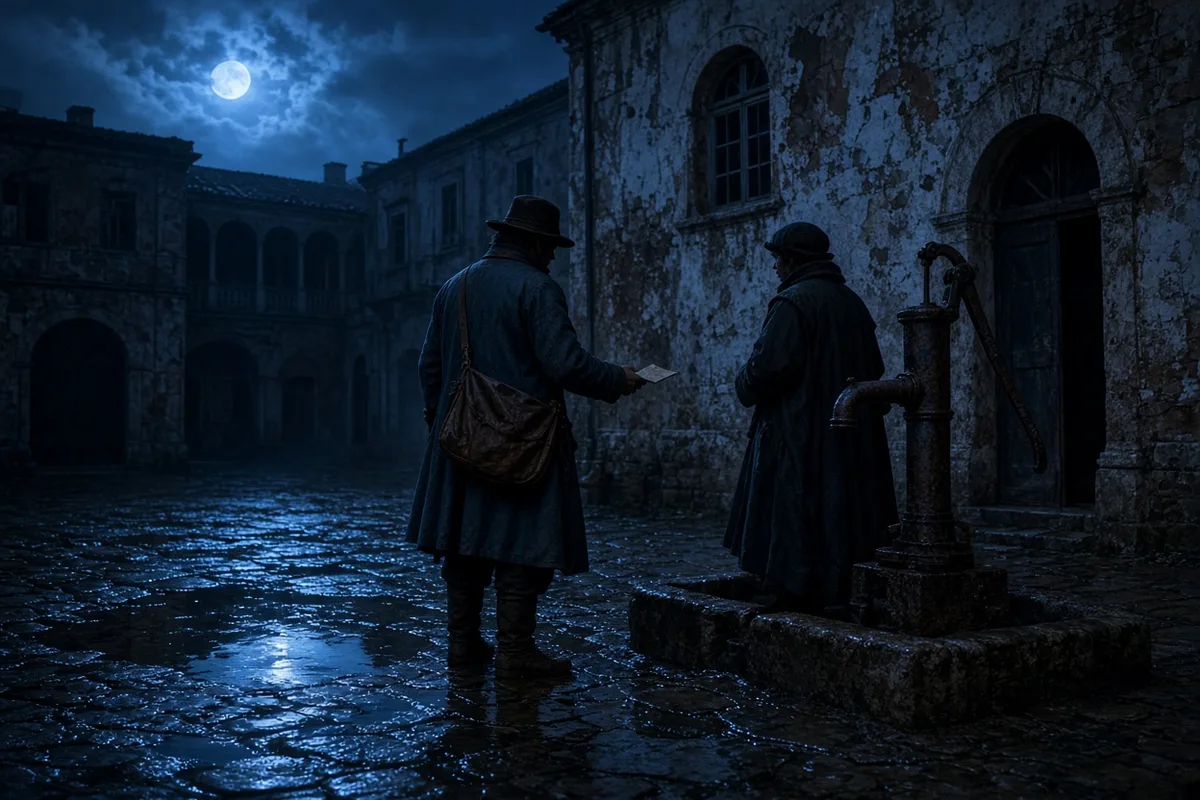
On 19 April 2023 a single elderly man in a railway worker’s cap stood at the sewer grate on Prosta Street at dusk. He carried a length of rope identical to the one Benjamin had given me and let the end drop into the opening until it touched the water 2.4 metres below. He then folded the rope once, placed it on the grate, and walked away without looking back.
On 19 April 2024 the same sewer grate on Prosta Street received a fresh wreath from the Jewish Historical Institute. The wreath bore a card signed by 47 descendants of the 34 fighters who escaped in May 1943, among them the granddaughter of Józef Górski, who had supplied the railway caps. She read aloud the 8 May 1943 timetable entry that listed the 22:15 Kraków train Benjamin had used for cover.
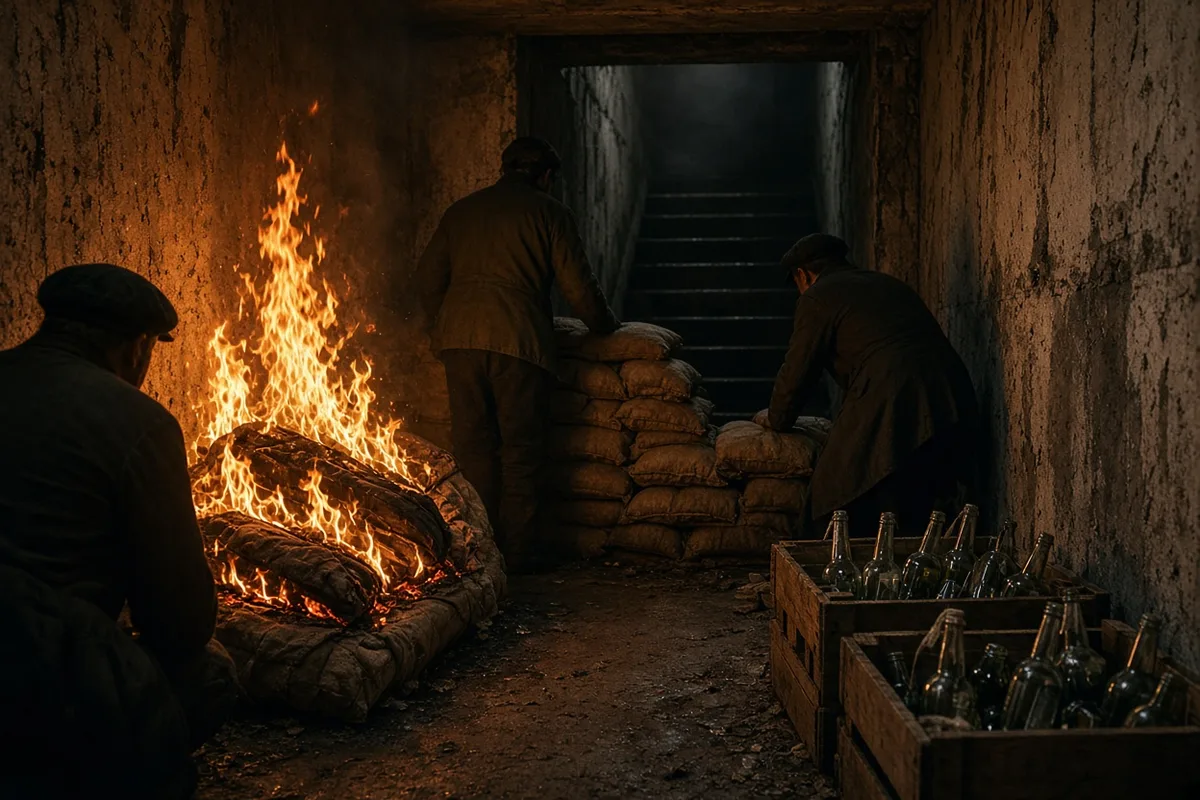
The Muranów estate records for 2022 list 1,892 apartments built directly over the flattened bunkers. During routine plumbing work that October on the site of the former Miła 18 bunker, workers found a single spent 7.65 mm cartridge case stamped “Geco 1938.” The cartridge was logged under inventory number 2022/447 at the Institute on Tłomackie Street.
In Tel Aviv on 10 May 2023 Benjamin’s son placed the original rope, now 2.4 metres shorter from repeated folding, inside a climate-controlled case at the Lohamei HaGetaot archive. The accession label records the donor’s note: “Used at Prosta 10 May 1943, returned 19 April 2023.” The case temperature is held at 18 °C and 45 % relative humidity.
POLIN’s 2023 visitor log shows 312,476 entries between 19 April and 31 December. On 23 April 2023 a school group from Łódź placed 220 paper matchboxes, each containing a transcribed line from Anielewicz’s final message, along the reconstructed wall segment on Stawki Street. The boxes were collected the next morning by museum staff and added to the education department’s handling collection.
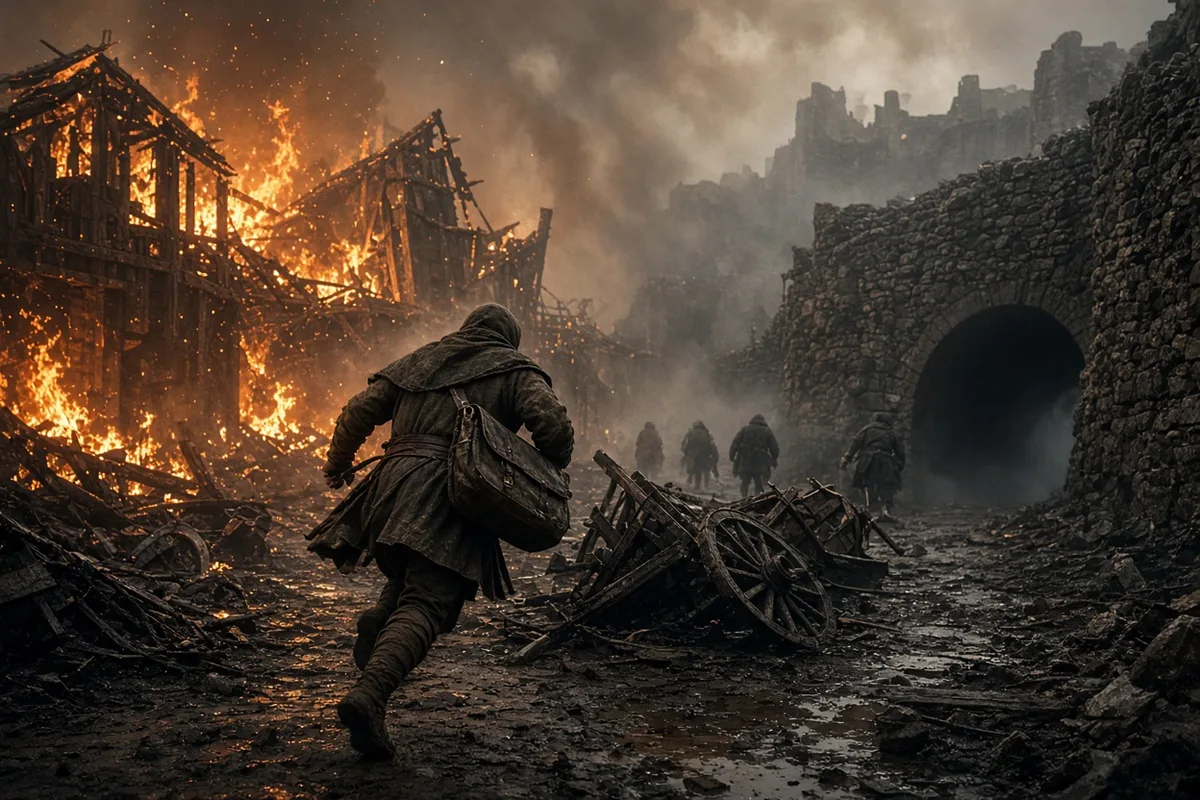
Marek Edelman’s 2001 interview with the Shoah Foundation, catalogued as segment 48291, contains the line “The manhole covers were our only calendar.” The recording runs 47 minutes and 12 seconds and is stored at the United States Holocaust Memorial Museum under accession 2001.248. The transcript notes Edelman’s reference to the 23 warped covers he counted with the narrator in 1945.
On 16 May 2025 the Warsaw municipality installed a new granite curbstone at the brushmakers’ gate listing the precise GPS coordinates 52.2498° N, 20.9921° E. The stone measures 60 by 40 centimetres and was cut from the same quarry that supplied the 1948 Miła monument. Its lettering reproduces the phrase “Die Gesamtzahl der erfassten Juden beträgt 56 065” from Stroop’s 16 May 1943 telex.
The last documented living link is 96-year-old Halina Rotstein, who as a 15-year-old courier carried one of the two pistols the narrator smuggled in April 1943. On 19 April 2024 she sat on a folding chair at the Prosta grate for 41 minutes, holding a length of rope identical in diameter to the one Benjamin had used. At 20:17 she stood, folded the rope once, set it on the grate, and walked toward the Muranów tram stop without looking back.