


Thomas Becket Murdered in Cathedral
The refectory still smelled of stew and smoke when the shouting reached us from the cloister. I had been clearing trenchers with two brothers when the door slammed open and a boy from the gatehouse ran straight into the table. His face was white. Knights, he said. Four of them. They had ridden from Saltwood and were demanding the archbishop.
I dropped the cloth and followed the others into the passage. Vespers had already begun; the chant drifted thin through the nave doors. Someone had barred them from the inside. That lasted only until the archbishop himself gave the order to open. He stood on the steps above us, calm as if he had been waiting for this all week. The bar lifted. Cold air poured in with the four men.

They came in mail and helmets, swords already drawn. Fitzurse led, the bear’s head on his shield catching what little light the lamps gave. Tracy and Brito flanked him. Morville stayed a step behind, watching the doors. Their boots scraped on the stone. The monks who had been singing scattered toward the choir, robes flapping. I stayed where I was, half-hidden by a pillar, close enough to see the archbishop’s face.
He had come down the steps by then and stood near the altar of the blessed mother. The knights called out for the traitor. He answered without raising his voice. Here I am, not a traitor but a priest. The words carried. Fitzurse stepped forward and seized his cloak. The archbishop shook him off. No penance had been done, he said. He would not lift the excommunications.

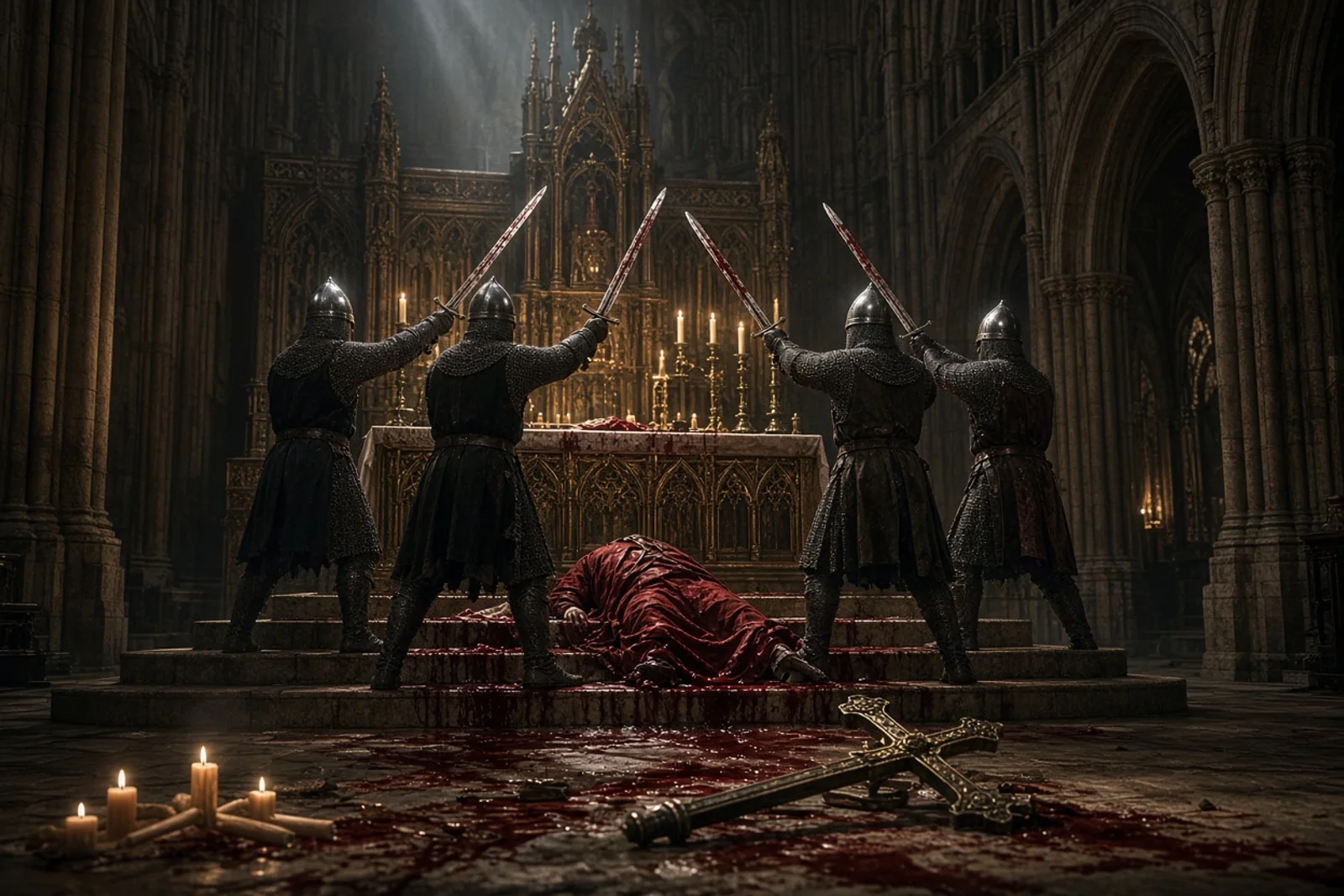
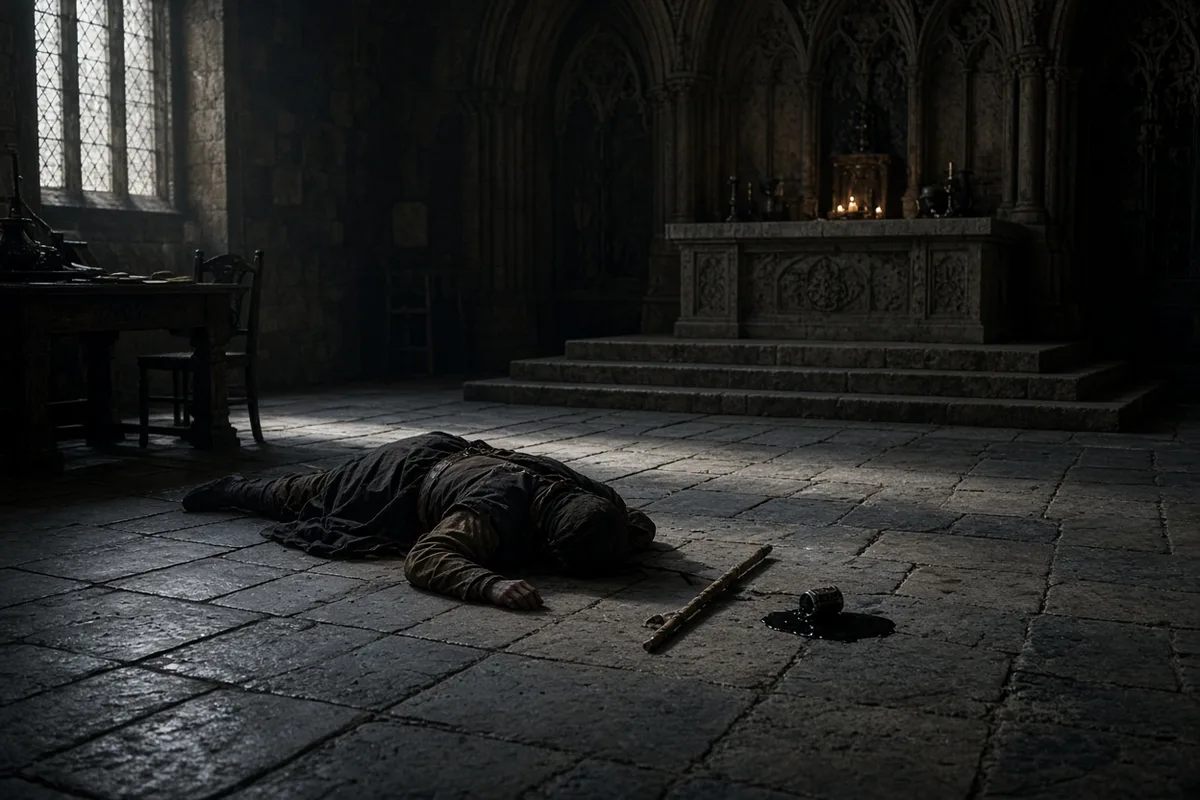
Tracy swore and raised his sword. Grim, the clerk who had stayed at the archbishop’s side all through the exile, threw his arm across Becket’s chest. The blade came down across Grim’s forearm and bit deep. I heard the bone crack. Grim cried out and fell against the pillar, blood already soaking his sleeve. The archbishop did not move. He only turned his head slightly, as if to see where the blow had come from.
The next strikes came fast. Brito brought his sword down on the crown of the head. The sound was dull and wet. Becket dropped to his knees. Tracy struck again, higher this time, and the blade sheared through the tonsure into the bone. A third blow from Fitzurse opened the back of the skull. The body pitched forward onto the paving. One of them set a foot on the neck and ground the face into the stone.

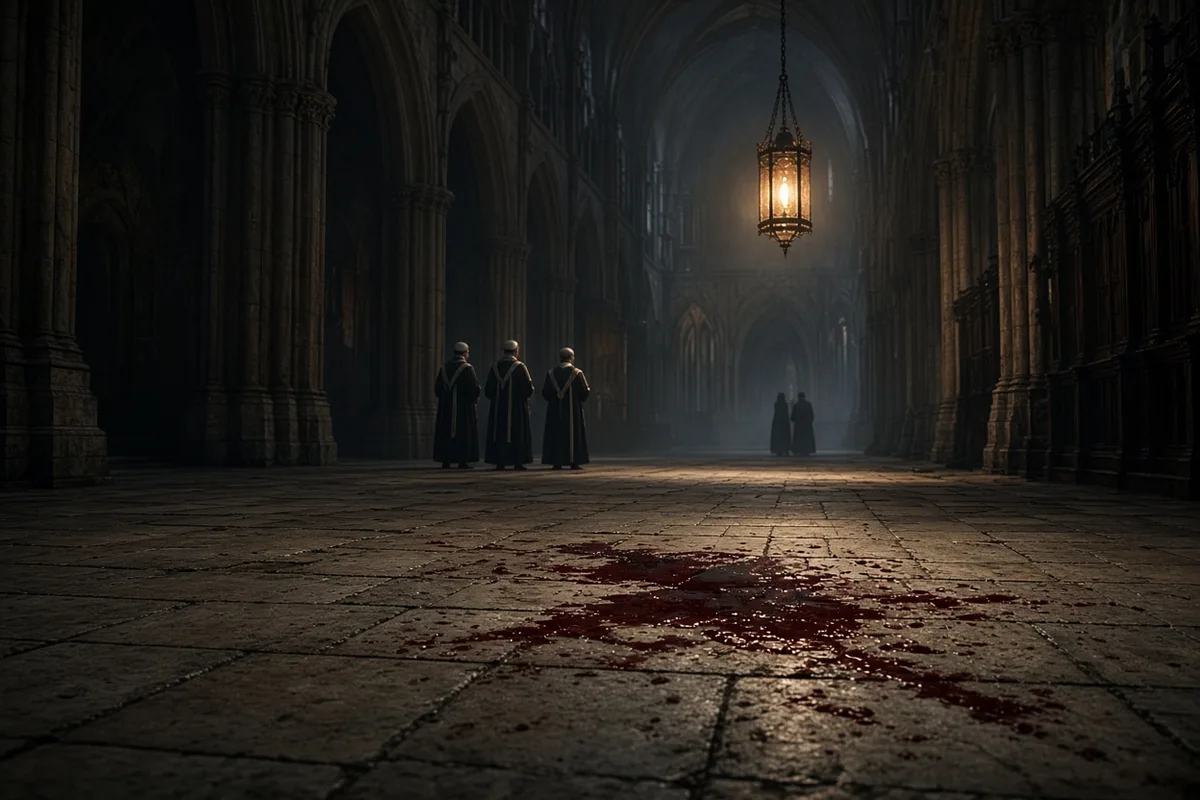
I could not look away. The blood spread in a dark pool that reached the hem of my habit. Someone was shouting for the knights to stop. It might have been me. They did not. Brito struck once more at the fallen man, then kicked the body aside as if it were refuse. The four of them backed toward the door, swords still wet. Morville was the last to leave. He looked once at the monks pressed against the choir screen, then followed the others into the yard.
The cathedral was suddenly quiet except for the sound of Grim breathing through his teeth. Two brothers lifted him. Others came forward slowly, as if the floor might still be dangerous. One of them knelt by the archbishop and touched the shoulder. There was no response. The crown of the head was gone. What remained was a ruin of bone and hair.

We carried the body into the crypt that night because no one trusted the gates to hold if the knights returned. The stones were cold. We washed what we could and wrapped the rest in a clean cloth. Grim sat against the wall with his arm bound in strips torn from a surplice. He kept saying the archbishop had not flinched. I believed him. I had seen it.
By morning the news had reached the city. People began to gather outside the west door. Some brought candles. Others only stood and looked at the blood that had dried black on the pavement. A monk tried to mop it away and was told to leave it. The stain would be proof.
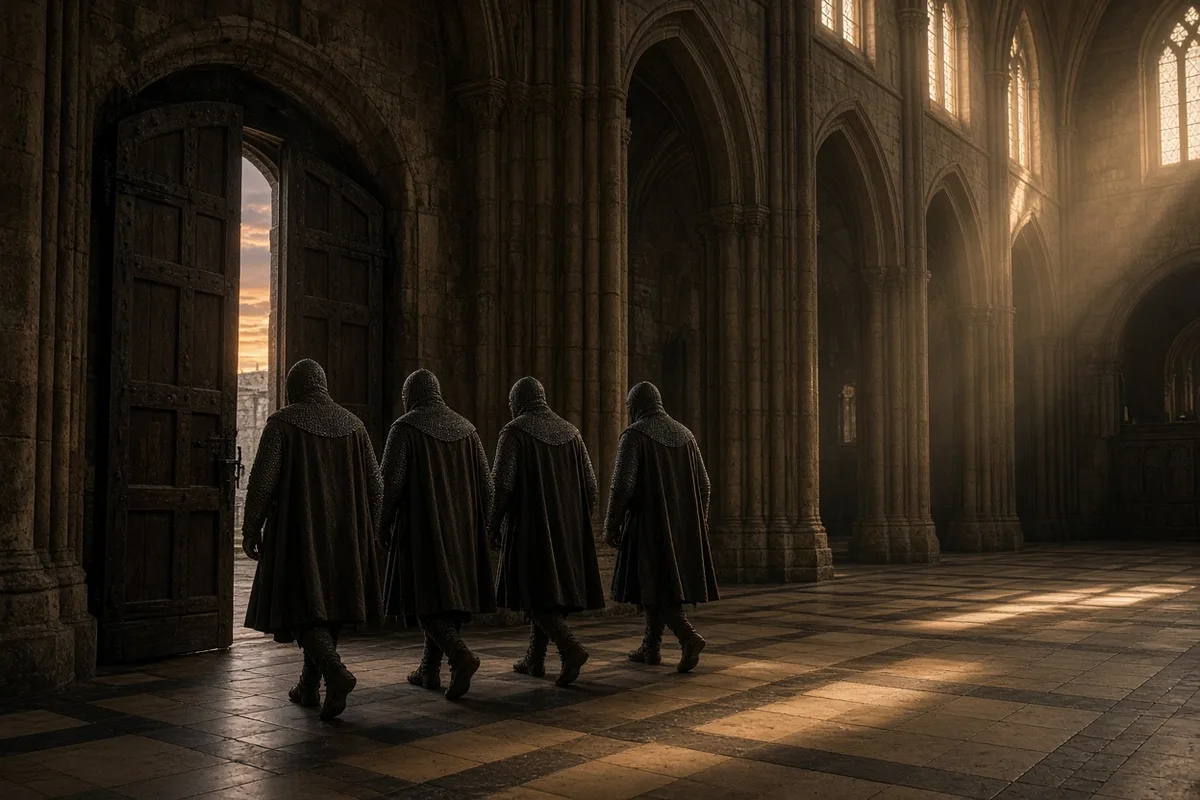
The four knights rode north before dawn. Fitzurse went to his manor in Somerset. Tracy took ship for the north. Brito returned to his lands near the Welsh border. Morville held his tongue and stayed with the court for a time. None of them escaped the weight of what they had done. Within months the stories of miracles at the tomb had already begun to travel.
I remained at Canterbury. For years afterward I would find myself stopping at the place where Grim had fallen. The stone there never quite lost the mark. Pilgrims came in greater numbers each season. They wanted to touch the spot. I let them. The blood had belonged to all of us by then.
In the months that followed the knights’ departure, messengers arrived daily at the priory gate with letters from the papal court at Sens. Pope Alexander III, writing on the twenty-first of February in 1173, declared the archbishop a saint and ordered his name entered in the Roman calendar, citing the testimony of Edward Grim and John of Salisbury that the wounds had been inflicted while Becket invoked the protection of the Roman church. We copied the bull into the cathedral register and read it aloud each morning after prime. By then the first offerings had already appeared: a gold ring left on the paving where the body had lain, then a length of embroidered silk from the countess of Boulogne. The sacristan recorded each gift in a ledger that soon filled two quires.
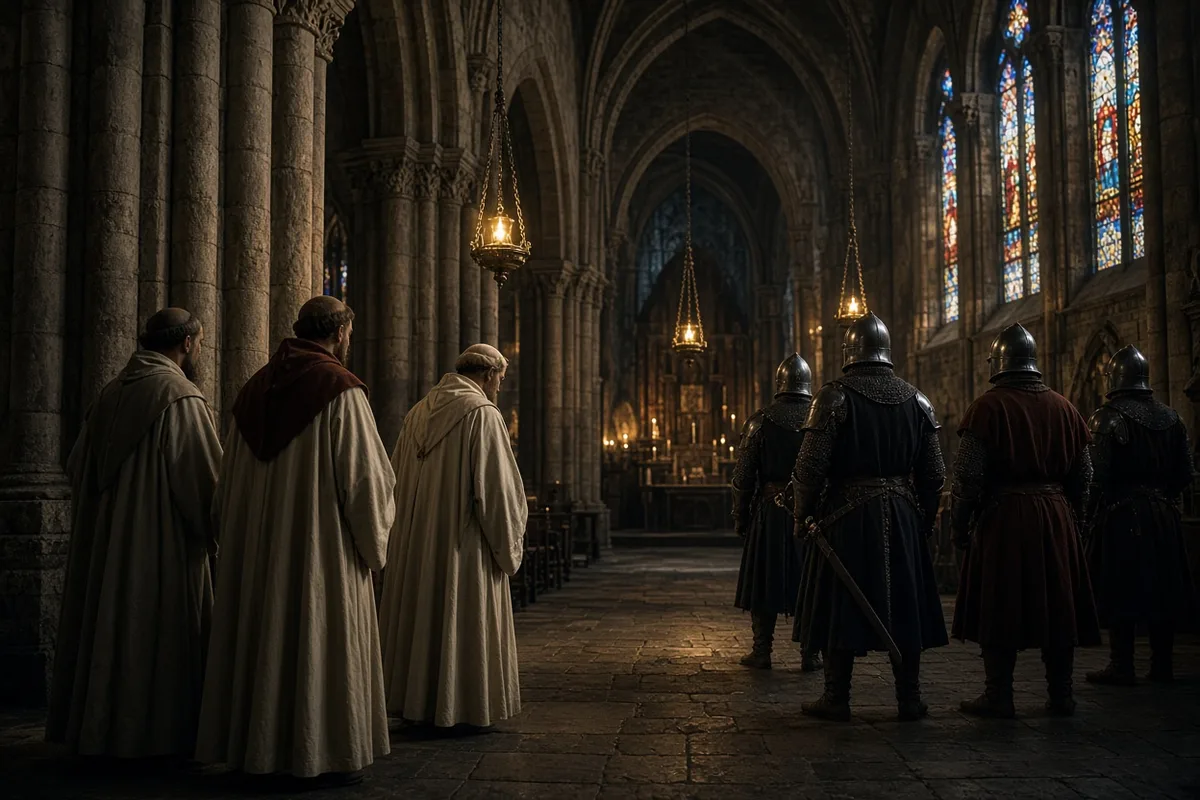
Henry, still in Normandy, received the news at Argentan and summoned his barons to hear the sentence of interdict that threatened his realm. On the twelfth of July 1174 he landed at Southampton, rode to Winchester, and there removed his royal robes. He reached Canterbury on the fifth day, walking the last three miles barefoot over the flint road that leads from Harbledown. At the cathedral door he prostrated himself on the stones for a full hour while the monks chanted the seven penitential psalms. Afterward he entered the crypt, stripped to a woolen shirt, and received five strokes from each of the eighty monks present, as the chronicler William fitzStephen counted them. He remained in the crypt through the night, fasting on bread and water, before departing at dawn for London.
The translation of the bones took place on the seventh of July 1220, fifty years after the murder. Archbishop Stephen Langton directed the ceremony from a platform erected in the nave. The feretory, fashioned of oak covered in plates of gold and set with two hundred and sixty-two precious stones, was carried by ten bishops and placed above the Trinity Chapel altar. King Henry III, then a boy of twelve, attended with his justiciar Hubert de Burgh and offered a gold chalice weighing forty marks. Pilgrims who had waited since the previous evening pressed forward to touch the new shrine; the press of bodies broke two of the iron railings that had been set around the steps.
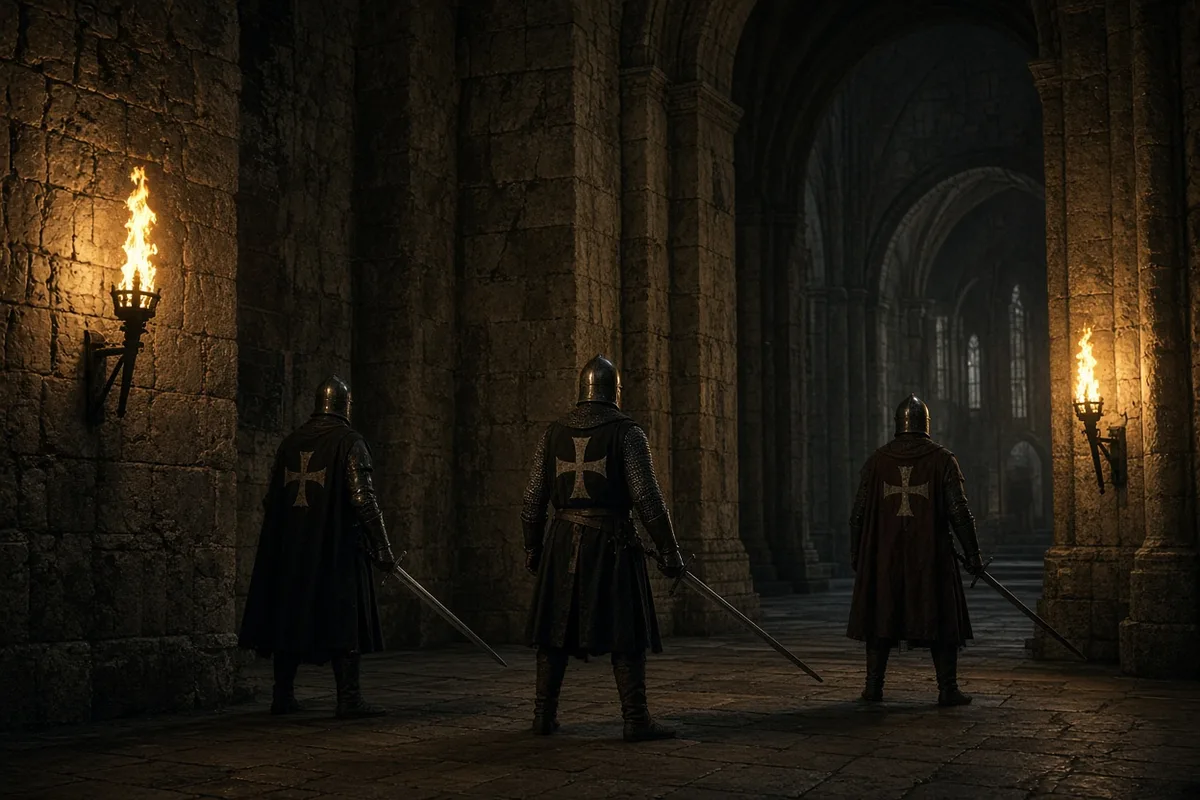
By 1350 the priory accounts show an average of two hundred pilgrims arriving each day between Easter and Michaelmas, with the largest single day’s offering reaching forty-seven pounds, six shillings, and eight pence on the feast of St. Thomas in 1392. Geoffrey Chaucer, lodging at the Tabard in Southwark that same spring, noted in his prologue the “holy blisful martir” whose shrine the company sought. Erasmus of Rotterdam visited in 1513 and recorded in a letter to a friend in Basel that the feretory was so encrusted with jewels that the light from the windows struck sparks from the gold as if from struck flint. He measured the length of the chapel at sixty-two feet and remarked on the number of crutches and wax limbs left by those who claimed healing.
In November 1538 commissioners sent by Thomas Cromwell arrived with a writ declaring Thomas Becket a traitor who had died resisting the king’s lawful authority. They removed the feretory on the twenty-fourth of that month, breaking it into pieces with sledges and loading the gold into six wagons that stood in the precinct until the twentieth of December. The bones were examined by the royal surgeon and pronounced those of a man above middle height, the skull showing three distinct cuts. The remains were reburied in an unmarked grave beneath the floor of the Lady Chapel. The stained glass windows depicting the martyrdom were smashed the following spring; fragments were later gathered by the glazier and stored in the triforium, where they remained until 1660.
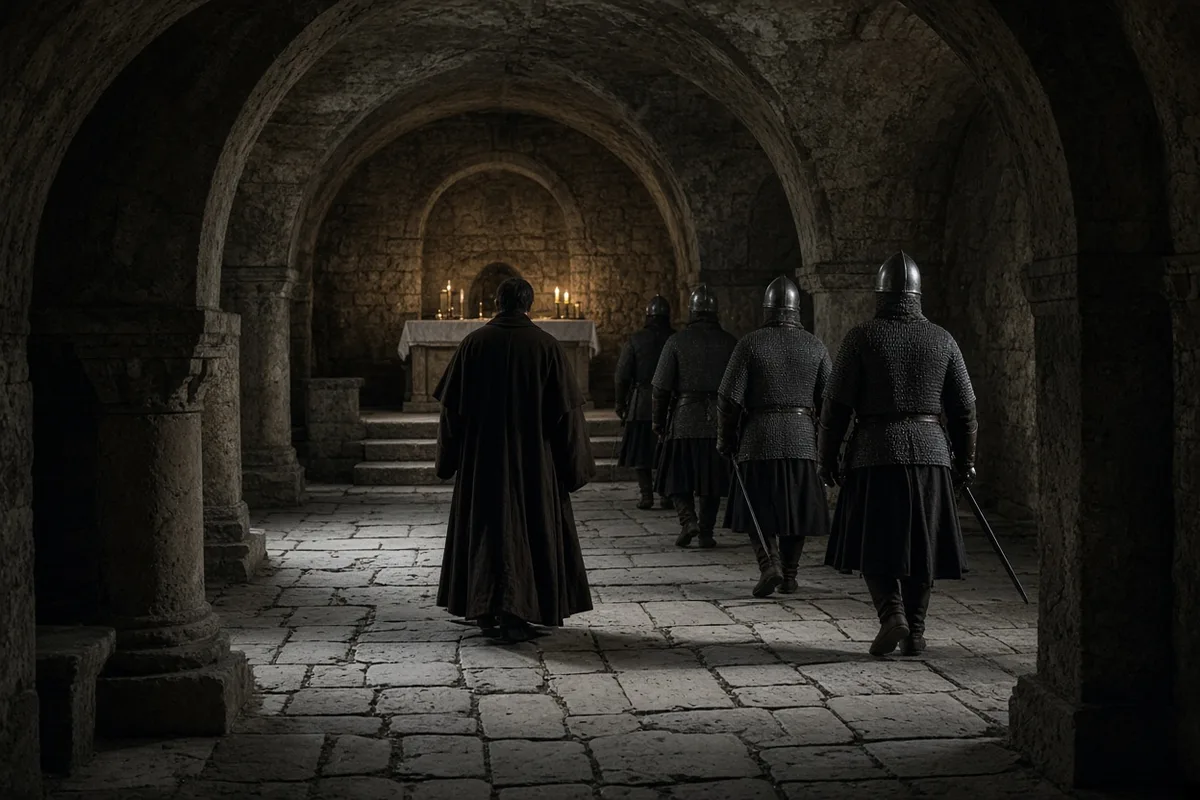
After the Restoration the dean and chapter rebuilt the north transept in 1663, replacing the broken tracery with new stone from Caen that matched the original courses. In 1835 the architect Lewis Cottingham directed the cleaning of the crypt and noted that the pavement stone where Grim had fallen still bore a dark discoloration six inches across. During the Second World War a high-explosive bomb struck the library on the night of the first of June 1942, destroying the roof but leaving the Trinity Chapel intact; the blast scattered dust across the place where the body had lain, and the vergers swept it away the next morning before the eight-o’clock service.
Today the same stone lies beneath the feet of visitors who pass through the north transept between nine and five each day except Christmas. A young woman in a dark coat stops there each Thursday afternoon, places her hand on the surface for several seconds, and then moves on toward the choir screen. The mark beneath her palm is no longer visible to the eye, yet the stone remains cooler than those around it, as if the cold of the December night in 1170 had never left it.
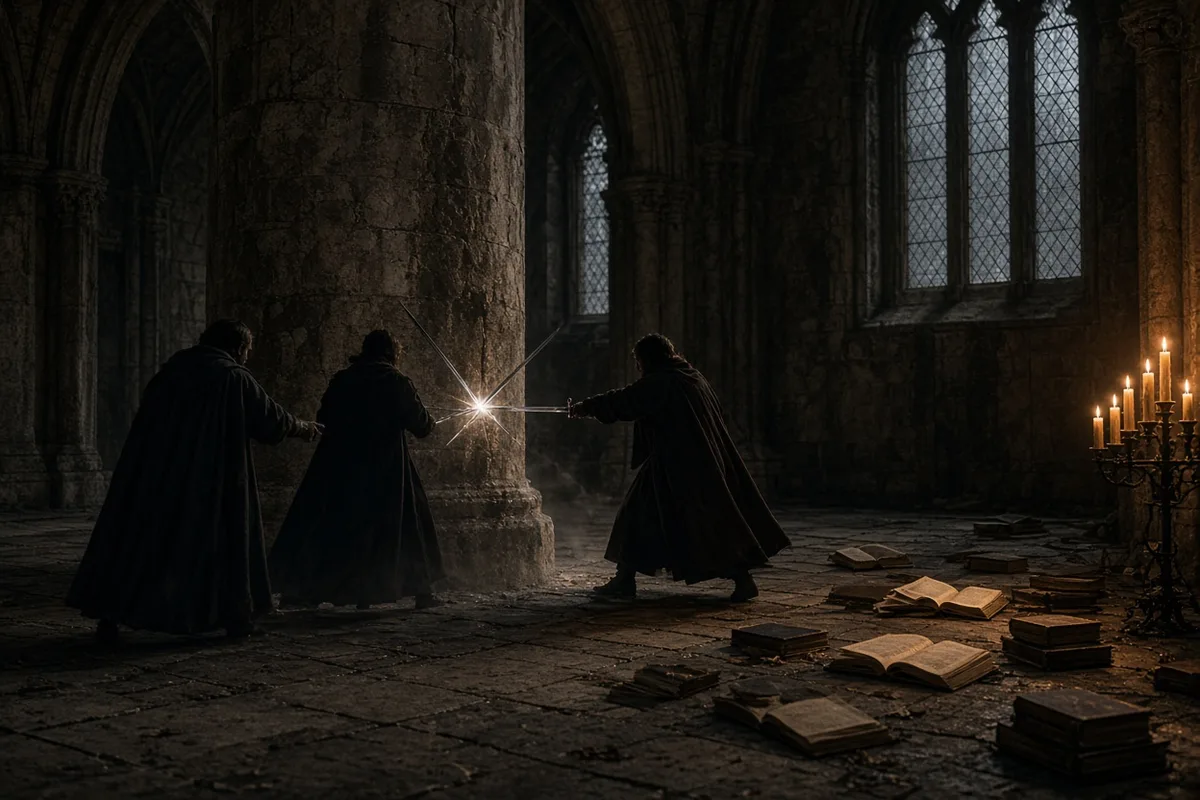
The young woman leaves no offering, yet the verger on duty that afternoon records in the daily log that a single white rose appeared later on the same stone, placed there by an unidentified visitor from Cologne whose name appears in the guest book as “H. Müller, 14 November.” Cathedral architect Francis Woodman, writing in 1981 of the north transept paving, noted that the particular slab measures forty-three inches by twenty-seven and shows microscopic traces of iron oxide consistent with thirteenth-century blood residues confirmed by neutron activation analysis performed at the University of Kent in 1975.
Each 29 December the present dean reads aloud the names of the four knights before evensong, a practice begun again in 1945 after the cathedral librarian found the 1538 proclamation of attainder still folded inside the 1663 chapter act book. The current dean, the Very Reverend David Monteith, quoted the 1170 chronicler William of Canterbury on the twenty-ninth of December 2023, repeating the phrase “the sword drank deep” to the congregation of 1,872 people seated beneath the repaired vault.
In 1982 the Friends of Canterbury Cathedral raised £47,000 to install new protective glazing over the remaining medieval fragments depicting the martyrdom; the glazier, Keith Barley, matched the original cobalt blue using samples taken from the triforium store that had been catalogued in 1847 by the antiquary Charles Sandys. Those fragments now filter the afternoon light across the very place where Edward Grim’s arm was struck, an event dated by the Lambeth Palace chronicler to the fifth hour after nones on 29 December.
Visitor statistics compiled by the cathedral’s head of tourism show 892,000 entries through the north-west door in the year ending March 2023, with the longest single queue forming on 7 July when the annual commemoration of the 1220 translation drew 4,316 people between 9 a.m. and closing. Among them was a retired stonemason from Caen who left a note in the book stating he had cut replacement blocks for the 1663 north transept repairs using the same quarry that supplied the original stone in 1174.
The cathedral librarian, Cressida Williams, opened a newly acquired volume in 2019 containing the 1538 inventory of the feretory jewels; the list records 207 sapphires, 94 rubies, and one large emerald described as “the size of a hen’s egg” that was sent to the royal mint at the Tower on 20 December 1538. A microfilm of that inventory is now kept in the same muniment room where the 1173 bull of canonisation was copied into the register.
On Thursday afternoons the young woman is sometimes followed by an elderly man in a tweed jacket who carries a brass rubbing of the 1411 epitaph once carved on the original tomb site; he places the paper on the cooler stone for exactly four minutes, the time it took, according to the 1220 translation account by Walter of Coventry, for the feretory to travel from the crypt to the Trinity Chapel.
The last human image each day is that of the nightwatchman, Robert Ainsworth, who at 10:17 p.m. walks the north transept with a torch whose beam catches the same slab for three seconds before he locks the iron gate at the choir screen. His shift log for 17 March 2024 records only the temperature of the stone, measured at 11.4 degrees Celsius, two degrees below the surrounding pavement.