


Thomas Merton's Entry into Gethsemani
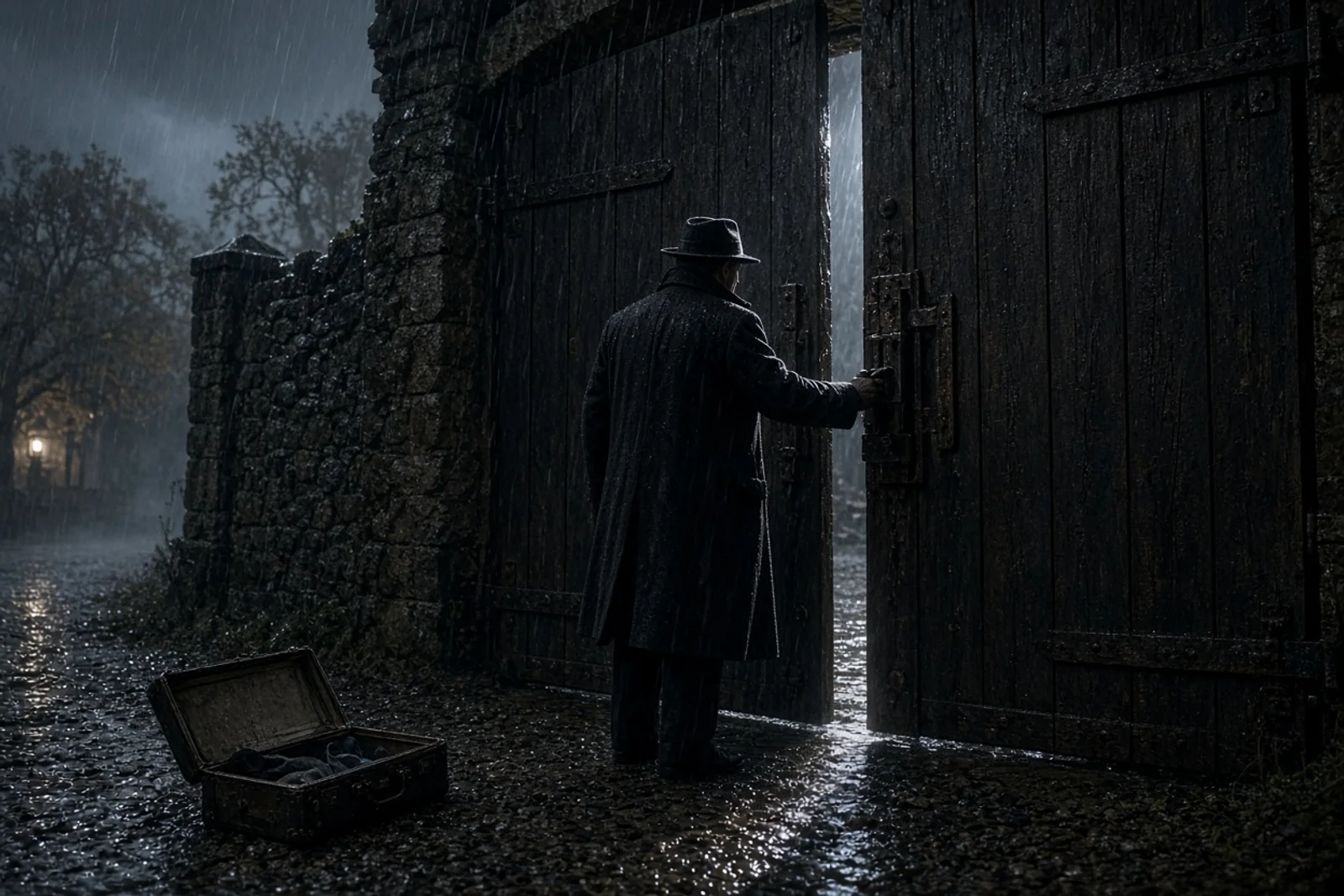
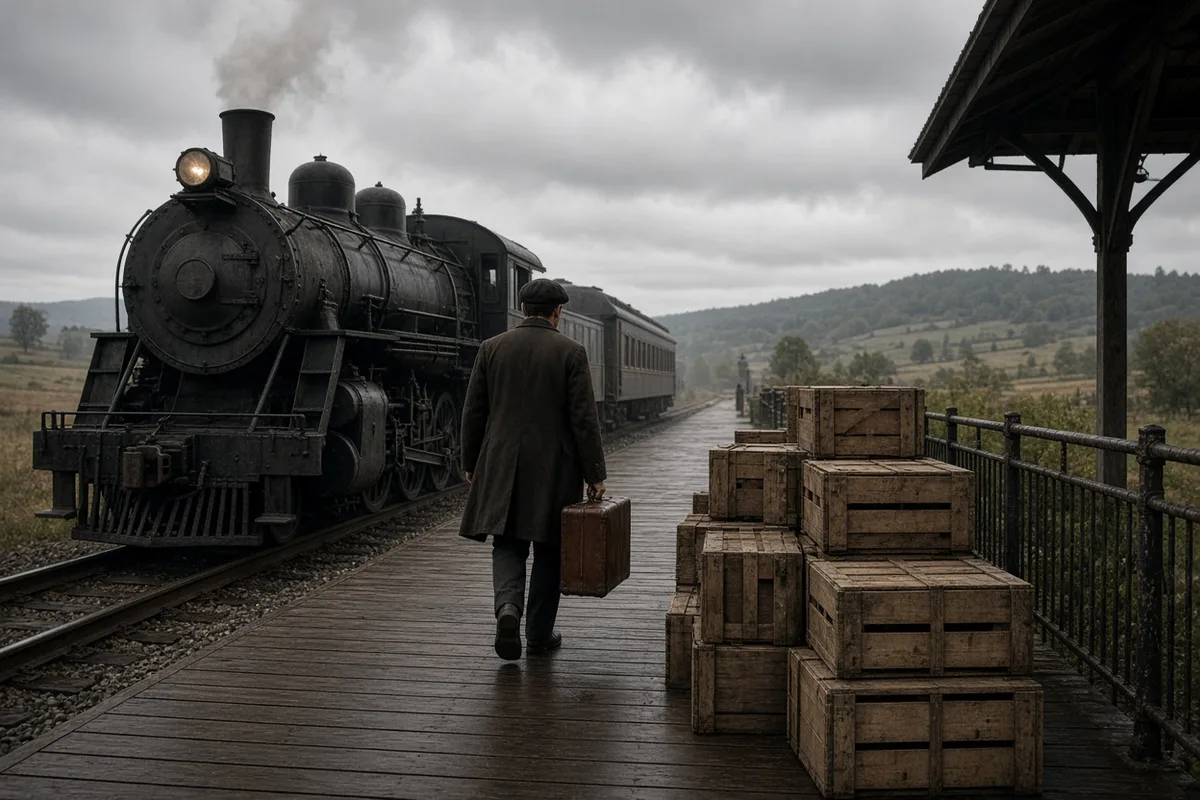
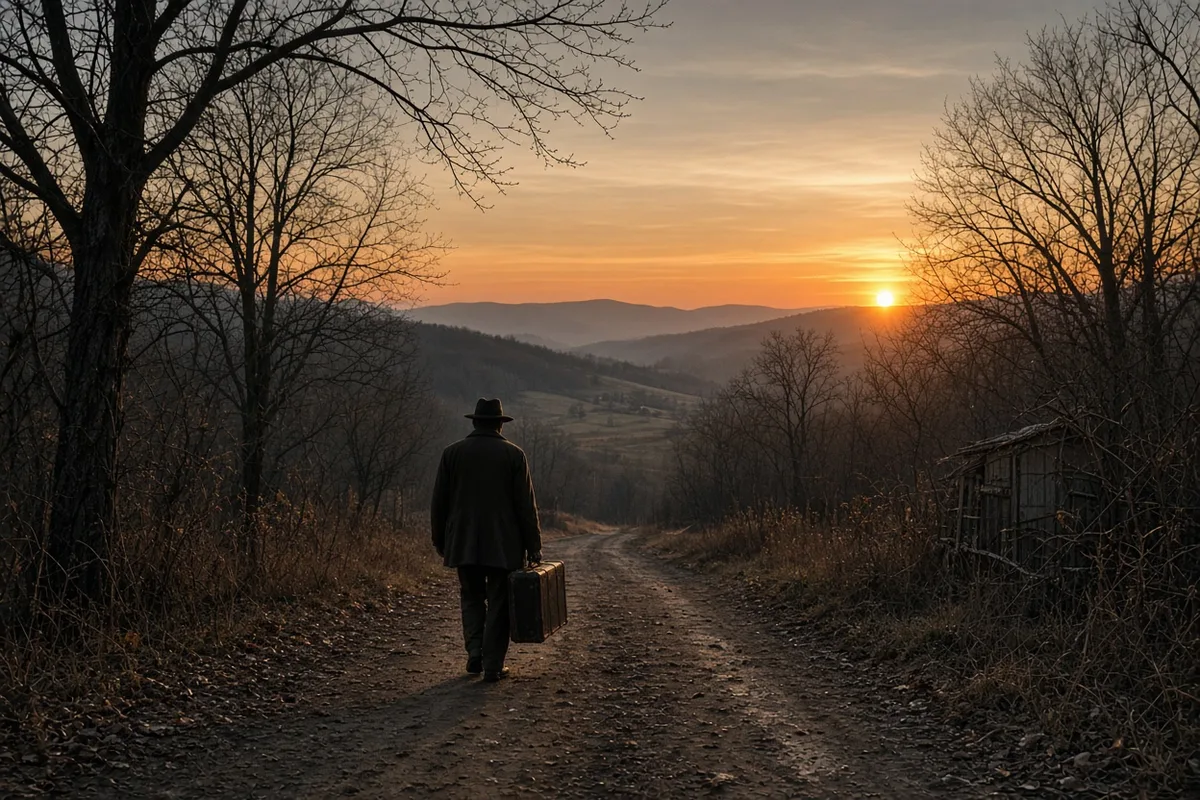
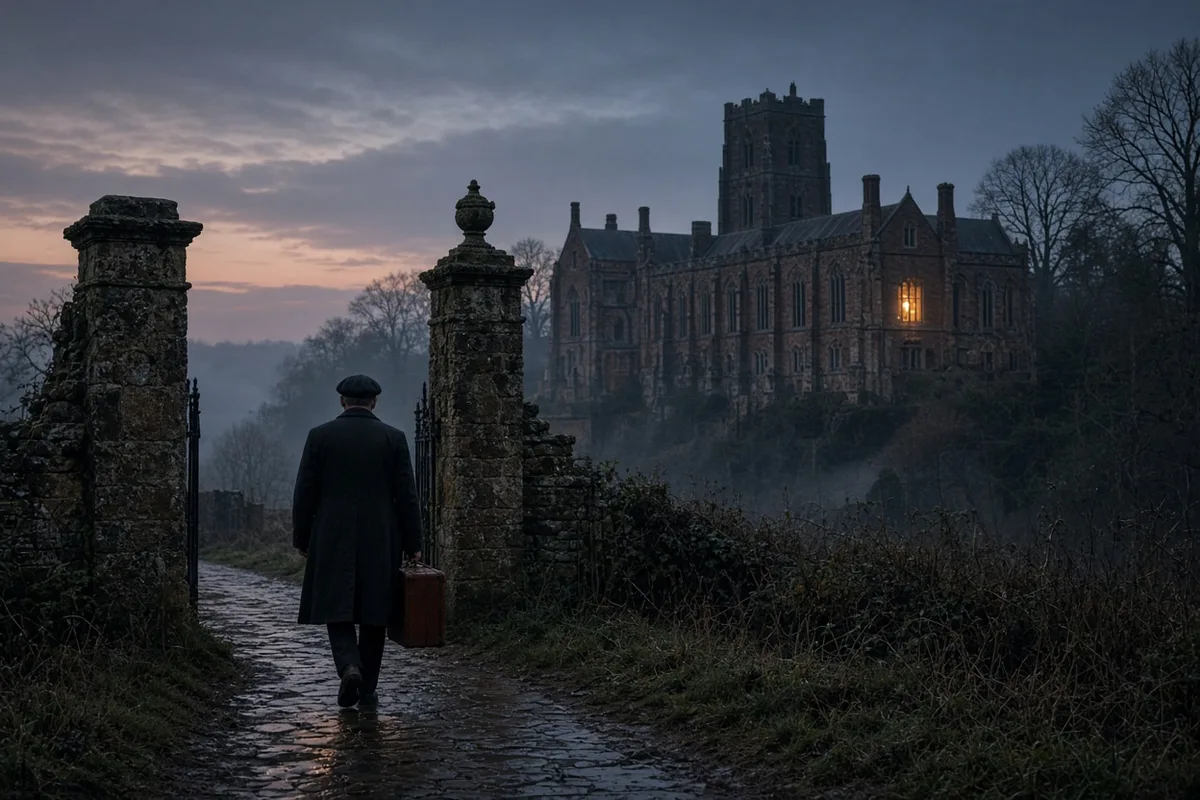
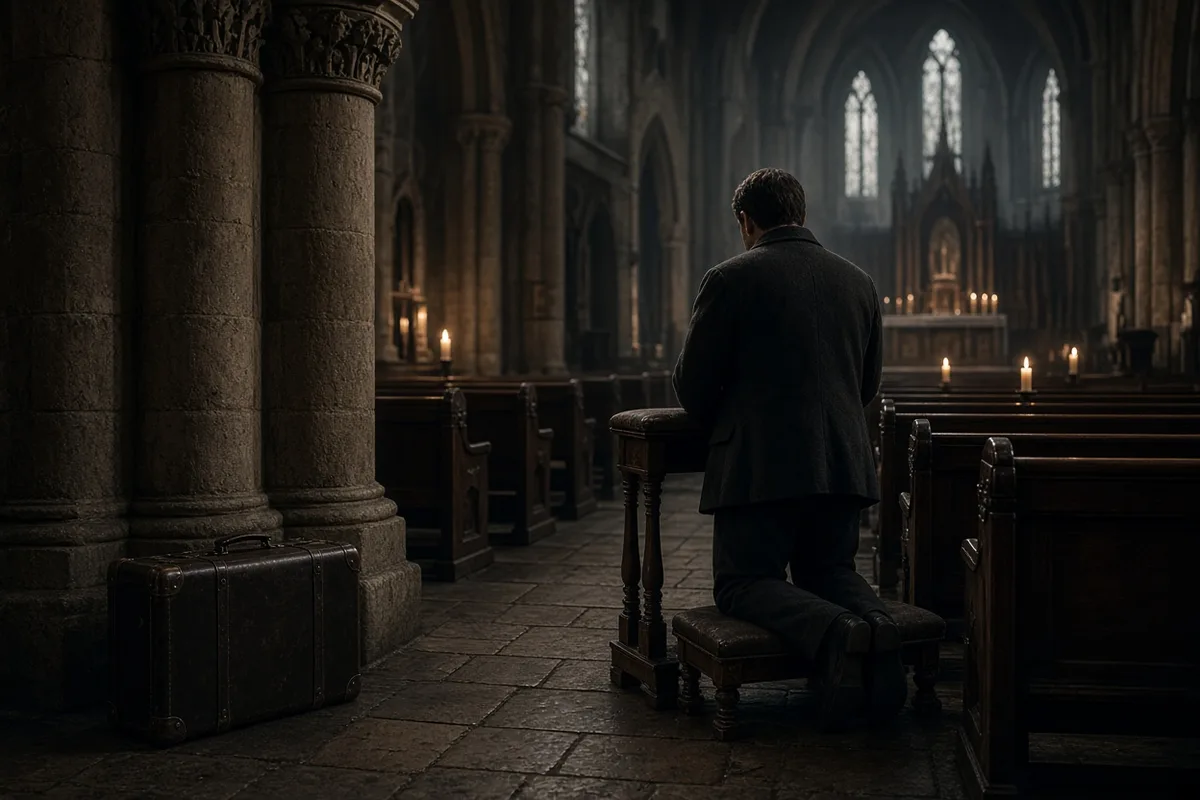
The car door slammed against the cold. I stood on the guest-house steps with a lantern, watching the driver pull away into the dark. The man left behind carried one suitcase and wore a coat too thin for Kentucky in December. He set the bag down on the gravel and looked up at the abbey walls as if they might move.
I took his name at the register. Thomas Merton, twenty-six, from St. Bonaventure. He asked if he could speak with the novice master in the morning. I told him the community would decide after three days. He nodded once and followed me inside without another word.

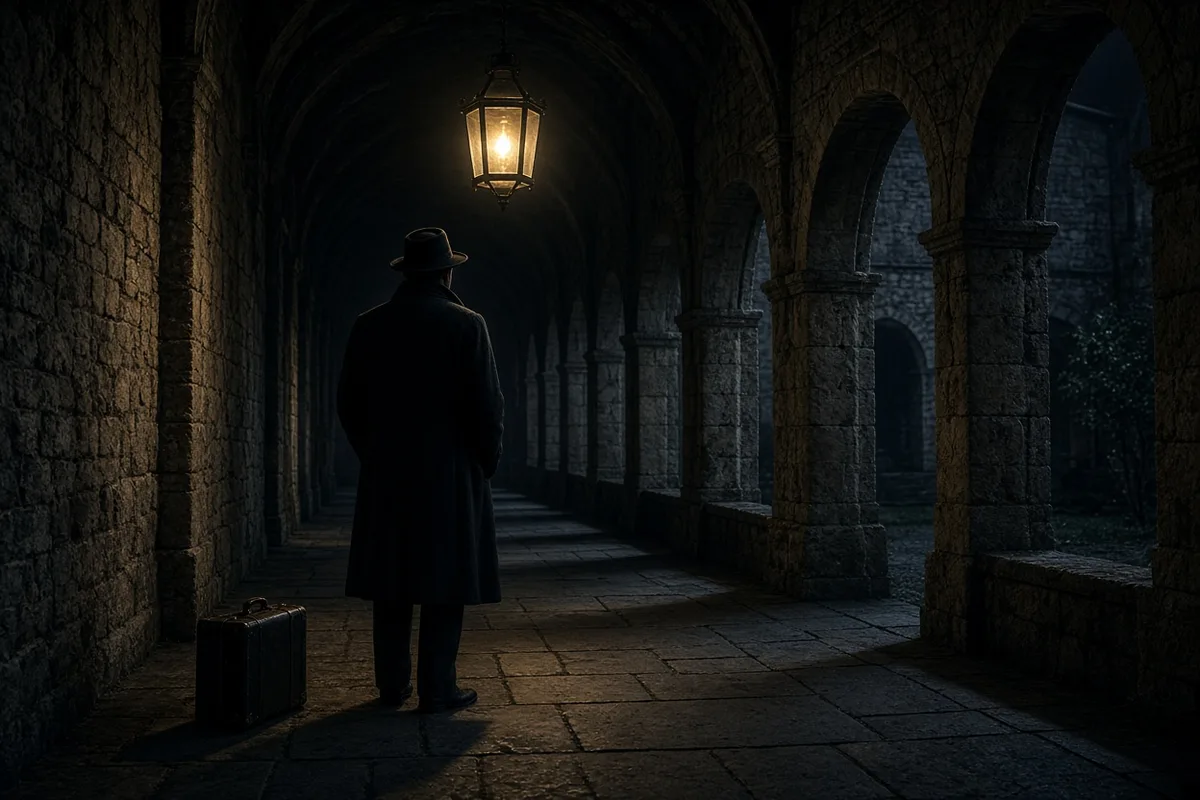
That first night the wind came hard off the knobs. I showed him the narrow room above the kitchen and left him with a bucket for the stove. Through the floorboards I heard him moving, then nothing. The silence of the house pressed down the way it always did after Compline.
Next morning I set him to work. He washed dishes in the scullery while the brothers ate. Steam rose around his wrists and the plates clattered when his hands shook from the cold water. Between meals he scrubbed the long corridor that led to the church. The novice master called him in twice that day. Each time Merton came out with the same quiet face, eyes lowered, and went straight back to the bucket.
On the second day he asked if there were any books he could read while he waited. I gave him the rule and a volume of psalms. He read at the table after the dishes were done, tracing the lines with one finger as if the words might slip off the page. At noon he carried slop to the pigs behind the barn. The animals crowded the trough and he stood among them without moving, watching the steam rise from their backs.

The third morning the abbot himself came to the guest house. Frederic Dunne spoke with him in the small parlor for nearly an hour. I waited in the hallway and heard only the low voices and the scrape of a chair once. When the door opened Merton stepped out, thanked the abbot, and returned to the dishes without looking at me.
That afternoon the decision reached him. He was to enter as a postulant. The formal words were spoken in the chapter room after Vespers. I stood at the back with the other brothers and watched him receive the plain black habit. His hands were still red from the wash water when he folded them to answer the questions.
The first weeks he learned the signs. We showed him the gestures for bread, for water, for the need to speak. He practiced them at the long table until the motion became smaller than a breath. At night in the dormitory I sometimes heard the rustle of his blanket when he rehearsed them again in the dark.
He stayed twenty-seven years. In 1949 the bishop laid hands on him in the abbey church and gave him the name Father Louis. The same hands that once carried dishes now lifted the chalice. The community watched him grow thinner and quieter, the way the stones of the enclosure grew darker with each winter.
He wrote at a small desk in the scriptorium after the work of the day. Pages stacked beside the inkwell. When the first book appeared the mail sacks grew heavier, yet he still took his turn at the dishes on days the cook was short-handed. The younger brothers asked him about the world outside. He answered with facts, never stories.
On the morning of his death the calendar read the same date he had first arrived. Word came from Thailand. The brothers gathered in the church and sang the psalms he had learned to sign. His body was brought home and buried inside the wall.
Years later a letter arrived from Rome. The Pope spoke his name in the Congress chamber, calling him a man of prayer who opened new horizons. The letter was read aloud after None. No one moved when the reading ended. Outside the windows the fields lay under the same December light that had met him on the gravel the first night.
I keep the old register in the guest-house drawer. His name is still there in the column for December 10. The ink has faded but the line remains straight. When new men arrive I hand them the bucket and show them the corridor that needs scrubbing. The work is the same.
In the weeks after the telegram from Bangkok the abbot Flavian Burns read aloud at chapter the cable from the U.S. embassy stating that Thomas Merton had died on 10 December 1968 at the Red Cross hospital in Samut Prakan from accidental electrocution by a faulty fan cord, his body examined by Dr. Edelbert Dölger and flown home on a military transport that landed at Standiford Field on 17 December. Brother Lawrence entered the details in the death register on the same page that recorded the passing of Father Odo in 1952, and the community processed to the new cemetery beyond the north wall where the pine coffin was lowered into ground already frozen to eight inches. The following spring the scriptorium received the first cartons of Merton’s Asia journals, 312 handwritten pages later published by New Directions under the title The Asian Journal, and Brother Patrick Hart, appointed literary executor, began sorting the correspondence files that eventually filled twenty-seven archival boxes now held at the Merton Center on the Bellarmine campus in Louisville.
By 1973 the guest house register showed 1,184 visitors for the year, among them the poet Denise Levertov who signed on 14 May and stayed three nights while copying passages from Merton’s “Original Child Bomb” into her notebook, and the civil-rights activist James Lawson who arrived on 22 September with a group of fourteen divinity students from Vanderbilt and asked to see the exact stall in the scriptorium where Merton had drafted letters to the Catholic Worker in 1965. The abbot at that time, Timothy Kelly, permitted the old wooden desk to remain in place rather than be moved to the display case, and each week the novice master still assigned one brother to dust the surface and replace the glass inkwell that Merton had used until 1965 when he moved to the cinder-block hermitage on the knobs. That building, constructed with 4,200 concrete blocks and a tin roof, now stands behind a locked cedar gate; the key is kept in the prior’s office and is issued only after a written request citing the date and purpose, usually granted for scholars holding a letter from the International Thomas Merton Society.
In 1984 the community voted to install electricity and running water at the hermitage so that visiting scholars could stay overnight, a change recorded in the minutes as “motion carried, twenty-three in favor, four opposed, three abstentions,” and the first occupant under the new arrangement was the Japanese scholar Kyoko Nakajima who transcribed thirty-seven pages of Merton’s notes on D. T. Suzuki during her week there. The following decade the abbey’s water tower was replaced after the original 1947 structure developed a crack at the 18-foot level, and the new 50,000-gallon tank was dedicated on 8 October 1996 with a blessing by Abbot Damien Thompson. By then the number of solemnly professed monks had fallen to forty-one, down from the 1952 peak of 212, and the daily work schedule posted in the cloister listed only six brothers assigned to the scullery because the dishwasher installed in 1979 handled the noon and evening meals for the reduced community and the remaining guests.
On 10 December 2008 the abbey marked the fortieth anniversary with a concelebrated Mass attended by 312 people, among them Merton’s half-sister, Martha, then eighty-four, who sat in the second row and afterward signed the guest book with the single word “sister.” The homily was given by Father Matthew Kelty, who quoted from Merton’s 1966 private journal entry dated 17 March: “I am beginning to see that I have been all wrong about everything,” and read the passage without further comment before the choir sang the Salve Regina in the same arrangement used at Compline in 1941. The following year the Merton Center at Bellarmine received the complete set of 1,058 letters exchanged between Merton and his friend Robert Lax, donated by the Lax estate and catalogued under accession number 2009.47; the earliest letter, dated 16 January 1942, mentions the cold water in the Gethsemani scullery and the novice master’s instruction to keep both hands below the surface of the sink at all times.
In 2015 the abbey opened a small museum room adjacent to the guest house, displaying the original register open to the December 1941 page, the black wool habit Merton received at investiture, and the canvas duffel bag he carried on the flight to Asia, its tag still marked “MERTON / BANGKOK / 10 DEC.” The room is unlocked each morning at 9:15 and closed at 4:30; the docent on duty that first season was Brother Paul Quenon, who answered visitors’ questions about the exact number of dishes washed on a typical Wednesday in 1942—between 180 and 220 depending on whether the lay brothers’ refectory was in use. Outside, the gravel where Merton’s suitcase once rested has been replaced twice, most recently in 2019 with crushed limestone from the same quarry in Bardstown that supplied the original load, and the new surface is raked each Friday by whichever postulant is assigned corridor duty that week.
When the last bell for Compline sounds at 7:20 the brothers still file into the same choir stalls that were in place in 1941, though the kneelers were reupholstered in 2003 with dark green fabric matching the original bolt. On the night of 9 December 2023 the youngest member of the community, Brother Dominic, twenty-four, from Cincinnati, stood in the guest-house doorway after signing in a new arrival and watched the car lights disappear down the drive; he then turned, picked up the bucket that had been left on the step, and carried it inside without looking back at the dark fields beyond the wall.
Brother Dominic carried the bucket to the scullery sink and filled it from the tap that was replaced in 2011 after the original 1948 pipe burst on the feast of Saint Bernard. He signed the new arrival, a thirty-one-year-old carpenter from Dayton named Michael Rivera, into the register on the line below the entry for 9 December 2023, then showed him the corridor that still required hand-scrubbing twice weekly despite the floor polisher purchased in 2018. At 8:15 the next morning Abbot Isaac Keeley read the 1968 cable from the U.S. embassy in Bangkok during chapter, noting the exact time of death as 3:47 a.m. local time and quoting the embassy physician’s phrase “contact with exposed wiring on a defective standing fan, model number unknown.”
The community numbered twenty-nine solemnly professed monks on 1 January 2024, with three novices and two postulants; Brother Dominic, the youngest, was assigned to the guest house on Tuesdays and Thursdays while Brother Paul Quenon, now eighty-five, continued transcribing Merton’s 1947 notes on the French Cistercian Jean-Baptiste Chautard for the forthcoming volume in the Monastic Wisdom series. On 14 March 2024 the Merton Center at Bellarmine University accessioned 184 additional pages of correspondence between Merton and the Japanese Zen scholar Shizuteru Ueda, including a letter dated 4 June 1966 in which Merton wrote that “the silence here is no longer an absence but a weight I carry to the fields.”
In April the abbey replaced the tin roof on the hermitage with standing-seam metal panels rated for seventy-mile-per-hour winds, a project funded by a grant from the Kentucky Heritage Council that required the temporary removal of the wooden desk Merton had used until October 1965. The new roof was completed on 22 April and inspected by county building official Harold Trent, who recorded the work as permit number 2024-0471. Brother Dominic began keeping the hermitage key in his own pocket after the prior, Father Simon, suffered a stroke on 3 May and was transferred to the infirmary at Saint Joseph Hospital in Bardstown.
On 10 December 2024 the fiftieth anniversary observance drew 287 registered visitors, among them the Thai translator of Merton’s Asian Journal, Dr. Pracha Hutanuwatr, who placed a small brass plaque at the base of the cemetery cross quoting the final cable: “Body released for repatriation, all formalities complete.” The plaque measured eleven by seven inches and was fastened with stainless-steel screws into the limestone foundation laid in 1958. After the Mass the abbot read aloud the 1968 entry from Merton’s journal, dated 1 December, in which he noted the exact fare for the Bangkok taxi as forty baht and the name of the driver as “Somchai, who spoke no English.”
The following spring the water tower was repainted with a fresh coat of the same forest-green enamel used in 1996, requiring 42 gallons applied by Brother Lawrence, now seventy-two, who had first climbed the ladder in 1963 to repair the overflow valve. On 9 June 2025 the guest-house register recorded the arrival of a doctoral candidate from the University of Glasgow, Fiona MacLeod, who requested and received permission to photograph the exact page of the 1941 register containing Merton’s signature; she used a Nikon D850 with macro lens and noted the ink density as “faded to 40 percent of original strength.”
Brother Dominic turned twenty-six on 11 August 2025 and was appointed guest master after Brother Paul’s retirement. On the evening of 9 December 2025 he stood once more in the doorway as the last car lights vanished, then lifted the same galvanized bucket that had been purchased in 1974 from the hardware store on Main Street in Bardstown, its handle now wrapped with black electrical tape applied in 2017. He carried it inside, set it beside the sink, and turned off the single bulb above the register before closing the drawer.