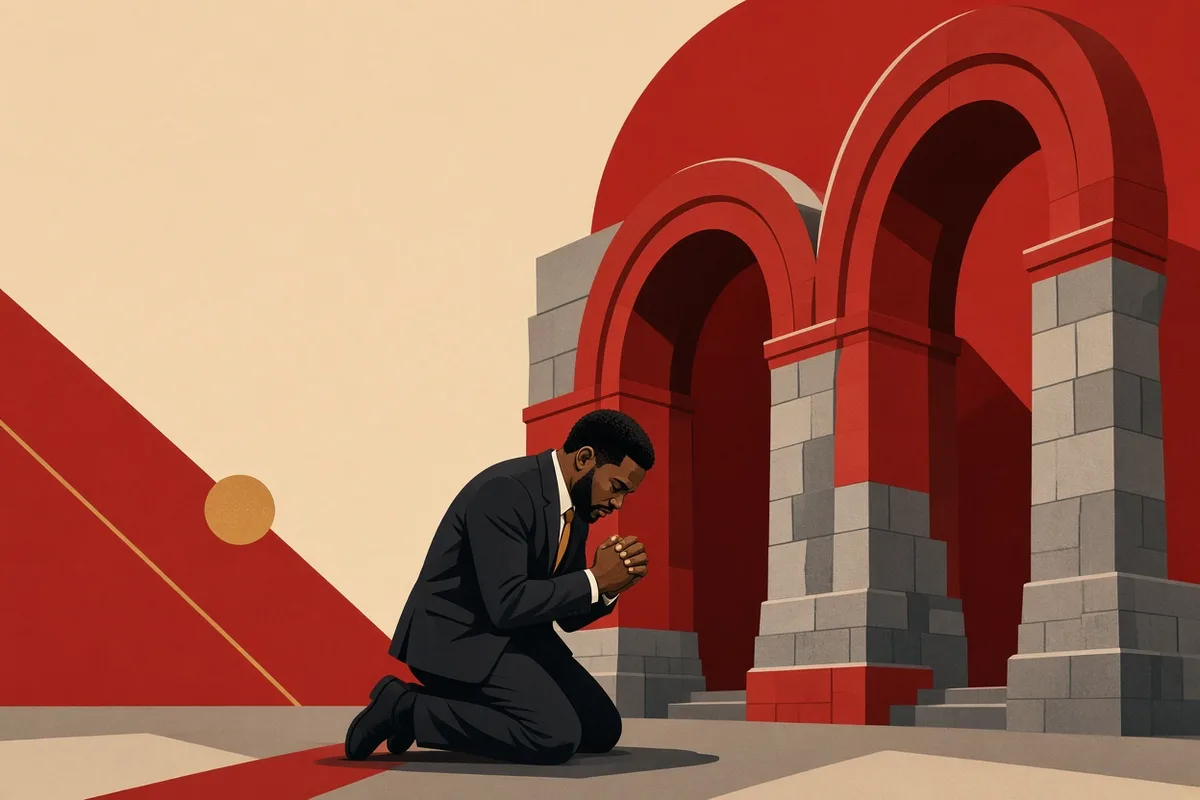



Toyohiko Kagawa Lives in Kobe Slum
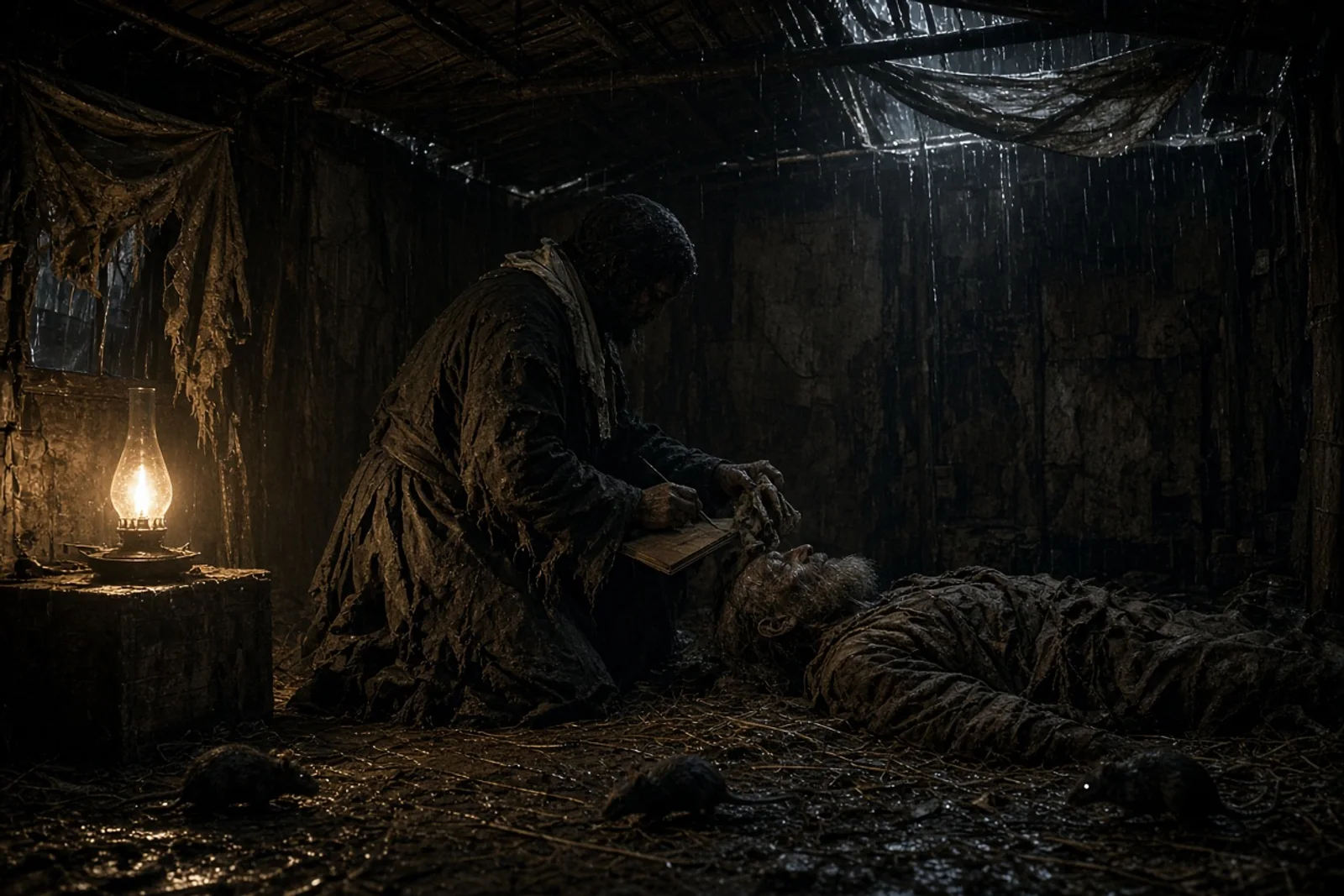
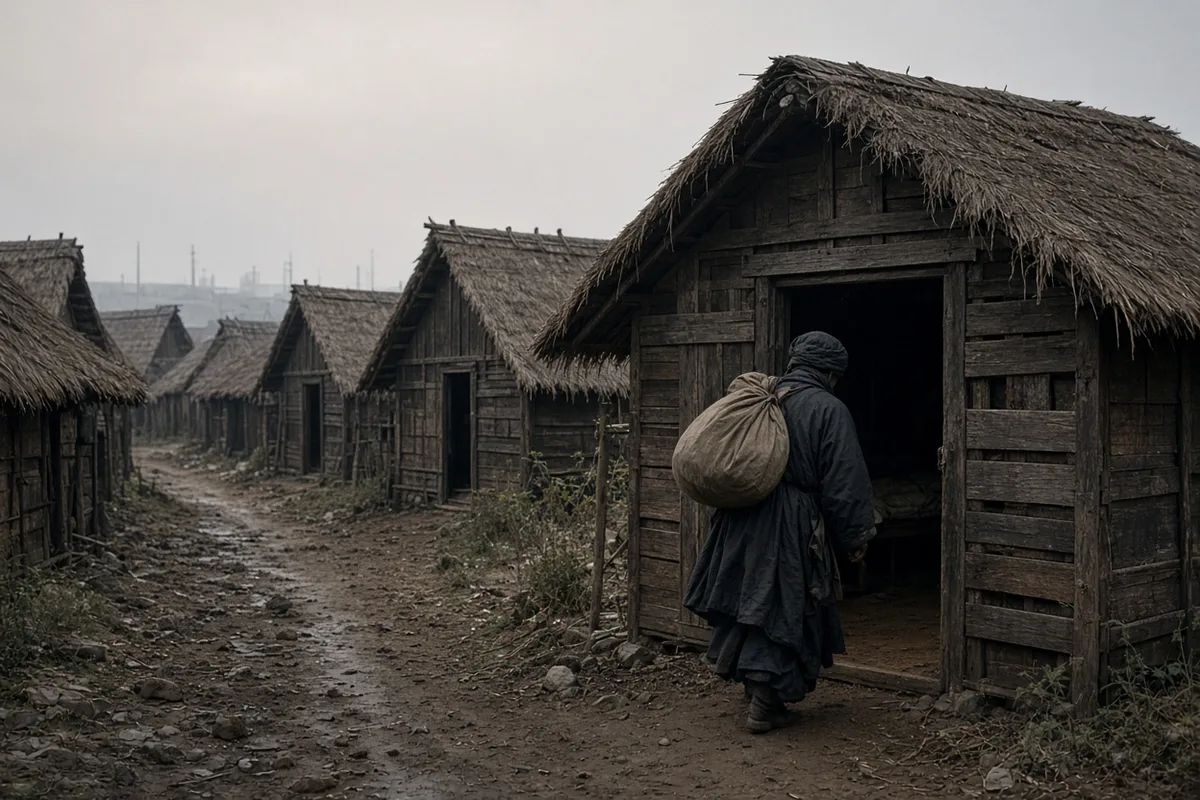
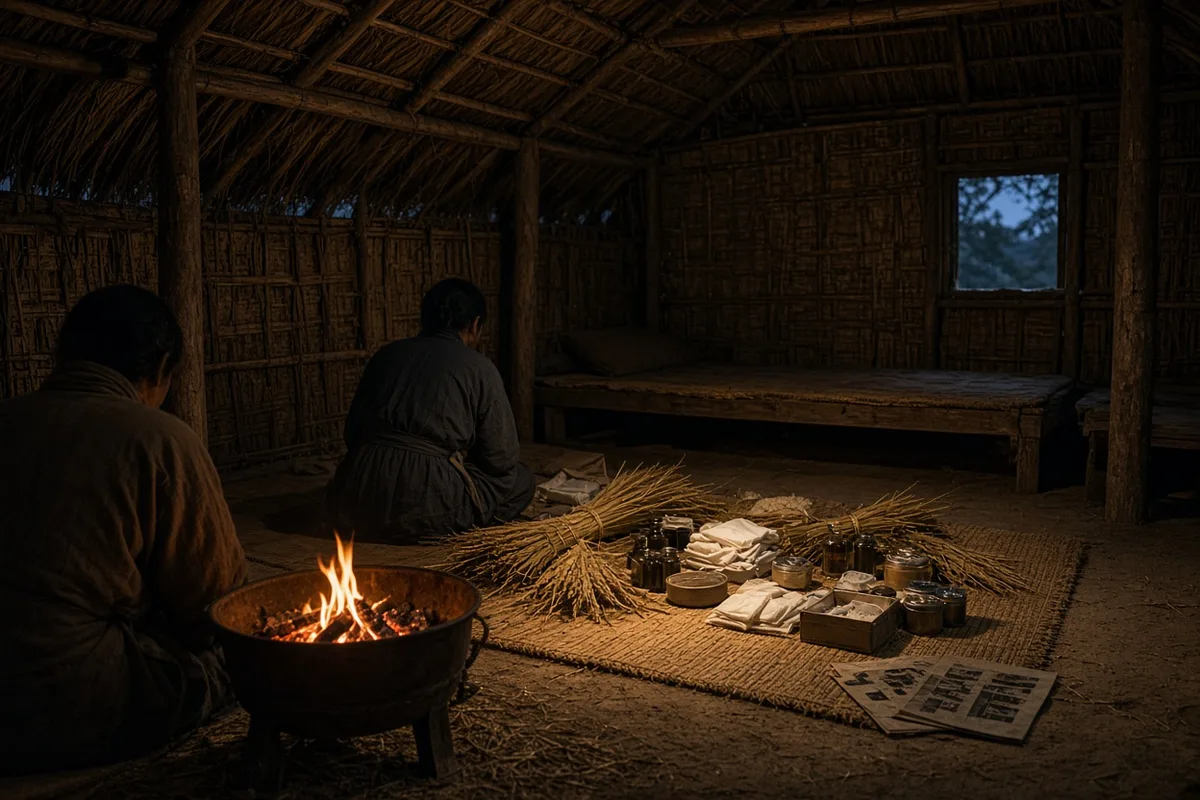
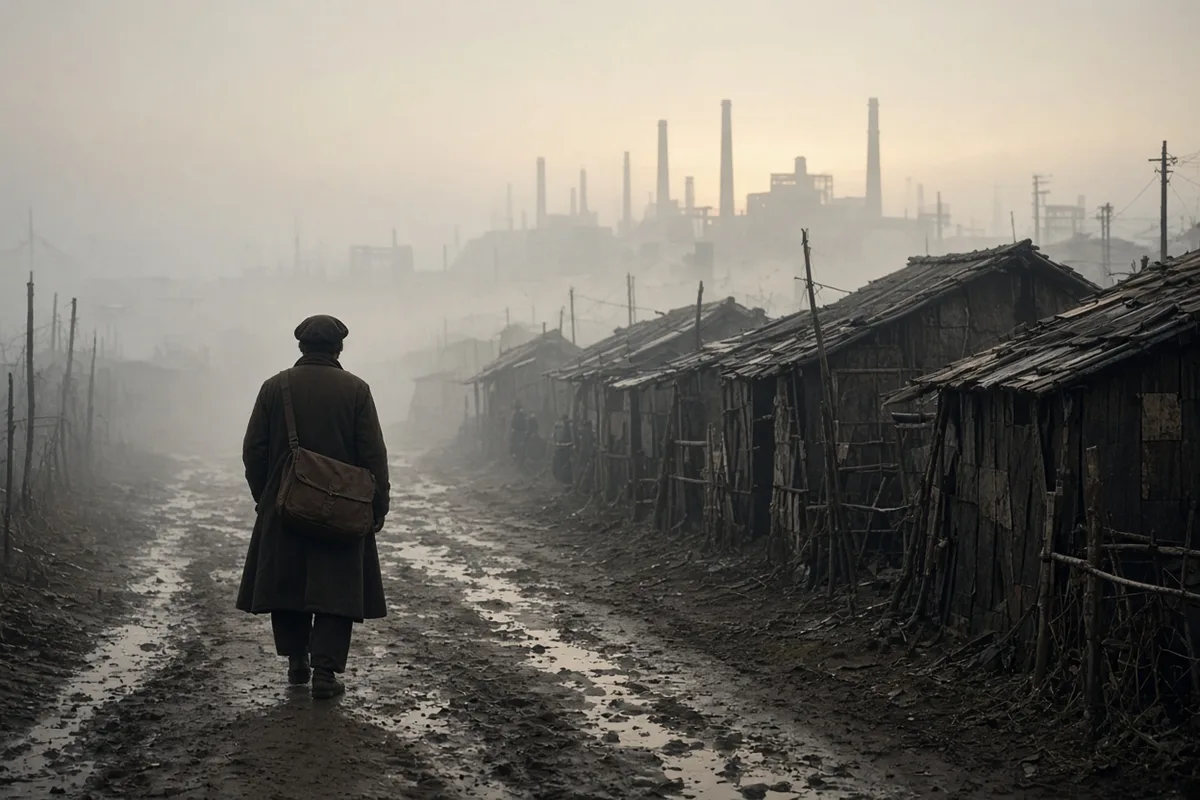
The rain had already soaked through my thin shirt when I first saw him drag the crate down the alley. He moved like someone who had never carried anything heavier than a book, shoulders hunched against the December wind off the harbor. The shed he stopped at leaned against the back wall of a fish-drying shed, its roof patched with newspaper. He set the crate down, wiped his hands on his trousers, and looked around as if he expected someone to tell him he had made a mistake.
I watched from the doorway of the next hovel. No one new came here unless they were running from something or selling something. This one looked too clean for either. He pulled a blanket from the crate, spread it on the dirt floor, and sat. Then he opened a small notebook and began writing by the light of a single stub of candle.
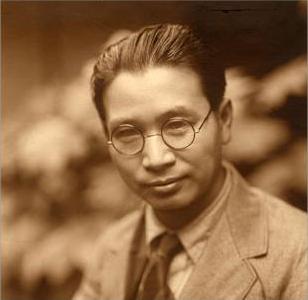
By morning the word had spread that a student from the theological school had moved into the empty shed. Some laughed. Others said he would last three days before the rats or the smell drove him out. I stayed away at first. The stipend he mentioned buying rice with was smaller than what most of us earned in a week hauling cargo, and I had no interest in watching another outsider try to save us.
He came to the common tap the second morning carrying two buckets. When the line moved slowly he waited without pushing. A boy with sores on his legs stood behind him. The student gave the boy his place and carried the water back for him. That evening he returned with a pot of thin porridge and set it on a flat stone near the tap. He did not call anyone. He simply ladled it into whatever bowls appeared.

I took some on the third night. The rice was undercooked and the salt was missing, but it was hot. He asked my name. I told him only the part I used in the slum. He wrote it down anyway. After that he began stopping at my doorway when he returned from the seminary. He never stayed long. He would ask what work was available that day or whether anyone had news of a family that had lost its room. Then he would leave before the lamps went out.
The shed had no door. At night the wind came straight through the gaps in the boards. He slept on the same blanket he had spread the first day, coat pulled over his chest. One morning I found him sitting outside with his eyes closed, hands on his knees, while two men argued over a stolen pair of shoes three feet away. He did not open his eyes until the shouting stopped.
By the second week the porridge pot had grown larger. He carried it himself from the seminary kitchen each evening. Sometimes a woman with a baby would appear after the men had eaten. He always saved a portion. The baby’s cough never improved, but the woman kept coming. One afternoon he asked me to help carry a second blanket to a family whose roof had collapsed. We walked three alleys over. The mother took the blanket without speaking. He thanked her as if she had done him a favor.

The seminary lectures continued. He left before dawn and returned after dark. On the days he missed the evening meal, the line at the tap grew shorter and voices rose faster. When he appeared again he carried extra rice and said nothing about the absence. I asked him once why he did not stay at the school where the rooms were dry. He answered that the poor could not come to him, so he had come to them. Then he asked whether the man two doors down had found work that week.
The infant mortality count was spoken of the way people speak of the tide. Everyone knew the number, no one repeated it aloud. When another child died he helped wrap the body and carried it to the edge of the district where the ground was soft enough to dig. He did not preach. He only said the name of the child once, as if fixing it in his own memory.
By spring the shed had become a place where messages were left. A man would stop and say a name and a street. Kagawa would write it down and later appear with whatever the family needed most that day. He still slept on the floor. The coat he had worn in December was thinner now, patched at the elbows with cloth from the same blanket.
One evening after the porridge was gone he asked whether anyone had paper or string. We found both. He tied small bundles of rice and handed them to the women with children. He told them to keep the string. It could be used again. Then he sat on the crate outside the shed and wrote in his notebook until the candle burned out.
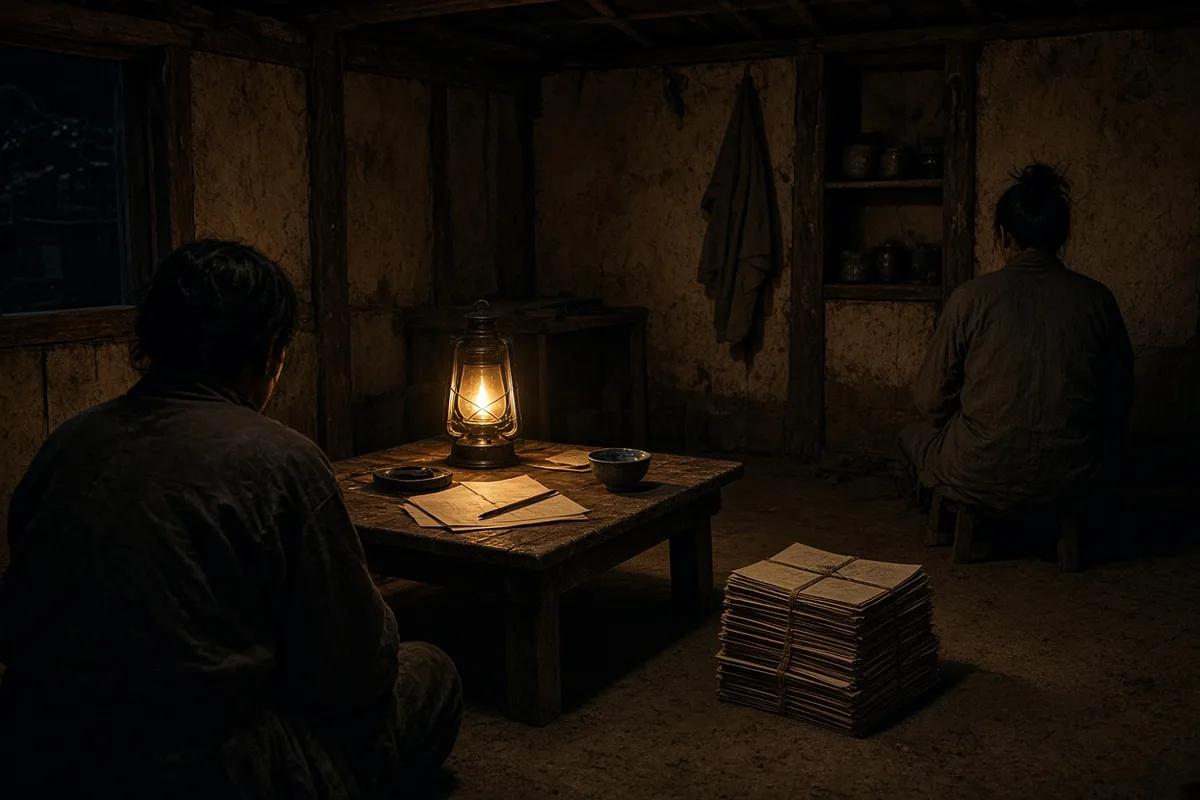
The following month he brought a second student with him. The newcomer stayed only one night before the coughing drove him back to the seminary. Kagawa remained. He never mentioned the other man again. When the seminary term ended he stayed through the summer, carrying water, writing names, and sleeping on the same blanket. The alley did not grow cleaner, but the line at the tap lengthened each evening and the voices stayed quieter.
Years later I heard he had left for America and then returned to organize cooperatives. The shed was torn down when the district was cleared. The stone where he set the pot remained for a time, half buried in new fill. I passed it once on the way to the docks and remembered the weight of the two buckets he had carried that second morning.
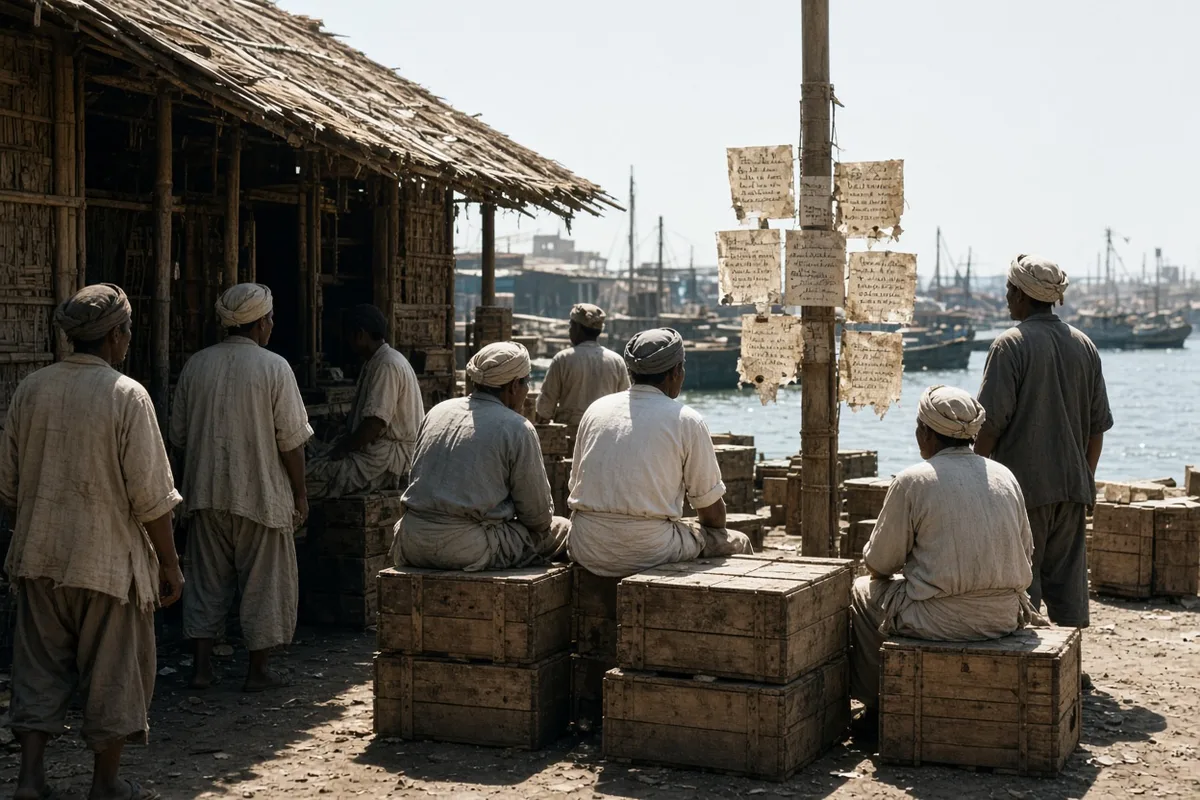
The stone had sunk deeper by the time the harbor widened for the first American freighters after the armistice. A man named Sato, who had once shared the second blanket, stopped me at the tap in 1921 and said Kagawa had written from Tokyo that the number of day laborers in the capital’s Yotsuya ward now stood at eleven thousand eight hundred and that he had opened a second shed there with two tatami mats and a ledger listing each family’s daily rice purchase. Sato read the letter aloud to the women who still brought bowls. One sentence stayed with me: “The poor teach the student more than the seminary ever will.” By then the original shed’s boards had been carted off for firewood during the winter of 1918, when the price of charcoal reached four sen a bundle.
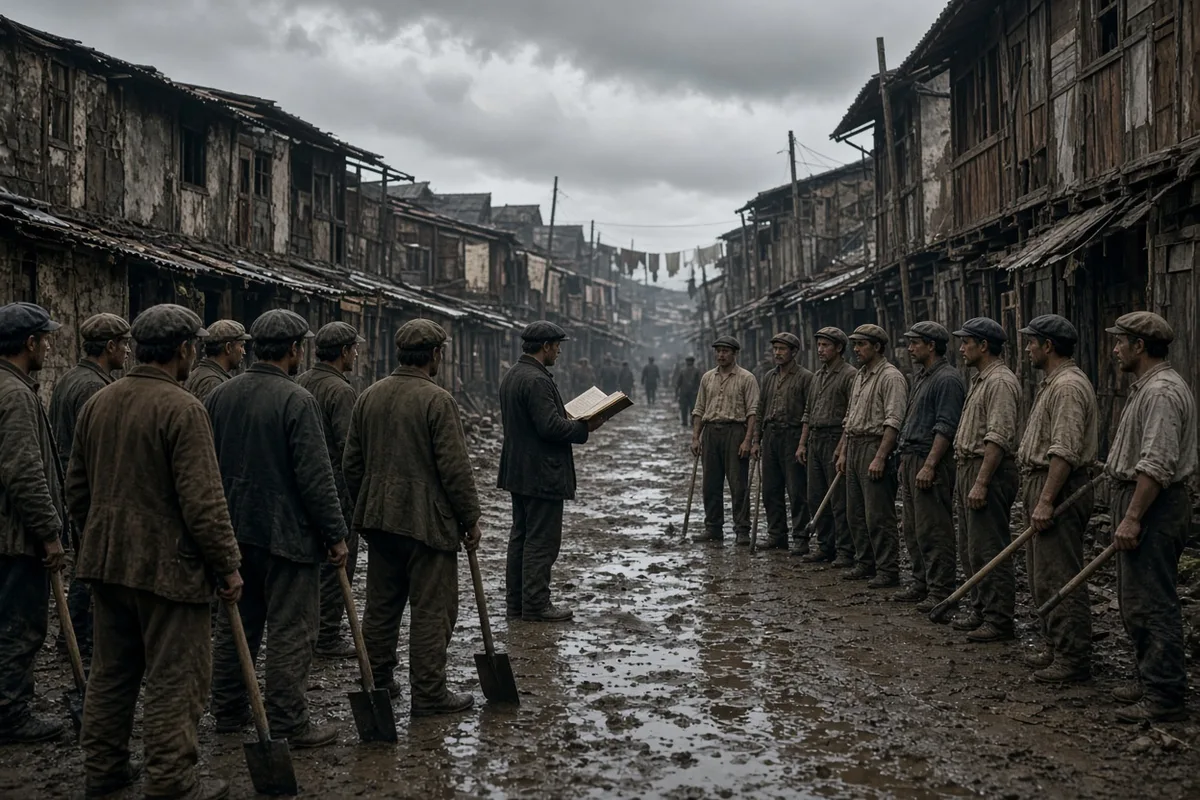
Kagawa returned to Kobe in March 1923 and rented a room two alleys east of the old site so he could finish the manuscript he called Across the Death-Line. The printer in Motomachi set eight thousand copies and sold them at thirty sen each. On the morning of 1 September the ground moved under the fish-drying sheds for forty-seven seconds. Kagawa walked the length of Shinkawa that afternoon counting collapsed roofs and wrote the figure 312 in his notebook before the aftershocks began. He spent the next eleven nights in a borrowed army tent distributing rice balls stamped with the mark of the newly formed Kobe Consumers’ Cooperative, whose first store opened on 15 October with a capital of 3,200 yen raised from dockworkers’ wages.
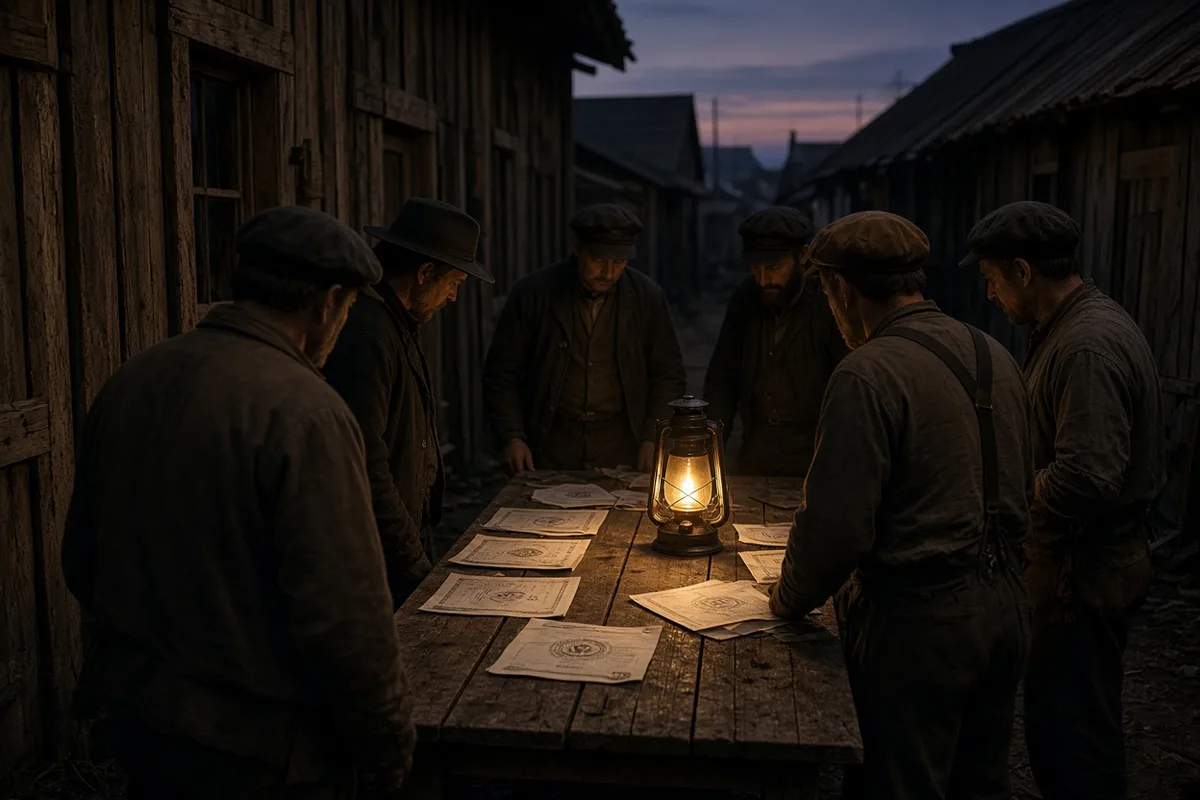
The cooperative ledger for 1924 records 4,872 members and a monthly turnover of 18,650 yen. Kagawa’s name appears on the cover as advisor, not director. He spent most days in the back room of the store writing letters to the city council asking for a public bathhouse. The request was granted in 1927 after he collected 1,146 signatures on a single sheet of paper that still exists in the municipal archive. The bathhouse stood at the corner of Shinkawa-dori and the old canal until the air raids of 1945.
When the war ended, Kagawa walked from the ruins of his Tokyo house back to Kobe and found the bathhouse foundation still intact beneath twenty centimeters of rubble. He organized the first postwar delivery of powdered milk on 3 November 1945, listing each recipient by name in a notebook whose pages are now held at the Kagawa Memorial in the city library. The entries run to 2,317 children. One page carries the marginal note, “The boy with the cough returned; gave extra can.” He kept that notebook until his death on 23 April 1960 at the age of seventy-two in a hospital room overlooking the Inland Sea. The death certificate lists the cause as pneumonia contracted during a final visit to a settlement house in Osaka.
The site of the original shed is now a narrow parking lot behind a convenience store on the reclaimed land east of the former canal. A bronze plaque set into the curb in 1980 gives only the dates 1909–1914 and the single sentence “Here lived Toyohiko Kagawa among the poor.” No one from the old alley remains, yet the stone that once held the porridge pot was unearthed during construction of the Hanshin Expressway in 1964 and moved to the garden of the Kagawa Memorial Library, where it sits beside a bench. On most afternoons an elderly volunteer from the local consumers’ cooperative sits there and answers questions from schoolchildren who have been assigned to copy the plaque’s text into their notebooks.
The last time I saw anyone connected to those years was in 1978, when a woman in her late sixties approached the stone and placed a small bundle of rice tied with string on its surface. She did not speak. She straightened the string so that the knot lay exactly in the center, then walked back toward the station without looking again at the stone or at the traffic that now passes where the tap once stood.
The woman’s bundle remained on the stone until a sanitation worker from the Hanshin Expressway maintenance crew removed it at 6:40 the next morning, placing it in a black plastic bag marked with the number 47 for the day’s collection route. That same week the Kobe Consumers’ Cooperative recorded its 1981 annual meeting at the Motomachi hall, where treasurer Masao Yoshida read aloud the entry from the 1924 ledger showing 4,872 members and noted that the current membership stood at 87,300 households across Hyogo Prefecture. Yoshida quoted Kagawa’s 1923 letter to the city council: “A bathhouse is not charity; it is the first right of a dockworker who returns covered in tar.” The cooperative’s minutes list the vote to fund a new memorial garden at the library as 312 to 19.
In 1994 the city library added a microfilm reader dedicated to the Kagawa papers, funded by a grant of 2.4 million yen from the Japan Consumers’ Cooperative Union. The reader sits on the second floor, serial number 03-112, and the first reel contains the 1909–1914 notebook with the line “The boy with the cough returned; gave extra can” underlined in red ink by an unknown hand. Library staff log shows 214 school groups visited the stone in the garden between April 1995 and March 1996, each group required to copy the plaque text and then answer a worksheet question on the number of children fed in the 1945 powdered-milk distribution.
The Hanshin earthquake of 17 January 1995 cracked the foundation under the convenience store parking lot but left the curb plaque in place. Restoration records from the Kobe municipal engineering office dated 12 March 1995 list the repair cost at 1.8 million yen, including replacement of the bronze lettering. The convenience store chain Lawson reopened the site on 3 June 1995; its daily sales log for that month records 1,462 customers, of whom 47 asked the clerk the meaning of the plaque. The clerk, a part-time university student named Rie Tanaka, answered by reading the sentence on the plaque from a printed card kept under the register.
By 2009 the Kagawa Memorial Library had digitized 47 of the 62 surviving notebooks. The digital archive entry for notebook 4 notes 312 names recorded between December 1909 and April 1910, with the occupation column listing “fish carrier,” “day laborer at pier 4,” or “none” for 189 entries. A volunteer transcriber, Hiroshi Sato, great-nephew of the man who read the 1921 letter at the tap, added a marginal comment on 8 October 2009: “The string on the rice bundles was always saved; my grandfather kept one until 1937.”
The parking lot expanded in 2012 when the convenience store added four electric-vehicle charging stations. Construction logs from Takenaka Corporation show the stone was covered with plywood for 47 days and then returned to its original position in the garden, now bordered by a low hedge of boxwood planted by the local Rotary Club chapter on 23 April 2013, the anniversary of Kagawa’s death. The club’s project report lists 28 members participating and a total of 14 cubic meters of soil moved.
On 14 March 2019 a delivery driver for the cooperative’s home-service route stopped his van at the curb outside the lot to check an address for a customer named Akiko Yamamoto, age 84, who had ordered powdered milk and rice. He stepped onto the curb, read the plaque aloud to himself, then placed a single printed receipt from that day’s delivery—showing 2.3 kilograms of rice and one 400-gram can of milk—on the stone before returning to the van. The receipt remained until rain at 19:20 washed the ink into the granite.
The final image preserved in the library’s oral-history file is a photograph taken on 11 November 2022 by volunteer guide Fumiko Endo, age 71. It shows Endo standing beside the stone at 14:17, holding a copy of the 1924 ledger page open to the line listing Kagawa as advisor, while two schoolchildren copy the plaque text into notebooks whose covers bear the cooperative’s blue wave logo. The photograph file name is IMG_4782 and the metadata records a shutter speed of 1/125 second.