



Two bicycle mechanics invented flight by trusting their own data
In 60 seconds
- Two unschooled Dayton bicycle mechanics solved controlled powered flight through patient observation, home-built instruments, and relentless iteration rather than a eureka moment.
- A household that prized reading and tinkering, plus a bicycle shop that taught balance and precision metalwork, shaped the temperament behind the work.
- They reframed the problem as control rather than lift or power, deriving wing warping from watching buzzards and treating the airplane like a bicycle a pilot steers.
- Three seasons of crashing and rebuilding gliders at Kitty Hawk, then a homemade six-foot wind tunnel testing roughly two hundred wing shapes, replaced bad published data with their own measurements.
- The December 17, 1903 flight of 120 feet in twelve seconds met near-total indifference; public and commercial acceptance arrived only after risky 1908 demonstrations in France and a near-fatal Army crash.
- Patent fights, Wilbur's death at forty-five, and a later rupture with their sister Katharine showed that vindication carried heavy personal and industrial costs.
The big idea
McCullough argues the airplane emerged from discipline, a supportive household, and willingness to fail repeatedly at Kitty Hawk, not from genius insight. By his account, invention is mostly unglamorous repeated labor, and sustained belief in one's own evidence is what moves history.
The book in brief
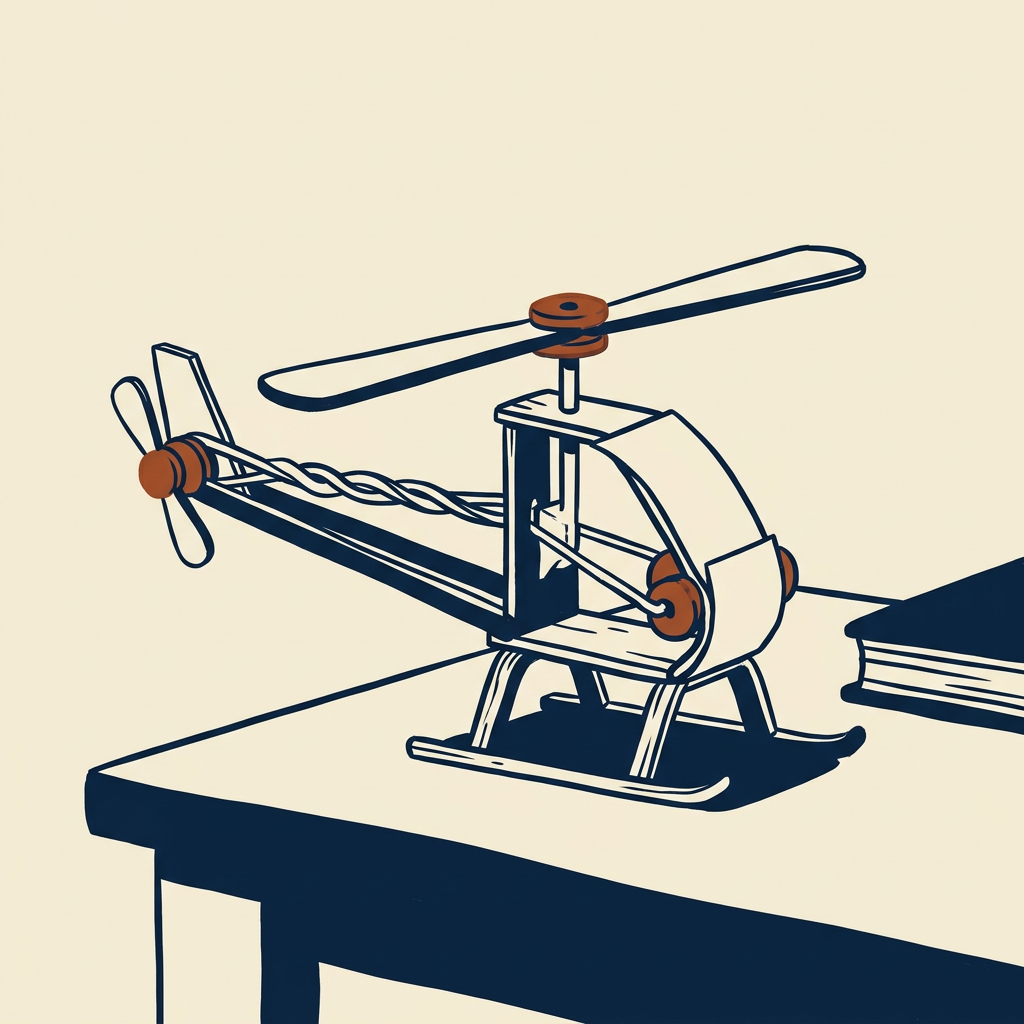
McCullough opens on Hawthorn Street in Dayton, where Bishop Milton Wright filled the house with books and refused to push his children toward money or status. A rubber-band toy helicopter he brought home when Wilbur was eleven and Orville seven set both boys building; neither finished college, Wilbur withdrew into voracious reading after a hockey injury, and Orville's printing and bicycle businesses taught precision, balance of unstable vehicles, and self-financed work. Sister Katharine kept the household running. Protestant habits against idle talk produced adults who tested every claim themselves.
By 1899 many experimenters chased bigger engines. Wilbur studied Lilienthal and corresponded with Chanute, then reasoned from buzzards twisting wingtips that the missing piece was lateral control. Wing warping—twisting wings oppositely with wires—plus the bicycle analogy of continual small corrections reframed flight as an actively flown vehicle. That choice led them to master unpowered gliding for years before adding power, a sequence rivals often skipped.
They chose Kitty Hawk for wind, soft sand, and privacy, camping through mosquitoes and storms from 1900. Each glider was rebuilt from the last; lift fell short of Lilienthal's tables, and the 1901 machine performed worse, yet they concluded the published data itself was wrong. Over winter they built a six-foot wind tunnel in the bicycle shop, testing roughly two hundred miniature wings on a homemade balance. The 1902 glider, now with a movable rear rudder, delivered hundreds of controlled glides and real piloting skill—the first reliable three-axis control.
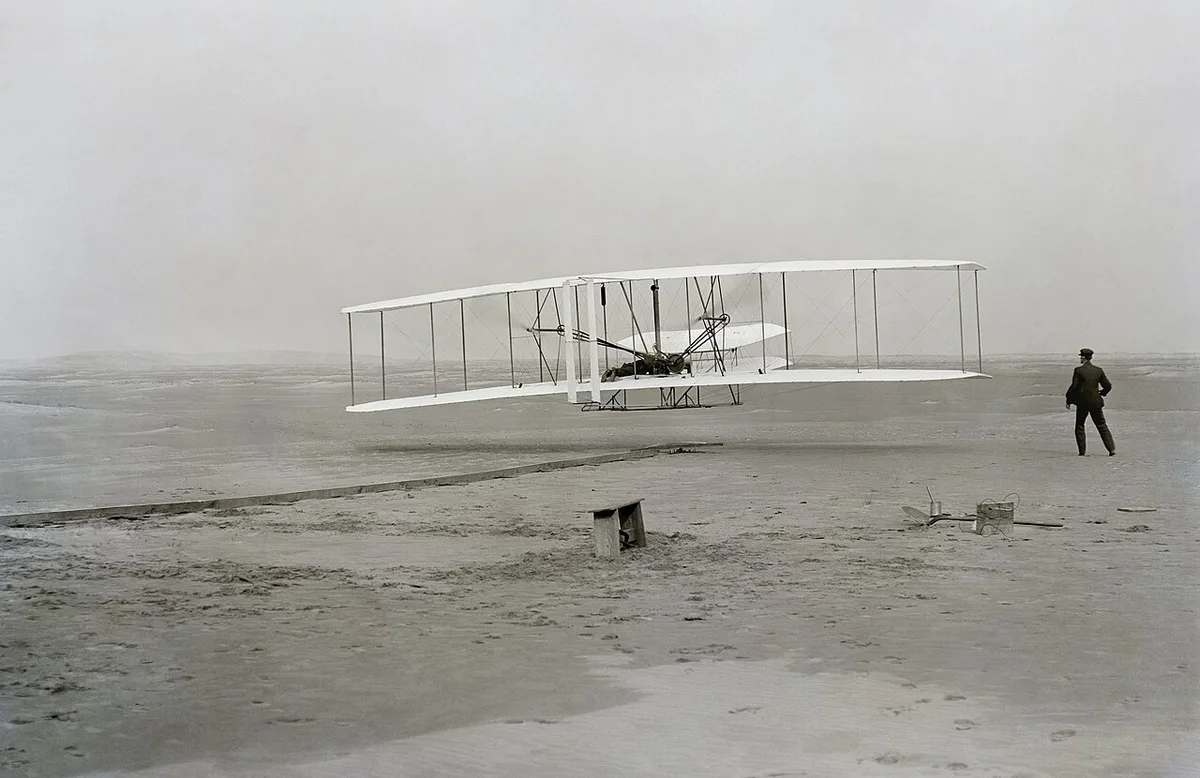
They built their own light engine with Charlie Taylor and hand-carved propellers treated as rotating wings. On December 17, 1903, Orville flew 120 feet in twelve seconds; Wilbur later reached 852 feet in fifty-nine seconds. A modest telegram and a local editor's shrug left the story nearly invisible. Fearing patent theft, they stayed vague and avoided demos. At Huffman Prairie they extended flights to thirty-nine minutes and twenty-four miles by October 1905, still almost unwatched.
Contracts forced public proof in 1908. Wilbur's controlled banks at Le Mans stunned European skeptics; the same month a propeller failure at Fort Myer killed passenger Lieutenant Selfridge and badly injured Orville. Acceptance, Army success, and French crowds followed only after that exposure. Patent wars against Glenn Curtiss then consumed the brothers; Wilbur died of typhoid in May 1912 at forty-five. Orville later broke with Katharine over her 1926 marriage, reconciled only at her 1929 deathbed, and fought the Smithsonian until 1942 over Langley's Aerodrome. The book closes on an undemonstrative family culture that made the invention possible and its aftermath costly.
Context
David McCullough's 2015 narrative recovers the Wrights from myth by building the story from letters, diaries, and local newspapers. It mattered because it showed invention as methodical labor rather than a single flash of genius, aimed at readers who knew only the Kitty Hawk outline and at engineers curious about systematic trial and error.
The key ideas
1
A household built for curiosity
Success began less with talent than with a home that rewarded relentless tinkering and reading over conventional ambition.
- BBishop Milton WrightFilled the house with books; prized independence over money or status
- WWilburHockey injury led to years of intense home reading instead of Yale
- OOrvillePrinting then bicycle shop taught precision and self-finance
- KKatharineOberlin graduate who ran the household and later public affairs
Bishop Milton Wright, an itinerant minister who respected intellectual independence, stocked the Hawthorn Street house with books and did not steer his children toward status or money. The family's Protestant discipline against tobacco, alcohol, and idle talk, plus the habit of reading newspapers and encyclopedias aloud, produced adults who approached every problem quietly and refused untested claims.
Neither brother finished college. After a teenage hockey injury to his face, Wilbur withdrew for years and read voraciously at home instead of pursuing Yale. Orville ran a printing business, then the bicycle-repair and manufacturing shop that taught both men precision metalwork, the balance of an inherently unstable moving vehicle, and how to operate without investors or debt.
Katharine, an Oberlin graduate and schoolteacher, kept the household functioning and later handled public and financial affairs. McCullough treats this environment as the real starting condition: invention here is the output of a particular temperament and household, not a spark of isolated genius.
In practice: When Wilbur was eleven and Orville seven, the bishop brought home a rubber-band-powered toy helicopter; both boys built their own versions and kept building.

2
Control was the unsolved problem
The Wrights succeeded partly because they identified control, not lift or power, as the real unsolved problem of flight.
Rivals' focus
Bigger engines and wings, hoping stability would appear on its own
Wrights' focus
Lateral control via wing warping, learned like riding an unstable bicycle
By 1899 well-funded rivals such as Smithsonian secretary Samuel Langley were still adding bigger engines and wings, hoping stability would follow. Wilbur wrote the Smithsonian for literature, studied Lilienthal's gliders, and corresponded with Octave Chanute as an informal mentor.
Watching buzzards, he saw they regained balance in gusts by twisting wingtips. From that the brothers derived wing warping: wires twisting the wings in opposite directions to roll left or right—the rough equivalent of later ailerons. Wilbur's letter observation held that a person could fly by learning to balance and steer the way a bicycle rider does, through continual small corrections rather than inherent stability.
That bicycle-shop analogy reframed the entire task. They were not building a passively stable platform but a vehicle a trained operator would actively fly. The reframing dictated every later choice, including years of unpowered gliding before any engine.
In practice: Rivals skipped prolonged glider practice and often paid for it in fatal crashes; the Wrights refused to add power until they could already control the airframe.
3
Three seasons of deliberate failure
Willingness to test, crash, and rebuild gliders for three consecutive seasons before attempting powered flight was the actual mechanism of their success.
Wilbur wrote the U.S. Weather Bureau for a site with steady strong winds, soft sand, and privacy from reporters; they settled on Kitty Hawk and began shipping gliders by rail and boat in 1900. They camped in primitive conditions, fighting mosquitoes, storms, and isolation without telephone or regular mail.
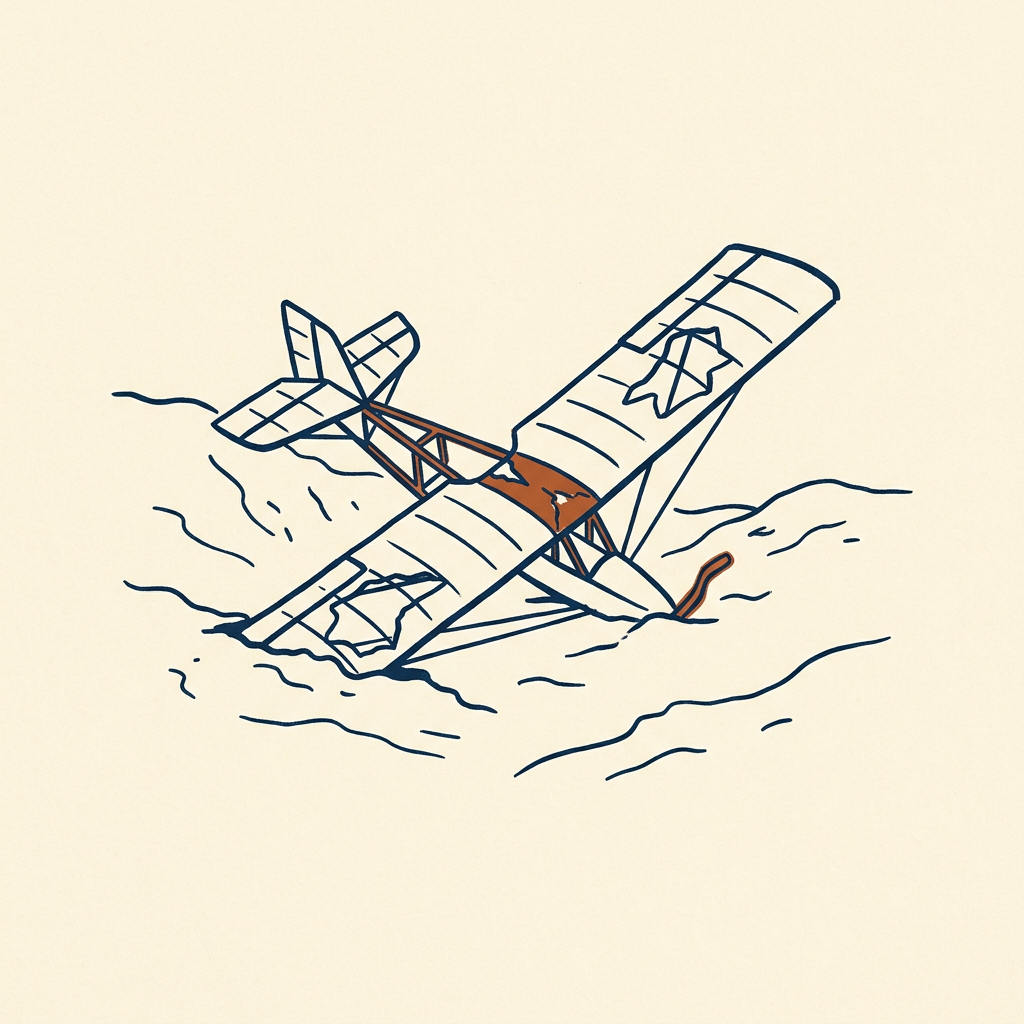
Each season's machine was rebuilt from the previous year's failures. The 1900 glider produced far less lift than Lilienthal's tables predicted. The larger 1901 glider performed even worse, prompting Wilbur's private remark that no one would fly for a thousand years—a rare despair McCullough flags because it did not stop them.
Instead of quitting, they decided the published aerodynamic data itself must be wrong, a conclusion most contemporaries would not have dared against an authority like Lilienthal. Progress came from trusting direct measurement over established tables, then acting on that distrust systematically. By 1902, with a movable rear rudder added to fix adverse yaw from wing warping, they logged hundreds of controlled glides, some over six hundred feet, becoming arguably the two most experienced glider pilots on earth before adding a motor.
In practice: The 1902 redesign, informed by their own measurements rather than Lilienthal, finally gave repeatable climb, turn, and recovery from unwanted banks.
4
The shop-built wind tunnel
Their decisive advantage was replacing borrowed theory with their own small-scale, quantified experiments.
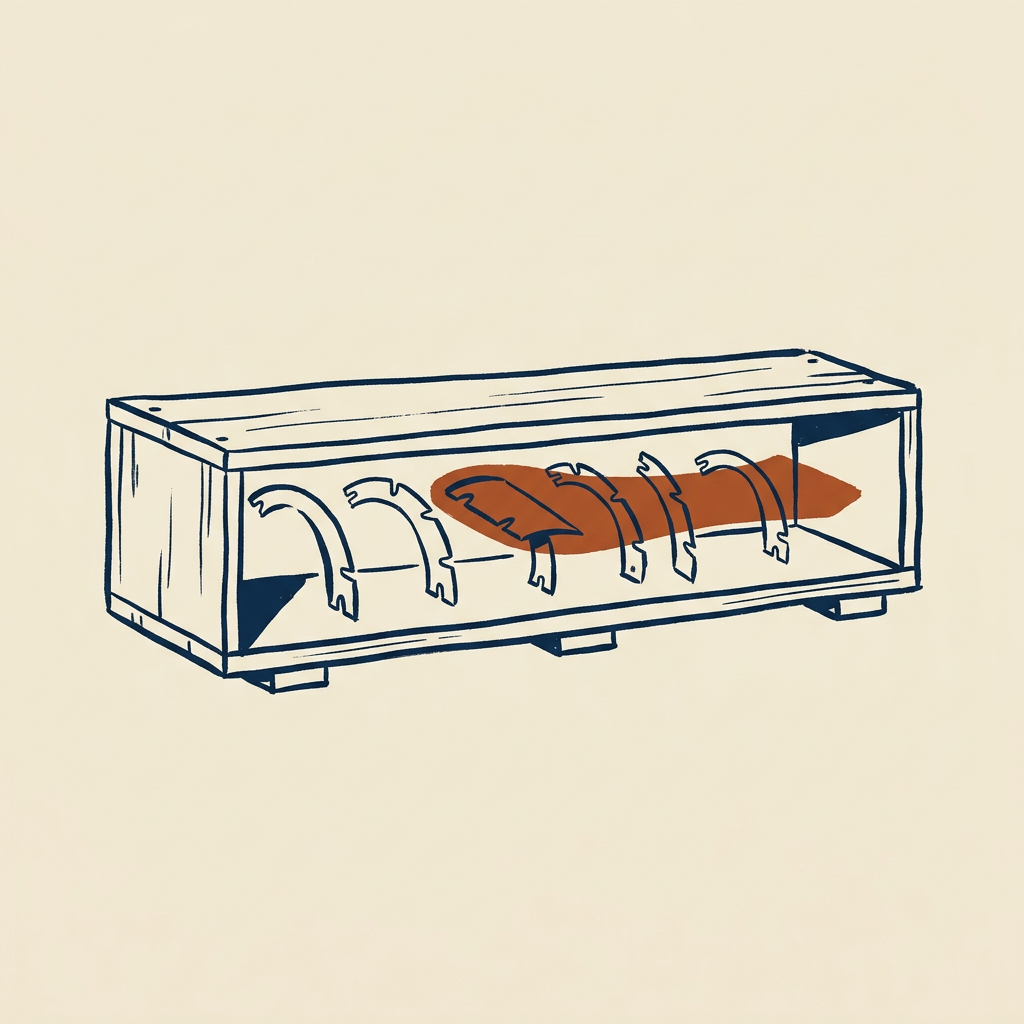
Frustrated by the gap between tables and reality, the brothers built a six-foot wooden wind tunnel in the back of the bicycle shop over the winter of 1901–1902. They cut roughly two hundred miniature wing shapes from hacksaw blades and sheet metal and mounted them on a homemade balance that measured lift and drag at once.
The work was repetitive and unglamorous, done while the shop still had to repair and sell bicycles to pay bills. Neither brother held an engineering degree, yet they isolated variables, repeated trials, and recorded notebook data exact enough to impress later aeronautical engineers.
McCullough treats the tunnel as the intellectual center of the enterprise, in some ways more important than Kitty Hawk, because it produced the first reliable aerodynamic coefficients anyone had—data whose variants stayed useful for years. It told them which curvature, aspect ratio, and camber gave the best lift-to-drag ratio, information no competitor possessed.
In practice: The 1902 glider built from those tunnel numbers became the first aircraft with reliable three-axis control, the exact capability Langley and others still lacked.

5
The flight nobody noticed
The first successful powered flight changed nothing immediately because the brothers' caution and public skepticism kept the achievement almost invisible.
With glider control proven, they built a gasoline engine themselves—helped by mechanic Charlie Taylor—because no manufacturer offered one light enough, and they hand-carved two wooden propellers using a calculation that treated each as a rotating wing rather than a simple screw.
On the cold morning of December 17, 1903, at Kill Devil Hills, Orville flew the Wright Flyer 120 feet in twelve seconds—the first sustained, controlled, powered flight of a heavier-than-air machine with a pilot. Wilbur later covered 852 feet in fifty-nine seconds before a gust damaged the machine.
What followed was near silence. They sent a modest telegram; a Dayton editor declined the story as too brief; a garbled account flickered in a few papers and died. No ticker-tape, no government interest, no investors. Fearing patent theft, the brothers gave deliberately vague statements and refused demonstrations for years, protecting the legal claim while feeding public disbelief that they had flown at all. Historical significance and public recognition, McCullough shows, are not the same thing.
In practice: They spent the next five years having to prove, almost from scratch, what they had already done on the sand.
6
Quiet years at Huffman Prairie
Turning a brief unstable hop into a genuinely useful flying machine required years of undramatic refinement that mattered more than the original breakthrough.
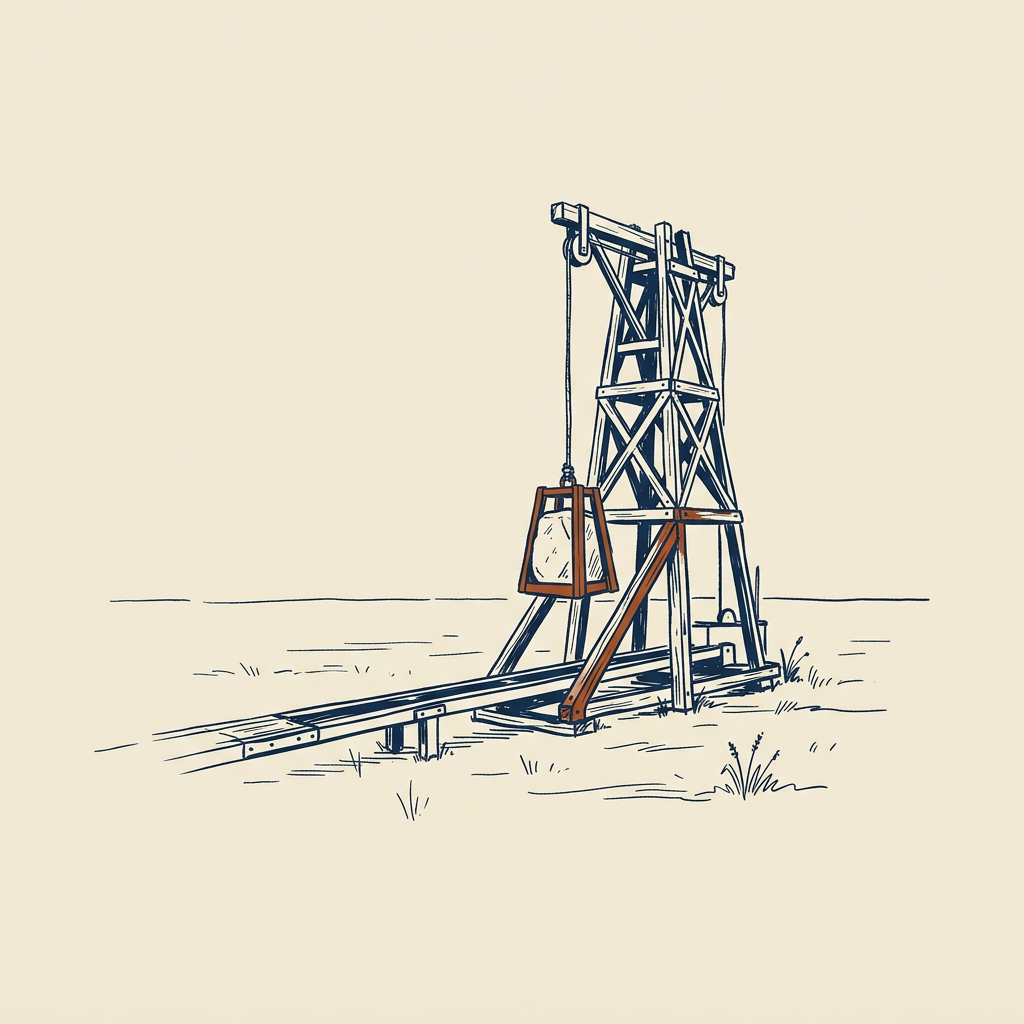
After 1903 they worked at Huffman Prairie, a cow pasture near Dayton rented from a local banker. Weaker winds than Kitty Hawk forced further invention, including a catapult that used a falling weight for takeoff momentum.
Between 1904 and 1905 they stretched flight times from tens of seconds to, by October 1905, thirty-nine minutes and twenty-four miles in one flight—genuine mastery rather than a lucky first attempt. Almost no one watched: a few neighbors, local reporters who did not grasp what they saw, and one Chicago beekeeper-journalist, Amos Root, who published an admiring note in a trade magazine.
Secrecy protected patents but nearly cost them priority credit. European flyers such as Santos-Dumont made shorter, less controlled, yet heavily publicized hops that some papers mistook for the first true powered flights. McCullough's lesson is that solving the technical problem and persuading a skeptical public are separate jobs; the Wrights had postponed the second.
In practice: Only after years of private mastery did contracts finally force them into the open in 1908.
7
Proof required public risk
They won public and commercial acceptance only after flying in full view of skeptical crowds, and the risk of that exposure nearly killed one of them.
Le Mans, August 1908
Wilbur's controlled banks convert European doubt into front-page belief
Fort Myer, Sept 17 1908
Propeller failure kills Lt. Selfridge and badly injures Orville
By 1908 contracts with the U.S. Army and a French syndicate demanded demonstration flights, ending years of secrecy. Wilbur went to Le Mans in August; a doubtful European aviation community expected an American bluff to collapse.
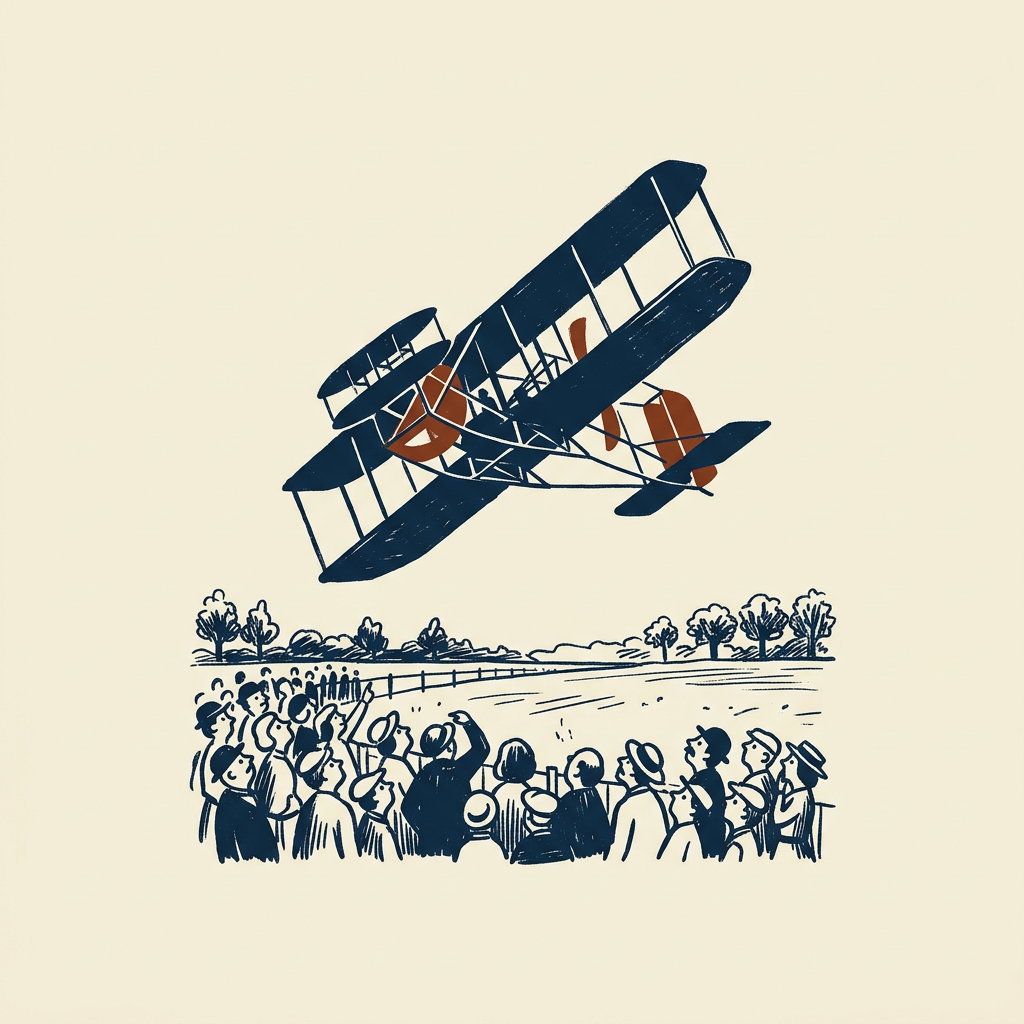
His first short flight—tightly banked and fully controlled—stunned experienced French pilots. Within days the flights were front-page news across Europe; by year's end thousands had watched, locking in the Wrights' priority. The same month, at Fort Myer, Virginia, Orville's Army trials ended when a propeller failure crashed the machine, killing passenger Lieutenant Thomas Selfridge—the first powered-airplane fatality—and seriously injuring Orville.
McCullough sets the French triumph beside the Virginia disaster to show how thin the margin remained five years after Kitty Hawk. Orville recovered to finish the Army trials in 1909; Katharine crossed the Atlantic to nurse him and later joined Wilbur in France, becoming a figure of note herself. Public belief, contracts, and money arrived only after the brothers accepted the exposure they had long avoided.
In practice: Even a solved technical problem, on this account, still needed a costly visible act of proof before society would act on it.

8
The cost of patents and credit
Winning credit and money for the invention consumed the brothers in litigation that damaged health and, some later argued, the pace of American aviation.
From 1909 through 1912 the Wrights fought chiefly Glenn Curtiss, who used ailerons rather than wing warping. They claimed their patent covered the broader principle of controlled banking regardless of mechanism and largely won in American courts.
The fight ate time, money, and goodwill. McCullough notes with ambivalence the later historical argument that the litigation, however legally grounded, slowed American aviation relative to Europe, where rival designs multiplied without the same constraint. Wilbur handled most legal strategy himself, traveling between depositions, meetings, and the Dayton factory until exhaustion.
In May 1912 he contracted typhoid, likely from contaminated food or water, and died within weeks at age forty-five, ending the partnership that had defined both lives. Orville ran the Wright Company until selling it in 1915, then turned to research and to defending their reputation, including a long bitter dispute with the Smithsonian over its promotion of Langley's failed Aerodrome. Persistence that built the airplane also produced years of draining conflict once the invention became property.
In practice: The Smithsonian only formally acknowledged the 1903 Flyer's priority in 1942; the original machine reached the institution after Orville's death in 1948.
9
Fame and a family rupture
Late-life fame reshaped the family in ways that were not simply triumphant, ending in estrangement between Orville and Katharine.
- 1926Katharine marries; Orville refuses the wedding and cuts her off
- 1929Orville visits only as she is dying of pneumonia
- 1942Smithsonian finally acknowledges 1903 Flyer priority
- 1948Orville dies; original Flyer reaches the Smithsonian
Katharine had managed correspondence, hosted visitors, and traveled with her brothers through the hardest public years. In 1926 she married Henry Haskell, a Kansas City editor—a choice Orville strongly opposed and never forgave. He refused the wedding and stayed estranged until she was dying of pneumonia in 1929, when he finally visited her deathbed.
McCullough treats the break as evidence that the family's identity had been organized entirely around the brothers' shared project; Katharine's independent step registered to Orville as betrayal of the arrangement that had made the work possible. Orville lived until 1948, increasingly private, serving on aeronautical boards and keeping the cycle-company building and home as informal historic sites.
Both brothers had wanted privacy and ordinary life even as they became world-historical figures; wealth and fame left their habits, dress, and manner unchanged. McCullough's closing judgment, delivered through detail rather than proclamation, is that the same stubborn undemonstrative culture that enabled the invention also made its aftermath difficult for everyone involved.
In practice: The Smithsonian dispute ended only in 1942; the original Flyer went to the institution after Orville died in 1948.
Key terms
- wing warping Twisting the wings in opposite directions with wires so the aircraft rolls left or right—the Wrights' solution to lateral control.
- three-axis control Ability to climb, turn, and recover from a bank in a repeatable, learnable way; first achieved reliably on the 1902 glider.
- Lilienthal's tables Published lift data the Wrights found wrong in practice and replaced with their own wind-tunnel measurements.
- Kitty Hawk / Kill Devil Hills Outer Banks site chosen for wind, soft sand, and privacy; scene of the 1900–1902 gliders and the 1903 powered flights.
- Huffman Prairie Dayton cow pasture where 1904–1905 flights turned the first hop into practical, long-duration flying.
- falling-weight catapult Takeoff assist invented for the weaker winds at Huffman Prairie.
- Wright–Curtiss patent fight Years of litigation over whether the Wright patent covered all controlled banking, not just wing warping; consumed Wilbur and slowed U.S. aviation relative to Europe, some historians argue.
What to do
- Remeasure secondhand data yourself with a cheap small-scale test before trusting it.
- Break the hard problem into dozens of low-cost repeatable trials before adding engines, money, or public risk.
- Schedule separate time and exposure to prove the result to skeptics; solving it and being believed are different jobs.
- Keep a simple notebook of variables and results the way the brothers logged tunnel and glide data.
- Protect the work without letting secrecy erase the later public demonstration the world still requires.
Questions to think with
- Where are you still trusting published tables or expert claims you have never remeasured yourself?
- Have you sequenced learning control before adding power and cost, or are you skipping straight to the dramatic step?
- What would a three-season cycle of deliberate failure look like on your current problem?
- When does patent-style secrecy protect the work, and when does it simply delay the proof others need?
- Which household or shop habits quietly shape whether you persist after the data turn against you?
The other side
McCullough's narrative is a triumph of craft but a modest historical argument: it leans heavily on the family's own curated letters and reminiscences without pushing hard on their strategic shading during the secrecy years, stays thin on the actual aerodynamics and wind-tunnel numbers, gives the morally ambiguous patent war comparatively brief treatment despite later claims it slowed American aviation, and largely ignores labor, race, Dayton's industrial context, and competing scholarly claims such as Gustave Whitehead's disputed 1901 flight.
Who it's for
Readers who want narrative history built from letters and diaries, engineers curious about how systematic trial and error actually yields breakthroughs, and anyone who knows only the Kitty Hawk legend and wants the fuller human cost and method behind it will get the most from the complete book.