



U.S. Dam Removals Aim to Restore Salmon
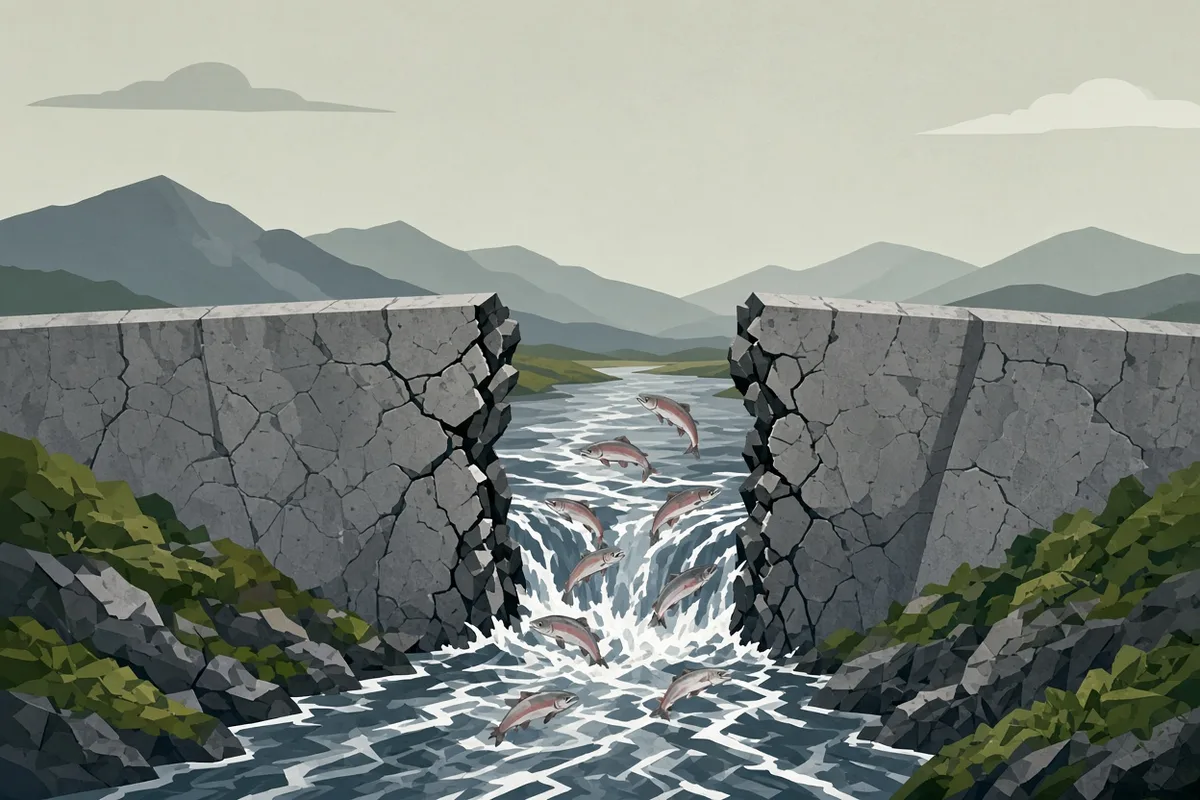
Across the United States, efforts to restore depleted salmon populations are increasingly centered on removing or redesigning dams and improving fish passage. On Maine’s Narraguagus River, an ice-control dam has been replaced with a nature-like series of pools intended to protect nearby communities while allowing Atlantic salmon and other migratory fish to reach spawning grounds; only about 25 wild adult salmon now return there annually, compared with far larger historical runs. Dam removals on Washington’s Elwha River and the Klamath River likewise reflect a broader shift away from the extensive dam building of the 20th century, with Indigenous tribes playing a leading role in restoring ecosystems and traditional lifeways. In the Pacific Northwest, hatcheries and seasonal salmon viewing programs support public awareness and conservation, while the Army Corps of Engineers transports juvenile fish downstream from Snake River dams to improve their chances of reaching the ocean. Together, these projects illustrate both the scale of salmon declines and a growing emphasis on habitat restoration, though recovery remains difficult after decades of dams, logging, and other environmental disruption.