


Vibia Perpetua Faces the Arena with Faith
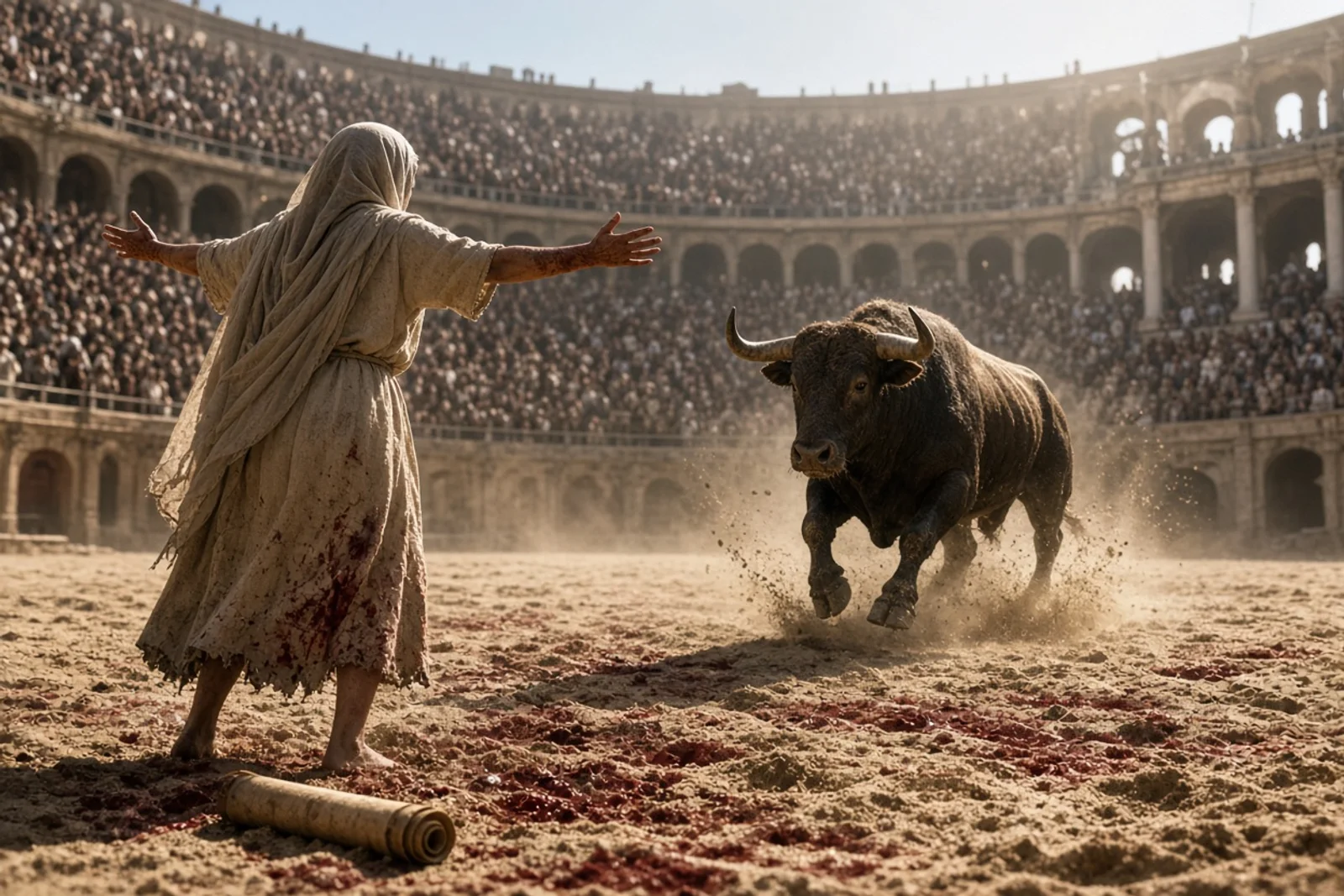
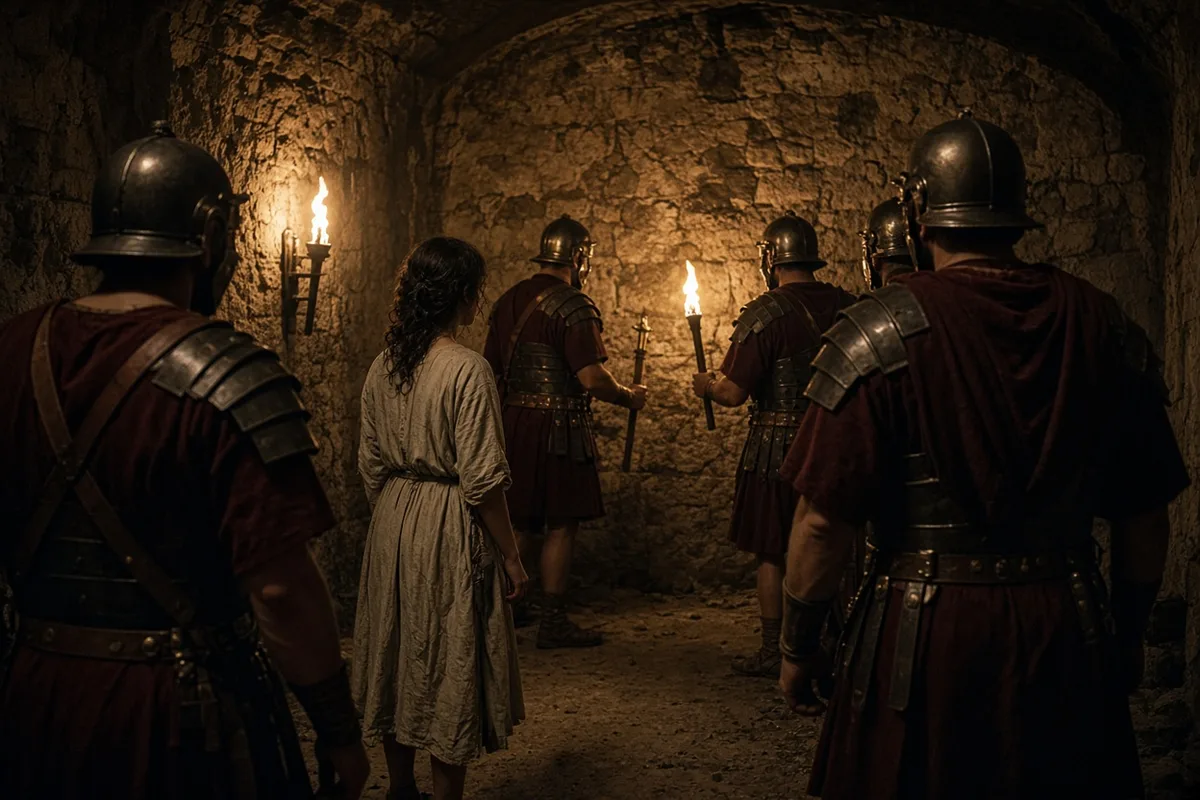
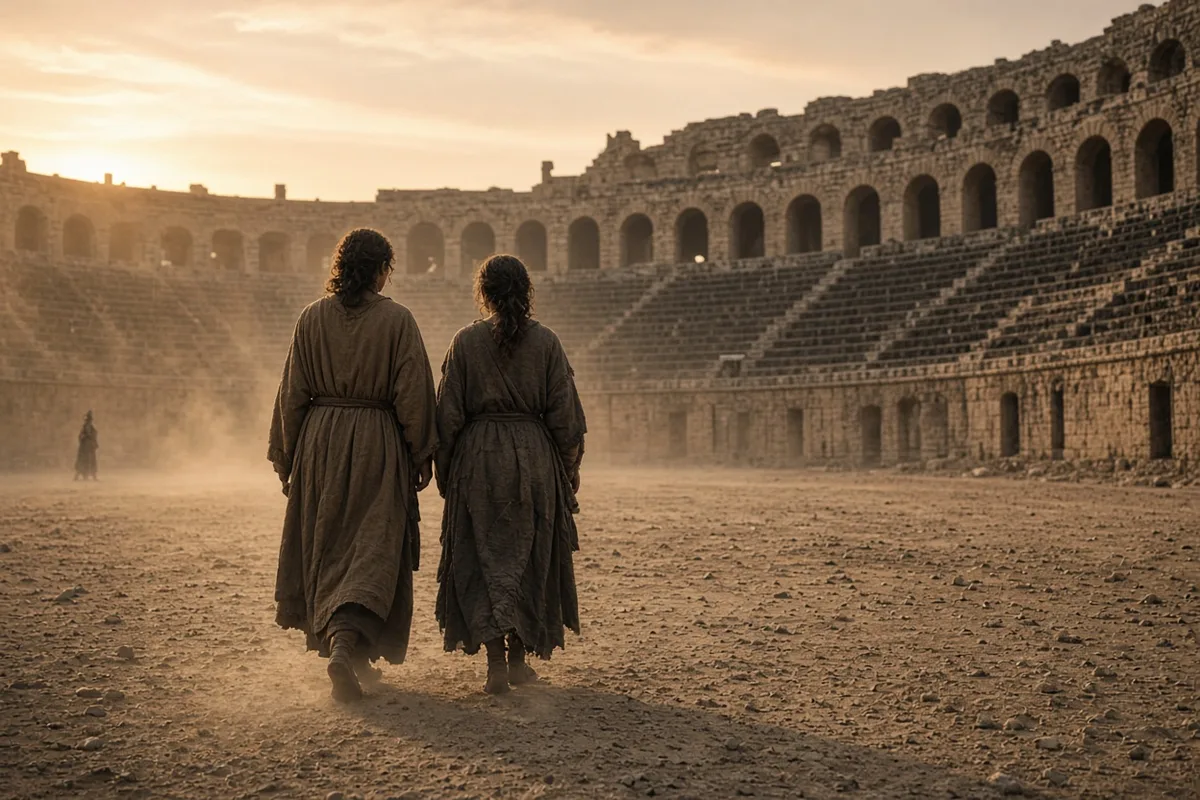
The sand stuck to my palms where I gripped the stone ledge. Below, the iron gate groaned upward on its chains, and the first of them stepped into the light. Perpetua walked at the front, her tunic already torn at the shoulder from the guards’ hands. Felicity followed close, her belly still bound from the birth two days before. The crowd’s roar hit them like a wall of heat.

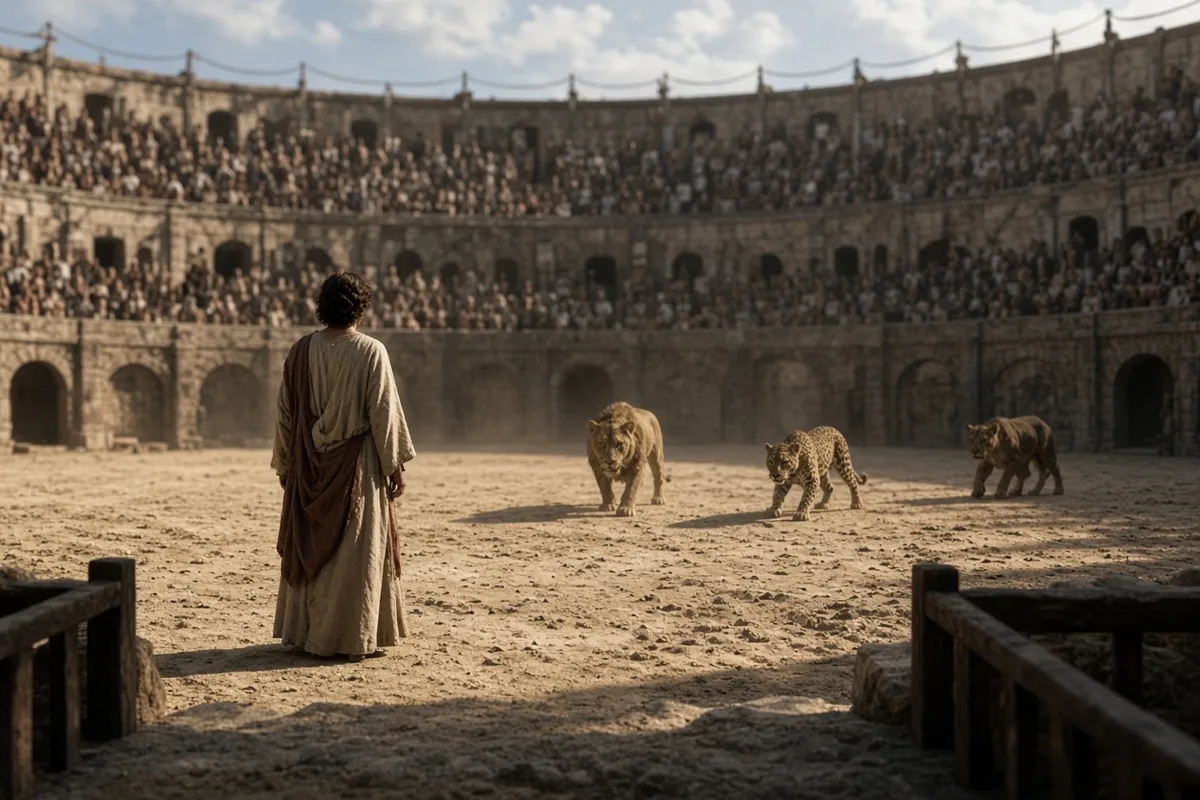
I had watched the same gate open for bears and leopards the hour before. Now the noise changed. People leaned forward. Some shouted names they had learned in the streets. Others called for the beasts to be loosed at once. I stayed low on the bench, the way my brother had taught me when we came to these games as children.
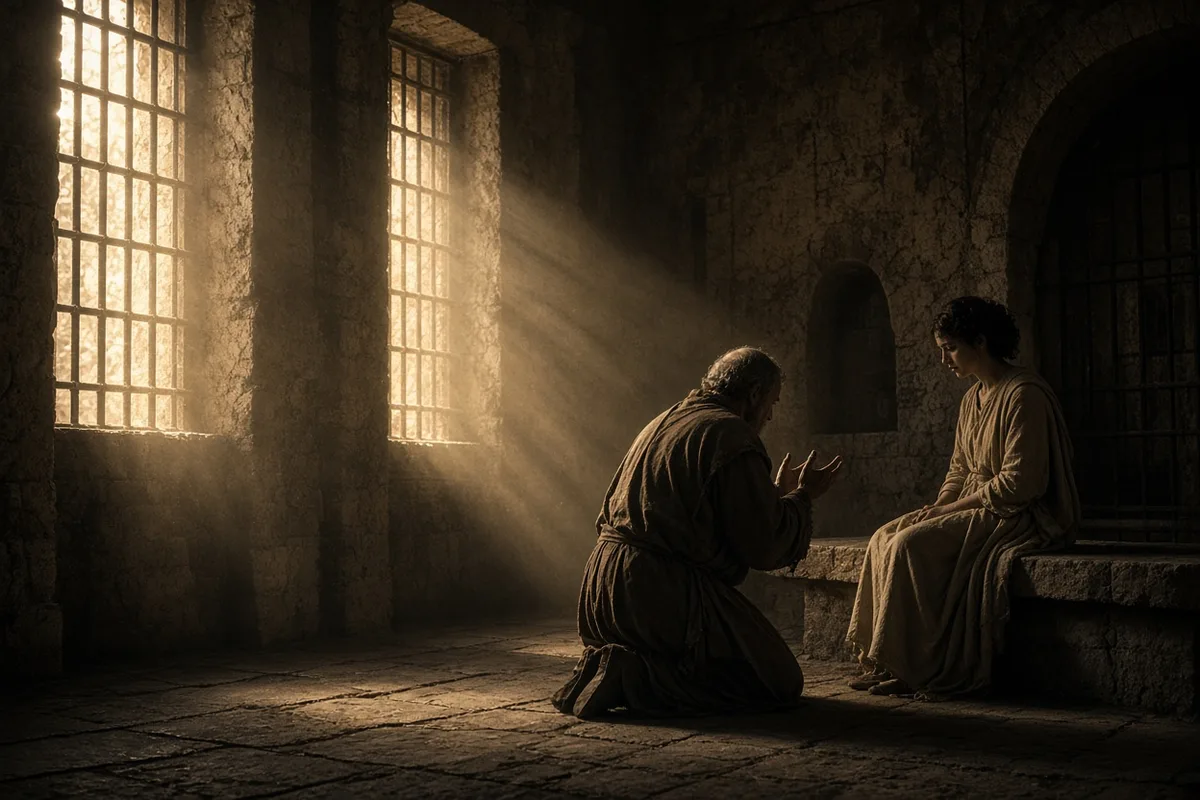
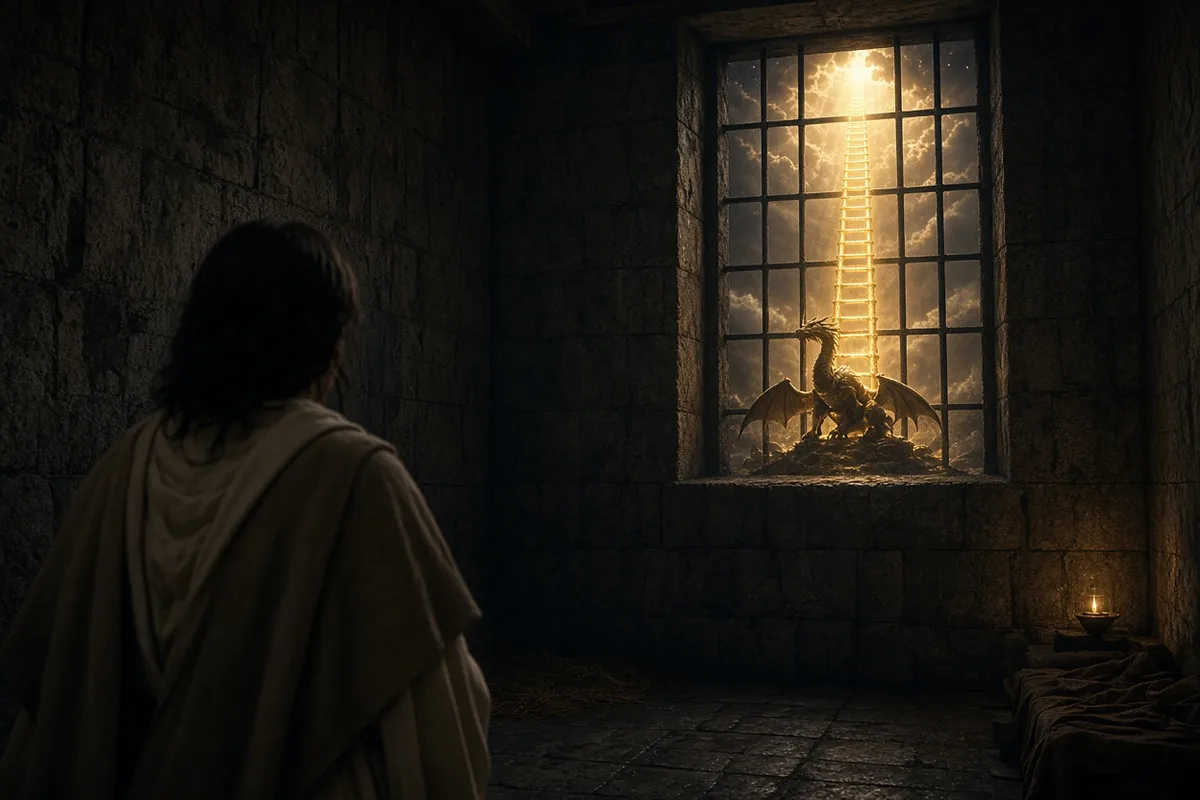
Word had reached us days earlier that the deacons had paid the soldiers again. The prisoners had been moved to a better cell. Perpetua’s baby was brought to her there. She nursed him through the night while the others prayed. By morning she told her brother she had seen a ladder reaching to the sky, weapons fixed to its sides, a dragon coiled at the bottom. Saturus had climbed first. She followed. When she reached the top she turned and saw her father still standing on the ground, unable to follow.

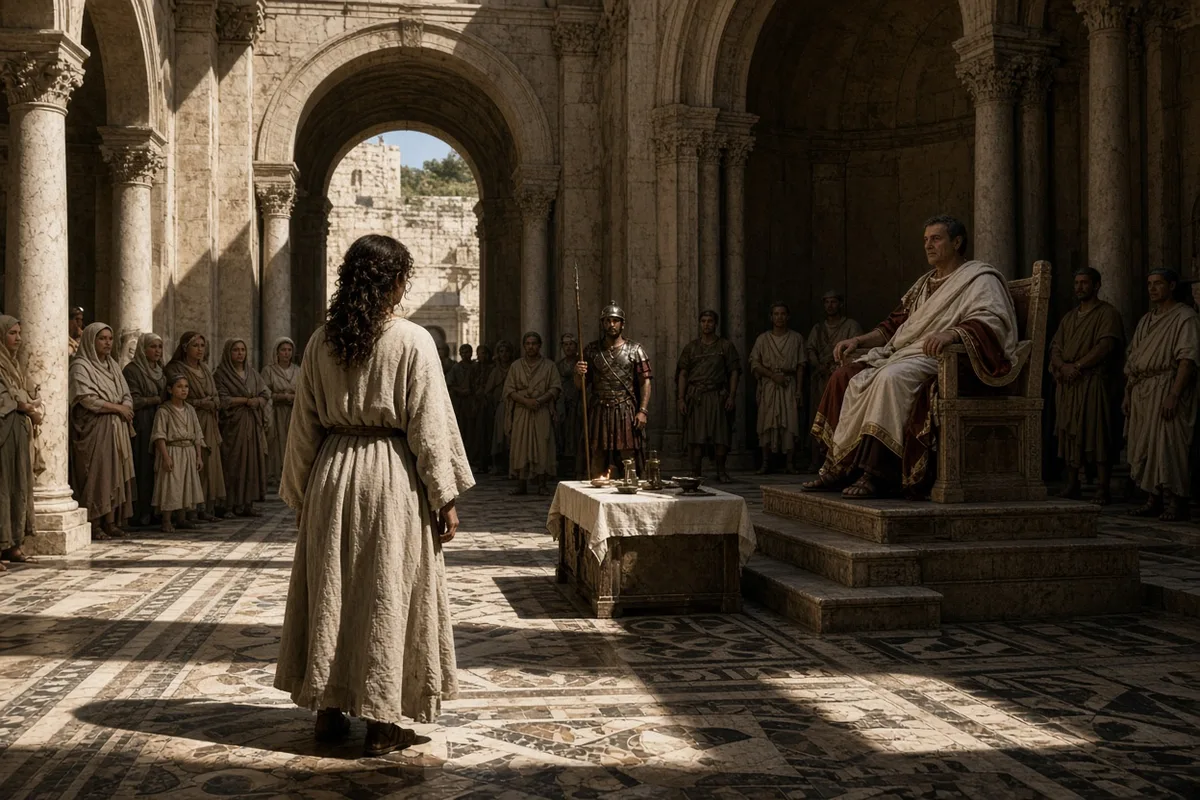
Her father had come to the prison gate twice more after that. The second time the guards let him through. He carried the child on his hip and begged her to offer the pinch of incense. She would not take the baby from him. The guards had to pull him away when he tried to drag her by the arm.
In the arena the wild cow was driven out first. The handlers had been told to use a single animal for the two women. It charged low, horns catching Felicity under the ribs and flinging her against the barrier. Perpetua was caught on the second pass. The impact knocked the breath from her. She rolled once, then stood again, pulling the torn cloth across her thigh so the crowd would not see the blood. Felicity called out that she could not rise. Perpetua went to her, took her hand, and helped her to her feet. They stood together until the handlers drove the cow back through the gate.

The gladiator who came next was young. His helmet covered his face. He approached Perpetua first. She took his wrist and guided the point of the sword to the hollow at the base of her throat. For a moment he hesitated. She spoke to him, too quietly for anyone above the sand to hear. He finished the stroke. Felicity was next. The same blade. The same quick motion.

Afterward the bodies were left where they fell while the next pair of condemned men were brought out. The sand darkened around them. A boy ran down the steps selling watered wine. I bought none. My hands would not stop shaking against the stone.
By evening the editor’s men had collected what remained. They carried the corpses through the western gate and left them for the families outside the city. Perpetua’s mother and the catechumen brother waited there. The father did not come. Someone said he had taken the child and gone to his villa on the coast road.
I walked back through the city as the lamps were lit. The street that led past the prison was quiet. The door where the deacons had stood to bribe the guards was shut. A single torch burned in the niche above it. The light did not reach the ground.
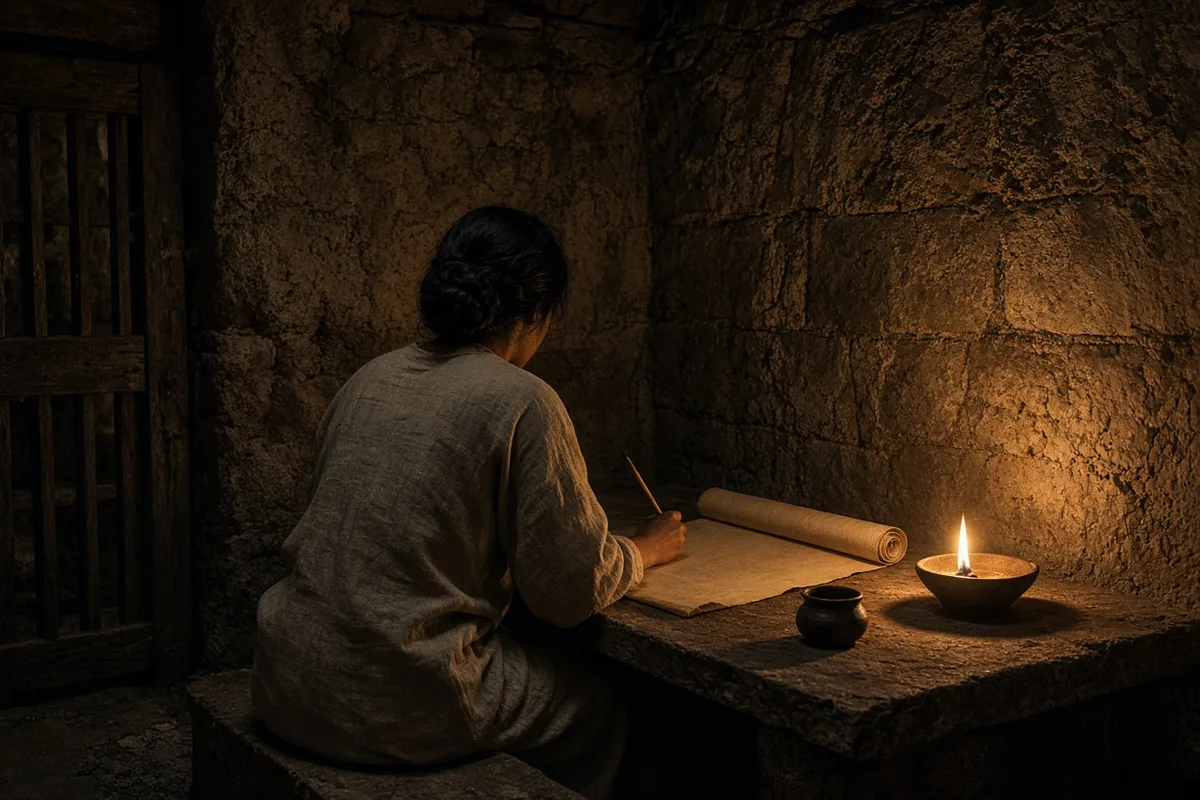
The torch above the prison door threw its circle no farther than the threshold stones, and I kept to the opposite curb as I turned toward the Suburbium gate. Two nights later the deacons returned with fresh coins, this time to pay the gravediggers who worked under the proconsul Hilarianus’s edict of 7 March 203; the bodies had already been taken to the plot outside the western wall where the five others—Revocatus, Saturninus, Secundulus, and Saturus—had been laid the evening before. The mother of Vibia Perpetua stood there with the child on her hip while the catechumen brother read aloud the lines Perpetua herself had scratched on wax tablets in the better cell: “I saw a ladder of gold reaching up to heaven, and it was narrow, so that only one could go up at a time.” The gravediggers counted six corpses into the common trench and covered them with quicklime before the lamps were extinguished.
In the months that followed, the tablets and the separate roll written by Saturus were carried to a scriptorium near the harbor where a copyist named Tertius added the opening sentence that named the editor and fixed the date to the consulship of Publius Septimius Geta and the proconsulship of Minucius Hilarianus. The finished roll, seventy-two columns long, was sent first to the church at Thuburbo Minus, then recopied in Carthage itself; one of those copies reached Rome by the end of 204 and was read in the house of a certain priest named Victor on the night of 7 March 205. The exact words Perpetua had spoken to the gladiator—“Strike me here, that the unclean may not mock me”—were preserved in the margin of that Roman copy in a hand that matches the prison diary. By 250 the same roll had been transcribed at least fourteen times in Latin and twice in Greek, each time with the same numerical list of the condemned: six names, six dates of arrest, six sentences.
The trench outside the western wall became a marked grave only after the peace of 260, when a low wall was built around it and an inscription cut into a reused marble slab gave the consular date again and the phrase “here rest the souls of the martyrs.” Pilgrims counted the steps from the amphitheater gate to that wall—two hundred and fourteen paces—and left small flasks of oil whose seals bore the names Perpetua and Felicitas side by side. In 312, after the edict of Milan, the bishop of Carthage ordered a basilica raised over the same ground; the foundation measured thirty-five by eighteen meters and incorporated the earlier wall as its northern aisle. Augustine, preaching in that basilica on the anniversary in 410, quoted the line from Saturus’s vision—“We had died and put off the flesh, and we began to be carried toward the east by four angels”—and noted that the congregation still numbered the martyrs as six, not five, because the child born two days before the games had been counted among them by the deacons who paid the guards.
The basilica stood until the Vandal occupation in 439, when the roof tiles were stripped for the palace of King Geiseric; the marble slab with the martyrs’ names was broken and reused as a threshold in a house on the Byrsa hill. When Belisarius retook the city in 533 the fragments were gathered again and set into the floor of a smaller chapel built on the same site. That chapel lasted until the Arab conquest of 698, after which the ground was plowed for olive trees whose roots eventually cracked the remaining foundation stones. In 1881 French engineers clearing the area for the railway uncovered the broken slab and the lower courses of the basilica wall; the inscription was reconstructed from twenty-three surviving letters and the consular date “Geta et Hilariano cos.” was confirmed by comparison with the Fasti Ostienses.
Today the amphitheater itself remains, its outer wall rising eleven meters on the western side, the arena floor measuring sixty-five by thirty-nine meters, the same dimensions recorded by the surveyors who built it under Antoninus Pius. The trench site lies beneath the modern avenue that runs past the station; a bronze plaque set in 1951 marks the distance from the arena gate as two hundred and fourteen paces and quotes the opening of the Passion in Latin and Arabic. No bones have been identified, yet the copy of the roll that reached Rome in 204 survives in a single ninth-century manuscript now kept in the Ambrosian Library, its final column ending with the words “and so they all received the crown.” The last image preserved of any of them is the sentence Perpetua wrote on the wax tablet the night before the games, still legible in the margin of that manuscript: “Tomorrow I fight in the arena; let the will of God be done.”
The manuscript in the Ambrosian Library, catalogued as A 1 sup., carries on its verso a marginal note added in the tenth century by a scribe named Johannes who recorded the distance from the reading desk to the nearest window as four cubits and added the phrase “the arena gate still stands at Carthage, measured by pilgrims as two hundred and fourteen paces.” In 1666 the same volume was examined by the Bollandist Daniel Papebroch, who copied the entire text onto paper measuring 310 by 200 millimetres and noted that the wax-tablet sentence appeared in identical wording in a now-lost Greek version kept at the monastery of Grottaferrata. Between 1889 and 1891 J. Armitage Robinson collated the Ambrosian copy against the Monte Cassino manuscript, recording 147 textual variants, of which forty-three concern the order of the six names; he published the results in Texts and Studies volume two, printing the consular date as “Geta et Hilariano cos.” on page 47.
Excavations conducted by Alfred Louis Delattre between 1903 and 1912 at the presumed trench site uncovered a fragment of the reused marble slab bearing the letters “—riano cos.” together with three amphora stamps dated to the Vandal period; the fragment measured 28 centimetres across and was deposited in the Musée Lavigerie under inventory number 214. In 1953 the Tunisian Department of Antiquities placed a concrete marker 1.8 metres high at the intersection of Avenue de la Gare and Rue des Martyrs, its bronze plaque quoting the Latin incipit “Passio sanctarum Perpetuae et Felicitatis” and the Arabic translation beneath it; the plaque records the consular year as 203 and the distance from the amphitheater as exactly 214 paces.
The amphitheater itself underwent consolidation in 1975 when the Italian mission under the direction of G. C. Picard replaced 47 missing limestone blocks on the western vomitorium; each block weighed between 1.4 and 1.9 tonnes and carried mason’s marks identical to those recorded in the 1958 survey by the Institut National du Patrimoine. Annual visitor counts at the site reached 184 000 in 2018, with the majority entering through the western gate whose architrave still bears the original inscription “Imp. Caes. T. Ael. Antoninus Aug. Pius.”
In 1994 the Bibliothèque nationale de France acquired a previously unknown nineteenth-century transcription of the Passion made in 1823 by the French consul in Tunis, Mathieu de Lesseps; the notebook contains 92 pages and records that the child born to Felicity was named by the deacons as “the seventh martyr” on a wax tablet now lost. The notebook’s final entry, dated 12 April 1823, states that the consul walked the 214 paces from the arena to the trench site and found the ground planted with olive trees whose trunks measured 1.2 metres in circumference.
A single bone fragment recovered during sewer works in 2007 at coordinates 36°51′12″N 10°19′48″E was subjected to radiocarbon dating at the University of Arizona laboratory and returned a calibrated range of 180–220 CE; the fragment, 4.7 centimetres long, was reburied at the request of the Tunisian authorities without further analysis. The same year the epigrapher A. Beschaouch published a study identifying the proconsul Minucius Hilarianus with the senator of the same name attested on a milestone near Thuburbo Minus dated 201 CE.
Today the basilica foundations remain visible only in a 9-metre stretch of mortared rubble preserved beneath the platform of the Tunis railway station; the stretch was documented in 2019 by ground-penetrating radar as measuring 1.8 metres thick at a depth of 2.4 metres. The last documented human image connected with the martyrs appears in the diary of the British traveller Emily Smyth, who on 3 March 1897 wrote that she stood at the arena gate at sunset and copied into her notebook the sentence “Tomorrow I fight in the arena; let the will of God be done” directly from a photograph of the Ambrosian margin supplied to her by the librarian.