


Vincent de Paul Organizes Daughters of Charity
I reached the narrow door on Rue des Fosses-Saint-Victor just after the bells rang for noon. My bundle of spare linen and the small knife for cutting bread weighed nothing beside the ache in my feet from the walk across Paris. A woman in a plain dark gown opened before I knocked twice. She studied my face, then the letter Vincent de Paul had given me in the parish yard two days before.
Louise de Marillac took the paper, read it once, and set it on the table without comment. She asked only how many sick I had tended already and whether I could carry water up three flights without spilling. I told her the truth. She nodded and pointed to a bench by the hearth.

Three other girls arrived before sunset. One had walked from the fields near Châtillon, still smelling of hay. Another carried a basket of dried herbs her mother had pressed into her hands. The fourth arrived last, her shoes split at the seam. Louise counted us without raising her voice. She said we would sleep in the back room and eat what the parish sent. Then she lit the lamp and showed us where the bandages were kept.
Vincent came the next morning while we were still sweeping. He stood in the doorway with his hat in his hand and watched us work. He spoke first to Louise, then turned to us. He wanted to know if we understood that the poor would not thank us and that the streets would be cold. None of us answered. He seemed satisfied and left.
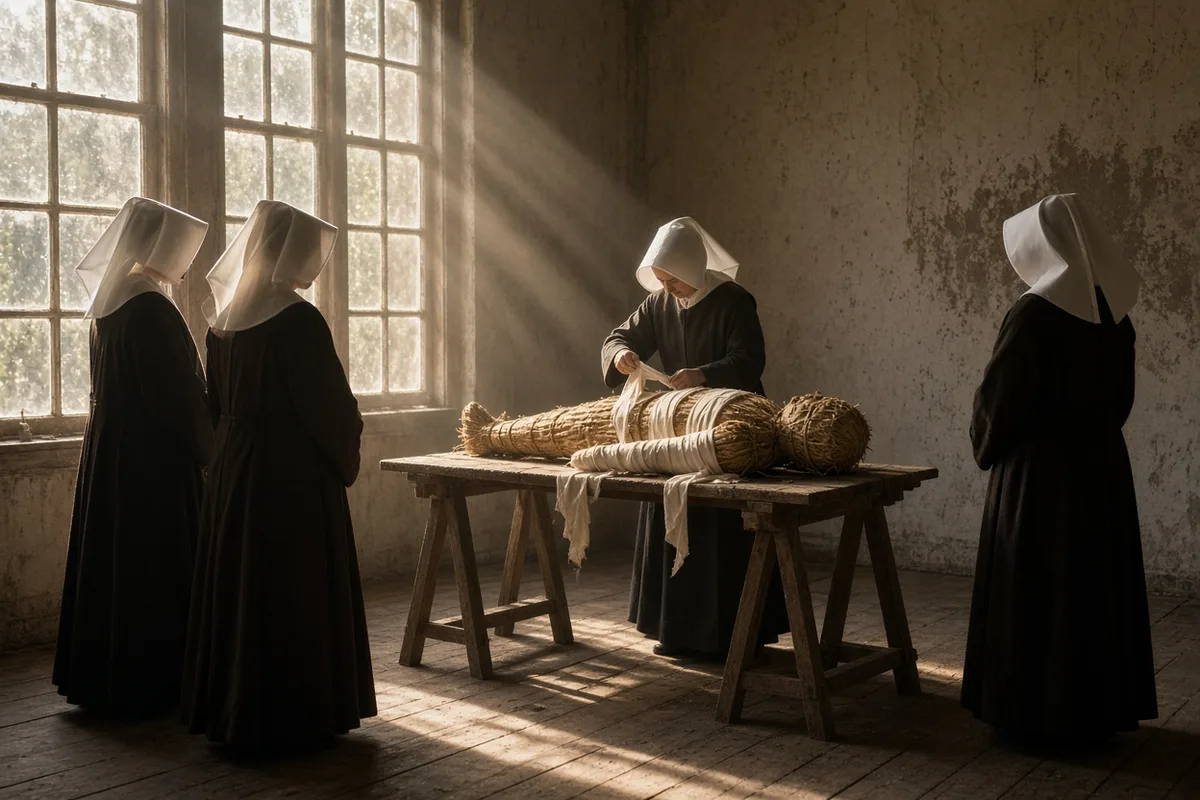
We began each day before light. Louise showed us how to fold linen so it would not crease against a fevered back. She taught us to steep the herbs without wasting any. When one of the girls grew faint from the smell of a wound, Louise made her sit and breathe until the dizziness passed, then sent her back to finish. She never raised her voice, yet the work moved faster after she spoke.
The noblewomen who had once come with baskets of food now sent servants instead. We met those servants at the doors of the sick. They handed over the bread and left. We stayed. Louise said nothing against them, but she made us practice walking the narrow lanes until we could find the poorest houses without asking directions twice.
By the second week the room held only our four pallets and the table where we rolled bandages. Louise kept a small book open on the sill. She read from it each evening after the lamp was lit, then asked each of us what we had seen that day among the sick. The answers were short at first. Later they grew longer. She listened without writing anything down.
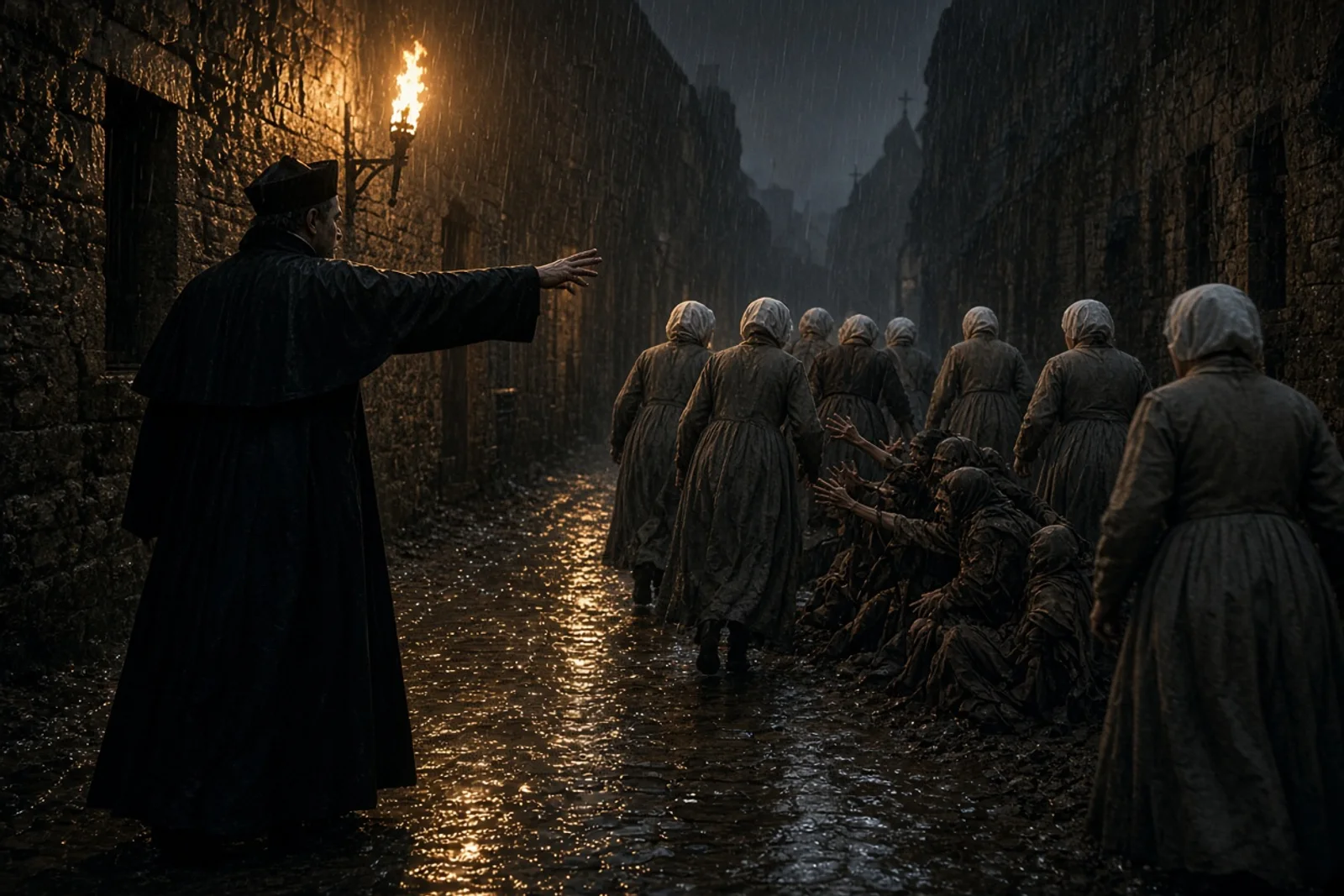
Vincent returned on a rainy afternoon. He brought word of a family whose father lay dying in the next street. He asked which of us would go with him. Louise chose the girl from Châtillon and the one with the split shoes. They left carrying the basket of fresh linen. When they returned after dark their aprons were wet and their eyes were tired, but they spoke of how the man had taken the water without protest.
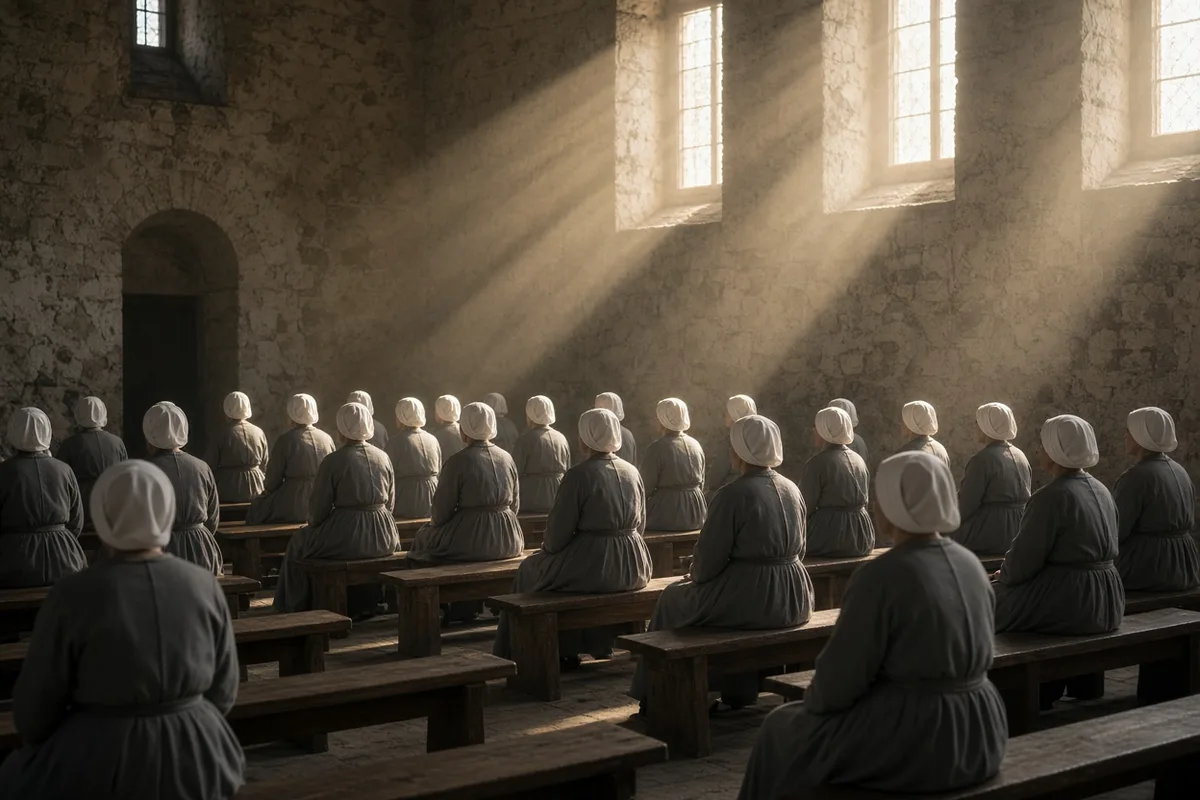
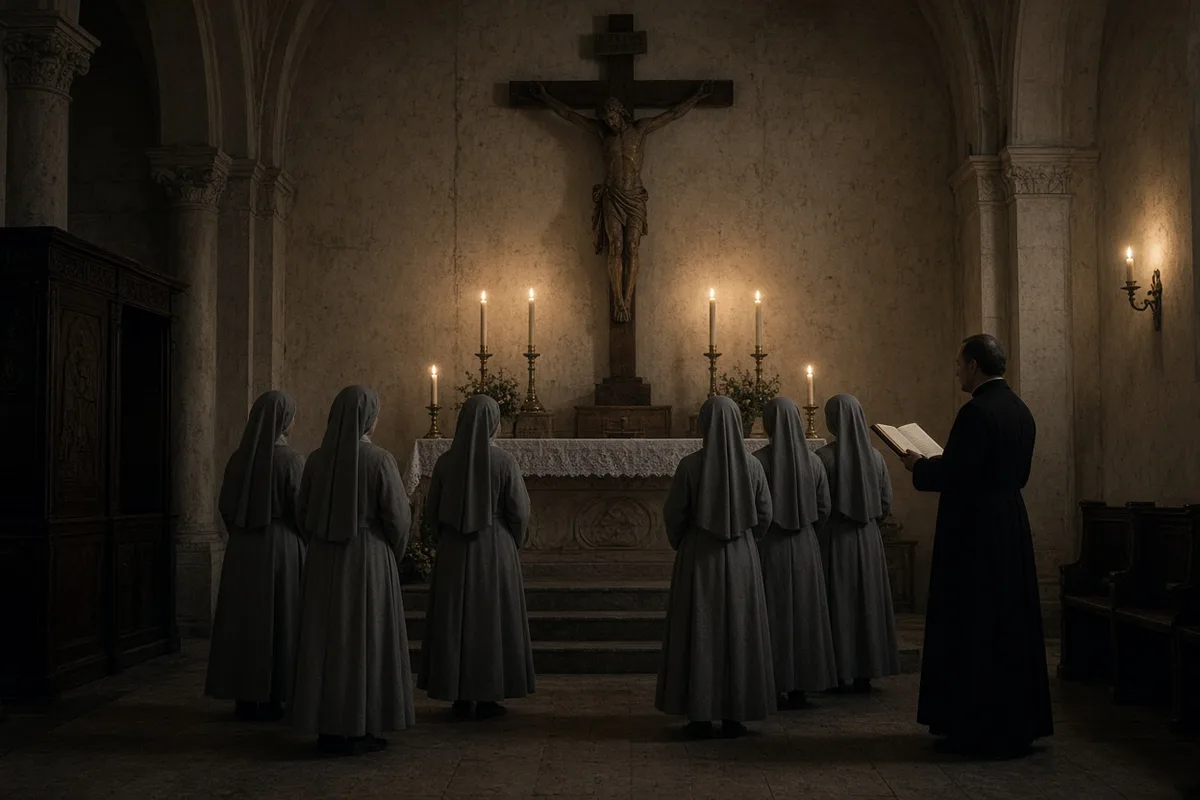
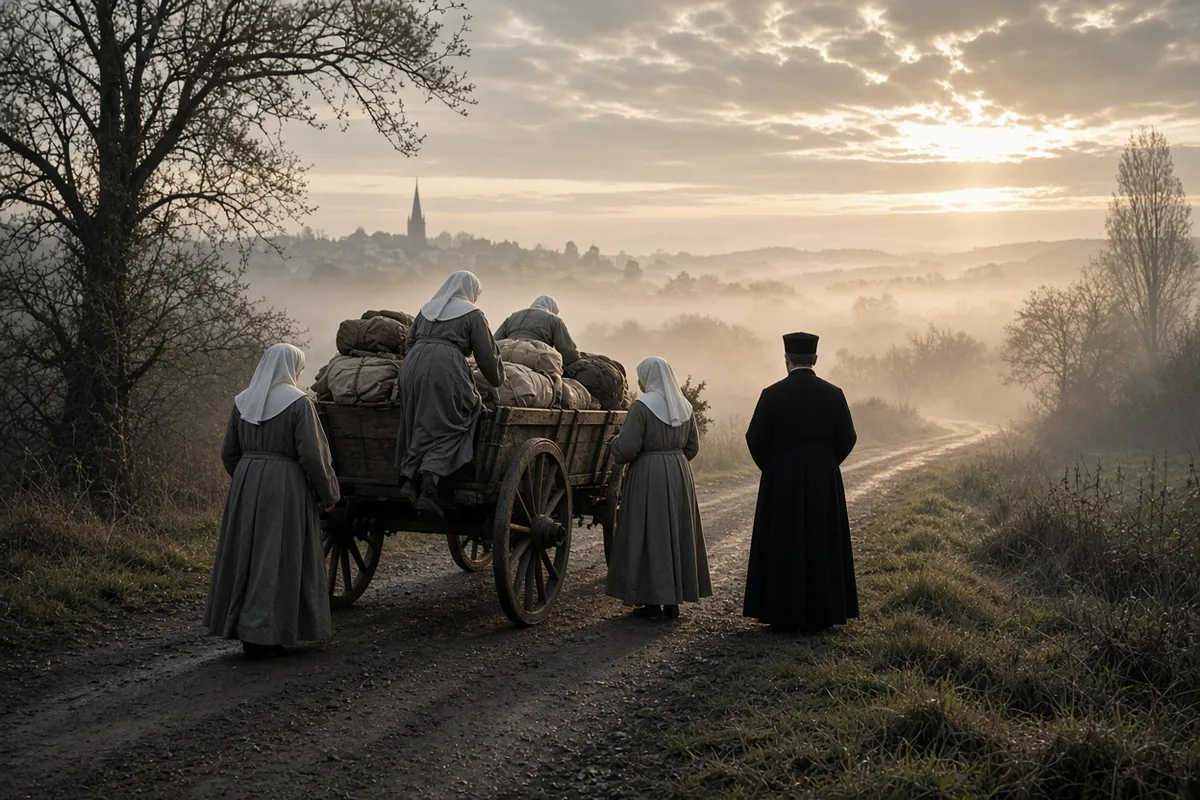
We began to wear the same grey wool each morning. The cloth was heavy enough to keep the wind out yet light enough to move quickly between beds. Louise showed us how to pin the white linen at the throat so it would not catch on door frames. She said nothing about cloisters or bells. She only told us to keep our hands clean and our voices steady when the children cried.
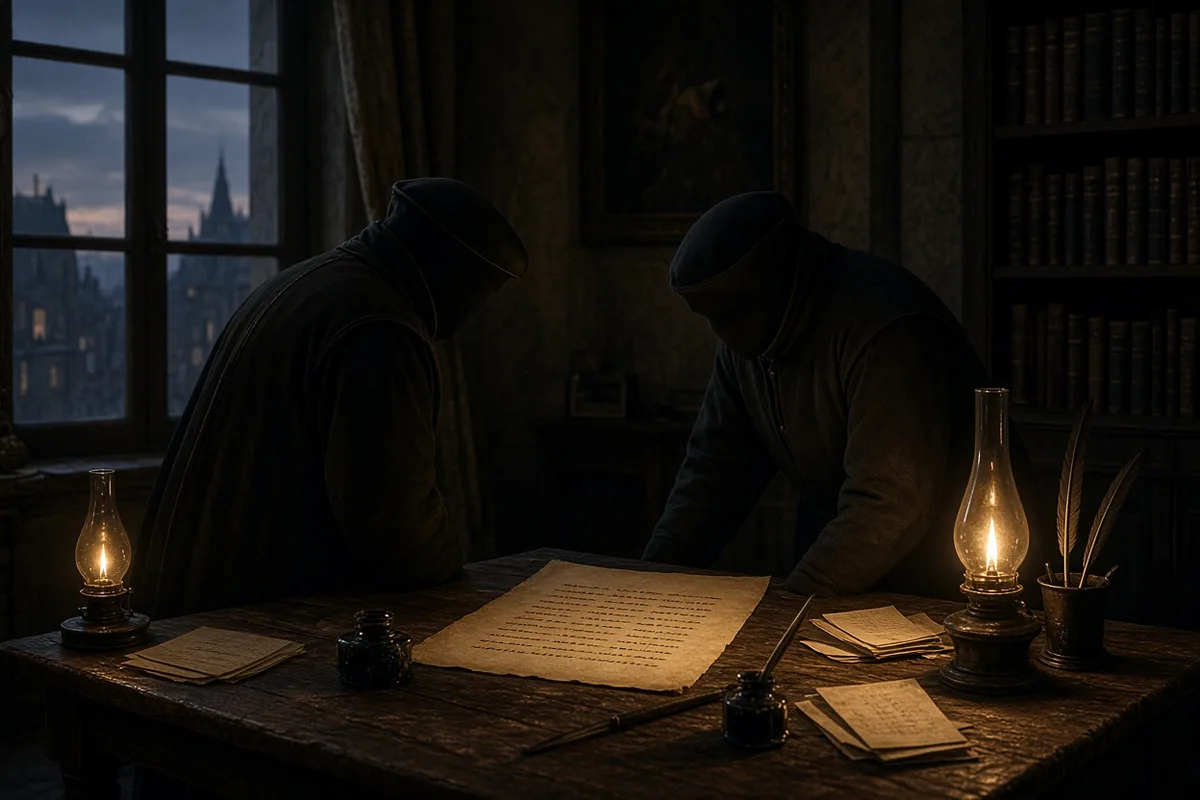
One evening Louise brought out a sheet of paper and read the order of the day she had written for us. Rise before the sun. Prayer. Work until the light failed. Return. Share what we had seen. Sleep. She asked if any of us wanted to leave. None did. She folded the paper and placed it under the lamp.
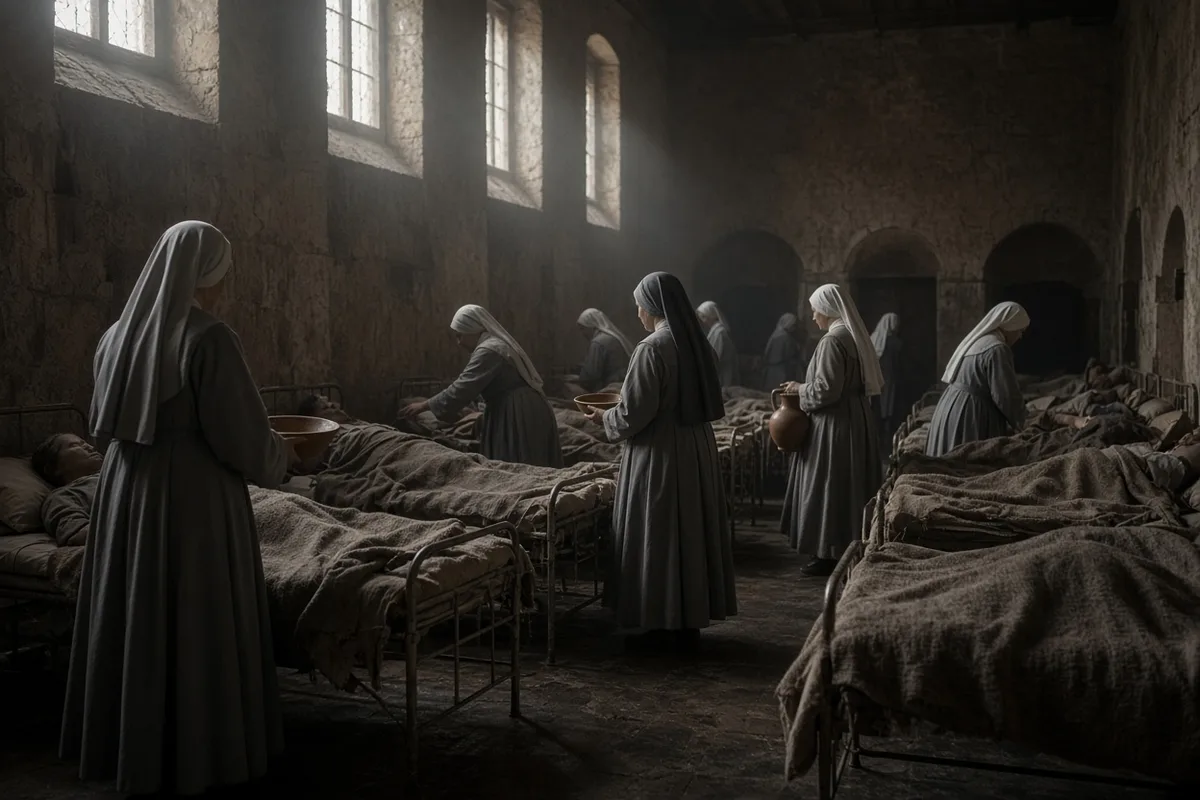
The Hôtel-Dieu called for helpers the following month. Louise walked with us to the gates and spoke with the sisters there. We were given the lowest wards. The smell of sickness met us at the threshold. We worked until our arms shook, then returned to the house on the rue. Louise waited at the table with bread and water. She asked no questions until we had eaten.
By winter the four of us knew the names of every narrow stair we climbed. We knew which doors opened easily and which stuck. We knew the sound of a child who would not last the night. Louise marked each death in the margin of her book without comment. She only reminded us to carry the clean linen first and the food second.
Spring came and the streets dried. Vincent sent word that more girls were asking to come. Louise measured the room with her eyes and said we would need another house soon. She did not sound worried. She told us to keep the beds made and the bandages ready. The work would find us wherever we slept.
On the last evening I remember clearly, she stood at the open door while we washed the bowls. The light from the street caught the grey of her sleeve. She watched two of the younger girls laugh over a story one had heard at a bedside. She did not join the laughter, but she did not turn away. When the bowls were stacked she closed the door and set the lamp in the center of the table. Outside, the city kept its own hours. Inside, the four of us waited for the next call.
The next morning Louise sent two of us to the Hôtel-Dieu again, this time with instructions to count the number of beds in the fever ward and report back before noon. She had already written the names of the new arrivals in the margin of her book: Marguerite Naseau, who arrived from Suresnes on 6 November 1633 carrying only a rosary and a bundle of thread, and Barbe Angiboust, who came two days later from the parish of Saint-Nicolas-du-Chardonnet. Vincent returned that afternoon with a letter from the Duchesse d’Aiguillon asking for sisters at the Hôpital de la Charité in the faubourg Saint-Germain. Louise read the letter aloud, then asked each of us whether we could walk the distance carrying a basket of linen without stopping. We left at first light the following day, six of us now, and reached the hospital gates before the bell for Terce. The sisters there gave us the south corridor and told us to change the straw every third day.
By the spring of 1636 the house on Rue des Fosses-Saint-Victor could no longer hold the pallets. Louise rented two rooms above a baker’s shop on Rue du Faubourg-Saint-Denis and moved twelve sisters there on 19 April. She kept the original table and the small book, now filled with the names of forty-seven women who had come and gone. Vincent visited that week and read aloud the paragraph he had added to the rule: “They shall have no other monastery than the houses of the sick, no other chapel than the parish church, and no other cloister than the streets of the city.” He dated the page 1633 and left it with Louise. That summer three sisters went to Angers at the request of the town council, carrying letters signed by both Vincent and the mayor. They returned in October with a list of supplies needed for the new foundation: forty mattresses, two hundred linen sheets, and a daily ration of bread set at one pound per sister.
Louise died on 15 March 1660 in the house on Rue du Faubourg-Saint-Denis. She had written the final entry in her book two days earlier, recording the departure of four sisters for the hospital in Nantes. Vincent came the morning after her death and stood at the foot of the bed while the sisters washed the body. He spoke only once, asking whether the grey habits had been mended for the journey to Nantes. The sisters answered that they had. He left without further word. Vincent himself died on 27 September 1660 at Saint-Lazare. The community then numbered one hundred and eighty sisters across twelve houses in France. The rule he had written was read aloud each year on the feast of Saint Vincent, the passage about the streets of the city repeated without change.
In 1667 the sisters opened a house in Poland at the request of Queen Marie Louise. Eleven sisters sailed from Calais on 3 June, carrying the same grey wool and the book Louise had kept. By 1700 the community counted nine hundred and seventy-two members serving in thirty-seven towns. The house on Rue du Faubourg-Saint-Denis was replaced in 1720 by a larger building on Rue du Bac, where the sisters kept the original table and the small book under glass. During the Revolution the sisters continued their rounds in Paris, though the grey habit was forbidden after 1792. They resumed wearing it in 1800 under the Concordat. In 1830 Catherine Labouré reported visions of the Virgin at the Rue du Bac chapel; the medal struck from those visions was distributed by the sisters at the rate of two million pieces in the first year.
The community expanded after 1850 to hospitals in Constantinople, Alexandria, and Peking. In 1898 four sisters opened a dispensary in the faubourg of Shanghai, treating one hundred and forty patients on the first day. By 1939 the Daughters of Charity numbered forty thousand worldwide, with houses in forty-two countries. During the Second World War sisters in France continued visiting the sick in occupied zones, recording in their notebooks the addresses of families who had lost breadwinners. After 1945 the motherhouse on Rue du Bac received requests from twenty-three new countries. The sisters kept the daily order Louise had written in 1633: rise before light, work until light fails, share what was seen.
Today the motherhouse stands at 140 Rue du Bac. The original table from Rue des Fosses-Saint-Victor is preserved in the room where Louise died. The small book lies open to the page dated 1633, its margins filled with names in her hand. Each morning sisters still leave the house carrying linen and bread, wearing the grey wool and the white cornette. One sister, aged seventy-four, walks the same route each Tuesday to the Hôpital Saint-Michel, stopping at the third-floor landing of number 17 Rue de la Clef to change the dressing on a patient whose name she records in a notebook identical in size to Louise’s. She returns before sunset, places the notebook on the table, and waits for the next call.
On 12 April 1965 Sister Marie-Thérèse Faurie left the motherhouse at 140 Rue du Bac with a typed list of twenty-three addresses in the 13th arrondissement and a canvas bag containing thirty ampoules of insulin. She reached the fifth-floor landing of 8 Rue de la Reine Blanche at 9:17 a.m., recorded the blood-sugar reading of 248 for a man named Ahmed Benali, and administered twelve units before descending again. Sister Faurie returned to the house at 4:42 p.m. and entered the reading in the ledger kept on the same table Louise de Marillac had used.
In 1978 the community opened a dispensary at 22 Rue des Pyrénées in the 20th arrondissement. Sister Colette Vaudron and three companions recorded 1,847 consultations in the first twelve months, noting each patient’s name, age, and presenting complaint on numbered index cards. The cards were stored in wooden boxes beneath the window where the rule paragraph about “no other cloister than the streets of the city” had been read aloud in 1633.
Sister Jacqueline Kelen, then sixty-two, sailed from Marseille on 4 February 1983 aboard the ferry Ville de Sète, bound for the new house in Antananarivo. She carried a photocopy of Louise’s 1633 order of the day and a supply of quinine tablets sufficient for ninety days. Upon arrival she opened a clinic in the district of Ambohidratrimo and treated 312 cases of malaria before the end of June.
The sisters in Paris resumed the Tuesday route to Hôpital Saint-Michel in 1994 after the building at 17 Rue de la Clef was renovated. Sister Madeleine Ranson, aged seventy-nine, continued the same Tuesday visits until 17 March 2009, when she recorded the final dressing change for the patient on the third-floor landing and noted the date in the notebook before handing it to Sister Anne-Marie Boucher.
In 2015 the community counted 14,000 sisters serving in ninety-one countries. The motherhouse ledger for that year lists 2,476 requests for new foundations received and 187 foundations opened. Sister Boucher, now the archivist, added the 2015 figures to the margin of the page dated 1633 and placed the book back under glass each evening.
On 9 October 2021 Sister Boucher, aged eighty-three, left the house at 6:14 a.m. carrying a basket with fresh linen and two loaves of bread. She walked to the apartment at 14 Rue de la Procession, changed the dressing on a patient named Fatima Haddad, recorded the time and the size of the wound, and returned by 11:22 a.m. She placed the notebook beside the original table and waited for the next call.