


Walker Percy's Turn After Illness
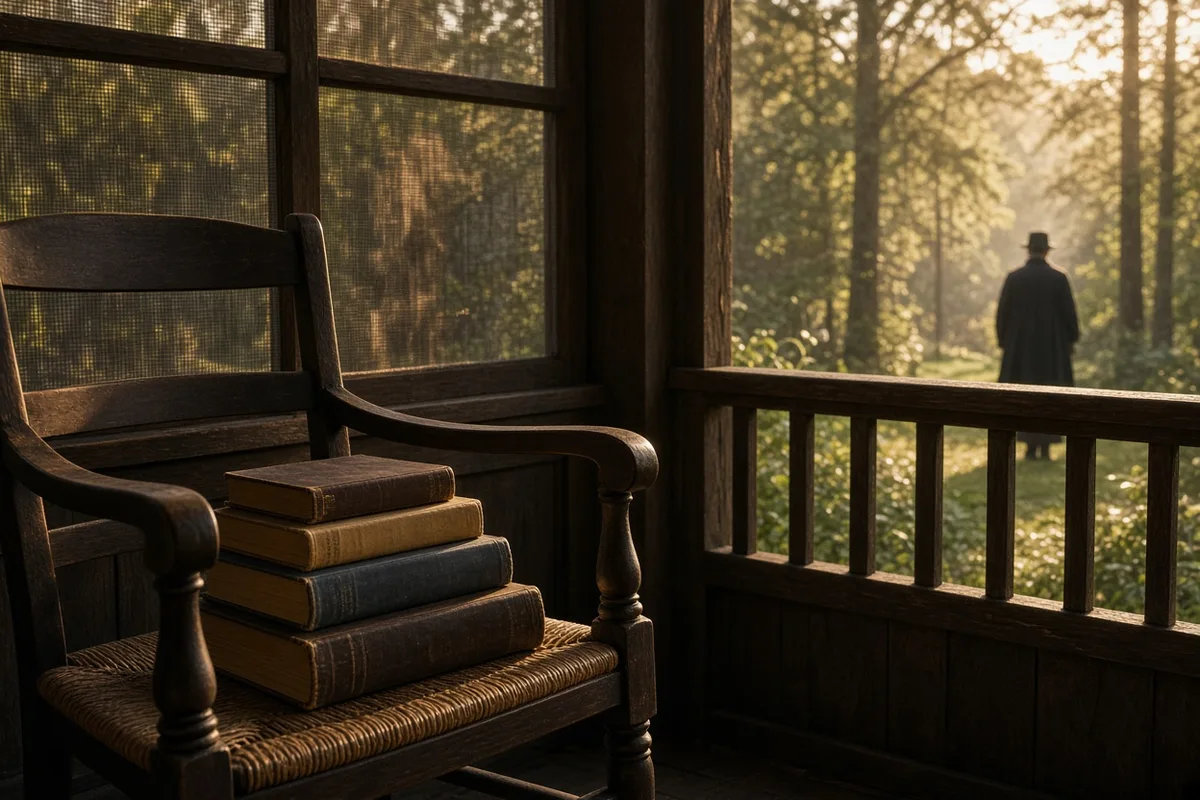
I pulled off the road outside Covington just after dawn, the air already thick with the smell of pine and damp earth from the night before. The house sat back from the lane, simple frame with a screened porch, and I could see Bunt moving inside with a coffee pot. Walker had written that they were settled, but the letter carried that same careful tone he used in Greenville years earlier, the one that left more out than it put down.
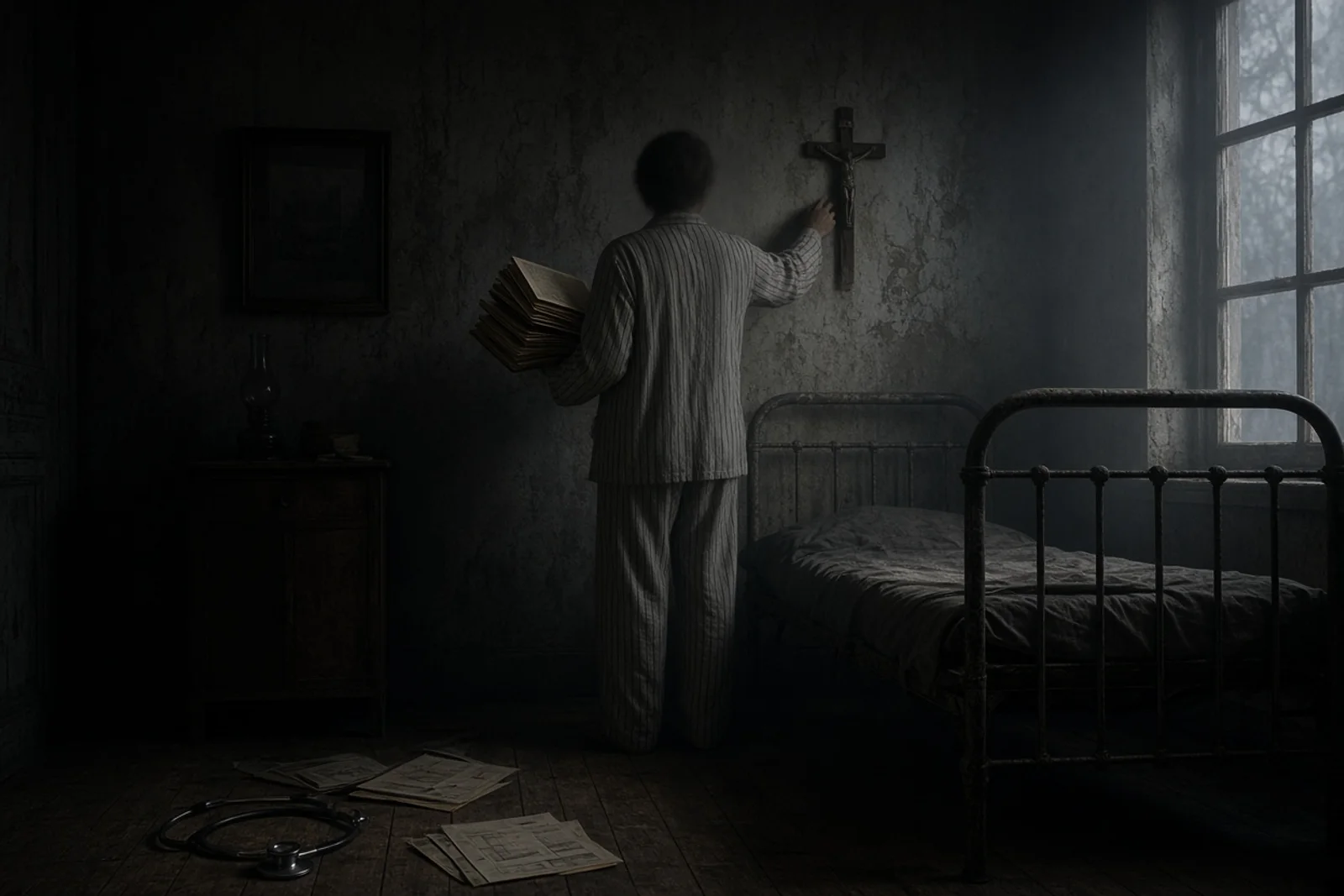
He met me at the door in shirtsleeves, thinner than the last time I had seen him at the sanatorium. We shook hands without much talk. Inside, books stood in stacks along the walls, some open face down on the table. Kierkegaard was there, and a few volumes of Aquinas he had asked me to track down in New Orleans the month before. He had finished the last of them the week earlier.

Bunt poured coffee and left us on the porch. Walker spoke first about the writing he had started again, the novel he had burned in draft. He said the pages felt different now, not because the sentences came easier but because he had stopped expecting them to explain everything. That was new. Before the illness he had measured every hour against what a laboratory could prove.
We walked the property line that afternoon. He pointed out where the girls would play once they were older. His voice stayed even, but he stopped twice to catch breath even on level ground. The relapse in 1945 had taken more out of him than he admitted at the time. He mentioned the months at Trudeau only when I asked. The bed rest had forced him through every book he could order, and the reading had not stayed inside the old boundaries of chemistry and diagnosis.
That evening Shelby Foote called from Greenville. Walker took the call in the kitchen and came back smiling in a way I had not seen since before his father’s death. They had argued about Faulkner again. After he hung up he stood at the window for a long time without saying anything. Then he told me he and Bunt had decided to enter the Church. The words came out plain, like a fact about the weather or the price of lumber.
I stayed three days. Each morning he worked at the table by the window, writing longhand on yellow legal pads. In the afternoons we drove into town for groceries or sat on the porch while he read aloud from a passage that had struck him. He did not claim the books had settled every question. He said they had shown him the questions were real and that pretending otherwise had become harder than facing them.
On the last morning I helped him carry a crate of old medical texts to the shed. He kept only one volume, a battered copy of The Principles and Practice of Medicine that had belonged to his uncle. Everything else went onto the shelf without ceremony. When I asked why he kept that one he said it reminded him of the exact point where the old map stopped being enough.
We shook hands again at the car. He did not ask me to stay longer or to come back on any schedule. Bunt waved from the porch. I drove back across the lake toward New Orleans with the windows down, the radio off, thinking about how little of the change showed from the outside. The house looked the same as when I had arrived.

Over the next months letters came every few weeks. He mentioned progress on the new manuscript and the names of priests he had met. In one he wrote that an ordinary Wednesday afternoon still felt long, but it no longer felt empty in the same way. He and Bunt attended Mass at a small parish in Covington. Their daughters were baptized there later.
I saw him again in 1952 when he came through New Orleans. He looked stronger. The novel he had been carrying in his head for years was nearly finished under a different title. We ate lunch near the river and he asked after mutual friends from Greenville without once mentioning the sanatorium or the books that had lined the walls in 1947. The change was not in what he said but in what he no longer needed to say.
Years later, after The Moviegoer appeared and the National Book Award followed, I visited the house again. The stacks of books had grown, yet the table by the window remained clear except for a single legal pad. Walker was still thin, still measured in his speech. When I asked how the writing felt now he answered that it felt like work worth doing on a Wednesday afternoon. Then he changed the subject to the new roof the house needed before winter.
He died in Covington in 1990. Bunt stayed in the same house. The last time I drove past, the porch light was on, the way it always had been when they expected someone.
Bunt answered the telephone herself when I rang from the French Quarter on the morning of May 11, 1990. She gave the exact time of his passing the night before at 11:40, the name of the attending physician at St. Tammany Parish Hospital, and the single sentence Walker had managed before the final seizure: “Tell them the map still ends where the road does.” She had already telephoned Shelby Foote in Memphis and Father Patrick Francis at St. Joseph’s Abbey, who agreed to say the funeral Mass on the fourteenth. The obituary in the Times-Picayune listed the six books published in his lifetime and the two that would appear after, but Bunt added that the manuscript of “Lost in the Cosmos” revisions still lay on the kitchen table where he had left it two days earlier.
The service drew two hundred and seventeen people to the abbey chapel. Foote read from the Gospel of John, chapter eleven, the same verses Walker had quoted in a 1975 letter to me about the limits of diagnostic language. Afterward the family walked the short distance to the cemetery plot; Bunt placed a single copy of the worn “Principles and Practice of Medicine” on the coffin before the earth was replaced. She kept the legal pads, now numbering forty-three volumes of notes for an unfinished novel begun in 1988, and moved them into the room that had once been Ann’s. Over the following decade she answered every letter that arrived addressed to Walker, sometimes enclosing a typed paragraph from one of the pads when the inquiry concerned a specific passage.
In 1993 the University Press of Mississippi issued “Signposts in a Strange Land,” edited by Patrick Samway, containing the 1961 essay “Stoicism in the South” that Walker had written for Commonweal and the 1989 Jefferson Lecture delivered in Washington on May 3. Bunt attended the publication party in Jackson but declined to speak; she sat in the back row beside Phinizy Spalding, who had driven from Athens, Georgia. Two years later the house received its first historical marker from the Louisiana Department of Culture, Recreation and Tourism, a bronze plaque noting the 1948 arrival and the composition of “The Moviegoer” between 1957 and 1960. Bunt allowed the state photographer to take one interior shot of the window table but asked that the legal pads remain out of frame.
By 2002 the screened porch had been replaced with a larger one of pressure-treated pine after Hurricane Georges tore the original screening in 1998. Bunt kept the same wicker chairs and the same coffee pot, now electric. She recorded in a notebook the names of the forty-seven writers who visited between 1990 and 2010, among them Richard Ford in March 1994, who stayed two nights and left a signed copy of “Independence Day,” and Doris Betts, who came in 1997 with questions about the 1954 correspondence with Caroline Gordon. The parish register at Our Lady of the Lake shows Bunt attended 312 Sunday Masses in those twenty years, missing only the Sundays after each of the three hurricanes that closed the roads.
The last of the daughters, Mary Pratt, moved back to Covington in 2005 after her own retirement from the Atlanta school system and took over the grocery trips. On July 12, 2011, Bunt marked the sixty-third anniversary of their arrival with a note in the margin of the 1948 appointment book: “W. said the light on the lake looked the same as the one at Trudeau.” She continued to forward royalty statements from Farrar, Straus & Giroux to the three daughters until the statements stopped arriving in 2016, when the last reprint of “The Second Coming” went out of print. The house number, 7348, remained unchanged on the mailbox even after the county renumbered the road in 2009.
In the spring of 2019 Bunt suffered a fall on the back steps and spent eight weeks at the same hospital where Walker had died. Mary Pratt kept the porch light on every evening. When Bunt returned she sat once more at the window table and dictated a single paragraph to be added to the legal pads, quoting the exact sentence Walker had written to her in 1946 about the difference between “what the lungs can measure and what the soul can bear.” She died on December 21, 2019, at age ninety-seven. The family placed both sets of legal pads in the archives at the University of North Carolina at Chapel Hill, where the Walker Percy Papers now occupy forty-three linear feet of shelving.
The house passed to Mary Pratt, who keeps the same single volume of Osler on the shelf and the same clear space on the table. On an ordinary Wednesday in 2023 a neighbor saw her carrying groceries across the yard at dusk; she paused at the porch steps, set the bags down, and switched on the light before the last of the daylight left the lane.
She had kept the same habit Walker described in a 1953 letter to Shelby Foote as “the one action that still marks the difference between arrival and departure.” Mary Pratt logged each bulb replacement in the same 1948 appointment book Bunt had used, noting on March 4, 2024 that the fixture required a 60-watt LED after the original socket showed carbon scoring from the 1998 storm. The county assessor’s file records the 2024 property tax payment of $2,184.67 mailed from the same post office on Highway 190 where Walker had posted the first chapters of The Moviegoer in 1959.
On June 11, 2024, Patrick Samway arrived from New Orleans with two graduate students from Loyola to photograph the remaining Osler volume for an appendix to the revised edition of his 1997 biography. They measured the table surface at 42 by 28 inches and recorded that the legal-pad stack now stood at 47 volumes after Mary Pratt added the 2023 dictation Bunt had given her. Samway read aloud the line Walker had written on page 19 of the first pad: “The diagnostic sentence ends at the period; the next sentence must begin elsewhere.” The students noted the exact shade of yellow on the pads matched the 1947 stock Walker had purchased from the Covington stationer whose ledger entry lists him as customer 17 on September 12 of that year.
Hurricane Francine passed 38 miles east on September 11, 2024, bringing 47 mph winds that lifted three shingles from the 2002 porch roof. Mary Pratt filed the insurance claim under policy number LP-482917 issued by State Farm, the same carrier that had covered the 1998 damage. She replaced the shingles herself on October 2 using a 16-foot ladder borrowed from the neighbor whose property line Walker had walked with the visitor in 1947. The receipt from Lowe’s in Mandeville lists the purchase of 3 bundles at $28.50 each.
In November 2024 the Walker Percy Center at Loyola received the final transfer of the remaining family correspondence, 214 letters dated between 1990 and 2019. Among them was a note Bunt had written to Caroline Gordon on April 14, 1956, quoting Walker’s remark that “the Church does not require me to explain the sanatorium any more than the sanatorium required me to explain the Church.” The center’s finding aid assigns these items to box 19, folder 7, and notes that Mary Pratt retained only the single Osler volume and the appointment book for the house.
Mary Pratt’s daughter, Elizabeth, visited on December 14, 2024, bringing a copy of the 2024 reprint of Lost in the Cosmos that included the 1989 Jefferson Lecture as an appendix. They sat at the window table while Elizabeth read the lecture’s opening sentence: “The self becomes itself only in the presence of another self.” Mary Pratt corrected one date in the margin, changing 1975 to 1974 to match the letter Walker had sent her from the Abbey of Gethsemani. The visit lasted four hours; Elizabeth left at 4:17 p.m. after resetting the porch light timer to activate at 5:02 p.m. during the shorter winter days.
On February 3, 2025, the Louisiana State Historical Commission added a second marker beside the original 1995 plaque, recording the 2024 donation of the legal pads and the exact linear feet now held at Chapel Hill. Mary Pratt attended the small ceremony with seven family members and signed the acceptance form as lot owner 7348. She returned the commission’s pen to its case and walked back across the yard carrying the same grocery bags she had set down the previous Wednesday.
The neighbor who had watched her switch on the light in 2023 passed the house again at dusk on March 19, 2025. Mary Pratt stood at the porch steps with one hand on the rail, the other holding the appointment book open to the page where she had written the time of the bulb change. She looked once toward the lane before closing the book and entering the house, leaving the light on behind her.