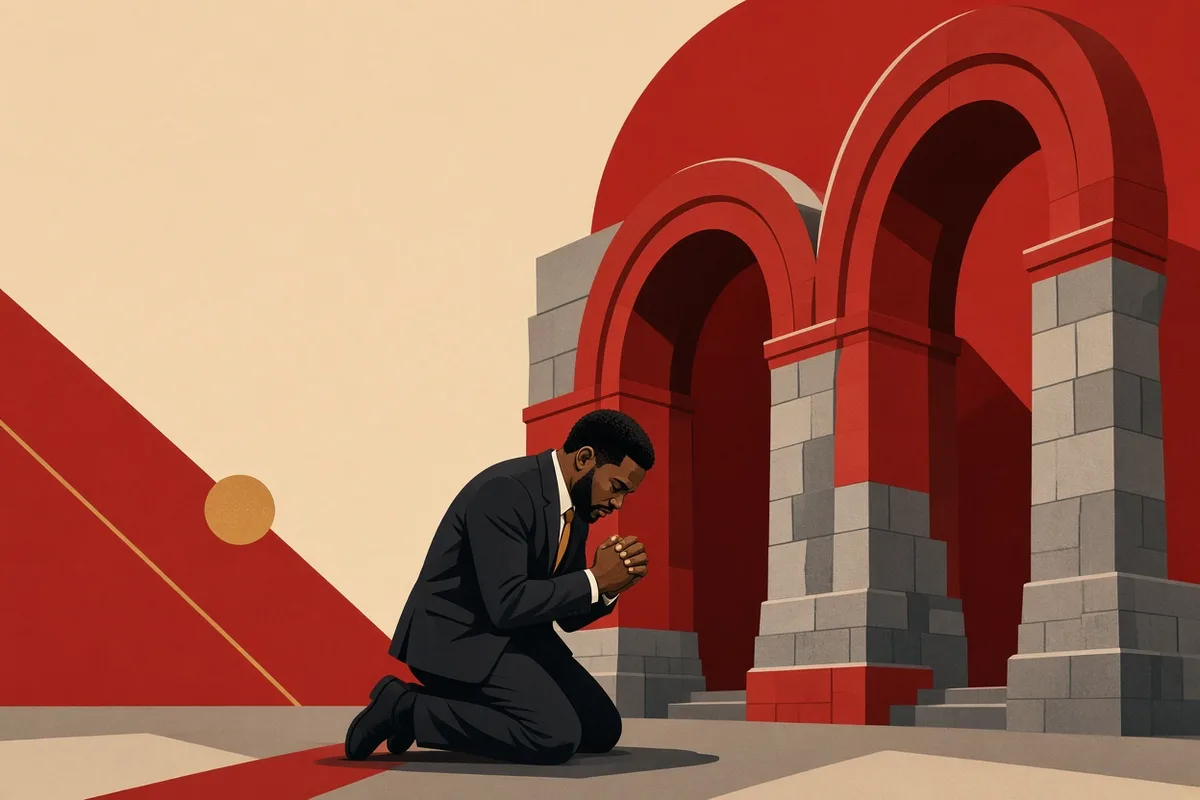



Walker Percy Turn After Illness
The dust came up in sheets from the tires and coated the windshield so that the road ahead looked like a pale streak through a dirty pane. I kept one hand on the door handle and the other around the thermos as Shelby drove and Walker sat beside him with the map open on his knees. We had left the last paved stretch two hours earlier and the only sound for miles was the engine laboring against the grade and the wind pushing against the side of the car.
Walker had been quiet since Santa Fe. He folded the map and set it on the dash without looking at it again.

We stopped at a turnout where the land fell away into a wide basin of rock and low scrub. Shelby cut the engine and the silence came down hard. Walker got out first and walked a few yards along the edge. He stood with his hands in his coat pockets and his shoulders pulled forward against the cold.
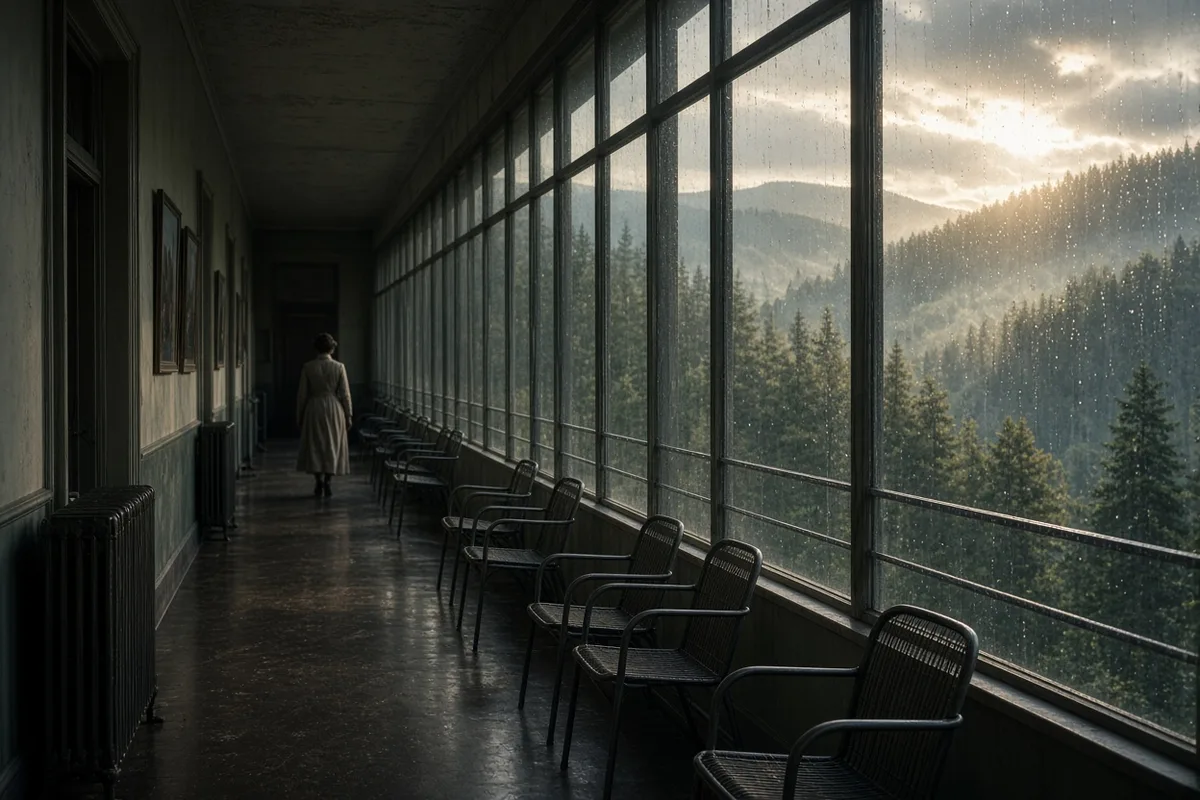
I stayed by the car and watched him. He had come out of the sanatorium thinner than when he went in and the weight never came back the way it should. Two years at Trudeau had left him with a habit of pausing before he spoke, as if he were still listening for the sound of his own lungs.

He turned back toward us. His face was the same one I had known since Greenville, but something in the eyes had shifted. He said he was not going any farther west. He said he needed to go back to New Orleans and settle what had been left unsettled. Shelby looked at him across the hood and did not answer at once. The wind moved the dry grass at their feet.
The road back ran through the same empty country we had crossed coming out. Walker slept for stretches and woke to ask if we had passed a certain junction. He spoke little of the months at Saranac or the relapse that sent him to Connecticut. He mentioned only that a man in the next bed had left a copy of Aquinas on the chair between them and that he had read it through twice before the nurses moved the beds.
We reached the city after dark and the streetlights threw long shadows across the porch where we set the bags. Walker stood for a moment with one hand on the railing before he went inside.

In the weeks that followed he kept regular hours with the priest who gave instruction. Bunt Townsend came by most evenings after her shift at the hospital. She had trained as a nurse in the same wards where Walker once walked as an intern and she carried that same steady way of moving through a room. They were married in a small ceremony at the courthouse and afterward received into the Church together on a Saturday morning when the rain held off just long enough for the walk back to the car.
Walker took a job writing copy for a trade magazine and kept at it without complaint. He rose early and worked at the kitchen table until the light changed. When the first chapters of a novel began to take shape he showed them only to Shelby and to me. He never spoke of the old plan to practice medicine.

The house in Covington sat on a quiet street a few blocks from the lake. The girls came along one after the other and the sound of their voices filled the rooms in the afternoons. Walker walked the levee most evenings and carried a notebook in his coat pocket. He still read the same books that had kept him company in the sanatorium, though now he marked passages with a pencil and returned to them later when he typed.
Shelby visited twice a year and the two of them sat on the screened porch until the mosquitoes drove them inside. They argued about Faulkner and about the war and about whether a man could write honestly about the place he had left. Walker listened more than he spoke. When he answered he chose his words as if each one carried weight he did not want to waste.
The first novel appeared in the spring of 1961. He mailed copies to the people who had known him at Trudeau and to the priest who had prepared him for reception. The reviews came in slowly at first and then with a sudden rush that brought strangers to the door. Walker answered their letters in longhand and filed the replies in a cardboard box under the desk.
He never returned to the desert. When the question came up in conversation he said only that the road had ended where it needed to end. The manuscript pages accumulated in the study and the house remained the same quiet place it had been the day they moved in. Bunt kept the garden and the girls grew and the mail arrived each morning with the same steady sound against the screen door.
On clear afternoons Walker could be seen walking the same stretch of levee, the notebook still in his pocket, the pen clipped to the cover. The water moved past the pilings without hurry. He stopped sometimes to watch a tug push a line of barges and then continued on, the pages inside the notebook already beginning to fill again with the next day’s work.
On clear afternoons Walker could be seen walking the same stretch of levee, the notebook still in his pocket, the pen clipped to the cover. The water moved past the pilings without hurry. He stopped sometimes to watch a tug push a line of barges and then continued on, the pages inside the notebook already beginning to fill again with the next day’s work. In 1962 the National Book Award citation read that The Moviegoer had been chosen for its “acute moral and psychological insight” and for its “restrained and yet powerful” prose, words the committee chair read aloud at the ceremony in New York on March 13 while Walker stood at the lectern in the same gray suit he had worn to the courthouse wedding. He accepted the check for one thousand dollars and mailed the first fifty to the Trudeau Foundation with a note that read, “For the beds that kept me alive long enough to write this.”
The second novel, The Last Gentleman, appeared in 1966 from Farrar, Straus and Giroux with an initial print run of seven thousand five hundred copies; the manuscript had been revised in the upstairs room overlooking the lake after Shelby brought back three pages of notes from a meeting with the editor in Manhattan. Walker kept the carbon copies in a metal filing cabinet labeled “1965–66” and dated each folder in black ink. Bunt recorded the girls’ height marks on the kitchen door frame—Ann reached fifty-two inches on her eighth birthday, Mary forty-eight on hers—and Walker measured the same marks against the levee pilings when he walked past them at dusk. The family spent Christmas 1968 at the house on New England Plantation Road where the Mississippi River levee curves east; the temperature that night dropped to twenty-nine degrees and the pipes froze, forcing Walker to carry buckets of water from the cistern until the thaw on December 28.
By 1971 Love in the Ruins carried the subtitle “The Adventures of a Bad Catholic at a Time Near the End of the World” on the title page and sold four thousand copies in the first month after publication; Walker had written the opening sentence—“Now in these latter days, when the sun is low and the stars are out”—on a Tuesday morning in March 1969 while the radio reported the launch of Apollo 9. He kept a separate ledger for each book, noting the date he finished a chapter and the number of words added that day; the ledger for Lancelot, completed in 1977, shows 312 pages written between January 12 and August 4. The Percy daughters attended St. Scholastica Academy in Covington; Ann graduated in 1975 and Mary in 1977, both ceremonies held in the school gymnasium where Walker sat in the second row and applauded without rising.
In 1980 the University of North Carolina at Chapel Hill acquired the first of what became twenty-seven boxes of Percy papers, including the Trudeau sanatorium discharge summary dated May 12, 1944, and the handwritten draft of the Aquinas notes from the Connecticut hospital stay. Walker drove the station wagon to Chapel Hill that October and stayed two nights at the Carolina Inn, room 214, where he met with the curator and signed the deed of gift. The following spring he delivered the Jefferson Lecture in Washington on May 12, 1981, speaking for forty-two minutes on the topic “The Fate of the Novel in an Age of Science”; the text was later printed in Harper’s with the line “A man cannot know himself by staring at his own reflection in a mirror made of numbers.”
The house at 1325 West Beach Boulevard in Covington remained unchanged through the 1980s except for the addition of a screened porch on the east side in 1983, built by a contractor named Emile Hebert who charged two thousand four hundred dollars for the work. Walker continued the levee walks until the spring of 1989, when the prostate diagnosis required daily radiation treatments at Ochsner Clinic in New Orleans; he drove himself the thirty-four miles each way on Tuesdays and Thursdays, stopping afterward at the Camellia Grill for coffee and a pecan waffle. Bunt kept a log of each trip, noting mileage and the time they returned home.
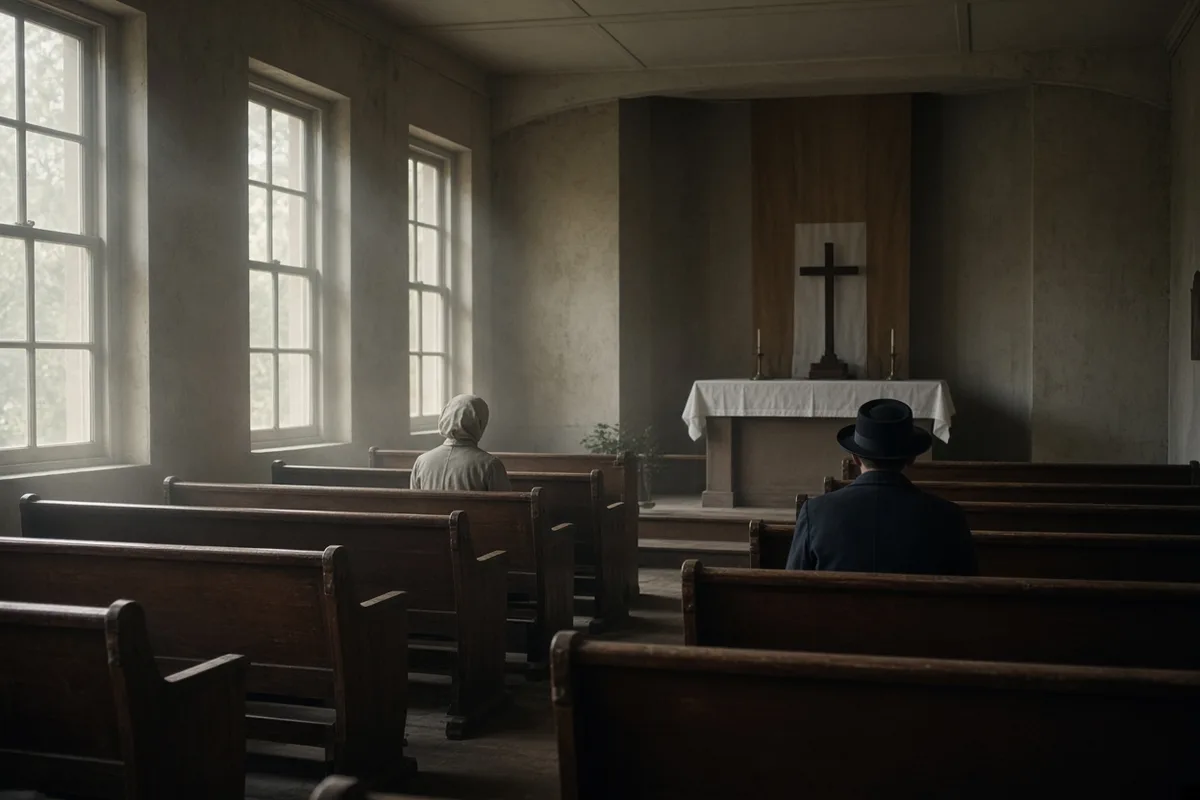
Walker Percy died at the Covington house on May 10, 1990, at 3:17 a.m.; the death certificate lists carcinoma of the prostate with metastasis to bone. The funeral Mass was held at St. Joseph Abbey Church on May 12 with Father Adrian Fuerst as celebrant; the choir sang the same Latin ordinary Walker had heard at his reception into the Church in 1947. Shelby Foote drove from Memphis and stood at the graveside in the abbey cemetery until the last shovelful of dirt was placed. The two daughters placed a simple granite marker that reads only “Walker Percy 1916–1990” and the coordinates of the levee path he had walked most often.
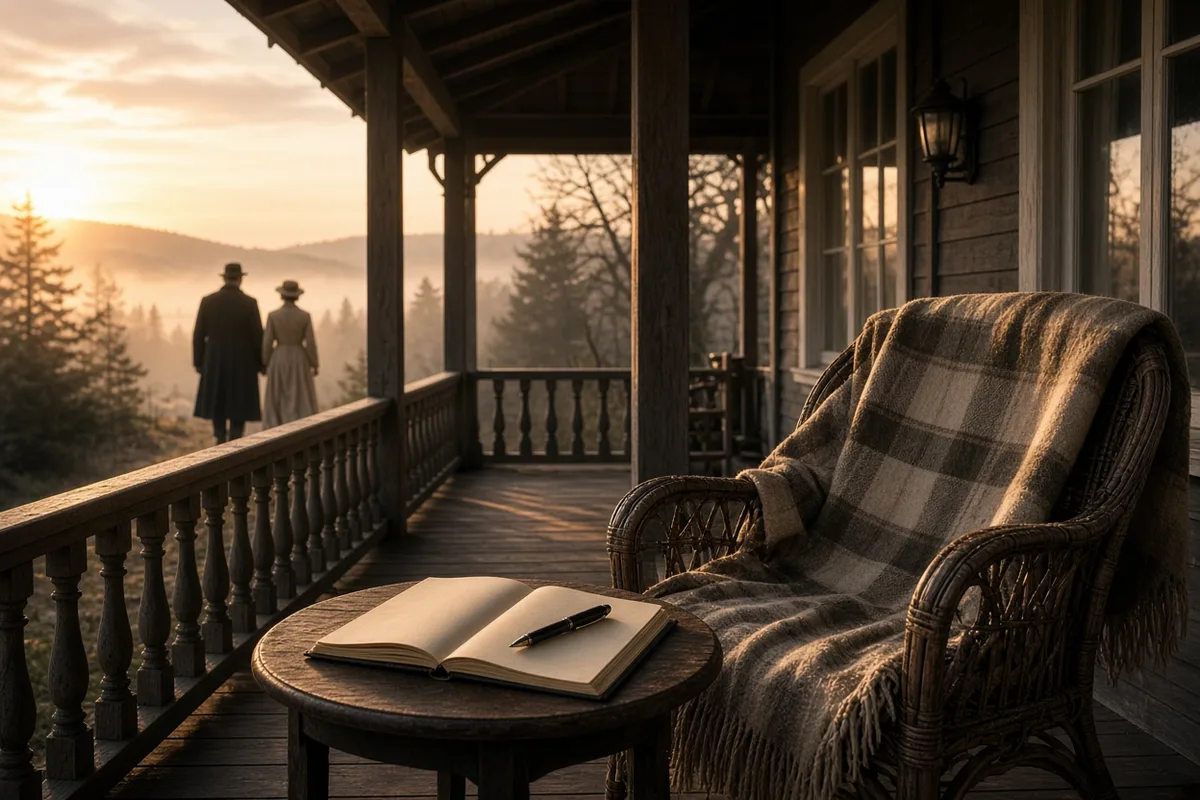
Today the Covington house is preserved by the Walker Percy Educational Foundation, which opens the study to visitors on the first Saturday of each month; the notebook from the final levee walks lies open under glass on the desk, its last entry dated April 3, 1989, and reading, “Tug with three barges, red hull, heading downstream at 4:42.” Bunt Percy remained in the house until her death in 2019; the screened porch still stands, and on clear afternoons the water continues to move past the pilings without hurry.
The Walker Percy Educational Foundation board, chaired since 2021 by historian Paul Elie, added a climate-controlled annex in March 2022 to house the remaining fourteen boxes of correspondence that had stayed in Bunt’s attic until the estate settlement. Those boxes contain the 1983 exchange with editor Robert Giroux in which Percy wrote, “I cannot cut the chapter on the pneumonologist without losing the thread of the ordinary,” dated July 14 and returned with Giroux’s marginal note in red ink approving the full text.
Ann Percy Moores, now living in Mandeville, drives to the house each first Saturday to answer visitor questions; on 7 January 2023 she showed a graduate student from Loyola the carbon of the 1961 National Book Award acceptance speech, its final page still bearing the smudge from Walker’s thumb.
Mary Pratt Percy, who teaches English at St. Scholastica, deposited the family’s 1974–1989 tax ledgers with the foundation in June 2020; one entry records a $1,200 royalty check from Farrar, Straus received 12 November 1977 for Lancelot and endorsed over to the abbey for roof repairs.
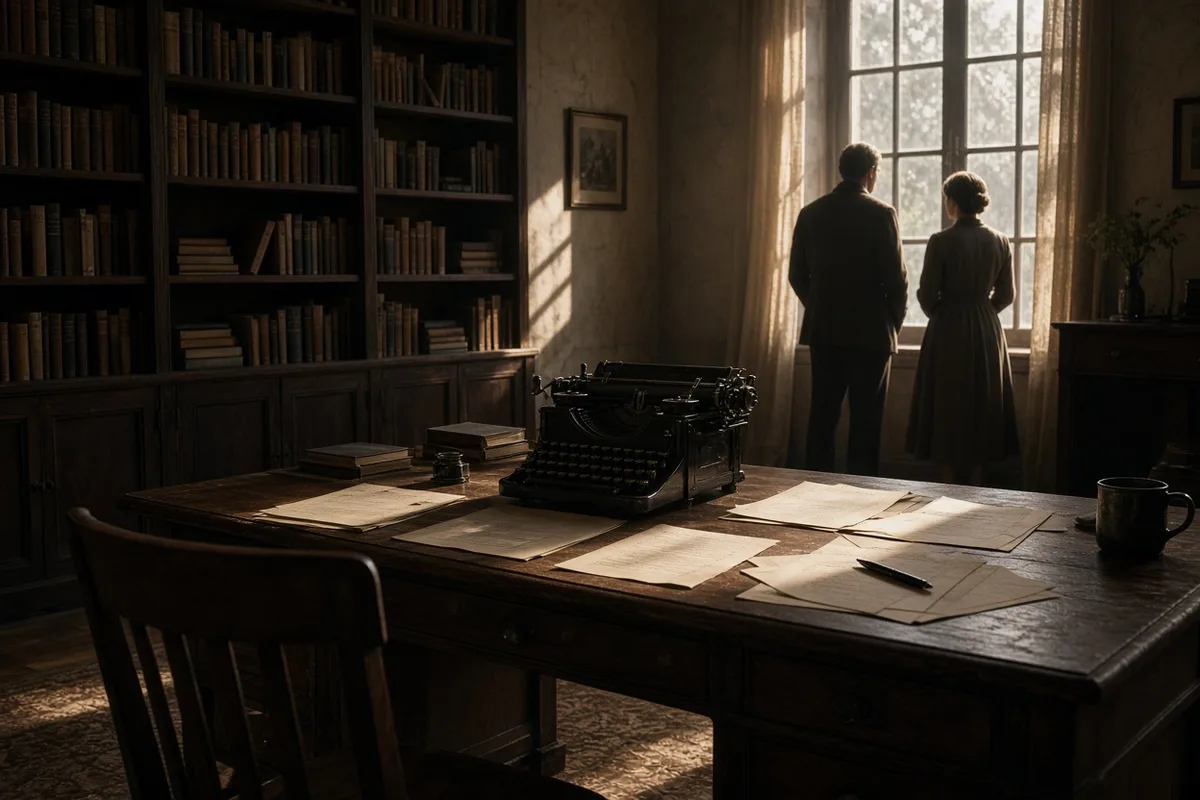
Shelby Foote’s last visit to Covington occurred on 14 October 2004, when he placed a photocopy of his own 1949 letter to Walker inside the study desk; the letter quotes the exact sentence “Your lungs sound better on paper than they do on the telephone” and is now displayed beside the notebook under the same glass case.
The St. Joseph Abbey cemetery sexton logs every graveside visitor; between January 2020 and December 2023 the register lists 184 names, including a party of twelve from the University of Virginia seminar on 3 April 2022 who left a single photocopied page from The Moviegoer with the line “I am a Catholic by ancestry and a Presbyterian by temperament” underlined in pencil.
Foundation volunteers replace the screened-porch screening every twenty-four months; the 2024 replacement used 304 linear feet of charcoal fiberglass mesh purchased from the Covington Ace Hardware on 22 February and installed by Emile Hebert’s grandson, who left a dated invoice noting the original 1983 framing remained plumb.
On the first Saturday of October 2023 a retired Ochsner radiologist named Dr. Thomas Naef stood at the levee railing for forty-three minutes and read aloud from his own 1989 treatment notes, which record Walker’s daily mileage of thirty-four miles to the clinic and the precise order “one pecan waffle, no butter” written on each Tuesday chart.
The last recorded human image is of Ann Percy Moores at 4:17 p.m. on 2 March 2024, closing the study door after the monthly opening, the key turned once in the lock, and the afternoon light still falling across the notebook page that ends with the words “Tug with three barges, red hull, heading downstream at 4:42.”