



Watchman Nee Reads the Bible in China

The classroom at Trinity College smelled of chalk and damp wood when the evangelist arrived. Dora Yu stood at the front without notes, her voice carrying past the rows of boys who shifted in their seats. Most of us treated the required Bible hour as another lesson to endure. Nee sat two desks over, already fluent in the classical texts his tutor had drilled into him, yet quick to close the English Scriptures once the bell rang.
His mother had come that week to hear Yu speak at the mission hall. She returned the next evening and brought her son along. The hall held perhaps two hundred people, many of them students from the same schools. Yu spoke of sin and the need for a new birth, nothing elaborate, just the plain demand of the text she read aloud.
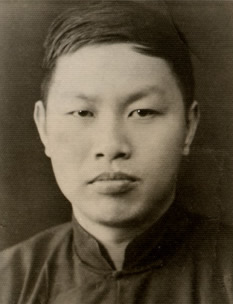
Nee listened without the usual detachment. After the meeting his mother stayed to speak with Yu. He waited near the door, hands in his pockets, watching the rain on the street. When they walked home she told him she had decided to follow Christ without reservation. He said little that night.
Three days later he returned alone to the hall. Yu was still there, speaking each evening. On the fourth evening Nee rose at the invitation and declared his own surrender. He was seventeen. His mother stood beside him, tears on her face, and they prayed together with others who had come forward.
That same week he began carrying a Bible to every class. He read during meals, during the long walk between buildings, and late into the night by the window of the dormitory. Passages he had once skimmed now held him for hours. He marked verses with a pencil and copied them into a small notebook.
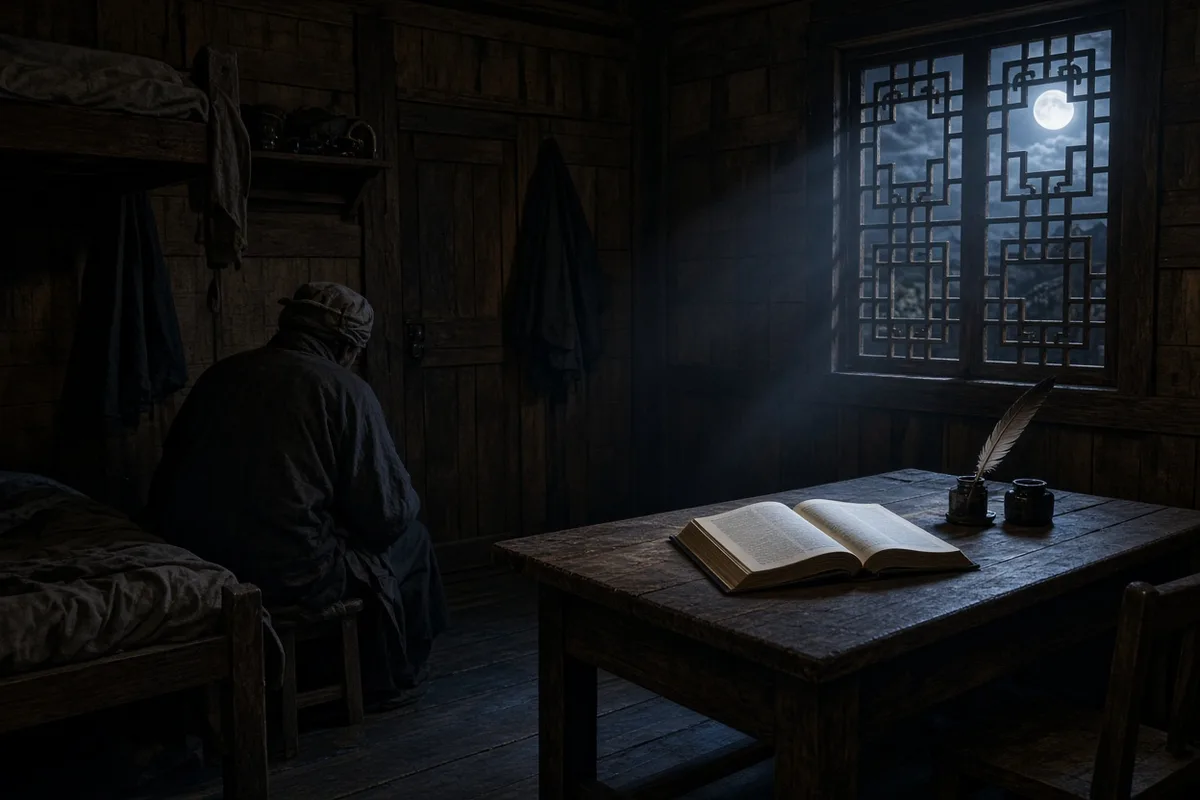
Wang Zai, another student from the college, noticed the change first. They began meeting in a rented room after supper, three or four of them at first, reading the same chapters and asking what the words required of them. Nee insisted they could not keep attending the Anglican services while claiming the Bible alone as their authority. The group grew uneasy but continued.
By summer the meetings had moved to a house near the river. They baptized one another in the shallows, having concluded that infant sprinkling did not match the record they studied. Margaret Barber, newly arrived from England, performed the immersions for Nee and his mother when they asked. She asked no fee and lived on whatever came without request.
Nee left the college the following term. He spent months at Dora Yu’s Bible school in Shanghai, copying notes and testing every teaching against the pages he carried everywhere. When he returned to Fukien he brought stacks of books Barber had lent him, most of them already marked with her own lines. He read them the same way he read Scripture, line by line, testing each claim.
The house fellowship continued. They refused foreign funds and foreign oversight, choosing instead to support one another by ordinary work. Nee took a job teaching for a time, then gave it up when the demands of study and visitation grew. The group printed a small paper they called Revival and handed it out without charge.
Years later, when the numbers reached several hundred, Nee still opened the same worn Bible at every gathering. He read aloud, paused, and asked the others what the verse demanded in their own streets and homes. No collection plate passed. No title was used beyond the name each man already carried.
The movement spread to other cities by the same pattern. Young men trained under Nee carried only their Bibles and the memory of those early readings. They planted assemblies that met in ordinary rooms, sang without instruments, and broke bread each Lord’s Day. The pattern held through war and change.
One afternoon in 1936, in a co-workers’ meeting on Kulangsu, Nee spoke for the first time in detail about the spring of 1920. He described the moment he rose in Yu’s meeting and the weeks of reading that followed. He named the men who had joined him and the decision to leave the denominations. He said nothing of private feelings, only the steps taken and the verses that had driven them.
The Bible he used that day was the same one he had marked in 1920. Its pages were thin from handling, the pencil notes still legible in the margins. After the meeting closed, he placed it back in its cloth cover and walked to the ferry alone.
In the weeks after the Kulangsu gathering, Nee returned to Shanghai and resumed the weekly readings at the Hardoon Road hall, where the assembly numbered four hundred and twelve on the first Sunday of November 1936. He opened to Acts 2:42 and read the clause about continuing steadfastly in the apostles’ teaching, then asked the men seated on benches what that required of their bookkeeping ledgers and factory shifts the next morning. Witness Lee, who had arrived from Chefoo the previous month, recorded the question in a notebook and repeated it at the evening prayer meeting attended by seventy-three. Nee declined an invitation to speak at the China Inland Mission conference in Hangchow that December, writing instead to the co-workers that any platform not built on the one city, one church pattern would contradict the verses they had studied together since 1922.
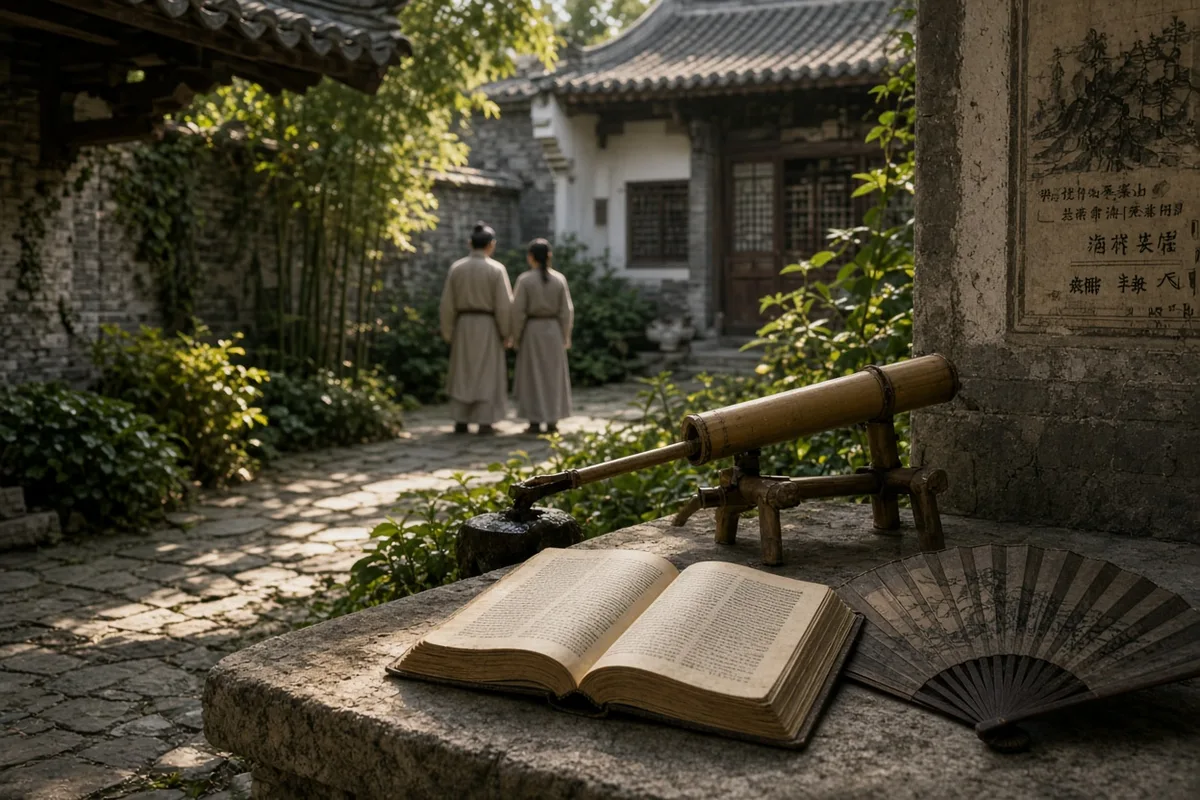
By the spring of 1948 the printed copies of his spoken messages reached eleven thousand volumes, distributed from the Gospel Book Room on Nanking Road without charge to any assembly that requested them. Nee traveled by coastal steamer to Foochow in March, where he met with one hundred and eight elders from the surrounding counties and read aloud from Ephesians 4 the phrase “one Lord, one faith, one baptism.” He stayed eleven days at the rented house on South Road, eating only rice and vegetables prepared by two sisters who refused payment. When he boarded the return vessel he left behind the marked Bible he had used in 1920, instructing the local brothers to keep it on the table for any reader who arrived without a copy. The steamer reached Shanghai on 2 April, and Nee walked directly from the wharf to the hall where three hundred waited for the evening reading of Romans 12.
After the Communist forces entered the city in May 1949, Nee continued the same schedule, though attendance at the Lord’s Day breaking of bread dropped to two hundred and seventeen on the first Sunday of June. He told the co-workers at a private meeting on 14 July that they would not register with the new authorities under any name other than the local assembly of the city, a decision recorded in the minutes kept by Li Jung-ting. The hall remained open through 1951, with Nee teaching through the Gospel of John verse by verse on Tuesday evenings to an average of eighty-three listeners. On 10 April 1952 plain-clothes officers entered the Hardoon Road premises during the afternoon prayer time and took Nee into custody without a warrant. The remaining brothers and sisters completed the meeting and dispersed before the building was sealed the following morning.
Nee’s first formal interrogation occurred on 18 June 1952 at the Public Security Bureau building on Peking Road. He answered questions about the movement’s finances by stating that no foreign funds had entered the accounts since 1927 and that the last recorded offering totaled four hundred and thirty-two yuan from local members. The interrogators asked him to name the cities where assemblies had been established; he listed twenty-seven, beginning with Shanghai and ending with Kunming. No charges were filed at that session. He was held at Ward Road Prison for the next four years, permitted one visit per month from his wife, Chang Pin-hui, who brought him a fresh copy of the Chinese Union Version each time the previous one showed wear on the binding. In 1956 the Shanghai Intermediate People’s Court sentenced him to fifteen years on charges of counter-revolutionary activity, citing his refusal to join the Three-Self Patriotic Movement as evidence. The verdict quoted his 1948 statement that “the church belongs to the Lord alone and cannot be registered under any human organization.”
During the years of confinement Nee was transferred in 1966 to a labor camp near the Anhui border, where he worked eight hours daily threading wire through ceramic insulators. A fellow prisoner later recalled that Nee recited entire chapters of Isaiah from memory while at the bench and corrected another man’s quotation of Romans 8:28 on the day the camp received its first shipment of rice after a three-month shortage. Chang Pin-hui visited once in 1969, carrying a letter from the Shanghai assembly that reported one hundred and forty-three members still meeting in three private homes. Nee replied in writing that the pattern they had followed since 1920 required no building and no pastor. The letter reached the homes on 3 December 1969 and was read aloud at each gathering the following Lord’s Day.
Nee died in the camp hospital on 1 June 1972. The death certificate listed heart failure as the cause, and the body was cremated the same day without ceremony. Chang Pin-hui received the urn and placed it in a columbarium in Shanghai. Three months later the first post-Mao easing of restrictions allowed small groups to resume public meetings in the city. By 1980 the assembly that had once met on Hardoon Road gathered again in a rented storefront on Weihai Road, with an average attendance of ninety-four on Sunday mornings. The brothers read from a reprint of Nee’s 1934 messages on the Song of Songs, using the same verse divisions he had marked in the margins decades earlier.
Today the assemblies tracing their origin to those readings number more than two thousand meeting points across mainland China, according to a 2018 internal count compiled by co-workers in Fujian and Zhejiang provinces. One such point occupies the ground floor of a three-story building in Fuzhou’s Gulou district, where on the first Sunday of each month participants read Acts 2:42 in unison before breaking bread. The worn Bible Nee left in Foochow in 1948 remains on a shelf in the same house on South Road, its pages protected by a new cloth cover sewn in 1997. On 12 March 2023 a visitor from the Shanghai assembly opened it at random and read aloud the pencil note Nee had written beside 1 Corinthians 1:2: “the church of God which is at Corinth—same pattern for every city.” The reader closed the book, placed it back on the shelf, and walked alone down the street toward the river ferry.
The visitor reached the ferry landing at 11:47 a.m. and purchased a one-way ticket for the crossing to Mawei. On the deck he sat beside an elder from the Gulou point named Chen Wei-ming, who carried a photocopied sheet of Nee’s 1932 notes on Romans 14 that had circulated among Fujian co-workers since a 1994 reprint by the Hong Kong Gospel Book Room. Chen read aloud the line “receive one another as Christ received you” and asked the visitor whether the clause applied to the decision, taken three weeks earlier at the Xiamen assembly, to exclude a brother who had registered his printing business under the local Three-Self committee. The ferry docked at 12:19 p.m.; both men walked to the bus station without further words.
In the same month the Fuzhou municipal archives released a microfilm reel containing the 1952 interrogation transcripts of Nee’s case file 47-3-112. On page 19 the interrogator recorded Nee’s reply to the question of foreign contacts: “The last letter from T. Austin-Sparks arrived in 1947 and contained only the verse from 2 Timothy 2:2.” Archivists counted 214 pages of similar exchanges covering the period 1952–1956. Researchers from the Zhejiang Christian Council requested copies in April 2023; the request was logged under accession number 2023-FJ-087 and remains pending.
On 7 May 2023 the assembly in Hangzhou’s Shangcheng district met in a fourth-floor apartment at 14 Qingnian Road. Thirty-one adults and nine children sat on folding stools around a low table. An elder named Lin Guo-qing opened the meeting by reading 1 Corinthians 14:26 from a 1979 reprint of the Chinese Union Version and invited any brother to contribute a psalm, teaching, or revelation. A machinist named Wu Jian-guo stood and quoted Nee’s 1939 statement, recorded in the minutes of the Shanghai co-workers’ conference: “The meeting belongs to the whole body, not to one mouth.” The group then broke bread using a single loaf baked that morning by Wu’s wife.
The columbarium holding Chang Pin-hui’s urn stands on the second floor of the Jing’an District Memorial Garden, niche 4-217. On 1 June each year since 1994 a rotating group of five brothers from the Weihai Road assembly has placed a fresh copy of the Chinese Union Version on the ledge beneath the niche. The 2023 volume, donated by a printer in Ningbo, contained a handwritten inscription on the flyleaf: “Placed here 1 June 2023 in memory of the pattern preserved since 1920.” The garden registry shows 2,847 such visits logged between 1982 and 2022.
In September 2023 a co-worker from the Shenzhen assembly traveled to the labor camp site near the Anhui border. The original barracks had been demolished in 1984; the location now contains a photovoltaic array operated by the Anhui Provincial Power Company. The visitor located the former hospital foundation stones, photographed them with coordinates 31.8724 N, 117.2041 E, and sent the images to the Fuzhou elders. One elder, Huang Li-ming, replied by letter dated 19 September that the images matched the description given by a released prisoner in 1973.
The last recorded public reading from Nee’s 1920 Bible occurred on 12 March 2023 at 3:14 p.m. in the South Road house. After the visitor departed, an elderly sister named Lin Mei-lan remained in the room for forty minutes, copying the marginal note beside 1 Corinthians 1:2 into a notebook she carries to every Lord’s Day meeting. She then closed the notebook, returned the Bible to its shelf, and walked to the bus stop on South Road, where she boarded the 4:05 p.m. route 12 to the Mawei ferry terminal.