



Why athletic greatness is never just genes or practice

In 60 seconds
- Athletic greatness is neither pure genetic gift nor pure hard work; genes shape how bodies respond to training, and training reveals what genes made possible.
- The 10,000-hour idea was an average from 1993 violin research, not a threshold; chess grandmasters ranged from under 2,000 to over 20,000 hours of serious study.
- In the HERITAGE Family Study, over 700 people did the same 20-week endurance program and saw VO2 max changes from essentially zero to over 50 percent, with response clustering in families.
- Olympic physiques diverged by sport over a century as selection sorted bodies into niches; Kenyan distance dominance mixes unusually thin lower legs with economic incentive and culture around Iten.
- ACTN3 correlates with sprint performance and is more common in West African–descent populations, yet is neither necessary nor sufficient; sickle cell trait can turn lethal under extreme heat and exertion.
- Elite hitters win via learned pattern recognition, not faster reflexes; youth systems favor early birth-month kids; binary sex categories collide with natural hormone variation, as in the Semenya case.
The big idea
Epstein argues that the nature-versus-nurture debate in sport is a false choice: genes produce proteins, tissue properties, and hormonal sensitivities that then interact with training, culture, and opportunity. The habit he wants is to ask, for any success story, what biology sets as a limit, what the environment supplies as chance, and how the two actually interact in that case.
The book in brief
Epstein starts by rejecting the two popular camps—champions are simply born, or anyone can reach the top with enough deliberate practice. A gene does not hand someone a skill; it shapes a tissue or a response curve that then meets whatever training and culture a person actually gets. Practice matters enormously, yet identical work can produce wildly different results because bodies adapt differently at the cellular level. He sets the method for the rest of the book: trace measurable gene–environment interactions rather than pick a side.
He then dismantles the 10,000-hour story. The figure came from an average in Anders Ericsson’s 1993 study of Berlin violin students and was popularized by Malcolm Gladwell; the actual range of hours to elite status was huge, and the same pattern shows up in chess. Deliberate practice helps most in stable, rule-bound tasks and less where reaction speed or limb proportions set a hard ceiling. Early aptitude also buys more coaching and playing time, so the hours themselves partly follow from prior advantage.
The middle of the book shows how selection and physiology sort people. Identical endurance training produces family-clustered gains from near zero to over 50 percent. Olympic athletes in different sports have become far more specialized in body type over a century because larger talent pools and money funnel the right builds into the right events. In Iten, Kenya, Kalenjin distance dominance mixes thinner lower legs that lower the energy cost of each stride with intense economic incentive and a deep youth running culture. In Jamaica, an ACTN3 variant linked to fast-twitch fiber is overrepresented among elite sprinters and West African–descent populations, yet is neither necessary nor sufficient; high-school Champs and strong clubs supply the filter and coaching.
Later chapters complicate tidy stories. Sickle cell trait protects against malaria yet can cause fatal collapse under extreme heat, dehydration, and conditioning drills, which pushed the NCAA to mandate screening in 2010. Baseball hitters do not have superhuman reflexes; they read arm angle and release early enough to swing inside a sub-half-second window. Youth sports over-select kids born just after cutoff dates, turning a few months of maturity into compounding opportunity. The Caster Semenya case shows that natural variation in sex development and hormones does not sort neatly into the binary categories sport demands.
Epstein lands on a working habit rather than a slogan: whenever someone offers a one-cause explanation for who succeeds, ask what the biology limits, what the environment opens, and how the two are interacting in that specific sport and place.
Context
David Epstein’s 2013 book of science journalism weighs genetic inheritance against training, culture, and opportunity, drawing on genetics research, physiology studies, and reporting from Kenya to Jamaica to NFL combines. It challenged the popular 10,000-hour narrative and reshaped how coaches, scientists, and journalists talk about talent.
The key ideas

1
The false choice
Framing greatness as either genetic gift or pure practice misdescribes a process where genes and training constantly shape each other.
Born or made
Champions are simply gifted, or anyone reaches the top with enough hours
Interaction
Genes shape tissue and response; training, culture, and opportunity reveal what those traits allow
Epstein rejects both the born-champion story and the anyone-can-make-it-with-practice story as bad biology. A gene produces a protein, a tissue property, or a hormonal sensitivity; that then meets the training, nutrition, and culture a person actually encounters. Height is genetically influenced, but a tall child without basketball courts never becomes an NBA center.
Two athletes can follow the same program and finish in different places because their cells respond differently. He treats single-cause stories as a trap that both journalists and scientists fall into. The method he sets up is to follow cases where the interaction can be measured—muscle biopsies, twin registries, family training studies—rather than to pick a side.
Any trait that looks purely environmental, such as Kenyan distance dominance, turns out to carry measurable genetic components. Any trait that looks purely genetic, such as a sprinter gene, still needs the right cultural and economic conditions to matter. The opening is less a verdict than a warning against seductive simplicity.
In practice: A tall child in a country without basketball courts never becomes an NBA center no matter what the height genes say.

2
No magic hour count
The claim that 10,000 hours reliably produces expertise misreads the original research and ignores enormous individual variation.
Epstein traces the popular figure to Ericsson’s 1993 study of violin students at a Berlin academy, later amplified by Gladwell’s Outliers. The number was an average, not a threshold, and the hours different violinists needed to reach elite status varied widely. Chess research later found some grandmasters earned the title in under 2,000 hours of serious study while others needed over 20,000.
He holds that deliberate practice matters most in tasks with stable, predictable rules—chess, classical music—and less in dynamic sports where reaction speed or limb proportions set a ceiling repetition cannot raise. Practice is necessary but not sufficient; treating it as sufficient produces bad coaching advice and false hope.
A selection effect also sits under the neat story. People who show early aptitude get more encouragement, better coaching, and more ice or court time, so the accumulated hours are partly a consequence of prior advantage rather than an independent cause. That reframing matters for later chapters that must separate practice volume from underlying physiology.
In practice: Some chess grandmasters reached the title in under 2,000 hours of serious study; others needed over 20,000.

3
Unequal training returns
Identical training produces dramatically different physiological gains because trainability itself is heritable.
0–50%+
VO2 max change after identical 20-week training (HERITAGE)
The HERITAGE Family Study, led by Claude Bouchard, put over 700 people through the same 20-week endurance program and tracked change in VO2 max. Results ranged from essentially zero improvement to gains of over 50 percent. Because families were included, researchers could show that response clustered within families, pointing to a genetic component in trainability distinct from baseline fitness.
Epstein uses the spread to puncture the comforting idea that hard work always pays off proportionally. Some bodies convert the same stimulus into mitochondrial density, capillary growth, and hormonal response far more efficiently than others. He notes, though, that later work has questioned how much of the dramatic zero-to-fifty range reflects stable individual traits versus measurement noise and single-bout responses, so the finding is influential yet contested in size.
In youth sports the practical cost is misreading kids. A coach watching two twelve-year-olds work equally hard may see one surge and the other plateau and wrongly blame work ethic. Early candidate genes for trainability explain only a slice of the variance; most traits are polygenic, with dozens or hundreds of small-effect variants acting with environment.
In practice: In HERITAGE, the same 20-week endurance program produced VO2 max changes from essentially zero to over 50 percent, clustered by family.
4
Bodies sorted into niches
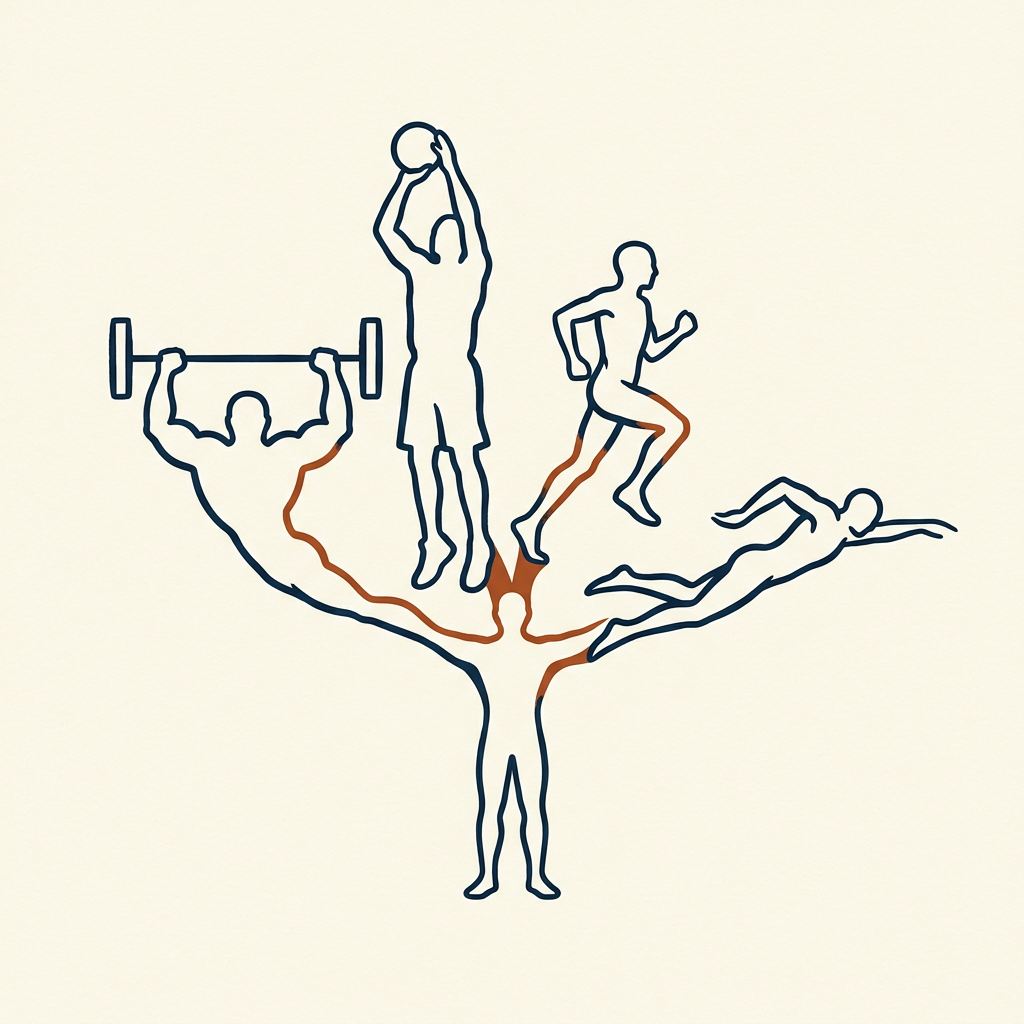
Elite athletes across sports have become more physically specialized over a century as selection funnels the right builds into the right events.
Epstein presents physique data across Olympic eras. Early in the twentieth century, elites in different sports looked fairly similar in height and build. By the 2000s, basketball centers, marathoners, gymnasts, and shot putters had clustered tightly around distinct ideals for their events.
Human bodies did not suddenly change. The world got better at finding and funneling fitting bodies, aided by bigger global talent pools, more sports science, and stronger financial incentives. Talent identification therefore begins long before deliberate practice: a child whose proportions poorly match a sport can train for years and still lose to someone whose structure fits the demands.
Swimming rewards longer torsos and shorter legs that reduce drag. High jump rewards Achilles tendon length and heel insertion that store and release elastic energy independent of training volume. Matching pre-existing variation to the sport that pays for it raises hard questions about how early and how narrowly children should specialize.
In practice: High-jump success can hinge on Achilles tendon length and heel insertion that set elastic energy return before training starts.

5
More than altitude in Iten
Kenyan distance dominance is not altitude alone but genetics, economic incentive, and cultural infrastructure converging in one region.
Epstein visits Iten in the Rift Valley, which has produced a disproportionate share of elite distance runners, mostly from the Kalenjin. Altitude training is the common explanation, yet many other high-altitude regions produce no comparable runners, and some elite Kalenjin come from lower-altitude areas.
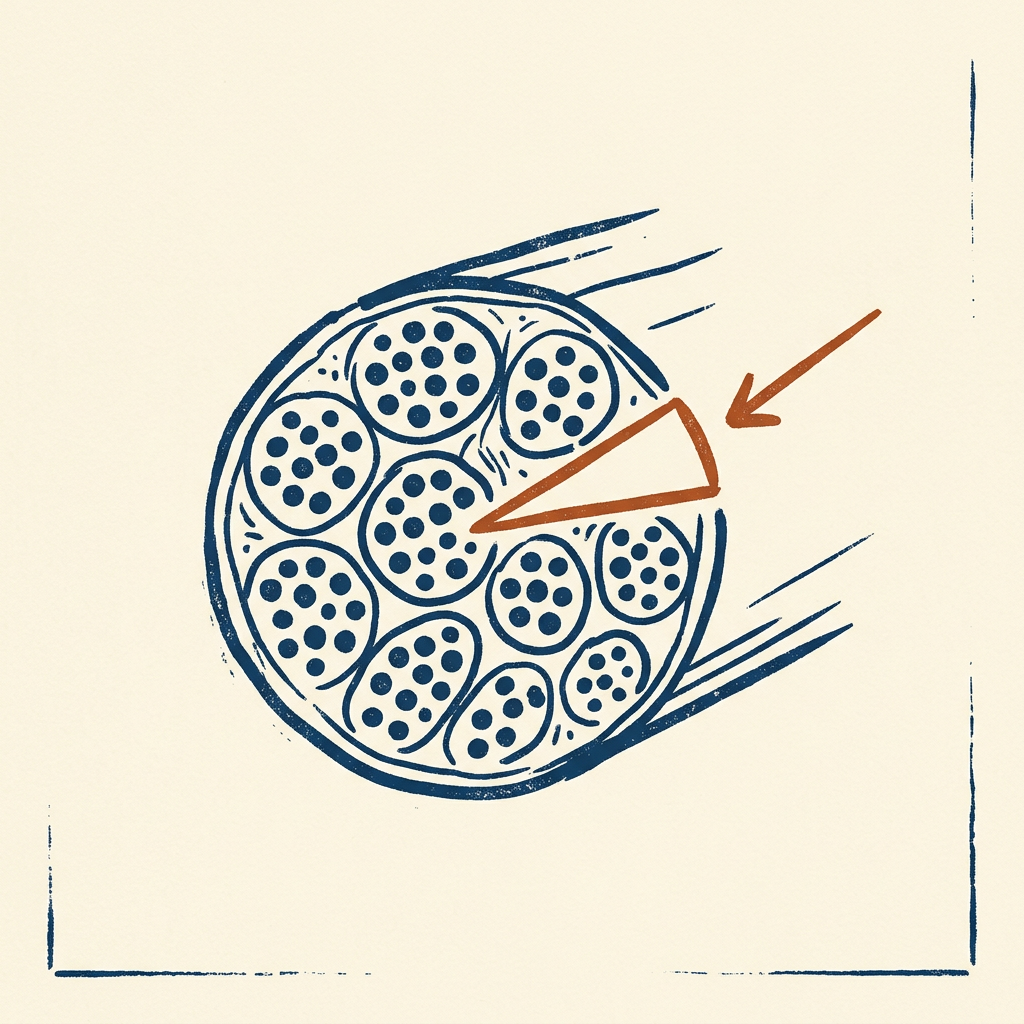
He builds a layered account. Kalenjin runners often have unusually thin lower legs and ankles relative to body mass, lowering the energy cost of swinging the leg each stride—lighter wheels on a bicycle. Limb-circumference and segment-mass studies comparing Kalenjin runners with Danish and other controls found the pattern consistently.
Biology is only part of the story. Running is one of the few reliable paths out of poverty there, so children train young, often running long distances to school, and successful runners become visible role models whose wealth reinforces the next generation’s incentive. As earnings rose, participation and results rose with them. Remove either the leg morphology or the incentive structure and the outcome would likely change.
In practice: Studies found Kalenjin runners had consistently thinner lower legs and ankles relative to body mass than Danish and other control groups.
6
No single sprinter gene
ACTN3 is more common in West African–descent populations and correlates with sprint performance, yet explains only a small fraction of championship speed.
Jamaica’s concentration of world-class sprinters, including Usain Bolt, leads Epstein to ACTN3, which produces a protein in fast-twitch fibers used for explosive movement. One version, the 577X variant, yields no functional protein and is tied to reduced sprint and power performance; the other is overrepresented among elite sprinters and West African populations more broadly. Work associated with Yannis Pitsiladis reported higher frequencies of the sprint-favoring variant in Jamaican and West African sprinters than in other groups.
He undercuts any simple destiny story. The favored variant is common in many people who are not fast, and some elite sprinters lack it entirely, so it is neither necessary nor sufficient. Later meta-analyses have found small and inconsistent effects on actual performance across cohorts—a caveat the book notes but does not dwell on, and that later literature has hardened.
Jamaica’s system supplies the rest: Champs, the rigorous high-school championship, acts as an intense public talent filter, and clubs such as MVP provide elite coaching early. Africa’s deep genetic diversity makes treating ‘African genetics’ as one category scientifically sloppy. The real picture is a gene-frequency difference meeting a specific national sporting machine.
In practice: The sprint-favoring ACTN3 version appears more often among elite sprinters and West African–descent populations, yet some champions lack it and many non-sprinters carry it.

7
When a trait can kill
Sickle cell trait protects against malaria yet can become dangerous under the extreme stress of elite conditioning, so context decides whether a gene helps or harms.
One copy of the sickle hemoglobin gene protects against malaria and is common among people of West and Central African descent and some Mediterranean and South Asian populations. Carriers are usually healthy. Under extreme exertion, dehydration, and heat, though, red cells can sickle and cause collapse, sometimes fatal, during intense drills.
Epstein recounts documented deaths of American college football players with the trait in preseason conditioning. That pattern pushed the NCAA to mandate trait screening for Division I athletes starting in 2010. Sport creates loads unlike ordinary evolutionary history, so an adaptive population trait can turn lethal in a engineered training environment.
The chapter also opens an ethical thread that runs later: how much should teams know about an athlete’s genetics, and does screening protect people or expose them to discrimination and lost opportunity. A variant is not simply ‘good for athletes’; context decides.
In practice: Documented deaths of college football players with sickle cell trait during preseason conditioning led the NCAA to mandate Division I screening in 2010.
8
Seeing the pitch early
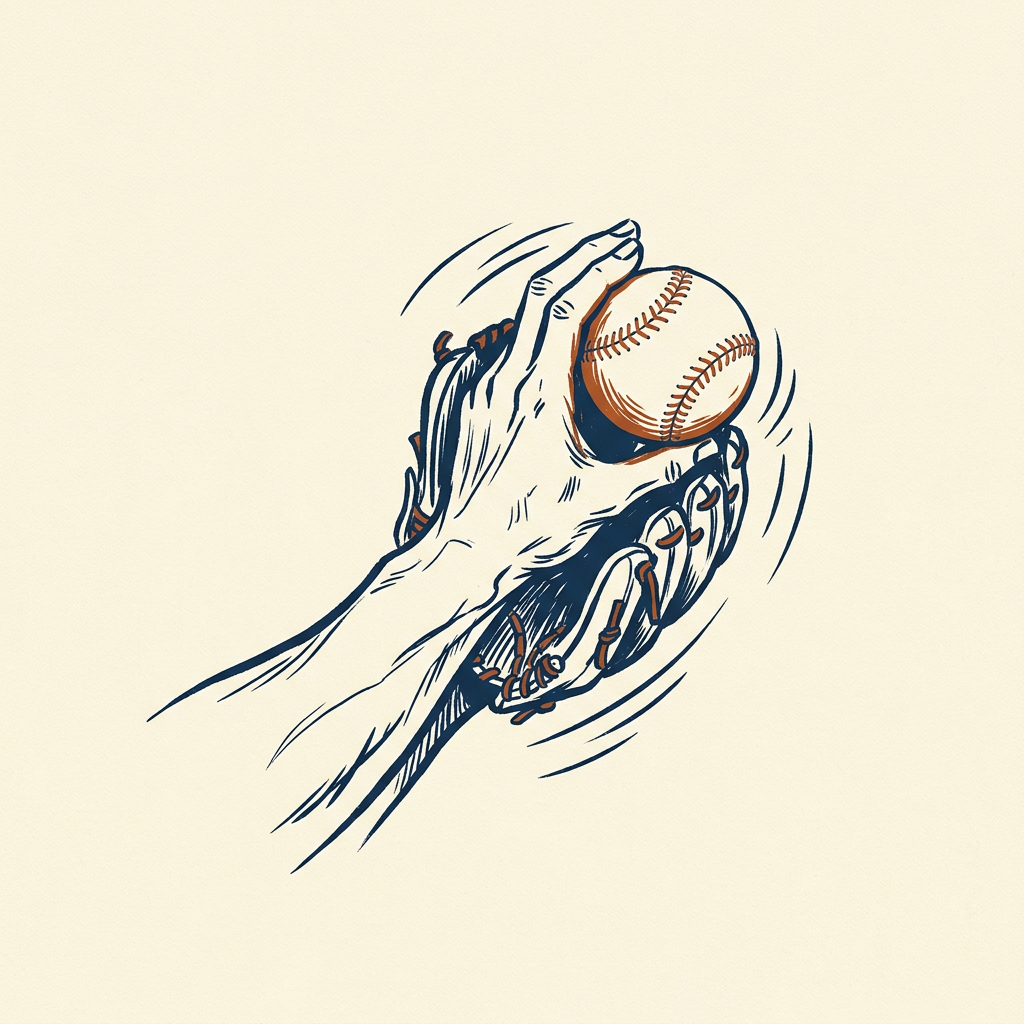
Elite hitters do not have superhuman reflexes; they use learned pattern recognition to anticipate the pitch before it fully leaves the hand.
- 1Early cuesArm angle, wrist, release point read before full ball flight
- 2PredictionPitch type and location anticipated inside a sub-half-second window
- 3Swing decisionAction begins on the forecast, not on conscious reaction to the ball mid-flight
A fastball can reach the plate in under half a second—less time than conscious reaction takes. Studies comparing raw visual reaction times of college and pro hitters with non-athletes found little difference. What differs is pattern recognition built from exposure.
Skilled hitters pick up arm angle, wrist position, and release point early enough to predict type and location before the ball is fully visible. Video occlusion research cuts the pitch at different moments and asks hitters to call the outcome; experts far outperform novices even when footage stops before release.
This is where deliberate practice does heavy lifting: fast recognition inside structured, rule-governed situations, exactly the domain Ericsson’s work described well. It contrasts with leg morphology or fiber type, where structure sets limits practice cannot erase. Talent therefore looks different by skill—sometimes trainable perception, sometimes unchangeable build—and conflating the two yields bad predictions.
In practice: In occlusion studies, expert hitters predicted pitch outcome far better than novices even when video stopped before the ball was released.

9
Born after the cutoff
Youth selection systems favor children who are simply older inside the age bracket, manufacturing early ‘talent’ that is mostly relative age.
- Age 8–9Extra months after the cutoff yield visible size and coordination edges
- SelectionCoaches advance the bigger, smoother kids onto elite tracks
- TeensBetter coaching and more games turn the calendar edge into a lasting skill gap
Epstein examines the relative age effect: kids born in the months just after a youth-sport cutoff are overrepresented in elite development tracks. In Canadian minor hockey, with a January 1 cutoff, January and February births dominate elite teams compared with November and December births, though birth month should not confer hockey ability.
At eight or nine, several extra months of maturity produce visible size and coordination edges. Coaches pick the bigger, smoother kids for elite paths; those kids then get better coaching and more games; the accidental edge compounds into a real skill gap by the teens.
Talent systems often measure who developed early rather than who holds the most long-term ability. Genuinely gifted later-born children get filtered out for calendar reasons. Separating stable potential from short-term developmental luck demands slower, more careful evaluation than most youth organizations use.
In practice: In Canadian minor hockey with a January 1 cutoff, January and February births are dramatically overrepresented on elite teams versus November and December births.

10
Sex categories at the edge
Binary sex categories break down at the margins because hormones and chromosomes do not sort neatly into two groups, forcing arbitrary eligibility rules.
Epstein takes up Caster Semenya, the South African 800-meter runner whose rapid rise around 2009 brought intense scrutiny and sex-verification testing. The case exposed how unprepared governing bodies were for natural differences in sex development that can produce internal testosterone in the typical male range in someone raised and identified as female.
Such variation is rare but part of human diversity, not an anomaly equivalent to cheating. Drawing a hard eligibility line is scientifically and ethically hard: testosterone is only one performance factor, and male and female performance distributions overlap in some sports. Epstein does not claim a clean policy answer; none exists inside the book’s frame.
The chapter extends the book’s core claim into its most fraught ground. Biology produces spectra—leg shape, fiber type, trainability, and also sex-linked traits—while sport insists on binary categories for fair competition. That collision will keep recurring. Written in 2013, the chapter predates later World Athletics testosterone rules and sustained critique that the performance science of testosterone is weaker than regulators claimed; it reads now as a starting point, not a settled account.
In practice: Semenya’s rise around 2009 triggered sex-verification testing and showed governing bodies unprepared for natural differences in sex development.
Key terms
- Deliberate practice Focused, structured training that improves skill most in stable, rule-bound tasks and less where physical ceilings dominate.
- Trainability How much a body improves from the same training stimulus; itself partly heritable and distinct from starting fitness.
- VO2 max A standard measure of aerobic fitness; the marker HERITAGE used to track training response.
- ACTN3 A gene whose protein appears in fast-twitch muscle fiber; one common variant is linked to lower sprint and power performance.
- Relative age effect The pattern that kids born just after a youth-sport cutoff date are over-selected for elite tracks because they are temporarily bigger and more coordinated.
- Sickle cell trait One copy of the sickle hemoglobin gene; usually silent and malaria-protective, yet risky under extreme heat, dehydration, and exertion.
- Polygenic trait A characteristic shaped by many small-effect gene variants plus environment, not a single on/off switch.
- HERITAGE Family Study Bouchard’s project that put family groups through identical endurance training and found wide, family-clustered differences in response.
What to do
- Stop using a single number such as hours practiced as a proxy for future potential in anyone you coach, hire, or train.
- Track actual response to a defined block of training, treating big individual gaps as information rather than moral failure.
- When ranking youth talent, check birth dates against cutoff dates before trusting early performance.
- Give later-born or late-developing athletes a longer runway before judging their ceiling.
- When a headline claims a gene explains a talent, ask what share of variation it accounts for and in which population before repeating it.
Questions to think with
- In the sport or skill you care about most, what looks like pure talent that might actually be early maturity, better access, or a body-type match?
- Where does practice clearly raise the ceiling, and where does structure (tendons, fibers, proportions) seem to set a hard limit?
- If two athletes train identically for three months, how would you measure and interpret a large gap in their gains?
- Should leagues screen for traits like sickle cell to protect athletes, and what safeguards would prevent discrimination?
- How should youth programs redesign tryouts so later-born kids are not permanently filtered out?
The other side
As science journalism rather than a peer-reviewed synthesis, the book’s chapter-after-chapter ‘genetic component’ can leave a stronger taste of determinism than any single study supports. ACTN3 effects have replicated inconsistently and meta-analyses find small, unreliable performance impacts; HERITAGE’s dramatic zero-to-fifty-percent spread has been challenged as partly measurement noise and less stable than foregrounded; the race-and-performance arc, though caveated, still risks a folk-genetic reading of Black athleticism if readers skim past Africa’s diversity; the 2013 Semenya framing predates later testosterone regulations and critiques that the performance science is weaker than rulers claimed; and complex team sports get far less attention than measurable individual events.
Who it's for
Coaches and talent scouts who need a more honest model of development, parents deciding how hard to push a child toward one sport, and general readers who want clearer thinking on genetics, race, and performance debates will get the most from the full book.