



Adam Grant urges treating beliefs as hypotheses not defenses

In 60 seconds
- Most of us default to preacher, prosecutor, or politician mode when challenged, protecting ego instead of accuracy.
- Confident humility pairs trust in your ability to figure things out with doubt about your current conclusions.
- Genuine dissenters beat assigned devil’s advocates because real disagreement cannot be dismissed as theater.
- Motivational interviewing and curious questions open minds faster than direct persuasion.
- Challenge networks and low-stakes practice rethinking beat crisis improvisation and identity foreclosure.
The big idea
Grant treats the habit of doubting what you know and revising opinions as a trainable skill, separate from raw intelligence. People who run their beliefs like scientists—seeking disconfirming evidence—make better decisions than those locked into defending, attacking, or campaigning for fixed views.
The book in brief
Grant opens with a personal miss: while judging student pitches at Wharton he dismissed the earliest Warby Parker plan, sure no one would buy glasses without trying them on. He was prosecuting his own retail theory, not testing it; the company later reached a valuation in the billions. That blind spot frames the core problem—most people never practice rethinking. He maps four mental postures. Preacher, prosecutor, and politician modes protect status when beliefs are challenged. Only the scientist mode treats an opinion as a hypothesis worth trying to break. The rest of the book shows how to build that mode as a habit rather than a personality trait. Confident humility supplies the psychology: trust your capacity to reason while holding present conclusions lightly. Detaching identity from opinions lets being wrong feel like growth. Productive disagreement then requires keeping task conflict separate from relational friction; real dissenters outperform theatrical devil’s advocates. On the interpersonal side, motivational interviewing and patient curiosity (illustrated by Daryl Davis’s long conversations with Klan members) loosen certainty better than argument. Organizations need the structural version: challenge networks, psychological safety that surfaces errors, and regular low-stakes rethinking so that crisis does not force frantic clinging to old tools—as happened at Mann Gulch in 1949 when firefighters could not drop the equipment that defined them. The arc closes on identity itself. Early career and life commitments often calcify through identity foreclosure. Periodic audits and classrooms that teach science as method rather than settled fact keep larger life scripts open to revision across decades.
Context
Adam Grant, an organizational psychologist, published Think Again in 2021. It landed as a reframing of mind-changing as strength rather than weakness, precisely when political and social polarization made updating views feel like betrayal. The book synthesizes lab and organizational studies into a practical case for scientist-mode thinking at work and in life.
The key ideas
1
Four mental postures
Preacher, prosecutor, and politician modes protect ego; only scientist mode tests beliefs for accuracy.
When a view is challenged, most people slide into one of three defensive stances. The preacher treats the belief as sacred and under moral attack. The prosecutor hunts flaws in the other side solely to win. The politician shades the position to win approval. None of these are built for getting closer to truth. The scientist stance is different: an opinion becomes a hypothesis, and the job is to look for the evidence that would kill it. Confidence stays attached to the process of testing, not to any single conclusion. That shift turns intellectual flexibility into a discipline that can be practiced. Grant’s own Wharton judging error shows the cost. He prosecuted a fixed theory of retail eyewear and missed a company that reached a valuation in the billions. The miss was not lack of intelligence; it was confidence locked onto a settled answer.
In practice: Grant rejected the early Warby Parker student pitch because he was sure glasses had to be tried on first.

2
Confident humility
Pair certainty in your ability to learn with real doubt about what you currently believe.
Arrogance
Confidence locked onto current conclusions
Confident humility
Confidence in learning ability; conclusions stay provisional
Arrogance parks confidence in today’s conclusions. Excess humility parks doubt in your own capacity and freezes action. The usable middle trusts your ability to reason and adapt while treating present opinions as provisional drafts. People who feel impostor doubts sometimes prepare harder and listen more closely, so long as the doubt stays about current knowledge rather than about the ability to improve. Experts in fast-moving fields who stop updating often degrade because early mastery creates the illusion the terrain is still the same. This stance is what lets someone run experiments on their own beliefs without the result feeling like a personal verdict.
In practice: Impostor feelings can drive more careful preparation and closer attention to feedback when they target knowledge rather than core capability.
3
Detach identity from opinions
Being wrong feels like growth only after opinions are unhooked from who you are.
People dig in less because the new evidence is weak and more because the old belief has fused with self. Changing a view on policy or parenting can register as self-betrayal. Swap the emotional stake: attach to accuracy and to values such as fairness or learning rather than to a fixed party line or strategy. Then a revision no longer touches the identity underneath. Without underlying confidence in your judgment, the same detachment just produces anxiety, which is why be-less-defensive advice usually fails alone. The 2019 debate between Harish Natarajan and an AI system showed the posture in public: he lost on delivery points yet responded with curiosity about the machine’s reasoning instead of defensiveness.
In practice: Natarajan, after losing points to IBM’s Project Debater, stayed curious about the AI’s reasoning rather than protective of his performance.
4
Real dissent beats theater
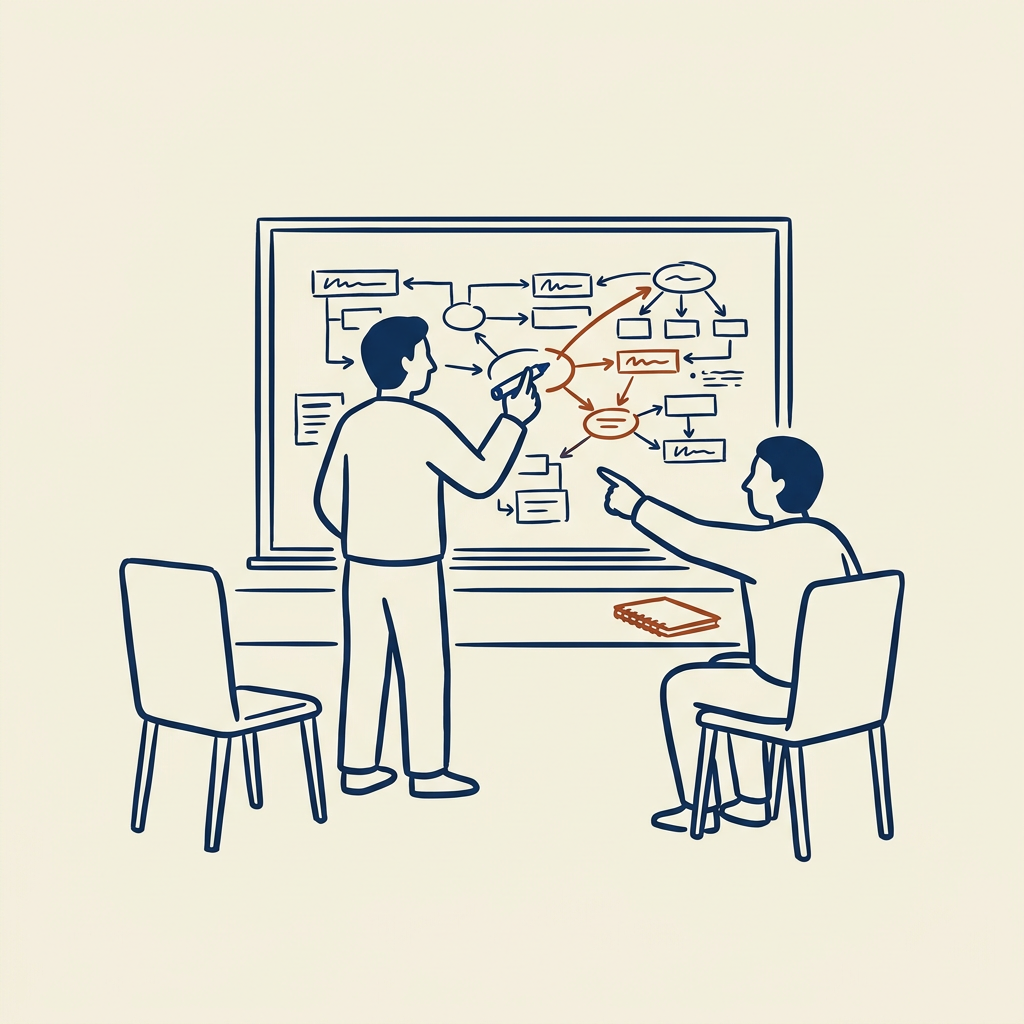
Assigned devil’s advocates barely help; actual minority holders sharpen decisions because the disagreement cannot be dismissed.
Devil’s advocate
Assigned role; disagreement reads as theater and is discounted
Genuine dissenter
Real minority view; discussion becomes rigorous because it cannot be waved away
Task conflict—disagreement over ideas and approaches—improves thinking. Relational conflict—friction between people—shuts it down. Teams constantly confuse the two, so a hard question feels like a personal attack. Charlan Nemeth’s work shows groups given a formal devil’s advocate improve only marginally; everyone knows the pushback is a role. Groups that contain someone who truly holds the minority view generate more rigorous discussion and better choices. Framing the clash around a shared goal keeps the heat on the problem instead of the person.
In practice: Groups with a genuine minority-view holder outperform groups that merely appoint someone to play devil’s advocate.

5
Questions over arguments
Direct persuasion corners people; letting them voice their own doubts opens the door.
Motivational interviewing, developed in the 1980s for addiction work, asks someone to rate confidence in a belief on a scale, then asks what would have to be true to move the number. The person generates the doubt; the listener does not shove it in. The same logic scales to charged topics when curiosity is real rather than tactical. It is slow, works better on personal attitudes than on beliefs locked in by a whole media ecosystem, and requires the questioner to loosen their own certainty first. Lecturing almost never produces the same opening.
In practice: Daryl Davis spent decades in friendly, curious conversation with Klan members; several later left the organization after questioning their own certainty.
6
Build a challenge network
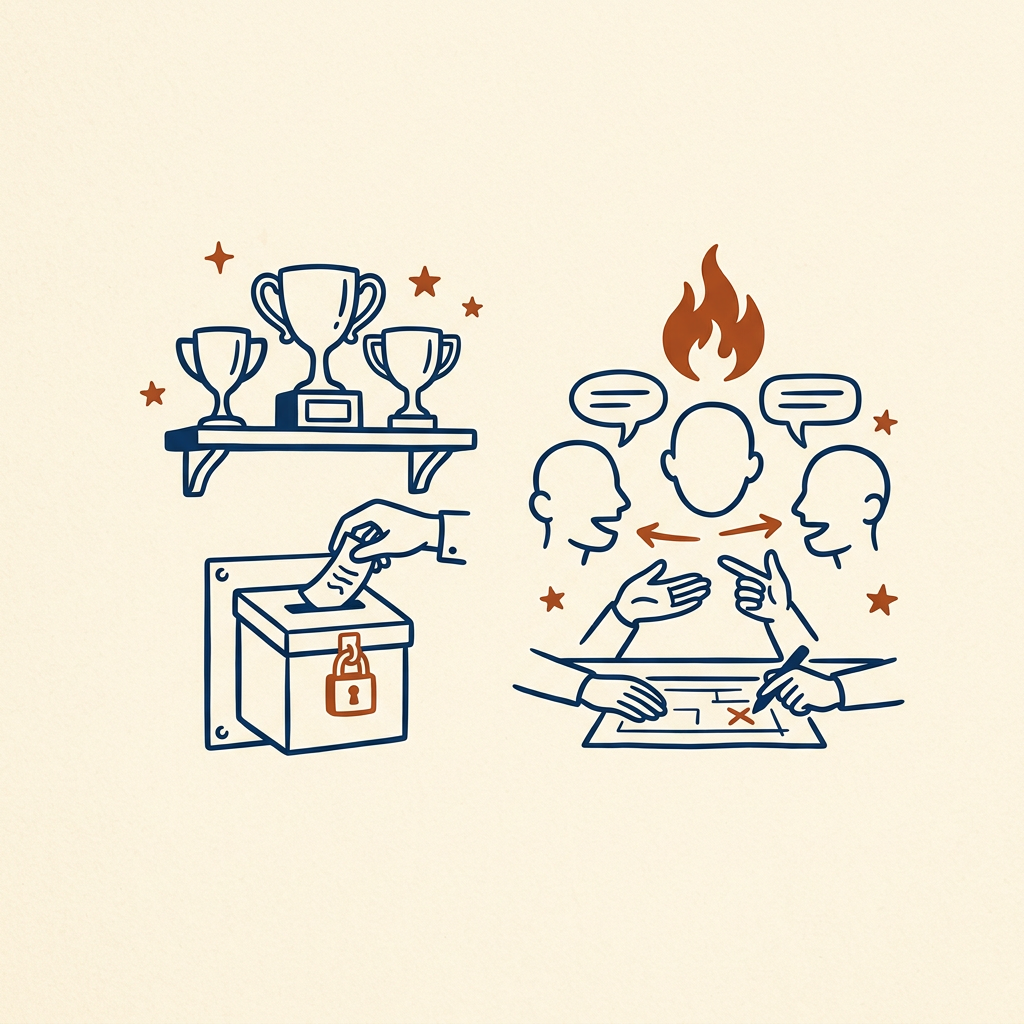
Affirming friends feel good; people who will tell you that you are wrong improve decisions.
Support network
People who affirm you and reduce discomfort
Challenge network
People rewarded for telling you when you are wrong
Most of us over-invest in support networks and under-build challenge networks because criticism stings even when it is useful. Goodwill alone does not fix this; colleagues stay quiet unless the system rewards candor. Amy Edmondson’s 1996 hospital research found nursing units with the best safety records reported more medication errors, not fewer—psychological safety made it possible to surface mistakes instead of hiding them. Extreme versions, such as Bridgewater’s recorded meetings and real-time ratings weighted by track record, bake disagreement into daily operations rather than leaving it to chance. The structural point matters: individual question-asking helps one conversation; norms and incentives keep honest pushback alive across hierarchy and time.
In practice: Hospital units with higher psychological safety reported more errors and achieved better safety records because staff could surface mistakes.
7
Rethink before the fire
Survivors practice small-course corrections early; crisis is too late to drop familiar tools.
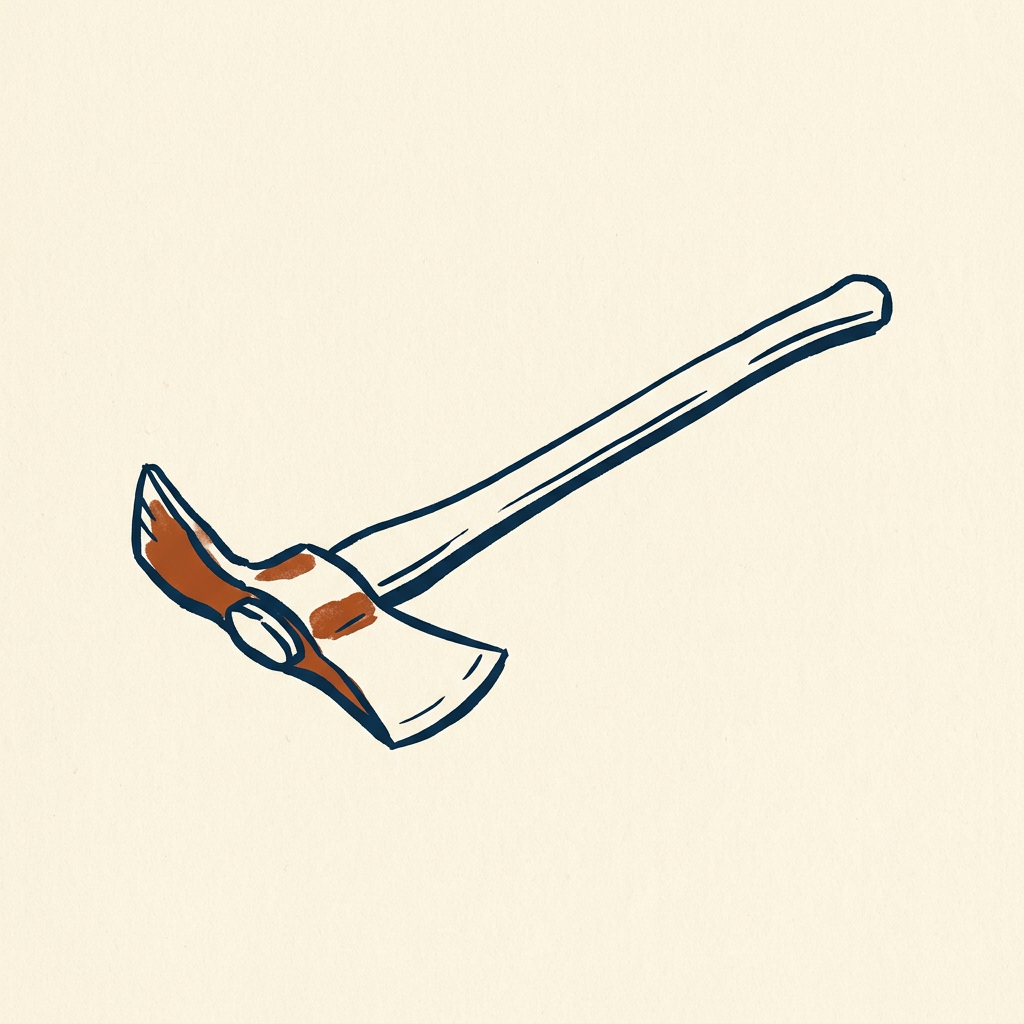
In the 1949 Mann Gulch fire, Wagner Dodge lit an escape fire and lay in its ashes; thirteen of his crew died. Some were found still carrying heavy tools that slowed them down—equipment that had defined the job became unthinkable to drop. Organizations do the same with once-successful models and strategies. The harder the pressure, the tighter the grip, exactly when release is required. Heroic improvisation under duress is a poor substitute for ordinary, low-stakes rethinking that makes a larger turn feel like continuity rather than emergency. A challenge network consulted only in crisis arrives too late; trust and habit need calm repetitions first.
In practice: Mann Gulch firefighters who could not drop their tools were slowed; Dodge’s improvised escape fire saved him because he could abandon the old script.

8
Audit identity foreclosure
Early career and life scripts harden unless you deliberately ask what you would choose today.
Identity foreclosure happens when someone commits early—to a career, belief system, or path—often to please parents or kill anxiety, then never re-examines as new information arrives. Schools that reward right answers over good questions train adults to treat a twenty-year-old choice as permanent. Periodic identity audits reverse the default: ask what you would pick if starting fresh. Continuity becomes a conscious choice instead of inertia. Classrooms that teach science as a method of doubting and testing, rather than a pile of settled facts, produce adults more willing to revise later. Individual rethinking only compounds across a lifetime when it reaches the large commitments people are least likely to question.
In practice: Schools that reward having the right answer over asking a good question help lock students into unexamined career paths.
Key terms
- Preacher mode Defending a belief as sacred and under moral attack
- Prosecutor mode Attacking someone else’s reasoning mainly to win
- Politician mode Shading your view to gain audience approval
- Scientist mode Treating your opinion as a hypothesis and hunting for what would disprove it
- Confident humility Trust in your ability to learn paired with doubt about current conclusions
- Task conflict Disagreement over ideas and approaches that sharpens thinking
- Challenge network People who will tell you when you are wrong, not just cheer you on
- Identity foreclosure Early life or career commitment that is never revisited as new information arrives
What to do
- List one belief you hold and write the specific evidence that would make you change it.
- Invite a genuine dissenter to the next decision meeting instead of appointing a devil’s advocate.
- Ask one person who disagrees with you to rate their confidence and what would lower it; only listen.
- Schedule a one-hour identity audit this week: what would you choose for work if starting today?
- Name two people for your challenge network and ask them for candid pushback on a current plan.
Questions to think with
- Which of the four modes do you enter first when a core work belief is challenged?
- Where has an old professional tool become too identity-linked to drop even though conditions changed?
- Does your team reward task conflict or quietly convert it into relational friction?
- What would a low-stakes rethinking habit look like before the next real crisis hits?
- Which early career or life choice have you never seriously re-examined?
The other side
The book is strongest as a synthesis of existing studies rather than new findings; lab and organizational cases do not always travel to deep identity-level conflicts. The Daryl Davis story is powerful yet singular—Grant spends little time on similar dialogues that fail or on the unfair burden placed on targets of prejudice to patiently convert holders of that prejudice. Most examples sit in relatively low-stakes, WEIRD settings, leaving open how well the tools work when an entire community or media ecosystem reinforces the belief.
Who it's for
Managers whose teams stay polite and make worse decisions, people who need to loosen someone else’s certainty without triggering shutdown, and professionals quietly wondering whether a career or identity chosen years ago still fits. Readers wanting original research or proven tactics for high-stakes culture-war fights will find less than they hoped.