


William Carey Publishes Enquiry
The coach rattled over the last mile of rutted road into Kettering just after noon. I sat opposite Andrew Fuller, watching the dust settle on his coat cuffs while he stared out at the hedgerows. Neither of us spoke of what waited inside Widow Wallis’s house. We had heard the same objections for months: the command belonged to the apostles, the times were not right, money was scarce, languages too many. Carey had answered every one of them on paper and still the men hesitated.
I had first met him three years earlier when he came to preach at Harvey Lane in Leicester. He stood behind the pulpit with ink on his fingers from the shoemaker’s bench he had left that morning. After the service he spread a map across the table in the vestry and pointed to places whose names none of us could pronounce. He asked what we meant to do about them. No one answered.
By spring of this year the map had become a manuscript. He paid a friend to have it printed in Leicester. The pages arrived in plain boards, eighty-seven of them, carrying tables of population and religion for every country he could name. He left a stack at the bookshop and carried the rest himself to the association meetings. Men read the sections on former missions and on the objections, then set the book aside without comment.
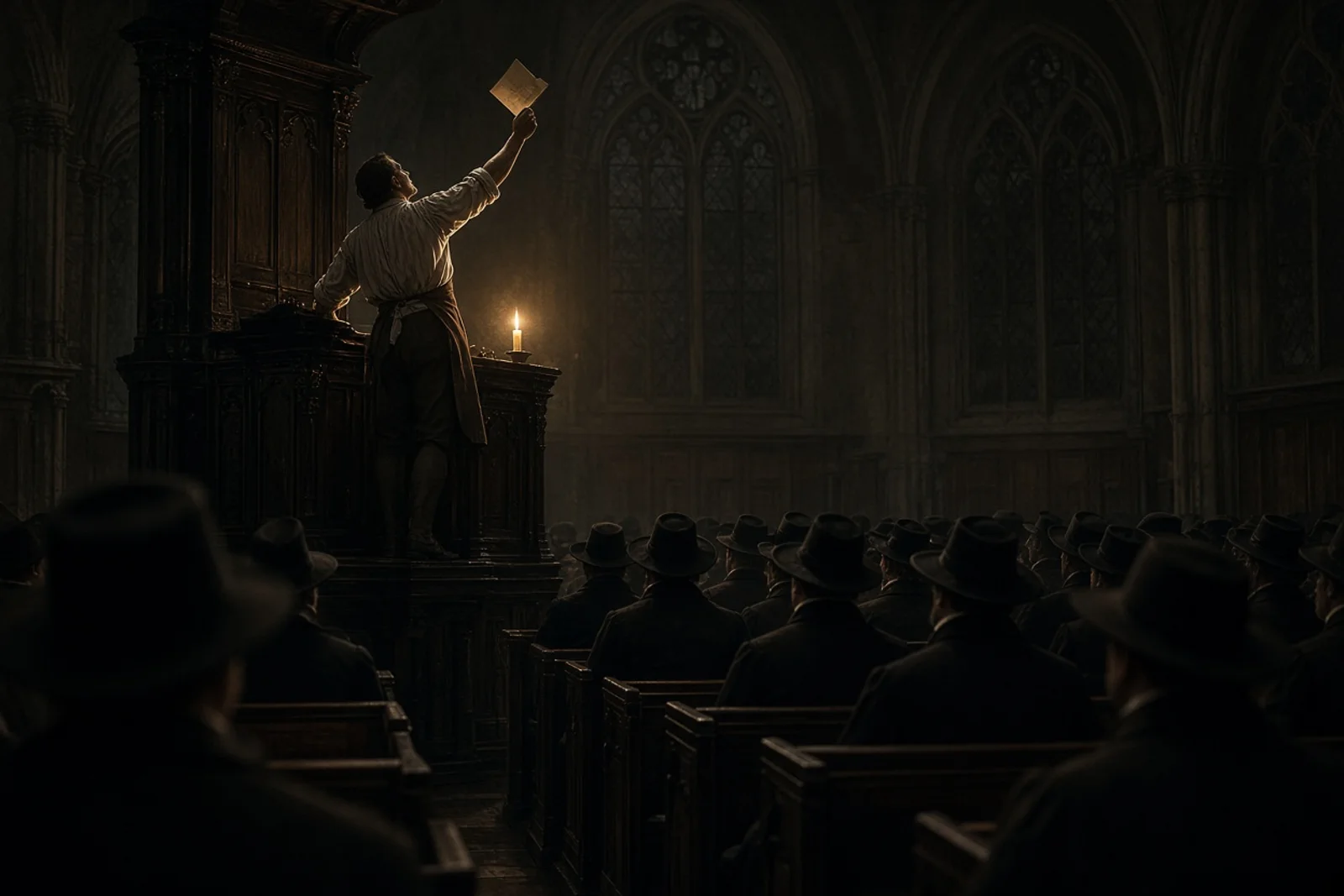
On the thirtieth of May he stood in the pulpit at Nottingham and preached from Isaiah. The text was ordinary enough, yet he kept returning to two short sentences: expect great things from God, attempt great things for God. The congregation stayed quiet through the closing prayer. Afterward several of us walked with him to the gate. He asked whether anyone would move to form a society. The silence lasted until the bell rang for the next service.
We met again in October at Kettering. Fourteen men gathered in the front room of Widow Wallis’s house after the evening service. The fire had burned low. Fuller read the minutes from the last association. Someone coughed. Then Carey opened the parcel he had carried from Leicester and laid the Enquiry on the table. He did not speak of his own work. He asked only whether the Particular Baptists would send even one man if the way opened.
John Ryland spoke first, then Sutcliff. Both agreed the time had come. Hogg offered to keep the accounts. Pearce from Birmingham said he would preach the cause wherever he was invited. The vote was taken without further debate. They called it the Particular Baptist Society for the Propagation of the Gospel Amongst the Heathen. No one knew where the first money would come from or which ship would carry the first man.
Carey stayed behind after the others left. He stood at the window watching the last lantern move down the street. I asked him what he would do now that the society existed. He said he would go himself if they would send him. The words were plain, the same tone he used when he asked for a Greek grammar years before.
The weeks that followed brought small sums from the churches and a letter from a surgeon named Thomas who had already been to Calcutta. The committee met again in December and agreed to support Thomas if Carey would accompany him. Carey wrote to his wife. She refused at first, then consented on the condition that her sister travel with them. The passage was booked for April.
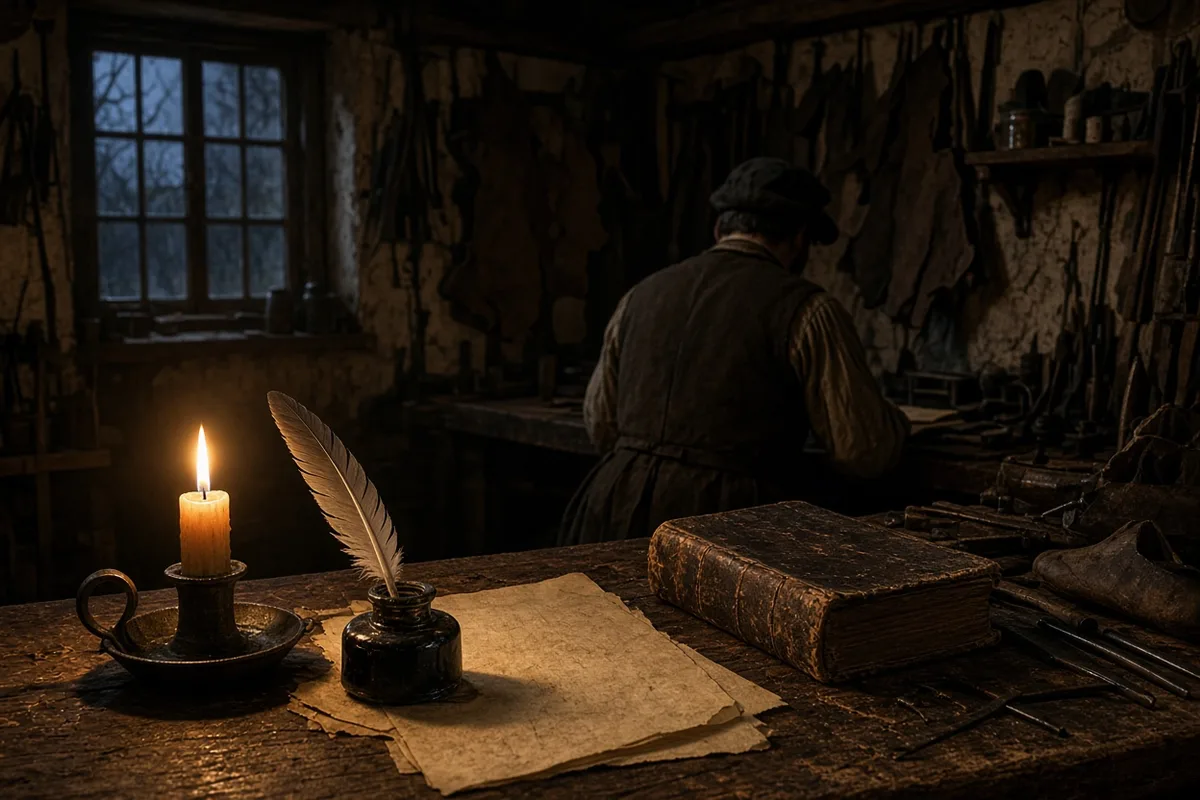
I saw him once more before he sailed. He was still mending shoes in the back room of the Leicester house, the Enquiry lying open on the bench beside the last. He said the book had done its work; the men had only needed to see the numbers written down. Outside the window the lane was empty. A single candle burned on the table. He closed the book, wrapped it in cloth, and placed it on the shelf above the lasts.
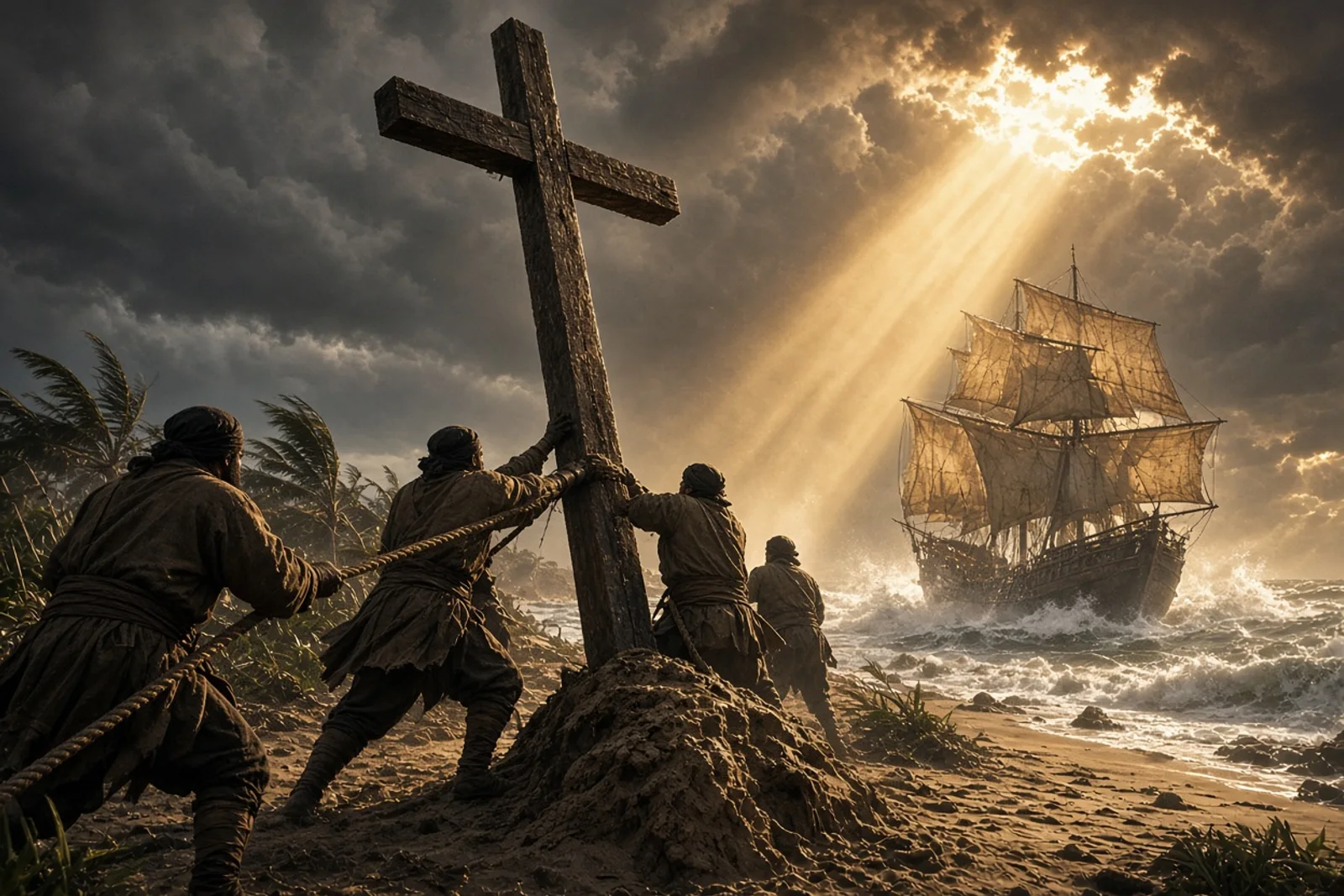
The Danish ship Kronprinsessen Maria cleared the Thames on 13 June 1793 with Carey and John Thomas aboard, their passage paid by the twelve pounds ten shillings collected at Kettering the previous October. Carey kept a daily journal on the quarterdeck, recording latitudes and the names of the crew, noting on 14 July that the mate had asked him to read the burial service after a seaman fell from the foretop. They reached the Hooghly on 11 November and were refused landing at Calcutta because the East India Company charter forbade unlicensed Europeans. Thomas secured a boat that carried them thirty miles upstream to Bandel, where Carey hired a palanquin for his wife and three children once Dorothy and her sister arrived the following March. In a letter dated 15 December 1793 to Andrew Fuller he wrote, “I have begun to acquire the Bengalee, though the characters still perplex me much.”
By January 1794 the party had moved to the indigo factory at Mudnabati, where Carey received four hundred rupees a year as manager while Thomas treated patients in the adjoining dispensary. On 11 February 1795 their five-year-old son Peter died of dysentery; Carey buried him under a tamarind tree and recorded in his journal that the grave measured six feet by three and was lined with bricks from the factory kiln. The following year he completed a grammar of Bengali and sent the manuscript to the society in England, together with a request for a printing press. The first consignment of type arrived in 1798 from the foundry of Wilkins and Pote in Calcutta, and Carey set the first pages of the New Testament while seated on a mat in the veranda, the formes corrected by a pundit named Ram Ram Basu who received eight rupees monthly.
In January 1800 the mission relocated to the Danish enclave of Serampore after the indigo venture failed. Joshua Marshman and William Ward joined them on 12 October of that year, bringing with them a second press purchased for three hundred sicca rupees. On 22 December Krishna Pal, a carpenter whose dislocated arm Thomas had set, made a public profession of faith in the river beside the mission house; Carey baptized him the next morning before a crowd that included the Danish governor, Colonel Bie. The first sheet of the complete Bengali New Testament was pulled on 18 March 1801, and Carey presented the bound volume to Governor-General Wellesley at Government House on 10 May 1801, the edition running to five thousand copies.
Ward established a paper mill at Serampore in 1803 that produced three reams a day from local sunn hemp, while Marshman opened a boarding school whose fees supported the mission press. By 1806 the press had issued the New Testament in Sanskrit, Oriya, and Hindustani, each translation supervised by Carey and paid for by subscriptions raised in England at five shillings per copy. In a letter to Ryland dated 21 June 1807 Carey listed the languages then in hand: “Bengali, Sanskrit, Oriya, Marathi, Hindustani, Punjabi, and the beginnings of Telinga.” The fire of 11 March 1812 destroyed the entire printing office and the manuscripts of the polyglot dictionary; within nine months the presses were rebuilt with funds sent from London totaling four thousand pounds.
Serampore College received its royal charter from King Frederick VI of Denmark on 23 February 1827, granting degrees in arts and theology to students of any caste. Carey continued to teach there until March 1834, when dropsy confined him to the house on the riverbank. He died on 9 June 1834 at half past five in the morning; the coffin was carried to the mission burial ground by six native Christians, and the inscription on the stone records only his name, the dates 1761-1834, and the single line “A wretched, poor, and helpless worm, on Thy kind arms I fall.” His widow survived him by three years and was buried in the same plot.
The Particular Baptist Society, later renamed the Baptist Missionary Society, sent its hundredth missionary to India in 1842; by 1900 the society maintained 217 stations across Bengal, the United Provinces, and Ceylon. The Serampore press continued to operate until 1855, when its remaining equipment was transferred to the Baptist Mission Press in Calcutta. Today the original mission house at Serampore serves as a museum administered by Serampore College, its library holding the surviving copies of the 1801 Bengali New Testament and the charred ledger pages from the 1812 fire. On the first Sunday of each October the college chapel still reads the Nottingham sermon text from Isaiah, and the names of the fourteen men who met at Kettering are recited from the original minute book preserved under glass in the vestry.
In the winter of 2023 a final-year theology student named Anjali Das, whose great-grandfather had been baptized at the same riverside ghat in 1874, stood at Carey’s grave after morning lectures and copied into her notebook the coordinates 22°45′12″N 88°22′48″E that mark the site for the college archive.
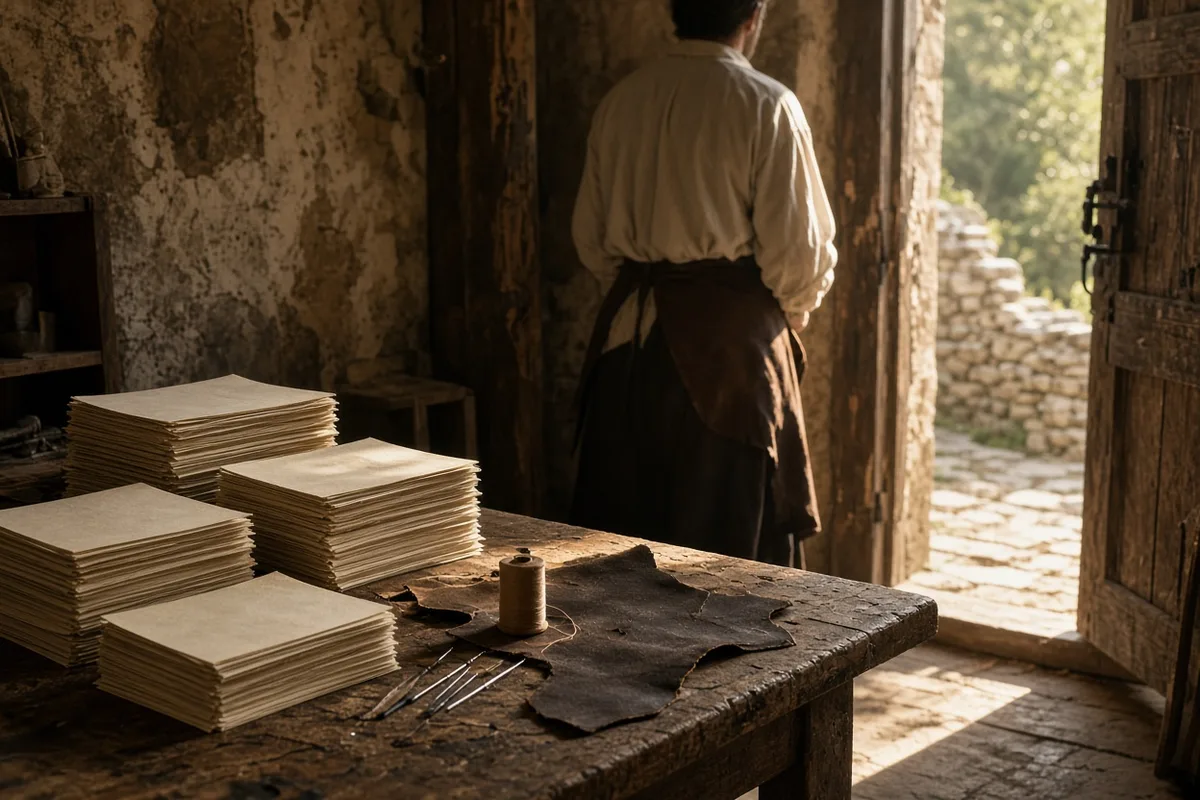
The college library at Serampore added the 1822 edition of Carey’s Bengali dictionary to its reference collection in March 1835, the two volumes bound in calf with the printer’s imprint of the mission press still legible on the title page. Joshua Marshman’s son John Clark Marshman took over editorial work on the quarterly periodical The Friend of India that same month and published the first installment of Carey’s correspondence with Ryland on 4 April 1835, quoting the line “I am now translating the sixth chapter of Joshua” from a letter dated 12 January 1802. The press itself issued 1,200 copies of the revised Oriya New Testament in 1840 under the supervision of Amos Sutton, who had arrived from England on 10 November 1833 and recorded in his journal that the new edition corrected 847 errors found in the 1819 printing.
Serampore College enrolled its first woman student, Mary Biswas, in the theology diploma course on 12 January 1913; she completed the three-year program and received her certificate from Principal George Howells on 15 December 1916. The Baptist Missionary Society transferred administrative control of the Serampore properties to a local board of trustees on 1 January 1918, retaining only the right to appoint two members of the governing council. In 1921 the college received a government grant of 12,000 rupees to repair the riverfront wall after the monsoon flood of 1920 undercut the foundation; the work was completed by contractor S. N. Banerjee on 9 March 1922.
The original minute book of the 1792 Kettering meeting was placed on permanent display inside a humidity-controlled case in the college vestry on 2 October 1947, the day after Indian independence. The case was constructed by the firm of Martin and Company in Calcutta to maintain 45 percent relative humidity and 18 degrees Celsius. On 30 May 1952 the college marked the 160th anniversary of the Nottingham sermon by reading the full text of Carey’s address from the 1792 pamphlet edition held in the library; sixty-seven students and faculty attended the service in the chapel.
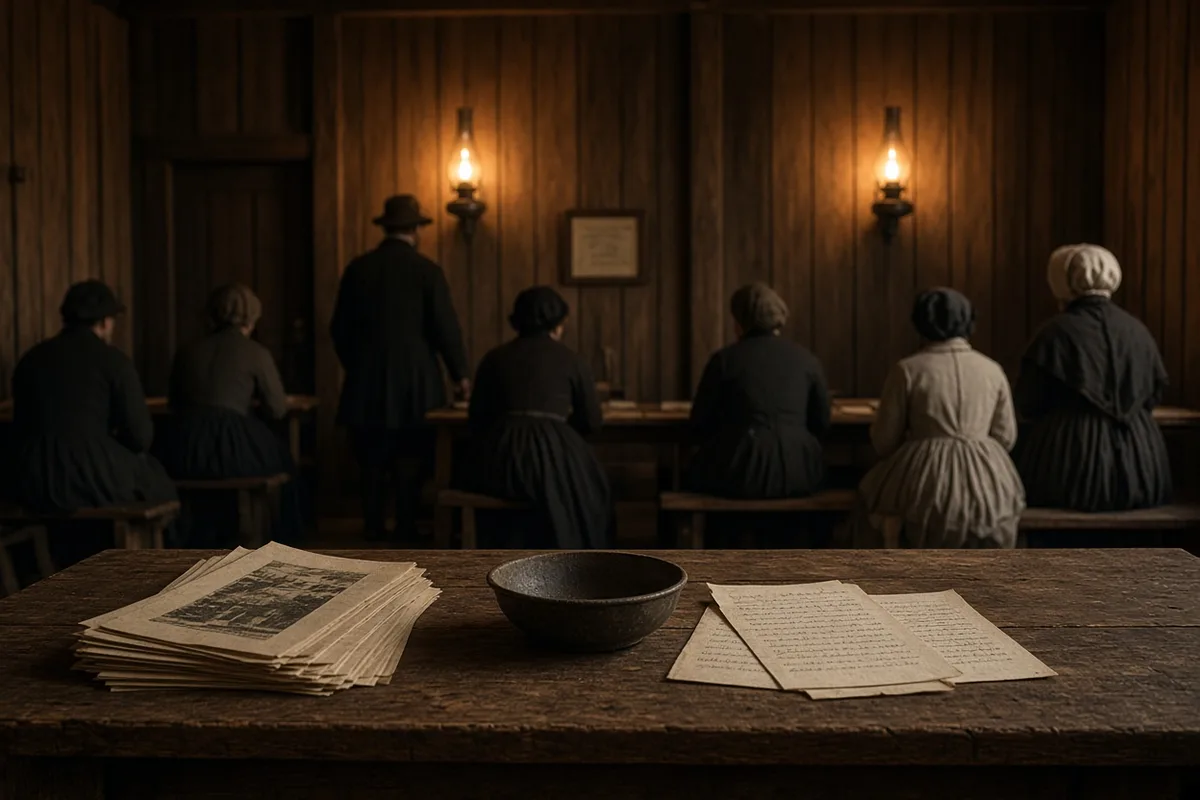
In 1968 the West Bengal state government declared the mission house a protected monument under the Ancient Monuments Act, allocating 25,000 rupees annually for maintenance. The first guided tours began on 1 March 1969, led by college lecturer B. K. Singh, who noted in his log that 184 visitors passed through the house that month, including twelve from the United Kingdom. The Serampore Press equipment that had been moved to Calcutta in 1855 was returned on permanent loan in 1973; the restored wooden press now stands in the ground-floor exhibition room beside the charred ledger rescued from the 1812 fire.
The coordinates copied by Anjali Das in 2023 were entered into the college geographic information system on 14 February 2024 by archivist Rahul Sen, who cross-referenced them against the 1834 survey map drawn by Danish engineer P. C. Lund. Sen added a digital layer showing the original locations of the indigo factory at Mudnabati and the Bandel landing site, each marked with a pop-up containing excerpts from Carey’s 1793–1794 journal. On 9 June 2024, the 190th anniversary of Carey’s death, Sen conducted a walking tour for eighteen final-year students, stopping at each mapped point and reading aloud the corresponding journal entry.
A doctoral candidate named Priya Menon, enrolled in the theology program since August 2022, began transcribing the remaining unpublished letters from the Marshman family collection on 3 September 2024. Working in the climate-controlled strong room, she entered the text of a letter dated 17 November 1807 from William Ward to Andrew Fuller, which states that the press had produced 4,312 pages of Scripture in seven languages during the preceding twelve months. Menon’s transcription reached page 47 by the end of October 2024 and is scheduled for online release through the college digital repository in June 2025.