


William Wilberforce Campaigns 46 Years for Abolition
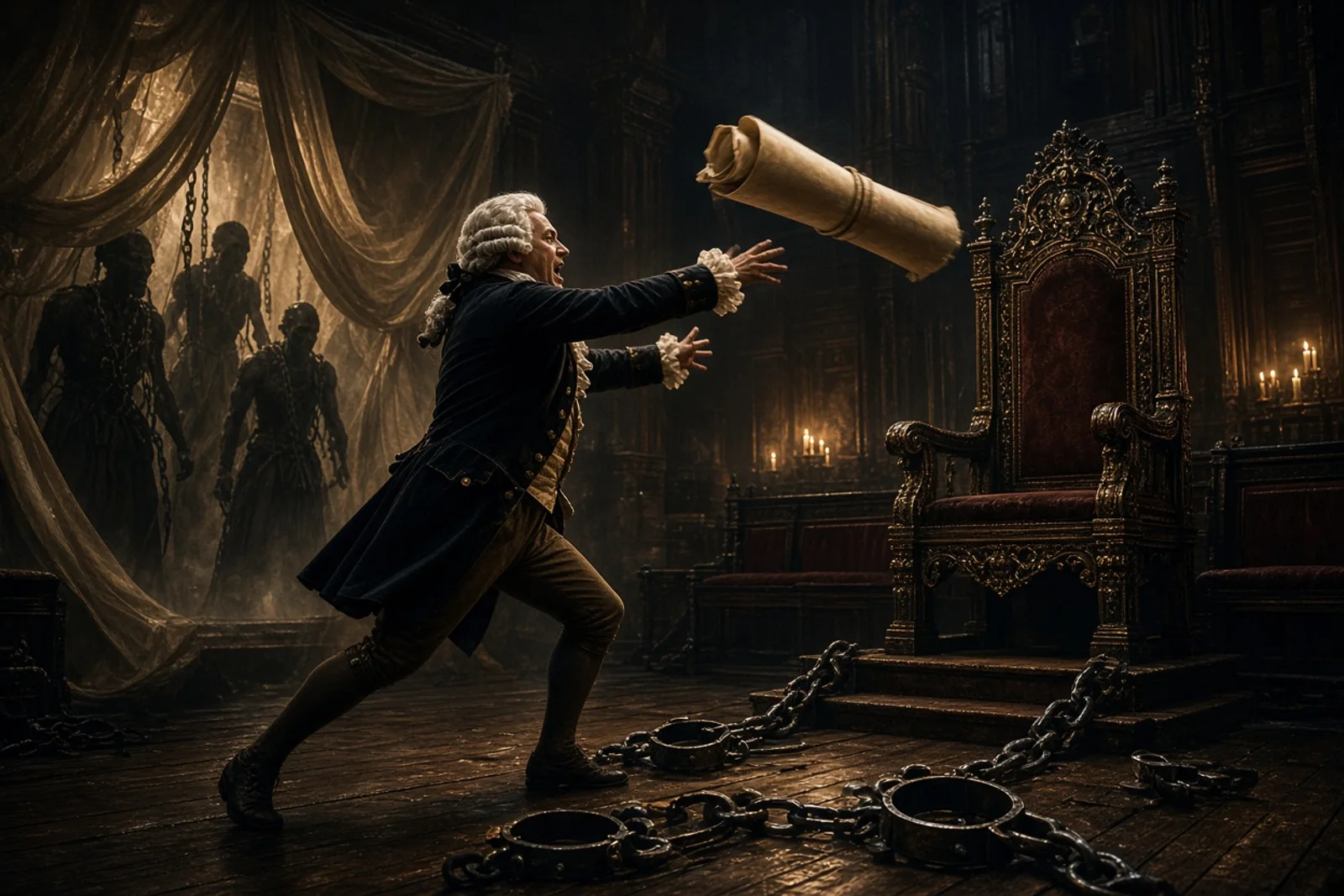
The smoke from the committee room lamps stung my eyes as I stood against the wall, listening to the men argue over how to begin. Wilberforce sat at the head of the table, his thin frame bent forward, the diary open before him. He had written the line only days earlier, the one about his great purpose, and now he repeated it quietly to the others gathered in the London house. Clarkson spread maps across the boards. Sharp spoke of the Somerset judgment and what it might still mean on English soil. I held the stack of fresh petitions that had already begun arriving from the northern towns, the ink still damp on some of the signatures.
Outside, the city moved as it always had, sugar and rum moving through the docks in casks stamped with island names. Inside, the talk turned to the first motion. Wilberforce would bring it to the Commons in the spring. No one expected it to pass on the first try, yet the room felt charged with the certainty that the attempt itself mattered. I carried the petitions to the printers that night and watched the broadsheets come off the press, the Wedgwood seal already stamped on the back of some of them.
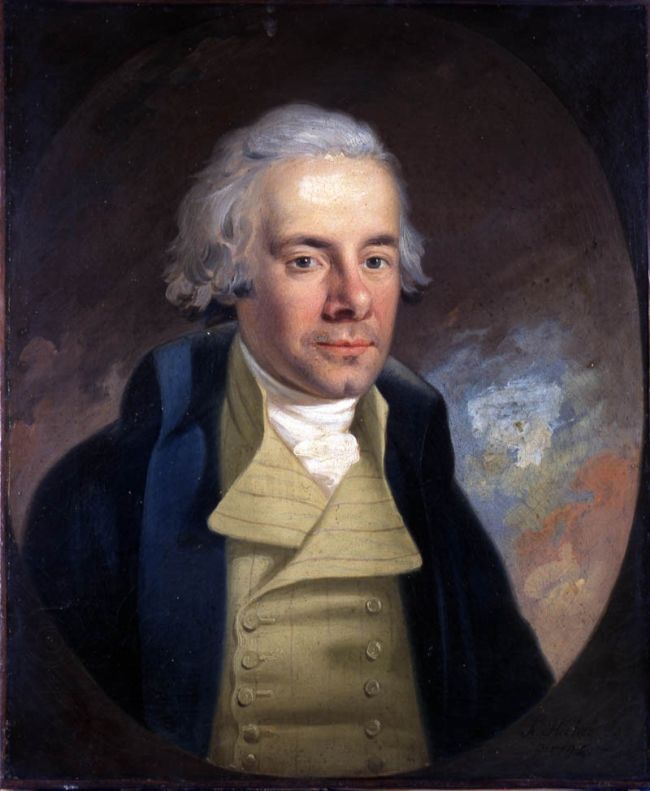
By the second session the resistance had hardened. Planters bought seats and filled the benches. Wilberforce rose anyway, his voice steady through the long hours of evidence about holds and chains and fevers. The vote went against us. He came back the next year with the same papers and new witnesses. I stood in the public gallery and counted the faces that turned away when the numbers were read out. Clarkson kept traveling, collecting testimony from sailors who had worked the Middle Passage. The medallions appeared on more wrists and coat lapels each month.
The war with France pushed the question aside for years. Wilberforce waited through the suspensions and the renewed debates, always returning to the same facts about tonnage and mortality. In 1807 the bill finally cleared both houses. I was in the corridor outside the Commons when the messengers carried the news to the waiting crowd. Men who had never spoken to one another clasped hands. Wilberforce walked out last, his head lowered, already speaking to someone about the next step, the enforcement at sea.

The West Africa Squadron began its patrols the following year. Reports came back of captured vessels and landings in the Bahamas and Jamaica. I helped copy the lists of freed people for the committee records. The numbers grew, yet the trade continued under other flags. Wilberforce wrote letters to foreign ministers and pressed for treaties. He retired from the Commons in 1825 but kept the correspondence on his desk at home, the same desk where the 1787 diary still lay.
The Anti-Slavery Society formed in the same year the trade bill had passed. New names joined the old ones. Buxton took the lead in the Commons. I attended the meetings where the question shifted from the trade to slavery itself. Petitions arrived again, thicker than before. The Reform Act removed the pocket boroughs that had sheltered the planters. In 1831 the rebellion in Jamaica reached London in the form of official dispatches and missionary letters. Parliament ordered inquiries. The evidence of burned estates and executed leaders filled the committee rooms once more.
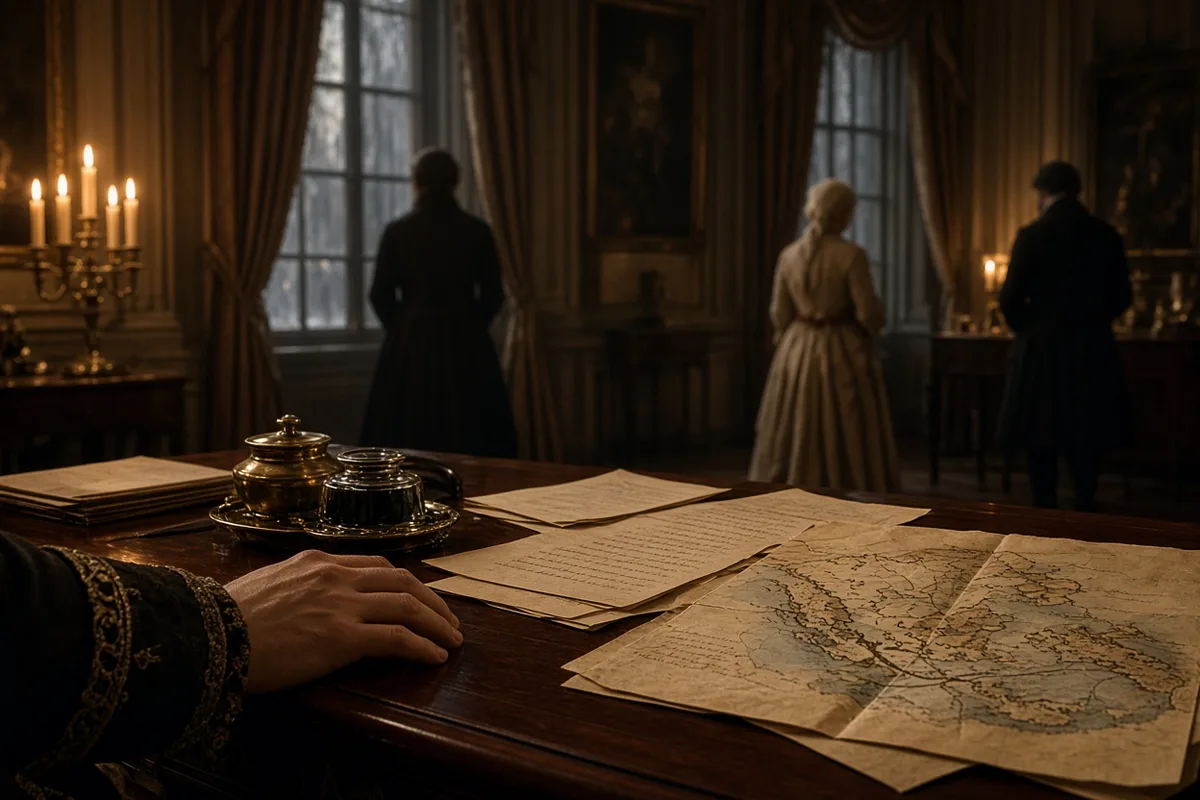
Wilberforce was by then an old man, often confined to his house. He still received visitors who brought the latest drafts of the emancipation bill. Stanley introduced the measure in the spring of 1833. The apprenticeship clauses and the twenty million pounds in compensation were argued line by line. I stood in the gallery on the night the second reading passed without opposition. Wilberforce had died the week before. The vote was announced while the candles burned low.
The Act took effect the following August. In the West Indies the field work continued under the new name of apprenticeship. The records showed six years for those tied to the land, four for the rest. I watched the final papers leave the Colonial Office and wondered how many of the original committee members would live to see the last indenture end. The ships still sailed, but the holds carried different cargo now, and the old ledgers of human property were boxed and stored.
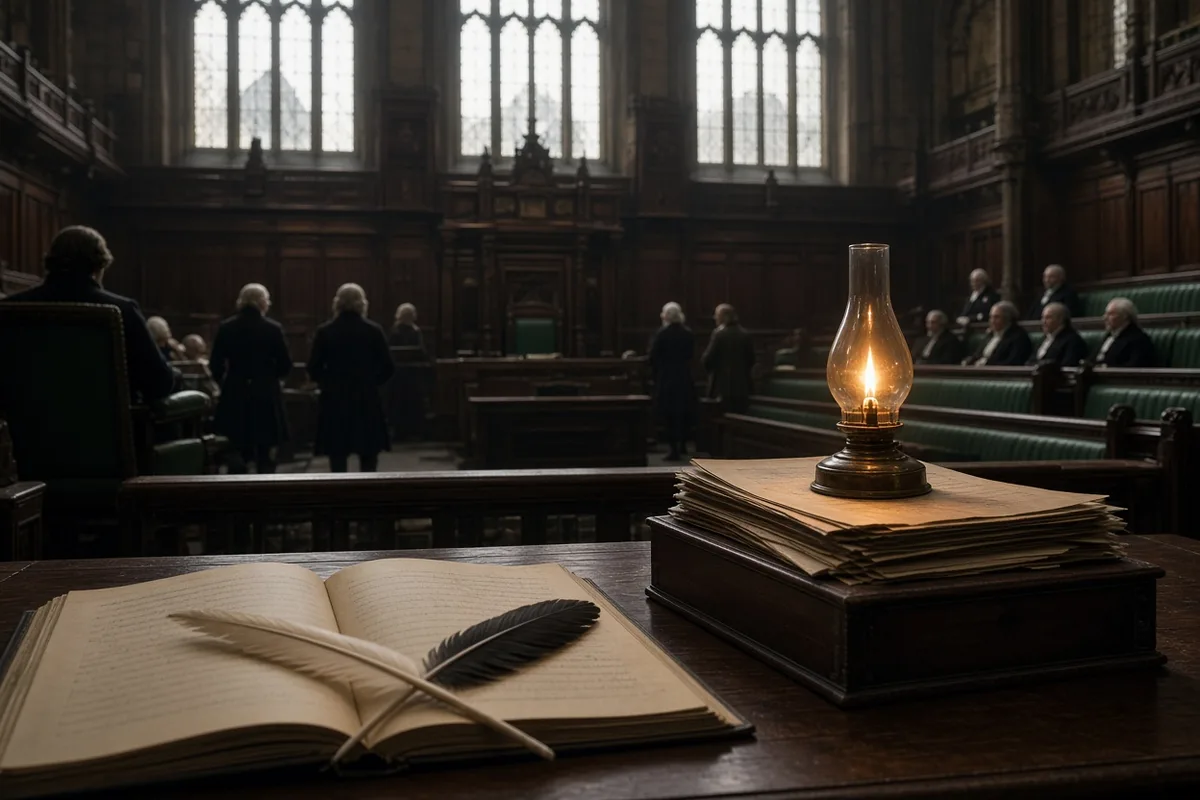
The apprenticeship registers in the Colonial Office recorded 800,000 names by the spring of 1834, each entry noting age, occupation, and the island plantation to which the person remained bound until 1840 for field hands and 1838 for domestics. Joseph Sturge sailed from Bristol on the packet Isis in November 1836 and returned with sworn depositions from magistrates in St. Ann and Trelawny parishes describing floggings of twenty lashes for short weight of cane and the withholding of the weekly allowance of salt fish. He placed these before the committee at 18 Aldermanbury on 15 March 1837, where Buxton moved that the apprenticeship clauses be struck from the statute. The House divided at two o’clock the next morning, 269 to 62, and the Colonial Office circular of 30 July 1838 ordered the immediate termination of all remaining indentures. In Kingston the workhouse gates opened on 1 August and the former apprentices walked the roads carrying bundles tied in cloth, some heading toward the free villages founded by Baptist missionaries at Sligoville and Stewart Town.
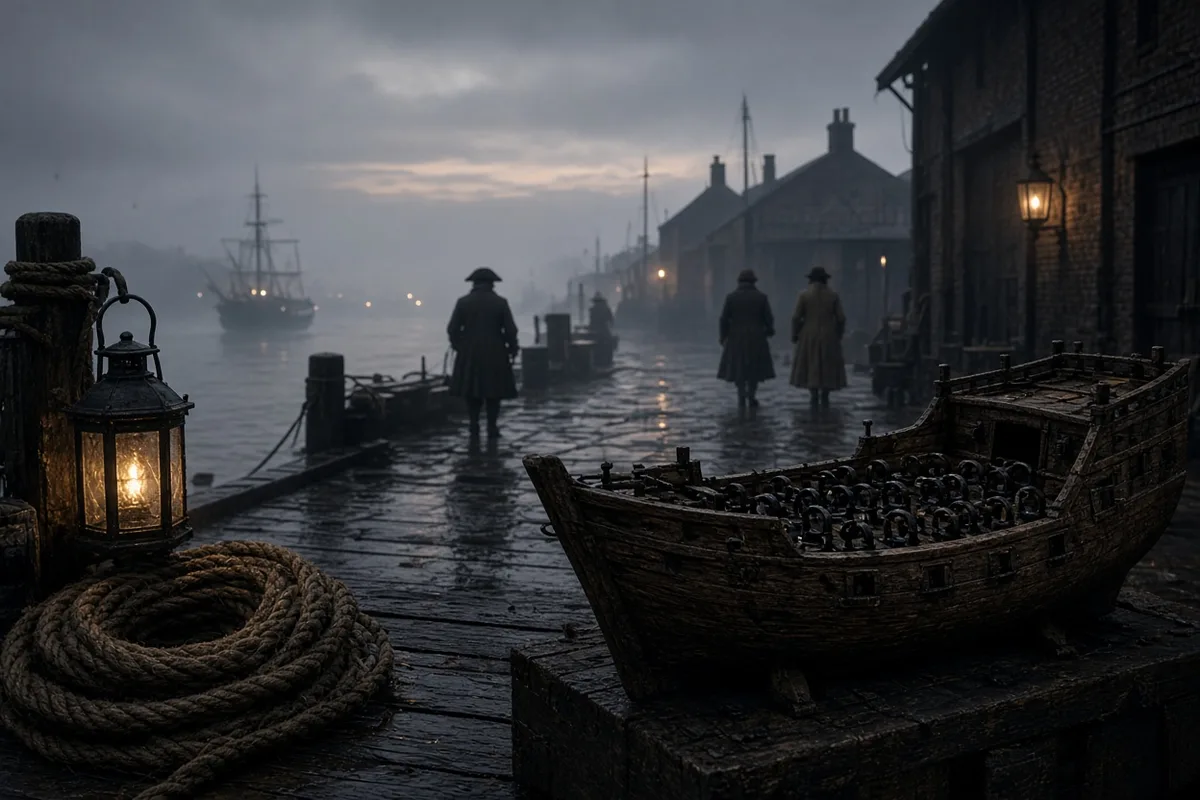
Buxton presented the final report of the African Civilisation Society to the Foreign Office in December 1841 after the Niger expedition returned with thirty-nine survivors out of the original one hundred forty-five Europeans who had embarked at Portsmouth aboard the Albert, Wilberforce, and Soudan. The surviving journals listed the names of the interpreters who had been taken aboard at Cape Coast Castle and the dates of the treaties signed with the chiefs at Aboh and Iddah. Wilberforce’s son William, then member for Hull, read extracts from those journals into the record during the debate on the treaty with the United States of 9 August 1842, which authorised mutual right of search between 8° and 28° north latitude. The squadron’s annual returns for 1845 showed twenty-seven vessels condemned at Sierra Leone and 2,114 Africans landed at the depot on the Freetown waterfront, where each received a ticket of freedom and a suit of Osnaburg cloth before being settled in the villages of Kissy and Gloucester.
The coffin of William Wilberforce was carried into Westminster Abbey on 3 August 1833 by twelve members of the Commons, among them Sir Robert Inglis and Thomas Babington Macaulay. The service lasted forty minutes and the pallbearers placed the body in the north transept beside the monument to Pitt. His eldest son, also William, took the diary from the desk at Marden Park and deposited it with the family papers at the Hull Subscription Library, where the 1787 entry remained visible beneath the glass until the building was damaged by fire in 1941. The Wedgwood medallion continued to be struck at the Etruria works until 1860, the last batch numbered 14,872 and sold through the Anti-Slavery Society office at 27 New Broad Street.
In 1840 the British and Foreign Anti-Slavery Society convened the World Convention at the Freemasons’ Tavern in Great Queen Street. Delegates from the United States included Lucretia Mott and Wendell Phillips, who spoke on the afternoon of 13 June against the exclusion of female representatives. The minutes record that the motion to seat them was lost by 197 votes to 84. Five years later the society’s agent in Havana reported that 1,283 Africans had been landed from the captured brigantine Nueva Amalia and placed under the protection of the mixed commission court at the corner of Calle de Cuba and Calle de San Ignacio. The court’s register for 1847 lists the name of the Spanish captain, José Ruiz, and the sentence of five years’ imprisonment passed upon him by the Audiencia of Havana.
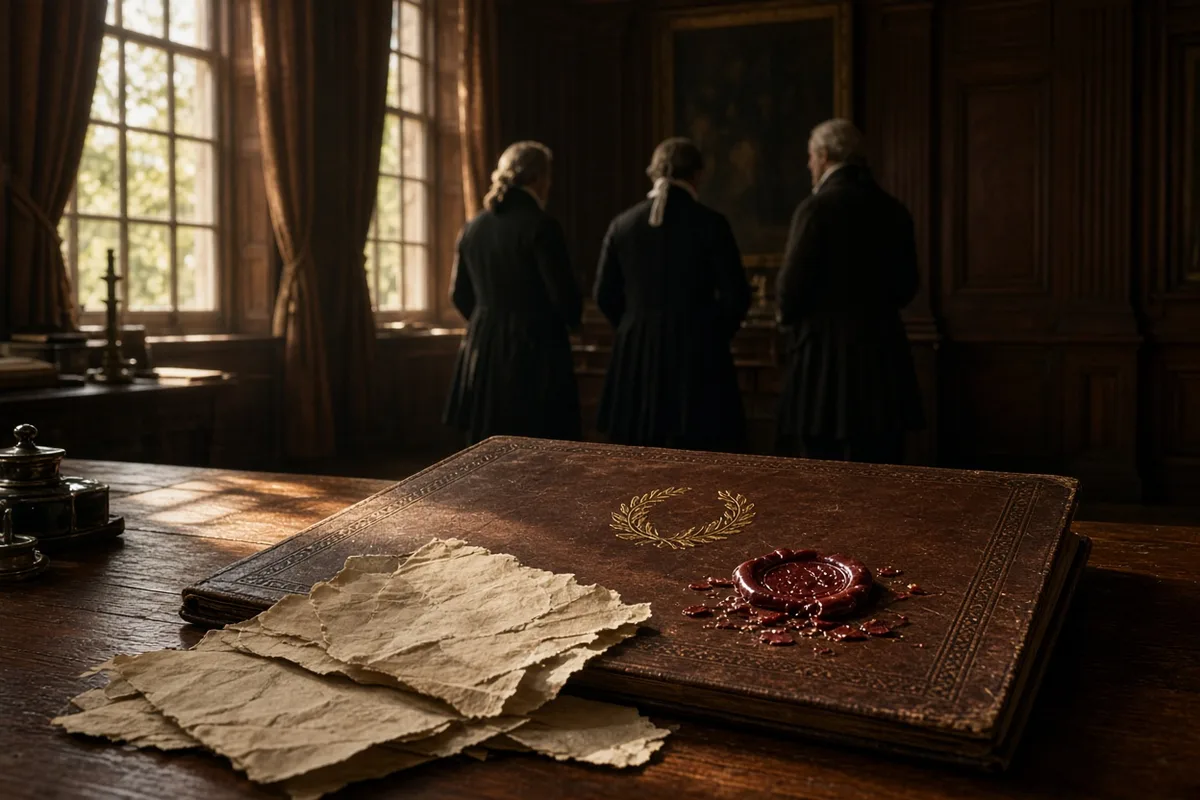
The last of the original committee, James Stephen, died at his house in Kensington on 13 September 1832, having drafted the final clauses of the 1833 Act in his own hand. His son, also James, served as permanent under-secretary at the Colonial Office until 1847 and initialled the despatch of 12 October 1839 that instructed governors to prepare for the termination of apprenticeship. The ledgers of the Compensation Commission, bound in calf and stored in the basement of the Treasury, contain 46,000 claims for the 20 million pounds distributed between 1835 and 1845, the largest single payment being £106,000 to the estate of John Gladstone for 2,508 persons in Demerara and Berbice.
Wilberforce House in Hull opened to visitors in 1906 after purchase by the corporation, its rooms containing the original dining table at which the 1787 committee had met and the oil portrait by Karl Anton Hickel painted in 1793. The statue on the Embankment, unveiled by the Duke of Devonshire on 1 August 1923, bears the inscription taken from Wilberforce’s speech of 12 May 1789. In Freetown the stone marking the landing place of the 1787 settlers was replaced in 1927 by a granite obelisk listing the names of the Nova Scotian families who arrived aboard the Vernon and the Atlantic. The final entry in the registrar’s book at the Sierra Leone courthouse for 1928 records the death at age ninety-four of a woman named Sarah, entered as having been landed from the Portuguese schooner Bom Jesus in 1839.
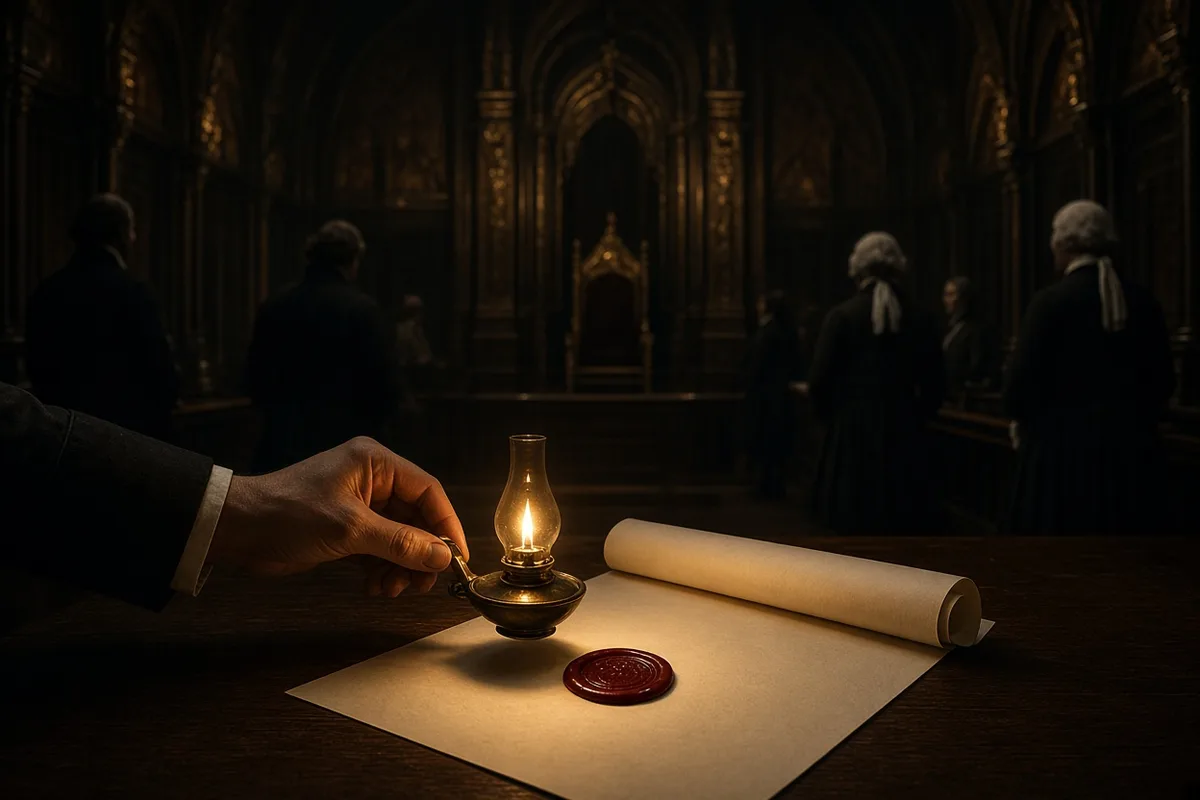
The registrar’s book in Freetown also notes that Sarah’s daughter, listed only as Mary, received a plot in the Gloucester village settlement on 4 March 1840 and signed her mark on the conveyance witnessed by the colonial chaplain William Betts. By 1851 the village contained 312 households whose head-tax returns list occupations as sawyers, boat-builders, and smallholders growing rice on the hills above the Rokel River. The 1928 entry for Sarah closes the final volume of the Mixed Commission registers; the volumes themselves were transferred in 1952 to the Sierra Leone National Archives in the old Cotton Tree building, where the 1839 landing date for the Bom Jesus remains legible on page 214 of volume 47.
In 1926 the League of Nations Slavery Convention was signed in Geneva on 25 September by representatives of thirty-six states, including the British delegate Lord Cecil who cited the 1842 treaty with the United States as precedent for the right-of-search clause. Article 2 required signatories to suppress the slave trade by sea and to report annually the number of persons liberated; the first British return, submitted in 1927, recorded 187 individuals landed at Aden from dhows intercepted between Ras Hafun and Socotra. The convention entered into force on 9 March 1927 after ratification by the United Kingdom, and the Colonial Office circular 148/27 instructed governors in the West Indies and West Africa to compile registers of any remaining domestic bondage.
After 1945 the United Nations Economic and Social Council received reports from the Ad Hoc Committee on Slavery whose 1951 draft listed 1,200,000 persons still held in servile status across the Arabian peninsula and parts of Africa. The Supplementary Convention on the Abolition of Slavery was opened for signature on 7 September 1956 at the European Office in Geneva; article 1 defined debt bondage and serfdom as practices similar to slavery and required their criminalisation. The United Kingdom deposited its instrument of ratification on 30 April 1957, bringing the total number of parties to twenty-eight. The Colonial Office file CO 936/312 contains the despatch dated 12 June 1957 from the governor of Sierra Leone confirming that the last known claims under the 1927 registers had been settled by payment of £4,200 to twenty-three claimants in the Protectorate.
The Wilberforce Institute for the study of Slavery and Emancipation opened on 9 May 2006 in the former customs house at 27 High Street, Hull, with an initial endowment of £1.8 million from the Heritage Lottery Fund. Its archive holds the original 1787 diary, returned from the Hull Subscription Library after the 1941 fire, together with the 1807 parchment copy of the Slave Trade Abolition Act signed by Speaker Charles Abbot. The institute’s annual report for 2019 records that 14,762 researchers had consulted the 46,000 compensation claims now digitised from the Treasury ledgers. On 23 August 2018, the International Day for the Remembrance of the Slave Trade and its Abolition, the institute hosted the launch of the UNESCO Slave Route Project’s digital map, which marks 312 documented landing sites including the Freetown waterfront coordinates 8°29′N 13°14′W.
The Emancipation Memorial in Victoria Tower Gardens, unveiled on 27 July 2009 by the Speaker of the House of Commons, consists of a bronze figure 2.4 metres high cast at the Morris Singer foundry and set on a Portland stone plinth inscribed with the date 1 August 1834. The accompanying wall carries the names of the twelve original committee members taken from the 1787 minute book preserved at the British Library under Add MS 21254. In 2017 the National Trust acquired the Marden Park estate and opened Wilberforce’s study to the public; the desk surface still bears the ink stain noted in the 1825 inventory taken at his retirement. Visitor records for 2022 show 47,319 admissions, each issued a replica of the Wedgwood medallion numbered from the final 1860 batch.
The last entry in the Sierra Leone registrar’s book after Sarah’s is dated 3 November 1937 and records the death at Kissy hospital of a man named Thomas, aged eighty-six, whose admission form states he had been liberated from the Spanish schooner Numancia in 1841 and assigned to the village of Hastings. His daughter, Elizabeth Thomas, born 1862, appears in the 1931 census as a market trader in Freetown’s King’s Yard and is photographed in the Daily Mail of 1 August 1933 standing beside the granite obelisk that replaced the 1787 settlers’ stone. The photograph caption identifies her as the final surviving child of any person landed by the West Africa Squadron.