



Flydubai flight to Tel Aviv transmits hijack code after pilots clash
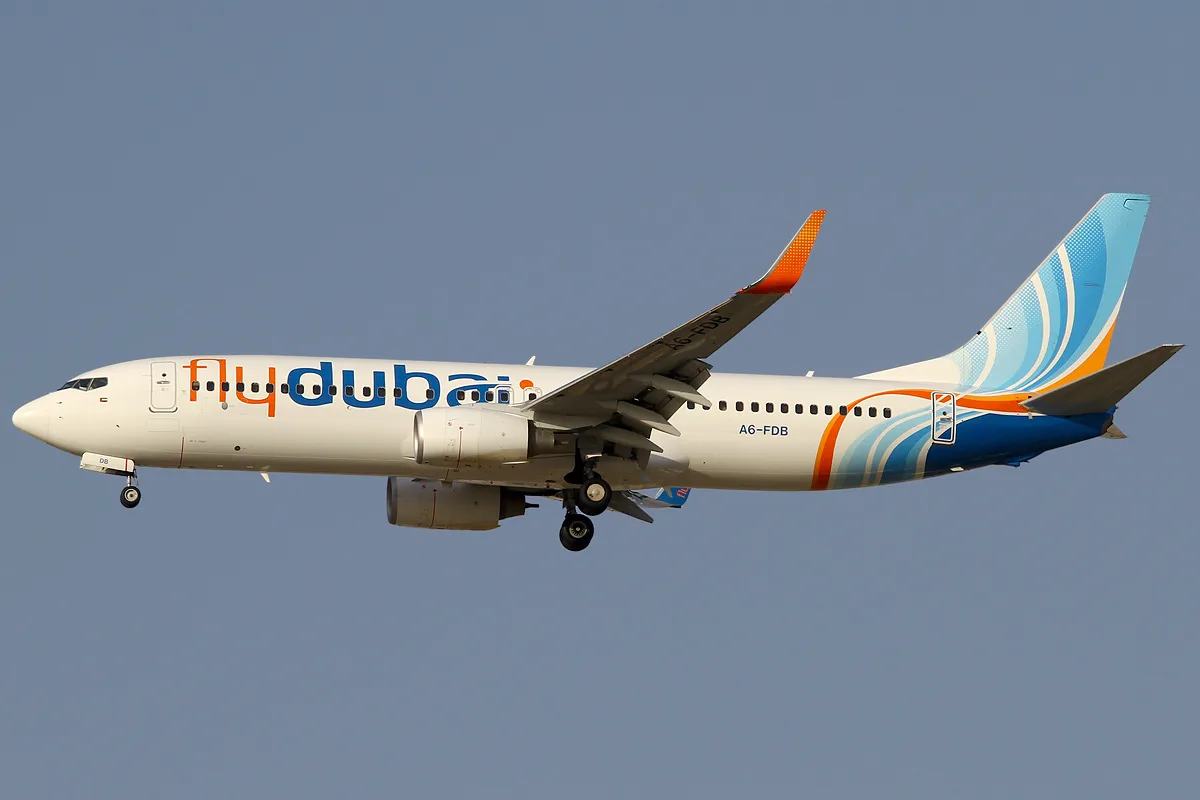
One passenger, speaking later to Israel’s Channel 12, described flydubai flight FZ1073. “We heard screams on the plane. Then they opened the cockpit and we saw blood, and someone had stabbed the pilot with a pocketknife.” The same voice added: “There were also moments when we thought we weren’t going to make it out alive.”
The Boeing was already pitching through a steep, rapid dive. Roughly 174 people sat aboard, among them 27 children, on the morning run out of Dubai toward Tel Aviv. Passenger totals for the flight varied by the report, running from about 100 to about 150 to roughly 174, including 27 children, to about 180. The aircraft kept dropping.
The Boeing had departed Dubai International at 03:05 UTC, just after 7 a.m. local time, due at Ben Gurion around 9:30 a.m. Israel time. At 05:31 UTC its transponder switched to 7700. Seven minutes later, at 05:38 UTC, while the jet was over Jordan and approaching Israeli airspace, the code flipped to 7500. Contact was lost.
A transponder answers radar with a four-digit code. Controllers reserve 7500 for unlawful interference—hijacking, in plain terms—and treat it as real until proven otherwise. On a jet bound for Tel Aviv, that single silent signal is enough to put fighters in the air. Israeli fighter jets scrambled.
Amit Segal described the signal in the clearest terms available that morning: “A flydubai flight that activated an emergency code used to signal unlawful interference with the flight.” He added: “The plane activated distress signals, and there has been no contact with it since. All possibilities are, of course, being investigated.”
Israeli security sources ruled out unlawful seizure. The distress sequence, they said, had been triggered by a violent altercation between the two pilots in the cockpit. The transponder later reverted from 7500 back to 7700. The aircraft turned away from Israeli airspace and diverted.

“This had everyone in the Middle East (esp Israel) on FULL ALERT this morning,” U.S. Ambassador Mike Huckabee wrote. “Having pilots inflight detouring to ‘fist city’ not your ordinary experience.”
Flightradar24 recorded an altitude fluctuation of 14,125 feet in 29 seconds. The Times of India calculated vertical speeds swinging between about -30,000 and +10,000 feet per minute from the altitude data the aircraft transmitted, a span far beyond the range normally seen during commercial flight. After that stretch of vertical motion the aircraft climbed back to around 21,650 feet. The track then shows a further drop that took the jet below 14,000 feet. Following the second descent the aircraft leveled near 15,000 feet and remained around 15,000 feet for an extended period. Saudi Gazette placed the jet near Tabuk at about 5,000 feet when it committed to the diversion.
The airframe was a Boeing 737 MAX 8, registration reported as A6-FKF. It landed safely at Prince Sultan bin Abdulaziz International Airport in north-western Saudi Arabia shortly before 10 a.m. Israel time. The field is also known as Tabuk Regional Airport. Tracking data put the landing between 06:45 and 07:00 UTC. flydubai reported that all passengers were safe and accounted for.
“Our teams are working closely with the relevant authorities. Further updates will be issued as additional confirmed details become available,” a flydubai spokesperson said. The airline opened an investigation into the incident and notified Israeli authorities. Its CEO ordered another aircraft sent from Dubai to Saudi Arabia to pick up the passengers and continue to Israel. The arrival time of that substitute flight was not confirmed.
flydubai is owned by the government of Dubai and operates an all-Boeing 737 fleet. On 26 November 2020 it began the first direct commercial flights between Dubai and Tel Aviv. During the Gaza war, when many airlines interrupted their service to Tel Aviv, flydubai kept multiple daily flights running on the route.
Investigators still had both pilots to interview and the cockpit voice recorder to pull. A cockpit voice recorder stores the audio from the flight deck so that investigators can later reconstruct what was said and heard during the flight. Who had actually selected the 7500 code, and whether that selection had been deliberate, remained unresolved in the record. Until those two steps were complete, the precise sequence inside the cockpit that produced the distress signals stayed open.
Most of the people aboard were Israeli, and they remained at Tabuk while a second flydubai aircraft was prepared in Dubai to collect them and finish the interrupted journey to Ben Gurion.