



Yatharth Hospitals Clears Advent Stake Deal to Fund North India Growth
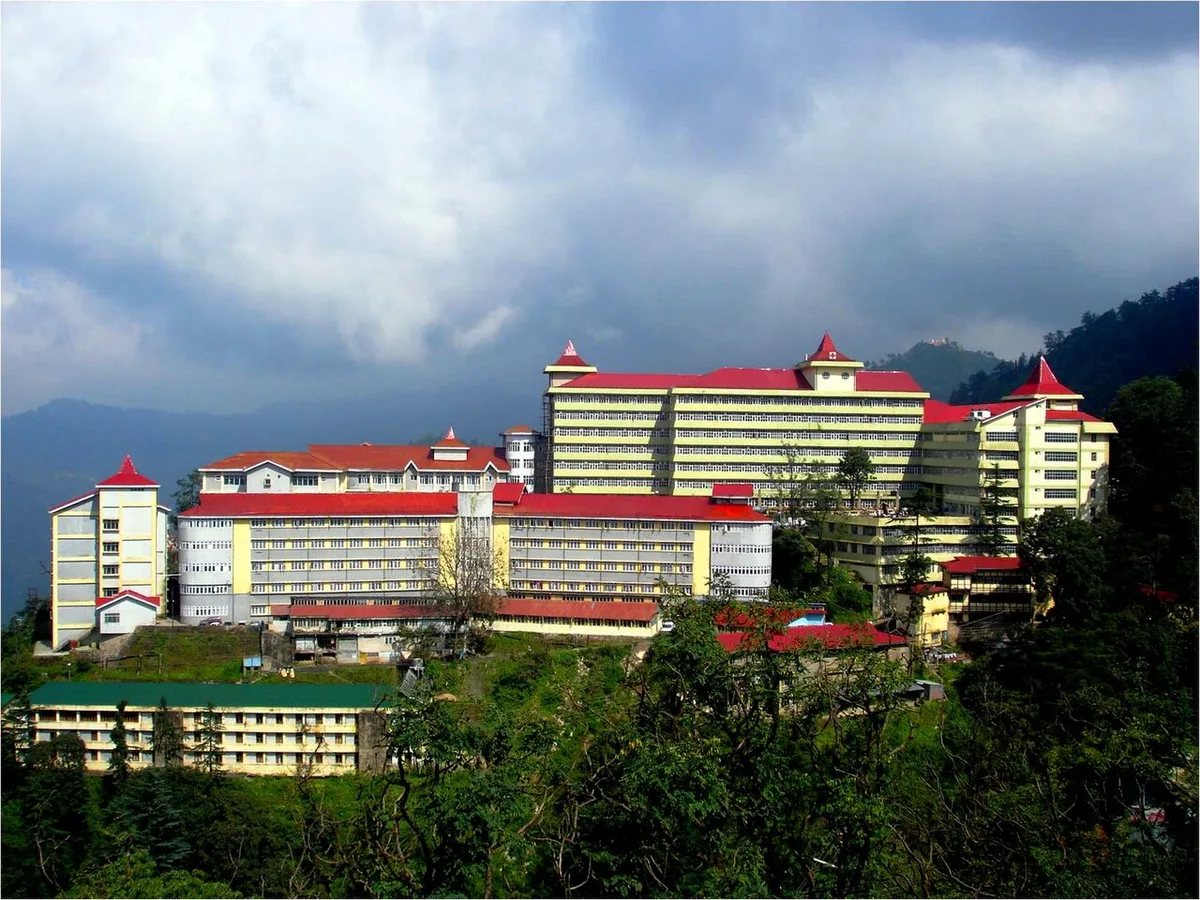
Directors at Yatharth Hospitals approved a ₹3,150 crore preferential issue to Advent International, locking primary capital into the company’s next phase. At the same sitting they raised authorised share capital from ₹1,150 crore to ₹1,500 crore. Authorised equity shares would climb from 11.5 crore to 15 crore. Face value stayed ₹10.
A preferential issue lets a listed company allot fresh shares and warrants to one chosen investor at a fixed price, outside a broad public offering. That path brought Advent’s money onto Yatharth’s books rather than into a secondary sale. Whole-time director Tyagi and the founding family’s platform stood formally tied to the new capital. The allotment stood cleared in principle, subject only to the customary steps still ahead.
The market had already begun to move on the whispers of the day before. On September 16 Moneycontrol put the two names in the same report: Yatharth and Advent were in talks. Deal terms remained unconfirmed. Email queries to both companies drew no reply.
The exchange disclosure ahead of the meeting had already laid out the menu the directors would face. The board would discuss and consider the growth plans of the company via fund raise options including debt, rights issue, preferential allotment or QIP. Preferential allotment channels fresh equity to one chosen buyer at a fixed price. A qualified institutions placement moves a block of shares to large institutional investors without a full public prospectus. Rights issues go to existing holders; debt leaves ownership untouched. Those four paths were the complete list on the notice. Market capitalisation as of September 15 was ₹9,474.52 crore.
Advent International would invest ₹3,150 crore of primary capital for a 24.9 percent stake—Sahi Markets cited 24.87 percent on a post-issue fully diluted basis—through a preferential allotment of equity shares and warrants priced at ₹985.17 per unit. The buyer on the paperwork was Cyprus-based Rasmalai Limited. Rasmalai currently holds no shares.
The allotment broke into two layers. Up to 1,30,26,516 equity shares would deliver roughly ₹1,283.33 crore at once. Up to 1,89,47,664 warrants would cover the balance of about ₹1,866.67 crore, money that arrives only if and when those warrants are exercised. Warrants are simply rights to buy stock later at the same fixed price; the structure lets capital land in stages rather than all on day one. Once every warrant converted, Rasmalai would hold up to 3.19 crore shares and sit on the register as a public, non-promoter shareholder.
The promoter Tyagi family already holds 55.80 percent. That stake keeps them the largest shareholder after the deal closes. Control stays with the founders while Rasmalai’s empty ledger fills and the new capital settles onto the books.
Founded in 2008, Yatharth Hospitals grew into nine multi-speciality hospitals holding roughly 2,800 beds and an announced capacity of about 3,250. The roofs sit in Noida, Greater Noida, Noida Extension, Greater Faridabad, New Delhi’s Model Town, Faridabad, Gurugram, Jhansi-Orchha in Madhya Pradesh, and Agra—a North India chain built one facility at a time under the founding family’s hand.
Atin Jain, director at Advent, described what those years produced: “Yatharth Hospitals has built one of North India’s most differentiated healthcare platforms – pairing clinical depth and disciplined execution, driven by the founding family’s ambitious vision. We look forward to partnering with Yatharth Hospitals and the management team to support the Company as it seeks to build one of the country’s most respected healthcare institutions, guided by the shared intent to provide quality healthcare accessible to all.”
That clinical depth and the family’s continued majority control now meet fresh capital and a partner already fluent in healthcare platforms. Yatharth Tyagi cast the cheque as more than cash on the books. “Advent’s investment marks a pivotal milestone in our journey and helps validate the strength of our platform and long-term vision. Beyond capital, Advent brings deep healthcare expertise, global insights, and a strong value-creation mindset that will, we believe, help accelerate our next phase of growth. Together, we aim to expand our reach, strengthen our capabilities, and build one of India’s leading healthcare networks while remaining committed to delivering high-quality outcomes for patients.”
Beyond the money sits a second asset: a partner already used to working inside founder-led healthcare companies. Private equity of this kind puts long-term funds into a business and then sits with management to stretch the platform. Pankaj Patwari, managing director at Advent, set that method next to the Tyagi name. “This investment underscores Advent’s deep and longstanding commitment to India’s healthcare sector, which we believe is entering a decade of structural growth as access expands, quality improves, and consolidation advances. We are pleased to partner with the Yatharth family, bringing our global healthcare expertise and experience investing in founder-led businesses to help support and accelerate the Company’s next phase of growth.”
Capital and playbook now travel on the same side of the table. The stretch itself is measured in beds. The company targets roughly 5,000 operational beds by FY29, with the expansion remaining focused on North India and proceeding through selective acquisitions of operational hospitals. The ninth hospital is already in hand—a 250-bed facility acquired in Gurugram—and its launch is scheduled for the first quarter of FY28. Once those 250 beds come into service they will raise the operating total and form a concrete step on the path that leads to five thousand by the end of FY29.
On September 17, following the announcement, the shares surged through the intraday session. They hit a fresh 52-week high after jumping as much as 9.67 percent to 10 percent on the BSE, according to Fortune India. Moneycontrol and News18 reported a 7 percent rise while Financial Express reported a 9 percent gain. Market capitalisation rose to ₹10,348 crore on the day, with more than 1 lakh shares changing hands across the exchange. The BSE print hit ₹1,077.90.