



Yom Kippur: Judaism’s Holiest Day of Atonement
Marc Cooper had already been on his feet since 1 a.m. The Thursday before Yom Kippur found the 57-year-old back at Coopers Let’s Fress Deli in Whitefield, the shop he runs with his brother Richard. His ordinary Friday shifts begin at 2 a.m.; the High Holy Days pull the clock earlier still.
The stretch before Rosh Hashanah had been the hardest. “From the Tuesday to the Friday, I had three hours’ sleep in all that time and I went home four times for a shower. That was it. Other than that I was here.” Prices keep rising around him. A crate of beef tomatoes that cost £7 or £8 three years ago now runs between £16 and £25, depending on the delivery. Fish has gone through the roof. Light sensors have been fitted to hold down the energy bills.
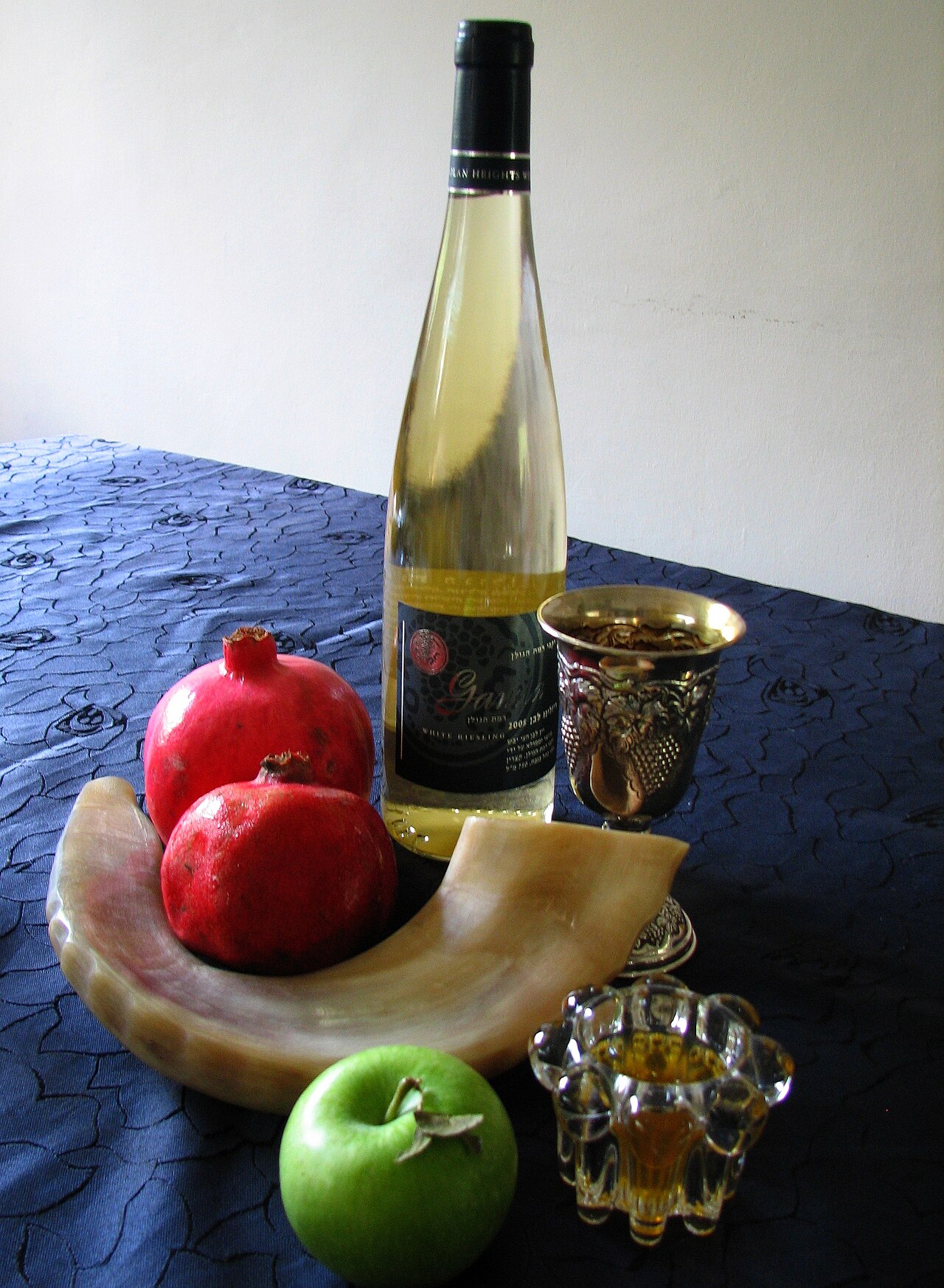
“Our religion is based around food. Any festival, any celebration.” The same produce that fills the deli counters will sit on family tables before the fast begins and again when it ends, with wine. The abstinence that starts at sundown still leaves room for the meals that bracket it—the supper finished before the gates of the day close, and the night of food and family that waits once the final shofar is heard.

Yom Kippur 2026 is observed from sundown on September 20 to nightfall on September 21. It is the holiest day of the Jewish calendar, the Day of Atonement, and the close of the Ten Days of Repentance that begin with Rosh Hashanah. Tradition holds that the judgment written at the New Year is sealed on this day. The fast lasts approximately twenty-five hours, nearly twenty-six by other counts.
Those who keep it abstain from food and drink, washing, leather footwear, and marital relations. Even many who observe little else set work aside and come to synagogue. The day is spent in prayer. Jacqueline Anzarut describes the hard demand at its center: to look honestly at the year that has passed. The work carries a Hebrew name, teshuvah, often translated as repentance and also meaning return.
Five services structure the hours. They begin on the eve with Maariv and Kol Nidre, continue through Shacharit and Musaf, include Minchah in the afternoon with the reading of the Book of Jonah, and end with Neilah, the closing of the gates at sunset, and the long blast of the shofar that finishes the fast.
Marvin Krislov describes the season as one of praying and repenting misdeeds of the past year. Before the request for forgiveness from God on the Day of Atonement, the tradition requires asking fellow humans for the ways they have been hurt. To him that work of seeking pardon from those around them is at least as profound and perhaps even more difficult. The appeal can take a blanket form—“forgive me if I have hurt you or wronged you”—or name a specific act. The request confuses others, particularly those who do not share the tradition. It can draw “sure, why not” or “I don't really understand what I'm supposed to say here.” The Talmudic frame is plain: atonement with God does not cover harm done to others until the other person has been appeased.
Stuart Katz names the one person who never seems to make it onto his forgiveness list: himself. He can forgive almost anyone else and can believe, most days, that God forgives him. Somewhere in the middle remains the figure he keeps holding responsible for everything, replaying every failure and refusing to let off the hook. He does not think he is the only one.
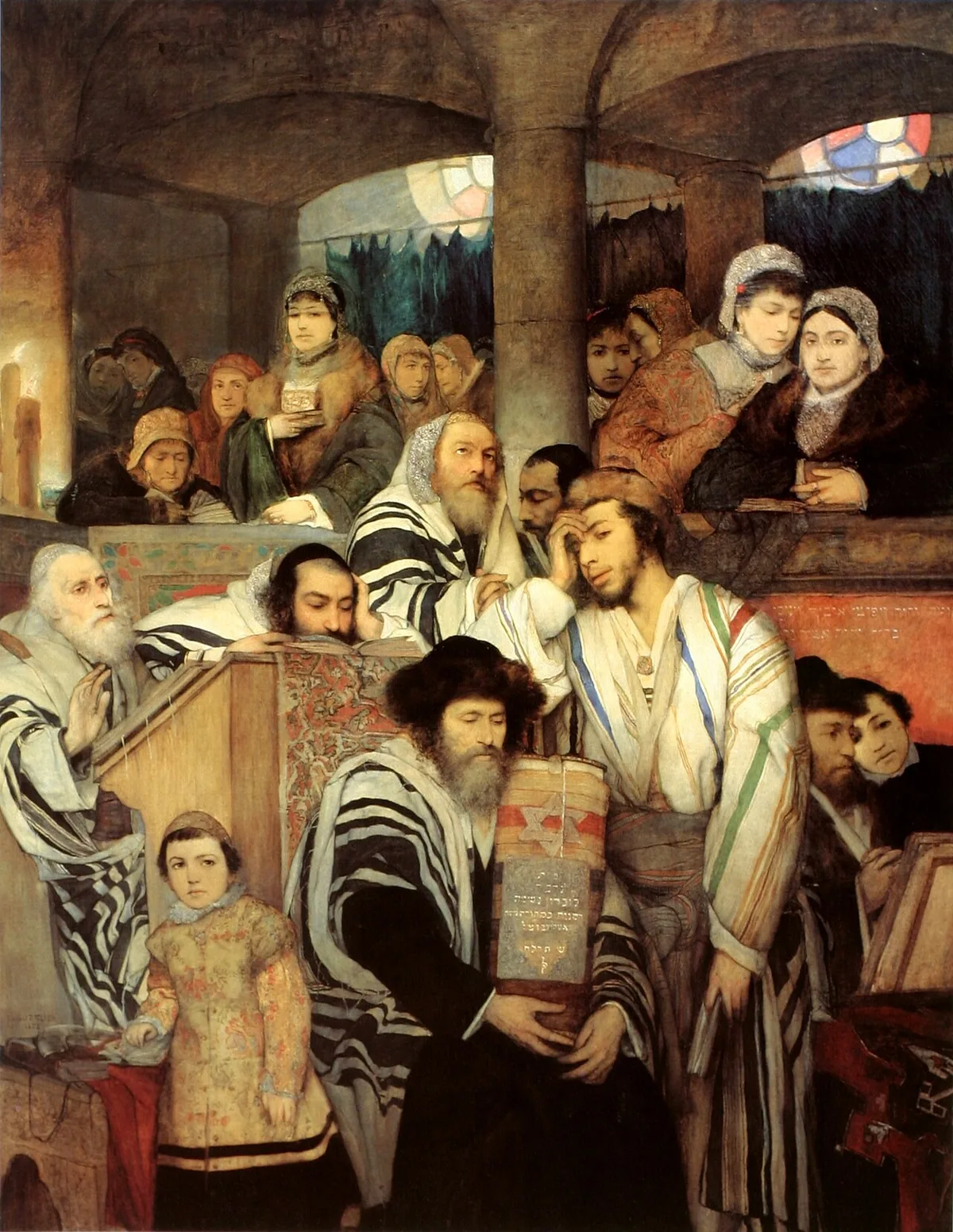
Yom Kippur is the day that comes for exactly that. All day the confession continues. Congregants stand and move through the long list, the viduy, tapping their chests as they go. The grammar is deliberate: “על חטא שחטאנו. For the sin that we have sinned.” Not the singular. The plural. The entire confession is spoken in the plural, out loud and together, the full room reciting the same catalogue, including acts most never committed. Nobody is required to rise alone and claim any single failing as personal. The words are spoken jointly so the person carrying the heaviest private shame can voice it hidden inside the group, tucked into the shared form, never singled out, never exposed, never alone. On the day of facing the worst of oneself, the practice ensures no one faces it by themselves.
Mario Mikulincer, a psychologist at the Hebrew University of Jerusalem and academic director of the Israel Center for Addiction and Mental Health, sees in the fast, the prayers, and the collective confession a structure that opens room for self-reflection. Hunger can weaken executive functions, the mental systems that handle planning and restraint, and leave a person more impulsive. Under stress, intentions give way to habits that run automatically. Willpower is not enough. The environment and consistent daily practices carry more weight. He cautions against inflated expectations—the early relief that arrives with a decision to change and then collides with the effort of following through. Guilt can motivate repair. Shame and self-hatred more often feed denial and anger and block the path.

Aaron Cherniak, a psychologist at the same center, research director at the Shaare Nefesh Resilience Center, and a Modern Orthodox rabbi, holds that personality can still shift in adulthood, though usually by degrees. A promise made on Yom Kippur does not rewrite habits on its own. Lasting change comes from repeated decisions to keep the new behavior. Crisis may catalyze a turn because it disrupts ordinary life, yet prolonged stress depletes the resources required for planning, impulse control, and the slow building of new habits. Motivation often follows the first small actions, once even modest progress becomes visible.
Last Yom Kippur a terror attack took place outside the Heaton Park Hebrew Congregation synagogue in Crumpsall, the shul Marc Cooper attends. Melvin Cravitz, 66, was stabbed to death by Jihad Al-Shamie. Adrian Daulby, 53, was killed by a stray police bullet. “We lost two wonderful human beings - two beautiful souls.” Reserved pews are kept for both men.
Days after the attack, while armed police remained outside, Marc returned to volunteer guard duty for the festival of Sukkot. As a child he had walked freely through the streets of Prestwich and Whitefield on Yom Kippur, meeting friends from morning until the shofar without his parents worrying. The gates are locked and covered now, with barriers on the inside as well as the outside. Greater Manchester Police will treat this year’s High Holy Days like a major football match or music concert. Security will combine the Community Security Trust, two paid guards, and synagogue volunteers including Marc.
Sandy Koufax once refused to pitch Game 1 of the 1965 World Series because it fell on Yom Kippur. When his replacement, Don Drysdale, was pulled for poor performance, he told manager Walter Alston he bet Alston wished he was Jewish too. Marc will spend the day reflecting, then hear the shofar. The final blast comes at nightfall on September 21. “I'll be very, very relieved when it's over and we've got through it peacefully, please God.”