



You control how feedback lands, not how it's given

In 60 seconds
- Most feedback conflict stems from mixing appreciation, coaching, and evaluation without either side noticing.
- Defensiveness arises from three predictable triggers—truth, relationship, and identity—not character weakness.
- Pain from ratings and labels shrinks when you separate the score from the story and the observation behind the word.
- Stable temperament differences and the simplicity of your self-story decide whether one comment becomes a crisis.
- Skillful receiving still includes weighing feedback and declining it after genuine consideration.
- The payoff is extracting usable value even from criticism that arrives badly, unfairly, or at the wrong moment.
The big idea
Stone and Heen flip standard coaching advice by locating the controllable skill on the receiving side of every feedback exchange. Sort the type of feedback, name the trigger firing, unpack vague labels into checkable data, and keep your identity story complex enough that one comment cannot topple it.
The book in brief
The book starts from a simple diagnosis: almost all feedback advice coaches the giver, yet the receiver is the only person whose response you can actually change. Stone and Heen map why conversations go sideways when appreciation, coaching, and evaluation get tangled, then show how three emotional triggers—truth, relationship, and identity—drive reflexive defensiveness.
They next zoom into evaluation pain, arguing that ratings hurt less once the numerical score is split from the life story the receiver instantly builds around it. Vague labels such as not strategic are treated the same way: the receiver's job is to pull the specific observation out from under the shorthand so the claim can be tested rather than swallowed or rejected whole.
Temperament research enters next. People differ stably in how hard negative feedback lands and how wide the swing is between praise and criticism; knowing your own wiring lets you schedule recovery time or request written notes instead of pretending willpower alone will fix the sting. That external work only holds if the internal story of self is complex and growth-oriented rather than simple and fixed, so a single comment cannot flip an entire identity judgment.
The arc closes on boundaries. Receiving well means hearing and testing the input, then accepting it, setting it aside, or pushing back—not becoming a doormat. Across sources and over time, patterns carry more weight than any one person's view. The landing point is a receiver who can turn even poorly delivered or unfair criticism into something usable rather than something merely survived.
Context
Douglas Stone and Sheila Heen are consultants and negotiation trainers. Their 2014 book synthesizes practical wisdom with psychological concepts such as Dweck's mindset research and temperament set-point ideas, drawing mainly on client anecdotes and case composites rather than original controlled studies.
The key ideas

1
Three kinds mixed up
A large share of feedback conflict is not about content but about mismatched purpose: appreciation, coaching, or evaluation.
Stone and Heen sort feedback into three jobs that people constantly confuse. Appreciation says you are seen and valued; it motivates and connects. Coaching offers a concrete way to improve a skill or fill a knowledge gap. Evaluation ranks or rates you against a standard so you know where you stand.
Trouble starts when one person intends one job and the other hears another. A manager offers a structural tip on a report and the employee hears a verdict that the work is inadequate. Someone finishing a hard project needs to feel seen and instead receives only improvement notes, leaving them feeling invisible despite the giver's good intent.
The authors refuse to pin the fix on perfect labeling by givers, which rarely happens. The receiver must ask which kind is coming or name what they actually need. Evaluation remains necessary for calibrating the other two, yet it should not silently swallow them. Each type triggers different emotions and therefore needs its own receiving move.
In practice: After a failed launch, a boss starts listing tactical fixes; saying I need to know you still trust me before I can hear the fixes redirects the exchange to the appreciation that is missing.

2
Three predictable triggers
Defensive reactions sort into truth, relationship, and identity triggers that can be named and managed instead of treated as character flaws.
- TTruth triggerArgue the facts when feedback seems wrong or unfair
- RRelationship triggerReject the message because of who delivered it
- IIdentity triggerGeneralize one critique into I am a failure
The central diagnostic tool divides the reflex to push back into three sources. Truth triggers fire when the feedback feels factually wrong, incomplete, or unfair, and the response is to argue the data. Relationship triggers fire because of who is speaking; the same words accepted from a mentor feel intolerable from a rival or someone seen as hypocritical.
Identity triggers fire when the comment threatens competence or worth, collapsing a single piece of criticism into I am a failure. Recognizing which trigger is active lets the receiver choose a deliberate response rather than a reflexive one.
Each trigger needs its own counter-move: calmly check the facts for truth triggers, separate the relationship from the content for relationship triggers, and widen the sense of self so one remark cannot threaten the whole person for identity triggers. The reframe is that bad reactions are identifiable patterns, not immaturity.
In practice: Told a presentation was too aggressive, one person rejects the substance outright, another dismisses the source as someone who never presents, and a third spirals into feeling fundamentally inadequate.

3
Score separate from story
Most sting from a rating comes from the narrative built around it within seconds, not from the number itself.
The score
One data point: meets expectations, bottom tier, reduced bonus
The story
Manufactured cascade: I am mediocre, will never advance, years wasted
Building on the trigger map, the authors isolate evaluation. A meets expectations mark can instantly generate a cascade: mediocre, never promoted, years wasted. The rating is one data point; the life narrative is manufactured by the receiver.
The practical separation is three-way: the score, the actual consequences that follow from it, and the story about identity and future. A bottom-tier forced-curve rating may truly cut bonus or visibility, yet that consequence does not prove the person lacks skills usable elsewhere or that the number captures full worth.
Evaluation systems are often crude, relative, and noisy—comparison pool, rater mood, timing—so the reliability of the score itself deserves interrogation before any story is built on it. Pausing to ask what actually happens versus what one is telling oneself keeps overreaction in check while still taking real consequences seriously.
In practice: Someone rated in the bottom tier of a forced curve faces a smaller bonus yet still separates that practical hit from any claim that the rating equals total personal worth.

4
Unpack the vague label
Labels that feel instantly false often hide a specific, checkable observation once the receiver traces the feedback back to what the giver actually saw.
Instant rejection—that is just not true—is frequently a reaction to a broad label rather than to underlying data. Not strategic enough sounds like a character judgment and invites dismissal. Labels are usually shorthand for behaviors the giver observed.
The move is to pull the feedback back to concrete data: what did they see or hear that produced that word? Not strategic may mean jumping into execution details before the group has agreed on priorities. That behavior is falsifiable and workable in a way the label never was. Givers also often generalize from a thin sample, sometimes one incident, so frequency and context questions matter.
Two failure modes are named: swallowing the label whole and importing a crude judgment into self-concept, or rejecting it outright and forfeiting the chance to learn. Curious, specific questions—can you give me an example of when you saw that—keep the receiver actively working the conversation instead of passively absorbing or resisting.
In practice: Not strategic enough unpacks into the observation that the person dives into execution details in meetings before priorities are set.

5
Wiring and swing
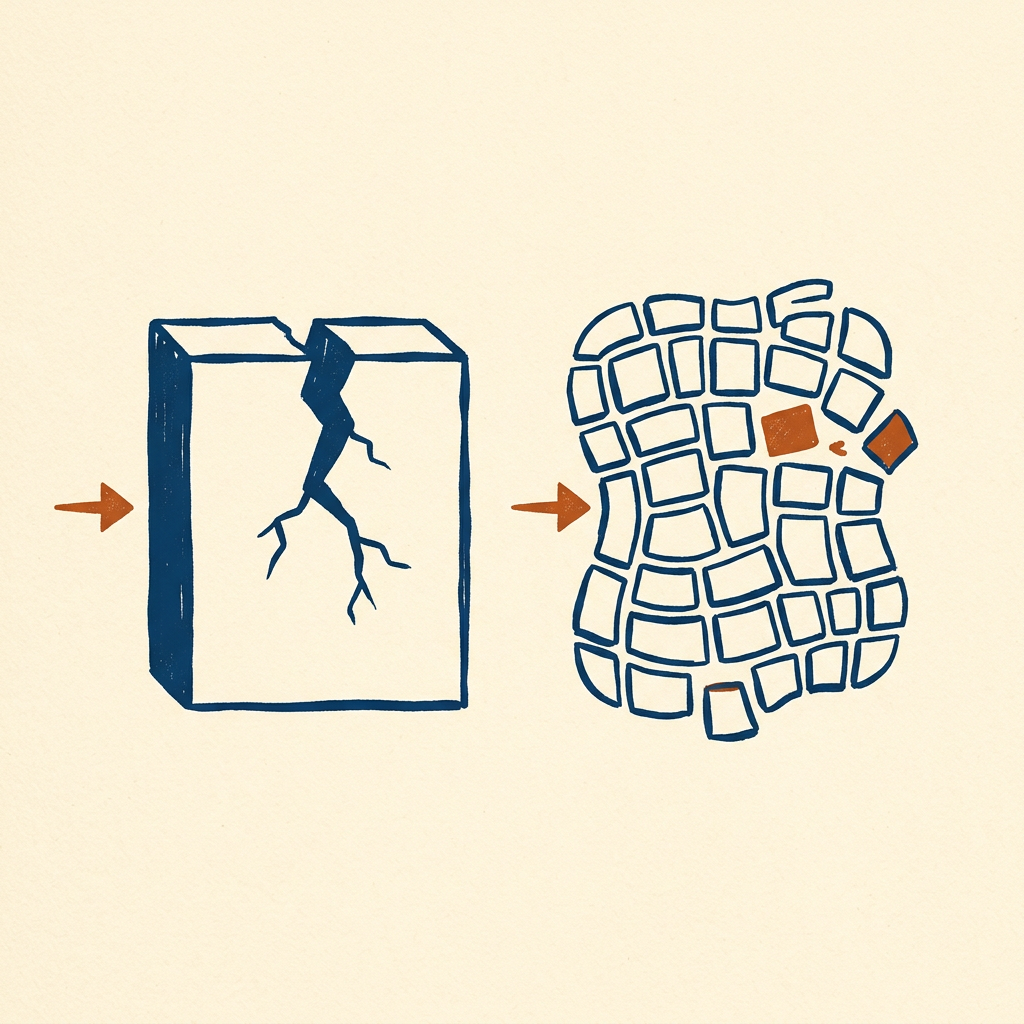
Stable differences in baseline sensitivity to negative feedback mean wide-swing people need deliberate buffers, not lectures to toughen up.
Narrow swing
Recovers from criticism within minutes; praise and critique land closer together
Wide swing
Carries one harsh comment for days; needs recovery buffers and written processing time
Drawing on temperament research, including twin-study work on happiness set points, the authors describe a baseline and sensitivity to negative and positive events that varies by person and stays substantially stable. Some recover from criticism in minutes; others carry one harsh comment for days. The gap is not simply discipline.
They name the swing—the distance between how good praise feels and how bad criticism feels. People with a wide swing experience negative feedback with special intensity and need strategies matched to that reality. Self-awareness lets them build buffers: schedule hard conversations when recovery time follows, or request written feedback so processing can happen before any reply.
The goal is not numbness; that would also blunt motivation from praise. It is recognition of wiring so after-effects can be managed on purpose. The same feedback filtered through different temperaments produces very different reactions, which is why knowing one's own baseline precedes any technique.
In practice: A person who spirals for days after criticism schedules the next review for a Friday afternoon and asks for notes in writing first.
6
Complex story of self
Whether one criticism stays a minor data point or becomes an existential crisis depends on how simple or complex, fixed or growth-oriented, the identity story is.
The authors expand the identity trigger into a theory of the story of self—the running narrative about abilities, worth, and future. Two features govern resilience: complexity versus simplicity, and growth versus fixed orientation, drawing explicitly on Dweck's mindset research.
A simple fixed story—I am either a good writer or I am not—treats any negative note as evidence for the binary verdict, so criticism feels catastrophic. A complex growth story—I am developing, strong in some ways, weak in others, and that can change—absorbs the same note as one data point about one skill at one moment.
Rewriting the story is deliberate work: catalogue specific strengths and weaknesses in detail so no single comment can stand in for the whole picture. Catastrophic patterns—assuming one failure predicts permanent failure or spreads to unrelated domains—are bounded by conscious limits: this comment is about this presentation, not the entire career or character. External techniques only hold if the underlying self-story can tolerate them.
In practice: Instead of hearing this draft is weak as proof of being a bad writer forever, the receiver files it as one note on structure in one piece while retaining a detailed inventory of other strengths.

7
Boundaries after hearing
Receiving well means genuinely testing feedback and then accepting, declining, or pushing back; it never means absorbing every criticism from every source.
A persistent fear is that skill at receiving turns the person into a doormat. Stone and Heen reject that reading. After real consideration, three responses remain open: accept and change, acknowledge yet decide not to act, or push back and explain the disagreement.
When the feedback relationship itself is troubled—a boss who criticizes in bad faith, a colleague whose notes serve their own agenda—understanding motive does not compel agreement; it only informs how much weight the content deserves. Tracking patterns across multiple sources over time supplies more signal than any single instance.
Explicit boundaries are themselves a form of feedback given back: telling a chronic critic that the how or when of delivery must change. Openness techniques therefore stop short of unconditional compliance; the receiver retains the final say on what to keep.
In practice: After genuinely considering a colleague's recurring critique, the receiver decides the content has low weight because it consistently advances the colleague's agenda, and says so.
Key terms
- Appreciation Feedback whose job is to show you are seen and valued; it motivates and connects.
- Coaching Feedback that offers a concrete way to improve a skill or fill a knowledge gap.
- Evaluation Feedback that ranks or rates you against a standard so you know where you stand.
- Truth trigger Defensive reaction that fires when the feedback feels factually wrong, incomplete, or unfair.
- Relationship trigger Defensive reaction driven by who is speaking rather than by what was said.
- Identity trigger Defensive reaction that turns one criticism into a verdict on overall worth or competence.
- Swing The gap between how good praise feels and how bad criticism feels; wider swings intensify the sting.
- Story of self The narrative you hold about your abilities, worth, and future; simple fixed versions make criticism catastrophic.
What to do
- Decide before your next hard conversation which of the three types you most need and say it out loud at the start.
- When you hear a vague criticism this week, ask for a specific example of when they saw it and wait for the data before reacting.
- After a negative rating, write two columns—what actually follows in practical terms, and what story you are tempted to tell about your identity—and keep them separate.
- Identify one person whose feedback you habitually dismiss because of who they are, and next time answer the content alone first.
- If you know you have a wide swing, schedule the next feedback talk when you have recovery time afterward or request it in writing.
Questions to think with
- Which of the three feedback types do you most often need, and which do you most often receive instead?
- When criticism lands hard, which trigger—truth, relationship, or identity—fires first for you?
- How simple or complex is the story you currently tell about your own competence?
- Whose feedback do you discount mainly because of the relationship rather than the content?
- Where would an explicit boundary around how or when someone gives you feedback actually help?
The other side
The book is largely practical synthesis rather than original research; its temperament and set-point claims rest on psychology that later faced replication questions, and its advice assumes enough safety and status to unpack labels and set boundaries—an assumption that fails for people in precarious jobs or facing biased evaluation, while its focus on fixing the receiver can let toxic givers and cultures off the hook.
Who it's for
Managers who still watch people shut down despite every giving-feedback book they have read, professionals who replay one critical comment for days, and anyone heading into a performance review who wants to leave with something usable instead of only defensiveness or collapse.