



Your brain budgets the body long before it thinks

In 60 seconds
- Barrett argues the brain's primary job is allostasis—predicting and regulating energy needs before deficits arise, with thought as a byproduct.
- She rejects the triune brain of stacked reptile, limbic, and rational layers as unsupported by comparative neuroanatomy.
- Mental functions arise from flexible whole-brain networks that reconfigure by context, not fixed single regions such as a fear center.
- Human infants arrive unfinished; caregivers and culture physically wire the brain, making nature and nurture inseparable.
- Perception and emotion are active predictions built from body signals, past experience, and learned concepts, revised only on prediction error.
- Other brains help regulate yours through presence and words, and shared concepts create social realities like money and race with real physical costs.
The big idea
Barrett's central argument is that the brain evolved not for rational thought but to keep the body alive by predicting needs and managing an energy budget moment to moment. From that base she shows perception, emotion, identity, and social categories as constructions of one networked, predictive, socially entangled organ—not fixed circuits or layered animal brains at war.
The book in brief
Barrett starts from a reframe: before asking what the brain thinks, ask what it regulates. She places continuous prediction and balancing of the body's resources at the center of brain function—older than thought and still dominant beneath awareness—and treats hunger, fatigue, and mood as budgeting reports rather than pure character.
She then clears myths that still shape business books and self-help. The stacked reptile-limbic-rational model does not match how vertebrate brains evolved or work. Capacities are not locked in single anatomical drawers either; they emerge from networks that fire together and shift roles by context.
The middle stretch turns to how brains get built and how they know the world. Infants arrive with bare architecture, so caregiving and culture become physical construction materials. Perception is mostly a best guess corrected only when sensory input produces enough mismatch. Emotion follows the same logic: a moment-to-moment build from body feeling, memory, and learned concepts, not a universal circuit.
The arc widens outward. Other people's presence and words act as real inputs to one another's body budgets, so relationships function as biological subsidies. In a final half-lesson she extends the same machinery to collective life: shared concepts invent money, borders, and racial categories that have no physical substance yet produce measurable harm, and she treats that constructive power as collective responsibility.
Context
Lisa Feldman Barrett published the book in 2020 as a plain-language update drawn from modern neuroscience and from her earlier academic work, including How Emotions Are Made. It spoke to readers still absorbing lizard-brain stories in business training, parenting advice, and self-help, offering a networked predictive alternative.
The key ideas

1
The body's accountant
Barrett says the brain's oldest job is allostasis—predicting bodily needs and adjusting glucose, water, salt, and oxygen before deficits hit.
Barrett rejects the idea that the brain mainly exists to produce intelligence or consciousness. Its most persistent job, shared with simple nervous systems, is keeping the body's energy budget balanced. A brain that only reacted after a shortage would be too slow to keep an animal alive, so selection favored brains that anticipate.
She calls constant internal sensing of the body's state interoception and treats it as raw material later shaped into emotional experience. Hunger, fatigue, and mood swings become budgeting reports rather than pure character traits. Feeling off before a meeting may flag low resources more than anxiety about the meeting itself.
This budget-keeping runs invisible and continuous. Barrett insists it explains more daily irritability, decision fatigue, and cravings than the brain-as-thinking-machine story allows. Regulation came first in evolutionary time and still dominates activity beneath awareness.
In practice: A marathon runner's brain, she notes, begins adjusting heart rate, blood flow, and motivation minutes or hours before muscles deplete, based on predictions of the run's cost.

2
One brain, not three
Barrett argues the reptile-limbic-neocortex stack is false: vertebrate brains share and repurpose ancestral material rather than layer newer controllers over older beasts.
Triune myth
Reptile instincts under limbic emotion under rational neocortex control
Barrett's view
One integrated system of repurposed ancestral material, not stacked layers
Barrett targets the triune model popularized in the 1960s by Paul MacLean and still repeated in business books, parenting advice, and self-help. That story claims an ancient reptilian brain for survival, a mammalian limbic system for emotion, and a human neocortex for reason, with newer layers controlling older ones.
Comparative neuroanatomy does not support it, she shows. Reptiles have no primitive version of a human limbic system, and the neocortex did not evolve as an add-on for impulse control. All vertebrate brains share ancestral neural material reorganized over hundreds of millions of years, not stacked like sediment.
The myth's practical damage is real. It encourages people to fight an inner beast and has excused impulsive or violent behavior as the reptile brain taking over. Barrett calls the framing scientifically false and psychologically counterproductive because self-control then means suppressing an enemy rather than understanding one integrated system budgeting under uncertainty.
Clearing the model also removes the assumption that emotion and reason are separate faculties at war, preparing her claim that both emerge from the same predictive machinery.
In practice: She notes the model still gets used to excuse impulsive behavior as a reptile brain taking over—a framing she rejects as false and unhelpful.
3
A network, not a cabinet
Barrett holds that functions like fear, memory, or language arise from overlapping networks that reconfigure by context, not from single dedicated regions.
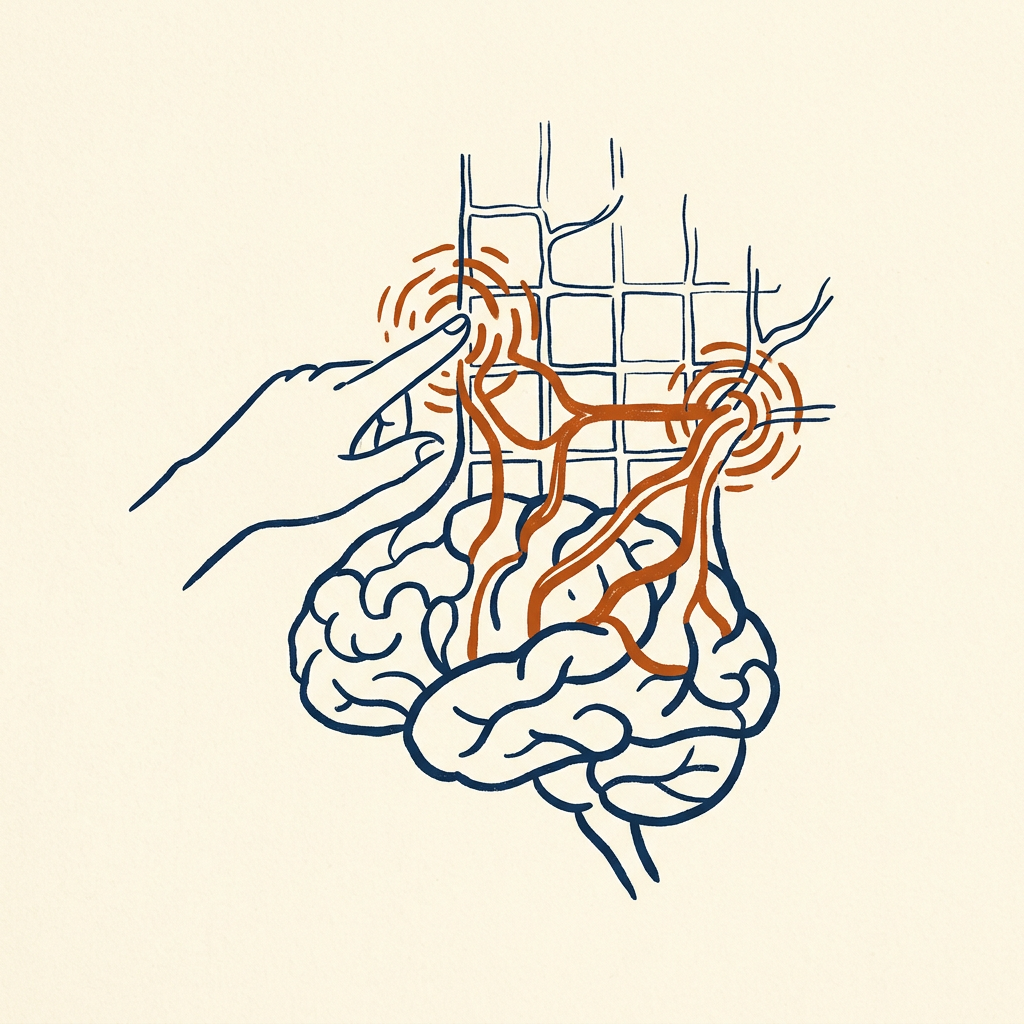
Building on the triune rejection, Barrett attacks the related myth that specific regions have fixed single jobs, such as the amygdala as a fear center. Decades of neuroimaging, she cites, show the amygdala active during surprise, attention, positive excitement, and simple decision-making, not fear alone.
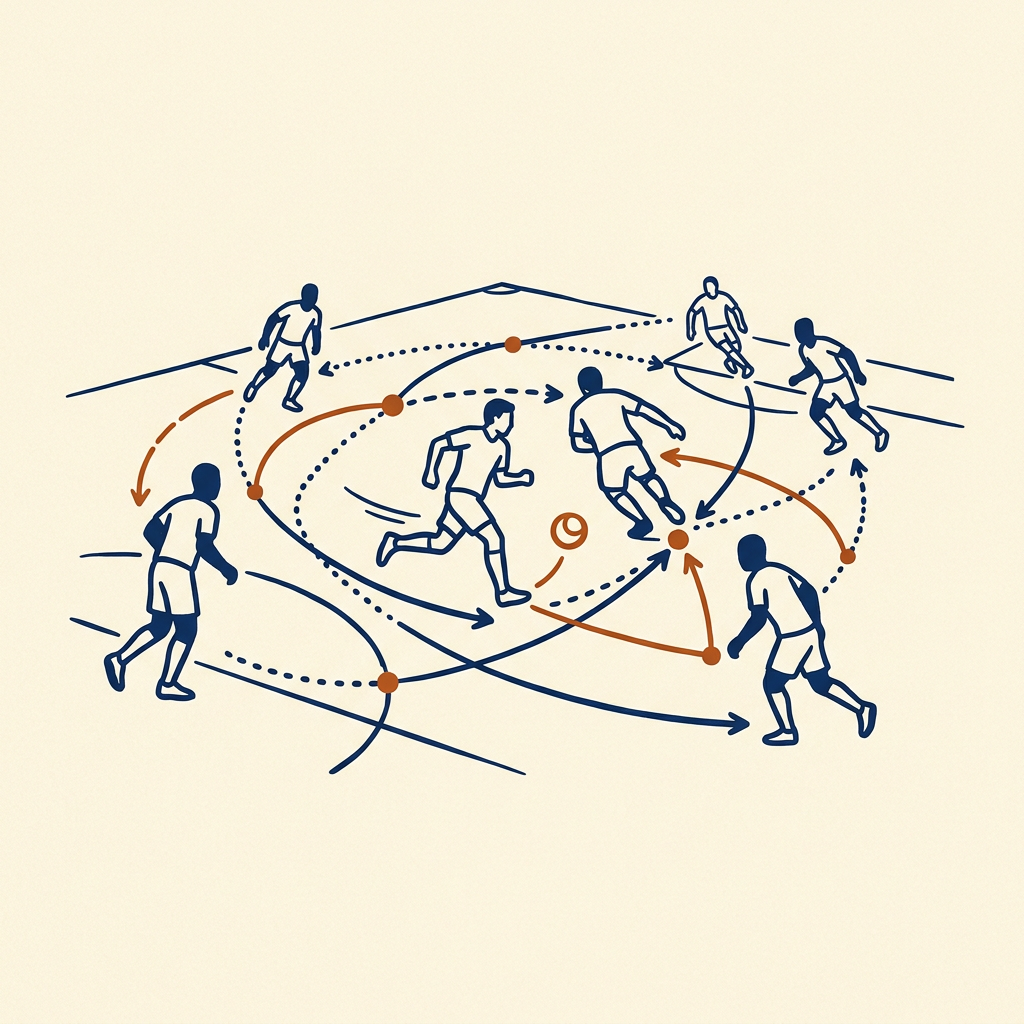
No brain-imaging meta-analysis has found one-to-one mapping between a mental state and one anatomical location. The brain works through large-scale networks—sets of regions that fire together, shift roles depending on partners, and reconfigure by context. She likens this to a sports team whose roles change with the play, not a filing cabinet of fixed drawers.
Brain-damage studies mislead when used to claim a function was localized and destroyed, because losing one region can degrade several unrelated capacities that shared that node. The same principle undercuts devices and apps that promise to train willpower or creativity by stimulating one spot.
This network view lays ground for later chapters: emotions and identity are constructed fresh from shifting configurations, not retrieved from permanent storage.
In practice: Barrett points out the amygdala lights up for surprise, attention, positive excitement, and decision-making, not only fear.
4
Wired by the world
Barrett argues human infants are born anatomically unfinished, so caregiver interaction and culture physically wire the brain and make nature and nurture inseparable.
Barrett treats nature-versus-nurture as a false choice. Unlike many animals born near adult wiring, human infants arrive with only bare architecture; most synaptic connections form after birth in response to experience.
She points to the Bucharest Early Intervention Project on Romanian orphans raised in severe deprivation. The study found measurable reductions in brain volume and lasting cognitive and emotional deficits without consistent caregiving; deficits improved substantially for children placed in foster care before roughly age two.
This is not genes overridden by environment but genes requiring environmental input to run correctly—what she calls nature via nurture. A caregiver's voice, touch, and responsiveness are literal construction materials for circuits governing stress regulation and social understanding.
The claim carries weight for parental leave, childcare, and early intervention. Early social contact becomes a biological necessity on par with nutrition. Children in different linguistic and social worlds do not merely learn different customs; their brains become different predictive models of reality.
In practice: In the Bucharest project she cites, orphans lacking consistent care showed reduced brain volume and lasting deficits that improved substantially when foster placement came before roughly age two.

5
Guesses before it knows
Barrett presents perception as the brain's continuous best guess about what will happen next, corrected only when sensory input creates large prediction error.
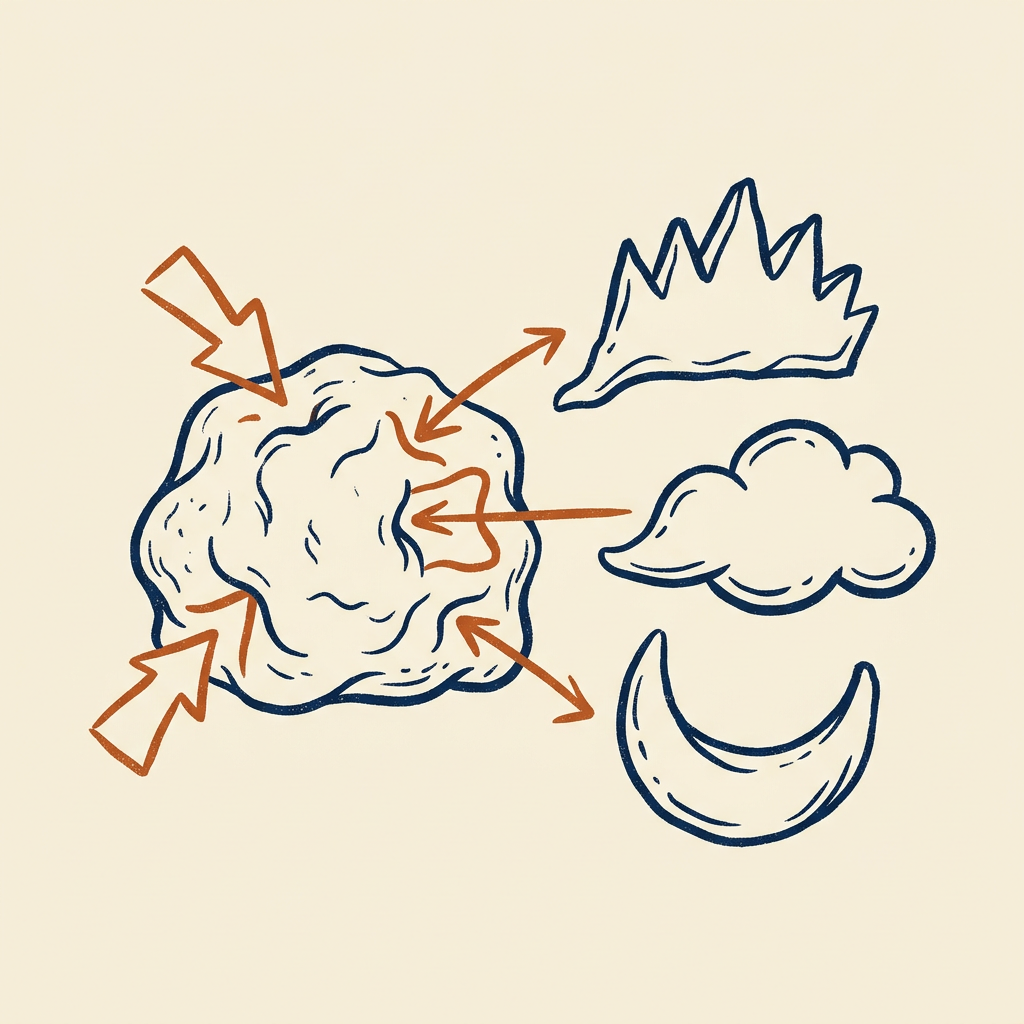
Rather than waiting for sensory data and then interpreting it, Barrett says the brain constantly generates a prediction from past experience and adjusts only on mismatch. Pure reaction would be too slow; by the time raw signals arrive, the moment they describe has already passed.
She illustrates with ambiguous images and illusions where prior expectation overrides raw input, and with everyday cases such as tasting identical wine as more pleasant when labeled expensive—a finding from behavioral pricing studies. What feels like direct reality is mostly simulation checked at the margins.
The same logic applies to bodily sensations. A racing heart before a presentation can be constructed as anxiety or excitement depending on available concepts, and which label wins can change performance, drawing on reappraisal and stress-mindset research.
Habits resist change because a well-worn prediction needs enough contradicting evidence to force revision, not a simple decision to act differently. If perception is construction, emotion must be built by the same machinery.
In practice: Barrett notes that identical wine tastes more pleasant when labeled expensive than when labeled cheap, as prior expectation shapes the experience.
6
Feelings are built
Barrett claims emotions are not universal hardwired reactions with fixed facial signatures but constructions each brain makes from body signals, predictions, and culturally learned concepts.
Basic-emotion view
Universal circuits and fixed facial signatures for anger, fear, sadness
Constructed view
Moment-to-moment builds from body signals, predictions, and learned concepts
This is her most contested claim. There is no dedicated circuit for anger, fear, or sadness that fires the same way in every person and culture, she argues. The brain builds an emotional experience in the moment by combining interoceptive signals, past predictions, and available emotion concepts—words and categories learned from culture—to make sense of ambiguous internal states.
The same racing heart and tight chest can become fear, excitement, or anger depending on context and concepts on hand. She cites cross-cultural work with the Himba people of Namibia: when isolated from Western media, people did not reliably match a scowling face to anger or a wide-eyed face to fear the way Western subjects did, undercutting Paul Ekman's claim of universal facial expressions.
Practical stakes follow. Lie-detection systems, airport screening, and some hiring software assume faces reveal fixed inner states—an assumption she says the data do not support. Emotional vocabulary does real biological work: people with wider emotion words, what she calls emotional granularity, show better regulation and mental health outcomes in her lab's research, because a precise concept yields a more manageable prediction.
Language therefore does not merely label feelings after the fact; it helps construct them.
In practice: Barrett cites studies with the Himba of Namibia showing people isolated from Western media did not reliably map scowling faces to anger or wide-eyed faces to fear.
7
Brains regulate other brains
Barrett argues other people's words, tone, and presence act as literal inputs to your allostatic regulation, making relationships a biological extension of the body budget.
Soft comfort myth
Relationships as emotional niceties and stress-relief metaphors
Biological subsidy
Touch and words change distress activity, cortisol, heart rate, and immune load
Because humans are intensely social, Barrett extends the body-budget idea outward. Another person's presence is not merely comforting in a metaphorical sense; it changes physiology.
She cites hand-holding studies by James Coan: a partner's touch measurably reduced a threatened person's brain activity linked to distress and lowered the physiological cost of anticipated pain, strongest in securely attached couples. Social support becomes a biological subsidy—one nervous system helping regulate another's resources.
Language participates too. Supportive words can lower cortisol and heart rate the way physical comfort does, while chronic rejection or isolation carries measurable cardiovascular and immune costs, comparable in some studies to smoking. Loneliness becomes a body-budget problem; cruelty, bullying, and exclusion look closer to physical harm because the receiving brain treats them as threats to regulatory stability.
Humans evolved to co-regulate in groups. Modern isolation from urban living or digital substitutes may misalign with a nervous system built to expect ongoing contact with reliable others. That sets up her final claim about shared conceptual systems regulating whole societies.
In practice: In Coan's studies she cites, a partner's hand-holding reduced distress-related brain activity and the physiological cost of anticipated pain, especially in securely attached couples.

8
Reality built together
Barrett says humans uniquely use shared concepts to create social realities—money, borders, race—that exist only by agreement yet produce real physical consequences, carrying collective responsibility.
- Physical paper or groundA bill or a line with no inherent value or barrier
- Shared conceptMany brains agree the paper is money or the line is a border
- Real consequencesWho eats, who crosses, who weathers faster under discrimination
In the shortest half-lesson, Barrett argues the same predictive, concept-using machinery lets humans invent entities with no physical form but real effects. A dollar bill is worthless paper until billions of brains share the concept of its value. A border is invisible on the ground until shared belief decides who may cross.
She applies the same process to racial categories, which lack a clean biological basis yet produce measurable physical harm. She draws on Arline Geronimus's public-health work on weathering, documenting accelerated biological aging in populations under chronic social and economic discrimination.
Because these categories are brain-built rather than biologically given, they can in principle be rebuilt or dismantled—but only by shifting shared concepts across many brains at once, which is slow and difficult. The chapter is more speculative and political than earlier ones, moving from lab findings about individual brains to claims about societal structures.
Barrett frames the constructive power as responsibility: since humans build much of the reality they inhabit through concepts passed brain to brain, they are accountable for maintaining or changing the harmful constructions among them.
In practice: Barrett points to Geronimus's weathering research, which documents accelerated biological aging in populations subjected to chronic discrimination, as a physical cost of socially constructed categories.
Key terms
- allostasis Predicting the body's needs and adjusting resources like glucose and oxygen before shortages hit
- interoception The felt sense of your own body's internal state, used as raw material for later emotion
- triune brain The outdated model of stacked reptile, limbic, and rational layers that Barrett rejects
- prediction error The mismatch between the brain's guess and actual sensory input that forces a model update
- emotional granularity A wider, more precise set of emotion words that supports better regulation
- nature via nurture Genes needing environmental input, such as caregiving, to wire the brain correctly
- social reality Shared concepts like money or borders that exist only by agreement yet have physical effects
- constructed emotion Barrett's view that feelings are built in the moment from body signals, predictions, and learned concepts
What to do
- Ask what your body budget needs—sleep, food, water, rest—before treating a stress reaction as purely psychological.
- Name a strong emotion more precisely than stressed or upset, such as overwhelmed by workload versus anxious about failing.
- Schedule brief, regular in-person contact with a few reliable people instead of relying on digital contact alone.
- Check claims about a reptile brain or fear center against current network-based neuroscience before repeating them.
Questions to think with
- When you feel off before a high-stakes moment, what body-budget factors might be in play besides the moment itself?
- How would rejecting the triune brain change the way you talk about self-control or someone else's impulsive act?
- Where do your emotion words feel thin, and what more precise labels might change the prediction your brain makes?
- Which shared concepts in your workplace or community produce physical effects even though they have no material form?
- How much of your daily regulation depends on a small set of people whose presence actually shifts your physiology?
The other side
The book's distinctive claim—that emotions lack universal dedicated circuits—is genuinely contested, not settled consensus; work in the Ekman and Keltner traditions finds substantial cross-cultural agreement on facial expressions, some neuroimaging finds more consistent patterns than Barrett allows, and her meta-analyses have been challenged on how emotion was operationalized. Predictive processing remains a working hypothesis rather than a proven account of all brain function, and the final chapter on social reality and structural racism shifts from documented neuroscience to social and political theory without the same evidentiary weight.
Who it's for
Readers who enjoyed pop psychology but suspect the lizard-brain story is too simple, students of psychology or neuroscience wanting a plain-language update on current theory, and anyone curious how relationships, words, and culture physically shape the brain will get the most from the full book.