For campers and boaters who need a fixed loop that holds under load yet unties by hand afterward.
Every turn of the free end locks against the standing part so the loop cannot change size once weighted. You gain a strong eye that still unties with a simple push after use.
You'll need four feet of smooth rope and clear table space.
Step 01
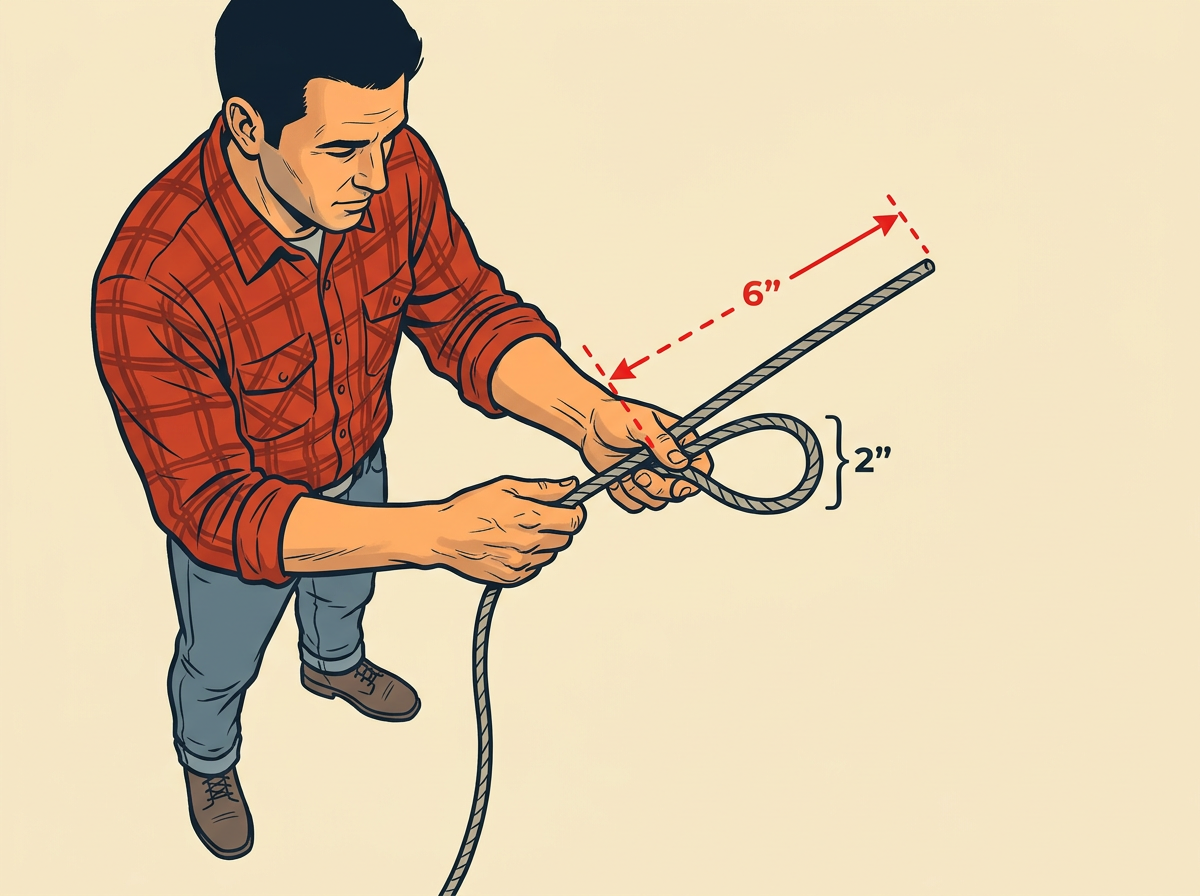
FORM a two-inch overhand loop by crossing the working end over the standing part six inches from the tip.
The working end must lie on top. You know the cross is right when the loop opens toward you like a small letter e. If the end lies underneath, uncross and lay it over instead.
Step 02
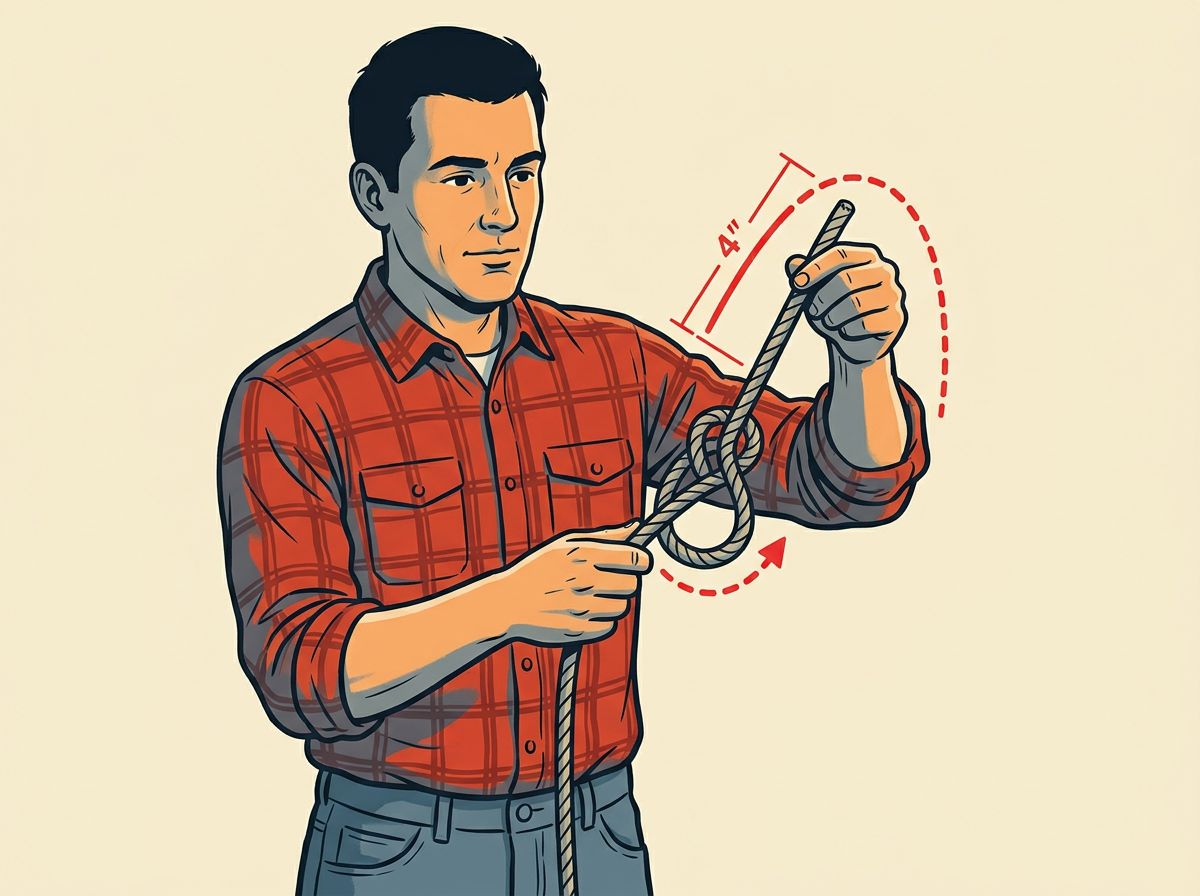
PASS the working end up through the two-inch loop from underneath until four inches stand free.
Keep the small loop from twisting as the end rises. The free tip points away from you once clear. If fewer than four inches emerge, push more rope through before wrapping.
Step 03
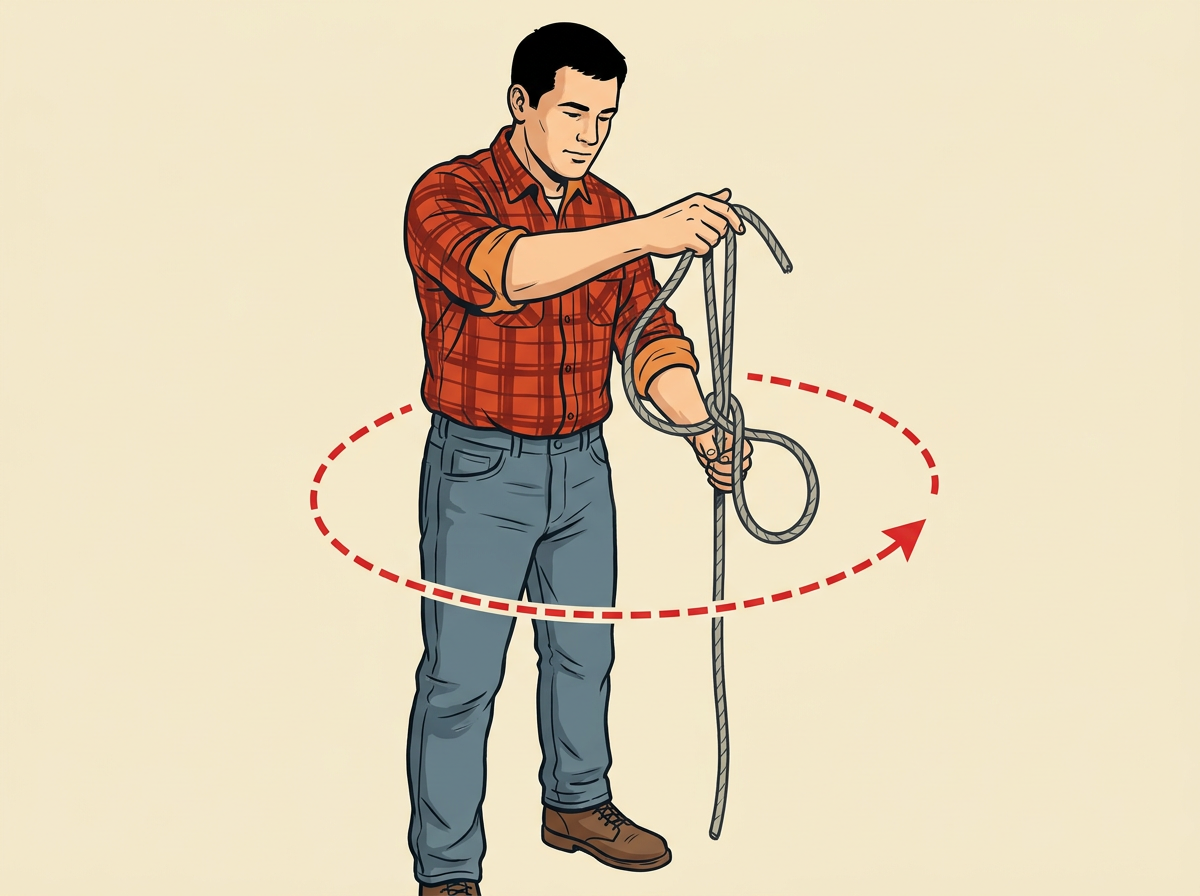
WRAP the working end behind the standing part one full turn so the tip faces back at the small loop.
The turn stays close to the small loop without crossing it. You see a clear circle of rope when the tip returns to the front. If the tip ends up on the far side, unwrap and pass it the opposite way behind the standing part.
The most common mistake
Starting with the working end under the standing part creates a slip knot that collapses under load. Cross the end over the standing part every time so the loop stays fixed.
Pro tip
After tightening, leave a free end at least six inches long so the knot cannot creep undone.
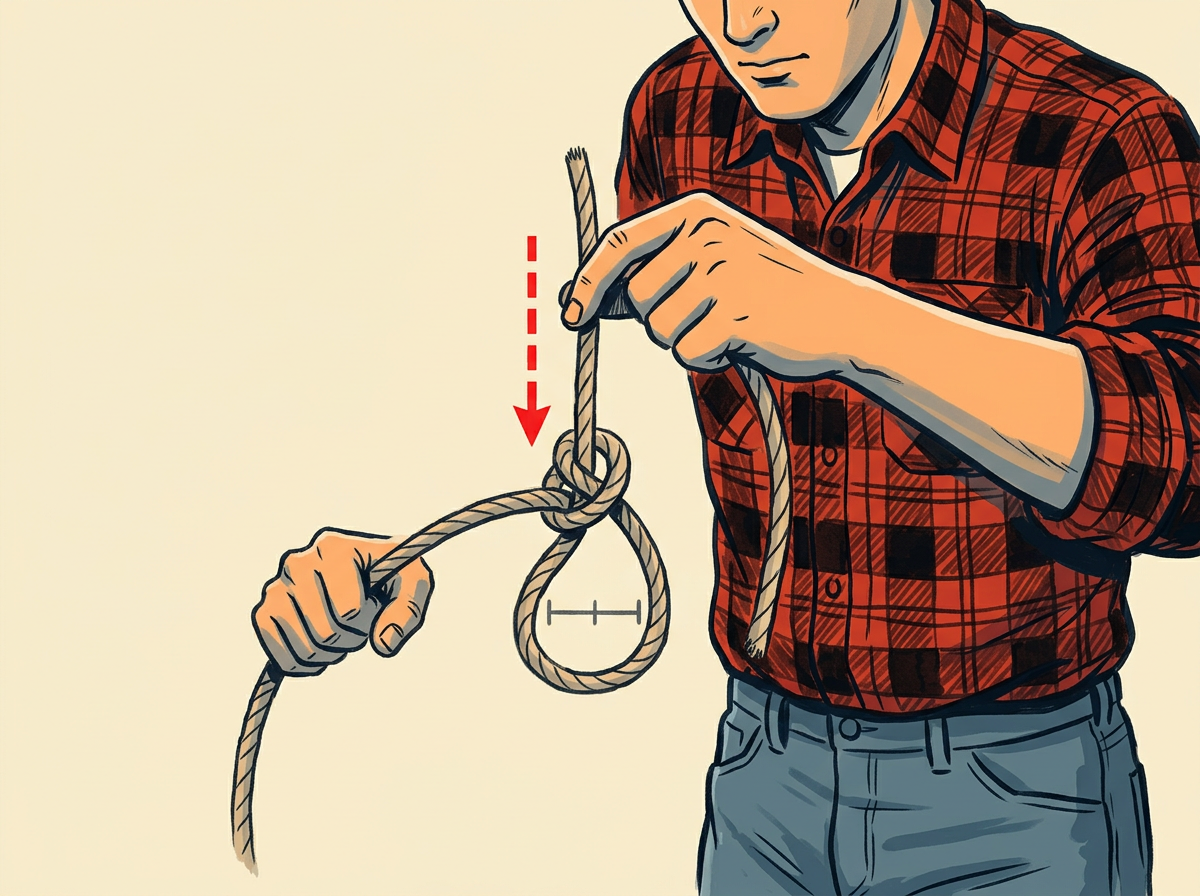
FEED the working end down through the two-inch loop until three inches exit below.
The end now runs beside the standing part outside the big loop. Confirm the weave by counting three rope parts locked in the small loop. If the end jams, open the small loop slightly with a finger and guide it through.
Step 05
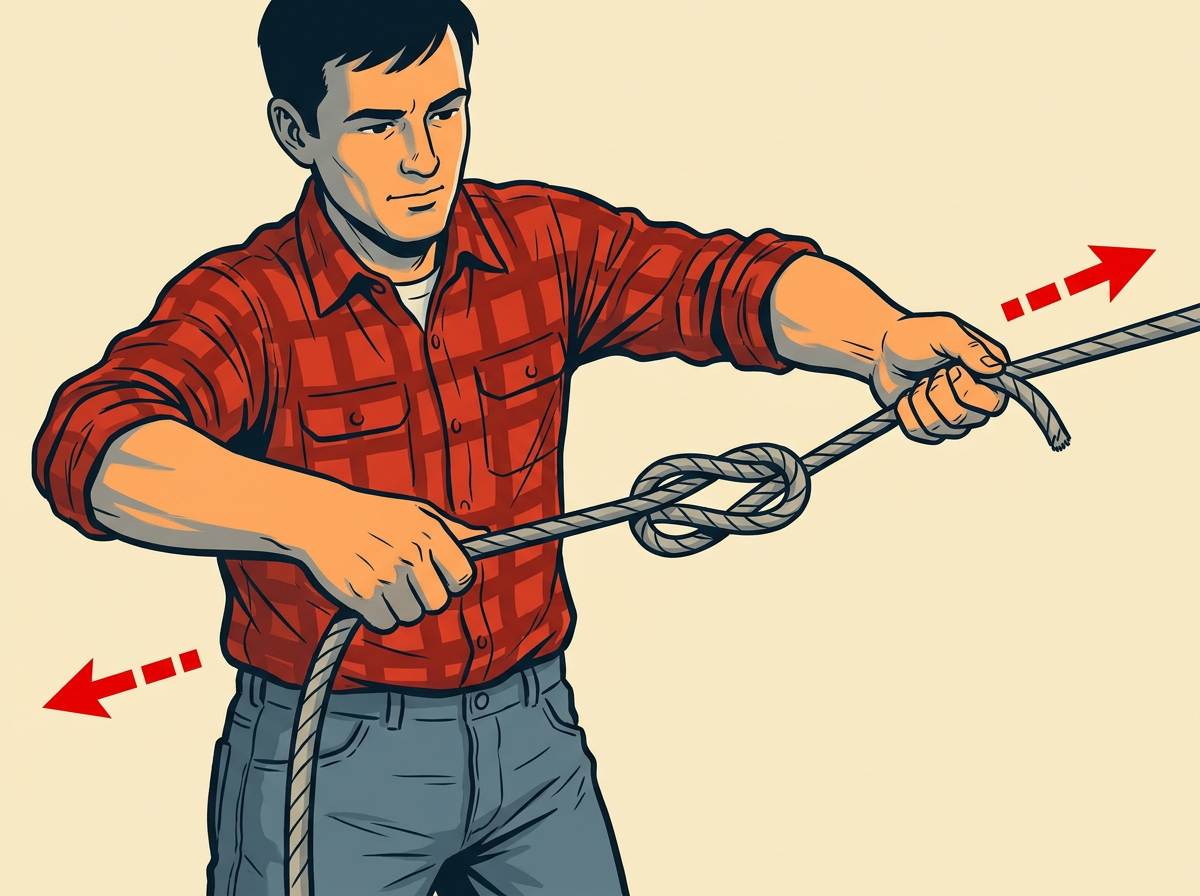
PULL the standing part and the working end apart with firm even pressure for a full count of three.
The wraps slide together and lock. You know the knot is set when the big loop holds its size no matter how hard you tug it. If a gap remains between turns, pull the free end first then the standing part again.




 How To5 steps