




Supreme Court Decision Sparks Free Speech Concerns as Thomas Issues Warning
Andrew Powell · Nov 17, 2026 · 2 min read
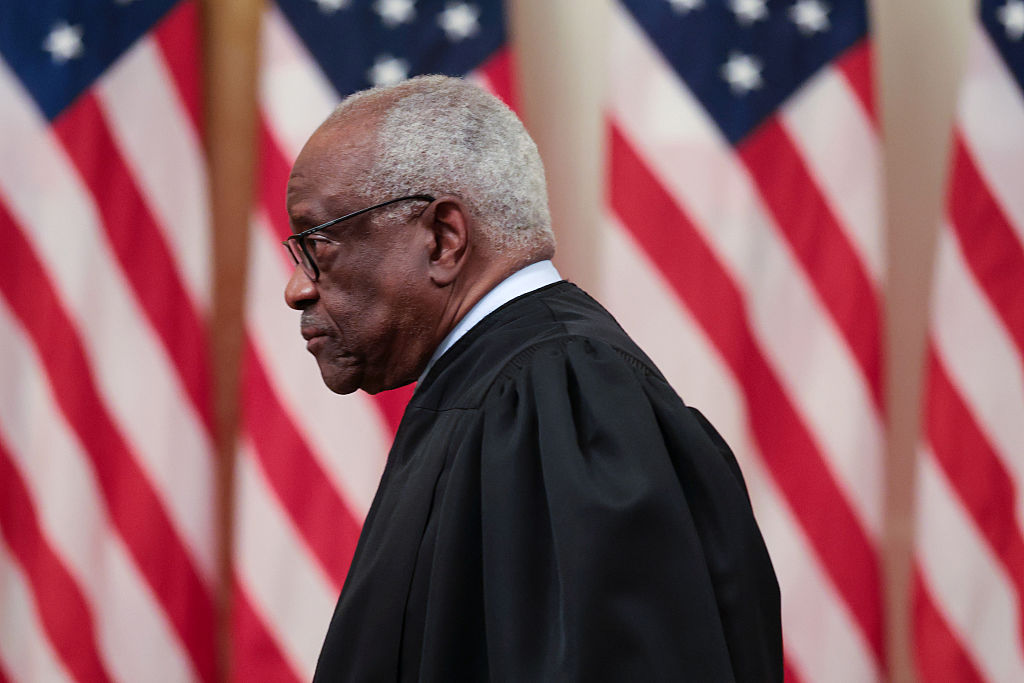
Justice Clarence Thomas is warning that the government could gain sweeping power to dictate what private citizens say after the Supreme Court declined to hear a challenge to a California law requiring doctors to receive implicit-bias training.
According to Fox News, Thomas, joined by Justice Samuel Alito, dissented Monday from the court's decision not to take up the case.
Justice Neil Gorsuch also disagreed with the decision, although he did not join Thomas and Alito's written argument.
The dispute involves California's requirement that licensed physicians complete 50 hours of state-approved continuing medical education every two years.
The courses must include instruction on implicit bias, either by examining its effects on medical treatment and health outcomes or by discussing ways to address related healthcare disparities.
Dr. Azadeh Khatibi, a California physician who teaches continuing education courses, challenged the requirement alongside the nonprofit Do No Harm. They argued the state was forcing private instructors to promote a position they did not necessarily support.
Khatibi's legal team maintained that implicit bias was not relevant to the subjects she teaches and that including the material would take time away from topics more directly related to her courses.
California defended the requirement by arguing that instructors are not required to personally agree with the theory. The state said teachers can explain that the material is included to comply with state regulations and can even express disagreement with the concept.
The Ninth Circuit Court of Appeals sided with California last year, ruling that the courses constituted government speech because of the state's extensive regulation of the medical profession.
Thomas took issue with that reasoning, arguing that the government cannot avoid constitutional scrutiny simply by requiring private individuals to communicate its preferred message.
"A State cannot regulate its way out of First Amendment scrutiny," Thomas wrote, warning against using government-speech rules as a means of compelling speech.
He also raised concerns about how the Ninth Circuit's reasoning could affect other professions regulated by California.
Thomas questioned whether the state could eventually dictate the viewpoints expressed at continuing education events for attorneys, using the same legal justification.
The Supreme Court's refusal to hear the case leaves the lower court's ruling in place without resolving the underlying First Amendment dispute.
A Do No Harm spokesperson told Fox News Digital that the organization was disappointed by the decision but remained encouraged that several justices recognized the constitutional questions involved.