



Math skill is trainable habits, not fixed talent
Students who freeze on STEM exams despite hard study get concrete tools—focused-diffuse cycling, chunking, and cold self-testing—instead of more grinding.
IJR · Oct 29, 2026 · 13 min read
In 60 seconds
- Genuine understanding needs deliberate switches between focused concentration and diffuse mental wandering, not endless grinding in focus alone.
- Mastery comes from compressing procedures into reusable mental chunks through repeated retrieval, not from rereading notes or isolated facts.
- Working memory holds only about four items at once, so spaced repetition and sleep push knowledge into durable long-term storage.
- Procrastination is the brain fleeing discomfort that fades minutes after starting; twenty-five-minute timed intervals break the avoidance loop.
- Rereading and highlighting create an illusion of competence; cold self-testing is the most reliable way to learn and to gauge real understanding.
- Visualization, interleaved varied practice, and reframing exam nerves as energy complete a toolkit that treats struggle as normal, not proof of incapacity.
The big idea
Oakley argues that success in math and science is a trainable skill built from specific mental habits rather than innate talent. She shows that alternating focused and diffuse thinking, compressing knowledge into chunks through spaced retrieval, and replacing passive rereading with self-testing can rewire anyone’s relationship to quantitative subjects.
The book in brief
Oakley starts from a familiar trap: people who freeze on math and science decide they lack talent, then grind harder in pure concentration and still fail. She reframes the problem as technique. The brain, she says, needs two modes—tight focused work on a problem and looser diffuse wandering during walks, showers, or sleep—because focus alone locks learners into a wrong first approach she calls Einstellung.
From that cycle she builds the core learning engine. Focused sessions exist to form chunks: procedures and concepts practiced until they fire as single units, like a chess master seeing patterns instead of loose pieces. Understanding without repetition leaves fragile chunks that collapse on exams; closing the book and solving from memory is her test that a chunk is real. Diffuse mode then helps connect those chunks to unfamiliar problems.
Working-memory limits make the schedule matter. The mental workspace holds only about four items, so cramming leaves material in short-term storage that decays. Spaced revisits across days, plus sleep that consolidates and clears toxins from focused effort, move chunks into long-term memory. Cramming feels productive and fails under stress; distributed practice with identical total time sticks.
Daily behavior is the saboteur. Anticipating disliked math activates pain-related brain regions, so the mind flees to phones and relief. Once work actually starts, the pain fades within minutes. Oakley treats procrastination as a cue-routine-reward-belief loop and offers small timed intervals plus process focus—sit down for one interval—rather than willpower against the whole assignment.
She then arms encoding and practice design. Abstract symbols become stickier as visual, spatial, or story images, including memory-palace routes and vivid metaphors, layered on chunks already built. Overlearning easy problem types wastes time and can raise choking risk; interleaving varied, harder problems feels worse in practice but transfers better. Anxiety steals working memory, so timed self-tests and reframing arousal as excitement protect performance.
The arc closes on diagnosis. Rereading and highlighting create false fluency; retrieval practice—cold problems, teaching aloud, recall over recognition—both strengthens memory and exposes thin spots early. Study groups surface gaps solitary review misses. The landing claim is practical and hopeful: anyone willing to protect the two-mode cycle, space retrieval, and test themselves can rebuild competence in STEM, even after years of writing themselves off.
Context
Barbara Oakley wrote as an engineering professor who had once been a math-phobic linguist; the book draws on neuroscience and that personal path. It mattered in 2014 because it translated cognitive science into study habits for people who had labeled themselves “not math people,” reframing struggle as a normal part of learning rather than proof of incapacity.
The key ideas
1
Two thinking modes
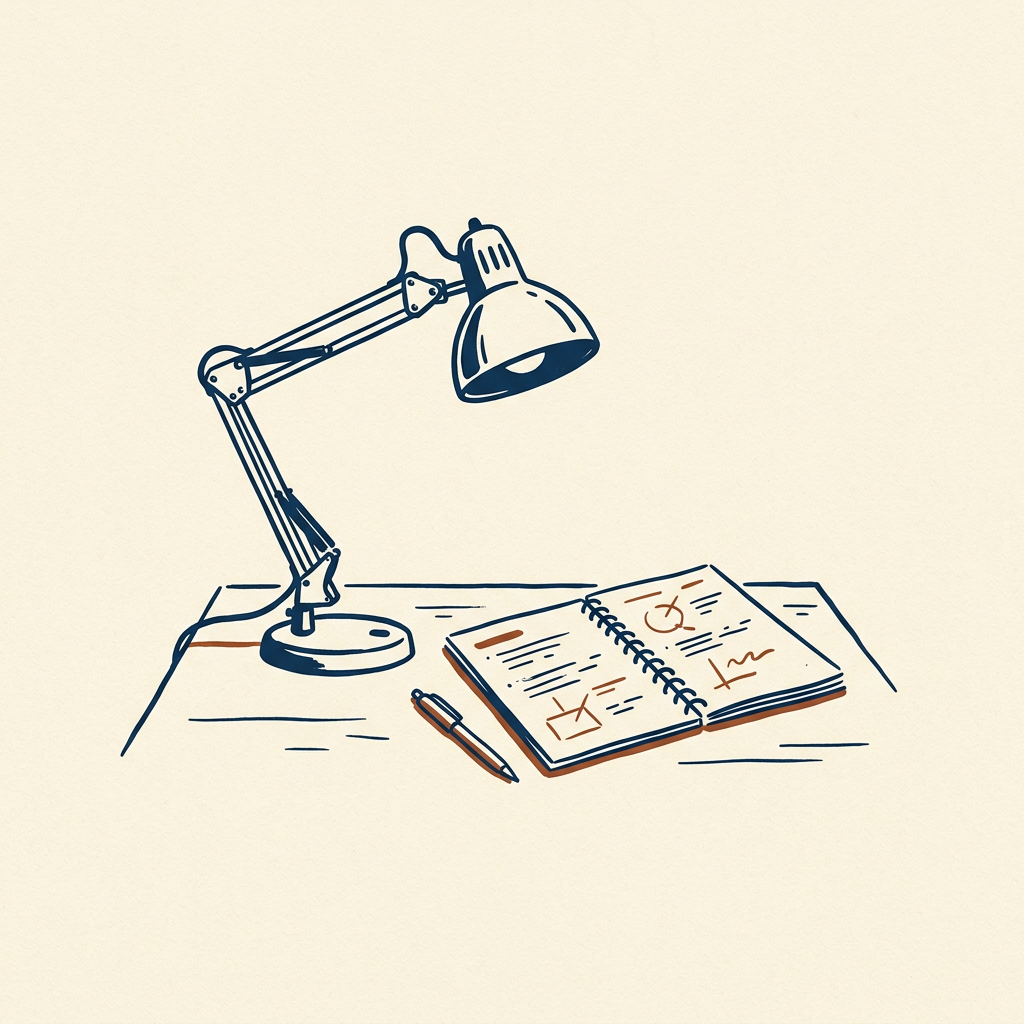
Real understanding requires deliberately alternating focused concentration and unfocused mental wandering rather than grinding harder only in focus.
Focused mode
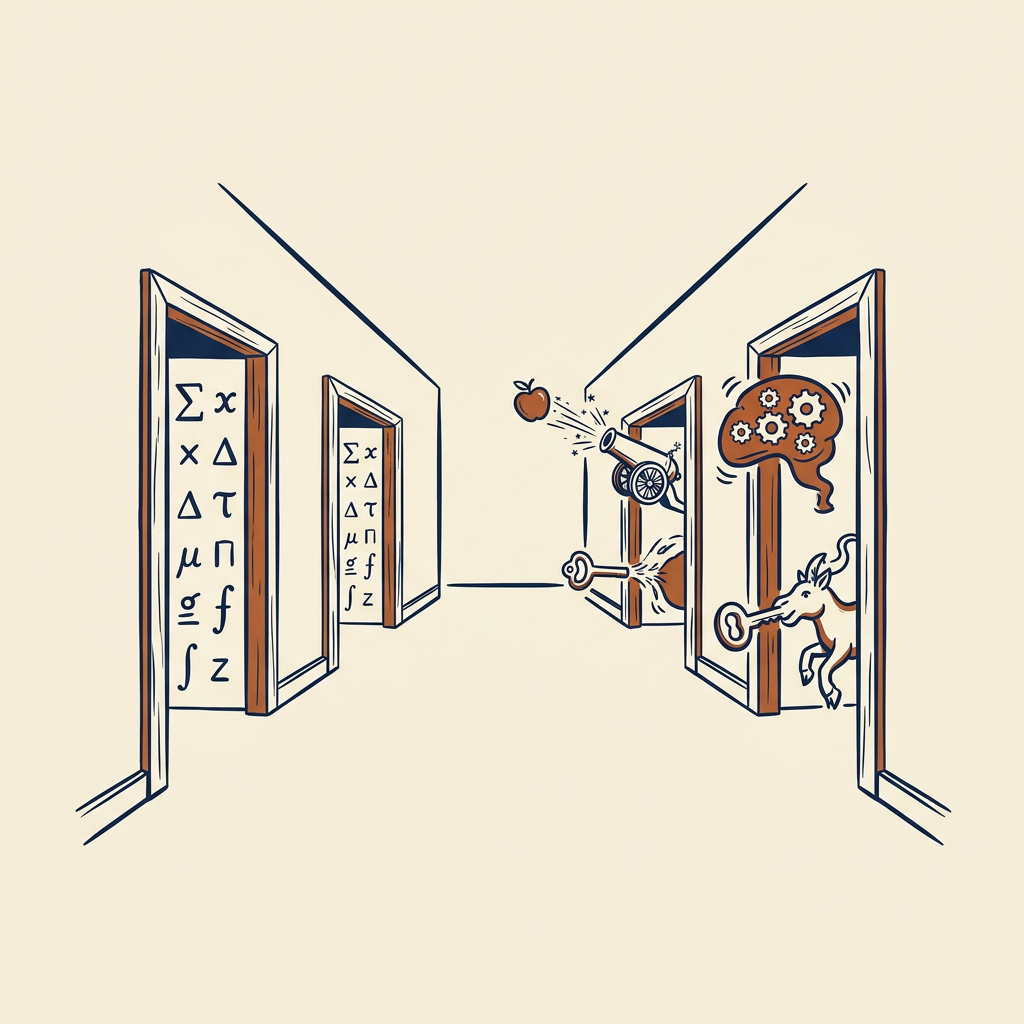
Prefrontal lock on one equation or step; high concentration, high risk of Einstellung stuckness
Diffuse mode
Relaxed wandering on a walk, in the shower, or in sleep; loose connections that reassemble the problem
Oakley opens with a neuroscience-borrowed split. Focused mode recruits the prefrontal cortex to lock onto one problem—an equation stared at until it yields. Diffuse mode is the relaxed background state of a walk, a shower, or sleep, when broader loose connections form and an answer can surface unbidden.
Focus alone often traps a learner in Einstellung: the mind clings to a familiar wrong approach and cannot release its first idea. Diffuse mode breaks that lock by letting pieces reassemble without judgment. People who excel at math, she holds, are not necessarily faster; they are better at cycling between the two states.
You cannot force insight by focused effort alone. Build short hard bursts, then step away so diffuse processing continues in the background. Every later tool in the book—timed intervals, sleep, breaks—exists to protect that cycle rather than simply to add study hours.
In practice: Switching from intense engineering problem-solving to the looser thinking of language work is how Oakley describes learning to cycle the two modes herself.
2
Chunking for mastery
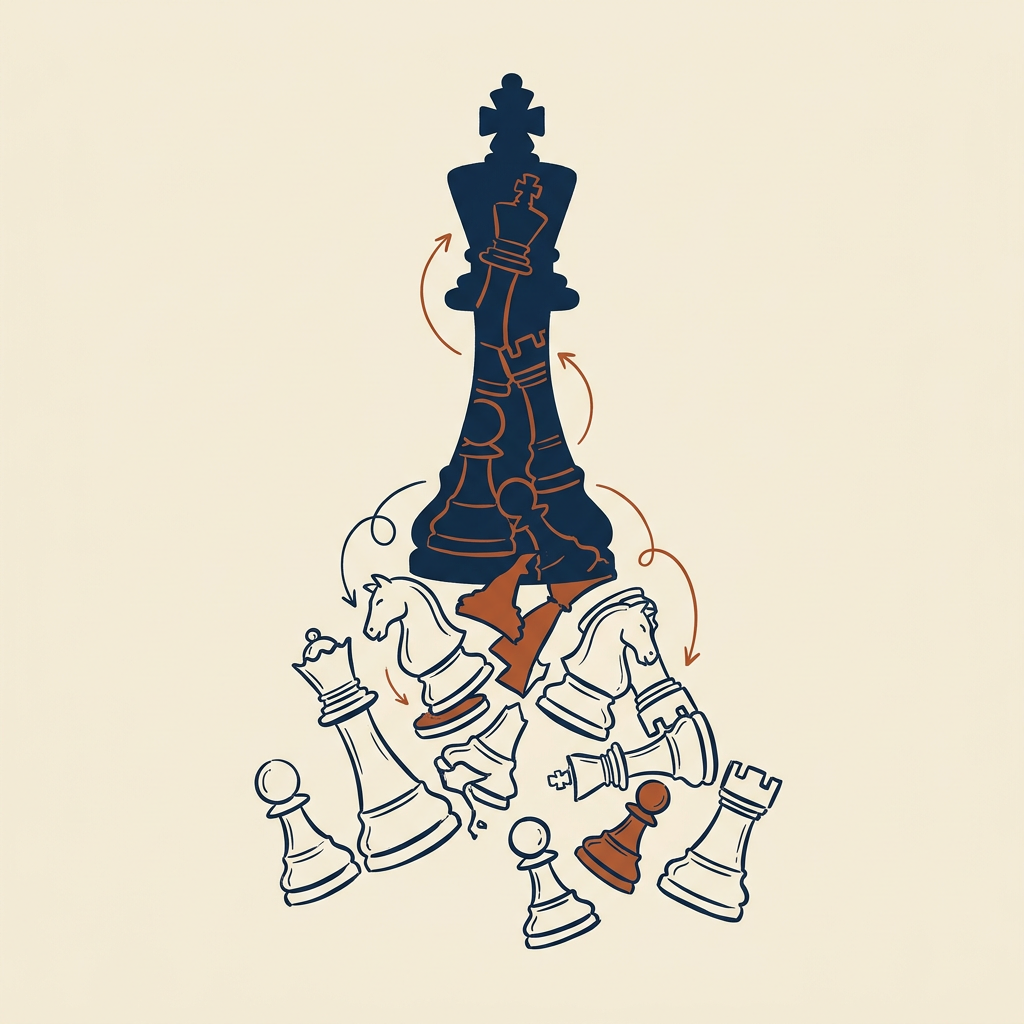
Mastery comes from compressing procedures into single mental chunks through repeated practice, not from memorizing isolated facts or rereading notes.
A chunk, she explains, is a group of ideas or steps bound so tightly by practice that they act as one memory unit and free space for larger problems. A chess master sees a few meaningful patterns, not dozens of separate pieces; a formula or proof technique should fire the same way.
Building a chunk needs three conditions: focused attention on the material, grasp of the underlying concept, and enough practice that the chunk triggers automatically. Understanding without repetition yields fragile chunks that shatter under exam pressure. Closing the book and solving from memory is her check that a chunk has formed; passively rereading a worked example only fakes fluency.
New chunks must also link to old ones, growing a library that combines flexibly. That library is what separates rote imitation on homework from genuine problem-solving when a test rephrases the question. Focused sessions produce the chunks; diffuse mode helps see when and how to deploy them on unfamiliar ground.
In practice: A student who only imitates homework solutions collapses when the exam changes the phrasing, because no transferable chunk was ever built.
3
Four-item working memory
Working memory holds only about four items at once, so learners must offload material into long-term memory through spaced repetition instead of cramming.
~4
chunks working memory can juggle at once
Oakley draws on cognitive psychology for a hard limit: working memory, the workspace for active thought, juggles roughly four chunks at a time. That ceiling is why complex problems swamp beginners. Long-term memory has vast capacity but needs effortful, spaced encoding to become reliable.
Cramming fails even when it feels productive. Material packed the night before sits in fragile short-term storage and decays because the hippocampus and cortex never get time to consolidate it during rest and sleep. She points to the spacing effect: distributed practice beats massed practice for retention even when total study time is the same.
Sleep is part of the mechanism. During sleep the brain replays and strengthens recent practice and clears toxins built up in focused waking work; all-nighters therefore degrade both memory and next-day reasoning. Working a problem set once and moving on is nearly useless; returning after a day, a week, then a month embeds knowledge that survives exam stress. Chunks solidify only when practice is spread, not piled.
In practice: Revisiting the same topic on day one, day three, and day seven builds retrieval that a single multi-hour cram session cannot match.
4
Procrastination as pain habit
Procrastination on math and science is mainly the brain fleeing discomfort the subject triggers, not a character flaw or simple time-management failure.
She cites brain-imaging work, including research referenced from a 2012 study, showing that anticipating a disliked math problem activates regions linked to physical pain—similar to burning a hand. Avoidance is flight from an aversive stimulus; switching to a phone delivers instant relief that trains the habit.
Once work actually begins, the pain response fades within minutes. Procrastination therefore buys short-term comfort at steep long-term cost. She frames the pattern as a four-part loop: a cue that triggers avoidance, a routine of distraction, a reward of relief, and a belief that the pattern is normal or unavoidable.
Breaking it does not mean gritting through discomfort forever. Change the response to the cue. Her main tool is the Pomodoro Technique: twenty-five focused minutes on a timer, then a short break. The small commitment keeps the pain response from fully firing while still producing focused-mode sessions. Focus on process—the decision to start one interval—not on the finished assignment, because outcome focus keeps the whole unpleasant scope in view and restarts avoidance.
In practice: Putting the phone in another room and committing only to one timed interval on a hard problem set lets the discomfort fade after minutes instead of ruling the evening.
5
Images beat bare symbols
Abstract math and science ideas stick far better when deliberately turned into visual, spatial, or story images instead of left as symbols or text.
Building on working-memory limits, Oakley notes the brain evolved strong visual and spatial systems long before abstract symbols. Translating equations and concepts into images therefore pays outsized returns. The memory palace places items along a familiar physical route—a walk through your house—then recovers them by retracing the path in the mind.
Concrete comparisons help too: visualizing the scale of a chemistry mole as a relatable physical volume recruits sturdier memory than rote numbers. Metaphor works the same way—electrical current as water in a pipe gives an abstract idea a physical intuition that extends to new problems.
These are memory aids, not substitutes for understanding. They work best layered on chunks already built through practice, giving a fast recall hook when a timed test stresses working memory. A strong emotional or absurd twist in the image helps, because the brain preferentially keeps vivid or unusual associations. Hardest abstract formulas and sequences, which have no built-in narrative, gain the most.
In practice: Mentally walking a familiar house route and placing each step of a formula at a doorway or chair makes the sequence retrievable under exam pressure.
6
Varied practice over drill
Overlearning complex problem types after mastery can waste time and raise choking risk; interleaved, retrieval-based practice on varied harder problems builds flexible skill.
Massed overlearning
Drill one easy problem type long after mastery; feels productive, weak transfer, can feed choke risk
Interleaved practice
Mix varied harder types; feels harder, more errors in practice, stronger transfer on novel tests
Oakley separates simple skills from complex ones. Overlearning the multiplication table into automaticity helps. Overlearning the same easy complex problem type after it is already mastered burns time better spent on varied, harder work.
She points to interleaving: alternating different problem types and topics inside one session instead of repeating one type. Interleaving feels harder and produces more practice errors, yet the research she cites shows stronger transfer to novel test problems because the learner must first choose which technique applies—the same demand real exams and real work make.
Choking is performance collapse under pressure when anxiety consumes working-memory capacity needed for the problem. Countermeasures include deliberate exposure to test-like conditions—timed self-testing—and reframing a racing heart as excitement rather than fear, which can change how the same bodily signal interferes with thinking. Enough practice means the right kind: varied, retrieval-based, moderately difficult—not maximum repetition of what already feels easy.
In practice: Alternating distinct problem types in one sitting, then doing a timed cold quiz, trains selection of techniques the way an exam will demand.
7
Self-test, skip rereading
Rereading notes and highlighting create a false sense of mastery; active self-testing is the most reliable method both to learn and to measure real understanding.
Rereading and highlighting
High familiarity, low effort, false fluency that fades when the book closes
Cold self-testing
Effortful retrieval, stronger lasting retention, honest map of weak spots
Oakley names the illusion of competence as a central obstacle: material just reread feels mastered because it is familiar, yet that familiarity vanishes once the book closes and the exam begins. Research she cites comparing rereading with retrieval practice—quizzing yourself without looking—shows self-testing yields stronger, longer-lasting retention even though it feels harder and less pleasant in the moment.
Retrieval forces the brain to rebuild a chunk from long-term storage and strengthens the pathway; rereading only reactivates short-term recognition. Tactics include covering worked solutions and attempting problems cold, explaining concepts aloud as if teaching, and favoring recall tools such as flashcards over passive chapter rereads.
Working with study groups or comparing approaches with classmates surfaces reasoning gaps solitary review misses; teaching a concept exposes whether a chunk is genuine or only superficial. Regular self-testing therefore doubles as early diagnosis: it builds memory and reveals thin spots long before an exam makes the illusion expensive.
In practice: Close the book, solve three problems from memory, and check answers only after committing—then explain one concept aloud to a classmate.
Key terms
- Focused mode Tight, prefrontal concentration on one specific problem or step
- Diffuse mode Relaxed background thinking that makes looser connections during breaks, walks, or sleep
- Einstellung Getting stuck on a familiar but wrong approach because the mind will not release its first idea
- Chunk Ideas or steps bound by practice so they act as one retrievable unit in memory
- Working memory The small mental workspace that holds only about four items at once during active thinking
- Spaced repetition Revisiting material across days and weeks so it consolidates into long-term memory
- Pomodoro Technique Working one focused twenty-five-minute interval on a timer, then taking a short break
- Illusion of competence False sense of mastery created by familiarity from rereading rather than from real retrieval
- Overlearning Continuing to practice a skill after mastery; useful for simple automatic facts, often wasteful for complex problem types
- Interleaving Mixing different problem types and topics in one session so you must choose which method to apply
What to do
- Set a timer for twenty-five minutes, put your phone in another room, and work one hard problem set; take a five-minute break without checking the problem.
- Stop rereading notes before a test; close the book and solve three problems from memory, checking only after you commit to answers.
- Build a revisit schedule for the same topic on day one, day three, and day seven instead of one long single review.
- When you catch yourself avoiding an assignment, commit to just one timed interval rather than the whole task.
- During pre-exam nerves, label the racing heart as energy you can use rather than as fear.
Questions to think with
- Where do you still grind only in focused mode and never deliberately step away for diffuse processing?
- Which topics feel fluent only because you just reread them, and what would a cold self-test reveal?
- What cue usually starts your avoidance loop on quantitative work, and what single timed interval could replace the usual distraction?
- Are you overlearning easy problem types you already own, or interleaving varied harder ones that force method choice?
- Which abstract formula or sequence could you turn into a vivid spatial image or house-route memory this week?
The other side
The book is a synthesis, not primary research, and sometimes states contested or preliminary findings more firmly than the science supports: the focused-diffuse split is a useful metaphor loosely tied to default-mode and incubation work, yet brain networks during rest and effort overlap more messily than a clean binary suggests. Oakley is an engineering professor and communicator, not a primary neuroscientist, and leans on secondary popular accounts rather than deep methodology or replication detail. Testing and spacing effects rest on decades of solid evidence; memory-palace and vivid-imagery gains are clearer for lists than for the relational understanding advanced STEM needs, and the book blurs memorization aids with comprehension. It also speaks mainly to motivated learners with time to space and self-test, and says little about dyscalculia, trauma-based anxiety, under-resourced schools, or language barriers. Her own path from math failure to engineering professor is rhetorically powerful but remains a single case, not proof the methods generalize evenly across abilities and systems—best read as a strong entry point, not the final word.
Who it's for
Students who freeze on math or science exams despite heavy study, adults retraining for technical work after years away from school, and teachers or parents seeking evidence-based ways to help someone stop dreading STEM will get the most from reading the full book.