




American history looks different from the bottom up
Students stuck with textbook versions, organizers hunting precedent, and curious readers who sense consensus history leaves people out will get the counter-story Zinn built for them.
IJR · Oct 23, 2026 · 13 min read

In 60 seconds
- Zinn holds that history told through presidents and generals hides how the state and capital used violence and law to protect elite interests.
- He treats Columbus’s landing as calculated extraction enforced by terror, not discovery, with the Arawak population on Hispaniola collapsing under gold quotas.
- Slavery, he argues, was a rational economic system; racism was hardened by law after Bacon’s Rebellion to split poor whites from Black slaves.
- The Revolution and Constitution managed popular anger while keeping property rules, then industry and war repeatedly broke strikes and jailed dissenters.
- New Deal gains, civil rights laws, and the Vietnam pullback came after sit-downs, boycotts, SNCC work, and resistance inside the military—not as gifts from above.
The big idea
Zinn argues that the standard American story systematically erases how wealth and stability were built on conquest, slavery, and the suppression of workers, women, and dissenters. Nearly every advance credited to enlightened leaders, he claims, followed sustained pressure from below, with the state conceding only when unrest threatened elite control.
The book in brief
Zinn opens on Columbus’s own journals. The explorer calls the Arawaks generous and unarmed, then coolly calculates how easily they can be enslaved. That juxtaposition frames the whole book: conquest as deliberate extraction through the encomienda system, mutilation for missed gold quotas, and a population crash on Hispaniola from several hundred thousand toward zero. Celebratory national stories, Zinn insists, are themselves power—deciding whose pain counts as tragedy and whose is written off as necessary cost.
The same lens turns on slavery. He treats it as an economic machine, not a moral slip the founders forgot to fix. Colonial Virginia shifts from mixed indenture to racial slavery after Bacon’s Rebellion in 1676, when poor whites and enslaved Blacks briefly joined against authority. Laws then split that coalition. Slave codes strip personhood; resistance—revolt, sabotage, escape—shows the enslaved were never passive. The Constitution’s silence on ending slavery reads here as a founding choice to keep a wealth source.
Before 1776, colonial elites face British taxes and domestic unrest from tenants, laborers, and Regulator movements that hit local rich as hard as Crown officials. Revolutionary liberty talk, Zinn claims, channels class anger outward. After independence, property qualifications for voting stay. Shays’ Rebellion of indebted Massachusetts farmers in 1786-87 is crushed by the new government. The Constitution, drafted partly in answer, protects property through the Senate, Electoral College, and hard amendment path—an elite settlement, not a pure liberty triumph.
Industrial fortunes follow the pattern. Homestead in 1892 brings Pinkertons against steelworkers; Pullman in 1894 brings federal troops under a Sherman Act injunction turned on unions; Ludlow in 1914 kills women and children in a strikers’ tent colony. Courts narrow the Fourteenth Amendment into a shield for corporations. Wars do double duty: the Spanish-American and Philippine wars mask commercial motives and mass Filipino deaths; World War I’s Espionage and Sedition Acts jail socialists and antiwar voices, including Eugene Debs for ten years, while the Committee on Public Information manufactures consent.
The New Deal grants real relief—Social Security, the Wagner Act, public works—only after unemployed councils and the Flint GM sit-downs of 1936-37 scare elites. Those laws also route militancy into the NLRB’s calmer channels and leave out agricultural and domestic workers, many of them Black. Civil rights statutes and Brown v. Board answer Montgomery’s boycott, Greensboro sit-ins, Freedom Rides, and SNCC’s dangerous Mississippi voter work, including the 1964 murders of Chaney, Goodman, and Schwerner; federal help often arrives late and under embarrassment. Vietnam breaks the older control script when campus marches, draft resistance, veterans’ organizing, fragging, and AWOL rates, plus the Pentagon Papers’ proof of private doubt, make repression too costly. The arc lands on one claim: change that lasts is forced from below.
Context
Howard Zinn’s 1980 retelling writes American history from enslaved people, workers, women, Native Americans, immigrants, and dissenters instead of presidents and generals. It mattered because it popularized bottom-up history-writing and pushed mainstream readers to face massacres, strikebreaking, and wartime propaganda that textbooks usually shrink.
The key ideas

1
Conquest over discovery
Zinn treats European arrival as deliberate extraction enforced by terror, not an accidental byproduct of contact.
Discovery story
Contact as exploration and exchange
Zinn’s ledger
Calculated enslavement, gold quotas, terror, demographic collapse
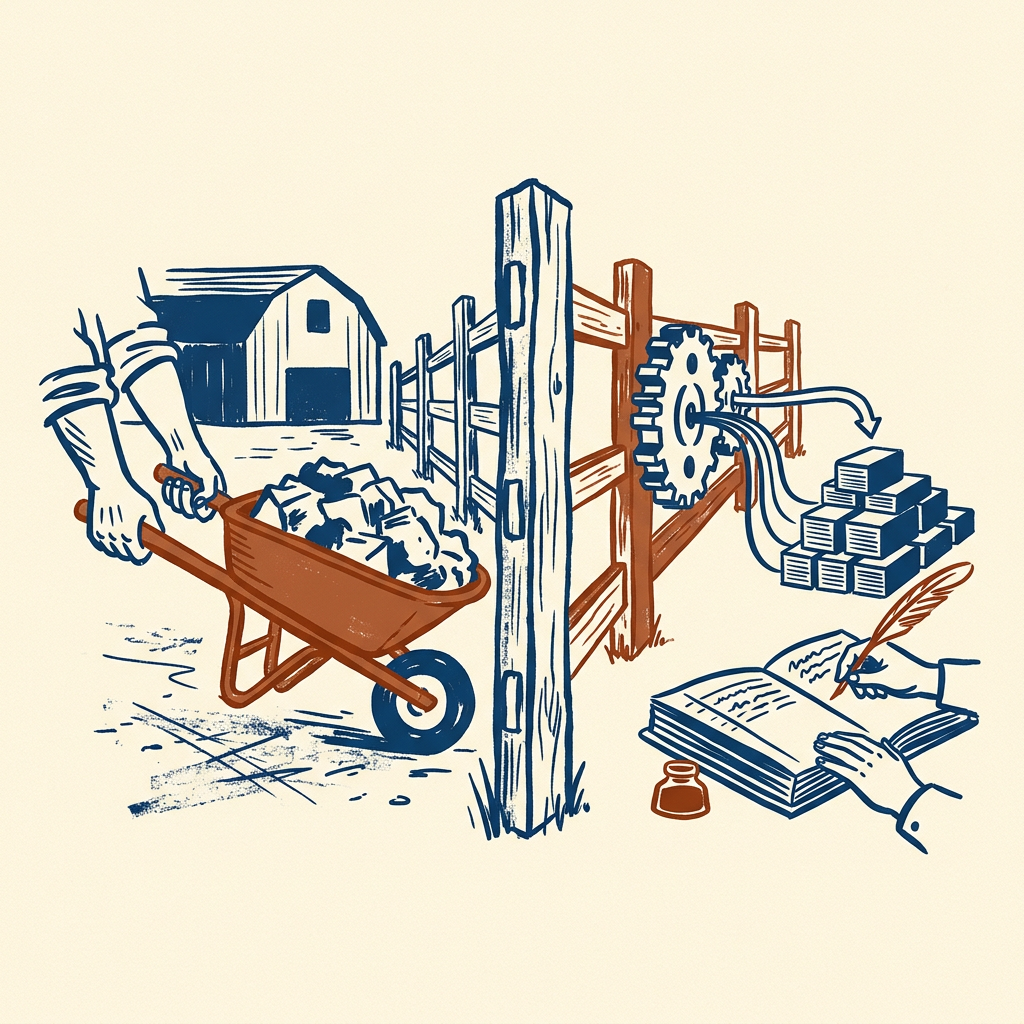
He starts with Columbus’s journals praising Arawak generosity and lack of weapons, then noting how simply they could be enslaved. That gap is the method: when a native population vanishes under colonial rule, the story should center the victims, not the colonizer’s ambition.
The encomienda system, gold quotas, and mutilation of those who failed them turn contact into policy. On Hispaniola the population falls from several hundred thousand toward zero within decades. Zinn does not pretend motives were simple; he refuses to let complexity erase the ledger of harm.
Celebratory national narratives, he claims, are acts of power. They decide whose suffering is tragedy and whose is written off as the price of growth. That framing—expansion and wealth narrated through what they cost people at the bottom—runs through every later chapter.
In practice: Columbus records the Arawaks as open-handed and unarmed, then immediately figures the ease of enslaving them; quotas and mutilation follow until Hispaniola’s population collapses.
2
Slavery as economic machine
Zinn argues American slavery was a rational institution built by law, with racism manufactured to lock in a permanent underclass.
- 1Mixed laborIndenture and slavery overlap in early Virginia
- 2Bacon’s Rebellion 1676Poor whites and enslaved Blacks briefly unite
- 3Legal splitCodes separate white servants from Black slaves
- 4Permanent underclassSlave codes erase personhood; trade expands
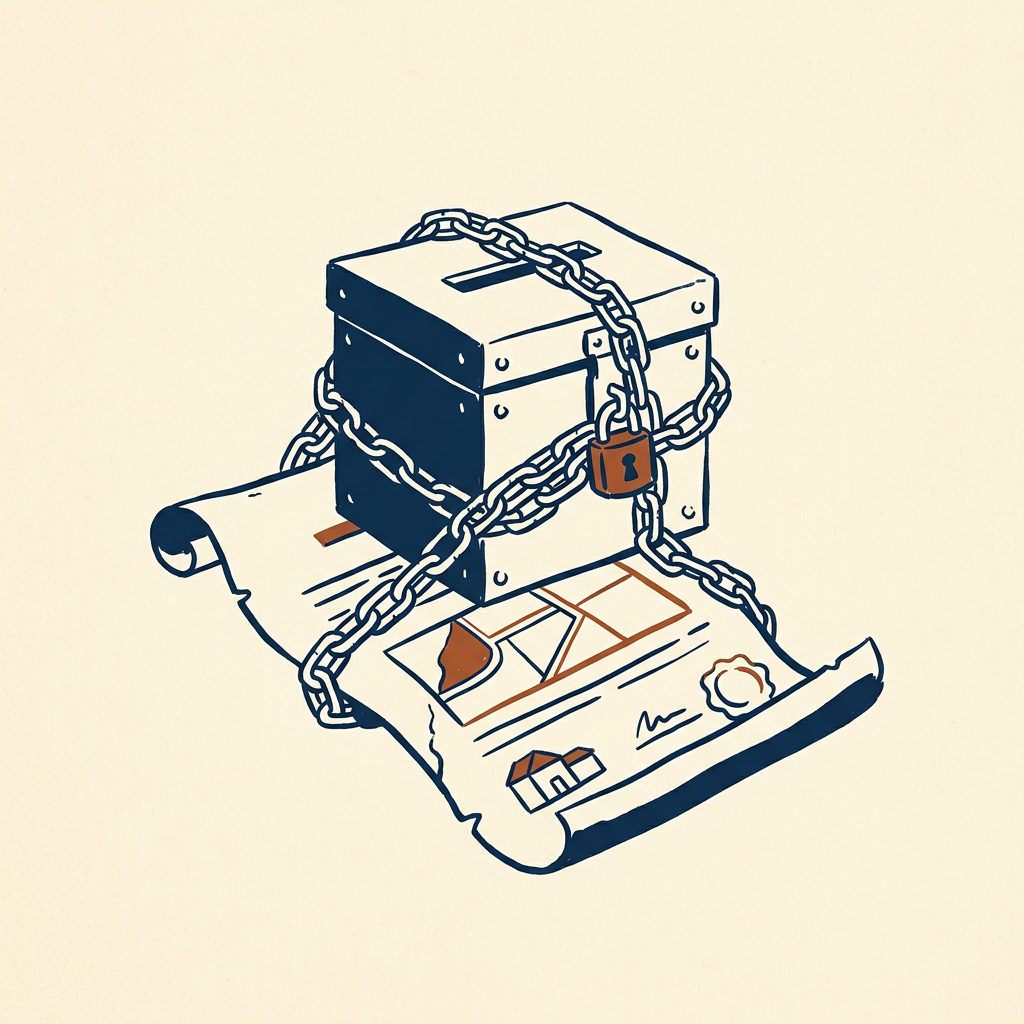
He traces colonial Virginia’s move from mixed indentured labor to hardened racial slavery in the late 1600s. The pivot follows elite panic after Bacon’s Rebellion in 1676, when poor whites and enslaved Blacks briefly united against colonial authority.
Laws distinguishing white servants from Black slaves, he claims, were a deliberate fracture strategy. Slave codes then strip legal personhood while the Middle Passage and the trade’s scale feed the plantation economy. Racism as later generations knew it is treated as justification layered onto an economic arrangement, not the original cause.
Resistance—rebellions, sabotage, escape—shows enslaved people were never the passive figures textbook frames that center white abolitionist benevolence imply. The founders’ constitutional silence on ending slavery becomes, in this reading, a decision to preserve wealth rather than a regretful compromise. The pattern of law keeping a permanent bottom class is the throughline Zinn carries into industrial labor.
In practice: After Bacon’s Rebellion joins poor whites and Black slaves against authority, colonial laws harden racial lines to split that coalition and protect elite control.
3
Revolution as elite management
Zinn presents the Revolution less as unified liberty than as property-owning elites redirecting popular anger to secure their own class position.
Textbook liberty
Unified people win freedom from Britain
Zinn’s class reading
Elites redirect anger, keep property rules, suppress Shays’
Colonial merchants, landowners, and lawyers face two threats: British tax policy and unrest from poor colonists, tenants, and urban laborers. Regulator movements in the Carolinas and riots in Boston and New York hit wealthy colonists as much as British officials.
Liberty rhetoric, he argues, partly channels that class anger outward against Britain instead of upward at local elites. Independence won, the new constitutions keep property qualifications for voting and office.
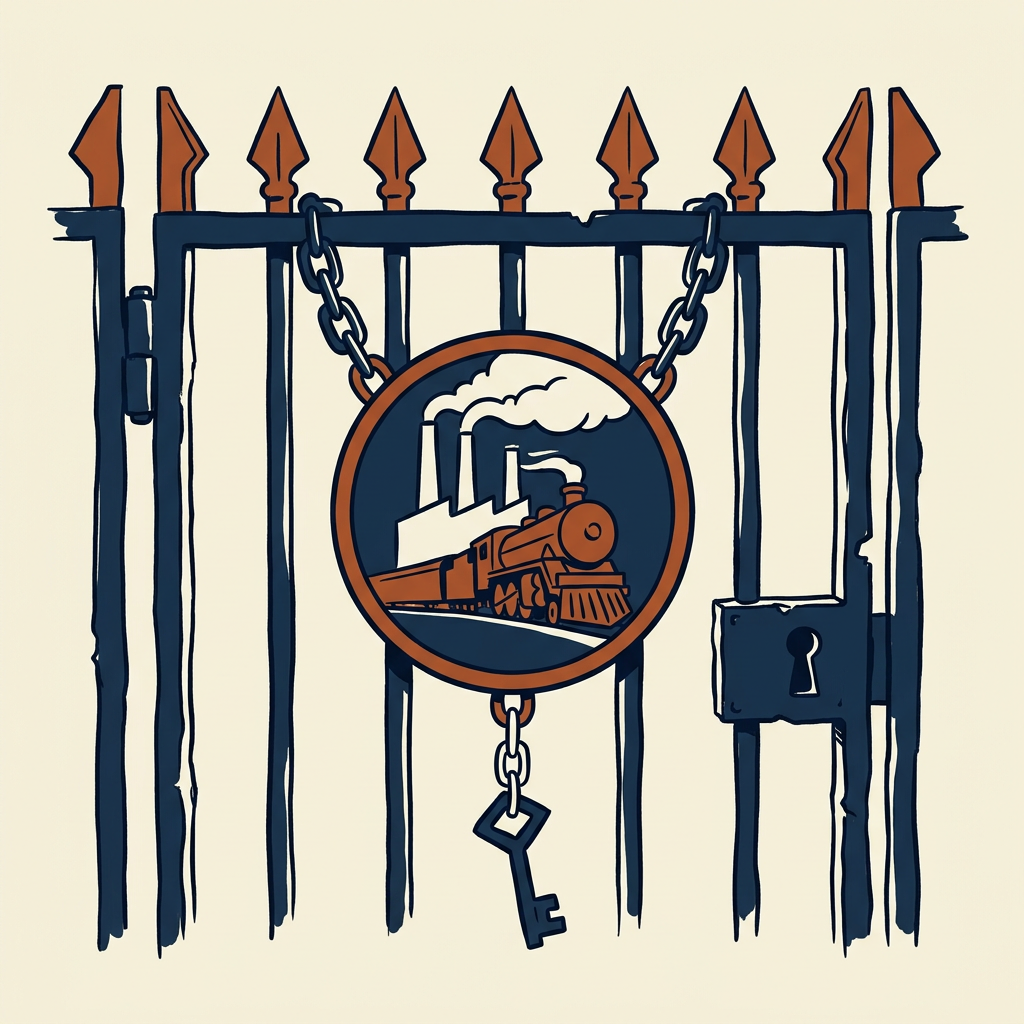
Shays’ Rebellion in 1786-87—an uprising of indebted Massachusetts farmers—is suppressed by the government that had just fought over taxation without representation. The Constitution, drafted partly in response, is read as engineered by figures like Madison to protect property and limit direct democracy: Senate structure, Electoral College, difficult amendment. Founding triumphs become negotiated elite settlements; popular movements win concessions but rarely lasting power.
In practice: Shays’ Rebellion of indebted farmers is crushed; the Constitution that follows hardens barriers to direct majority power over property.
4
Industry backed by force
Zinn holds that Gilded Age fortunes rested on monopolies, immigrant exploitation, and coordinated state and private violence against strikes.
- 1892Homestead: Pinkertons vs. steelworkers
- 1894Pullman: federal troops and antitrust injunction vs. union
- 1914Ludlow: Guard and mine guards kill strikers’ families
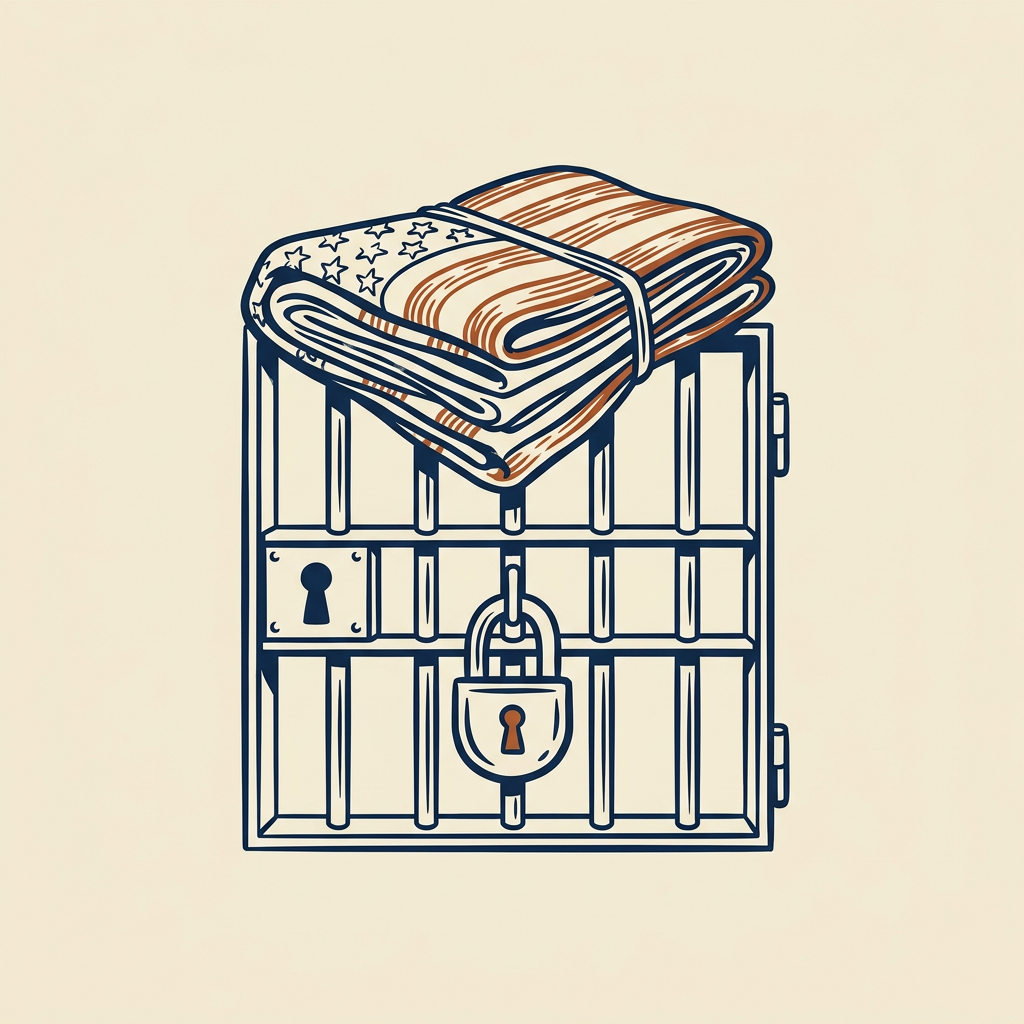
Carnegie, Rockefeller, and Vanderbilt are not treated as pure innovators. Homestead in 1892 shows Carnegie’s manager Henry Clay Frick hiring Pinkertons against steelworkers. Pullman in 1894 is broken by federal troops under an injunction that turns the Sherman Antitrust Act—sold as a monopoly curb—against the union.
Ludlow in 1914 brings Colorado National Guard and mine guards down on a tent colony of striking coal miners’ families, killing women and children. The state, Zinn claims, consistently sides with capital, undercutting stories of natural growth merely interrupted by unrest.
Courts narrow the Fourteenth Amendment, passed to protect freed slaves, into protection for corporations as legal persons. Legal and military power is asymmetric: property guarded, collective worker action criminalized. He treats the line as continuous with the earlier crushing of Shays’ and of slave uprisings.
In practice: At Ludlow, Guard and mine guards attack a strikers’ tent colony and kill women and children; at Pullman, federal troops and a Sherman Act injunction break the strike.
5
War as domestic lid
Zinn argues wars from 1898 through World War I expanded markets abroad while giving cover to criminalize labor and socialist dissent at home.
- 1Foreign warMarkets and power expanded under humanitarian cover
- 2Patriotism drivePropaganda agencies manufacture consent
- 3Domestic repressionEspionage and Sedition Acts jail organizers and critics
- 4Quieter home frontLabor and socialist movements weakened
↻ and round again
The Spanish-American War and the Philippine-American War are framed as commercial projects under liberation talk, with a brutal counterinsurgency that kills hundreds of thousands of Filipinos. Foreign policy and domestic repression are one system, not separate spheres.
In World War I the Wilson administration uses the Espionage Act of 1917 and Sedition Act of 1918 against socialists, organizers, and antiwar critics. Eugene Debs draws a ten-year sentence for a speech against the draft. The Committee on Public Information manufactures pro-war opinion despite wide prewar antiwar feeling among workers and immigrants.
Wartime patriotism, he claims, supplies the same state violence used against strikers. The template—war abroad, criminalization of the IWW and left at home—extends later to Cold War and Vietnam chapters. Dissent against war meets the tools already tested on labor.
In practice: Debs is sentenced to ten years under wartime acts for opposing the draft, while official propaganda agencies push intervention.

6
New Deal as damage control
Zinn credits New Deal relief yet treats it as a concession to stabilize capitalism after militant pressure, not a pure progressive gift.
Social Security, the Wagner Act, and public works arrive only after years of action: unemployed councils and the Flint General Motors sit-downs of 1936-37. Roosevelt’s circle, facing real fear of wider upheaval, grants enough to preserve the system rather than redistribute power at the root.
The same labor laws that legalize bargaining build the National Labor Relations Board and similar structures that route militancy into regulated, less disruptive forms. Strike power softens over time by design.
Limits matter: agricultural and domestic workers—disproportionately Black—are left out of Social Security and minimum-wage protections as a concession to Southern Democrats. Strategy shifts from pure repression toward selective absorption. Gains still require disruptive organizing from below; reforms from above stop short of structural change—a pattern Zinn later sees in civil rights legislation.
In practice: Flint sit-downs and unemployed organizing push the Wagner Act and Social Security, which then channel militancy into the NLRB while excluding many Black workers.

7
Civil rights forced upward
Zinn reframes 1950s-60s victories as products of sustained grassroots direct action, not moral initiative by courts or presidents acting alone.
- 1955-56Montgomery bus boycott
- 1960Greensboro sit-ins begin
- 1961Freedom Rides
- 1964Freedom Summer; Chaney, Goodman, Schwerner killed; Civil Rights Act
Brown v. Board in 1954 and the Civil Rights Act of 1964 are treated as responses to organized pressure already underway. He centers the Montgomery bus boycott of 1955-56, Greensboro sit-ins from 1960, Freedom Rides in 1961, and SNCC’s voter-registration work in Mississippi under threat of violence.
Federal intervention is often reluctant. Kennedy and Johnson administrations, he claims, weigh political calculation first and move when local violence becomes a national embarrassment. The 1964 Freedom Summer murders of Chaney, Goodman, and Schwerner sit inside that longer grind, not as isolated shocks.
Internal movement tensions—NAACP and SCLC institutional paths versus SNCC’s harder grassroots line and later Black Power currents—show change was contested from below, not delivered as a single gift. Disruptive organizing remains the engine; official signatures follow.
In practice: Montgomery’s boycott, Greensboro sit-ins, Freedom Rides, and SNCC’s Mississippi work under lethal threat precede and force the federal statutes and court orders often credited as the start.
8
Vietnam and pressure from below
Zinn claims Vietnam policy shifted only when mass mobilization and resistance inside the military outran mainstream channels.
- 1Manufactured authorizationGulf of Tonkin 1964 used to green-light planned war
- 2Public mobilizationTeach-ins to mass marches on Washington
- 3Revolt inside ranksDraft resistance, VVAW, fragging, AWOL
- 4Elite credibility breakPentagon Papers show private doubt vs. public claims
Escalation under Johnson includes the Gulf of Tonkin incident of 1964, which he argues manufactures congressional authorization for a war already planned. Opposition grows from campus teach-ins to mass Washington marches by 1967-1969.
Resistance appears inside institutions assumed loyal: draft-card burnings, desertions, Vietnam Veterans Against the War, low morale, fragging, and rising AWOL rates by the early 1970s. The 1971 Pentagon Papers show officials privately doubting winnability for years while claiming progress in public—the gap between rhetoric and elite knowledge.
Here the older link between foreign war and domestic control frays. Scale of resistance, especially among the draft-eligible and within the ranks, makes continued repression too costly. Mass, sustained, non-institutional pressure alters state behavior in ways electoral politics alone had not, reinforcing the book’s core claim that meaningful change comes from below.
In practice: Gulf of Tonkin authorization, then draft resistance, veterans’ revolt, fragging and AWOL spikes, and the Pentagon Papers’ private doubts force costs the administration can no longer manage.
Key terms
- Bottom-up history Telling the national story through workers, enslaved people, women, Native nations, immigrants, and dissenters instead of presidents and generals.
- Encomienda Colonial labor system that bound Indigenous people to extract gold and goods under threat of terror.
- Manufactured racism Zinn’s claim that racial hierarchy was hardened by law after elite fear of poor white–Black coalitions, to justify permanent bondage.
- Elite-managed uprising A revolution or reform in which property-owning leaders redirect popular anger while keeping voting and power rules that protect them.
- Selective concession Reforms granted to calm unrest and stabilize capitalism without handing over lasting structural power.
- War as domestic control Using foreign conflict and patriotism to justify jailing organizers, socialists, and antiwar critics at home.
- Consensus history The textbook story that treats American progress as steady leadership wisdom and minimizes massacres, strikebreaking, and propaganda.
- People’s pressure Sustained strikes, boycotts, direct action, and resistance inside the military that force officials to move.
What to do
- Ask who was organizing, striking, or protesting in the years before any celebrated policy win, and hunt their names—not only the official who signed.
- Cross-check one textbook chapter against a firsthand account, court record, or newspaper from the time to see what was dropped.
- When a company or government touts progress, ask what lawsuit, strike, or internal pressure came first.
- Treat top-down reform stories as partial by default until you find the grassroots force that usually preceded them.
- Read one episode you know from presidents and generals again through workers, the enslaved, or dissenters named in that moment.
Questions to think with
- If every major reform Zinn tracks followed disruption from below, what should we expect from politics that stays only inside elections and courts?
- Where does treating elites as a bloc clarify the record, and where might it hide real fights among the powerful?
- How would a textbook page on the Constitution change if Shays’ Rebellion and property qualifications sat at the center?
- What present-day official narrative of progress would look different if you demanded the prior strike, boycott, or leak first?
- Which groups in your own city or workplace are still missing from the ‘people’ in a people’s history?
The other side
Critics such as Michael Kazin and Sean Wilentz argue Zinn trades analytical complexity for moral clarity, painting elites as a coordinated bloc when archives often show disagreement and miscalculation; the book sidelines reforms not driven by unrest, intra-working-class racial and ethnic conflict, and moments when government constrained capital without street pressure. It leans on secondary sources and selected quotations rather than original archives—Zinn himself called it deliberately one-sided as a corrective—so readers who meet it as their only history risk a new distortion. Coverage thins on Native history after the nineteenth century, Latino and Asian American experience, and uneven foreign policy, while later bolted-on chapters read looser than the stronger nineteenth- and early twentieth-century core.
Who it's for
Readers who only know the textbook arc and want the counter-narrative, plus activists looking for precedent in grassroots pressure, will get the most from the full book. General readers already suspicious that consensus history is incomplete will find the throughline that ties conquest, slavery, labor, war, and reform into one argument.