




Name one enemy and lock giving into the company early
Benioff argues a challenger unseats software giants by manufacturing a public rival, baking fixed philanthropy into the charter, and running on one shared planning page.
IJR · Nov 1, 2026 · 12 min read
In 60 seconds
- Durable products come from living a buyer’s pain, not from surveys—Benioff built browser CRM after watching year-long installs fail.
- A startup grows faster by picking one named villain and staging conflict than by listing features.
- When revenue vanishes, protect engineering and customer support first; recurring subscriptions let you cut precisely.
- A roadmap built with roughly fifty early customers who already bet on you beats broad market research.
- Setting aside 1 percent of equity, product, and employee time at founding keeps philanthropy alive through bad quarters.
- A one-page V2MOM plus an open app marketplace and a public IPO turned the unconventional model into numbers outsiders could trust.
The big idea
Benioff argues a challenger beats entrenched software firms not with a longer feature list but with a clearer story, a visible enemy, and structural commitments—to customers, to giving, and to written process—that survive a downturn. Recurring subscriptions and customer-driven development made the business both easier to sell and easier to steer than license-and-install rivals.
The book in brief
Benioff starts from the pain he watched at Oracle: customers spent millions and waited more than a year for CRM installs that often failed before they worked. In a Telegraph Hill apartment in 1999 he and three colleagues bet that software should work like Amazon or eBay—browser-based, auto-updated, paid monthly like a utility—so a sales VP with a credit card, not a CIO with a multi-year budget, could buy it.
To get noticed they named Siebel the enemy, wore the slashed-software logo, and staged a mock protest outside Siebel’s own user conference. The stunt bought press no ad budget could match because the incumbent could not answer with matching theater.
The dot-com crash then tested the model. Salesforce had raised from Ellison and a small circle rather than one giant round; it cut hard but shielded engineering and support, chased short sales cycles, and rode real recurring revenue that reached $22 million by early 2001.
Product direction came from an informal board of roughly fifty early accounts asked what would make them quit or recommend the service. That feedback produced dashboards and forecasting tools ahead of feature parity with desktop rivals. The same structural instinct produced the 1-1-1 model—1 percent of equity, product, and employee hours—set aside before profitability so giving could not be cut quietly later.
Internally the Hawaiian idea of ohana and a one-page V2MOM (Vision, Values, Methods, Obstacles, Measures) that every employee wrote kept priorities visible. Externally, AppExchange let outside developers fill vertical gaps and turned potential rivals into partners. The 2004 IPO, priced at $11, forced the whole story into numbers—revenue from roughly $5 million in 2000 to over $96 million by fiscal 2004, renewal rates around 90 percent—and showed the unconventional model could satisfy conventional scrutiny.
Context
Marc Benioff, Salesforce founder and long-time Oracle executive under Larry Ellison, published the book in 2009 as both memoir and playbook. It mattered because it codified the subscription software model and a business-integrated philanthropy model that hundreds of later startups copied.
The key ideas

1
Live the buyer’s pain
Benioff argues the most durable business ideas come from personally living a customer’s pain, not from market research.
Old install model
Millions spent, year-plus wait, projects often abandoned before they worked
Browser utility model
No install, auto-updates, monthly bill, sales VP can buy with a card
At Oracle he watched buyers pour millions into on-premise CRM and wait a year or longer, only to abandon the projects. That frustration, not a consultant’s slide deck, produced the founding conviction: software should behave like a consumer website.
The delivery mechanism itself became the product. No install, no IT department, automatic updates, monthly utility pricing. Because the offer was cheaper and faster, Salesforce could chase the same companies Siebel and Oracle served but sell to a different buyer inside them—often a sales leader with a card rather than a CIO guarding a multi-year budget.
The idea existed before market validation. Four people in a rented apartment on Telegraph Hill shared one belief and almost no capital. Everything that followed—the enemy story, the crash discipline, the platform—rested on that single bet about how software should be delivered.
In practice: Months before paying customers existed, Benioff wore a T-shirt showing a red slash through the word “software” to industry events.
2
Manufacture one clear enemy
A challenger brand spreads faster by creating a visible villain than by describing its own features.
Abstract benefits do not travel; conflict does. Benioff refused to position against “traditional software” in general. He named Siebel Systems, the CRM leader, as the specific public enemy so customers already had a face for the problem.
The logo and tagline—a red circle with a slash through “software,” like a no-smoking sign—gave people a shareable idea they could repeat without a demo. Guerrilla theater then forced the story into the trade press at almost no cost.
The asymmetry mattered. A public incumbent with a reputation to protect could not answer with matching stunts without looking petty. An unknown startup had nothing to lose and everything to gain from the attention. A genuinely different product still needed a genuinely different story aimed at a target the market already recognized.
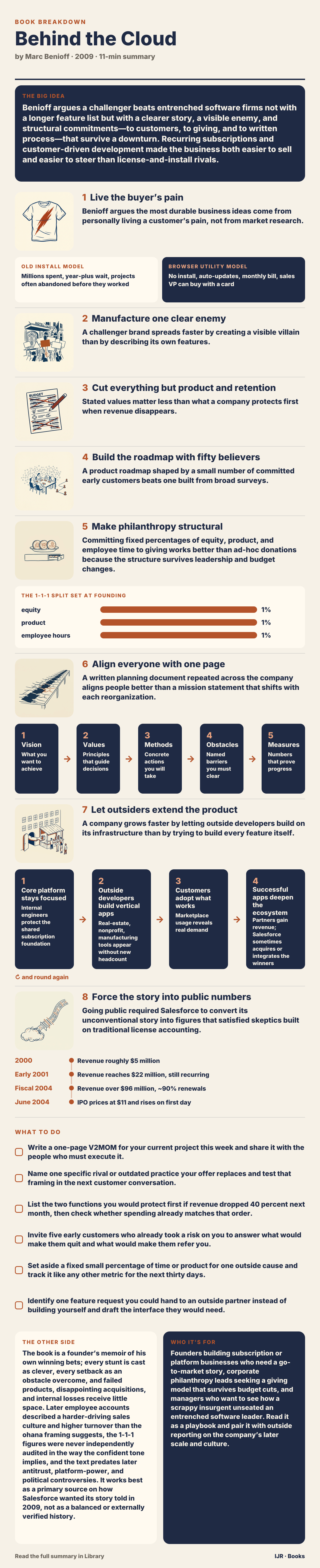
In practice: At Siebel’s 2000 San Francisco user conference, Salesforce hired actors to protest outside the hotel with “The End of Software” signs and handed out a satirical program parodying Siebel’s own materials; Siebel called the police and the coverage dwarfed any ad buy.

3
Cut everything but product and retention
Stated values matter less than what a company protects first when revenue disappears.
By 2001 the crash had erased most of Salesforce’s venture-backed peers. Survival, Benioff says, came from discipline, not luck. Money had come from Ellison personally and a small investor group, so the company kept control of its runway instead of depending on one giant round.
When the downturn hit, costs were cut hard, yet two functions stayed intact: the engineers building the core product and the support team keeping existing accounts alive. Growth-at-all-costs was sacrificed; product and retention were not.
The same subscription model that made the product easy to buy also made the business easier to steer. Revenue was visible and recurring rather than lumpy and back-loaded, so cuts could be precise instead of panicked. Smaller, faster deals replaced year-long enterprise pursuits that froze first when budgets tightened.
In practice: Salesforce reached $22 million in revenue by early 2001—modest by bubble standards yet real and recurring—so leadership could forecast cash and cut with a scalpel.
4
Build the roadmap with fifty believers
A product roadmap shaped by a small number of committed early customers beats one built from broad surveys.
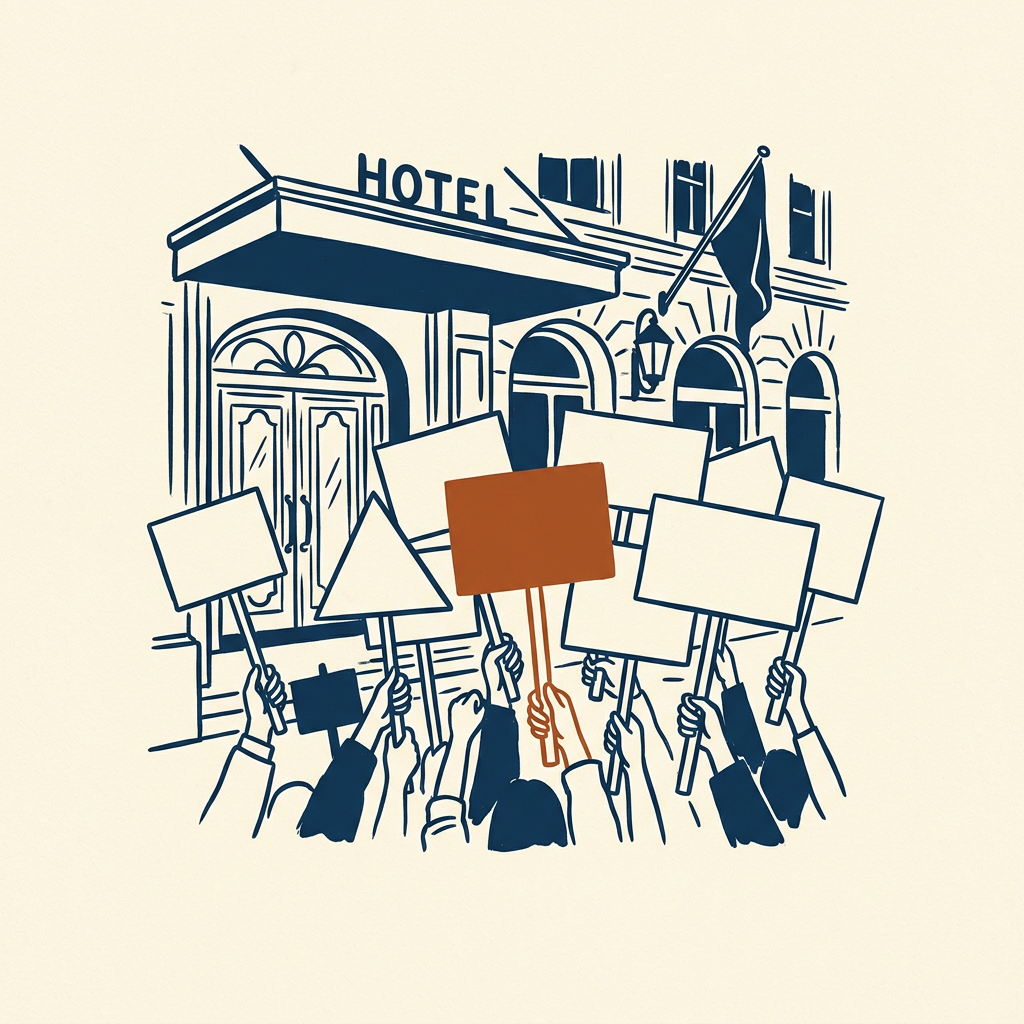
In the first year Benioff assembled an informal advisory board of roughly fifty early accounts. They gave blunt feedback in exchange for real influence. Quarterly meetings turned on two questions: what would make you stop using this, and what would make you tell a colleague to buy it.
Those conversations revealed that speed of setup and pipeline visibility for sales managers mattered more than feature parity with Siebel’s desktop software. Dashboards and forecasting tools shipped in direct response, ahead of capabilities engineering had assumed would matter more.
Skin in the game made the signal clean. These customers had already taken an unusual bet on an unproven vendor; their complaints aimed at making that bet pay off, not at padding a casual wishlist. Traditional enterprise vendors, locked into multi-year contracts and driven by whichever prospect was largest that quarter, heard the same truths years later.
In practice: The advisory group pushed Salesforce to ship sales dashboards and forecasting before chasing full feature match with incumbent desktop CRM.

5
Make philanthropy structural
Committing fixed percentages of equity, product, and employee time to giving works better than ad-hoc donations because the structure survives leadership and budget changes.
The 1-1-1 split set at founding
In 2000, before profitability, Benioff and Suzanne DiBianca set aside 1 percent of equity, 1 percent of product, and 1 percent of employee hours for community work through what became the Salesforce Foundation. The percentages were taken at founding so they could not be quietly trimmed in a bad quarter the way a discretionary charity line item can.
Product mattered more than cash to many nonprofits. Free or discounted CRM gave small organizations the same donor and volunteer tools sales teams used. Employee time became six paid volunteer days a year, tracked like any other business metric.
The same logic that made customer feedback loops durable made giving durable: write the commitment down early, make it percentage-based, and report it in public. Employees and customers both saw the company act on its values under pressure, not only in flush years. Later firms, including Atlassian, treated the pattern as a template.
In practice: Early Foundation partnerships with United Way and Bay Area youth programs let employees volunteer during ordinary workdays, raising participation because no weekend sacrifice was required.

6
Align everyone with one page
A written planning document repeated across the company aligns people better than a mission statement that shifts with each reorganization.
- 1VisionWhat you want to achieve
- 2ValuesPrinciples that guide decisions
- 3MethodsConcrete actions you will take
- 4ObstaclesNamed barriers you must clear
- 5MeasuresNumbers that prove progress
Benioff adopted the Hawaiian word ohana—extended family—as the metaphor for treating employees, customers, and partners as one interdependent group. The practical tool was the V2MOM: a single page covering Vision, Values, Methods, Obstacles, and Measures.
He wrote his own before the company existed. Eventually every employee, including new hires on day one, wrote and shared one. Vague goals such as “grow the business” had to become a measurable method and a named obstacle. Because the pages were visible, departments could check priorities against one another instead of assuming alignment.
Weekly all-hands meetings, kept even after headcount passed a thousand, reviewed metrics in the open—including missed sales targets. Information moved both ways, unlike the slower upward-only flow Benioff remembered from hierarchical Oracle. Fixed, written, repeatable commitments replaced ad-hoc leadership judgment.
In practice: Leadership continued open metric reviews at all-hands gatherings long after the company grew past a thousand people, sharing bad news in the same forum as good news.
7
Let outsiders extend the product
A company grows faster by letting outside developers build on its infrastructure than by trying to build every feature itself.
- 1Core platform stays focusedInternal engineers protect the shared subscription foundation
- 2Outside developers build vertical appsReal-estate, nonprofit, manufacturing tools appear without new headcount
- 3Customers adopt what worksMarketplace usage reveals real demand
- 4Successful apps deepen the ecosystemPartners gain revenue; Salesforce sometimes acquires or integrates the winners
↻ and round again
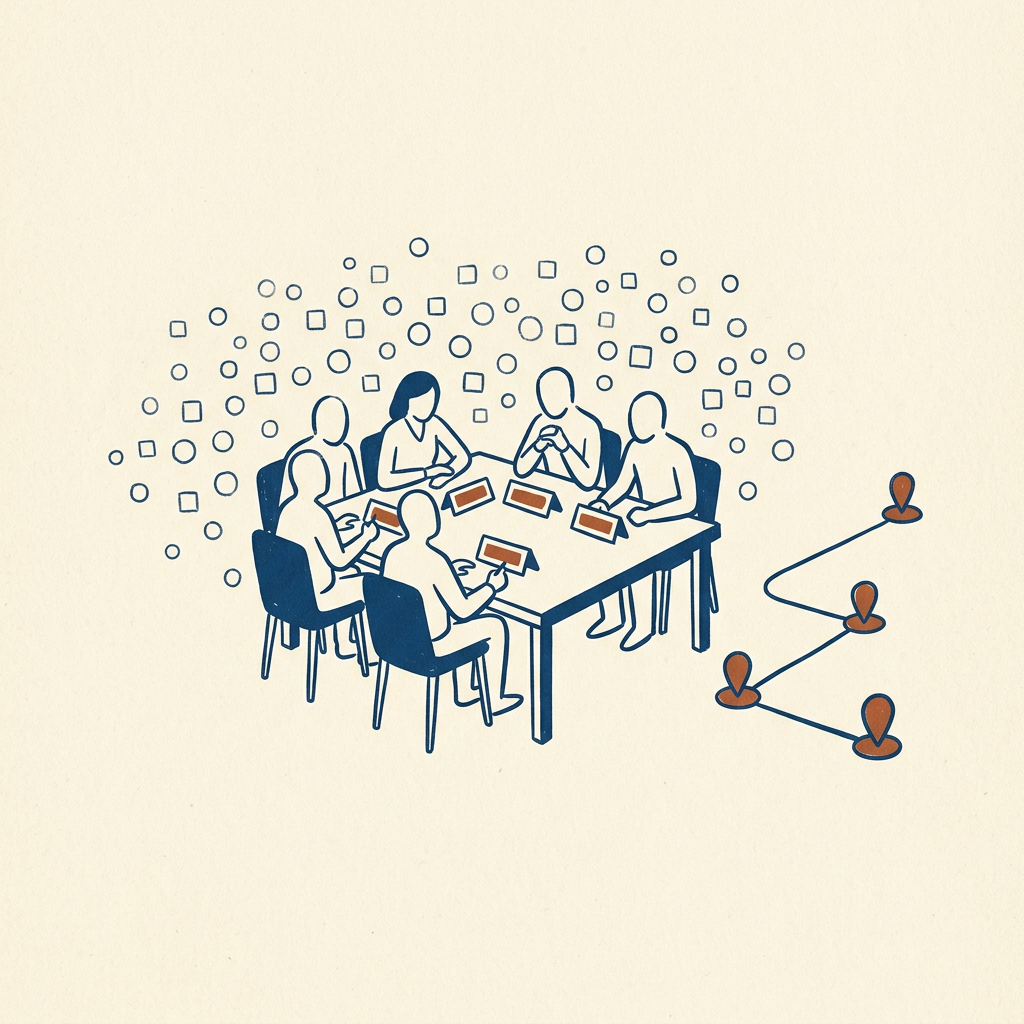
By 2005 customers wanted industry-specific tools—real estate, nonprofits, manufacturing—that one engineering team could never ship fast enough. AppExchange, launched in 2006, turned that pressure into a marketplace: outside developers built on Salesforce’s core platform and sold or gave the apps directly to Salesforce customers.
Two problems resolved at once. Product gaps filled without diverting core engineers, and potential competitors gained a financial stake in Salesforce’s success because their apps were worthless if customers left.
The market itself signaled demand. Adoption of third-party apps showed which categories mattered; the most successful could later be acquired or deeply integrated. Once the subscription core was stable, opening it multiplied surface area without multiplying payroll—the cloud-era version of what Microsoft had done with Windows.
In practice: Early partners such as Jigsaw and Constant Contact added lead generation and email marketing integrations Salesforce did not have to build itself.

8
Force the story into public numbers
Going public required Salesforce to convert its unconventional story into figures that satisfied skeptics built on traditional license accounting.
- 2000Revenue roughly $5 million
- Early 2001Revenue reaches $22 million, still recurring
- Fiscal 2004Revenue over $96 million, ~90% renewals
- June 2004IPO prices at $11 and rises on first day
The 2004 IPO filing tested whether monthly subscriptions could ever match the margins Wall Street expected from big upfront license deals. Analysts doubted that smaller recurring payments could produce comparable results.
Benioff answered with the company’s own trajectory: revenue had climbed from roughly $5 million in 2000 to over $96 million by fiscal 2004, with renewal rates in the 90 percent range. Customers who adopted the model stayed. The offering priced at $11 a share and rose sharply on the first June 2004 trading day, giving outside investors a chance to confirm what early customers and employees already believed.
Internal pressure before the IPO pushed for faster short-term profitability at the expense of guerrilla marketing and platform bets. Resisting that pressure, Benioff writes, preserved the long-term foundation AppExchange needed. Every earlier choice—the enemy, the advisory board, 1-1-1, the open platform—had to survive contact with public markets.
In practice: At IPO time Salesforce showed revenue growth from roughly $5 million in 2000 to over $96 million by fiscal 2004 and renewal rates around 90 percent, evidence the subscription base was durable.
Key terms
- End of Software The slogan and slashed-logo campaign that cast traditional installed software itself as the problem Salesforce would replace.
- 1-1-1 model The founding pledge of 1 percent of equity, 1 percent of product, and 1 percent of employee hours to community work so giving could not be cut in a downturn.
- ohana Hawaiian word for extended family, used as the metaphor for treating employees, customers, and partners as one interdependent group.
- V2MOM A one-page plan every employee writes covering Vision, Values, Methods, Obstacles, and Measures so priorities stay specific and visible.
- AppExchange The 2006 marketplace where outside developers build and sell apps on Salesforce’s platform, filling vertical gaps without growing core headcount.
- Customer advisory board The informal group of roughly fifty early accounts that met quarterly to say what would make them quit or recommend the product.
- Subscription utility model Browser-based software paid monthly like a utility bill, updated automatically, needing no install or heavy IT involvement.
What to do
- Write a one-page V2MOM for your current project this week and share it with the people who must execute it.
- Name one specific rival or outdated practice your offer replaces and test that framing in the next customer conversation.
- List the two functions you would protect first if revenue dropped 40 percent next month, then check whether spending already matches that order.
- Invite five early customers who already took a risk on you to answer what would make them quit and what would make them refer you.
- Set aside a fixed small percentage of time or product for one outside cause and track it like any other metric for the next thirty days.
- Identify one feature request you could hand to an outside partner instead of building yourself and draft the interface they would need.
Questions to think with
- What single enemy or outdated practice would make your offer instantly clearer to a stranger?
- If budget were cut tomorrow, which two teams would you protect and which growth experiments would you freeze first?
- Who are the roughly fifty users with enough skin in the game to tell you the truth about your roadmap?
- Which of your current values exist only as statements, and which are locked in as fixed percentages or written processes anyone can check?
- Would your current growth story survive the same public-number test an IPO forced on Salesforce in 2004?
The other side
The book is a founder’s memoir of his own winning bets; every stunt is cast as clever, every setback as an obstacle overcome, and failed products, disappointing acquisitions, and internal losses receive little space. Later employee accounts described a harder-driving sales culture and higher turnover than the ohana framing suggests, the 1-1-1 figures were never independently audited in the way the confident tone implies, and the text predates later antitrust, platform-power, and political controversies. It works best as a primary source on how Salesforce wanted its story told in 2009, not as a balanced or externally verified history.
Who it's for
Founders building subscription or platform businesses who need a go-to-market story, corporate philanthropy leads seeking a giving model that survives budget cuts, and managers who want to see how a scrappy insurgent unseated an entrenched software leader. Read it as a playbook and pair it with outside reporting on the company’s later scale and culture.