




Franklin built America's character through hustle and compromise
Readers who know Franklin only from the hundred-dollar bill, plus professionals curious how habits and civic networks build careers, get the fuller stranger story here.
IJR · Oct 24, 2026 · 13 min read
In 60 seconds
- Franklin fled his brother's Boston shop at seventeen, setting a lifelong pattern of leaving rigid hierarchy for open, merit-based association.
- His thirteen-virtues chart and Junto treated character as trainable habit, fusing self-interest with moral striving through Poor Richard's maxims.
- Printing profits funded voluntary civic works—library, fire company, hospital, postal reform—before he retired at forty-two for science and public affairs.
- Utilitarian electricity experiments and a freely published lightning rod made him a European scientific celebrity whose standing later aided diplomacy.
- Cockpit humiliation in 1774 radicalized a loyal imperial agent; the fur-cap Paris persona then secured the French alliance decisive at Yorktown.
- At the Constitutional Convention he urged imperfect compromise over purity, while private reserve estranged Loyalist son William and delayed abolitionism until 1787.
The big idea
Isaacson argues that Franklin, more than any other founder, invented a durable American character—pragmatic, self-taught, civic-minded, and skeptical of inherited authority or rigid ideology. The same flexibility that aligned self-interest with public benefit in institutions, science, and diplomacy also exacted private and moral costs the book refuses to erase.
The book in brief
Franklin was born in 1706 to a large Boston candle-and-soap household and apprenticed at twelve to his harsh older brother James. He absorbed printing, slipped witty Silence Dogood essays into James's paper, then broke indenture and fled to Philadelphia at seventeen with almost no money, buying three puffy rolls and walking streets he did not know. Isaacson treats the flight as the seed pattern: abandon constraining authority, build voluntary merit-based ties. Work with Keimer, a London stint, and merchant-financed independence soon gave him his own shop by his early twenties.
In his early twenties he ran a thirteen-virtues chart—temperance, silence, order, frugality among them—marking daily failures and rotating focus like an engineer optimizing a machine. He founded the Junto of tradesmen for weekly debate and mutual accountability, then packaged the ethic in Poor Richard's Almanack from 1732. Printing thrived through partnerships that spread shops like early franchises. The same organizational energy produced the Library Company (1731), Union Fire Company, street paving and lighting, postal reform as deputy postmaster, Pennsylvania Hospital, and the American Philosophical Society. At forty-two, annuity income let him retire from active printing for science and public affairs.
Freed from the shop, he treated electricity as useful inquiry rather than parlor trick, proposing a single-fluid positive-negative theory. The 1752 kite experiment, whatever its exact details, made him an international name; the lightning rod he refused to patent spread across rooftops because he published the design freely. Bifocals, the efficient stove, and the glass armonica followed the same public-benefit logic and cemented European standing that later governments could not ignore.
For decades he remained a proud British subject and colonial agent in London, pushing the 1754 Albany Plan and negotiation over rupture. The hinge was personal: in 1774 the Privy Council humiliated him in the Cockpit over leaked Hutchinson letters, stripping his postmastership on the spot. He sailed home in 1775 convinced reconciliation was finished. Sent to Paris in 1776, he staged rustic simplicity—plain fur cap instead of wig—winning cultural sympathy, Vergennes's friendship, the 1778 alliance after Saratoga, and decisive French help at Yorktown, then generous 1783 Treaty terms, even as John Adams fumed at the sociable method.
At the 1787 Convention, carried in by sedan chair past eighty, he pushed the Great Compromise on representation and closed by urging delegates to accept an imperfect document rather than let private reservations sink public confidence. Domestic life exacted parallel costs: common-law marriage to Deborah Read, long separations, her 1774 death while he was abroad; deep closeness then permanent rupture with Loyalist son William, left almost nothing in the will. The unfinished Autobiography, begun 1771 as a letter to William, modeled a replicable self-made path while soft-pedaling Deborah, the estrangement, and vanity. Only late, after decades owning enslaved people and printing sale ads, did exposure via a Black school and London abolitionism lead him to preside over Pennsylvania's abolition society in 1787 and petition Congress in 1790. Isaacson asks readers to hold both the civic architect and the moral costs together.
Context
Walter Isaacson's 2003 biography reframes the founding away from Jeffersonian idealism toward middle-class hustle, compromise, and civic engineering. It gives general readers one volume spanning printing, science, and diplomacy without archives, treating Franklin as inventor of a durable American character rather than a quaint kite-flyer.
The key ideas

1
Escape as self-invention
Franklin's illegal break from his brother's indenture at seventeen set the template of abandoning inherited authority for open, chosen association.
Born 1706 into an unremarkable Boston trades family, Franklin was apprenticed at twelve to older brother James and learned the press under harsh discipline. He smuggled Silence Dogood essays into the paper until the ruse and the conflict forced the break. Isaacson reads the hungry Philadelphia arrival—three rolls, no friends—as the founding myth of a life spent walking away from rigid hierarchy.
The pattern repeated: Keimer's shop, a London interval, then his own press by the early twenties financed by merchant friends rather than family capital. Loyalty shifted from blood and indenture to self-directed improvement and voluntary peers.
That same move later powered the Junto, the print network, civic societies, and finally the political break with Britain. Isaacson argues the American character Franklin embodied prizes exit from constraining arrangements over dutiful endurance of them.
In practice: At seventeen he broke indenture, fled Boston, and entered Philadelphia friendless with almost no money, an image he later staged in the Autobiography with the three puffy rolls.
2
Virtue as trainable skill
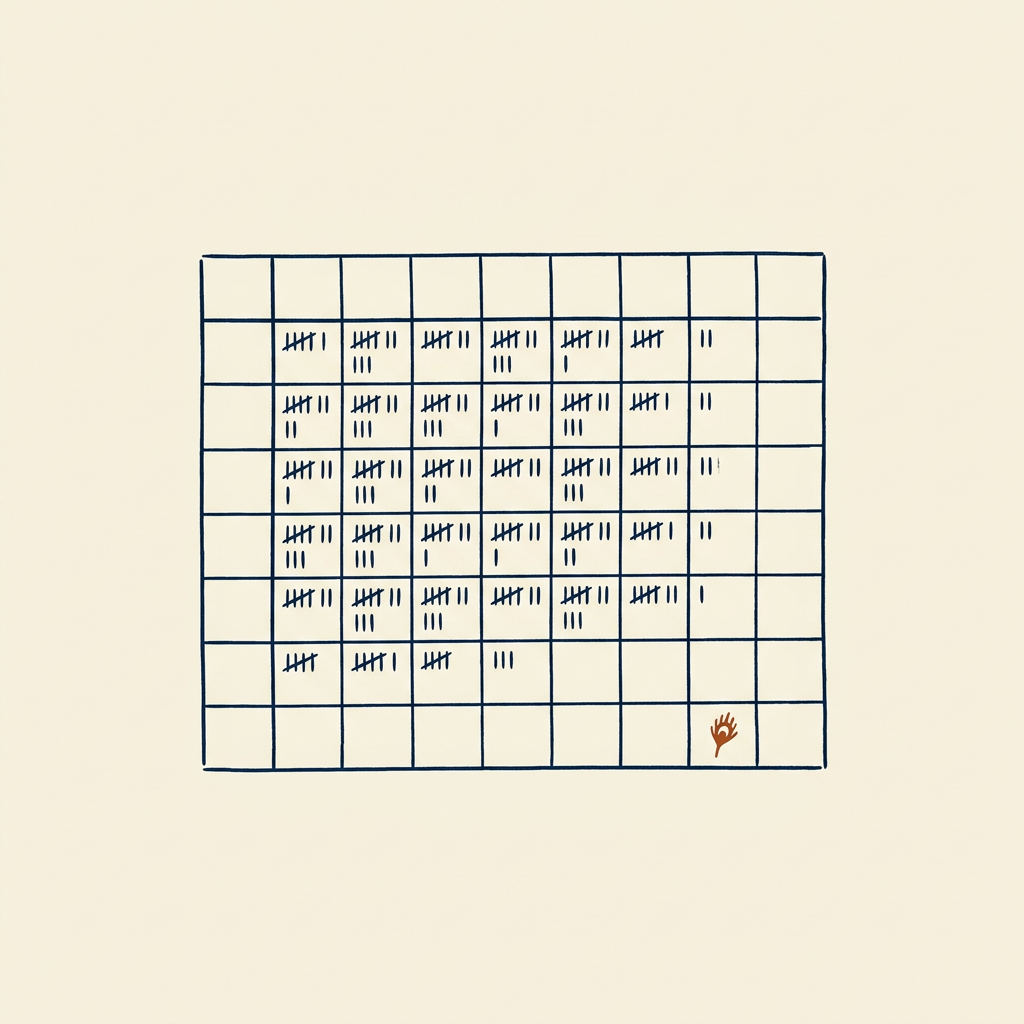
The thirteen-virtues chart treated moral improvement as measurable habit iteration, not spiritual conversion, though pride resisted the method.
- 1List thirteenTemperance, silence, order, frugality and the rest
- 2Daily marksChart failures rather than vague resolve
- 3Rotate focusOne virtue at a time across weeks
- 4Peer checkJunto holds members to projects and habits
In his early twenties Franklin listed temperance, silence, order, frugality and the rest, tracked daily failures on a chart, and rotated focus week by week like an engineer debugging a machine. He admitted order stayed elusive and pride hardest to kill, since claiming humility feeds pride.
The method mattered more than the list: character as secular habit-formation. The same years produced the Junto—tradesmen meeting weekly on morals, politics, natural philosophy, and useful projects—plus Poor Richard's Almanack from 1732, selling thrift and diligence farther than any sermon.
Isaacson notes the fusion: becoming better and becoming more successful were one project. Critics then and later called the virtue calculated rather than felt; the book leaves that charge on the table.
In practice: He marked daily failures on a rotating virtue chart and used the Junto for mutual accountability on self-improvement and civic schemes.

3
Self-interest builds commons
Franklin engineered merchant profit and community welfare to reinforce each other through voluntary subscription institutions.
By his late twenties the print business thrived via partnerships with former employees in other colonies, an early franchise model spreading income without personal oversight of every shop. Once cash flowed, Isaacson tracks what he built next: civic infrastructure by citizen subscription, not decree.
Library Company of Philadelphia (1731) pooled books no one could buy alone. Union Fire Company became the volunteer-fire template. He drove street paving and lighting, reformed the colonial post as deputy postmaster, and helped found Pennsylvania Hospital and the American Philosophical Society.
In 1748, at forty-two, annuity arrangements let him retire from daily printing so science and public affairs became the next enterprise, run with the same rigor. Isaacson frames the public-spirited entrepreneur who treats community projects as ambition's extension, while noting the unresolved tension between genuine altruism and well-marketed self-interest.
In practice: He organized the Library Company in 1731 and the Union Fire Company so shared resources and volunteer brigades did work government had not yet done.

4
Curiosity must be useful
Franklin's science prized everyday benefit over pure theory, producing the lightning rod he refused to patent and European standing that later enabled diplomacy.
Parlor novelty
Electricity as spectacle and abstract puzzle
Public tool
Single-fluid theory turned into free lightning rods, bifocals, stove
Free of the shop, he turned electricity from novelty into a single-fluid theory of positive and negative charge. The 1752 kite-and-key experiment, dangerous and partly debated in detail, made him a Royal Society honoree and a French-translated celebrity.
Isaacson stresses application: the lightning rod design published freely rather than locked behind a patent, plus bifocals, a heat-saving stove still bearing his name, and a glass armonica that drew music from Mozart. Knowledge earned value through public use, consistent with his earlier civic building.
By the time imperial conflict sharpened, Europe already knew him as a natural philosopher, not merely a colonial merchant—a credibility Isaacson says proved indispensable when rebellion needed foreign governments to listen.
In practice: He published the lightning-rod design without patent so it spread across European and American rooftops for common protection.

5
Insult radicalizes loyalty
Franklin's shift from proud British subject to revolutionary was driven less by prior ideology than by accumulated personal humiliation and imperial miscalculation.
- 1754Albany Plan rejected by colonies and London
- Long London yearsAgent lobbying for negotiated redress
- 1774 CockpitPublic humiliation over Hutchinson letters
- 1775Sails home radicalized against reconciliation
Most of his life he sought an expanded, representative empire; the 1754 Albany Plan for colonial unity was rejected by assemblies and London alike. Nearly two decades as colonial agent in London rested on the belief that negotiation could fix grievances.
Isaacson marks the hinge as personal: 1774, summoned to the Cockpit, he stood silent through an hour of solicitor-general insult over leaked Hutchinson letters urging a rights crackdown, then lost his deputy postmaster post on the spot. He left London radicalized and sailed home in 1775 certain reconciliation was dead.
The account complicates heroic 1776 narratives. Isaacson argues even major ideological turns can be catalyzed by wounded pride and institutional overreach as much as settled philosophy, a reading the documentary bitterness toward Hutchinson supports.
In practice: After the Cockpit humiliation and summary firing in 1774, the longtime imperial agent returned home convinced rupture was inevitable.
6
Charm as statecraft
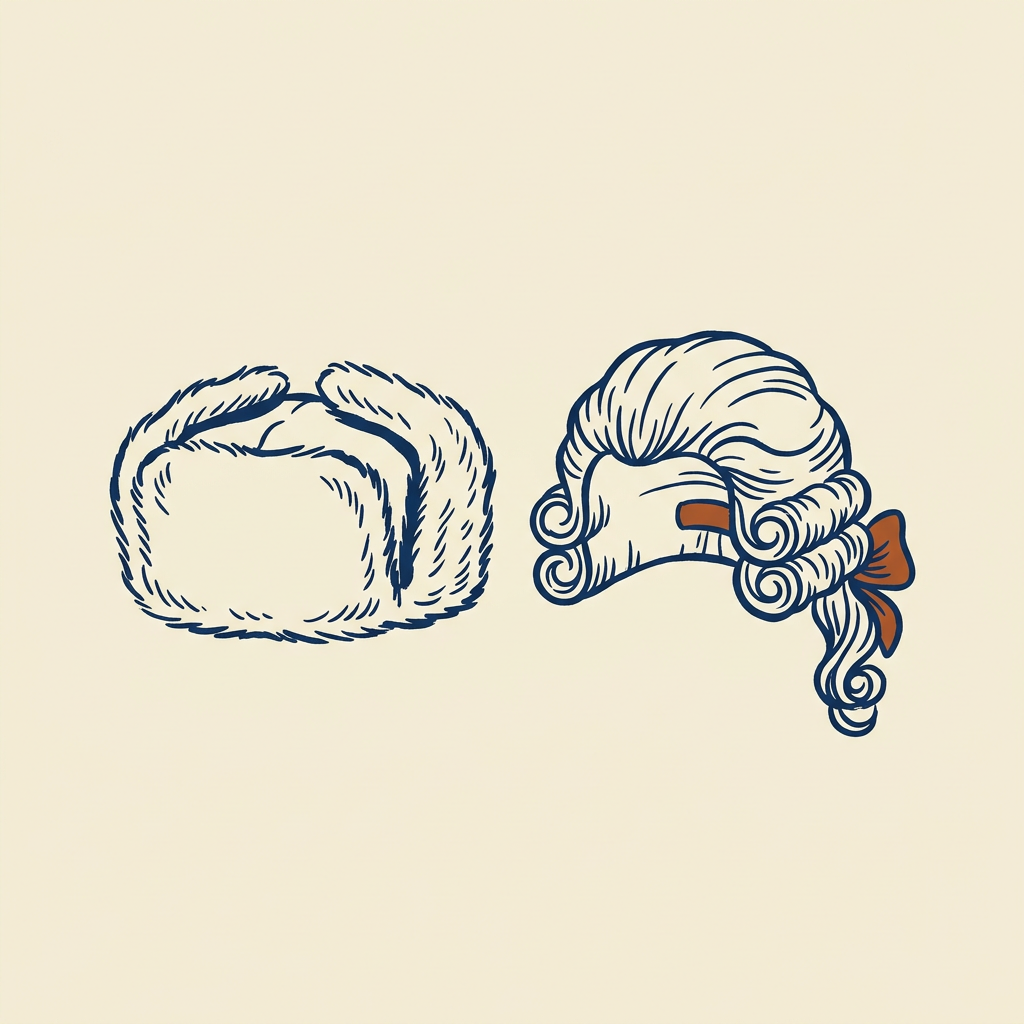
The staged Paris persona—fur cap, rustic simplicity—won French money, ships, and troops more effectively than formal argument alone.
Adams temperament
Rigid rectitude, distrust of Parisian sociability
Franklin method
Fur-cap simplicity, salons, personal ties to Vergennes
Already famous for electricity, Franklin arrived in 1776 and deliberately downplayed London-honed sophistication. Plain fur cap instead of powdered wig, face on medallions and snuffboxes, friendships with Vergennes and a wide circle of French women and intellectuals turned cultural sympathy into policy.
Isaacson calls it strategy, not vanity: alliance depended on personal relationship as much as memoranda. France signed in 1778 after Saratoga, and naval-military aid proved decisive at Yorktown in 1781; he then helped secure generous 1783 Treaty terms.
Friction with John Adams, who hated the sociable laxity, lets Isaacson contrast rigid rectitude with flexible pragmatism. Without that specific diplomatic talent, he argues, independence might have failed for want of foreign support regardless of battlefield courage.
In practice: Wearing the fur cap and cultivating Vergennes helped lock the 1778 French alliance that made Yorktown possible.

7
Imperfect document preferred
At the Convention Franklin modeled political wisdom that accepts a workable constitution over ideological purity modern politics rarely rewards.
Past eighty and carried in a sedan chair, he authored no major structural clauses yet steadied younger delegates when talks nearly collapsed. He pushed the Great Compromise that split a population House from an equal Senate.
His closing speech admitted personal dislike of parts of the text yet urged unanimous support: imperfect men cannot write a perfect constitution, and public confidence outweighed any single reservation. He floated opening prayer (mostly ignored) and soothed walk-out tempers behind the scenes.
Isaacson reads this as the culmination of a lifetime of voluntary compromise—from Junto to Library to Albany. The cost is invisibility: procedural and relational work leaves no single signature achievement comparable to Madison's design or Hamilton's finance.
In practice: In the closing speech he asked delegates to back the draft despite private objections so the country would trust the result.

8
Public genius, private distance
The reserve and strategic relationship management that built institutions estranged his household, most painfully Loyalist son William.
Public builder
Libraries, alliances, compromise among strangers
Private cost
Years apart from Deborah; permanent break with William
Common-law marriage to Deborah Read began in 1730 because her prior husband's fate blocked a formal wedding; she ran household and shop for decades but never joined him in London or Paris, and long separations ended with her death in 1774 while he remained abroad.
Illegitimate son William, born around 1730, was close for decades; Franklin won him the New Jersey royal governorship. Revolution made William a committed Loyalist, arrested; the pair met once more in London in 1785, stiff and unreconciled. The will left William almost nothing beyond disputed land.
Warmer ties to daughter Sally and to William's illegitimate son Temple (taken to Paris as aide) did not erase the pattern. Isaacson argues the same emotional reserve that served public institution-building made Franklin a difficult husband and father, more at ease improving systems than tending the nearest people. The rupture also shows how the Revolution split households along principle lines even love could not bridge.
In practice: After William's Loyalism and arrest, the 1785 London meeting stayed cold, and the will delivered a final near-total disinheritance.

9
Memoir as performance
The Autobiography's plain self-made story was strategic self-fashioning meant to teach and persuade, not transparent confession.
Begun in 1771 as a letter to William and continued in fragments until Franklin's 1790 death without finishing, the memoir stages the rolls-under-arm arrival, the virtue chart, and the tradesman's rise as a replicable path for ordinary readers.
Isaacson treats it as another deliberate construction consistent with Franklin's lifelong image-crafting. It shaped later American self-reliance lore and the whole self-improvement genre.
Yet it softens or omits Deborah, the William estrangement, diplomatic maneuvering, and vanity visible in letters. Because so much early-life evidence comes from Franklin writing decades later with reputation in mind, Isaacson flags the risk that biographers, himself included, reproduce the curated portrait more than an independent one.
In practice: The famous Philadelphia arrival with rolls and the virtue chart are arranged to model diligence any reader might copy, while family fractures stay muted.

10
Late and incomplete reckoning
Franklin's abolitionist turn after decades as slaveholder and ad-printer shows moral growth in Enlightenment figures can be slow, self-interested, and forced by circumstance.
- Adult decadesOwns servants; prints sale and capture ads
- 1750s onwardBlack school exposure; London abolitionist climate
- 1787Presides over Pennsylvania abolition society
- 1790Signs petition to Congress; dies same year
For much of adulthood he owned enslaved household servants and ran newspaper ads for sale and capture, treating slavery as ordinary commerce. Early economic notes on inefficiency versus free labor stayed framed as productivity, not moral wrong.
Isaacson traces gradual shift from the 1750s via a Philadelphia school for Black children that challenged assumptions about intellectual capacity, then London years where abolitionist opinion ran ahead of the colonies. The decisive move came late: 1787, same year as the Convention, he became president of the Pennsylvania Society for Promoting the Abolition of Slavery; in 1790 he signed a petition to Congress for ending the trade and moving toward emancipation—Congress declined.
The book refuses a smooth enlightenment arc. Decades of complicity preceded the conversion, and the Constitution he helped ratify protected slavery in several clauses. Even adaptable figures, Isaacson argues, can hold contradictions for decades until movements, exposure, and politics finally align.
In practice: In 1787 he took the presidency of Pennsylvania's abolition society and in 1790 signed the petition Congress ignored, after a lifetime of ownership and slave-sale ads.
Key terms
- Silence Dogood Pseudonym Franklin used to slip witty essays into his brother's paper while still an apprentice
- Junto His weekly club of tradesmen who debated morals and politics and held one another to useful projects
- Thirteen virtues The charted list he used to mark daily failures and train character as habit
- Poor Richard's Almanack The long-running bestseller that sold thrift, diligence, and prudence as popular maxims
- Albany Plan His 1754 proposal for unified colonial government, rejected by both colonies and London
- The Cockpit Privy Council room where he was publicly humiliated in 1774 over the Hutchinson letters
- Great Compromise Convention deal he backed that split population-based House from equal Senate representation
- Fur-cap persona The staged rustic simplicity in Paris that turned celebrity and charm into French alliance
What to do
- Start a recurring group of three or four peers who meet to trade honest feedback on one shared project or goal.
- Pick one trait, track it daily for a week with a simple pass/fail mark, then rotate to the next once it sticks.
- Before your next hard negotiation, name aloud one concession you will make to reach a workable outcome.
- If you build a useful method at work, test whether publishing it freely serves you better long-term than guarding it.
- Write a short plain account of one formative escape or choice in your own life as a model others could adapt.
Questions to think with
- When has personal insult or institutional overreach shifted your politics more than abstract principle did?
- Where do you still treat virtue as a feeling rather than a measurable habit you could chart for a week?
- Would you publish a valuable design freely if it spread your name and influence faster than a patent?
- Which relationships have you managed strategically at the cost of warmth, and was the trade worth it?
- What contradiction have you lived with for years that circumstance has not yet forced you to resolve?
The other side
Isaacson's portrait stays admiring even when listing flaws, converting contradictions into charming complexity; the late slavery chapter can read like an unearned redemption arc, underweighting how enslaved and print-shop labor structured early fortune, while heavy reliance on Franklin's own curated Autobiography lets the narrative voice adopt his self-assessment too readily, and the practical-bourgeois-American thesis risks essentializing a diverse founding generation into a tidy archetype without archival breakthrough.
Who it's for
Readers who know Franklin only as kite and hundred-dollar bill, professionals who want a concrete model of habits plus civic networking, and history readers seeking one readable volume that spans printing, science, and diplomacy without archival density.