




Vulnerability is courage, not the weakness culture assumes
Brené Brown’s twelve-year qualitative research gives managers who dodge hard feedback, parents raising resilient kids, and anyone who feels never-enough despite success a plain-language case for why emotional exposure is strength.
IJR · Oct 18, 2026 · 13 min read
In 60 seconds
- Vulnerability means uncertainty, risk, and emotional exposure—not weakness—and Brown’s interviews tie it to courage, creativity, and connection.
- A scarcity mindset—the chronic sense of never being thin, successful, safe, or certain enough—makes ordinary vulnerability feel like a threat.
- Shame (‘I am bad’) predicts hiding, addiction, and disengagement; guilt (‘I did something bad’) supports repair and accountability.
- Armor such as perfectionism, foreboding joy, numbing, and the viking-or-victim binary blocks pain but also blocks joy and belonging.
- Shame loses power when named aloud to someone who meets it with empathy; sympathy at a distance does not work the same way.
- Trust builds marble by marble through small consistent moments, and workplaces that punish visible failure get compliance while losing innovation.
The big idea
Brown argues that showing up without a guaranteed outcome is the source of courage, trust, and creativity, not a liability to armor against. Scarcity and shame teach people to hide behind perfectionism, cynicism, and numbing, which costs more connection and joy than the exposure they fear.
The book in brief
Brown opens with Theodore Roosevelt’s 1910 image of the man in the arena who risks failure and criticism by competing, unlike the safe critic in the stands. She defines vulnerability as uncertainty, risk, and emotional exposure, and reports that the people in her grounded-theory interviews who lived with the deepest worthiness were those who walked into exposure repeatedly rather than those who avoided it. Courage, in her data, was action taken alongside fear.
She next digs into the cultural soil that makes vulnerability feel unbearable: scarcity. Across income levels, interviewees described a chronic never-enough feeling about time, money, sleep, certainty, and achievement, amplified by constant comparison to curated lives. That mindset raises the cost of admitting struggle, so people perform having-it-together instead of being present.
The core distinction follows. Guilt evaluates a specific behavior against values and supports change; shame is a global verdict on the self and correlates with hiding, depression, aggression, and disengagement. Gendered patterns appeared in her interviews—women’s triggers around appearance, motherhood, and seamless competence; men’s around never seeming weak—but she treats them as recurring patterns, not laws. From there she catalogs the armor people build: perfectionism aimed at others’ approval, foreboding joy that steals present happiness by rehearsing catastrophe, numbing that dulls joy along with pain, and rigid viking-or-victim cultures that leave no room for ‘I don’t know.’
The applied turn is shame resilience: recognize the body’s signals, question the messages driving the shame, reach out to someone trustworthy, and name the feeling aloud. Empathy—stepping into a shared vulnerable position—dissolves the secrecy shame needs; sympathy keeps distance. She extends the same logic to parenting through disruptive engagement: children absorb modeled struggle more than instructed self-acceptance, so worthiness must be unconditional and present-tense while accountability stays high. At work she describes shame-prone cultures that use humiliation and blame, then offers an engaged-feedback checklist that targets behavior rather than character and requires the giver to sit in discomfort too. Creativity dies when unconventional ideas meet eye-rolls.
She closes with the marble-jar metaphor for trust: it accumulates through many small follow-throughs and honest repairs, not grand gestures, so vulnerability must be calibrated to what a relationship has already earned. Floodlighting—disclosing too much too fast—backfires. The arc ends where it began: being seen when you might fail is the route to actually being known.
Context
Drawing on twelve years of grounded-theory research and thousands of coded interviews into shame and worthiness, Brown’s 2012 book reframed vulnerability as a strength rather than a liability and gave everyday language to a feeling many readers recognized but could not name. It reached managers, parents, and high achievers who felt chronically not-good-enough despite visible success.
The key ideas

1
Enter the arena
Vulnerability is uncertainty, risk, and emotional exposure, and Brown’s interviews link repeated entry into it with the deepest sense of worthiness.
The stands
Critic watches safely, risks nothing, offers judgment without skin in the game
The arena
Competitor shows up under uncertainty, accepts possible failure and criticism
Brown organizes the whole book around Roosevelt’s man in the arena, the person who actually competes and risks failure rather than the critic who watches from safety. Daring greatly, in her terms, means showing up and being seen when the outcome is uncertain.
She rests the claim on twelve years of grounded theory: thousands of interviews coded for recurring patterns, not controlled experiments. The definition is precise—uncertainty, risk, emotional exposure—not sadness, weakness, or oversharing. Most people blur those categories and therefore build defenses against ordinary human exposure.
Her data reverse a common assumption. The people living with the strongest worthiness were not those who had avoided exposure; they were those who had walked into it again and again. Armoring against vulnerability does not spare pain; it also cuts off joy, creativity, and belonging.
In practice: A manager who holds damaging feedback because being seen as difficult feels riskier than letting the problem fester is avoiding exposure, not conflict out of laziness.

2
Scarcity raises the stakes
A culture of never-enough—time, money, certainty, achievement—turns ordinary vulnerability from uncomfortable into unbearable.
Actual need
Concrete lack of time, money, or safety in a specific moment
Scarcity mindset
Chronic never-enough feeling that persists even amid plenty and raises the cost of any exposure
Before treating shame directly, Brown maps the soil it grows in. Nearly everyone she interviewed, regardless of income or status, described feeling chronically insufficient even amid plenty. That is distinct from actual deprivation.
She traces part of the pressure to a culture of comparison, amplified by media that streams curated versions of other people’s success, looks, and families. Comparison itself is old; the volume and frequency are new, and they keep people measuring themselves against impossible standards.
Scarcity thinking makes asking for help feel like confirming a hidden failure rather than a normal disclosure. Culture then rewards the appearance of having it together over the reality of being in process, pushing performance over presence and making elaborate psychological armor seem rational.
In practice: Parents at school events treating children’s achievements as a proxy war over their own adequacy, so a simple admission like struggling with a child’s reading becomes too risky to say.
3
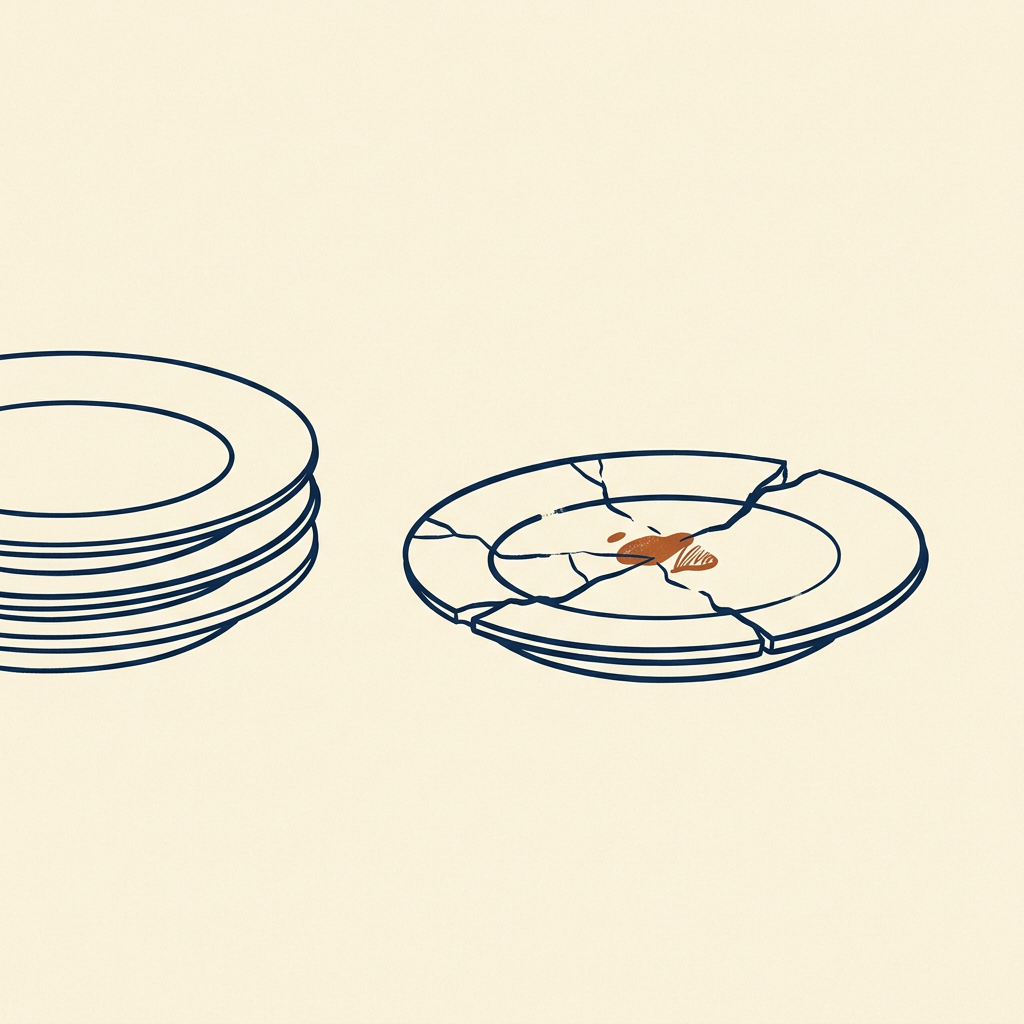
Shame is not guilt
Shame’s global verdict ‘I am bad’ predicts destructive hiding; guilt’s ‘I did something bad’ supports accountability and repair.
Guilt
I did something bad — evaluates behavior, supports repair and change
Shame
I am bad — global self-verdict, correlates with hiding and disengagement
Brown’s central split is simple and consequential. Guilt evaluates a specific behavior against one’s values. Shame judges the whole self as unworthy.
Her coded interviews link guilt to behavior change and accountability, and shame to the opposite cluster: addiction, depression, aggression, bullying, and disengagement. People who spoke in shame language about identity were less likely to repair a mistake than those who separated the act from who they were.
Interview patterns also split by gender. Women’s shame triggers clustered around appearance, motherhood, and doing everything seamlessly under conflicting expectations. Men’s clustered more narrowly around never appearing weak, incompetent, or afraid. She presents these as recurring qualitative patterns, not universal laws, yet they shape how she later designs resilience practices.
Used as social control, shame does not deliver the compliance people hope for. It delivers hiding.
In practice: A working mother told by a colleague that a ‘good mom’ would not travel for work hears an attack on identity, not a comment on a specific choice—shame rather than guilt.

4
Armor blocks joy too
Perfectionism, foreboding joy, numbing, and rigid dominance-or-collapse binaries shield against pain while also sealing off connection and creativity.
Once vulnerability feels dangerous, people build defenses. Perfectionism promises that doing everything right will prevent judgment; Brown distinguishes it from healthy striving because it is aimed at others’ approval rather than genuine improvement.
Foreboding joy is one of her sharper observations: in moments of real happiness many people immediately invent catastrophe to brace for loss. The dress rehearsal does not protect against future grief; it only steals the joy available now. Numbing through busyness, substances, or distraction fails the same way—you cannot selectively numb, so dulling pain dulls joy.
Some cultures, especially certain corporate and military settings, enforce a viking-or-victim binary: total dominance or total collapse, with no honest middle such as ‘I need help.’ The armor works short-term. Structurally it costs trust, intimacy, and creative risk—the experiences that make life feel worth living.
In practice: A fire-department culture that treated admitting fear as disqualifying led firefighters to suppress real safety concerns rather than seem weak.

5
Four moves of resilience
Shame loses power when recognized, questioned, shared with a trustworthy person, and named aloud; empathy is the mechanism that dissolves it.
Brown treats shame resilience as a learnable skill built through four repeated practices rather than a fixed trait. First, catch shame in the body—heat, chest tightness—often before the mind has a label. Second, practice critical awareness: are the driving expectations realistic, attainable, and actually yours, or absorbed from family and culture?
Third, reach out instead of isolating. Fourth, speak shame explicitly rather than acting it out sideways as anger or withdrawal. Across all four, the working mechanism is empathy. Shame depends on secrecy and the belief that no one else would understand; spoken and met with understanding, it cannot survive.
She draws a hard line between empathy and sympathy. Sympathy holds distance (‘that’s terrible’). Empathy requires stepping into a version of the same vulnerable position (‘I’ve felt something like that’). Without the earlier shame-versus-guilt split and the catalog of armor, these practices would have no clear target.
In practice: Brown once disclosed a parenting mistake expecting judgment and instead heard a friend’s comparable failure, which dissolved the isolation that had made the mistake feel unbearable.
6
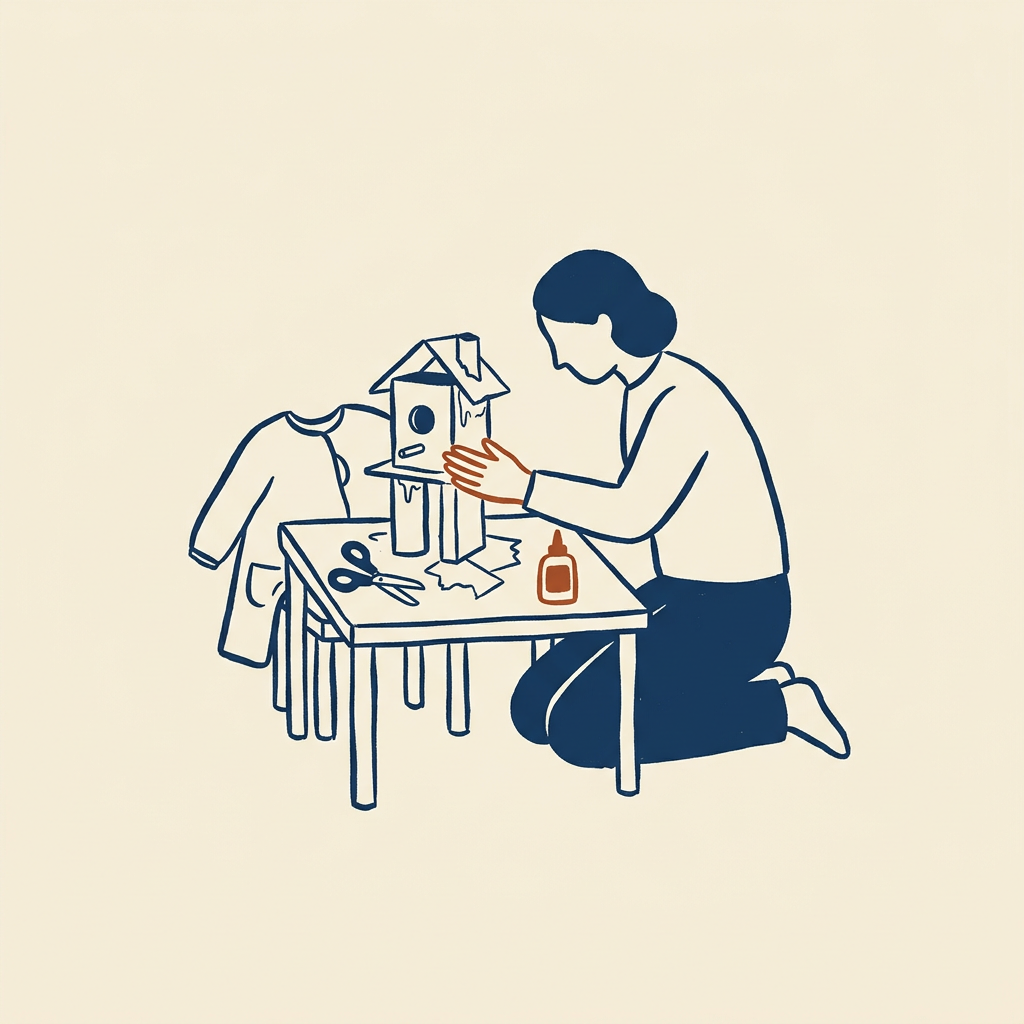
Worthiness without conditions
Children develop durable worthiness by watching adults struggle honestly and stay lovable, not by being shielded from every disappointment.
Fixed-trait praise
‘You’re so smart’ ties worth to a trait that feels losable after failure
Process praise
‘You worked hard on that’ locates worth in effort children can repeat
Brown carries shame resilience into parenting as disruptive engagement: actively interrupting the hand-off of shame and scarcity to the next generation instead of hoping children turn out fine. Kids absorb what parents model far more than what parents instruct. A parent who preaches self-acceptance while visibly loathing their body or panicking over minor failures teaches the opposite lesson.
The message she wants to install is that children are imperfect and wired for struggle, yet worthy of love and belonging exactly as they are right now. The word now rejects conditional, achievement-tied worthiness.
Two common failures sit on either side. Shielding children from all disappointment leaves them without practice tolerating discomfort. Shaming them into compliance teaches that failure equals unworthiness. High accountability paired with unconditional worthiness is harder to sustain than either pure leniency or harsh discipline, and it depends on the shame-guilt distinction built earlier.
In practice: Praising ‘you worked hard on that’ after effort builds resilience better than ‘you’re so smart’ after every success, because worth stays in process rather than a fixed trait that can be lost.

7
Failure must be survivable
Workplaces that treat failure, dissent, or uncertainty as career risks extract compliance while starving the creativity that needs people to take visible risks.
Brown applies the same framework to institutions. Most workplaces, she argues, reward armor over honesty. Shame-prone cultures manage performance through fear of humiliation, public callouts, and rigid blame hierarchies.
Shame does not produce better work. It produces hidden mistakes, avoided stretch assignments, and disengagement from anything with a visible risk of failure. Creativity is especially fragile: creative work means producing something that might be judged or wrong, an inherently vulnerable act. Punish bad ideas as harshly as negligence and you get fewer ideas of any kind.
Her alternative is an engaged feedback checklist: be ready to sit in discomfort with the other person, address specific behavior rather than character, and accept being examined in return. The checklist turns feedback from a shame delivery system into an accountability tool, echoing the guilt-versus-shame split. Leaders who want innovation and honest problem-reporting must first make trying and failing survivable.
In practice: On a design team, visible eye-rolling at the first unconventional idea, repeated a few times, quietly narrows output to safe unoriginal work without any explicit ban on creativity.

8
Marbles, not monuments
Trust accumulates through many small consistent moments and is easily shattered, so vulnerability must match what a relationship has already earned.
Brown closes the practical arc with a classroom marble jar: each trustworthy collective act adds a marble until a reward is earned. Adult trust, she argues, works the same way. It builds when someone remembers a detail, keeps a minor promise, or meets a small risk with support rather than judgment.
This matters for the whole vulnerability argument. Vulnerability without trust is unprotected exposure. Sharing something risky with a person who has not earned it through accumulated small moments is not bravery; it is simply unsafe.
She warns against floodlighting—disclosing too much too fast to people who have not shown they can hold it—which often gets read as oversharing rather than connection. The marble jar recalibrates vulnerability to a relationship’s actual track record. Small honesties and small repairs create the reserve that lets a larger conflict be survived.
In practice: A friendship weathers a serious conflict not because of one dramatic reconciliation, but because years of smaller marbles—small honesties, repairs, and showing up—had already filled the jar.
Key terms
- Vulnerability Uncertainty, risk, and emotional exposure when you show up without a guaranteed outcome
- Shame The global self-verdict ‘I am bad’ or unworthy, distinct from judging a single act
- Guilt The uncomfortable sense that ‘I did something bad,’ which can drive repair and change
- Scarcity A chronic never-enough feeling about time, success, safety, or certainty that persists even amid plenty
- Foreboding joy Rehearsing catastrophe in a happy moment to brace for loss, which steals present joy without protecting against grief
- Shame resilience A learnable set of practices: recognize shame, question its messages, reach out, and name it to someone who responds with empathy
- Floodlighting Disclosing too much too fast to people who have not earned trust, often misread as oversharing
- Disruptive engagement Actively interrupting the hand-off of shame and scarcity to children by modeling honest struggle plus unconditional worthiness
- Engaged feedback Critical feedback given only when ready for shared discomfort, aimed at behavior not character, and open to being examined in return
What to do
- Rewrite any feedback that starts with ‘you are’ into a sentence that starts with ‘this action was’ before you deliver it.
- Admit one low-stakes uncertainty out loud this week—say ‘I don’t know’ or ‘I got that wrong’—and notice what actually follows.
- When you catch yourself rehearsing disaster during a good moment, stop mid-sentence and name the good moment instead.
- Pick one thin-trust relationship and add a single small reliable marble: follow through on something minor you would normally let slide.
Questions to think with
- Where do you most often choose armor—perfectionism, foreboding joy, numbing, or silence—and what joy or connection does that choice also block?
- When has naming a shameful moment to someone who responded with empathy changed what happened next?
- Are the expectations driving your harshest self-talk realistic, attainable, and actually yours?
- In your workplace or family, is failure treated as survivable information or as a character verdict?
- Which relationship has enough marbles to hold a harder truth, and which ones are still too empty for floodlighting?
The other side
The book’s base is grounded theory from thousands of interviews, a legitimate way to generate theory but not designed to prove causal claims, and Brown sometimes states findings with more certainty than the method supports; samples skew middle-class, educated, and disproportionately female in the U.S., limiting how far gendered patterns or parenting advice generalize, while the framework treats shame largely as an internal or cultural-attitude problem and says little about material conditions such as poverty or discrimination that make ‘never enough’ an accurate read rather than a distortion—critics later noted institutions can misapply it to load resilience training onto individuals instead of fixing structures that produce shame at scale, and the book engages lightly with earlier empirical shame researchers such as June Tangney, so it is strongest as accessible synthesis and practical prompt rather than settled science.
Who it's for
Managers who stay silent rather than risk being disliked, parents who want resilient kids without shielding them from every struggle, and anyone who feels chronically not-good-enough despite visible success will get the most from reading the full argument and practices.