




Your every choice sits on causes you never picked
Dek — Readers who want blame, praise, and punishment rebuilt from neurons and hormones instead of thought experiments.
IJR · Oct 30, 2026 · 14 min read
In 60 seconds
- Sapolsky contends every act, including effortful willpower and crime, traces an unbroken chain of genes, hormones, childhood, culture, and brain state with no gap for an uncaused self.
- Brain activity can predict simple choices seconds before conscious awareness, so felt intention looks like a downstream report rather than the cause.
- Transient states—stress hormones, blood sugar, sleep, even a full bladder—shift the same person's moral and risk choices within minutes.
- The prefrontal cortex finishes maturing only in the mid-twenties, so the capacity for self-control is built by forces no one chose.
- If virtue and vice both rest on unchosen luck, praise and blame are equally unjustified; justice can still restrain danger without retributive desert.
- Accepting determinism need not end effort or care, because motivation itself is a determined biological process that keeps running.
The big idea
Big Idea — Sapolsky argues human behavior is the product of an unbroken causal chain from milliseconds of neural firing back through hormones, development, genes, and centuries of culture, leaving no place where a self stands outside biology and chooses. The consistent follow-through is to drop both blame and praise as desert and reshape criminal justice toward quarantine and change rather than retribution.
The book in brief
Book in Brief — Sapolsky starts from the everyday conviction that at the moment of choice some part of you could have done otherwise, uncaused. He grants that deliberation feels real, then sets a strict test: any free will worth the name must point to a specific break in the physical chain where something happens that is not itself the product of prior events.
He then walks that chain backward through every timescale. Seconds before an action, neural activity already predicts the choice and consciousness looks like a narrator after the fact. Minutes and hours earlier, stress chemistry, glucose, and fatigue load the brain that will decide. Years earlier, an unfinished frontal cortex and an unchosen childhood have already set the limits of impulse control. Centuries earlier, culture, poverty, and historical trauma have installed the very values by which choices are later judged.
With the chain closed at every scale, the second half of the book turns to consequences. Moral luck undoes credit as thoroughly as blame. Criminal justice can still separate dangerous people and try to change them, but it cannot coherently treat punishment as deserved. The fear that determinism breeds nihilism is met with the claim that effort and care are themselves determined processes that continue without a libertarian self.
The book lands on a demand for consistency rather than despair: keep protecting others, keep working and loving, while giving up the story that anyone authored their character from nowhere.
Context
Context — Sapolsky, a working neuroscientist known for stress endocrinology and long-term baboon fieldwork, wrote the book to move determinism out of abstract philosophy and into a concrete mechanistic case built from decades of brain, gene, and hormone evidence. It matters for readers who have met free will mainly as a thought experiment and now want the biological rebuttal, and for anyone tangled in questions of blame in law, parenting, or self-judgment.
The key ideas
1
No uncaused mover
Sapolsky defines free will as a break in the causal chain where a self could have done otherwise; he finds no such break at any timescale.
He is not denying that choice feels real. Deliberation, effort, and the sense of deciding are granted as experiences. The target is the further claim that somewhere along the path to action a self steps in from outside biology and physics and tips the scale.
Every candidate location for that gap, he argues, dissolves once you keep asking what caused the cause. Prefrontal activity that resists a temptation was itself shaped by that day’s glucose and stress hormones, which were shaped by sleep, habits, parental modeling, grandparents’ poverty, and geopolitics further back. At no point does the chain need an uncaused mover.
He treats the claim the way a physicist treats a falling ball: the motion needs no ghost pushing from inside. The standard he sets for the rest of the book is strict—any defense of free will must name a specific, identifiable point where something occurs that is not the product of prior physical events. Neuroscience, genetics, and endocrinology, in his view, have closed the candidates.
In practice: Resisting a piece of cake traces to prefrontal activity shaped by blood glucose, stress, sleep, childhood habits, parental modeling, and older historical forces, with no residual gap.
2
Brain first, awareness later
Neural signals can predict a choice seconds before the person feels they have decided, so conscious intention looks like a report on a decision already under way.
On the shortest timescale Sapolsky reviews classic work in which people freely pick when to move a wrist while researchers record brain activity. A readiness potential builds before subjects say they have decided. Later imaging extended the lead time: activity patterns predicted a simple choice up to several seconds before conscious awareness.
He does not treat these findings as a full proof of determinism. The tasks are arbitrary motor flicks, not weighty moral dilemmas, and prediction is above chance yet far from perfect. Their force is narrower: they undercut the intuition that conscious awareness arrives first and issues commands.
He adds cases in which actions occur without the conscious self reporting initiation—alien-hand and split-brain phenomena—followed by after-the-fact stories. Confabulation research shows people confidently explain choices actually driven by factors they never saw, such as position effects. The felt sense of authorship, he concludes, is weak evidence for actual authorship.
In practice: In Haynes’s 2008 fMRI work, brain activity predicted a simple choice several seconds before the subject became aware of choosing.
3
Chemistry loads the choice
The same person makes different moral and risk choices depending on stress hormones, blood sugar, pain, and fatigue minutes earlier.
After food or early session
Parole granted far more often
Late session before a break
Parole granted far less often
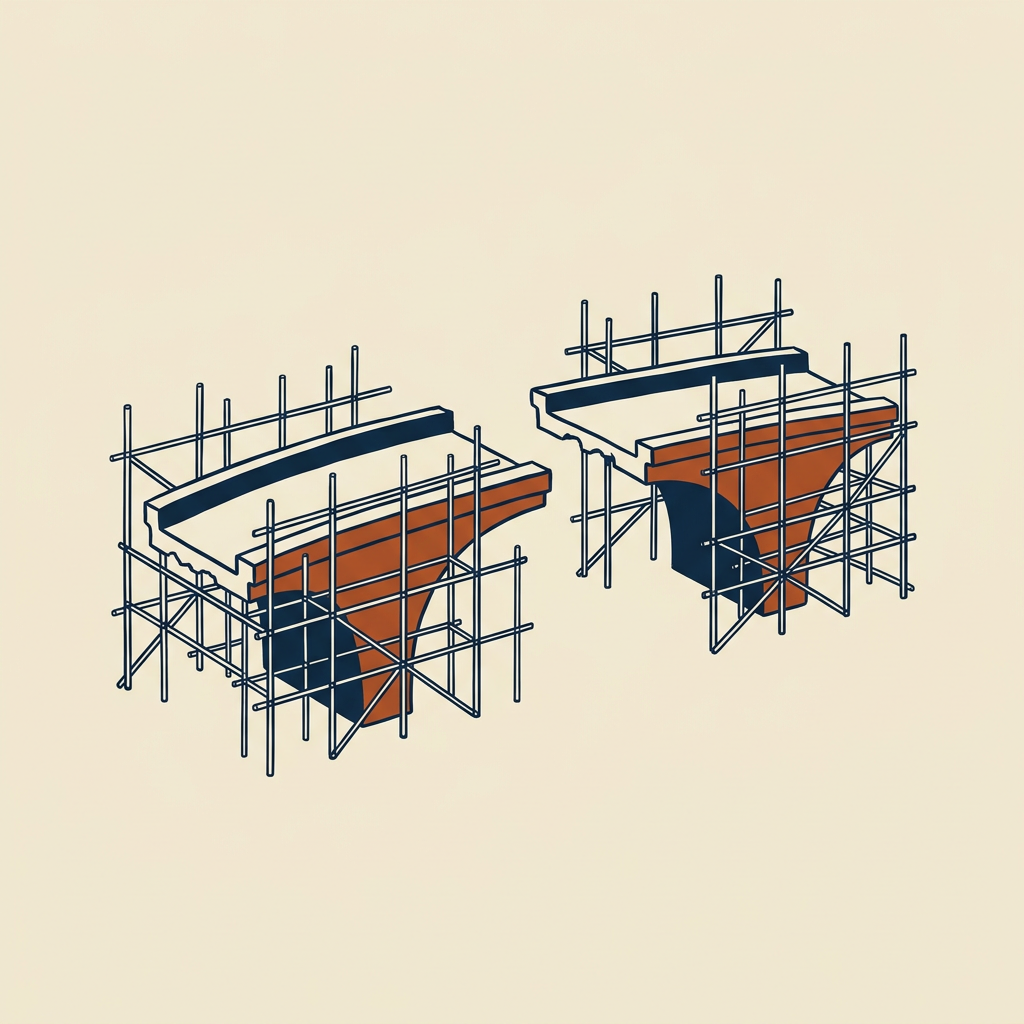
Moving from milliseconds to minutes, Sapolsky turns to his own field of stress endocrinology. Transient bodily states are not background noise; they reshape judgment. Cortisol and adrenaline narrow attention and tilt people toward threat-focused, less generous responses. Room temperature or a full bladder can shift patience and risk tolerance in experiments.
The brain that ‘decides’ is therefore never a neutral organ expressing a pure self. It is already loaded by the last meal, the last argument, the last night’s sleep, and ambient conditions it did not pick and often cannot sense. Once that is granted, a decision as a clean readout of someone’s true values becomes hard to defend—the same values-holding brain yields different outputs under different chemistry.
His baboon fieldwork supplies a parallel: rank-related stress hormone levels predicted aggressive or affiliative moves independent of the ‘personality’ observers thought they knew. The chapter tightens the noose started by the timing studies: if intention does not originate action, and the state feeding the action is set by uncontrolled biology minutes earlier, autonomous choice keeps shrinking.
In practice: Israeli parole-board data from 2011 showed judges granting parole far more often early in the morning or right after a food break than late in a session, a pattern tied to glucose and decision fatigue rather than case merits.
4
Unfinished control hardware
The prefrontal regions that weigh the future and brake impulses do not finish maturing until the mid-twenties, so treating young adult acts as fully chosen rests on an arbitrary line.
Developmental neuroscience extends the chain into the years before any single act. Myelination and synaptic pruning in prefrontal areas involved in impulse control and long-term planning continue into the mid-twenties. That fact already shapes real institutions: the U.S. legal system’s move away from death sentences and mandatory life for juveniles drew on adolescent brain immaturity.
Sapolsky pushes past the usual reform stopping point. If a seventeen-year-old’s unfinished cortex grounds reduced culpability, what principled cut-off spares a twenty-two-year-old whose wiring is also incomplete, or an adult whose cortex was permanently altered by childhood adversity and never reaches an assumed baseline? Prenatal stress hormones, nutrition, and early attachment further sculpt the trajectory—none chosen by the developing person.
By the age society calls someone fully responsible, the capacity for self-control has already been built, unevenly and involuntarily. The boundary between ‘the brain made them do it’ and ‘they chose it’ is, on this view, a legal convenience drawn on a continuous process, not a scientific discovery.
In practice: Roper v. Simmons in 2005 cited adolescent brain immaturity in barring the death penalty for juveniles, a logic Sapolsky extends to later ages and to adults shaped by early adversity.
5
Grit was never earned
Genes and early environment interact so completely that adult differences in temperament and self-control reflect accumulated unchosen luck, not standalone character.
Gene variant alone
Did not predict antisocial behavior
Same variant plus maltreatment
Predicted antisocial behavior
Sapolsky rejects the tidy slogan that genes load the gun and environment pulls the trigger. The two are inseparable. A well-known interaction finding showed a MAOA gene variant predicting antisocial behavior only in people who also met childhood maltreatment; the same variant with a stable upbringing did not. The child chose neither factor.
Epigenetics tightens the point: early stress can chemically alter gene expression, sometimes across generations, as in work on descendants of famine survivors and on rodent maternal care permanently resetting offspring stress reactivity. Neuroimaging has linked childhood poverty and chronic stress to reduced hippocampal and prefrontal volume—structural changes that later look like failures of will.
The self-help story that grit and resilience are earned traits therefore collapses. The capacity for grit is itself a biological outcome distributed by lottery: genes unchosen, childhood uncontrolled. Even the long-term self-control people want to exempt from determinism was assembled from materials and builder capacities no one freely selected.
In practice: Caspi and Moffitt’s 2002 work found a MAOA variant predicted antisocial behavior only when paired with childhood maltreatment, not with the same gene and a stable home.

6
Values installed by history
Culture, economic history, and social structure shape brains over generations, so even the yardstick used to judge a choice was handed down by accidents the person never authored.
At the widest scale, culture functions like slow biology. It sculpts behavior as powerfully as hormones, only over decades and centuries. Cross-cultural work on WEIRD populations shows that basic tendencies—individualism versus collectivism, styles of reasoning—differ by culture and are absorbed early without conscious consent.
Historical trauma, colonization, slavery, and famine leave biological and behavioral traces in descendant populations, linking back to epigenetic findings. Growing up in poverty alters stress physiology into adulthood, shortening time horizons and shifting risk tolerance in ways that read as ‘poor choices’ but track material scarcity and scarcity mindsets documented in behavioral economics.
Sapolsky’s claim is cumulative rather than homogenizing: people are not identical, yet individual variation itself has causal roots all the way down. By the time the chain has run from milliseconds to centuries, he has found no exception. The values used to score a life were weather-like inheritances.
In practice: Scarcity-mindset research associated with Mullainathan and Shafir shows how material scarcity changes decision-making in ways later misread as character failures.
7
Praise falls with blame
Because good outcomes rest on the same unchosen luck as bad ones, credit for virtue is as philosophically confused as blame for vice.
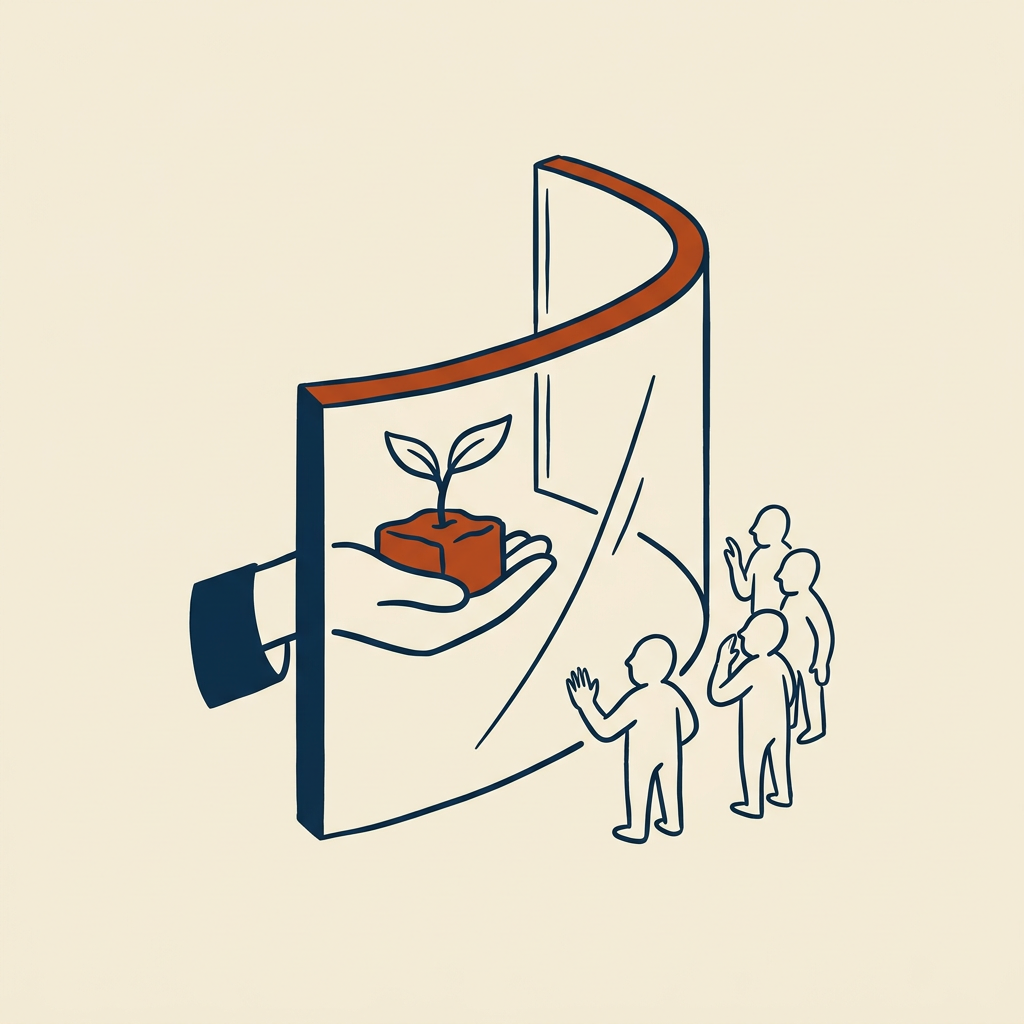
A common dodge treats determinism as a soft brief against punishing criminals while leaving medals and moral applause untouched. Sapolsky refuses the asymmetry. Honesty, discipline, and generosity built from fortunate genes, stable childhoods, mentors, and cultures that rewarded those traits do not ground cosmic credit any more than the reverse grounds cosmic blame.
He imports the philosophers’ idea of moral luck and anchors it in mechanism. Two soldiers facing an unjust order may diverge because of prior models of authority, specific commanders assigned by chance, or earlier biological luck—not because one possesses unmatched inner fiber. The discomfort is acknowledged: war heroes, whistleblowers, and parents who break abuse cycles feel diminished if desert evaporates.
His reply is that we can still value the outcomes and feel grateful without entering them in a desert ledger, the way we value a sunset without praising the sun for effort. The chapter is the book’s hinge: everything established about causes is applied evenly, closing the exit that keeps praise while discarding blame.
In practice: A soldier who refuses an unjust order and one who obeys may differ by prior experience and assignment luck rather than unequal moral fiber.
8
Quarantine, not payback
Dangerous people can still be separated and changed, but once desert has no coherent basis, punishment as deserved suffering loses its justification.
Retributive desert
Make the offender suffer because they deserve it
Quarantine model
Restrain and treat for risk and safety, without moral payback
Sapolsky does not call for empty consequences. Someone who poses serious danger may need to be kept apart, exactly as a carrier of a contagious disease is quarantined—not as moral payback for carrying the pathogen, but to protect others under humane conditions. Forward-looking risk assessment replaces backward-looking desert.
Existing doctrines already nod in this direction without finishing the thought: insanity defenses, diminished capacity, juvenile sentencing reforms. He reads them as inconsistent half-measures. Norway’s rehabilitation-heavy prisons and lower recidivism rates illustrate a system closer to the determinist logic, even if its designers never signed a free-will waiver.
Critics worry that ordinary people need retribution to feel that wrongs are answered and that social cooperation will fray without it. Sapolsky answers that moral frameworks have shifted before—on slavery, on mental illness as illness rather than sin—without collapse, and that the change is institutional and gradual rather than a demand that every person extinguish the private feeling of blame overnight.
In practice: Norway’s prison emphasis on rehabilitation and lower recidivism is offered as closer to a determinist-informed model than retributive systems.

9
Care without a chooser
Motivation and effort are determined biological processes; they keep operating whether or not one believes in libertarian free will, so determinism need not equal nihilism.
- 1Biological driveDopamine, reward learning, social reinforcement generate effort
- 2Action and outcomeWork, care, and restraint still occur
- 3Further reinforcementResults and relationships feed the same circuitry again
↻ and round again
The standard objection is: if nothing is truly chosen, why try, parent, work, or care? Sapolsky answers that the objection assumes belief in free will is the current engine of effort. Effort, instead, runs on dopamine circuitry, learned reward associations, and social reinforcement—none of which require a metaphysically free self.
Lab work that induces disbelief in free will has increased cheating in the short term, a practical risk he takes seriously rather than waves away. The remedy is not to hide the claim, but to build prosocial structures and motives that do not depend on the illusion—much as knowing love involves oxytocin and dopamine does not stop people from valuing love.
He describes his own stretch of feeling flattened after internalizing the view, then finding that caring for family, students, and research could continue once caring itself was seen as a determined state worth having, the way health is worth having though no one freely chooses a metabolism. The chapter is a practical reckoning more than a final proof.
In practice: Vohs and Schooler’s 2008 studies found that prompting disbelief in free will increased cheating in lab tasks—a risk Sapolsky treats as real and solvable with new motives, not secrecy.
Key terms
- Uncaused will The idea that at the moment of choice a self could have done otherwise, independent of prior physical causes—the target Sapolsky aims to demolish.
- Readiness potential Brain activity that builds before a person reports deciding to move, used to argue that awareness lags the neural preparation of action.
- Moral luck The claim that how good or bad we turn out depends on factors we never chose, so both praise and blame lose their desert footing.
- Quarantine model Justified restraint of dangerous people to protect others, without any need to say they deserve to suffer.
- Gene–environment interaction Outcomes that appear only when a specific genetic variant meets a specific early environment—neither factor alone does the work.
- Confabulation Confident after-the-fact stories people tell about why they chose, even when the real causes were hidden from them.
- WEIRD populations Western, Educated, Industrialized, Rich, Democratic groups whose psychology is often mistaken for human universal baseline.
- Scarcity mindset How material want itself changes attention, time horizons, and risk-taking so that later ‘bad choices’ track poverty’s physiology.
What to do
- Replace character labels like lazy or bad with specific prior conditions—sleep, stress, trauma, money pressure—and address those conditions.
- When you want someone to suffer because they ‘deserved it,’ separate that urge from the legitimate need to protect others from harm.
- Before calling a choice a willpower failure, check blood sugar, sleep debt, and time pressure that day.
- Treat your own self-reproach the same way: ask what loaded the brain, not what kind of person you must be.
- Practice valuing good outcomes—in others and yourself—as grateful appreciation without entering them in a cosmic credit ledger.
Questions to think with
- If praise and blame both rest on unchosen luck, what still makes a life admirable or a society worth defending?
- Where, if anywhere, would you still draw a line of criminal responsibility after following the causal chain into the mid-twenties and beyond?
- Can institutions run on quarantine and rehabilitation without ordinary people needing the feeling of retribution?
- Does knowing that effort is determined change how you parent, manage, or judge yourself this week?
- Is compatibilist free will a different and still useful idea, or only a renaming of the capacities Sapolsky already grants?
The other side
The strongest fair criticism is that Sapolsky leaps from ‘behavior has causes’ to ‘no meaningful free will survives,’ while compatibilists such as Dennett argue the free will worth wanting never required uncaused causation—only systems that respond to reasons and whose deliberation changes outcomes. His engagement with that philosophical literature is thinner than his neuroscience, Libet-style pillars face methodological pushback (including work suggesting readiness potentials may be neural noise), and evidence of heavy influence is repeatedly treated as if it already proved exhaustive determination; the reply to nihilism is also more asserted than demonstrated.
Who it's for
Readers of neuroscience and psychology who want the free-will debate grounded in biology rather than thought experiments, plus anyone wrestling with blame and punishment in law, parenting, or self-judgment, and readers of compatibilist philosophy looking for a hard-determinist rebuttal from a working scientist.