




Fungi force us to rethink what an organism even is
Sheldrake argues fungi are active networked organizers whose partnerships dissolve the boundaries we draw between individual and colony, plant and soil, mind and matter.
IJR · Oct 22, 2026 · 10 min read
In 60 seconds
- Fungi are their own kingdom: mostly shapeless mycelium with no fixed body boundary, closer to animals in glycogen and chitin than to plants.
- Roughly 90 percent of plants still depend on mycorrhizal partnerships that made land livable about 450 million years ago.
- Shared fungal networks can move carbon between trees, but claims of deliberate tree talk outstrip what isotope studies show.
- Lichens—and by extension human bodies—are multi-species committees, not single individuals.
- Civilization’s bread, beer, wine, and soy foods rest on domesticated fungal metabolism, from yeast to koji.
- Mycelium solves resource problems without brains; psilocybin can restructure human cognition; plastic-eating fungi remain mostly lab-scale.
The big idea
Sheldrake argues that fungi are not passive decomposers at life’s margins but active, intelligent-seeming organizers of nearly every terrestrial ecosystem. Through mycelial networks, lichen partnerships, fermentation, and psychedelic chemistry, they dismantle the assumptions that individuals have clear boundaries and that cognition requires a brain.
The book in brief
Sheldrake opens by stripping away the habit of treating fungi as plant-like. A fungus is mostly invisible mycelium—a branching, boundary-less network that absorbs by contact and constantly rebuilds itself—so animal-centric ideas of body and individual have to go before later claims can land.
He then roots the living world in an ancient bargain: early land plants lacked true roots and partnered with fungi to mine minerals for sugars, a mycorrhizal deal that still underwrites most plant life. From there the book follows those same underground links into forests, where networks move resources between trees, while carefully separating proven carbon flow from headlines about intentional communication.
Lichens push the individuality problem harder. What looks like one crusty organism is a stable committee of fungus, algae or bacteria, and sometimes extra yeasts, surviving places none could alone. The same composite logic turns up in kitchens and cellars, where humans have long domesticated yeasts and molds so their metabolic byproducts become our bread, beer, and soy traditions.
Mycelial networks then become a working model of brainless problem-solving—finding paths, reallocating nutrients—before the book turns the cognitive question onto us via psilocybin’s effects on perception and default brain networks. It closes on radical mycology’s bid to harness fungal enzymes for pollution and materials, honest that lab promise still outruns scaled proof.
Context
Merlin Sheldrake’s 2020 book arrived as popular science was already rethinking plant and animal cognition, and gave fungi the same agent-centered treatment. It mattered because it used organisms most readers never considered agents at all to force a rethink of biological individuality and mind.
The key ideas
1
A body without edges
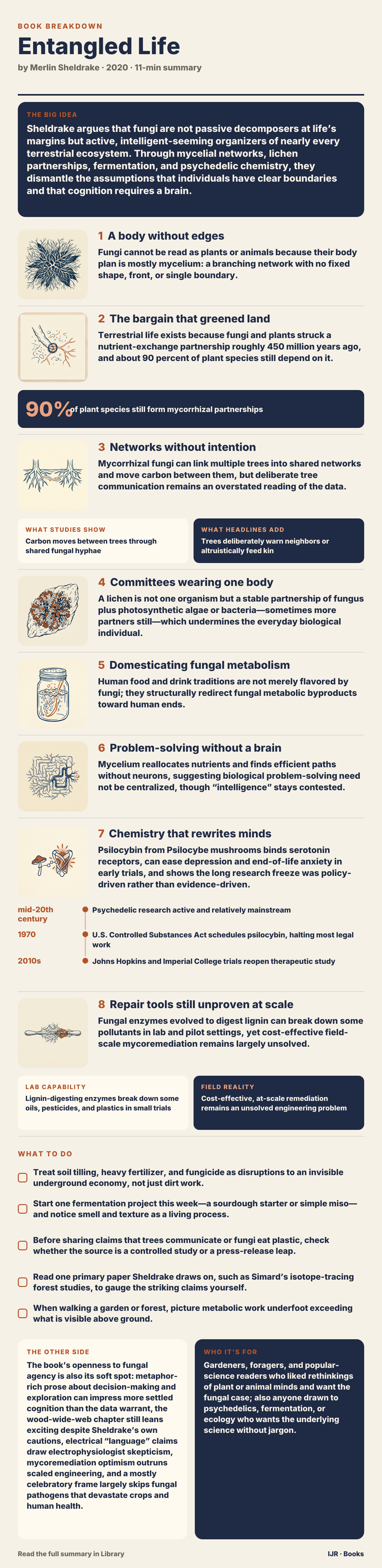
Fungi cannot be read as plants or animals because their body plan is mostly mycelium: a branching network with no fixed shape, front, or single boundary.
Sheldrake dismantles the folk habit of lumping fungi with plants. They are their own kingdom, closer to animals in storing energy as glycogen and building cell walls from chitin, yet unlike either in form.
What we call a mushroom is only a temporary fruiting body. The real organism is hyphae growing through soil or wood, absorbing nutrients by direct contact, extending toward resources and dissolving unused parts.
Biology’s usual words—individual, body, behavior—were built from vertebrate experience and fit this poorly. Until that vocabulary is unsettled, later claims about networks, symbiosis, and cognition will not make sense.
In practice: A single Armillaria honey-fungus network found in Oregon spans several square miles and is estimated at thousands of years old, yet stays invisible to a hiker walking over it.
2
The bargain that greened land
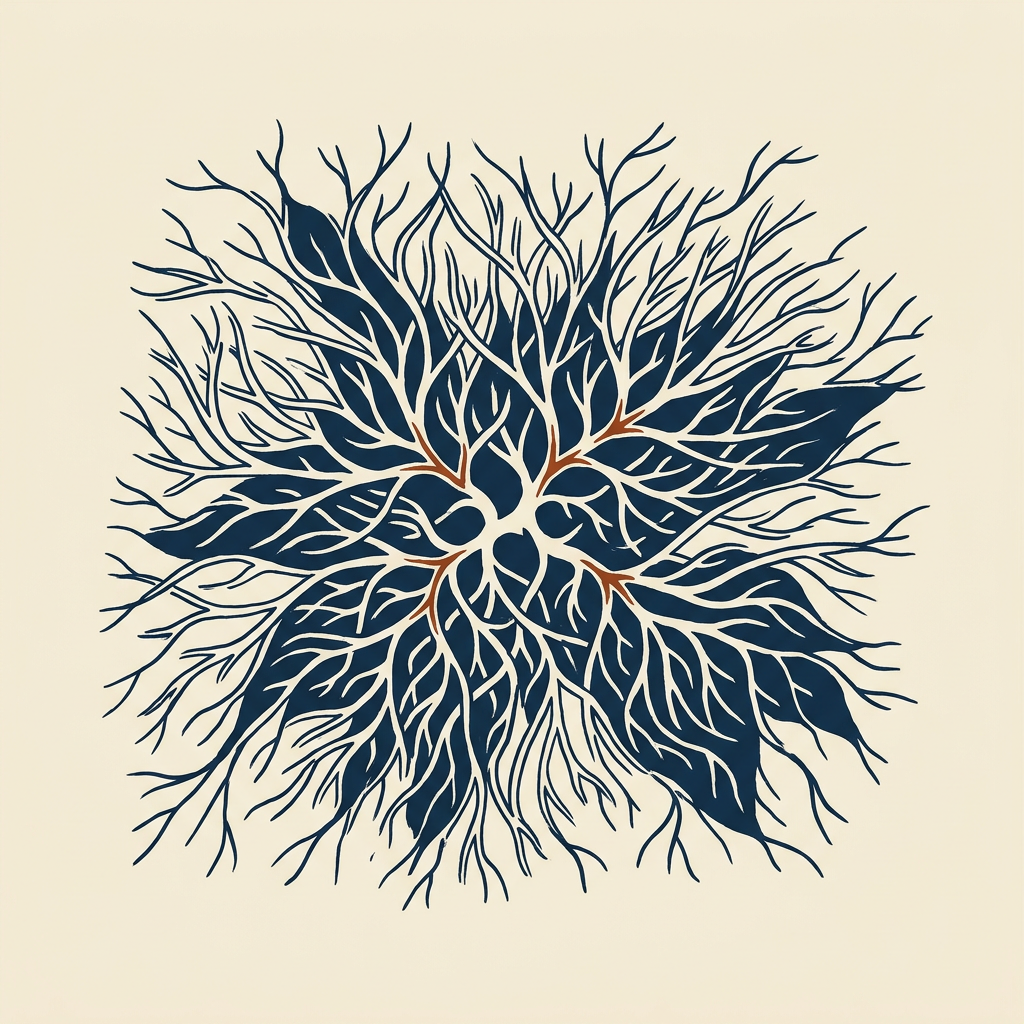
Terrestrial life exists because fungi and plants struck a nutrient-exchange partnership roughly 450 million years ago, and about 90 percent of plant species still depend on it.
90%
of plant species still form mycorrhizal partnerships
Before plants could live on land they faced a bind: sunlight and air enable photosynthesis, but phosphorus and other minerals stay locked in rock. Early plants lacked true roots.
Fossil and molecular evidence points to fungal partners mining those minerals in exchange for plant sugars. The intimacy is physical: arbuscular mycorrhizal fungi enter root cells and form branched arbuscules where exchange crosses membranes directly.
Isotope-labeled carbon and phosphorus experiments show measurable two-way trade, not one-sided parasitism. Plants did not conquer land alone; the partnership was a precondition, which later reframes agriculture that ignores or destroys it.
In practice: Radioactive and isotope tracers reveal carbon and phosphorus moving both ways between plant and fungal partners rather than only one direction.
3
Networks without intention
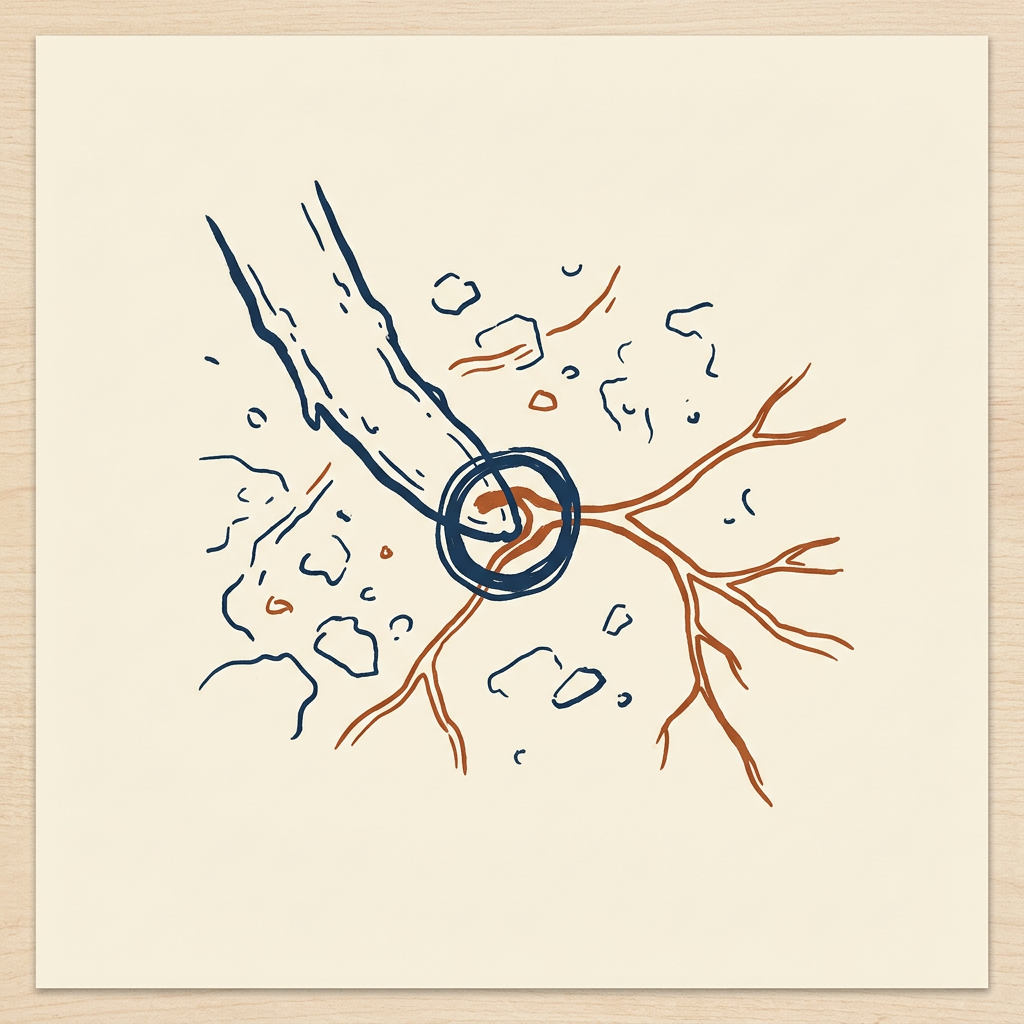
Mycorrhizal fungi can link multiple trees into shared networks and move carbon between them, but deliberate tree communication remains an overstated reading of the data.
What studies show
Carbon moves between trees through shared fungal hyphae
What headlines add
Trees deliberately warn neighbors or altruistically feed kin
Building on the root partnership, Sheldrake turns to work such as Suzanne Simard’s in Canadian forests: one fungal network can physically connect roots of different trees and even different species.
Isotope-tracing finds carbon moving from a labeled donor tree through hyphae into neighbors. That connectivity is real. What does not automatically follow is intentional warning signals or altruistic feeding of offspring—the framings that made headlines.
Fungi are not neutral wires. A network has its own need for carbon and may shift resources for its own metabolism, with trees as secondary beneficiaries or even exploited parties. The chapter trains readers to separate network existence from network intention.
In practice: Douglas fir seedlings received more carbon when shaded, detected via isotope labeling, yet that transfer alone does not prove trees are talking.
4
Committees wearing one body
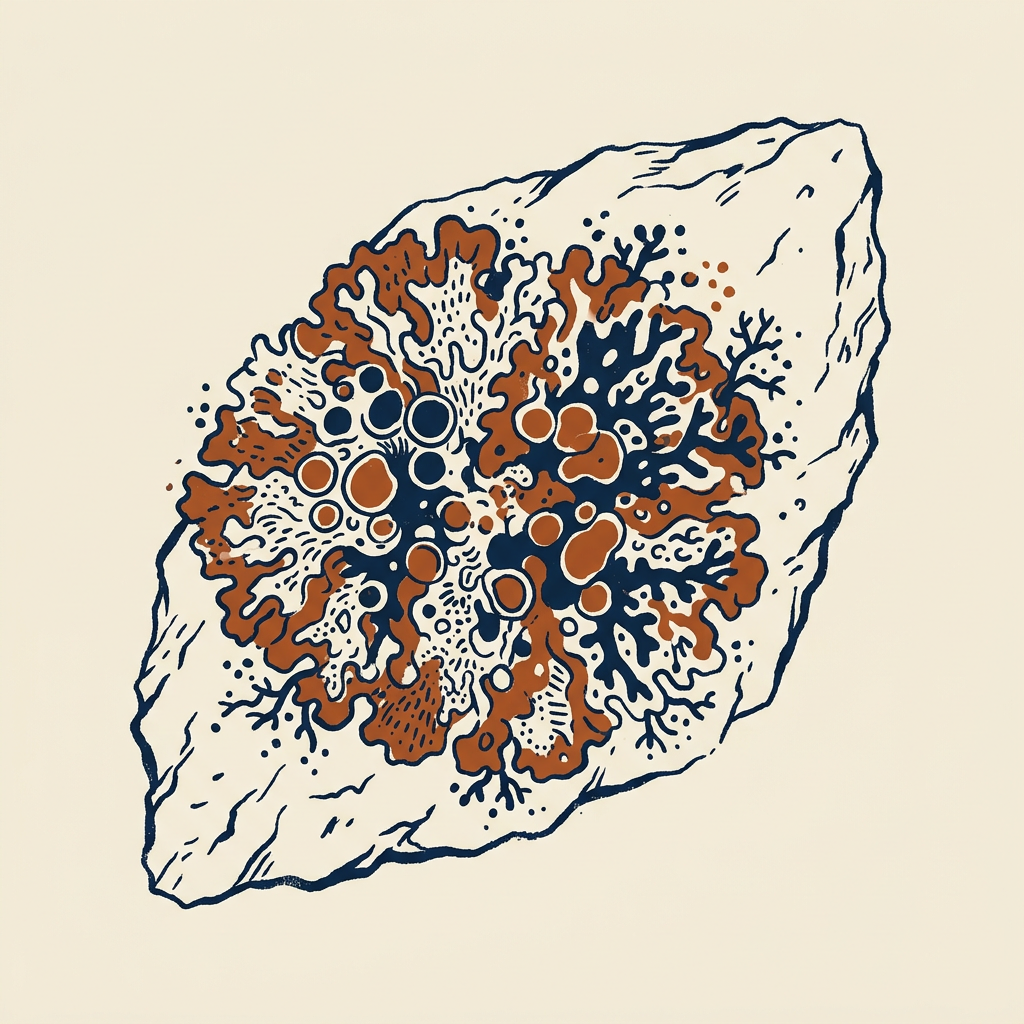
A lichen is not one organism but a stable partnership of fungus plus photosynthetic algae or bacteria—sometimes more partners still—which undermines the everyday biological individual.
Lichens on rock and bark were long treated as single species until Simon Schwendener argued they were dual, an idea first ridiculed as demeaning to the fungus.
Modern DNA work, including Toby Spribille’s, shows many lichens are more composite still: multiple fungi, yeasts, and bacteria in one body. The fungus supplies structure and protection; the photosynthetic partner supplies sugars; together they endure bare rock, arctic tundra, and volcanic surfaces neither could alone.
If a unit that reproduces and behaves as one is provably several species, “individual” is a convenience label. Sheldrake makes the parallel explicit: human bodies likewise carry bacterial and fungal communities essential to digestion and immunity.
In practice: Some lichens long thought to be one fungus plus one alga contain a second, overlooked fungal species required for the lichen’s form.
5
Domesticating fungal metabolism
Human food and drink traditions are not merely flavored by fungi; they structurally redirect fungal metabolic byproducts toward human ends.
Yeasts are single-celled fungi that turn sugars into alcohol and carbon dioxide for their own survival. Humans spent millennia steering that chemistry into bread, beer, wine, and spirits.
Saccharomyces cerevisiae shows genetic marks of domestication distinct from wild ancestors, selection comparable in principle to dogs from wolves. Koji—Aspergillus oryzae—plays the parallel role in soy sauce, miso, and sake.
Sheldrake frames fermentation as symbiosis run in reverse of wild mycorrhizae: instead of co-evolving in forests, humans engineered co-evolution with fungi so thoroughly it shaped agriculture, trade, and cuisine, often unnoticed.
In practice: Sheldrake’s own hands-on work with radical fermentation practitioners produced novel foods from fungal cultures beyond the familiar staples.
6
Problem-solving without a brain
Mycelium reallocates nutrients and finds efficient paths without neurons, suggesting biological problem-solving need not be centralized, though “intelligence” stays contested.
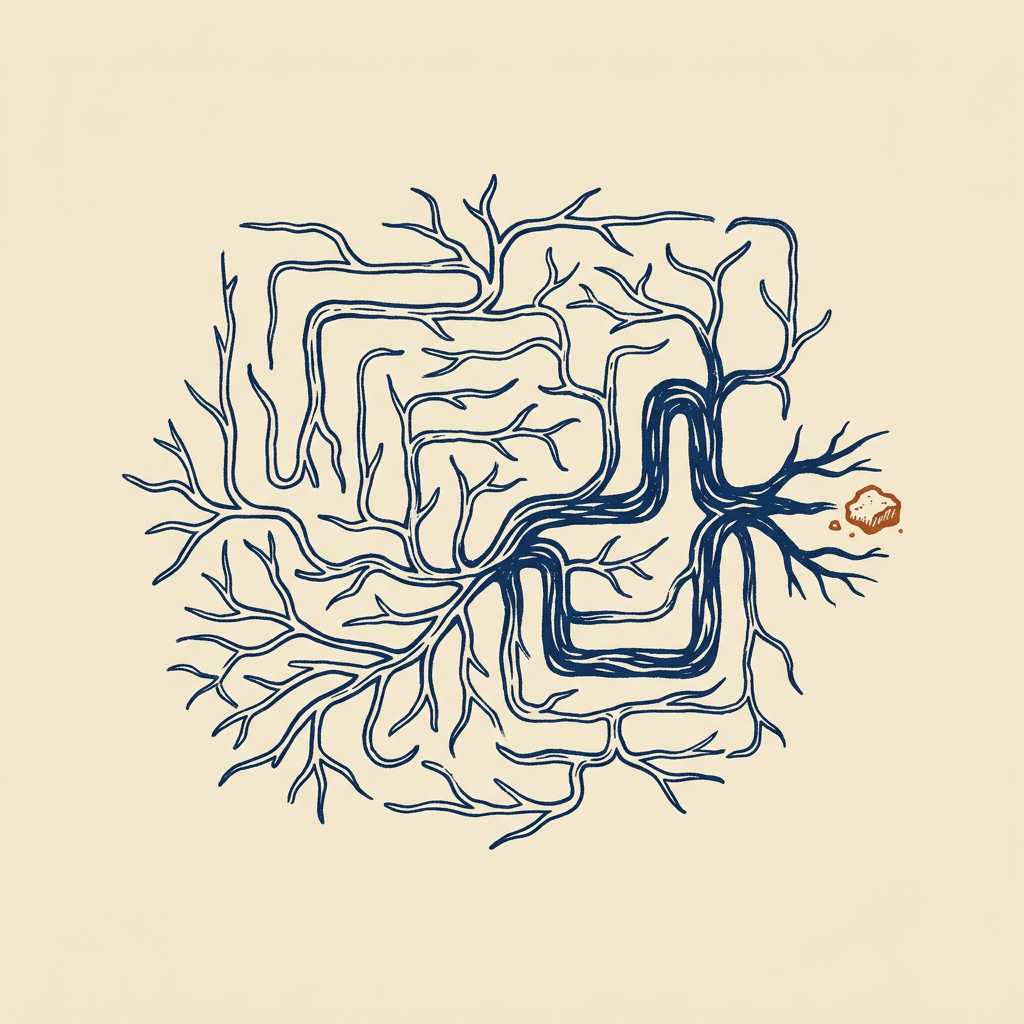
Networks grown in mazes locate food sources efficiently. Sheldrake also reports slime-mold work—structurally analogous brainless networks—such as Physarum polycephalum approximating the Tokyo rail layout when food sat at station sites, from Toshiyuki Nakagaki’s group.
True fungi redistribute resources toward new patches and away from depleted ones, behavior that looks like decision-making without any central nervous system. Controversial electrical spiking in hyphae is noted, with scientists split on whether it resembles communication or mere physiological gradients.
The demonstrated fact is efficient reallocation under changing conditions. The contested leap is memory, decision, or intelligence in any strong sense. Biologists and distributed-algorithm researchers have begun treating mycelium as a real-world model anyway.
In practice: In one well-known setup, a slime mold rebuilt a simplified Tokyo rail pattern when food sources marked the stations.
7
Chemistry that rewrites minds
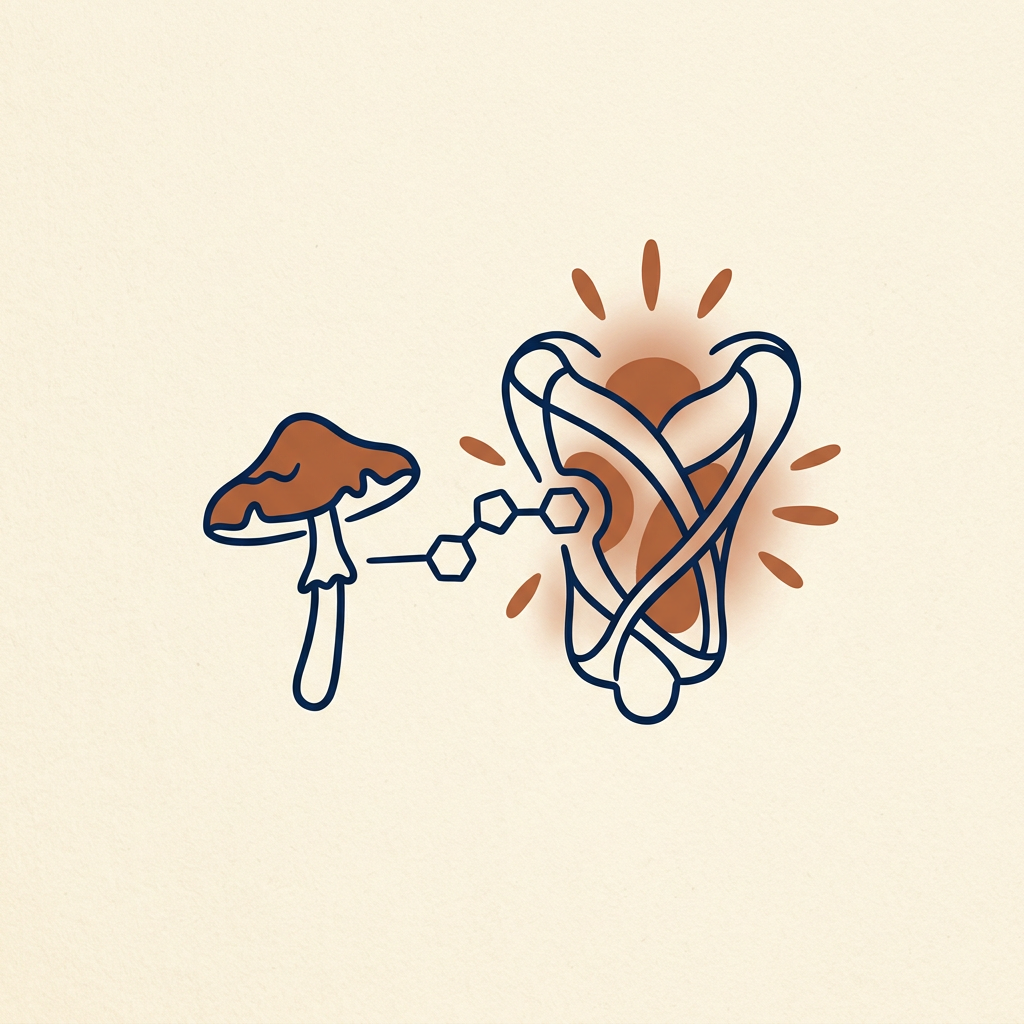
Psilocybin from Psilocybe mushrooms binds serotonin receptors, can ease depression and end-of-life anxiety in early trials, and shows the long research freeze was policy-driven rather than evidence-driven.
- mid-20th centuryPsychedelic research active and relatively mainstream
- 1970U.S. Controlled Substances Act schedules psilocybin, halting most legal work
- 2010sJohns Hopkins and Imperial College trials reopen therapeutic study
The compound binds especially at the 5-HT2A receptor, altering perception, mood, and sense of self. Neuroimaging links effects to reduced activity in the brain’s default mode network.
Trials tied to Johns Hopkins and Imperial College London in the 2010s tested psilocybin-assisted therapy for treatment-resistant depression and terminal-cancer anxiety; several reported lasting symptom drops after few doses, though samples were often only dozens and larger replication was still underway when the book appeared.
Active mid-century research largely stopped after the 1970 U.S. Controlled Substances Act placed psilocybin in Schedule I, despite comparatively low physiological toxicity. Why mushrooms make a vertebrate-brain chemical at all—defense or other hypotheses—remains unproven. Fungi thereby claim a place not only in ecosystems but in the architecture of human experience.
In practice: Early clinical work reported significant symptom reduction for months after limited dosing sessions in depression and end-of-life anxiety studies.
8
Repair tools still unproven at scale
Fungal enzymes evolved to digest lignin can break down some pollutants in lab and pilot settings, yet cost-effective field-scale mycoremediation remains largely unsolved.
Lab capability
Lignin-digesting enzymes break down some oils, pesticides, and plastics in small trials
Field reality
Cost-effective, at-scale remediation remains an unsolved engineering problem
Oyster mushrooms and other wood-decay fungi release extracellular enzymes tough enough for lignin; the same chemistry has degraded some petroleum hydrocarbons, pesticides, and plastics in small trials.
Sheldrake profiles DIY radical mycology inspired by figures such as Paul Stamets, who has promoted applications from pesticide alternatives to oil-spill trials. Headline claims of fungi simply “eating” spills or plastic mostly trace to petri-dish or pilot demos.
Mycelium grown into molds as biodegradable packaging substitutes is further along commercially than pollutant cleanup, yet still niche. Enthusiasm for ecological repair currently runs ahead of rigorous engineering at scale.
In practice: Lab and small pilot work shows certain fungi attacking petroleum hydrocarbons and some plastics, without yet yielding deployed industrial solutions.
Key terms
- mycelium The main fungal body: a branching network of thread-like hyphae, usually hidden in soil or wood.
- hyphae The individual filaments that make up mycelium and absorb nutrients by direct contact.
- mycorrhizal association The nutrient-trade partnership between fungi and plant roots (fungus gets sugars; plant gets minerals).
- arbuscules Branched structures formed inside root cells where plant and fungus exchange nutrients across membranes.
- lichen A stable composite of fungus plus photosynthetic algae or bacteria (often with extra microbial partners) living as one body.
- wood wide web Popular name for shared mycorrhizal networks linking multiple trees; connectivity is real, intentional communication is debated.
- psilocybin The psychoactive compound in Psilocybe and related mushrooms that binds serotonin receptors and can alter perception and self-sense.
- mycoremediation Using fungi’s pollutant-breaking enzymes to clean soils or wastes—promising in labs, largely unproven at industrial scale.
- koji Aspergillus oryzae, the domesticated mold behind soy sauce, miso, and sake.
What to do
- Treat soil tilling, heavy fertilizer, and fungicide as disruptions to an invisible underground economy, not just dirt work.
- Start one fermentation project this week—a sourdough starter or simple miso—and notice smell and texture as a living process.
- Before sharing claims that trees communicate or fungi eat plastic, check whether the source is a controlled study or a press-release leap.
- Read one primary paper Sheldrake draws on, such as Simard’s isotope-tracing forest studies, to gauge the striking claims yourself.
- When walking a garden or forest, picture metabolic work underfoot exceeding what is visible above ground.
Questions to think with
- If a lichen or a human microbiome functions as a unit made of many species, what work is the word “individual” still doing?
- Where should we draw the line between efficient resource reallocation in mycelium and anything worth calling intelligence?
- How should forestry and farming change if most plants are composite partnerships rather than solo organisms?
- What would count as decisive evidence that trees use fungal networks to communicate on purpose?
- Should policy treat psilocybin’s low physiological toxicity and early therapeutic signals as reason to ease research barriers further?
The other side
The book’s openness to fungal agency is also its soft spot: metaphor-rich prose about decision-making and exploration can impress more settled cognition than the data warrant, the wood-wide-web chapter still leans exciting despite Sheldrake’s own cautions, electrical “language” claims draw electrophysiologist skepticism, mycoremediation optimism outruns scaled engineering, and a mostly celebratory frame largely skips fungal pathogens that devastate crops and human health.
Who it's for
Gardeners, foragers, and popular-science readers who liked rethinkings of plant or animal minds and want the fungal case; also anyone drawn to psychedelics, fermentation, or ecology who wants the underlying science without jargon.