




Exercise is unnatural, and that is why it works
Lieberman argues humans evolved to rest whenever survival allowed, so voluntary workouts fight instincts modern ease never switched off.
IJR · Oct 21, 2026 · 12 min read
In 60 seconds
- Exercise—moving only for health—is a modern invention; ancestors moved for food, carrying, and safety, then rested.
- Hadza adults do roughly two hours of moderate-to-vigorous activity daily, rest a lot, and do not live in a nonstop ancestral gym.
- Sitting is not the new smoking; unbroken inactivity and low daily exertion matter more than chair hours alone.
- Humans evolved endurance gear yet are weaker pound-for-pound than chimps, so unused muscle declines fast with age.
- Workouts help mainly through myokines and hormesis—controlled repeated stress—not simple calorie burn.
- Willpower fails against an unconscious drive to conserve energy; social habits and environment beat education.
The big idea
Lieberman argues exercise is a cultural invention fighting instincts shaped to treat unnecessary exertion as waste, because industrial life removed survival movement while leaving the urge to rest intact. Bodies still need regular moderate aerobic work plus strength training, which is why deliberate activity prevents disease and why sticking with it feels so hard.
The book in brief
Lieberman starts from a plain oddity: no other species spends energy it does not need, yet people pay to run and lift for no practical payoff. He treats that as a mismatch, not a character flaw. For almost all of human history, daily subsistence forced walking, digging, carrying, and occasional pursuit; there was no separate box labeled exercise, and selection favored resting whenever safety and calories allowed.
He then replaces folklore about ancestral super-athletes with measured foraging life and comparative physiology. Real hunter-gatherer days look mixed and moderate, full of rest as well as work, and wildly different by place and season. That undercuts both the excuse that any modern movement is unnatural and the marketing fantasy of one rediscovered paleo routine.
From there the argument tests viral health slogans and turns to hard anatomy. Sitting panic gets separated from true inactivity. Walking and endurance running map onto specific evolved structures. Relative human weakness gets explained as a trade for stamina, with a sharp cost if strength is ignored later in life.
Mechanisms come next: how muscle work signals the body, tamps chronic inflammation, and lowers risk for major diseases without reducing to calorie arithmetic. He asks why adherence still collapses, and answers with automatic energy-saving psychology plus environments built for zero effort.
The arc lands on modest practice rather than an optimal ancestral script. Regular movement, some resistance work, enjoyment, and design beat perfectionism and guilt. Exercise is hard because it is unnatural—and useful for the same reason.
Context
Lieberman is a Harvard evolutionary biologist and biomechanist drawing on Hadza fieldwork and decades of physiology research. The 2020 book entered a market thick with conflicting advice on sitting, running, strength, and calories, offering a mismatch frame instead of moral scolding or paleo costume.
The key ideas
1
The exercise paradox
Exercise is voluntary movement for health alone—a cultural invention with no deep evolutionary precedent.
Ancestral default
Move for food, safety, and loads; rest whenever possible
Modern invention
Expend energy on purpose because daily life no longer requires it
Lieberman opens on a simple oddity. No other species spends energy it does not need to spend. People still pay to run on treadmills and lift weights with no survival payoff.
He argues this does not mean humans are broken. Walking to food, digging tubers, carrying children and firewood, and chasing game once supplied enough movement that no separate category called exercise was required.
Natural selection built bodies that treat extra exertion as wasteful and risky. Rest won whenever tasks allowed. Industrial life stripped the old demands and left the conservation instinct standing.
People must now choose on purpose what circumstance once forced. He rejects both the myth of ancestral nonstop training and the scolding tale that sedentary life is pure willpower failure, and he uses mismatch as the lens for every later claim.
In practice: Paying for a treadmill run that accomplishes no foraging, carrying, or escape task captures the invention he names.
2
What foragers actually do
Hadza adults average roughly two hours of moderate-to-vigorous activity a day, rest between bursts, and are not a nonstop CrossFit template.
~2 hrs
Hadza moderate-to-vigorous activity daily
Lieberman turns to the Hadza of Tanzania to replace guesswork with measurement. Movement devices and doubly labeled water tracked activity and total daily energy use.
Work with Herman Pontzer and others found more moderate-to-vigorous movement than typical Western days, yet far less than fitness folklore claims. Long sits and squats fill the gaps between tasks.
Once body size is matched, Hadza total daily energy expenditure is not dramatically higher than that of sedentary Americans and Europeans. Pontzer’s constrained total energy expenditure model suggests the body may offset activity by spending less elsewhere.
Lieberman refuses to overread one population. Short-term exercise trials elsewhere do raise expenditure. The durable point is methodological: real foraging movement is varied, task-driven, and mixed with rest, not a prescription for marketed intensity.
In practice: Hadza days interleave digging, walking, and carrying with hours of sitting or squatting rather than filling a single training block.
3
No paleo master routine
Foraging movement followed habitat, season, and food needs, so no single ancestral workout exists to copy.
Lieberman attacks the claim that a rediscoverable caveman program is hiding in prehistory. Foraging groups differed enormously by place and season.
One day could be a long easy walk. Another could be a short hard burst—digging a burrow or sprinting after wounded prey. Sets, reps, and training cycles did not exist because movement was a byproduct of staying fed and alive.
He faults fitness and diet brands that borrow scientific authority from how “cavemen” supposedly trained. Those stories cherry-pick convenient details and skip diversity and unpredictability.
Persistence hunting—running prey to heat exhaustion—illustrates the caution. He finds endurance anatomy compelling, yet notes direct observations in modern foragers are rare and some anthropologists dispute how central the practice ever was. Evolutionary health talk, he argues, owes the same evidence standards as any other claim.
In practice: A subsistence day might mean miles of easy walking or one frantic dig and sprint, never a planned interval session.
4
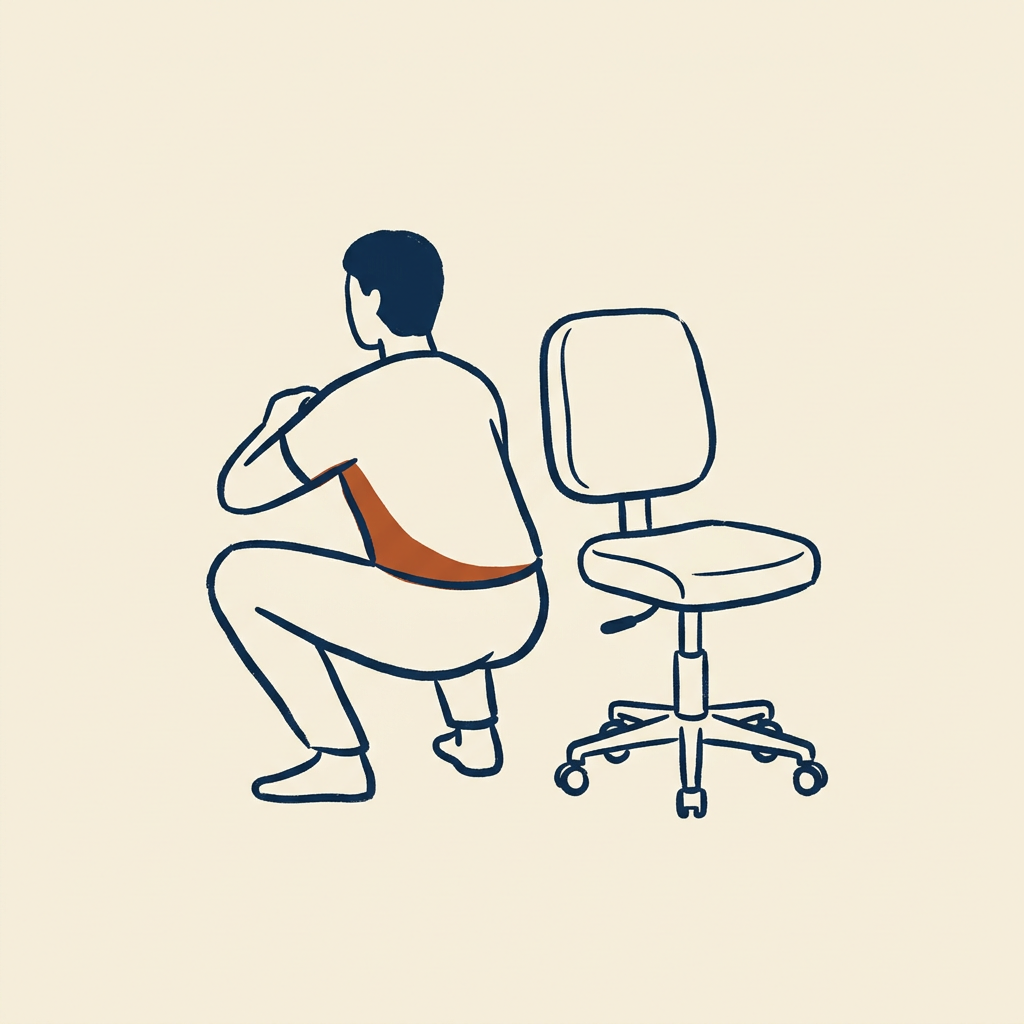
Sitting is not the new smoking
Sitting posture is not inherently toxic; harm tracks long stretches without muscular work and low total daily exertion.
Alarmist slogan
Sitting hours themselves rival smoking-level harm
Lieberman’s cut
Risk follows unbroken inactivity and low daily exertion, not chairs alone
Lieberman dismantles the slogan that sitting equals smoking. Hunter-gatherers sit or squat for many hours—sometimes more cumulative rest than office workers—without matching Western rates of cardiovascular and metabolic disease.
What surrounds the rest differs. Movement breaks the day, deep squats keep muscles mildly alive, and overall activity and diet diverge from sedentary industrial patterns.
He splits sitting as a posture from physical inactivity as unbroken hours without engagement, disrupted metabolism, and little movement across the whole day. Brief breaks that improve blood glucose and triglycerides support pattern over raw chair totals.
Chairs are not harmless to ignore. Panic about furniture still distracts from total activity and regular real exertion. Eight hours of sitting plus a brisk forty-minute walk and periodic movement is not the same state as eight hours with nothing else.
In practice: A forager’s long rest still includes squatting postures and chores that keep muscle lightly switched on between sits.
5
Built for distance
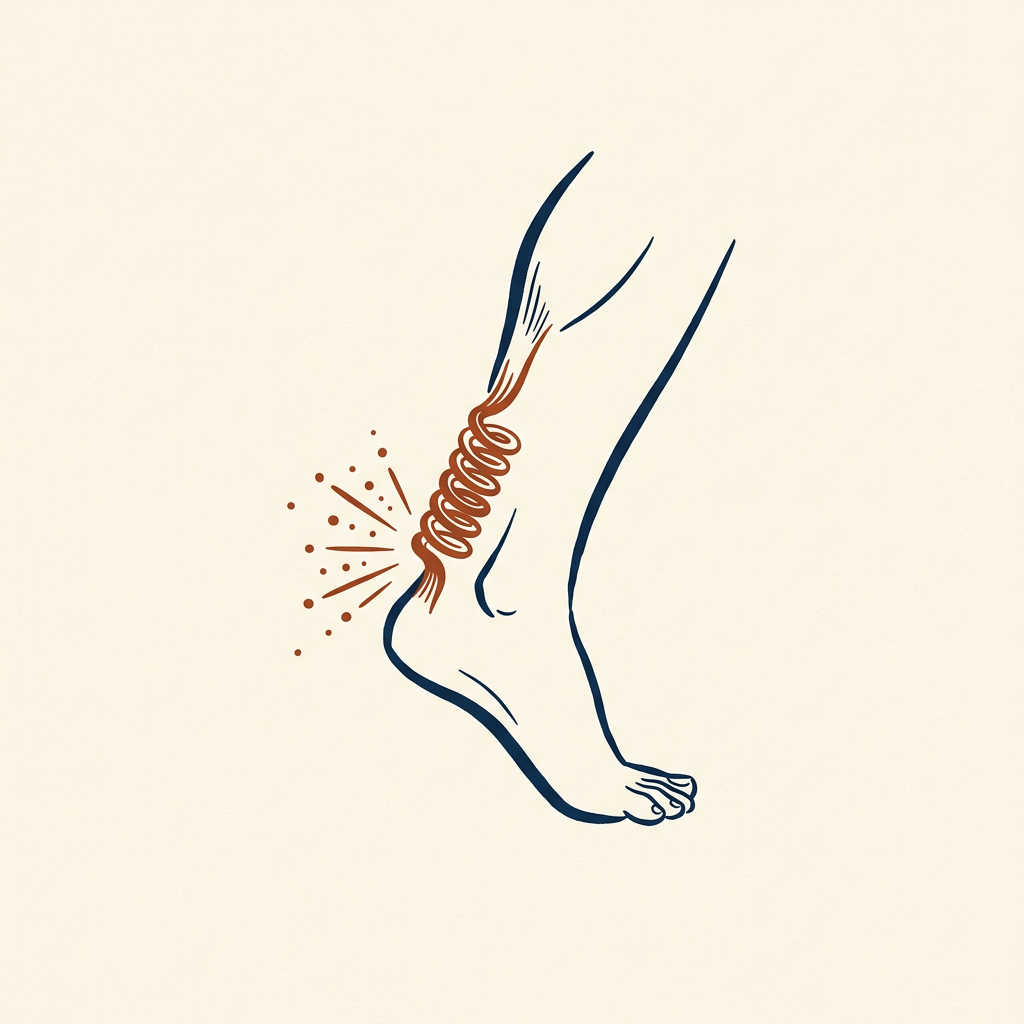
Human traits—a springy Achilles, large gluteus maximus, nuchal ligament, and roughly five million sweat glands—evolved for sustained walking and endurance running.
Lieberman shifts into biomechanics, his own specialty. He catalogs parts suited to long locomotion: a long springy Achilles that stores and returns elastic energy; an enlarged gluteus maximus that steadies the trunk on running strides; a nuchal ligament at the back of the skull present in humans and other running animals, absent in chimpanzees.
Roughly five million sweat glands let humans dump heat without the panting stops that halt many four-legged hunters.
He argues these paid off for efficient distance travel to food and for scavenging or hunting in heat while other predators rested. That anatomy underwrites the endurance-running story even when ethnographic frequency stays debated.
Walking and moderate steady aerobic work are therefore not arbitrary modern fads. They switch on hardware legs and lungs were shaped to use, which helps explain why walking programs show dependable benefits across many groups.
In practice: Heat-ready sweating lets humans keep moving while panting predators are forced to quit.
6
The strength trade-off
Chimpanzees produce roughly one and a half to two times more force per muscle mass; humans traded peak power for economy, so neglected strength ages badly.
Lieberman compares species on strength. Lab tests show chimpanzees generating roughly one and a half to two times more force per unit of muscle mass.
High-force fibers are metabolically expensive. Selection appears to have pushed human muscle toward stamina and efficiency useful for distance, tools, and cooperation rather than raw dominance.
The bill arrives with age. Sarcopenia—the progressive loss of muscle mass and strength—matters because muscle stores metabolism and strength predicts falls and mortality in older adults. Without resistance work, loss runs roughly three to eight percent per decade after midlife from an already modest baseline.
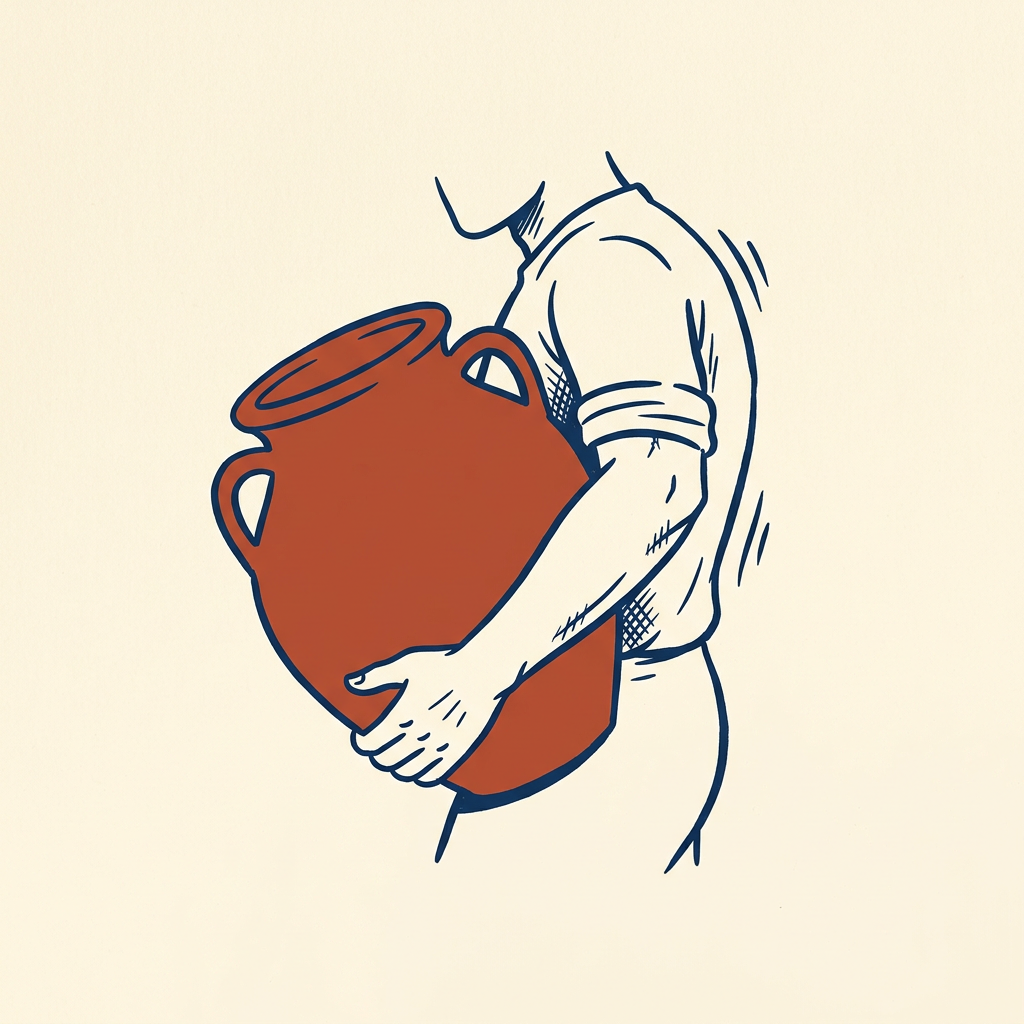
He argues strength training deserves equal public-health billing with cardio. Ancestral load-bearing—children, water, firewood—still supplied stimulus without gym theater. Ignoring strength leaves an evolved vulnerability unopposed.
In practice: Carrying children, water, and firewood once loaded muscle through ordinary chores rather than isolated machines.
7
Stress that heals
Exercise protects chiefly by myokine signals and hormesis—repeated mild stress that upgrades regulation—not by calorie arithmetic alone.
Lieberman surveys biology and rejects a thin calories-in-calories-out story. Working muscle releases myokines, including interleukin-6. As an illness marker it can flag inflammation; in exercise it acts anti-inflammatory and aids insulin sensitivity and glucose uptake.
Hormesis is the partner idea: mild repeated cellular stress prompts repair and antioxidant systems, leaving tissue tougher afterward, akin to how controlled exposure trains immunity.
Regular moderate activity links to lower rates of type 2 diabetes, colon and breast cancers, cardiovascular disease, and depression, with cohort effect sizes often matching or beating common medications. He admits epidemiology cannot fully erase confounding, yet points to trials that improve insulin sensitivity within weeks.
Chronic low-grade inflammation in sedentary, overfed bodies—sometimes called inflammaging—sits near the center of his account. Activity is one of the few reliable checks on it, which lets him bridge anthropology to medical advice without vague wellness talk.
In practice: Controlled exercise trials that raise insulin sensitivity within weeks supply causal weight beyond lifestyle correlation.
8
Why sticking with it fails
Energy-conservation instincts run mostly below awareness, so adherence is an environment and habit problem, not a shortage of facts or grit.
If benefits are real, why do routines die? Lieberman answers with the book’s premise. The urge to skip unneeded effort is ancient and largely automatic.
People unconsciously drift toward the least physical effort even while trying to be active. Willpower programs fade over months because they fight a standing evolutionary current instead of steering it.
Campaigns that only preach benefits misdiagnose the patient. Most people already know movement helps and still do not keep it up. Tactics that work better use the same psychology: make activity social and enjoyable, attach concrete goals or light competition, and fold movement into defaults so effortful choice is not required every time.
Cars, elevators, remotes, and delivery erase incidental motion that once filled days without intention. Quitting is the expected output of old instincts inside a convenience machine. He gestures at planning, workplaces, and policy without fully building the fixes.
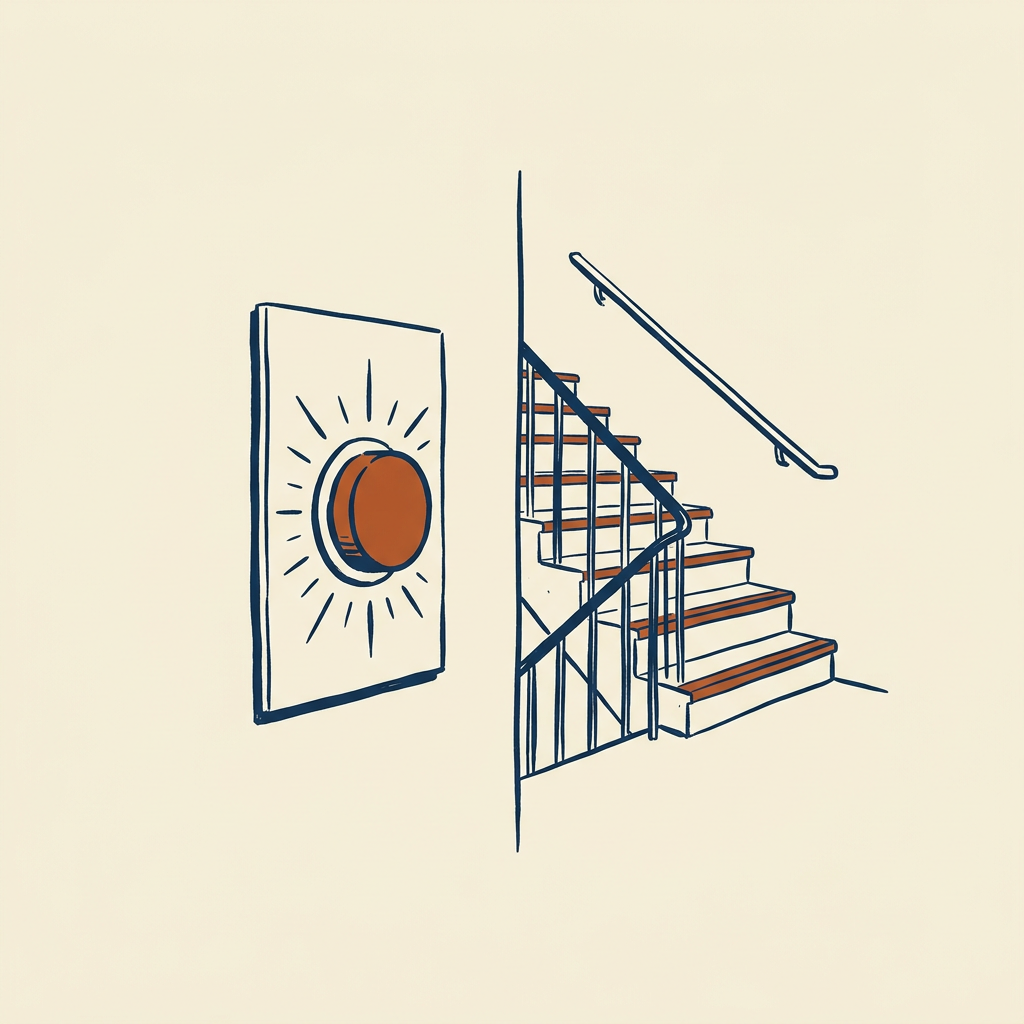
In practice: Even a motivated person still reaches for the elevator button and the closer parking space without deliberating.
9
Dose without dogma
Steepest gains come leaving sedentary life for modest activity—about 150 moderate or 75 vigorous aerobic minutes weekly plus at least two strength sessions—with weaker returns at extremes.
Aerobic weekly anchors he reviews
Lieberman’s practical chapter reviews dosage rather than crowning one perfect plan. Cohort work behind World Health Organization guidance clusters near roughly 150 minutes of moderate or 75 minutes of vigorous aerobic activity per week.
The biggest health jump appears at the first move out of full inactivity. Benefits flatten higher up, and some very high endurance loads show elevated cardiac-stress markers in a subset of long-distance runners.
Resistance evidence supports at least two weekly sessions for major muscle groups, with better muscle, bone, and metabolic health in older adults who train. He refuses a single formula. Consistency and enjoyment outrank precision because an ideal routine quit after three weeks produces nothing.
Hadza-style frequent moderate movement, real rest, and functional carrying roughly echo those numbers. He calls the overlap a useful coincidence, not proof, and closes on unglamorous advice: move regularly, add strength, stop hunting a mythical ancestral script.
In practice: Public guidance near 150 moderate minutes and two strength sessions lands close to mixed foraging demands without copying any tribe’s week.
Key terms
- Exercise Voluntary physical activity done for health rather than immediate survival need
- Mismatch Modern convenience colliding with bodies and instincts shaped for required movement and rest
- Constrained total energy expenditure Model in which total daily calorie burn stays flatter because the body may offset activity by spending less elsewhere
- Persistence hunting Proposed long chase that runs prey to heat exhaustion; anatomy supports it more firmly than field frequency
- Myokines Signaling molecules released by working muscle, including interleukin-6 in its exercise role
- Hormesis Mild repeated stress that prompts stronger repair and defense afterward
- Sarcopenia Progressive age-related loss of muscle mass and strength
- Inflammaging Chronic low-grade inflammation common in sedentary, overfed modern bodies
What to do
- Schedule two brief strength sessions this week for legs, back, and core before silent midlife muscle loss compounds.
- Replace one daily car trip or elevator ride with walking toward roughly 150 moderate minutes weekly, tracked loosely.
- Break long sitting blocks with a two-minute movement break each hour instead of treating chairs as poison.
- Choose a movement you can imagine still doing in five years and lock it to a partner or fixed social slot.
Questions to think with
- Where does your day still force movement, and where does convenience delete it without a decision?
- Which fitness rules you follow rest on evidence, and which only wear ancestral costume?
- If willpower is the wrong lever, what single environment change would make activity the easier default?
- Given the human strength trade-off, where does resistance work sit beside cardio in a realistic week?
- How would rest change if mild muscle engagement mattered more than total hours in a chair?
The other side
The book is strongest on biomechanics and weaker when one contemporary foraging group stands in for deep human history; critics note recent contact shapes today’s Hadza and that persistence hunting plus constrained-energy claims remain disputed, with some exercise trials showing expenditure rises that fit poorly with compensation. Solutions stay thin relative to the diagnosis, still loading choice onto individuals, and disability, chronic illness, and unequal access get little space.
Who it's for
People who already work out but want a plain account of what movement does to a body built for necessity, and readers lost in clashing advice on sitting, running, strength, and calories who want evolutionary clarity without paleo salesmanship.