




Motivation follows action—and thoughts make the mood
Motivation often follows action rather than preceding it, and Burns holds that catching ten thinking errors can lift depression as a skill you practice, not a feeling you wait for.
IJR · Oct 31, 2026 · 11 min read
In 60 seconds
- Motivation follows action rather than preceding it; waiting to feel ready locks in do-nothingism.
- Moods come from the interpretation of an event, not the event itself—so the same loss can yield despair or mere frustration.
- Nearly all depressive thinking fits ten named distortions, from all-or-nothing thinking to personalization.
- A written three-column log weakens automatic thoughts by forcing slower evaluation than rumination allows.
- Late-1970s outpatient trials suggested cognitive work could match antidepressants for many patients and leave a more portable skill.
- After recovery, keep practicing; old patterns reactivate under stress unless the toolkit stays in use.
The big idea
Burns contends that depression and anxiety are driven by distorted automatic thoughts, not by circumstances or repressed drives. Correct the thinking error on paper and mood often shifts, turning a clinical method into a repeatable self-management skill.
The book in brief
Burns starts from a simple rejection: feelings are not direct reactions to what happens. Between event and emotion sits an interpretation, and that interpretation is what generates despair or frustration. Two people fail the same exam; one concludes permanent stupidity, the other a fixable study mistake—and only one sinks.
From that premise he catalogs ten recurring logical errors that bias thought toward the negative. Naming the pattern—overgeneralization, mind reading, labeling, should statements, and the rest—is treated as the first disarming move. The practical core is a written exercise: record the automatic thought, identify its distortion, draft a more balanced restatement. Writing slows the compulsive loop that silent argument cannot.
He then pushes the model into behavior. Depressed inactivity, which he calls do-nothingism, rests on pessimistic forecasts about how bad action will feel. Predicting satisfaction before a small task and rating it after usually exposes a large gap; motivation, in his account, is often a result of acting rather than a prerequisite. The same tools are applied to unstable self-worth built on achievement or approval, and to excess anger and guilt fed by rigid shoulds.
A later chapter compares cognitive methods with antidepressants using the era’s trials, arguing comparable improvement for many outpatients and potentially lower relapse because the patient keeps a skill. He closes on maintenance: recovery does not erase the old patterns, so the written practice must continue as habit, catching a relapse thought before it becomes a settled mood.
Context
David Burns, a psychiatrist trained in both pharmacology and cognitive methods under Aaron Beck’s influence, published the book in 1980. It carried clinical cognitive therapy to a mass audience and helped legitimize structured self-help as a serious complement to professional treatment.
The key ideas

1
Moods follow thoughts
Emotional intensity is produced by the interpretation attached to an event, not by the event itself, so the lever of change sits inside what you tell yourself.
Event-driven view
The failed exam itself causes despair
Burns’s claim
The story told about the failure causes despair or mere frustration
Burns rejects the everyday assumption that feelings are straightforward reactions to circumstances. Between any event and any emotion sits a thought, and that thought is what generates the feeling. Change the thought experimentally and the mood shifts; that is the mechanism cognitive therapy exploits.
This also explains why low mood often outlasts its trigger. The circumstance may resolve while the thought pattern continues, keeping despair alive. Locating the intervention in thought puts the point of change inside the person’s control even when the world stays the same.
He is careful about scope. Real losses still warrant real grief. His narrower claim is that the intensity and duration of suffering are usually disproportionate because the attached thoughts are distorted, not because the event itself demands that degree of pain.
In practice: Someone who fails an exam and thinks ‘I am stupid and will never succeed’ feels despair; someone who fails the same exam and thinks ‘I studied the wrong material, I will adjust’ feels frustration without collapse.

2
Ten cognitive distortions
Nearly all depressive thinking collapses into a short, memorizable list of logical errors, and naming the error already weakens it.
Burns catalogs recurring patterns: all-or-nothing thinking, overgeneralization, mental filtering, disqualifying the positive, jumping to conclusions (mind reading or fortune telling), magnification and minimization, emotional reasoning, should statements, labeling, and personalization. The thoughts are not randomly false; they are systematically biased toward the negative regardless of evidence.
The list’s power is its brevity. A person does not need to analyze every thought from scratch—only check it against ten recognizable shapes. Before a thought can be corrected it must be caught and typed; Burns treats the naming itself as partially disarming because a pattern is easier to doubt than a felt truth.
This taxonomy becomes the diagnostic backbone for every later technique in the book.
In practice: A salesman loses one account and concludes he will lose every account and go broke—overgeneralization stacked with fortune telling.

3
The triple-column technique
Writing the automatic thought, naming its distortion, and drafting a balanced rebuttal is a mechanical procedure that weakens the thought’s grip even before you fully believe the rebuttal.
The core tool is three columns on paper: the negative thought exactly as it occurred, the distortion it contains, and a more evidence-based restatement. Burns insists on writing rather than mental rehearsal because automatic thoughts loop compulsively in the head, while writing forces slower evaluation.
The exercise does not demand forced positivity or denial of real risks. It asks the person to weigh evidence the way they would for someone else’s problem, targeting the specific logical flaw instead of overriding feeling with willpower.
Resistance is expected: the negative thought often still feels true. Feeling true is not evidence of being true. Value comes from repeated practice—the skill compounds—rather than from one instantly convincing line.
In practice: ‘My boss didn’t say hello, he must be angry with me’ is labeled mind reading; the rebuttal notes he may be preoccupied and that even mild annoyance would not put the job at risk.
4
Undoing do-nothingism
Inactivity is fueled by distorted forecasts of how bad action will feel, and testing those forecasts against real outcomes restores motivation as a consequence of acting.
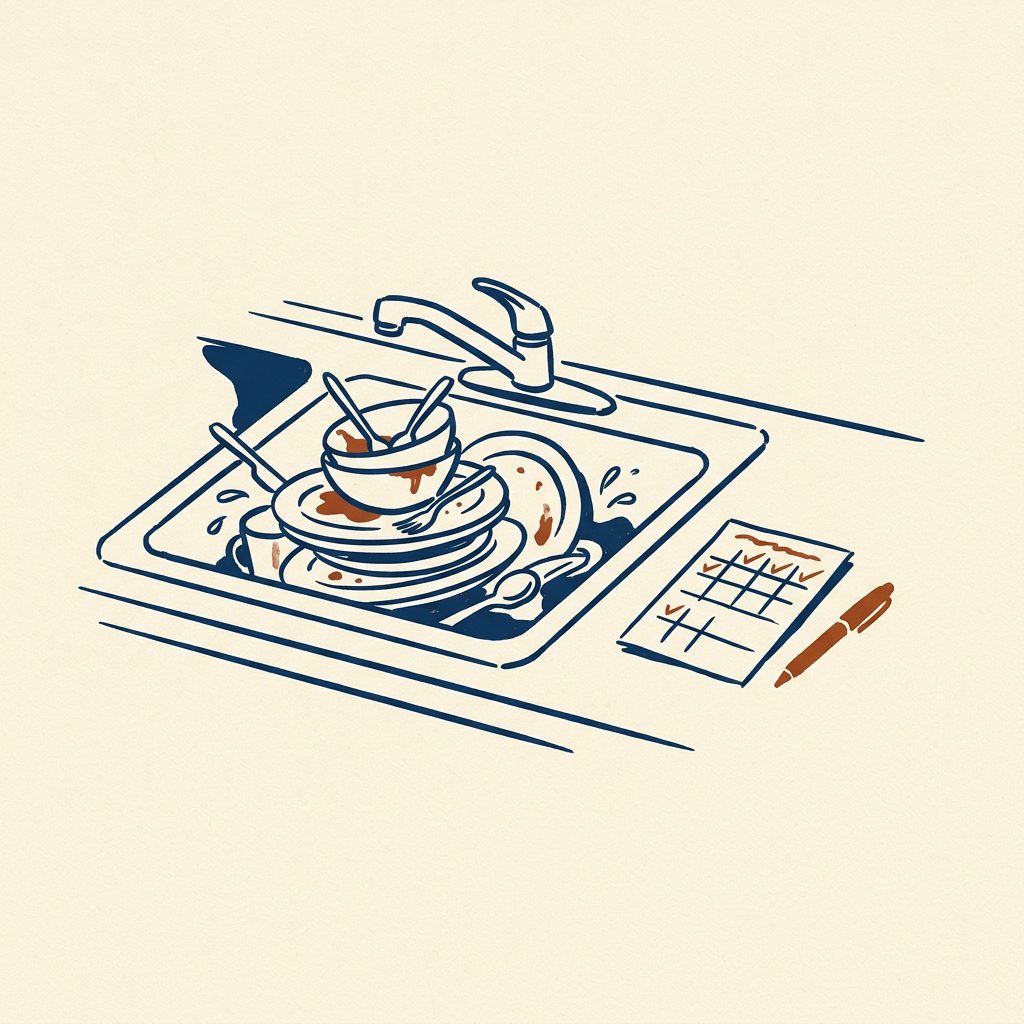
Depressed people often stop working, socializing, or doing hobbies because they predict exhaustion, joylessness, or humiliation. Burns calls the resulting paralysis do-nothingism: a self-fulfilling loop in which doing less supplies fresh evidence that nothing can be done.
His counter is concrete. Before an activity, predict on a numeric scale how satisfying or difficult it will be; afterward, rate the actual experience. The gap is usually large—people consistently underestimate capacity and eventual satisfaction.
Correcting the forecast through direct testing breaks the link between pessimistic prediction and behavioral freeze. In this model you do not wait to feel motivated; motivation often arrives after the first small action supplies contrary evidence.
In practice: A patient predicted washing dishes would be unbearably tedious with zero satisfaction, then rated it moderately satisfying once finished because completion itself gave a sense of competence the forecast had ignored.

5
Self-esteem without trophies
Worth tied to achievement or approval is inherently unstable; durable self-esteem treats the person as fallible and valuable independent of any single performance.
Conditional worth
Value rises and falls with sales, grades, and approval
Stable baseline
Value rests on being a fallible person who can still think and choose
Burns isolates a corrosive equation: my value equals my accomplishments, appearance, or others’ opinions. That creates a self-esteem trap in which mood becomes hostage to outcomes the person cannot fully control—a lost sale, a rejected proposal, an unreturned call.
He separates self-esteem from self-confidence. Confidence can reasonably rise and fall with task performance. Self-esteem, in his usage, should be a stable baseline no external failure can revoke, anchored in the inherent capacity to think, feel, and choose.
The stance is partly philosophical and partly pragmatic. Whether or not unconditional self-acceptance is deeply ‘true,’ he argues that believing it produces steadier mood and better functioning than performance-based worth. The earlier distortion list and written rebuttal are aimed squarely at the failure-equals-worthlessness equation.
In practice: A perfectionist accountant treated one arithmetic error as proof of being fundamentally incompetent and worthless until the labeling and all-or-nothing errors were disputed.

6
Anger, guilt, and shoulds
Excess anger and guilt usually spring from the same distortions as depression—especially rigid should statements—and yield to the same written reappraisal rather than separate emotional theories.
Should as law
Unmet preference treated as a justice violation
Wish as preference
Same letdown named as disappointment without moral inflation
Burns extends the cognitive model past sadness. Excessive anger often begins by dressing a personal preference as a moral law others have broken; when the rule is unmet, disappointment inflates into fury. Guilt turns the same machinery inward, with harsh shoulds about past behavior, often compounded by hindsight bias.
The approval trap belongs here too: mood that depends on being liked makes ordinary friction feel catastrophic. Treatment stays consistent with earlier chapters—catch the automatic thought, name the distortion, write a cooler reappraisal—without re-deriving the whole procedure.
He distinguishes this from suppression. Proportioned anger can be legitimate and useful; chronic rage is usually inflated by distorted thinking rather than fully justified by the trigger. The same short distortion list now covers a wide band of emotional intensity, not low mood alone.
In practice: ‘He should have called me back’ becomes ‘I wish he had called, but people often don’t, and frustration need not become fury.’

7
Cognitive work versus medication
Drawing on late-1970s trials, Burns claims structured cognitive treatment produced improvement comparable to tricyclic antidepressants for many outpatients, with a skill that may outlast the drug.
Medication path
Mood may lift while the same distortions stay available after the drug stops
Cognitive path
Patient keeps a written skill meant to catch distortions early
Writing as a psychiatrist trained in both pharmacology and cognitive methods, Burns challenges the then-dominant view that depression is primarily biochemical and therefore first a drug problem. He cites outcome comparisons from his era, including work linked to Aaron Beck, suggesting cognitive treatment matched tricyclics for many outpatients and showed lower relapse after treatment ended.
His explanation: medication may lift mood without rewriting the underlying thought patterns, so the old distortions remain ready when the drug stops. Cognitive work aims to leave a portable skill. He does not call medication useless; he allows that more severe or biologically driven cases may need drugs as necessary or as adjuncts.
The claim is narrower than a blanket rejection of psychiatry: for many mild-to-moderate cases, cognitive methods deserve first-line consideration. It rests on a specific set of late-1970s trials with specific populations, a limit that later research would revisit and that keeps the comparison from reading as settled forever.
In practice: Burns points to era trials in which structured cognitive treatment matched tricyclic outcomes for outpatients while aiming to reduce relapse by teaching a lasting method.

8
Resistance to relapse
Recovery does not permanently erase distorted patterns; the same written techniques must stay in use as maintenance so early relapse thoughts are caught before they harden into mood.
- Acute episodeUse thought records to lift mood
- Early recoveryKeep periodic practice even while feeling well
- New stressorCatch reactivated distortions before they settle into mood
In the later chapters Burns turns to life after symptoms ease. The distortions that fed the episode are not deleted; the person has only learned to catch and correct them faster, and that skill atrophies without practice.
He recommends continuing thought records periodically while well—less an emergency tool than a habit like exercise. New losses, criticism, and failures tend to reactivate labeling or overgeneralization; someone who still knows the list can spot a relapse while it is still only a thought.
This answers a fair objection: if the patterns are deep, why would a few corrections last? They do not last automatically. Maintenance is deliberate, and the book’s techniques are framed as a permanent toolkit rather than a one-time cure.
In practice: Months after treatment, a formerly depressed patient caught the thought ‘I’m falling apart again’ after one bad day and ran the written exercise before it ballooned into weeks of low mood.
Key terms
- Cognitive distortion A systematic thinking error that tilts interpretation toward the negative.
- Automatic thought A rapid, often unnoticed interpretation that appears between an event and a feeling.
- Triple-column technique A written exercise listing the raw thought, its distortion name, and a balanced alternative.
- Do-nothingism Depressive paralysis fed by forecasts that activity will be pointless or crushing.
- Self-esteem trap Tying personal worth to performance or approval so mood becomes hostage to external outcomes.
- Approval trap Depending so heavily on being liked that ordinary social friction feels catastrophic.
- Should statement A rigid rule about how self or others must behave that breeds guilt or disproportionate anger.
- Emotional reasoning Treating a feeling as proof that a negative claim is true.
What to do
- Start a daily three-column log: one automatic negative thought, its distortion name, and a more evidence-based alternative.
- Before skipping a small task, predict satisfaction on a 0–100 scale, do it anyway, then rate the real result and note the gap.
- When anger or guilt spikes, rewrite the hidden should as a wish and see whether the intensity drops.
- Schedule a short thought-record session even on a good day this week so the habit is not only crisis gear.
- If several weeks of steady practice leave mood unchanged or symptoms are severe, contact a clinician instead of blaming yourself for ‘failing’ the method.
Questions to think with
- Which of the ten distortions shows up most often in your worst moods, and what evidence usually gets ignored?
- Where are you waiting to feel motivated before acting, and what smallest test could check the forecast?
- Is your self-worth currently riding on a result you do not fully control?
- When you say someone ‘should’ have done better, what preference is hiding inside that rule?
- If you recovered once, what early thought would signal a relapse starting—and would you notice it on paper?
The other side
Burns’s medication comparisons rest on a limited set of late-1970s trials, often small and focused on outpatients with mild to moderate depression; later meta-analyses look more mixed, and publication bias in the early cognitive-therapy literature is a documented concern. The book says relatively little about severe depression with psychotic features, bipolar disorder, or suffering driven mainly by biology or trauma, where thought records alone are unlikely to suffice. The model can slide into subtle blame—if mood is caused by thoughts, someone who cannot make the technique work may add shame for ‘thinking wrong.’ It also underplays social and structural causes such as poverty, discrimination, or abuse, where changing the environment may matter more than changing the interpretation. The self-help format itself can understate how hard sustained practice is without clinical support.
Who it's for
Someone stuck in self-critical loops who wants structured tools before or alongside therapy, a therapist or student needing a plain-language door into cognitive techniques, or a skeptic of open-ended talk therapy who prefers a testable, written method. Readers with severe, bipolar, or primarily biological depression should treat it as a partial aid, not a solo plan.