




Stop fighting positions and negotiate the interests underneath
Soft yielding and hard combat both fail; principled negotiation around interests, options, and fair standards produces stronger deals.
IJR · Oct 20, 2026 · 13 min read
In 60 seconds
- Positional bargaining locks people into defending demands, yields mediocre midpoints, and damages relationships whether you play hard or soft.
- Separate the human relationship from the substance so ego and emotion stop sabotaging workable terms.
- Positions are only one answer to underlying interests; incompatible demands often hide compatible needs you can both meet.
- Invent many options before judging any of them, or you leave joint value on the table.
- Settle remaining gaps by objective criteria rather than contests of will, and treat your BATNA as real power.
- When the other side is stronger or plays dirty, strengthen your alternative, redirect attacks at the problem, and name the tactic.
The big idea
Fisher and Ury argue that the default of positional bargaining—hard or soft—produces poor agreements and frayed relationships because it treats negotiation as a fixed pie divided by stubbornness. Their alternative, principled negotiation, separates people from the problem, focuses on interests rather than stated positions, invents options before deciding, judges outcomes against fair external standards, and treats BATNA as the true source of leverage.
The book in brief
The book opens by diagnosing the usual trap. Most people either dig into fixed positions and trade concessions toward a midpoint, or yield quickly to keep the peace. Both modes fail on their own terms: hard bargaining rewards stubbornness and strains the relationship, while soft bargaining invites exploitation. A landlord opening at one rent figure and a tenant at another will drift to a meaningless average that ignores real needs and market facts.
Fisher and Ury then lay out four linked moves developed at the Harvard Negotiation Project. First, disentangle the people from the problem so perceptions, emotions, and egos get their own track and stop contaminating the terms. Second, dig beneath stated positions to the interests that actually drive them; many deadlocks dissolve once you see that the underlying needs can both be met. Third, separate inventing from deciding so premature judgment does not kill creative packages that expand the pie. Fourth, resolve leftover disagreements by reference to objective criteria—market value, precedent, independent standards—rather than who can hold out longer.
Underneath the method sits BATNA: your best alternative if no agreement is reached. A rigid private bottom line can walk you away from a creative deal that still beats your real options, or lock you into a bad one. Knowing and improving what you will actually do without a deal is the reliable source of power.
The later chapters answer the practical objections. When the other side has more power, a strong BATNA sets the floor. When they attack, stonewall, or use dirty tactics, negotiation jujitsu redirects pressure at the problem, invites criticism of your proposal, asks what principle justifies their extreme demand, and names the tactic out loud. The method is framed as joint problem-solving, not naive cooperation.
The arc closes by acknowledging limits. The framework works best where value can be expanded; it is thinner on genuinely zero-sum fights, deep power asymmetry, cognitive bias, and cross-cultural style. The lasting claim remains simple: the position on the table is rarely the only way to satisfy the interest underneath it.
Context
Roger Fisher and William Ury developed the method at the Harvard Negotiation Project. Published in 1981, the book reframed negotiation as joint problem-solving rather than a contest and became the standard reference for business, diplomatic, and legal training for decades afterward.
The key ideas

1
Positional bargaining fails
Arguing over fixed positions produces worse outcomes than interest-based method, even when one side appears to win.
Positional path
Open high or low, trade concessions, land near midpoint; relationship frays or one side is exploited.
Principled path
Treat the deal as a shared problem; seek options and standards that serve real interests on both sides.
Fisher and Ury open by naming the default most people use. One side states a price or demand, the other counters, and both edge toward a midpoint through concessions. That process locks each side into defending the stated number rather than solving the actual problem, so the final figure often reflects stubbornness more than need or market reality.
Hard bargaining damages the working relationship: every concession reads as weakness, every firm stand as aggression, and the game rewards intransigence over judgment. Soft bargaining, the opposite pole, avoids friction by yielding early, which simply invites a firm counterpart to keep pushing.
Neither mode asks what either side actually needs, why the number is what it is, or whether better packages exist. The authors treat positional bargaining as the wrong game entirely—a fixed-pie contest—rather than a problem that might admit solutions better than any point on the original spectrum. The rest of the book is the alternative method, not cleverer tactics inside the old game.
In practice: A landlord opens at $1,200 rent and a tenant at $900; they settle near $1,050 regardless of real constraints or market value, and the number satisfies neither side’s underlying needs.
2
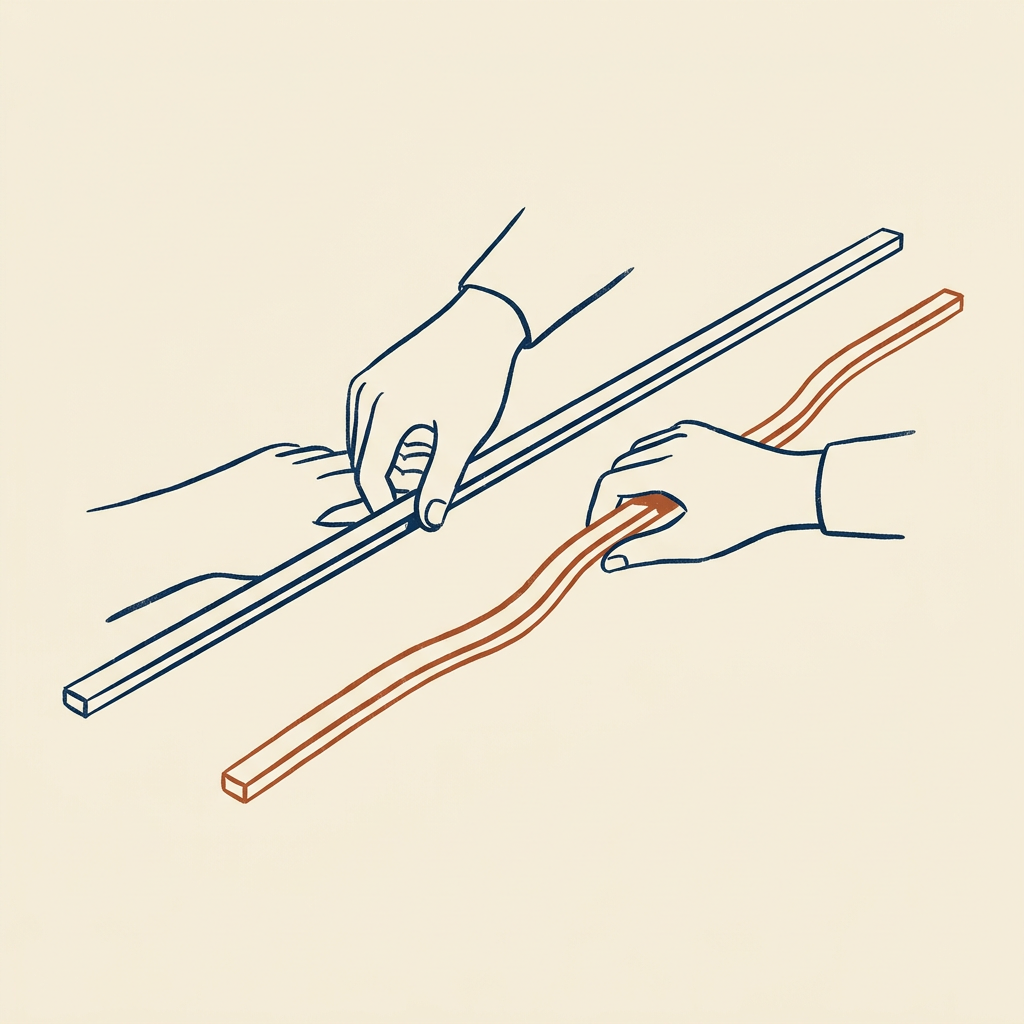
Separate people from problem
Fusing relationship friction with substantive disagreement guarantees that emotion will sabotage practical solutions.
Tangled channels
Every push on terms feels like a personal attack; pride and hurt freeze the deal.
Two tracks
Relationship work and substance work run side by side; either can move without wrecking the other.
Negotiators are people with egos, feelings, and different readings of the same facts. When a proposal is attacked, the recipient often hears a personal attack; pride then defends a weak position, or substance is conceded just to keep the peace. Both moves produce bad deals.
The remedy is two parallel tracks. Work the relationship deliberately: ask how the other side sees the situation, name emotions instead of letting them leak, listen to understand rather than to score, and speak so you can be heard. At the same time, keep the substance on its own track.
Language and posture matter. Attack the problem, not the person—say the delivery schedule does not work rather than calling the other side unreliable. This is not niceness for its own sake. A durable agreement needs both channels open; collapse them and every disagreement risks becoming personal while every personal slight blocks a workable term.
In practice: Two neighbors arguing over a fence line stop speaking entirely, so the property dispute becomes permanently unsolvable because the personal breach blocks any talk about the actual boundary.

3
Interests beneath positions
A stated position is only one solution to an underlying interest; fixating on it hides packages that could satisfy both sides more fully.
Positions
Open the window or close it; keep all of Sinai or keep security buffer—one side must lose.
Interests met
Fresh air without draft via the next room; Egyptian flag plus demilitarized security for Israel.
A position is what someone says they want; an interest is why they want it. Two parties can hold clashing positions while sharing compatible or even identical interests underneath. Most apparent deadlocks are conflicts of position layered on shared or complementary interests, not true conflicts of interest.
Behind every position sit multiple interests—money, timing, and terms, but also respect, security, fairness, and autonomy. Negotiators who only trade positions never surface the intangible drivers that often keep the standoff alive. The diagnostic work is excavation: ask why a position is held and why an alternative is refused, and imagine the interest from the other side’s vantage rather than assuming it mirrors yours.
Once interests are clear, solutions that looked impossible under binary positions often appear. The method turns negotiation from compromise between stated demands into design around the needs that produced those demands.
In practice: Two people fight over opening or closing a window; fresh air versus draft are both met by opening a window in the next room. At Camp David, Egypt’s demand for every inch of Sinai and Israel’s demand for retained territory looked irreconcilable until sovereignty and security were met through a demilitarized zone under Egyptian flag.

4
Invent options first
Judging and narrowing too early suppresses creative combinations that would satisfy both sides better than any option born under pressure.
Even after interests surface, negotiators often leap to the first plausible package and start evaluating. Premature judgment censors ideas before they are spoken. Searching for a single answer stops generation at the first workable thought. Assuming a fixed pie hides value-creating trades. Believing the other side must solve its own problem keeps each party generating only self-serving options.
Fisher and Ury insist on a hard separation between inventing and deciding, borrowing brainstorming discipline: generate many possibilities without criticism, then evaluate. Look at the dispute through multiple professional lenses, vary the scope of any proposed deal, and design packages that make the other side’s decision easier rather than harder.
The payoff is trading across differences. Parties with different risk tolerances, time horizons, or forecasts can often give each other more of what each values by exchanging along the dimension where they differ, instead of splitting one fixed resource down the middle. Most negotiators leave that value unclaimed simply because they stopped inventing too soon.
In practice: In a joint venture, one company wants immediate cash and the other long-term equity; structuring payment so each gets more of what it prizes beats an even split of any single form.

5
Use objective criteria
Deciding by leverage or stubbornness breeds resentment and fragile deals; fair external standards produce outcomes both sides can defend.
Contest of will
Threats, holdouts, and inflated anchors until one side tires; loser resents and may renege.
External standard
Market figures, precedent, or independent estimates frame a number both can justify.
Interests and options still leave choices to make. Settling those choices by pure will—who threatens better or holds out longer—rewards deception and leaves the losing side quietly determined to undermine the result. Relationships that must continue past signing pay the price.
Fisher and Ury propose deciding by reference to external standards: market value, precedent, scientific judgment, professional norms, efficiency. The standards become the frame for discussion rather than either party’s persistence. Apply them by reasoning together about which standard fits, not by unilaterally declaring one and demanding surrender; that would only replace one power move with another.
When several legitimate standards conflict, test them for fairness and independence from either side’s preference. Agreements reached this way hold up because both parties can explain, to themselves and to outsiders, why the outcome is fair rather than merely won. This completes the four-part method: people, interests, options, criteria.
In practice: After property damage, an adjuster low-balls and a claimant inflates; instead of exhausting each other on numbers, either side can bring replacement-cost estimates, comparable payouts, or industry depreciation schedules and reason from those.

6
BATNA is real power
A fixed bottom line is a worse safeguard than knowing your best alternative to agreement, because the line can be arbitrary while the alternative is real.
Rigid bottom line
Arbitrary floor set in advance; misses creative deals and misreads real options.
Worked-out BATNA
Concrete next-best path if talks fail; becomes the true test of every offer and a portable source of power.
Many negotiators protect themselves by setting a private floor before talks begin. Fisher and Ury call that a poor safeguard. A rigid bottom line can blind you to a creative option outside your original assumptions that still serves your interests better. A floor set too high can walk you away from a deal that is worse than you hoped yet still better than what you will actually do without agreement.
The fix is to map, in concrete detail, what you will do if no deal is reached, and to treat that alternative—not an arbitrary number—as the standard for every offer. A strong BATNA is protective and also a source of power independent of the other side’s size or aggressiveness. A small party with an excellent alternative can outperform a large party with a weak one.
Roughly understanding the other side’s BATNA reveals how much room truly exists and guards against both fearful over-concession and false-confidence over-demand. Before important talks, spend real effort identifying and improving your own alternatives; a stronger BATNA changes the negotiation more reliably than any tactic used at the table.
In practice: A job candidate with no other offer is weak no matter what private salary floor they set; a candidate holding a competing offer has leverage that owes nothing to bluffing.

7
Jujitsu for hardball
Principled negotiation includes countermoves for power imbalance and bad-faith tactics instead of assuming good faith will be returned.
Two practical objections arise at once: the other side may hold far more power, or may refuse principle and rely on pressure, extreme demands, personal attacks, or deception. For power imbalance the primary defense remains a strong, improved BATNA; it sets a floor no amount of table pressure can move.
When the counterpart stays positional or manipulative, Fisher and Ury prescribe negotiation jujitsu. Do not push back against an attack or hard position; redirect the force toward the problem. If your proposal is attacked, ask what is wrong with it and invite criticism rather than defending, which often disarms escalation. If an extreme position is stated, ask what interests or principles justify it instead of matching it with your own extreme.
You can also bring a neutral third party or explicitly name the frame—“we seem to be trading positions; can we talk about what each of us actually needs”—which shifts process without requiring prior consent. For outright dirty moves such as false deadlines, misleading information, or insults meant to unsettle, name the tactic and question its legitimacy directly; exposure usually retires the move faster than silent endurance or matching fire. The chapter answers the charge that the method only works with reasonable people: the defenses are built in.
In practice: Rather than counter an extreme demand with your own, ask what principle or interest supports it; rather than absorb a personal attack, note the tactic aloud and return to the problem.
Key terms
- Principled negotiation The four-part method: separate people from the problem, focus on interests, invent options before deciding, and use objective criteria.
- Positional bargaining The default contest of stated demands and concessions that locks parties into defending numbers rather than solving needs.
- Interests The underlying why behind a stated position—tangible needs plus respect, security, fairness, autonomy.
- BATNA Best Alternative To a Negotiated Agreement; what you will actually do if no deal is reached, and the real measure of any offer.
- Objective criteria External standards—market value, precedent, professional norms, independent estimates—used to decide fairness instead of pure will.
- Negotiation jujitsu Redirecting attacks and hard positions toward the problem, inviting criticism, probing justifying principles, and naming dirty tactics.
- Soft bargaining Yielding quickly to avoid conflict, which invites a firm counterpart to keep extracting concessions.
- Fixed pie assumption The belief that whatever one side gains the other must lose, which blocks value-creating trades across differences.
What to do
- Write your BATNA in specific terms before the next negotiation and spend time this week improving that alternative, not just naming it.
- Before proposing any number or term, ask the other side why they want what they are asking for and listen for the interest underneath.
- When two or more solutions seem plausible, write at least three options privately before saying any aloud, then choose which to raise.
- If talks stall on whose figure wins, propose an external standard—market rate, prior case, independent estimate—and ask them to help pick the fairest one.
- If the other side attacks your proposal or states an extreme position, invite criticism or ask what principle justifies it instead of pushing back.
Questions to think with
- What is my concrete BATNA for the negotiation I face next, and how could I strengthen it this week?
- In a recurring conflict at work or home, what positions are we defending, and what interests might sit underneath each?
- Where have I judged options too early and left possible trades across differences unexplored?
- Which external standard would both sides accept as fair if we stopped arguing pure numbers?
- When the other side plays hardball, am I pushing back—or redirecting their energy at the shared problem?
The other side
Critics note the book’s star cases (shared window, Sinai, inheritance) are chosen because integrative solutions exist; many real fights over scarce budgets, layoffs, water, or land are closer to zero-sum, and inventing options simply fails. Power asymmetry beyond BATNA is thinly handled—a vastly stronger party can ignore interests and criteria, and jujitsu or third parties are less developed than the core method. The text rests on anecdotes and stylized dialogues rather than controlled evidence; later work shows people systematically mis-estimate others’ interests and BATNAs, while anchoring effects persist even among trained negotiators. The model also assumes Western direct communication and can read as intrusive in high-context cultures. The framework remains a strong default where value can expand, not a universal solvent.
Who it's for
Managers who dread salary and contract talks and want a repeatable method instead of gut instinct; mediators and lawyers who need language to move clients off rigid demands without losing trust; anyone stuck in recurring family or workplace conflict who keeps winning arguments and losing relationships.