




Setbacks turn into green lights if you stay engaged
McConaughey treats forced stops and detours as instructive signals that become the story once met with attention, discipline, and a private code.
IJR · Oct 25, 2026 · 11 min read
In 60 seconds
- A loud, volatile childhood taught him to read friction as investment rather than failure.
- A year of manual work abroad clarified his choice to act more than any conventional path would have.
- Lucky breaks attach only to people already in motion toward a goal.
- Red lights stay provisional; decades of journals let him reassemble disappointments into later forward motion.
- Refusing the roles that paid him created space for a harder, Oscar-winning reinvention.
- A self-authored code of conduct outlasts fame, box office, and other people's applause.
The big idea
McConaughey argues that life's red and yellow lights are not obstacles to a good story but the material of it, once met with discipline and attention. A private written record and a self-made code of conduct, not applause or box office, are what turn scattered setbacks into forward motion.
The book in brief
McConaughey starts from a childhood where conflict counted as proof of care. Parents fought, divorced, and remarried. Battles got settled at home, sometimes with fists, then hugs. He frames that heat as the source of his ease with confrontation and his distrust of bland comfort.
Distance came next. As a young man he left Texas for unfamiliar work and host families far from home. The discomfort stripped away borrowed expectations. Away from the assumed path, he chose acting for himself and began the nightly journal habit that would later feed this whole account.
Early motion met an opening. A chance conversation led to a small role that grew through improvisation on set. He uses that break to argue luck only sticks when you are already driving toward something. Wanting an opportunity without repositioning yourself, he says, lets it pass clean through.
He then names the system. Green lights clear the way. Red lights stop you cold. Yellow lights force a slower turn. None of the labels stay fixed. A closed door can free a better one years later, though you often only see the link while rereading old notes.
Mid-career comfort became its own trap. The same charming persona paid well and kept getting offered. Creative range shrank inside the success. He answers with subtraction: stop saying yes, accept silence and lost income, strip routine until instinct returns. The pause is presented as frightening, not confident.
What followed was a run of harder, stranger work that looked nothing like the earlier brand. Visible physical risk and reduced leverage signaled seriousness to collaborators and to himself. Later chapters shift from career turnaround to marriage, children, a slower home base, and a short list of private rules he checks decisions against. The book lands on the diaries themselves. The tidy traffic-light story was assembled after the fact from messier daily entries. The practice of writing things down, he claims, matters more than any pattern you later find in them.
Context
Greenlights gathers McConaughey's private diaries into a memoir that doubles as a field guide. It mattered in 2020 because it reframed the Hollywood confessional as a working philosophy: treat flow, forced stops, and necessary detours as equally instructive, and let a self-made code—not applause or box office—define success.
The key ideas
1
Love earned through friction
Chaotic, physically expressive love in his childhood home built more resilience than a calm, orderly one would have.
Outside view
Volatility that looks like harm
His reading
Intensity as the marker of care
McConaughey describes parents who fought loudly, divorced, and remarried each other. Conflict counted as proof of investment, not failure. His father's rule was that you settled your own battles. Sons worked disputes out with fists, then had to hug.
Affection in the house was loud, physical, and immediate. Soft comfort was not the currency. Love had to be earned through friction. He credits this chemistry with an ease around confrontation and a suspicion of blandness.
The chapter's move is the book's recurring method. Take a hard event that looks like instability from outside. Mine it for the version of the story that moves you forward. He presents the claim as formative for him, not universal advice for every household.
In practice: He frames his father Jim's death by heart attack during sex with his wife not as pure tragedy but as proof the man lived and died on his own terms.
2
Distance forces real choices
Deliberately leaving comfort at eighteen accelerated his self-knowledge more than years of formal schooling could have.
Instead of a conventional college track, he spent a year in Australia on exchange. Host families. Manual jobs. Unfamiliar rules. At least one host situation turned uncomfortable and isolating.
He had to rely on his own judgment rather than family instruction. He kept a journal every night. That habit becomes the spine of the later book.
The quiet turning point came away from Texas. Without his father's voice in his ear, he decided he wanted to act rather than pursue law. Proximity had made the alternative invisible. Discomfort, not instruction, produced the real decision about identity.
In practice: The year of physical labor and unfamiliar people did more to clarify his direction than any course, he claims, because distance made family expectation lose its grip.

3
Luck needs you already moving
Lucky breaks come to people already in motion toward a goal, not to people who are simply waiting.
Waiting
Wanting the opening while still on the old path
Already driving
Plans quit, motion started, so luck has somewhere to land
His entry into acting started as a chance encounter in an Austin bar. He talked with a casting associate working on a film. That talk led to a small role.
The role grew because the director let him improvise. One improvised line became the catchphrase that followed him for decades. He does not deny the luck of the right bar on the right night.
His point is preparation. He had already quit other plans and moved toward acting before the meeting. The opening had something to attach to. When he had wanted opportunities without repositioning himself, they passed without effect.
In practice: A conversation about Dazed and Confused with a casting associate, plus Richard Linklater's openness to improvisation on set, turned a small part into a career-defining break.
4
Red lights stay provisional
Every red light is provisional and can turn green later if you stay engaged with it.
Here he names the organizing system of green, red, and yellow lights. Labels are not fixed. A full stop today can become forward motion later.
The only real mistake is treating any stop as final and abandoning the direction it blocked. Closed doors can free better ones, though the link often appears only in hindsight.
Because he kept written records for years, he can reassemble scattered disappointments into a coherent narrative of things eventually working out. The method is a discipline of attention more than a law of nature. Someone whose stop never lifts has little place in the frame except to keep waiting.
In practice: He lost a role he badly wanted, felt it as a dead stop, and only years later—while reviewing journals—saw how that closed door freed him for an opportunity that mattered more.
5
The trap inside success
The genre that made him famous nearly erased his range; commercial success and creative identity can work directly against each other.
The payoff
Steady offers and substantial pay
The cost
Interchangeable roles and a shrinking range
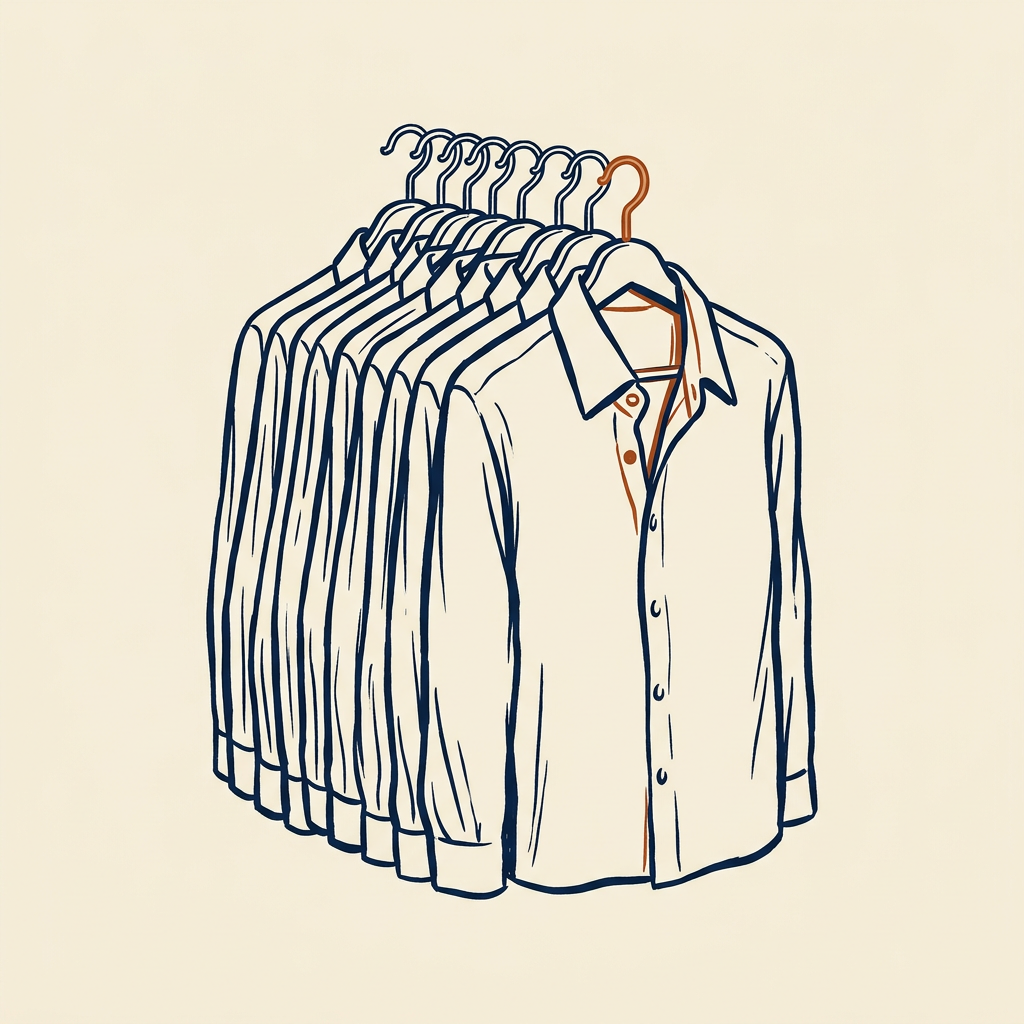
From the mid-1990s through the 2000s he became a reliable romantic-comedy lead. Films built around a shirtless, easygoing, charming Southern persona. The pay was substantial. Offers kept coming.
Directors, studios, and audiences wanted the same character regardless of script. Roles felt interchangeable. He frames the trap as built from his own early success, not from any villain. The industry responded rationally to what had worked.
The discomfort was not financial. It was being professionally successful while creatively stagnant. A person can get stuck inside achievements because of the achievements. That claim sets up why a drastic later move felt necessary.
In practice: Large checks kept arriving for work that no longer stretched him, while the narrow version of himself became what the market would buy.
6
Subtraction before reinvention
Refusing money and visibility was a more decisive career strategy than chasing more of either.
Around 2008 and 2009 he turned down the romantic-comedy offers that still defined his market. Nothing else was lined up. He describes a stretch with no acting offers at all.
He spent that time with family and in a deliberate personal reset. Isolation. Abstinence from familiar habits. The aim was to strip routine and reconnect with instinct before choosing what came next.
Hollywood could not see him differently while he kept saying yes to the same parts. Changing his behavior had to come first, even at the cost of income and visibility. He is honest that he did not know if it would work. Progress sometimes requires a visible pause rather than continuous forward motion.
In practice: He turned down the rom-com offers still coming in, then lived through roughly a year and a half with no acting work lined up.
7
Make the risk legible
Visible physical and financial sacrifice for a role convinced the industry of his seriousness more than any audition could have.
The turn arrived with a part as a man dying of AIDS. He accepted reduced up-front pay for a share of later earnings. He treats the extreme physical change not only as craft but as a signal.
Directors and he himself needed proof the reinvention was real. Discipline made visible worked as credibility. Words would not have been enough.
What followed looked nothing like the earlier career. A run of riskier films and a prestige television role landed, then the Best Actor Oscar. He argues this was consequence, not rebound: refusing old roles created space only unfamiliar work could fill.
In practice: Dallas Buyers Club in 2013 required the extreme bet on body and backend points; the same stretch brought Killer Joe, Mud, Magic Mike, True Detective in 2014, and the Oscar.
8
Build a code you control
A private, self-made list of rules does more to sustain a career and a life than talent or luck once the initial spotlight fades.
After the professional turn he shifts to marriage, children, a family move out of Los Angeles, and later teaching. Scattered through the pages are short aphoristic statements he treats as his own rules of living.
Fame and box-office numbers sit on other people's opinions and shifting markets. A self-authored code is something he can check decisions against regardless of outside weather. He treats the slower pace in Austin as consistent with the code, not a retreat from ambition.
Sustainable success, on his account, means converting outside validation into an internal standard. The standard has to survive when the validation stops. The specific rules are idiosyncratic to his temperament. The transferable piece is the long habit of writing them down.
In practice: Marriage to Camila Alves in 2012, the move to Austin, and teaching at the University of Texas all get framed as expressions of that private constitution rather than steps away from the work.
9
Meaning arrives in the reread
The neat pattern of red lights turning green depends on thirty-five years of retrospective journaling and may be a story imposed afterward rather than a rule found in real time.
Nearly the whole account is drawn from journals kept across that span. Observations, decisions, poems, lists. He returned to the notebooks while writing.
Reading back felt like discovery. Connections appeared between events that felt disconnected when they happened. Writing things down without knowing how they resolve eventually yields a body of evidence you can mine.
He admits the tidy green-red-yellow structure was assembled after the fact from messier daily entries. That honesty boosts credibility as process and weakens any claim the framework predicts the future. The procedural argument remains: keep the record. The record, not the eventual flattering story, is what you have to work with when you need to make sense of a life.
In practice: He describes finding, only while reviewing the private notebooks, the through-lines that let scattered disappointments read as a coherent sequence of lights changing color.
Key terms
- green light Anything that moves you forward without resistance
- red light A full stop—rejection, injury, closed door—treated as provisional, not final
- yellow light A forced slowdown that requires adjusting course without fully stopping
- unbecoming Deliberate subtraction of familiar roles, money, and habits to reset identity
- McConaissance The career reinvention that followed refusal of old parts and visible sacrifice for new ones
- personal code A self-authored set of living rules used as the first test for major decisions
- rom-com cage The narrowing of creative range caused by repeated commercial success in one persona
What to do
- Start a daily written record this week, even five sentences a night, noting what happened and how you felt without editing for a tidy ending.
- When you hit a genuine dead stop this month, write it down and revisit it in three months before deciding what it means.
- Before agreeing to the next safe, well-paid option, write one sentence on what it would cost you creatively or personally and weigh that against the money.
- Draft three or four personal rules you already live by but have never written down, put them somewhere visible, and use them as the first test for your next major decision.
Questions to think with
- Which current stop in your life have you already labeled final, and what would change if you treated it as provisional for three more months?
- Where are you still waiting for luck without having repositioned yourself toward the goal?
- What commercial or social success of yours is quietly narrowing your range the way the rom-com roles narrowed his?
- If applause and income went quiet for a year and a half, which private rules would still tell you who you are?
- Looking back at an old setback, what green light can you only see now that you could not see then?
The other side
The claim that setbacks reliably resolve into gains rests on one unusually fortunate life. He had family resources for a year abroad, the advantages of looks and charisma, and enough savings to refuse millions without danger. The book rarely faces how much the greenlight pattern depends on starting conditions most readers do not share. It also aestheticizes certain family losses as proof of a life lived correctly. Reviewers praised its warmth and unusual structure but found the advice vague once separated from his circumstances, and noted little engagement with race, class, or the industry advantages that made his risks survivable. Best read as one successful person's sense-making, not a transferable method.
Who it's for
Actors, artists, and career-changers weighing a risky reinvention will get the most from the full book. So will memoir readers who prefer diary-driven fragments over strict chronology, and anyone drawn to building a personal code of conduct rather than following stock self-help rules.