




Good moments vanish unless you hold them long enough
Lasting wellbeing depends less on how often good things happen than on how often you register them long enough to leave a neural trace, and Hanson offers a concrete method to do that on purpose.
IJR · Oct 31, 2026 · 14 min read

In 60 seconds
- The brain is Velcro for threats and Teflon for rewards, an evolutionary design that now fuels chronic anxiety even when life is reasonably safe.
- Positive states become durable traits only when held in awareness long enough to trigger the consolidation negative experiences get automatically.
- Nearly all lasting inner resources feed three evolved needs: safety, satisfaction, and connection.
- Hanson's HEAL sequence has you notice a beneficial experience, enrich it, absorb it for roughly ten to twenty seconds, and optionally link it to old pain.
- Strengths such as gratitude, self-worth, and calm are built through repeated targeted absorption, the same way muscle is built.
- Relationships compound the bias, so partners must deliberately dwell on good moments together or resentment outpaces goodwill.
The big idea
Hanson argues that the brain evolved to lock onto threats and undercount rewards, so people stay anxious and dissatisfied even when circumstances are decent. Inner strength is not simply discovered; it is built by deliberately holding ordinary positive experiences until they leave lasting neural structure.
The book in brief
Hanson starts from a design claim: the brain is not a neutral recorder. Threat systems feed memory and emotion more richly than reward systems, so a single criticism can color a week while a dozen compliments barely land. He treats this Velcro-for-bad, Teflon-for-good pattern as an ancient survival algorithm, not a personal failing, and shows how it produces a background hum of worry that outruns actual risk.
From there he pivots to neuroplasticity. Neurons that fire together wire together, but the brain does this automatically for danger and only reluctantly for pleasure. A fleeting state becomes a durable trait only if attention holds the experience long enough for consolidation. Happiness, in his framing, is the physical residue left by absorbed attention, not a mood to chase.
He organizes the strengths worth building around three evolved needs—safety, satisfaction, and connection—each tied to an avoiding, approaching, or attaching system. Most suffering, he contends, traces to one or more of these running on a deficit, which gives direction to what would otherwise be vague positivity.
The practical core is HEAL. Have means noticing or gently creating beneficial material already present in ordinary life. Enrich and Absorb mean stretching the experience and feeling it in the body for roughly ten to twenty seconds so it can move from working memory toward lasting change. Link, the optional final step, pairs a well-built positive resource with milder old pain so the old material can update, with clear cautions when the wound is too raw.
He then applies the same compounding logic to specific resources—gratitude, self-worth, calm, motivation, compassion—and extends it to relationships and parenting, where two negativity-biased brains make unaddressed hurt accumulate faster than goodwill unless partners actively pause on the good. The book lands on a simple claim: good things are probably already happening; they just are not being given enough time to count.
Context
Rick Hanson draws on clinical and meditation experience as well as general principles of neuroplasticity and memory reconsolidation. The 2013 book translates the well-known negativity bias into a self-directed daily sequence aimed at readers who want a concrete mechanism rather than generic advice to think positive.
The key ideas
1
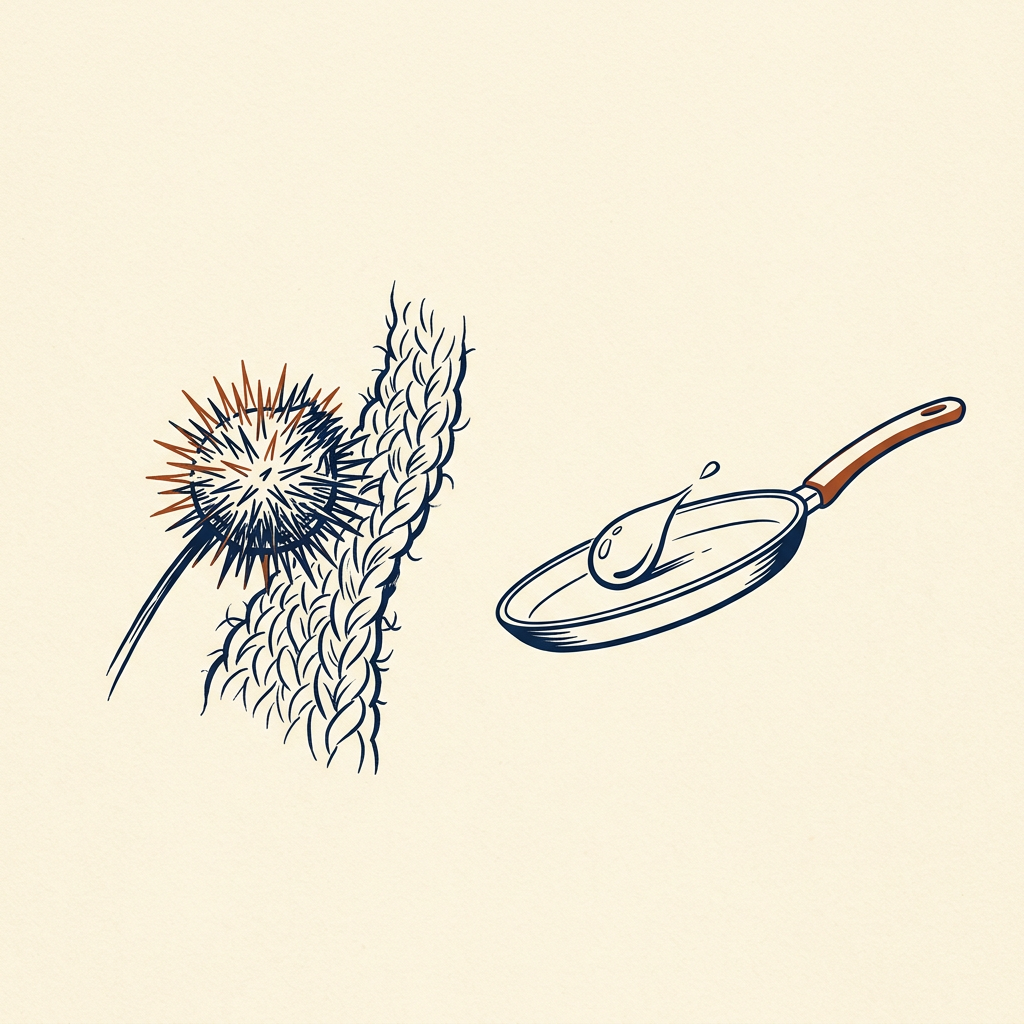
Velcro bad, teflon good
The brain registers threats faster, deeper, and longer than rewards because missing a predator was fatal while missing a meal usually was not.
Bad experiences
Fast, deep, sticky encoding into memory and emotion
Good experiences
Quick, shallow processing that vanishes unless held
Hanson opens with asymmetry in neural architecture: the amygdala has richer connections into memory and emotion than the systems that register reward. The result is preferential sticky encoding of anything threatening and quick, shallow processing of anything merely pleasant.
He frames this as design, not weakness. Ancestors who missed food might eat tomorrow; ancestors who missed a predator did not get a second chance. Evolution therefore weighted the nervous system toward scarcity and danger, not toward the comparative safety many people now inhabit.
In modern life the same algorithm produces a chronic scan for what might go wrong even when job, relationship, and health are stable. Negative events also get preferential long-term storage through stronger joint activation of hippocampus and amygdala, while positives pass through working memory and vanish unless something holds them.
Recognizing the pattern, he argues, removes shame from chronic worry and self-criticism. They become predictable outputs of an ancient survival routine, which sets up his central wager: if the brain undercounts the good by default, feeling better requires deliberate counterweight.
In practice: A single sharp criticism from a boss can dominate mood for a week, while a dozen compliments barely register.
2
States must become structure
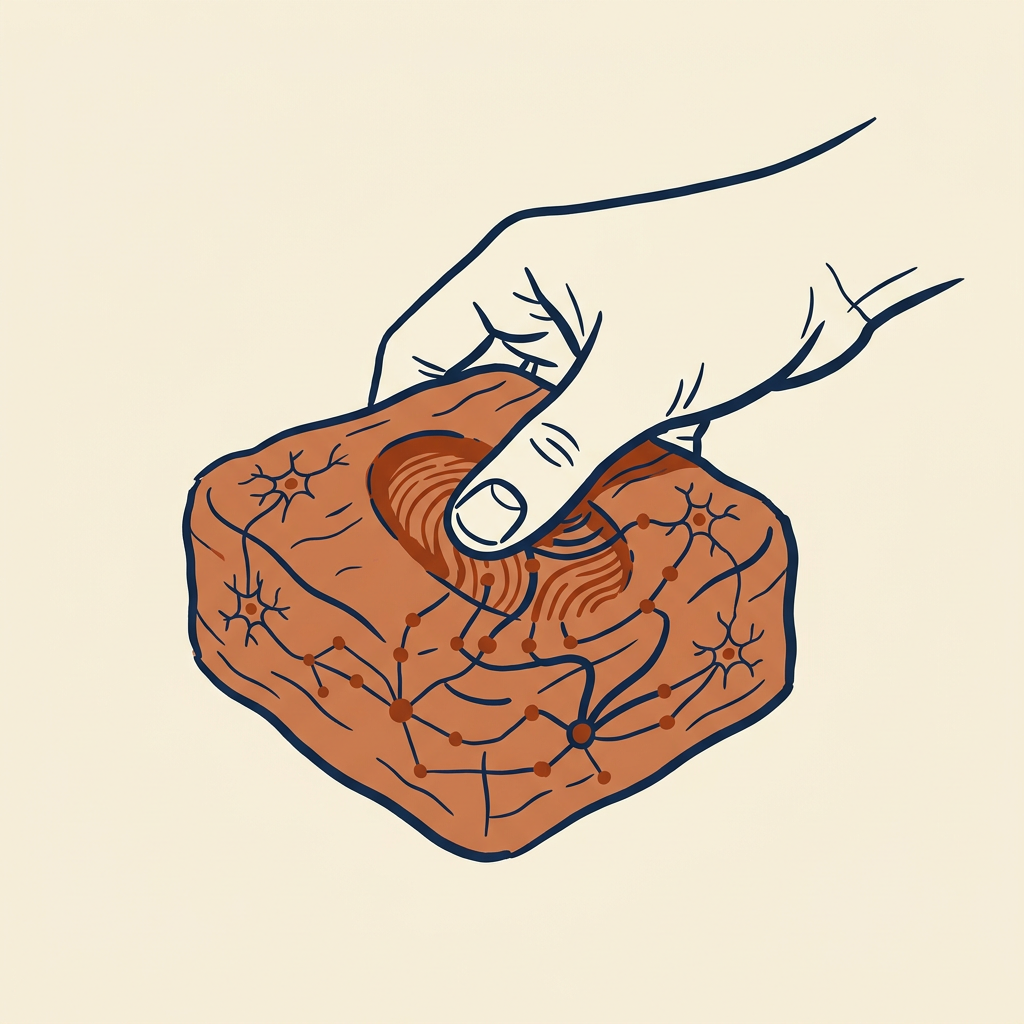
Positive states become durable traits only when held long enough to trigger the same neural consolidation negative experiences receive automatically.
- Durable traitConfidence, contentment, or felt care as a stable disposition
- Absorbed experienceA beneficial state held long enough to leave a synaptic trace
- Fleeting stateA brief positive moment that disappears when attention shifts
Building on the bias, Hanson turns to a narrower claim about plasticity. Repeated mental activity changes synapses, but the brain performs that work involuntarily for threats and needs help for rewards.
He distinguishes a state—something felt right now—from a trait, a durable disposition assembled from many absorbed states. Confidence, contentment, and a felt sense of being cared for are not single breakthroughs; they are pathways thickened by thousands of small moments of feeling capable, satisfied, or connected.
A three-second flash of relief when a flight lands, or a moment of appreciation at dinner, activates reward circuitry that could strengthen calm or self-worth. If attention moves on immediately, the experience stays a state and never becomes structure.
The practical implication is sharp: more good events alone will not raise long-term wellbeing. The rate-limiting step is how often those events are registered long enough to leave a trace.
In practice: Relief at a safe landing or appreciation at dinner activates reward circuitry, yet both vanish as lasting resource if attention moves on at once.
3
Three needs, three systems
Nearly all lasting inner resources fall into safety, satisfaction, and connection—the three evolved needs behind avoiding, approaching, and attaching systems.
Hanson collapses the sprawl of psychological strengths into three underlying needs. Safety maps to an avoiding system aimed at not getting hurt; when unmet it yields anxiety, vigilance, and threat-sensing even in calm settings.
Satisfaction maps to an approaching system aimed at reward; when chronically unmet it yields frustration, craving, and the sense that nothing is ever quite enough. Connection maps to an attaching system aimed at bonding; when unmet it yields loneliness, jealousy, or fear of rejection.
He holds that most emotional suffering traces to one or more of these running on a deficit, and that the positive experiences worth cultivating are ones that directly feed them: feeling protected, fulfilled, loved, or included.
The framework turns vague savoring into targeted repair. Instead of absorbing anything pleasant at random, a person can ask which need is thin and look for ordinary moments that address it.
In practice: Someone who feels perpetually behind is likely running a satisfaction deficit and should absorb moments of enoughness or accomplishment; someone isolated should prioritize warmth or being seen.

4
Notice what is already there
Most of the positive material a person needs is already occurring in ordinary life and is being missed, not absent.
The first HEAL step, Have, is deliberately modest. Hanson does not ask readers to manufacture extraordinary joy; he asks them to notice ordinary experiences that already carry benefit—the warmth of a first sip of coffee, a coworker's brief thanks, the relief of finishing a task, the ease of sitting after standing all day.
People routinely have dozens of such moments and register almost none, because attention is captured by problems, plans, or scrolling. The discipline is both turning toward what is going right and turning the volume up on it.
He also allows created material: recalling being loved, or imagining a future success, since the brain does not fully distinguish vivid imagination from perception when activating related networks.
This step is the gate. Without noticed or generated positive material, later steps have nothing to work with. It is retraining attention itself after a lifetime of problem-scanning.
In practice: In a slow line, alongside irritation, a person can notice the mild pleasure of people-watching or the relief of not being in a hurry.
5
Enrich, then absorb
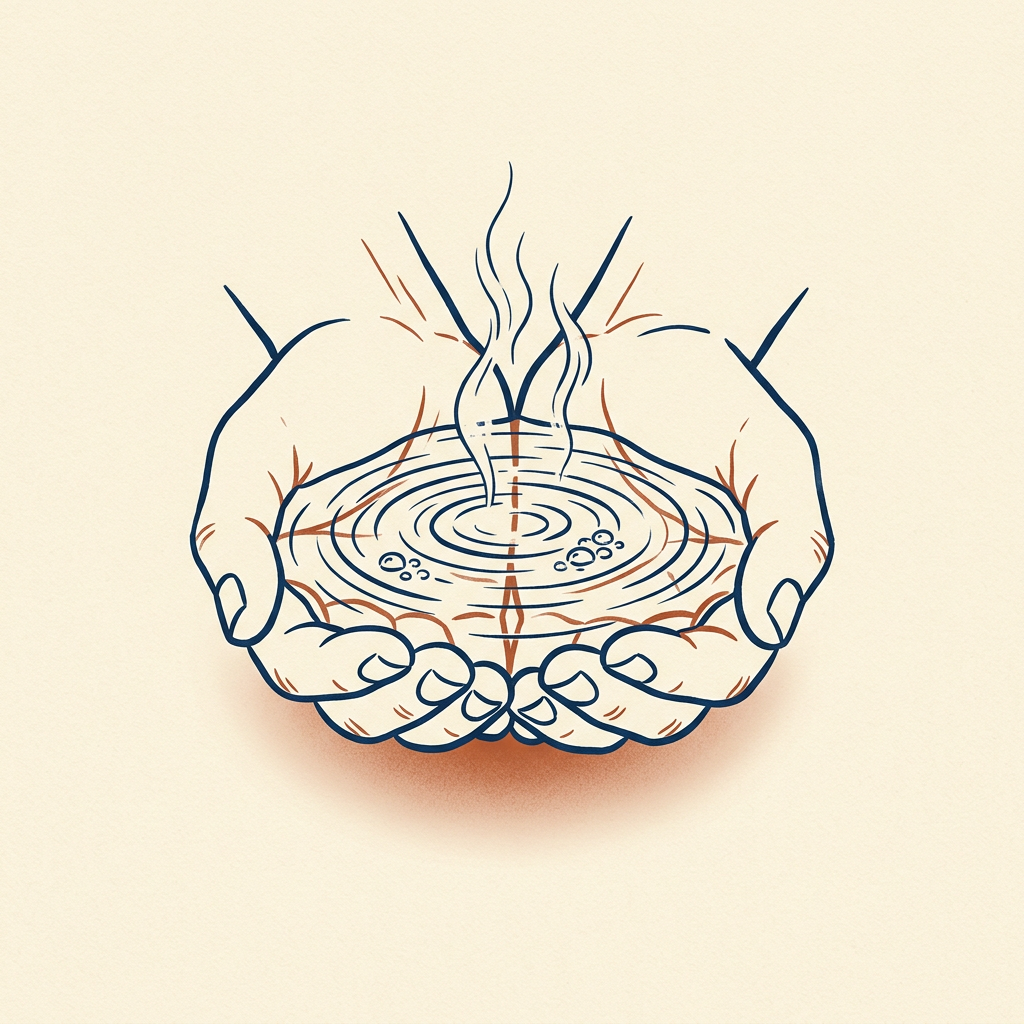
A positive experience builds lasting trait structure only when deliberately prolonged and felt in the body for roughly ten to twenty seconds.
Once a beneficial experience is noticed, Enrich and Absorb do the consolidation work. Enrich means staying with it longer than it would naturally last, opening more fully, and layering related positive elements—competence beside relief, for instance.
Absorb means letting it register somatically, imagining it sinking in the way warmth sinks into skin, and intending it to become part of oneself rather than a passing event. Hanson draws on memory research suggesting that experiences held for longer periods, especially ten to twenty seconds or more, have a better chance of moving from working memory into longer-term synaptic change.
He is explicit that this is effortful practice, not passive positive thinking. Compliments are often deflected within a second or two; the discipline is to pause, let them land, and stay with the felt sense of being valued for several breaths.
The core wager sits here: most people can already notice good moments, but almost no one holds them long enough to change underlying structure, and that holding is trainable.
In practice: A work compliment usually minimized in a second or two is instead paused on, felt, and kept in awareness for several breaths before moving on.
6
Link good to old pain
A well-established positive resource can be paired with a painful memory or belief to weaken that belief's hold, though only when the positive stays clearly dominant.
- 1Install the resourceRepeatedly have, enrich, and absorb a positive sense until it is stable
- 2Touch the old materialBriefly bring a milder negative memory or belief into awareness
- 3Keep positive dominantSurround the old material so it can update without overwhelming
Link is the optional final step. An established positive experience is held alongside a negative one, with the positive kept dominant. Hanson draws loosely on memory reconsolidation: when old emotional memory is activated while a new incompatible experience is present, the old memory can update rather than merely reactivate.
The sequence matters. First build a strong felt sense of being wanted or valued through repeated Have-Enrich-Absorb until it is stable and accessible. Only then briefly bring the old sense of being unwanted into awareness and surround it with the stronger positive feeling.
He warns the step can backfire. If the negative material is too strong or too raw, it overwhelms the exercise and reinforces itself. Start with milder material, build the positive resource to clear strength, and treat serious trauma with professional support rather than alone.
This is what separates the method from pure self-soothing: it aims to revise old emotional learning, not only stack new positives on an unchanged foundation. It is also the step with the thinnest direct evidentiary base in the book.
In practice: Someone carrying a persistent sense of being unwanted first installs a stable felt sense of being valued, then briefly holds the old wound inside that stronger positive frame.

7
Strengths compound like muscle
Resilience, gratitude, and self-worth are built through repeated targeted repetitions rather than single breakthrough moments.
- 1Catch one instanceA specific moment of help, respect, capability, or enoughness
- 2Absorb it fullyHold the felt sense long enough to leave a trace
- 3Repeat over monthsPathways thicken into gratitude, calm, or self-worth
↻ and round again
With the method in place, Hanson applies it to particular resources: gratitude, self-worth, calm, motivation, compassion. Each, he contends, is not a fixed personality endowment but a practiced pattern of attention that thickens over months and years.
Gratitude is built by absorbing specific instances of being helped or having enough, not by deciding once to be grateful. Self-worth is built by absorbing moments of having done something decently, being respected, or contributing value, accumulated across many small instances.
He treats the compounding as slow and often invisible short-term, like strength training where one session changes nothing visible and consistent repetition over months does. Different strengths also map onto the three needs, so a person can prioritize based on which system feels most depleted.
Character growth becomes a cumulative technical process rather than pure willpower or moral effort.
In practice: For workplace burnout he suggests the deficit is often starved safety or recognition, addressable by absorbing ordinary moments of competence and support during the workday rather than only cutting hours.

8
Relationships double the bias
Because every person in an interaction carries the negativity bias, relationships accumulate unaddressed hurt faster than goodwill unless partners actively counteract it together.
Default couple pattern
One careless remark outweighs ten kind ones in memory and mood
Shared counterweight
Partners pause together and dwell on specific good moments as they occur
Hanson extends the model outward. If one brain is Velcro for bad and Teflon for good, two brains compound the effect. Ten kind remarks and one careless one often leave the careless one dominating memory and mood for both people.
That distortion, he argues, explains why relationships that are objectively going well can still feel troubled. The raw ratio of good to bad may be favorable, yet encoding weights the bad so heavily that resentment outpaces goodwill unless someone intervenes.
His practical suggestion is shared HEAL: couples and families pause to acknowledge and dwell on good moments as they happen, rather than letting them pass silently while conflicts get replayed for days. The brief pause is what turns a mention into a felt deposit of trust.
The same logic applies to parenting. Children's security is built less by the absence of hard moments than by whether calm, connected moments are given enough time to register in rapidly developing brains that share the same bias.
In practice: A couple names one specific appreciated thing at the end of each day and sits with it for a slow breath rather than a quick mention.
Key terms
- Velcro for bad, Teflon for good The brain's bias to stick to threats and let pleasant experiences slide off unregistered.
- Negativity bias The evolved tendency to process and remember threatening information more readily than neutral or positive information.
- State versus trait A state is what you feel right now; a trait is a durable disposition built from many absorbed states.
- HEAL Hanson's sequence: Have a beneficial experience, Enrich it, Absorb it, and optionally Link it to old pain.
- Have Notice or gently create ordinary positive material already available in daily life.
- Enrich Intensify and extend a positive experience beyond the few seconds it would naturally last.
- Absorb Let the experience register in the body and intend it to become part of you for roughly ten to twenty seconds.
- Link Hold a strong positive resource beside milder old pain, keeping the positive dominant so the old learning can update.
- Three needs Safety, satisfaction, and connection—the avoiding, approaching, and attaching systems that most inner resources feed.
What to do
- Pick one small positive moment each day and stay with it fifteen to twenty seconds, noticing how it feels in the body.
- Before your next hard conversation, name which need—safety, satisfaction, or connection—feels thinnest and look specifically for evidence that need is being met.
- At day's end, name one specific good moment out loud to a partner, roommate, or journal, then pause on it deliberately instead of mentioning it in passing.
- When a compliment arrives, refuse the one-second deflection; let it land and breathe with the felt sense of being valued.
- In a tedious wait, notice one mild present benefit beside the irritation and hold that benefit for a few breaths.
- Choose one strength you want—gratitude, calm, or self-worth—and for a week absorb only moments that feed the matching need.
Questions to think with
- Which of the three needs feels most undernourished in your life right now, and what ordinary moments already feed it?
- What good experiences from today did you register for less than a couple of seconds before moving on?
- Where in your closest relationship does one sharp moment still outweigh a stretch of ordinary care?
- Are you trying to feel better by collecting more positive events, or by metabolizing the ones you already have?
- Which milder old belief could wait until a positive resource is truly stable before you attempt to link them?
The other side
The descriptive claim that threat information is processed and remembered more readily than positive information rests on reasonably solid ground in fear conditioning, amygdala research, and loss-aversion work, though Hanson sometimes states timings and pathways with more confidence than the studies warrant. The prescriptive claim that the specific HEAL sequence reliably turns states into traits is much thinner: the book leans on general neuroplasticity and reconsolidation principles without controlled trials of this protocol against alternatives, and much support is anecdotal or clinical. Researchers studying related positivity practices have often found smaller, more variable effects than the book's tone implies. Emphasizing dwelling on good feelings can also function as mild avoidance when suffering stems from poverty, discrimination, or genuinely unsafe relationships rather than from failing to notice available goodness. The book has little to offer for severe depression, trauma, or psychosis, where self-directed absorption may be insufficient or counterproductive without guidance. Finally, the hardwiring metaphor risks overstating fixedness relative to the more provisional, context-dependent reality of adult plasticity.
Who it's for
Readers who replay criticism for days yet forget compliments by lunch, meditators and therapy clients who want a concrete mechanism for why practice works, and anyone managing chronic anxiety or low self-worth who wants a self-directed, evidence-informed tool. It is less suited to people in acute crisis or unsafe conditions who need external change and professional support first.