




Kids need parents as their compass, not peers
Children oriented to peers instead of parents grow anxious and shut down—though the case rests more on clinical pattern than hard data.
IJR · Oct 21, 2026 · 13 min read
In 60 seconds
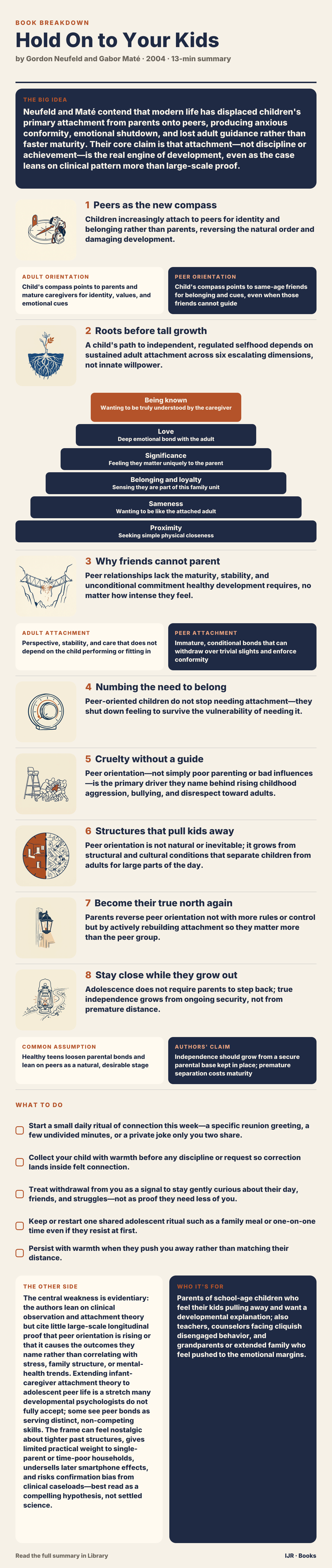
- Neufeld and Maté claim children increasingly look to friends, not parents, for identity, values, and emotional cues—a shift they call peer orientation.
- Healthy development, they argue, runs on sustained attachment to caring adults across six dimensions from proximity to being known; maturity emerges from security, not pressure.
- Peers lack the maturity, stability, and unconditional commitment to guide growth, so peer orientation yields conformity, status anxiety, and brittle defenses.
- When attachment feels too risky, children emotionally shut down—appearing indifferent—which blocks empathy, conscience, and real relationship.
- Bullying, aggression, and eroded respect for adults flow, in their view, from lost parental attachment rather than discipline failure alone.
- The fix is parents rebuilding connection through closeness, rituals, and warmth before demands—and staying attached through adolescence, not stepping back.
The big idea
Neufeld and Maté contend that modern life has displaced children's primary attachment from parents onto peers, producing anxious conformity, emotional shutdown, and lost adult guidance rather than faster maturity. Their core claim is that attachment—not discipline or achievement—is the real engine of development, even as the case leans on clinical pattern more than large-scale proof.
The book in brief
the book in brief
The authors open on a pattern from clinical practice: children whose compass points to friends for belonging, values, and emotional cues rather than to parents. They name this peer orientation and separate it sharply from ordinary friendship. Historically, they say, kids attached first to mature adults and used that bond as a secure base; extended daycare, age-segregated schooling, and technology that keeps peers always reachable have rerouted the need. Attachment is framed not as a nicety but as the mechanism through which children absorb values, regulate emotion, and gain the security independence requires.
They then lay out attachment as the developmental engine. It escalates through six dimensions—proximity, sameness, belonging and loyalty, significance, love, and being known. Secure adult attachment frees a child's energy for growth, curiosity, and selfhood; maturity cannot be taught directly or rushed. Push independence without that root system and the result is anxiety and defense, not adulthood. Peers, living through the same immaturity, cannot supply the steady hierarchical bond a developing child needs.
Middle chapters track the damage. Peer ties are often unstable and conditional, so kids grow hyper-vigilant about status and oddly conformist, adopting group tastes wholesale because difference risks exclusion. When needs feel too dangerous to feel, the brain numbs them—emotional shutdown that looks like sarcasm and studied indifference but is a survival strategy. That dulling blocks access to conscience and empathy. Disrespect, bullying, and casual cruelty follow because children no longer internalize adult values through wanting to please someone they are attached to; without attached adults as emotional arbiters, peer hierarchies default to dominance.
Causes are structural, not timeless: daycare and after-school programs, age-segregated school, thinner multigenerational communities, early always-on messaging, and a culture that mistakes early peer socialization for health. A vicious cycle forms when parents read a child's pull toward peers as healthy growing up and withdraw further, deepening the shift. Families under time and money pressure cede still more of the day to peer environments.
The remedy is reclaiming the parental role without forbidding friends or piling on rules, which tend to backfire. Parents rebuild the six dimensions—shared time, rituals of family belonging, expressed significance, unconditional delight—and collect the child with warmth before any correction so discipline lands inside connection. A defended child often resists at first; persistence matters. Through adolescence the same logic holds: stay involved, keep shared meals and one-on-one time, know their world without turning care into control. Independence should grow from a secure base still in place. The book lands on a simple larger claim—hold the adult attachment, and development can right itself.
Context
Gordon Neufeld and Gabor Maté wrote as clinicians drawing on attachment science and pattern recognition in practice. The 2004 book mattered because it named a cultural drift many parents felt but could not articulate, offering a developmental explanation rooted in attachment rather than nostalgia alone.
The key ideas
1
Peers as the new compass
Children increasingly attach to peers for identity and belonging rather than parents, reversing the natural order and damaging development.
Adult orientation
Child's compass points to parents and mature caregivers for identity, values, and emotional cues
Peer orientation
Child's compass points to same-age friends for belonging and cues, even when those friends cannot guide
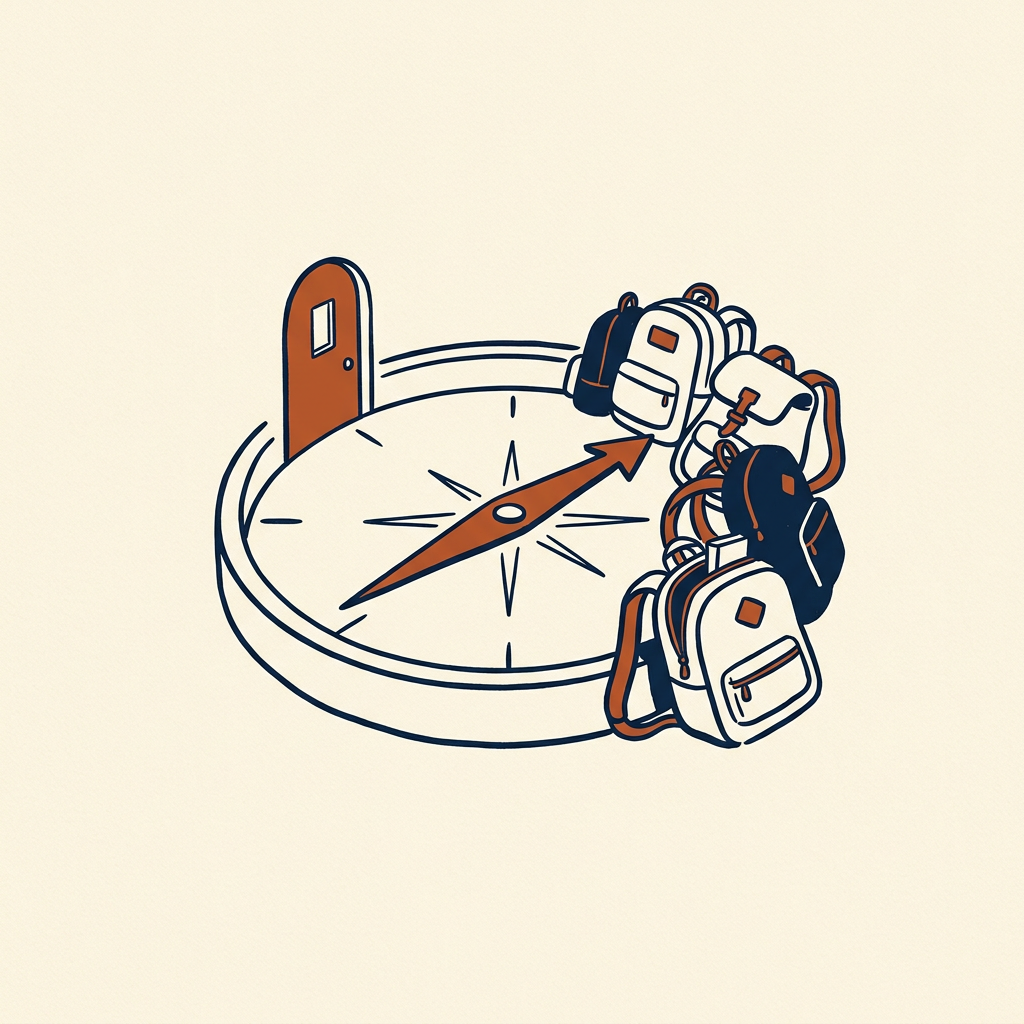
Neufeld and Maté describe children who treat friends—not parents—as their primary source of orientation, values, and emotional cues. They call this peer orientation and insist it is not the same as ordinary friendship. The child's compass points toward other children for a sense of who they are and where they belong, instead of toward adults with more perspective, patience, and long-term investment.
Historically, they argue, children attached first and most powerfully to parents and other mature adults, then used that bond as a secure base from which to explore. What looks like a simple preference shift is, in their framing, a structural change in attachment itself.
Drivers include extended daycare hours, age-segregated schooling, and technology that lets kids reach peers constantly. The stakes are high because attachment is the channel through which children absorb values, build regulation, and gain security. Reroute that channel to same-age companions who cannot guide them, and development itself is disrupted—not because kids or their friends are morally failing, but because a biological need has been systemically redirected.
In practice: The authors return to the shift in whom a child turns to first when upset or excited: once a parent was automatic; for many children now it is a friend no better equipped to handle the moment.
2
Roots before tall growth
A child's path to independent, regulated selfhood depends on sustained adult attachment across six escalating dimensions, not innate willpower.
- Being knownWanting to be truly understood by the caregiver
- LoveDeep emotional bond with the adult
- SignificanceFeeling they matter uniquely to the parent
- Belonging and loyaltySensing they are part of this family unit
- SamenessWanting to be like the attached adult
- ProximitySeeking simple physical closeness
Attachment, in their framing, is the drive to seek closeness and belonging with specific caregivers. It moves through six dimensions: proximity, sameness, belonging and loyalty, significance, love, and finally being known. Young children begin with simple physical nearness and, over years, grow toward wanting to be truly understood by that same adult.
That progression builds psychological architecture. A secure attachment frees energy for curiosity and the gradual construction of independent selfhood, because the child is not anxiously monitoring whether connection will hold. Maturity cannot be rushed or taught as a lesson; it emerges as a byproduct of feeling securely held over time.
A child pushed toward independence too early, without that foundation, does not become more mature—only more anxious and defended. If attachment is the engine, then handing its job to peers does not merely change social life; it interrupts the whole developmental sequence. Peers are not equipped for the steady, hierarchical, patient relationship a developing child requires.
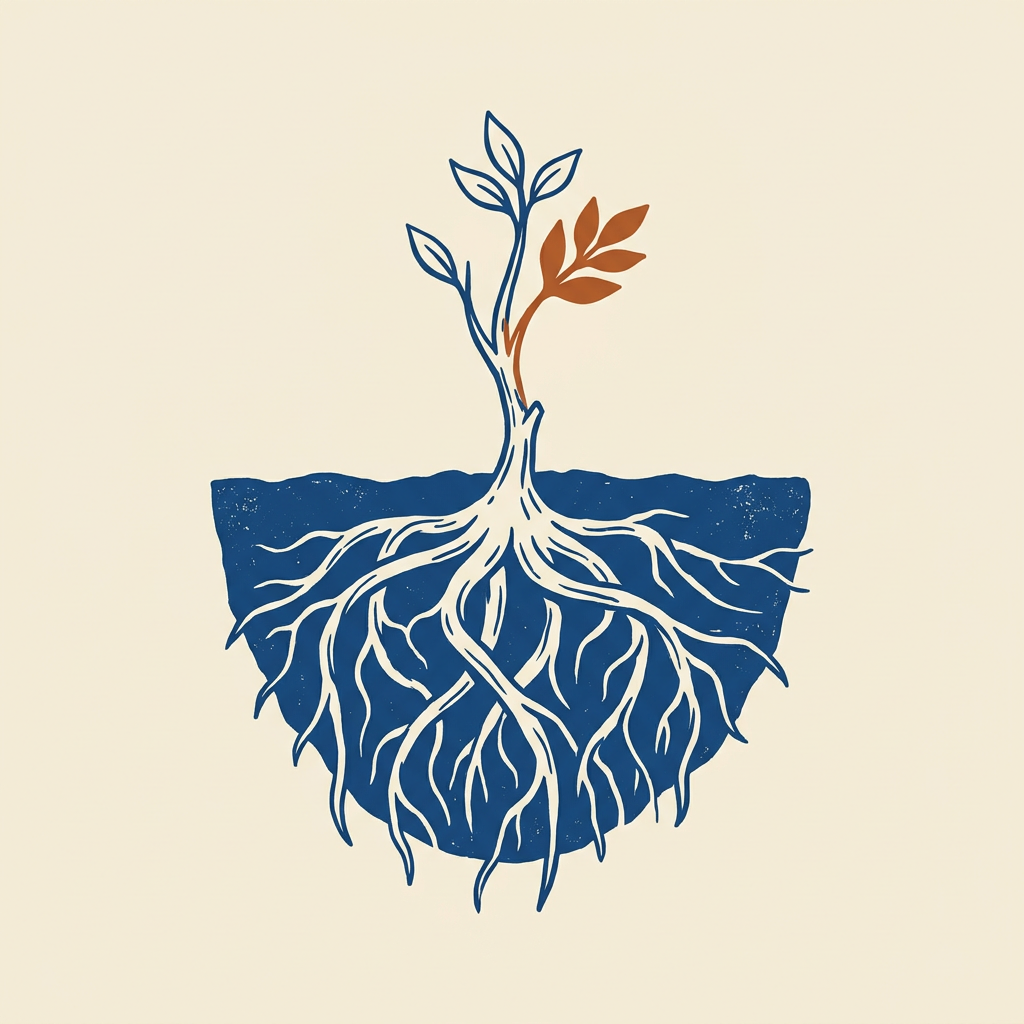
In practice: They liken the child to a plant that needs roots before it can grow tall: attachment is the root system, and resilience, self-control, empathy, and individuality grow out of it.
3
Why friends cannot parent
Peer relationships lack the maturity, stability, and unconditional commitment healthy development requires, no matter how intense they feel.
Adult attachment
Perspective, stability, and care that does not depend on the child performing or fitting in
Peer attachment
Immature, conditional bonds that can withdraw over trivial slights and enforce conformity
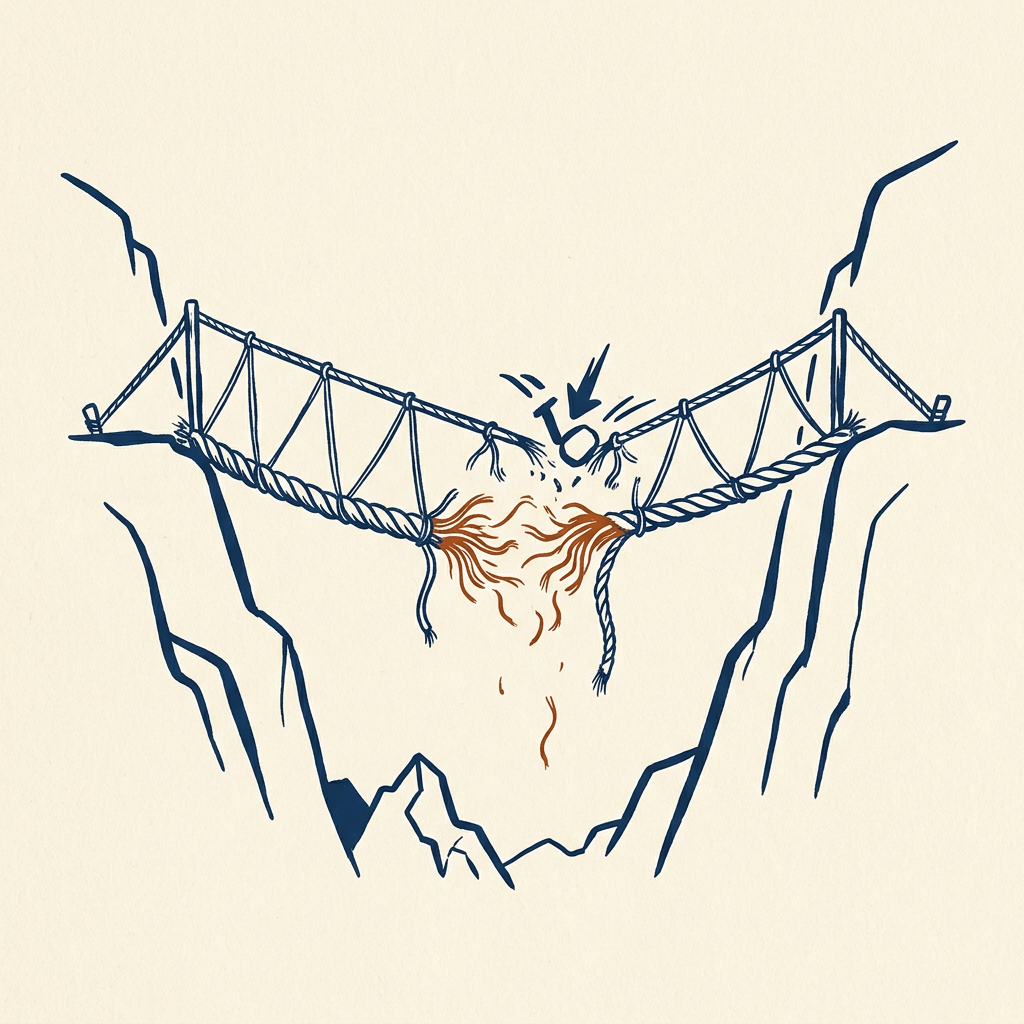
Adult attachment figures bring perspective, emotional stability, and an investment in the child's welfare that does not hinge on performance or fitting in. Peers, by contrast, are immature and egocentric by developmental necessity. Their bonds are often unstable and conditional: friendship can vanish over a slight, loyalty can flip, and groups enforce conformity rather than nurture individuality.
What adults sometimes read as healthy social flowering—intense adolescent friendships and romances—can mask deep insecurity. Teens may cling with anxious desperation precisely because the relationships are unreliable and the child senses it. Peer-oriented kids become hyper-vigilant about status, appearance, and group approval, which stunts the individuality secure attachment would otherwise protect.
Peer culture also tends to prize toughness and distance from adult authority, pushing children toward the appearance of not caring as a shield. Peer orientation is not a harmless alternative attachment; it is a developmentally inadequate one that yields defensive, brittle personalities rather than resilient ones.
In practice: Children who are peer-oriented often become oddly conformist, taking on a group's language, tastes, and attitudes wholesale because standing apart risks exclusion.

4
Numbing the need to belong
Peer-oriented children do not stop needing attachment—they shut down feeling to survive the vulnerability of needing it.
When attachment needs go unmet or feel too risky to show, the authors say the brain protects itself by numbing feeling rather than facing the pain of unfulfilled connection. This is not ordinary independence. A securely attached child apart from a parent still feels the absence and shows it; a defended child appears not to care and treats vulnerability as weakness.
They tie the defense directly to peer orientation. Once secure parental attachment weakens and trust moves to an unstable peer world, the child cannot afford the full weight of that instability, so feeling itself gets shut off as survival strategy. Flat affect, sarcasm, and studied indifference among teens get mistaken for normal moodiness instead of defense against unbearable vulnerability.
Costs run past mood. Shutdown blocks access to conscience, empathy, and genuine relationship, all of which need emotional openness. The child becomes harder to reach and teach, and more prone to risk-taking, aggression, or self-harm, because internal alarms tied to care for self and others have been dulled. Peer-oriented adolescence, in this account, looks rebellious by nature but is defended by necessity.
In practice: A teenager answers a friend's betrayal with cold dismissal rather than visible hurt—not because it did not wound, but because feeling it fully is too dangerous on already precarious attachment footing.
5
Cruelty without a guide
Peer orientation—not simply poor parenting or bad influences—is the primary driver they name behind rising childhood aggression, bullying, and disrespect toward adults.
Increased bullying, casual cruelty, and eroded respect for adult authority are treated as downstream effects of the attachment shift, not separate culture problems. When children stop looking to adults for guidance and orient toward peers for identity and approval, they also stop internalizing adult values through attachment-based imitation and admiration.
Respect for adults, they argue, was never mainly a product of enforced discipline. It grew from a child wanting to please someone they were attached to. Remove the attachment and the desire to please disappears with the respect, leaving power dynamics and rules with no emotional buy-in. Bullying flourishes because status hierarchies among immature children, unmediated by attached adults' oversight and empathy, default to dominance and exclusion.
Aggression also links to shutdown: a child cut off from their own vulnerability loses access to empathy for others' vulnerability too. What many treat as a discipline or values crisis is reframed as a connection problem—so punitive responses miss the cause and rarely work.
In practice: On playgrounds and in cafeterias, cruelty goes unchecked not only when adults are literally absent but when children have stopped treating them as arbiters of behavior.
6
Structures that pull kids away
Peer orientation is not natural or inevitable; it grows from structural and cultural conditions that separate children from adults for large parts of the day.
The authors treat widespread peer orientation as historically recent. Age-segregated schooling, expanded daycare and after-school care, and the decline of extended family and multigenerational communities once surrounded children with multiple attached adults. Even before smartphones, they flagged early instant messaging and constant peer access as accelerants: contact that once ended with the school day became continuous validation and pressure.
Modern parenting culture, prizing independence and self-reliance, sometimes pushes very young children toward peer groups before they have the security to handle it, mistaking early peer socialization for health. Socioeconomic pressure leaves some families less bandwidth for attachment-building time, inadvertently ceding more of the child's day to peer environments.
A vicious cycle follows. As children become peer-oriented they resist parental closeness; parents read that as proof the child is growing up and needs less involvement; withdrawal deepens the shift. The hopeful claim is reversibility: attachment can be rebuilt, so peer orientation is a current default, not a fixed trait, and it moves when the structure of the child's relationships moves.
In practice: Parents who interpret a child's pull toward friends as healthy independence often step back further—exactly when the authors say more connection, not less, is required.

7
Become their true north again
Parents reverse peer orientation not with more rules or control but by actively rebuilding attachment so they matter more than the peer group.
Stricter discipline, heavier rules, and forbidding friendships tend to backfire, the authors say, by making peers the escape from parental control. The work is to become important to the child again through the six dimensions of attachment: more physical closeness and shared time, rituals of belonging that make the child feel part of this family specifically, clear signals of the child's significance, and unconditional love and delight in who the child is apart from behavior or achievement.
They stress collecting the child—initiating warm contact before any demand or correction—so discipline arrives inside felt connection rather than as fresh evidence of distance. The process needs patience and consistency. A child already peer-oriented and defended will often resist overtures, having learned to guard against vulnerability.
Persistence still matters. Once attachment reestablishes, the child's need to lean so hard on peers for identity and belonging eases, and the natural hierarchy returns: parents guide; peers complement rather than replace.
In practice: Parents reinstate small daily rituals—a specific after-school greeting, a bedtime routine, a private nickname or joke—that restore exclusive connection the peer group cannot copy.
8
Stay close while they grow out
Adolescence does not require parents to step back; true independence grows from ongoing security, not from premature distance.
Common assumption
Healthy teens loosen parental bonds and lean on peers as a natural, desirable stage
Authors' claim
Independence should grow from a secure parental base kept in place; premature separation costs maturity
A widespread assumption holds that healthy adolescence means loosening parental bonds and raising peer influence as a natural stage. The authors reject that. Independence should emerge from a secure base still in place; a teenager who separates from parents too early is not maturing faster but losing the foundation maturity needs.
Apparent rebellion and secrecy often reflect a peer-oriented teen defending territory they rely on because parental attachment has already weakened—not a universal biological stage every teen must pass. Practically, parents should stay involved in a teen's friends, days, and struggles without mistaking involvement for control or nagging.
Outsourcing discipline and guidance to institutions or peer culture in these years is especially costly, because decision stakes rise sharply just when attachment still matters most. Rebuilding with an already peer-oriented teenager is harder and slower than maintaining the bond from childhood, yet they insist it remains possible. Warmth, curiosity about inner life, and non-punitive engagement can gradually shift the compass back, even if imperfectly.
In practice: They urge keeping shared rituals such as family meals or regular one-on-one time through adolescence—precisely when many parents assume the teen wants to be left alone, and when resisters often need the overtures most.
Key terms
- peer orientation When a child's main compass for identity, belonging, and emotional cues points to other children instead of to caring adults
- attachment The drive to seek closeness and belonging with specific caregivers; treated as the engine of healthy development
- six dimensions of attachment Escalating forms of bond: proximity, sameness, belonging and loyalty, significance, love, and being known
- emotional shutdown Numbing feeling as a defense when attachment needs feel unmet or too risky to show
- collecting the child Actively offering warmth and contact before any demand or correction so guidance lands inside connection
- defended child A child who appears not to need anyone, treating vulnerability as weakness after attachment has felt unsafe
- hierarchical attachment A steady adult-to-child bond with perspective and unconditional investment peers cannot provide
What to do
- Start a small daily ritual of connection this week—a specific reunion greeting, a few undivided minutes, or a private joke only you two share.
- Collect your child with warmth before any discipline or request so correction lands inside felt connection.
- Treat withdrawal from you as a signal to stay gently curious about their day, friends, and struggles—not as proof they need less of you.
- Keep or restart one shared adolescent ritual such as a family meal or one-on-one time even if they resist at first.
- Persist with warmth when they push you away rather than matching their distance.
Questions to think with
- Who does your child turn to first when upset or excited, and what would shift if that answer were more often you?
- Where have you read a child's pull toward peers as healthy independence and stepped back—might the opposite move be needed?
- Which small ritual of exclusive belonging could you restore this week that no peer group can copy?
- How much of your teen's secrecy or indifference might be defense against vulnerability rather than a required stage?
- If attachment is the engine, which of your current discipline habits rebuild connection and which only widen distance?
The other side
The central weakness is evidentiary: the authors lean on clinical observation and attachment theory but cite little large-scale longitudinal proof that peer orientation is rising or that it causes the outcomes they name rather than correlating with stress, family structure, or mental-health trends. Extending infant-caregiver attachment theory to adolescent peer life is a stretch many developmental psychologists do not fully accept; some see peer bonds as serving distinct, non-competing skills. The frame can feel nostalgic about tighter past structures, gives limited practical weight to single-parent or time-poor households, undersells later smartphone effects, and risks confirmation bias from clinical caseloads—best read as a compelling hypothesis, not settled science.
Who it's for
Parents of school-age children who feel their kids pulling away and want a developmental explanation; also teachers, counselors facing cliquish disengaged behavior, and grandparents or extended family who feel pushed to the emotional margins.