




Addiction is a response to early pain, not weakness
Punishing people who use drugs deepens the isolation and shame that drove the compulsion in the first place.
IJR · Oct 31, 2026 · 13 min read
In 60 seconds
- Addiction is any compulsive pattern of craving, short relief, lasting harm, and inability to stop—heroin in an alley and obsessive shopping sit on the same continuum.
- The harshest addictions track the harshest early adversity, often multiple forms of abuse or neglect before age five.
- Disrupted infant attachment leaves reward and stress circuits underbuilt, so drugs later answer a preexisting deficit rather than hijack a healthy brain.
- Environment rivals chemistry: social rats largely refuse morphine that isolated rats chase, and most Vietnam heroin users quit once home.
- Genes set sensitivity ranges; early stress can switch vulnerable expression on without rewriting DNA.
- Criminalization repeats the original wound; harm reduction and support for early caregiving aim at the pain itself.
The big idea
Maté argues addiction is neither a moral failing nor a simple pharmacological trap but an attempt to soothe unbearable early pain rooted in disrupted attachment and underbuilt self-regulation. Punitive policy deepens that wound, while treatment and prevention work by restoring connection, stability, and the conditions of safe childhood.
The book in brief
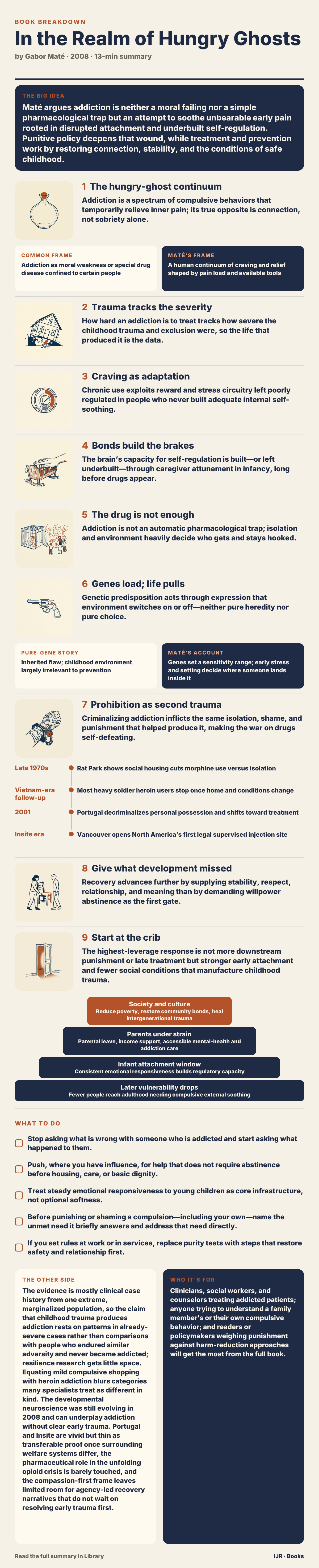
Maté opens with the Buddhist hungry ghost—an aching belly and a throat too narrow to fill—and places his own compulsive classical-music buying beside the street addictions he treats. He defines addiction by craving, temporary relief, long-term harm, and difficulty stopping, then treats it as a human continuum rather than a special moral category. Understanding any case means understanding the pain it relieves.
He turns to patients at a Vancouver Downtown Eastside clinic. Across dozens of histories—childhood sexual abuse followed by sex work and cocaine, foster care after violence, Indigenous families shattered by residential schools—the most entrenched addictions almost always map onto the most severe early adversity, often before age five. By the time drugs appear, the groundwork is already laid.
Neuroscience and attachment theory supply the mechanism. Dopamine, endogenous opioids, and stress hormones operate inside a range when early caregiving builds the orbitofrontal circuits of regulation; chronic early stress leaves those systems swinging between distress and craving. A first opioid dose often feels not novel but finally normal. Maté links this to his own infancy under occupation and a depressed, survival-preoccupied mother.
Two classic findings undercut the idea that drugs alone trap people. Rats in enriched social colonies largely ignore morphine that isolated caged rats self-administer. Most American soldiers who used heroin heavily in Vietnam stopped once home, without formal treatment. Genes matter as heritable sensitivity to impulsivity and stress, yet environment switches expression; siblings in one household can diverge sharply.
Policy follows the same logic. Arrest, jail, stigma, and blocked work reinstate the isolation that fed the addiction. Portugal’s 2001 decriminalization of personal possession and Vancouver’s supervised injection site illustrate the alternative: remove criminal penalties, meet people without demanding abstinence first, and open paths to stability. Clinically Maté favors methadone, housing, basic care, and a non-moralizing relationship, redefining success as less harm and more dignity, sometimes years on and sometimes short of full abstinence.
The final move runs furthest upstream. If vulnerability is built in the crib, the highest-leverage response is support for stressed new parents, reduced poverty, parental leave, and community healing for intergenerational trauma. Treatment and prevention become one project aimed at the same wound at different times.
Context
Gabor Maté wrote from a decade treating severely addicted patients in Vancouver’s Downtown Eastside and from his own compulsive habits; the book appeared in 2008. Its shift—from addiction as crime or discrete disease to addiction as adaptation to pain—changed how many clinicians, policymakers, and readers speak about the subject.
The key ideas
1
The hungry-ghost continuum
Addiction is a spectrum of compulsive behaviors that temporarily relieve inner pain; its true opposite is connection, not sobriety alone.
Common frame
Addiction as moral weakness or special drug disease confined to certain people
Maté’s frame
A human continuum of craving and relief shaped by pain load and available tools
Maté borrows the hungry ghost—an endless belly and a throat too thin to satisfy—as the book’s central image. He immediately includes himself: classical-music CD binges that pulled him from patients and family for a rush of relief he could not otherwise name.
He sets a working definition with four parts: craving, short-lived pleasure or ease, negative long-term consequences, and real difficulty stopping. That definition covers alley heroin and a physician’s record shopping under one roof. Severity differs; the pattern does not.
The point is not to flatten suffering. It is to drop the idea that addiction is a special moral weakness reserved for certain drugs or certain people. It becomes a universal vulnerability along a continuum, shaped by how much pain someone carries and how few other tools they have.
Once addiction is relief-seeking rather than a discrete disease entity, every later argument—case histories, brain science, policy—follows. You understand the behavior by understanding the pain it answers.
In practice: Maté’s own CD hunts neglected work and family for a relief he could not name any other way.
2
Trauma tracks the severity
How hard an addiction is to treat tracks how severe the childhood trauma and exclusion were, so the life that produced it is the data.
At the Portland Hotel Society clinic in Vancouver’s Downtown Eastside—one of North America’s densest injection-drug areas—Maté treats patient histories as evidence, not decoration.
Women who survived childhood sexual abuse later turned to sex work and cocaine. Men raised in foster care after violent homes. A disproportionate share of Indigenous patients whose families were broken by residential schools and forced separation from land and culture. Across dozens of cases the pattern holds: the most entrenched addictions almost universally report the most severe early adversity, often multiple forms compounding before age five.
Poverty and trauma intertwine but are not identical. Some patients came from financially stable homes marked by emotional abandonment; others faced material deprivation plus violence. The shared thread is damage to a child’s sense of safety and worth.
This undercuts the story that addiction mainly begins with bad choices in adolescence. By the time the drug arrives, the neurological and emotional groundwork is typically years old. The base is clinical case history from an extreme population, not a controlled study—a limit the book never fully escapes.
In practice: Patients with the hardest-to-treat addictions almost universally described severe adversity, often several forms of abuse or neglect layered before age five.
3
Craving as adaptation
Chronic use exploits reward and stress circuitry left poorly regulated in people who never built adequate internal self-soothing.
Maté walks through the chemistry of craving: dopamine circuits that drive motivation and reward-seeking, endogenous opioid systems that produce comfort and connection, cortisol that floods the body under threat.
In people who developed secure internal regulation early, these systems stay within a manageable range, damped by a well-developed orbitofrontal cortex—the region tied to impulse control and emotional regulation. When early environments failed to support that development, the same systems swing hard between distress and the hunt for relief.
A drug such as heroin or cocaine does not invent a new appetite. It hijacks an existing, poorly regulated appetite for ease the person has carried since early life. Biology here is shaped by history, not fixed at birth.
That sets up the developmental claim: if regulatory systems are built through experience, addiction vulnerability is largely set before anyone meets a drug.
In practice: Patients often described a first opioid dose not as novel pleasure but as the first time they felt normal—at ease in their own skin.
4
Bonds build the brakes
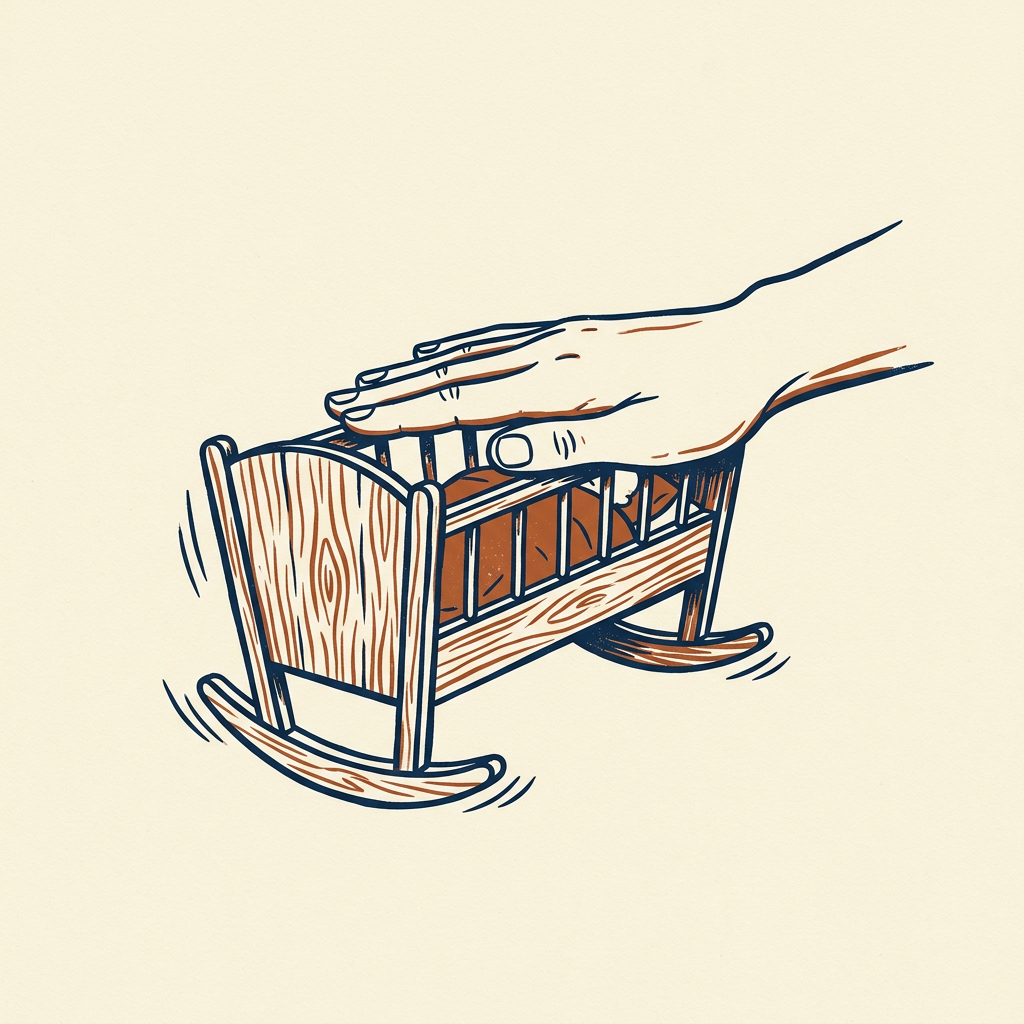
The brain’s capacity for self-regulation is built—or left underbuilt—through caregiver attunement in infancy, long before drugs appear.
An infant’s brain relies on a caregiver’s responsiveness: soothed when distressed, mirrored when expressive. Each attuned exchange is practice for self-regulation. Repeated absence leaves the pathways underdeveloped.
Chronic early stress elevates cortisol in ways that can impair growth of the orbitofrontal cortex and related structures. Maté places the sensitive window largely before school age.
He ties the science to his own start: born in Budapest in 1944 under Nazi occupation, briefly separated from his mother in extreme danger, then raised by a mother he describes as depressed and preoccupied with survival. He reads his adult compulsion to acquire and escape through the same mechanism—an early attachment rupture producing lifelong vulnerability to self-soothing by acquisition—without equating its severity to heroin.
The chapter’s power is the lived link between abstract circuits and real infancy. Its unresolved limit is heavy reliance on retrospective narrative and silence on why many people with comparable early disruption never develop addiction.
In practice: Maté connects brief infant separation and a depressed, survival-focused mother to his later compulsive need for the relief of acquisition.
5
The drug is not enough
Addiction is not an automatic pharmacological trap; isolation and environment heavily decide who gets and stays hooked.
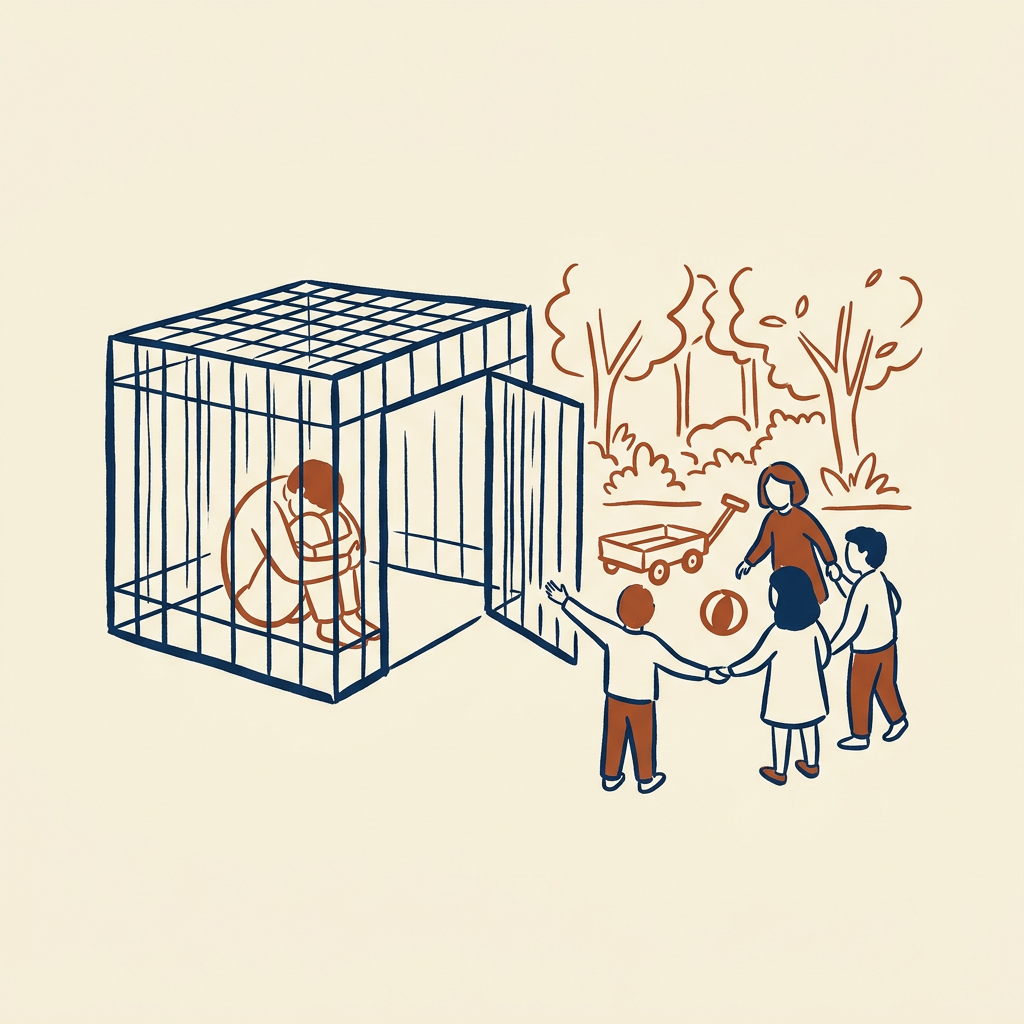
Two bodies of evidence complicate the chemical-hook story. In Bruce Alexander’s late-1970s Rat Park work, rats in isolated cages readily self-administered morphine-laced water, while rats in a spacious social enclosure with toys and companions took far less of the same solution even when it was free.
Lee Robins’s research on American soldiers who used heroin heavily in Vietnam found that roughly ninety percent stopped once home, without formal treatment, after leaving the stress and social conditions of the war.
If exposure alone were nearly deterministic, isolated and social rats should have used at similar rates, and returning soldiers should have kept using at Vietnam rates. Neither occurred.
Maté reads the implication straight onto the Downtown Eastside: addictions persist not only because the drugs are strong, but because isolation, trauma, and deprivation remain the daily environment. Policies that only chase the substance miss the condition.
In practice: Roughly ninety percent of soldiers who used heroin heavily in Vietnam stopped after returning home, without formal treatment.
6
Genes load; life pulls
Genetic predisposition acts through expression that environment switches on or off—neither pure heredity nor pure choice.
Pure-gene story
Inherited flaw; childhood environment largely irrelevant to prevention
Maté’s account
Genes set a sensitivity range; early stress and setting decide where someone lands inside it
Addiction runs in families, and Maté does not deny heritability. Twin and adoption work point to variation in impulsivity and stress sensitivity that can raise vulnerability.
Genes, he argues, are probabilities activated by environment, not fixed fates. Emerging epigenetic findings show early stress can alter gene expression—turning vulnerabilities on—without changing the DNA sequence itself.
Siblings raised in the same household sometimes diverge sharply, one addicted and one not. Maté attributes the split to how each child met the same setting: birth order, temperament, or exposure to particular stressors at different developmental moments.
The chapter corrects the book’s own tilt. After stressing trauma and environment, Maté refuses a pure-environment story that would ignore biology, and refuses a genetic determinism that would make childhood prevention irrelevant. Genes set a range; environment lands the person inside it.
In practice: Siblings in one home can split outcomes—one addicted, one not—through differences in temperament, birth order, or timing of stressors.
7
Prohibition as second trauma
Criminalizing addiction inflicts the same isolation, shame, and punishment that helped produce it, making the war on drugs self-defeating.
- Late 1970sRat Park shows social housing cuts morphine use versus isolation
- Vietnam-era follow-upMost heavy soldier heroin users stop once home and conditions change
- 2001Portugal decriminalizes personal possession and shifts toward treatment
- Insite eraVancouver opens North America’s first legal supervised injection site
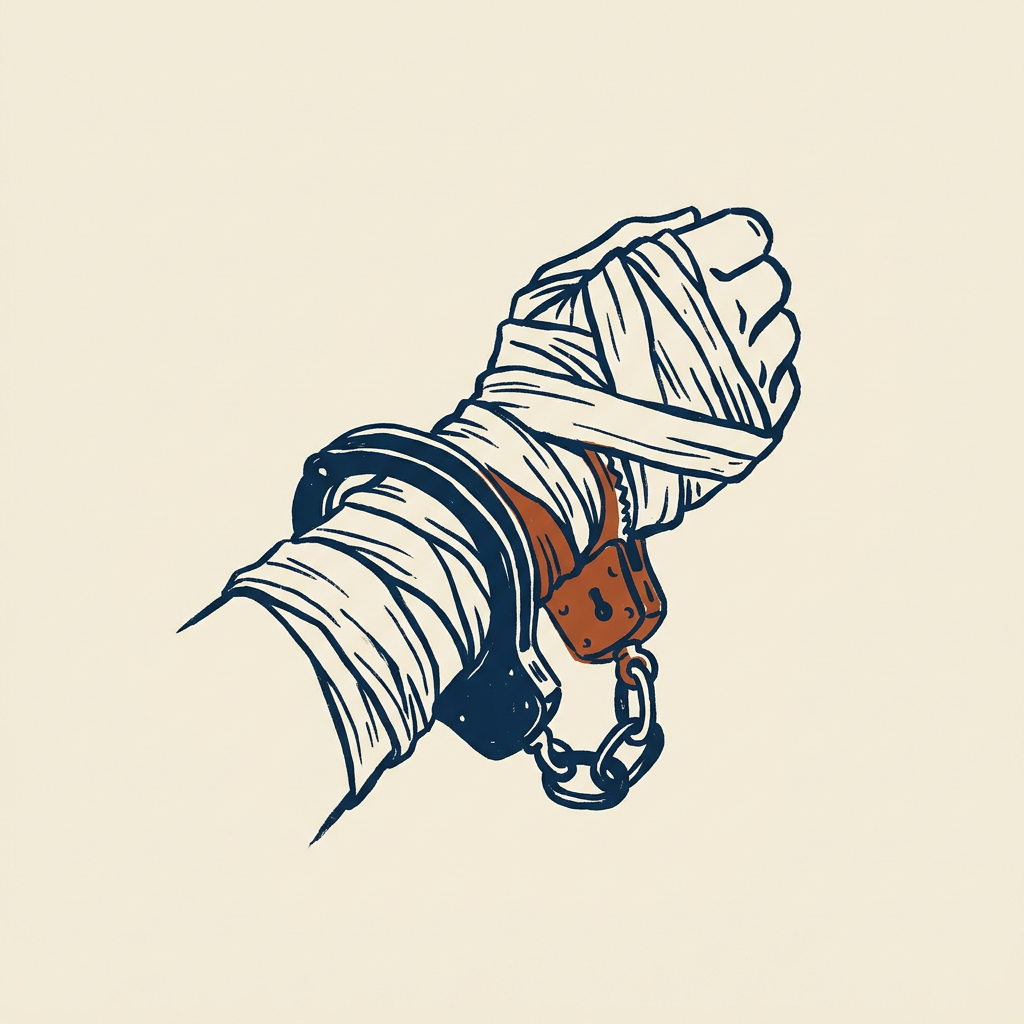
Once addiction is rooted in trauma and unmet developmental need, Maté turns to policy. Arrest, incarceration, and stigma strip what little stability patients have. Criminal records close employment. Public shaming deepens the isolation that drove use.
Portugal’s 2001 choice to decriminalize personal possession and shift resources toward treatment and social support did not produce the predicted surge in use. It correlated with fewer overdose deaths and less HIV transmission in the years that followed.
Vancouver’s Insite—North America’s first legally sanctioned supervised injection site—let clinicians meet people without requiring abstinence first. Maté argues that stance saves lives and opens doors to care that punishment seals.
He does not claim decriminalization alone cures addiction. He claims it removes an active harm stacked on an already hard condition. The illustration is strong; how far the results travel without similar health and welfare systems is left thin.
In practice: Portugal’s 2001 decriminalization of personal possession redirected energy to support and later showed drops in overdose deaths and HIV transmission.
8
Give what development missed
Recovery advances further by supplying stability, respect, relationship, and meaning than by demanding willpower abstinence as the first gate.
At the Portland clinic Maté practiced harm reduction rather than forced abstinence. He prescribed methadone and sometimes supported continued use while stabilizing housing, basic medical care, and a consistent relationship with a provider who did not moralize.
Confrontational or shame-based rehab models, he argues, replay the rejection many patients met in childhood and make relapse more likely. Progress often came because someone finally had safety and a steady bond—sometimes years into care, sometimes without ever fully leaving drugs—while quality of life still rose.
Success is redefined: less harm, more stability, restored dignity. The work is slow and uneven, unsatisfying to anyone wanting quick fixes.
Addiction here is a relationship problem as much as a substance problem. Healing therefore needs relationship, not only removal of the drug. Critics call the approach permissive without a clear endpoint; Maté notes the tension without fully dissolving it.
In practice: Some patients improved through stable housing and a non-judging provider years into care, even when full abstinence never arrived.
9
Start at the crib
The highest-leverage response is not more downstream punishment or late treatment but stronger early attachment and fewer social conditions that manufacture childhood trauma.
- Society and cultureReduce poverty, restore community bonds, heal intergenerational trauma
- Parents under strainParental leave, income support, accessible mental-health and addiction care
- Infant attachment windowConsistent emotional responsiveness builds regulatory capacity
- Later vulnerability dropsFewer people reach adulthood needing compulsive external soothing
If vulnerability is largely built in the first years through attachment quality and chronic stress, the decisive intervention point is the crib, not the clinic or the courtroom.
Maté calls for investment in new parents under economic or psychological strain: reduce poverty, expand parental leave, make mental-health and addiction care reachable for parents themselves. That upstream work, he argues, would cut future addiction more than any later drug statute.
He returns to Indigenous patients: healing intergenerational residential-school trauma needs community-level cultural restoration, not only individual treatment plans.
This is the book’s most speculative stretch—moving from clinical pattern to broad social prescription. Attachment research supports early regulation mattering; specific policy leaps rest more on conviction than comparative outcome data. Still the throughline holds: every chapter moved further upstream, and the last asks readers to treat treatment and prevention as one project aimed at one wound.
In practice: Maté ties lower future addiction rates to practical supports for stressed new parents—leave, income stability, and reachable care for the parents’ own pain.
Key terms
- Hungry ghost Buddhist image of endless craving—an aching emptiness that nothing fully fills; Maté’s metaphor for addiction.
- Four-feature addiction Craving, temporary relief or pleasure, negative long-term consequences, and difficulty stopping despite those consequences.
- Attachment attunement A caregiver’s repeated soothing and mirroring that builds an infant’s own capacity to regulate stress and emotion.
- Orbitofrontal cortex Brain region involved in impulse control and emotional regulation; Maté links its development to early responsive care.
- Harm reduction Care that lowers damage and builds stability without demanding abstinence as the first condition of help.
- Rat Park Alexander’s finding that rats in rich social housing take far less morphine than rats kept isolated in bare cages.
- Epigenetic switch Early stress altering gene expression—turning vulnerability up or down—without changing the DNA sequence.
- Decriminalization Removing criminal penalties for personal possession so resources shift toward treatment and support rather than punishment.
What to do
- Stop asking what is wrong with someone who is addicted and start asking what happened to them.
- Push, where you have influence, for help that does not require abstinence before housing, care, or basic dignity.
- Treat steady emotional responsiveness to young children as core infrastructure, not optional softness.
- Before punishing or shaming a compulsion—including your own—name the unmet need it briefly answers and address that need directly.
- If you set rules at work or in services, replace purity tests with steps that restore safety and relationship first.
Questions to think with
- What pain or unmet need might a compulsive pattern in your own life be temporarily answering?
- If environment and isolation shape addiction as much as chemistry, what daily conditions around someone you know are still feeding the loop?
- Where does a harm-reduction stance feel wise to you, and where does the fear of permissiveness without an endpoint still tug?
- How would policy change if prevention truly started with support for stressed new parents rather than with later punishment?
- What would it take to hold both deep compassion for early wounds and real room for personal agency in recovery stories?
The other side
The evidence is mostly clinical case history from one extreme, marginalized population, so the claim that childhood trauma produces addiction rests on patterns in already-severe cases rather than comparisons with people who endured similar adversity and never became addicted; resilience research gets little space. Equating mild compulsive shopping with heroin addiction blurs categories many specialists treat as different in kind. The developmental neuroscience was still evolving in 2008 and can underplay addiction without clear early trauma. Portugal and Insite are vivid but thin as transferable proof once surrounding welfare systems differ, the pharmaceutical role in the unfolding opioid crisis is barely touched, and the compassion-first frame leaves limited room for agency-led recovery narratives that do not wait on resolving early trauma first.
Who it's for
Clinicians, social workers, and counselors treating addicted patients; anyone trying to understand a family member’s or their own compulsive behavior; and readers or policymakers weighing punishment against harm-reduction approaches will get the most from the full book.