




The danger of kitchen life is what makes it meaningful
Professional cooking thrives as a brutal tribal subculture whose dysfunction supplies the meaning rather than a flaw to remove.
IJR · Oct 25, 2026 · 10 min read
In 60 seconds
- A single perfect childhood meal in France hooked Bourdain harder than any career plan.
- Dinner rush survives only through rigid French brigade rank and mise en place against default chaos.
- Kitchens absorb immigrants, ex-convicts, addicts, and misfits because the work needs people with few other options.
- Diners miss Monday-old fish, brunch as a leftover dump, and wine priced to prop up thin food margins.
- The same intensity that thrills also normalized long drug habits and early deaths the industry shrugged off.
- Bourdain still insists a fully sanitized kitchen would lose the belonging that keeps people inside it.
The big idea
Big Idea
Bourdain claims professional kitchens are closer to criminal fraternities than polite artisan shops, held together by adrenaline, hierarchy, low pay, and tribal loyalty. Danger and dysfunction are not bugs to fix; they are the source of meaning for the people who stay.
The book in brief
Book in Brief
Bourdain starts with the sensory jolt that pulled him in. A perfect meal abroad hit a bored American kid hard. A Cape Cod clam-shack summer then showed him cooks moving like pirates under a private code of swagger and mockery. He wanted that crew more than cuisine as an abstract art.
The romance meets its real demands next. Service is organized chaos. Strict rank, fixed stations, and relentless prep are what keep dozens of tickets from turning into wasted food. The people who last often already sit outside ordinary workplaces. The kitchen answers with a clear task, a rank, and a crew that needs them to show up.
Money gets its own confession. The plate out front is a managed illusion. Ingredient age, menu tricks, and beverage pricing quietly protect razor-thin margins while wages stay low and hours stay brutal.
The physical and chemical toll runs in parallel. Late kitchens treated stimulants as common currency. Habits lasted for years beside the work. Colleagues who did not survive met a grim shrug instead of a safety net.
Authority rewrites the bargain. As executive chef the job stopped being out-hustling everyone on the line and became judgment calls about who to protect, who to fire, and how to hold standards when former equals now answer to you. Loneliness comes with the seat.
He closes without sanding the life smooth. Intensity, risk, and loyalty arrive as one package. He still steps onto a line himself for the rush and hires for toughness and reliability over school pedigree.
Context
Context
Anthony Bourdain drew on nearly three decades cooking in New York. The 2000 memoir made the back of the house visible to diners for the first time, reshaping public understanding of restaurants and helping turn chefs into outlaw figures rather than quiet artisans.
The key ideas
1
One meal as trap
A single perfect childhood taste can lock someone into lifelong kitchen obsession harder than any career plan.
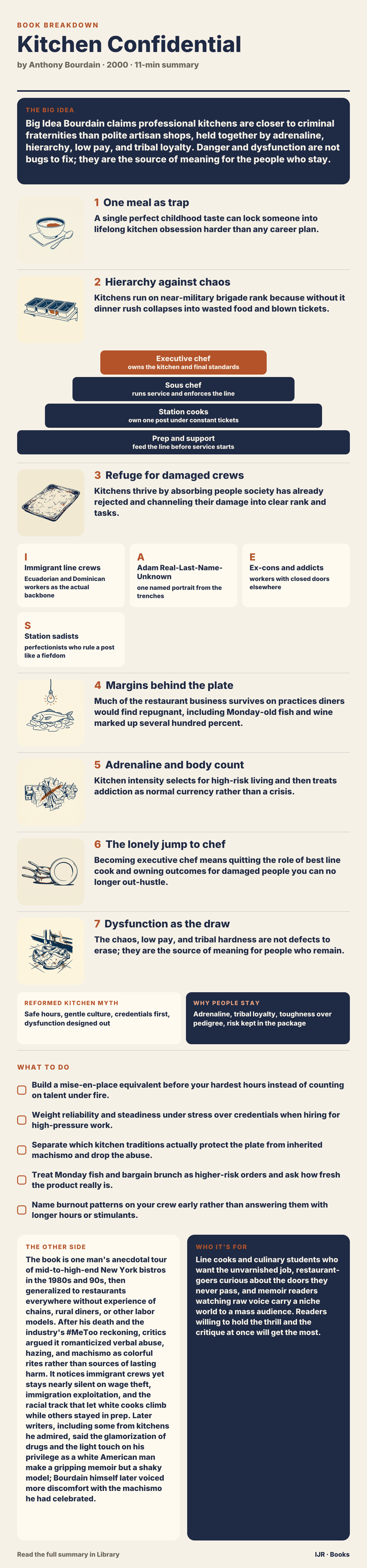
Bourdain opens with sensation, not vocation. As a bored kid on a family trip to France, one cold soup undid him physically and reset what he thought food could do.
No counselor pointed him at a stove. The next magnet was a Cape Cod summer shucking clams while cooks worked with swagger outsiders could not join. He wanted the smell, the profanity, the late nights, and the private code.
He treats those cooks as pirates running a tiny kitchen by their own honor system. Culinary school talk misses the real draw. It is tribal and sensory before it is intellectual.
The same hunger for extremity that builds a strong line cook also opens the door to drugs, burnout, and self-destruction. He locates the choice of a low-status brutal job in the thrill of that seduction itself.
In practice: One bowl of vichyssoise in France did more to set his path than any later plan or credential.
2
Hierarchy against chaos
Kitchens run on near-military brigade rank because without it dinner rush collapses into wasted food and blown tickets.
- Executive chefowns the kitchen and final standards
- Sous chefruns service and enforces the line
- Station cooksown one post under constant tickets
- Prep and supportfeed the line before service starts
He lays out the French brigade—executive chef, sous chef, station cooks—as survival architecture, not decoration. Dozens of time-sensitive demands hit at once. Strict roles are what keep the room from falling apart.
The craft that actually separates professionals is mise en place: everything cut, measured, and placed before the first ticket. A home cook can plate one good dish. Volume on a Friday night punishes anyone without that discipline.
Early pride in talent and creativity taught him the lesson the hard way. Repeated service disasters showed organization beating inspiration under pressure.
The structure also sorts people. Those who thrive on constraint and adrenaline stay. Talented but undisciplined cooks wash out. Rank and repetition are what put correct dishes on the pass night after night.
In practice: His own early services fell apart until prep and hierarchy mattered more to him than flashes of skill.
3
Refuge for damaged crews
Kitchens thrive by absorbing people society has already rejected and channeling their damage into clear rank and tasks.
- IImmigrant line crewsEcuadorian and Dominican workers as the actual backbone
- AAdam Real-Last-Name-Unknownone named portrait from the trenches
- EEx-cons and addictsworkers with closed doors elsewhere
- SStation sadistsperfectionists who rule a post like a fiefdom
Long stretches of the book are portraits from the trench. Ecuadorian and Dominican immigrant crews form the backbone of most New York kitchens he knew. Ex-convicts, alcoholics, obsessive perfectionists, and station sadists fill out the rest. He names Adam Real-Last-Name-Unknown and sketches mentors with affection mixed with horror.
The industry works as refuge. Criminal records, addiction, immigration status, or plain social unfitness close other doors. Restaurants need bodies willing to take brutal hours, low wages, heat, and danger. That labor pool overlaps with people who have few options.
He refuses a clean romance. People burn out, get hurt, vanish. He also shows real dignity in pride as narrow as years of perfect julienned vegetables customers never notice.
Brigade rank doubles as a family substitute. A defined task and a crew that depends on you showing up channel difficult people into productive roles.
In practice: Immigrant crews from Ecuador and the Dominican Republic quietly carried the kitchens while often staying locked in prep roles.

4
Margins behind the plate
Much of the restaurant business survives on practices diners would find repugnant, including Monday-old fish and wine marked up several hundred percent.
Bourdain shifts into insider confession on how places actually stay open. Fish ordered on Monday is often the oldest piece in the walk-in, held from a weekend delivery that did not sell. Brunch becomes a useful dump for ingredients that need moving. Older dishes such as beef Wellington once helped hide lower-quality cuts.
Wine regularly carries markups of several hundred percent. He defends the practice as cross-subsidy. Real estate, labor, and food cost chew through most of the money on the plate, so beverage keeps the lights on.
The dining room is a managed illusion. Owners and chefs trade constantly among safety, cost, and presentation. He separates dangerous dishonest shortcuts from pragmatic industry-standard ones, yet insists regular diners should know the difference.
The same thin margins that drive the ingredient games also lock wages low and hours long. Profit comes from underpaid labor and from customers who do not ask.
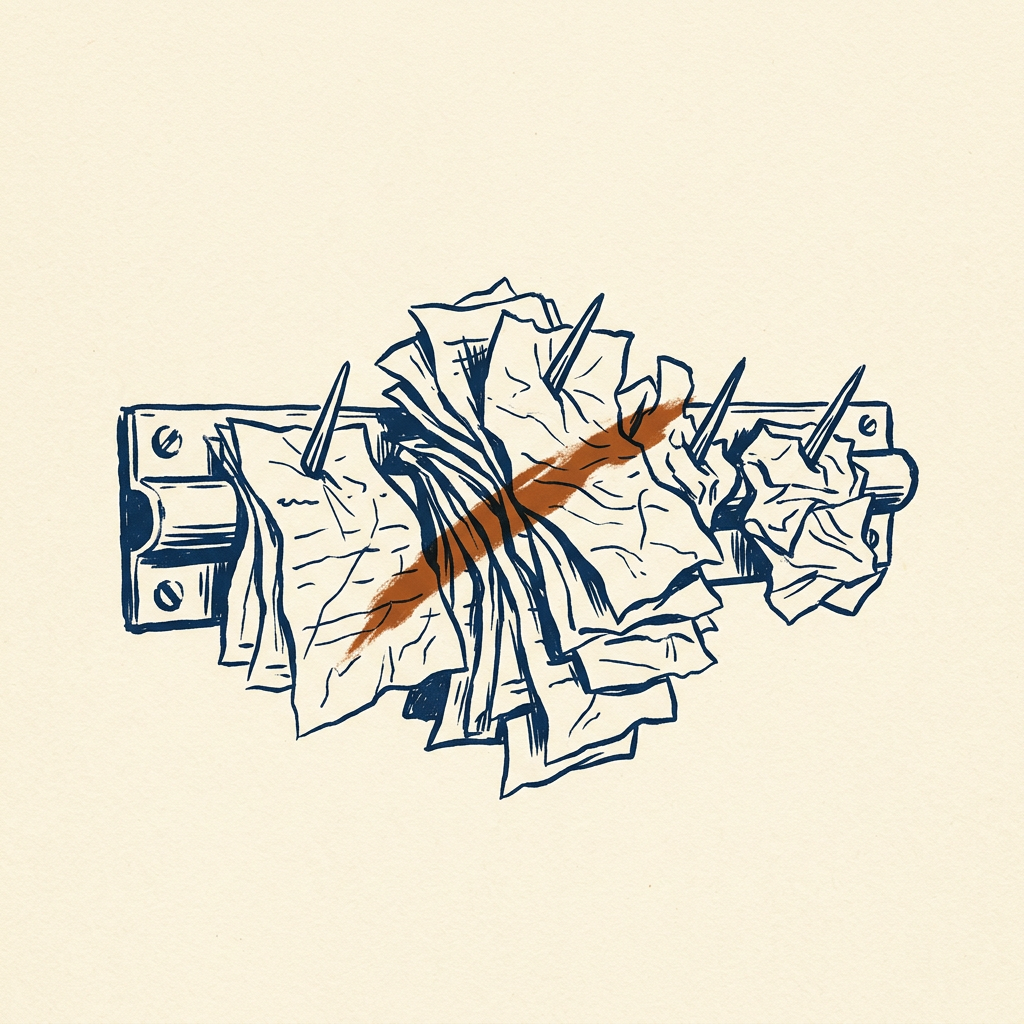
In practice: Ordering fish on a Monday risks eating product held over from the weekend because it failed to sell.
5
Adrenaline and body count
Kitchen intensity selects for high-risk living and then treats addiction as normal currency rather than a crisis.
He is blunt about a two-decade habit. Heroin and cocaine ran beside his cooking career for years without fully ending it. He offers that fact as proof of cultural tolerance, not as a trophy.
Late kitchens made drugs common currency, sometimes traded for shifts or favors. Service adrenaline turned stimulants into seeming tools. Colleagues lost to overdose or early death met a grim shrug instead of any real institutional response.
The work selects for the pattern. Hours are antisocial, pay is low, the body takes a beating, and the historical answer to burnout was more of the same rather than support. Absorbing damaged people has a hard downside when no off-ramp exists.
His own easing came from age and the simple need to stay reliable for service—practical pressure more than moral awakening. He still loves the work. He just refuses to hide the cost the romantic image erases.
In practice: Heroin and cocaine use continued for years in parallel with cooking because the culture treated it as workable rather than disqualifying.
6
The lonely jump to chef
Becoming executive chef means quitting the role of best line cook and owning outcomes for damaged people you can no longer out-hustle.
After years of bouncing between kitchens—fired, then flourishing—he took real authority and eventually landed at Brasserie Les Halles. Leadership is not finer technique. Plenty of strong technicians make bad chefs.
The work is steering difficult people toward the same output every night. That requires cold judgment about who to protect, who to fire, and how to hold morale when pressure never lifts. Early soft treatment of friends on staff produced slipping standards he later had to pay for.
The seat is lonely. You leave the old camaraderie because the job now includes disciplining people who used to stand equal with you. Rank makes that survivable; authority cannot rest on being liked.
Stacked failure taught him more than gift. The discipline once applied to pans now applied to people. The industry rarely trains the jump, so most chefs learn it the same brutal trial-and-error way they once learned knives.
In practice: At Les Halles he had to stop being one of the crew and start firing and protecting in ways that ended the old equality.
7
Dysfunction as the draw
The chaos, low pay, and tribal hardness are not defects to erase; they are the source of meaning for people who remain.
Reformed kitchen myth
Safe hours, gentle culture, credentials first, dysfunction designed out
Why people stay
Adrenaline, tribal loyalty, toughness over pedigree, risk kept in the package
Closing chapters step back from story to defense. Intensity, physical risk, low pay, and loyalty form one package. Strip out the dysfunction, he suggests, and you also strip the adrenaline and belonging that pull people off safer paths.
The claim sits badly beside ordinary labor standards. He does not tidy the tension away. He names the addiction, the burnout, and the bodies left behind, then still says the life gave him what a safer career could not.
Hiring preferences close the loop. Reliability and toughness beat culinary-school pedigree, returning to the opening claim that the pull is tribal before it is artistic.
The final practical image is an established chef and author who still works a line himself at times because the rush of service feels more honest than almost anything else on offer.
In practice: Even after becoming a known chef and author, he still chose to work the line occasionally for the service rush itself.
Key terms
- brigade system French kitchen hierarchy from executive chef down through sous chef and station cooks, built to keep service from collapsing
- mise en place every ingredient and tool prepped and placed before service; the discipline that separates pros from home cooks at volume
- the line the row of station cooks actually cooking under ticket pressure during service
- the pass the checkpoint where finished dishes are inspected and sent to the dining room
- walk-in the restaurant cold room where fish and stock quietly age between deliveries
- ticket an order slip that hits the line and starts the clock on several dishes at once
What to do
- Build a mise-en-place equivalent before your hardest hours instead of counting on talent under fire.
- Weight reliability and steadiness under stress over credentials when hiring for high-pressure work.
- Separate which kitchen traditions actually protect the plate from inherited machismo and drop the abuse.
- Treat Monday fish and bargain brunch as higher-risk orders and ask how fresh the product really is.
- Name burnout patterns on your crew early rather than answering them with longer hours or stimulants.
Questions to think with
- Would a fully safe, gentle kitchen still attract the people who currently give it their lives?
- Where does necessary brigade discipline end and decorative hazing begin on a team you know?
- What invisible margin games are you accepting as a customer without realizing it?
- If pedigree predicts less than steadiness, what should culinary schools actually teach?
- Can tribal belonging survive without the self-destructive side Bourdain chronicled?
The other side
The book is one man's anecdotal tour of mid-to-high-end New York bistros in the 1980s and 90s, then generalized to restaurants everywhere without experience of chains, rural diners, or other labor models. After his death and the industry's #MeToo reckoning, critics argued it romanticized verbal abuse, hazing, and machismo as colorful rites rather than sources of lasting harm. It notices immigrant crews yet stays nearly silent on wage theft, immigration exploitation, and the racial track that let white cooks climb while others stayed in prep. Later writers, including some from kitchens he admired, said the glamorization of drugs and the light touch on his privilege as a white American man make a gripping memoir but a shaky model; Bourdain himself later voiced more discomfort with the machismo he had celebrated.
Who it's for
Line cooks and culinary students who want the unvarnished job, restaurant-goers curious about the doors they never pass, and memoir readers watching raw voice carry a niche world to a mass audience. Readers willing to hold the thrill and the critique at once will get the most.