




Thrift, density, and owned ground beat retail glamour
Durable low prices come from cultural cost control, regional saturation, and real estate you actually control.
IJR · Nov 1, 2026 · 14 min read
In 60 seconds
- Walton lost his first high-volume Ben Franklin to a landlord and thereafter insisted on controlling store real estate.
- Discounting worked in towns of 5,000 to 10,000 when Wal-Mart was the only discounter and kept costs thin enough for low margins.
- He priced by buying at 80 cents and selling at a dollar, funding that bet with an expense culture kept below Kmart's and Sears's.
- Expansion filled every viable town within a day's drive of each distribution center before the map moved outward.
- Early automated distribution, computers, and a 1987 private satellite protected the cost edge store by store.
- Profit sharing from 1971 plus constant executive store visits aimed to make hourly associates act like owners while rivals stagnated; by 1991 sales passed Sears.
The big idea
Walton argues that discipline, frugality, and relentless customer attention beat size and glamour. Own the ground, saturate ignored towns, keep overhead culturally low, and small persistent advantages compound past better-funded chains.
The book in brief
Walton starts in 1945 by leasing a Ben Franklin in Newport, Arkansas with borrowed money and his wife's savings. He works the floor, drives to Tennessee to buy straight from manufacturers, and undercuts the franchise's suggested markups until the store leads a six-state region. The landlord then refuses to renew and gives the location to his son. Walton treats the loss as the most useful failure of his career: never again build on a foundation he does not control. It forces him to Bentonville, a town of about 3,000, where he opens Walton's 5&10 in 1950. He frames the whole career as corrections after concrete mistakes, not a smooth rise.
By the late 1950s discounting already works in cities, yet conventional wisdom demands at least 50,000 people. Walton tests the opposite store by store: a discounter can thrive in towns of 5,000 to 10,000 if it is the only game and costs stay low enough to live on thin margins. The first Wal-Mart Discount City opens in Rogers, Arkansas in 1962—the same year Kmart and Target begin—but in a place they would never consider. By 1970 there are 32 stores, still clustered in Arkansas, Missouri, and Oklahoma. The edge is the map, not a cleverer format: local dominance where rivals see nothing worth taking.
Pricing follows a plain rule. Buy an item for 80 cents and sell it for a dollar rather than $1.20, trusting extra volume only if company costs stay permanently lower than everyone else's. Walton shares hotel rooms on buying trips into his sixties, drives an old pickup as a billionaire, and keeps air conditioning out of the Bentonville office for years so no manager can justify waste. He treats the expense ratio, kept meaningfully below Kmart's and Sears's, as the real competitive weapon, and insists the discipline must be cultural or every store will leak money.
Growth refuses flagship leaps into Chicago or Los Angeles. He builds a distribution center, then places stores within a day's drive and fills every viable town in that radius before pushing the perimeter out. The map grows in concentric rings from Arkansas for two decades. Trucks drop goods and pick up returns on the same trip; regional managers visit many stores in a week; word of mouth carries from one county to the next. Density turns into a logistics advantage rivals cannot cheaply copy once it is locked.
He spends on automated distribution and computerized inventory earlier than peers his size think wise, then in 1987 installs a private satellite linking every store to Bentonville for real-time sales and daily pricing changes. The outlays look reckless on quarterly statements yet cut stockouts, markdowns, and replenishment lag—the hidden costs that would otherwise destroy the price edge. From 1971 he funds profit sharing and later stock programs so hourly workers he calls associates hold a real stake; he flies his own plane to walk stores unannounced and runs open Saturday morning meetings in Bentonville. He copies layout and merchandising freely from Kmart, claiming victory came from executing the same fundamentals more consistently for three decades while competitors diversified and let core stores stagnate. By 1991 Wal-Mart's sales pass Sears's. The book is a founder dictating the highlight reel at the end of his life.
Context
Sam Walton dictated the autobiography with journalist John Huey in the last months of his life while dying of bone cancer; it was published in October 1992, six months after his death. It became a management-shelf staple as an insider account of how a company New York dismissed outcompeted Sears and Kmart from small towns most retailers ignored.
The key ideas

1
Learn by losing the lease
Retailing skill is learned on the floor; a humiliating setback taught Walton more about control and balance sheets than any course.
- 1945Leases Ben Franklin in Newport with borrowed money and wife's savings
- ~1950Highest-volume franchise in six states; landlord refuses renewal
- 1950Opens Walton's 5&10 in Bentonville, town of about 3,000
Walton did not begin with a retail theory. He leased a Ben Franklin variety store in Newport in 1945, put his wife's savings and borrowed money at risk, and worked the floor himself. He drove to Tennessee to buy from manufacturers instead of the franchise wholesale arm and undercut suggested markups. Within five years the store was the highest-volume Ben Franklin in a six-state region.
Then the landlord saw the success, refused to renew, and handed the store to his own son. Walton lost everything he had built. He calls that loss the most useful event of his career because it burned in one rule: never build again on rented ground you do not control.
The failure pushed him to Bentonville and forced him to master leases, real estate, and the balance sheet the hard way. Later Wal-Mart practice of owning or tightly controlling locations traces straight to that sting. He presents the career as a string of immediate course corrections after concrete mistakes, and treats the willingness to admit error fast as worth more than any single merchandising insight.
In practice: After building the top Ben Franklin in a six-state region, Walton lost the Newport store when the landlord gave the lease to his son, forcing the move to Bentonville in 1950.

2
Claim the towns others skip
Discount stores could dominate towns of 5,000 to 10,000 when they were the only discounter and kept costs low enough for thin margins.
Received wisdom
Discounting needs at least 50,000 people to support volume
Walton's map
Own towns of 5,000–10,000 completely when no rival is within driving distance
By the late 1950s, urban discounters had already proved the format. Conventional wisdom still held that you needed a population base of at least 50,000 to support the volume. Walton never derived a study; he tested store by store.
His finding was simple. In a town of 5,000 to 10,000, a discounter that is the only game within driving distance can own the entire trade area—something impossible in a city where five chains split the same shoppers. Costs just have to stay low enough to profit on thin margins.
The first Wal-Mart Discount City opens in Rogers, Arkansas in 1962, the same year Kmart and Target launch, yet in a place none of them would have considered. By 1970 the chain still has only 32 stores, all in Arkansas, Missouri, and Oklahoma. Every later system—distribution, technology, culture—exists to scale that small-town formula without breaking local dominance.
In practice: Rogers, Arkansas in 1962 received the first Wal-Mart while Kmart and Target opened elsewhere; competitors treated towns that size as worthless.

3
Price from real overhead cuts
Sustainable low prices come from permanently lower operating costs, not promotions or thin margins alone.
Comfortable markup
Buy at 80¢, sell at $1.20
Volume bet
Buy at 80¢, sell at $1; lower permanent overhead makes the volume pay
Walton states the pricing bet in plain numbers. Buy an item for 80 cents and sell it for a dollar instead of $1.20; the lower price must move enough extra volume to produce a larger total profit. That math collapses unless company costs stay lower than rivals' costs forever.
He obsessed over overhead the way other retailers obsessed over displays. He shared hotel rooms with colleagues on buying trips into his sixties, drove an old pickup to work as a billionaire, and refused for years to put air conditioning in the Bentonville home office. The habits were policy: if the founder would not spend it, no store manager could justify waste either.
The chapter's claim is that a discounter's true weapon is its expense ratio. Wal-Mart's operating costs as a percentage of sales ran meaningfully below Kmart's and Sears's for years; that gap, compounded across thousands of stores, funded everyday underpricing and still higher returns. One wasteful HQ habit, he warns, gives every manager permission to leak money.
In practice: As a billionaire he still drove an old pickup and shared hotel rooms on buying trips so the cost signal stayed visible to every buyer and store manager.

4
Fill the circle before you leap
Saturate every viable town within a day's drive of a distribution center before moving the perimeter; density beats flagship glamour.
- 1Plant the hubBuild the distribution center first
- 2Draw the radiusSite stores only within a day's drive
- 3SaturateFill every viable town inside the circle
- 4Move the edgePush the perimeter outward only after density is locked
A growing retailer is tempted to plant visible flagships in big cities to build the brand fast. Walton rejected the leap. His rule was fixed: build the distribution center first, then open stores only within a day's drive, filling every workable town in that radius before the map expands.
For two decades Wal-Mart therefore grew in concentric rings out of Arkansas rather than jumping to Chicago or Los Angeles. Trucks that dropped merchandise could pick up returns or rebalance inventory at a nearby store on the same run, holding delivery costs far below a chain whose stores sat scattered with no shared supply lines.
Density also let regional managers and buyers see many stores in one week and turned local advertising and neighbor word-of-mouth into a self-reinforcing loop. What looked conservative—always expanding from strength—was the more aggressive play once the logistics moat existed. By the time Kmart and Sears treated Wal-Mart as a national threat in the 1980s, the saturated South and Midwest base was already too costly to attack head-on.
In practice: Stores stayed clustered around distribution hubs across Arkansas, Missouri, and Oklahoma for years instead of scattering into coastal flagship cities.

5
Spend on the back end early
Logistics and information systems funded before they looked affordable let stores run leaner than rivals permanently.
Walton repeatedly spent on distribution and computers years before company size seemed to justify it, over the objections of his own finance staff. Large automated distribution centers and computerized inventory tracking arrived earlier than most competitors of similar scale expected.
In 1987 the company installed a private satellite communication system linking every store to Bentonville. Headquarters could see what was selling in real time across thousands of locations and adjust orders and pricing daily instead of monthly. On a quarterly income statement the outlays looked reckless.
The payoff was lower hidden cost everywhere else: fewer stockouts, less markdown of unsold goods, faster replenishment. That insurance protected the overhead advantage the pricing model required. Walton admits he never fully understood the computers himself; he hired people who did and treated the founder's job as recognizing which capabilities were decisive and funding them before the balance sheet felt comfortable.
In practice: The 1987 private satellite let Bentonville read store-level sales daily and rewrite orders and prices across the chain in real time.

6
Make associates real partners
Profit sharing and stock ownership were meant to keep turnover and shrinkage low without paying the highest retail wages.
Walton renamed store employees associates and insisted the word was substantive. Starting in 1971 Wal-Mart introduced a profit-sharing plan funded by company contributions tied to earnings. Stock purchase and ownership programs followed so hourly people could accumulate wealth as the share price rose through the 1970s and 1980s.
He presents the package as the mechanism that let the company pay competitive but not premium wages while still holding turnover low enough for efficient stores. An associate who owned stock had a direct reason to stop shrinkage, greet customers, and stay long enough to vest. Certain merchandise decisions were pushed down to store managers and department heads on the theory that people next to the customer see what headquarters misses.
Walton acknowledges wages were not the highest in retail. He argues total compensation—profit sharing, discount privileges, promotion from within—made the job a better deal than the pay stub alone suggested. Later critics dispute the claim sharply; inside the book it is offered as the political and operational fix that kept labor costs sustainable.
In practice: From 1971 onward company-funded profit sharing and later stock programs let hourly associates build wealth from the rising share price rather than from top-tier wages alone.
7
Manage only by being there
A retail company is managed accurately only when executives keep walking stores instead of trusting headquarters reports.
- 1Land unannouncedFly in, walk aisles, talk to associates and customers
- 2Test the reportsCompare the floor to what regional numbers claim
- 3Saturday reviewOpen merchandising and problem session in Bentonville
- 4Raise the barPush lieutenants to visit more stores, not sit at HQ
↻ and round again
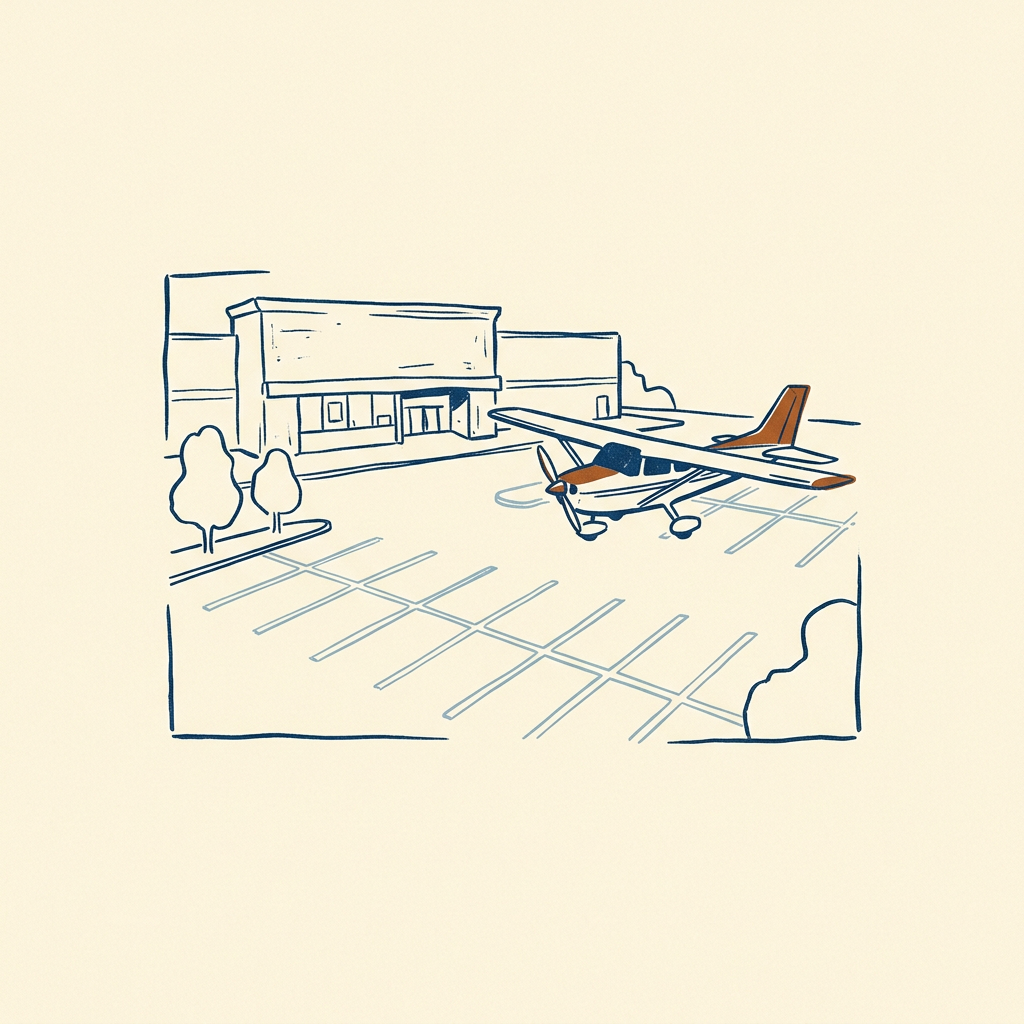
For decades Walton flew his own small plane so he could drop into stores unannounced, walk the aisles, talk to associates and customers, and test what he saw against what regional reports claimed. He treated direct observation as the only reliable audit of a slow checkout line or a poorly stocked shelf.
He also locked in a Saturday morning meeting at Bentonville where merchandising, sales figures, and the week's problems were reviewed in the open. He says he never missed it even while traveling heavily. Company cheers and staged store visits were meant to keep morale and information moving both directions.
If associates are asked to act like owners, executives must behave like owners too—which means showing up rather than delegating all oversight to regional layers. He pushed top lieutenants to visit more stores instead of lingering in Bentonville. He is candid the rhythm was exhausting; the book also notes the model scaled poorly once the chain passed roughly 2,000 stores.
In practice: Walton flew his own plane for unannounced aisle walks and refused to miss the open Saturday morning numbers meeting in Bentonville.

8
Consistency outruns the giants
Wal-Mart passed Sears and Kmart by executing ordinary fundamentals more steadily for three decades while rivals diversified and drifted.
- 1962First Wal-Mart; Kmart and Target also launch; Sears is the dominant U.S. retailer
- 1980sKmart diversifies; Wal-Mart keeps tightening cost, density, and inventory
- 1991Wal-Mart sales pass Sears; largest retailer in the United States
When the first Wal-Mart opened in 1962, Sears dominated American retail and Kmart launched the same year with far more capital and an instant national footprint. Walton visited Kmart stores regularly, studied what worked, and admits Wal-Mart copied merchandising and layout ideas freely rather than inventing a wholly new format.
He claims the win came from thousands of small, repeated decisions: slightly lower costs, slightly tighter distribution, slightly more disciplined inventory, store after store for thirty years. In the 1980s Kmart diversified into unrelated retail chains and let its core discount stores stagnate; Sears had looked unbeatable at the start.
By 1991 Wal-Mart's sales passed Sears's, making it the largest U.S. retailer—a milestone Walton greets with more surprise than triumph. In a low-margin business, he argues, small persistent advantages compound into decisive ones when competitors chase quarterly distractions or wander from the core.
In practice: In 1991 Wal-Mart's sales overtook Sears's after three decades of cost and density discipline while Kmart spent the 1980s diversifying away from its discount core.
Key terms
- associates Walton's name for store employees, meant to signal a stake in results rather than hired labor alone
- expense ratio Operating costs as a share of sales; the gap versus Kmart and Sears that funded everyday low prices
- saturate the radius Fill every viable town within a day's drive of a distribution center before expanding outward
- 80 cents to a dollar Buy at 80¢, sell at $1 instead of $1.20, trusting volume only if overhead stays permanently lower
- Saturday morning meeting Open weekly Bentonville review of sales, merchandising, and problems that set the company's operating rhythm
- private satellite link 1987 system tying every store to headquarters for real-time sales visibility and daily order and price changes
- profit sharing Company-funded plan begun in 1971 that tied associate wealth to earnings and later stock gains
What to do
- Walk your own front line unannounced and note every gap between the floor and the reports.
- Cut one visible overhead habit at the top so no one else can justify the same waste.
- Map only the customers you can serve from existing logistics before chasing a glamorous new market.
- Fund one back-end fix—inventory accuracy or replenishment speed—before the P&L feels ready.
- Give front-line people shared numbers or a real stake in the week's result, then ask what they see that you miss.
Questions to think with
- Where are you still building on real estate, contracts, or systems you do not actually control?
- Which geography or customer segment do better-funded rivals still treat as too small to matter?
- Is every low price you advertise funded by permanent overhead discipline or by a short-term promotion?
- If the founder stopped spending on comfort tomorrow, would the culture hold or would waste rush back in?
- Which small advantage could you repeat for a decade while competitors chase the next distraction?
The other side
The book is a valedictory highlight reel dictated while Walton was dying of bone cancer, not a document tested under long scrutiny. It soft-pedals failed bets and the human cost of the wins; Walton defends wages through profit sharing yet never seriously faces evidence already visible by 1992 that Wal-Mart's arrival often closed the Main Street retailers whose customers it took, hollowing downtowns across the rural South and Midwest—gaps later scholarship such as Nelson Lichtenstein's 2009 study pressed hard.
Who it's for
Independent retailers trying to compete with chains without matching their capital, managers of low-margin businesses who need to out-execute richer rivals, and business-history readers who want the founder's own account before later critiques rewrote the story.