




Poverty is thousands of small failures, not one trap
Anyone who funds, designs, or debates anti-poverty work should read Poor Economics to replace grand aid theories with evidence on what actually changes poor households.
IJR · Nov 4, 2026 · 14 min read
In 60 seconds
- The pro-aid versus anti-aid fight misses the point: poverty is thousands of local, testable market failures, not one trap.
- Extra income barely lifts calories; poor households shift spending toward taste, variety, and small pleasures instead.
- Tiny frictions of price, distance, and inconvenience block free high-return health steps like bed nets and vaccines.
- Enrollment surged while learning stalled because curricula serve an elite few; teaching children at their actual level raises skills fast.
- Microfinance cheapens small loans and smooths cash flow but rarely finances the leap into a larger business.
- Commitment devices and good timing beat willpower alone for saving, fertilizer use, and other future-minded choices.
The big idea
Banerjee and Duflo argue that poverty is not a single trap solvable by big aid or free markets but thousands of specific frictions in food, health, education, credit, and risk. The poor reason like anyone else yet operate with less margin, information, and working institutions, so small design details of price, trust, timing, and psychology decide whether interventions succeed.
The book in brief
By the late 2000s development debate had hardened into two camps: a big coordinated aid push to break poverty traps, and the claim that aid breeds dependency and props up bad governments. Banerjee and Duflo treat both as sweeping stories that skip what happens inside a poor household. Their alternative borrows medicine’s method—test one concrete program against a similar untreated group and watch behavior change.
That method then walks domain by domain through a poor family’s life. Food and the nutrition-trap idea come first, then the puzzle of empty clinics despite cheap cures, schools that enroll children without teaching them, fertility as a hedge against old age and risk, informal insurance that snaps under shared shocks, the persistent power of the moneylender, the struggle to protect savings, and the small shops that look like entrepreneurship.
Across those domains a pattern holds. Choices that look wasteful or irrational from outside usually answer real constraints the observer has not priced in: missing information, present bias, weak trust, or institutions that do not work. Ideology about markets versus the state matters less than whether a bed net is free, a vaccine camp is nearby, a lesson matches a child’s actual skill, or fertilizer is offered the day cash is in hand.
The book ends less with a master plan than with a habit of mind: distrust grand claims about what the poor need, and ask what a careful comparison actually shows. It stays mostly silent on national growth, trade, and politics, and its cases cluster in South Asia and East Africa, limits the authors largely accept rather than paper over.
Context
Abhijit V. Banerjee and Esther Duflo published the book in 2011 after co-founding the Abdul Latif Jameel Poverty Action Lab at MIT in the early 2000s to scale randomized trials already used by economists such as Michael Kremer in Kenya in the 1990s. The book helped found a new, evidence-based development economics that favored clinical tests of specific programs over ideological narratives about aid.
The key ideas

1
Beyond the aid war
The grand fight over whether aid helps or hurts is a distraction because poverty is thousands of separate, testable market failures, not one problem.
Big-push aid
Poor countries are trapped and need a large coordinated foreign-aid surge to escape.
Aid skepticism
Aid breeds dependency, props up bad governments, and rarely reaches the poor.
Sachs held that poor countries sit in a poverty trap and need a large coordinated push of foreign aid to escape. Easterly answered that aid creates dependency, props up bad governments, and rarely reaches the people it claims to help. Banerjee and Duflo call this a false choice built on historical narratives rather than close evidence from inside households.
Their substitute is the clinical trial: stop asking whether aid in general works and ask whether a specific bed-net program, teaching method, or savings account changes behavior. Compare a treatment group with a similar untreated group. The method was already in use in Kenya in the 1990s; by the early 2000s the authors had built a lab at MIT to scale it.
The core claim running under every later chapter is that the poor are not fundamentally different in their reasoning. They simply operate with far less margin for error, far less information, and far fewer working institutions. Interventions therefore succeed or fail on small design details, not on whether one is philosophically pro-market or pro-state.
In practice: Instead of debating aid writ large, the authors ask whether a particular immunization camp, contract-teacher hire, or lockbox changes measured behavior against a control group.

2
The appetite S-curve
Extra income for poor households does not mainly buy more calories, which undercuts the idea that poverty is fundamentally a nutrition trap.
Nutrition-trap theory
Extra cash should buy more calories and break a biological work-energy cycle.
What extra money buys
Slightly more calories, plus tastier food, variety, radios, weddings, and alcohol.
A popular theory says too little food yields too little energy to work, which yields too little income to buy more food, so a calorie subsidy should break the cycle. Household spending data from India, Indonesia, and elsewhere, building on work by Deaton and Drèze, point the other way. When poor households get extra money, calorie intake rises only slightly.
Spending shifts toward more expensive, better-tasting food—white rice instead of cheaper grains, more sugar, tea, and festival meals. Households making around a dollar a day in rural India often skipped cheap calorie-dense staples for variety, and many put money toward radios, weddings, and alcohol before additional food.
That is not waste. Food carries social and psychological roles beyond raw energy, and the poor trade some calories for taste, status, and pleasure the same way wealthier people do. Nutrition programs built only around more raw calories, without attention to taste, convenience, and micronutrients such as iron and iodine, therefore tend to underperform.
The authors favor interventions that raise nutrition quality directly, such as fortified foods or salt iodization, which do not require persuading someone to eat more of what they have already decided not to want.
In practice: Rural Indian households living on about a dollar a day often chose variety, sugar, tea, and festival meals over extra cheap staples when they had a little more money.

3
Cheap cures, empty clinics
The poor skip extremely cheap, high-return health measures mainly because small costs of price, distance, and inconvenience loom large against uncertain future benefits.
Immunizing a child, treating water, or sleeping under a bed net often costs under a dollar per person and ranks among the highest-return investments a poor household can make. Uptake stays chronically low even when the service is free. Information alone does not close the gap.
In Kenya, bed nets offered free versus at a small subsidized fee showed demand collapsing once any price was charged, even about sixty cents, with no evidence that paying made people value or use the net more. In Udaipur, mobile immunization camps lifted full vaccination from roughly six percent to about seventeen percent just by being reliably nearby, then to around thirty-eight percent when families received a kilogram of lentils for finishing the course.
The lentils cost far less than the savings from avoided illness, yet without them most families never completed a free life-saving series. The same pattern appears with deworming pills in Kenya: negligible costs and modest logistical hurdles sharply cut participation. A sick child today is vivid; a shot against a disease that might strike years later is not.
Health systems that assume knowledge will drive prevention miss present bias and the diffuse payoff of staying well. Small design changes—price, proximity, a modest incentive—close more of the gap than moral appeals.
In practice: Udaipur mobile camps raised full vaccination from roughly six percent to about seventeen percent by being nearby, then to around thirty-eight percent when a kilogram of lentils rewarded completion.

4
Teach to the real level
Surging enrollment failed to raise learning because curricula are pitched to an elite few; the fix is teaching each child at actual skill rather than building more schools.
More of the same
Build schools, shrink classes, keep age-grade curricula aimed at the top prepared.
Match the child
Group by actual skill, hire accountable contract teachers, correct beliefs about wage returns.
By the 2000s enrollment had climbed across the developing world while literacy and numeracy barely moved. In India, Pratham found many fourth- and fifth-graders unable to read a simple sentence or do basic subtraction after years in school, because the curriculum assumed preparation only the best-ready children had.
Pratham’s Teaching at the Right Level grouped children by demonstrated skill rather than age or grade for part of the day. Randomized evaluations in Indian states showed meaningful gains in reading and arithmetic within months. A Kenya study found that simply halving class sizes did little, while hiring lower-paid contract teachers accountable for results raised test scores more—incentives and pedagogy beat raw resources.
Aspirations matter too. Parents and children often underinvest because they misjudge the payoff. In the Dominican Republic, boys shown accurate statistics on the wage returns to finishing secondary school stayed enrolled significantly longer than those given no such information; many had wrongly assumed returns were flat.
Education systems fail the poor less from missing buildings than from a mismatch between what is taught, what families believe, and what a struggling child needs on a given day.
In practice: Pratham’s skill-based grouping in Indian states produced clear reading and arithmetic gains within months, while a Kenya class-size cut alone did little.
5
Children as insurance
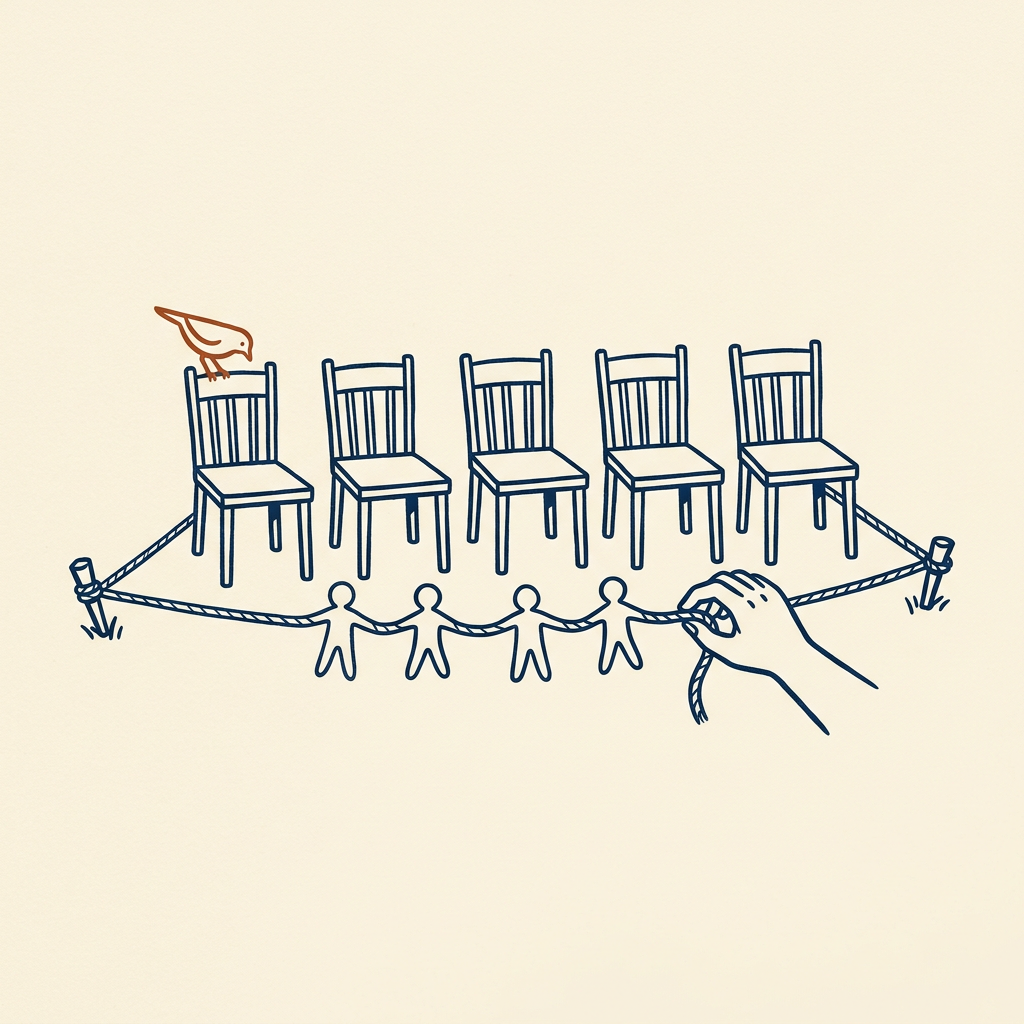
Poor families often have many children as a rational hedge against risk and old age rather than from ignorance of contraception, so family-planning access alone rarely cuts fertility much.
Policymakers have long treated large families as a contraception problem: open clinics, hand out pills, and family size will fall. Evidence is more mixed. In much of the developing world children function as an informal pension when savings, insurance, and state old-age support cannot be counted on.
Parents invest in more children to raise the odds that at least one can support them later. High infant mortality strengthens the logic, because some children are not expected to reach adulthood. Fertility declines have historically tracked improvements in child survival, girls’ education, and old-age security more closely than contraceptive availability by itself.
The quantity-quality tradeoff associated with Becker also appears: as the return to educating one child rises and the cost of raising many well becomes harder to bear, parents shift toward fewer, more heavily invested children. Mexico’s Progresa paid poor families to keep children in school and attend health checkups; effects on fertility timing were modest, while child health and schooling investment moved more, suggesting the channel runs through incentives for children already born.
Family decisions about children are woven into how the poor manage an uncertain future, not a simple information gap.
In practice: Progresa’s conditional cash transfers shifted child health and schooling more than they reduced the demand for children themselves.

6
Nets that snap in a drought
Informal risk-sharing among the poor is sophisticated but insufficient, and formal insurance fails to take hold even when fairly priced because trust, complexity, and liquidity block adoption.
Informal sharing
Works for small common shocks via gifts, labor, and kin; fails when a whole village is hit at once.
Formal index insurance
Fairly priced and fraud-light, yet low take-up from distrust, opaque rules, and no spare cash at sale.
Poor households face far more income volatility than the salaried—crop failure, illness, death of a working adult—yet almost no formal insurance. Communities built substitutes: reciprocal gifts, labor-sharing, and kin networks that spread small shocks across many households.
Those systems work reasonably for small, common shocks. They collapse under large correlated ones, such as a drought that hits an entire village at once, because everyone is short and no one has surplus to lend. Formal products have struggled to fill the hole.
Weather-indexed crop insurance piloted in India paid out automatically on measured rainfall, cutting fraud risk and paperwork. Take-up stayed stubbornly low, well under what actuarially fair pricing would predict. Farmers distrusted an unfamiliar product from a distant company, found payout rules hard to verify, and lacked spare cash at the moment of sale.
Health shocks are especially dangerous: one serious hospitalization can shove a managing family into years of poverty as medical bills meet lost income. Insurance markets for the poor are not simply waiting to be sold; they must clear deficits of trust and liquidity that actuarial fairness alone does not solve.
In practice: Indian rainfall-index crop insurance from firms such as ICICI Lombard still saw low take-up despite automatic payouts and fair pricing, blocked by trust, complexity, and cash-on-hand.
7
Why the moneylender wins
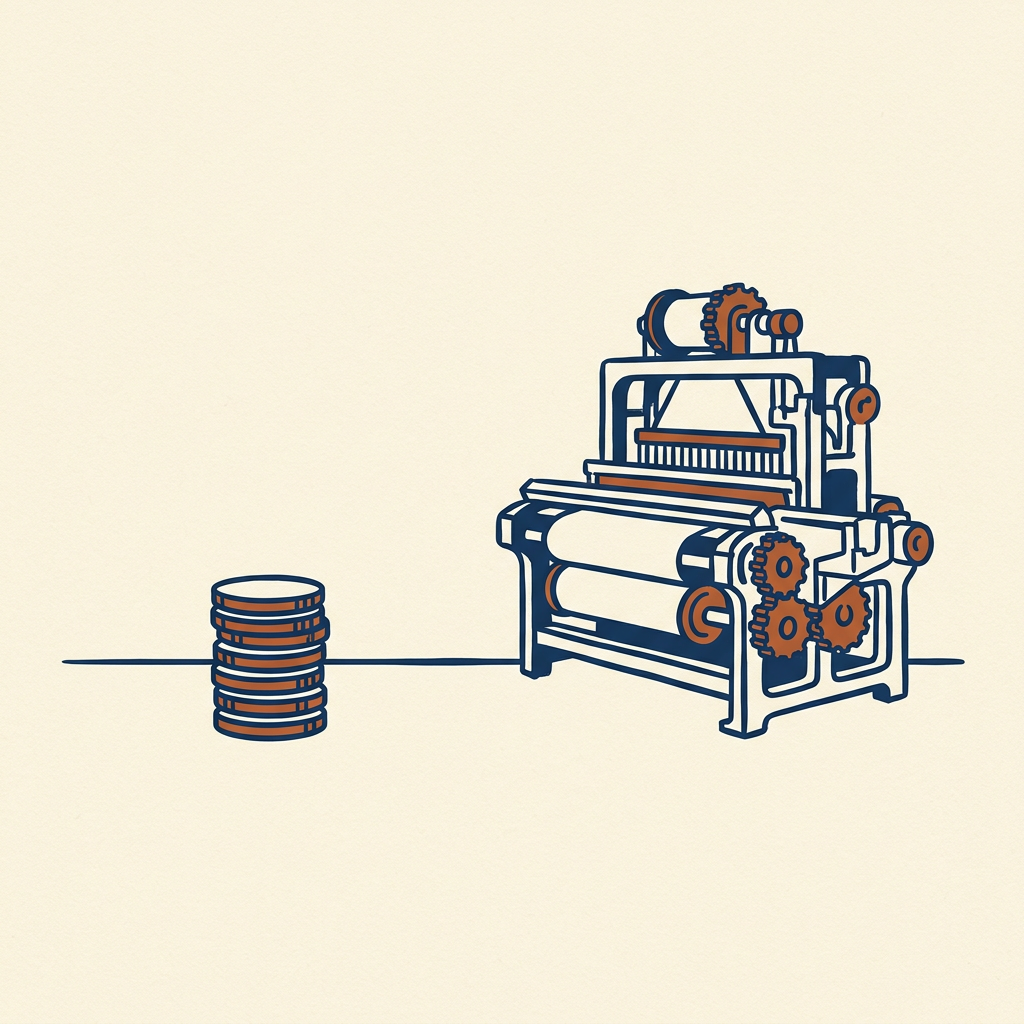
Microfinance genuinely lowers borrowing costs but cannot replace the large flexible loans needed for transformative investment, so its real achievement is smoothing consumption rather than ending poverty.
Poor households routinely borrow from local moneylenders at four to five percent per month—sixty to a hundred percent a year or more—far above formal bank rates. That is not pure exploitation. Moneylenders lack seizable collateral and court enforcement, yet hold detailed local knowledge banks do not, so they price default risk and monitoring.
Microfinance tried to undercut this by lending in small groups whose members cross-monitor each other, lowering default without collateral. An evaluation of a lender’s expansion into new Hyderabad neighborhoods found real but modest effects: existing small businesses invested a bit more and durable-goods purchases shifted, yet no surge of new firms and no dramatic jump in household income or consumption.
The deeper limit is product design. Loans are typically small, short-term, and repaid on a rigid weekly schedule—fine for restocking a shop, poor for a longer-horizon machine or land purchase that might lift a household out of poverty. Group liability, meant to curb default, also discourages ambitious but uncertain ventures because failure hurts the whole group.
Microfinance succeeds at what its design allows: cash-flow management and modest growth of existing tiny enterprises, not financing a discontinuous leap.
In practice: The Hyderabad microfinance expansion raised some small-business investment and shifted durable purchases without creating a wave of new firms or large income gains.

8
The trouble with waiting
The poor save at low rates not mainly because they have nothing to spare but because saving means resisting temptation and social claims with almost no protective tools.
Across domains, poor households often can set something aside yet struggle to shield it from impulse purchases or requests from relatives and neighbors. A simple metal lockbox given to Kenyan market vendors raised savings and health-related investment because money became harder to reach on impulse and easier to defend from others.
Rotating savings and credit associations common across Africa and Asia work partly the same way: money paid into a group pot each week leaves the saver’s control and turns a weak intention into a binding obligation. Timing can matter as much as the tool.
Kenyan farmers offered fertilizer right after harvest, when cash was in hand but planting was months away, adopted at triple the rate of farmers offered the same fertilizer at the same discount at planting time, when money was tight and immediate needs competed. The active ingredient was not price but the moment when self-control was easiest.
Poverty is often a missing infrastructure for protecting future-minded decisions. Wealthier people lean on automatic payroll deductions and retirement accounts the poor rarely have.
In practice: Offering fertilizer to Kenyan farmers immediately after harvest, at the same discount, tripled adoption versus waiting until planting time.
9
Reluctant entrepreneurs
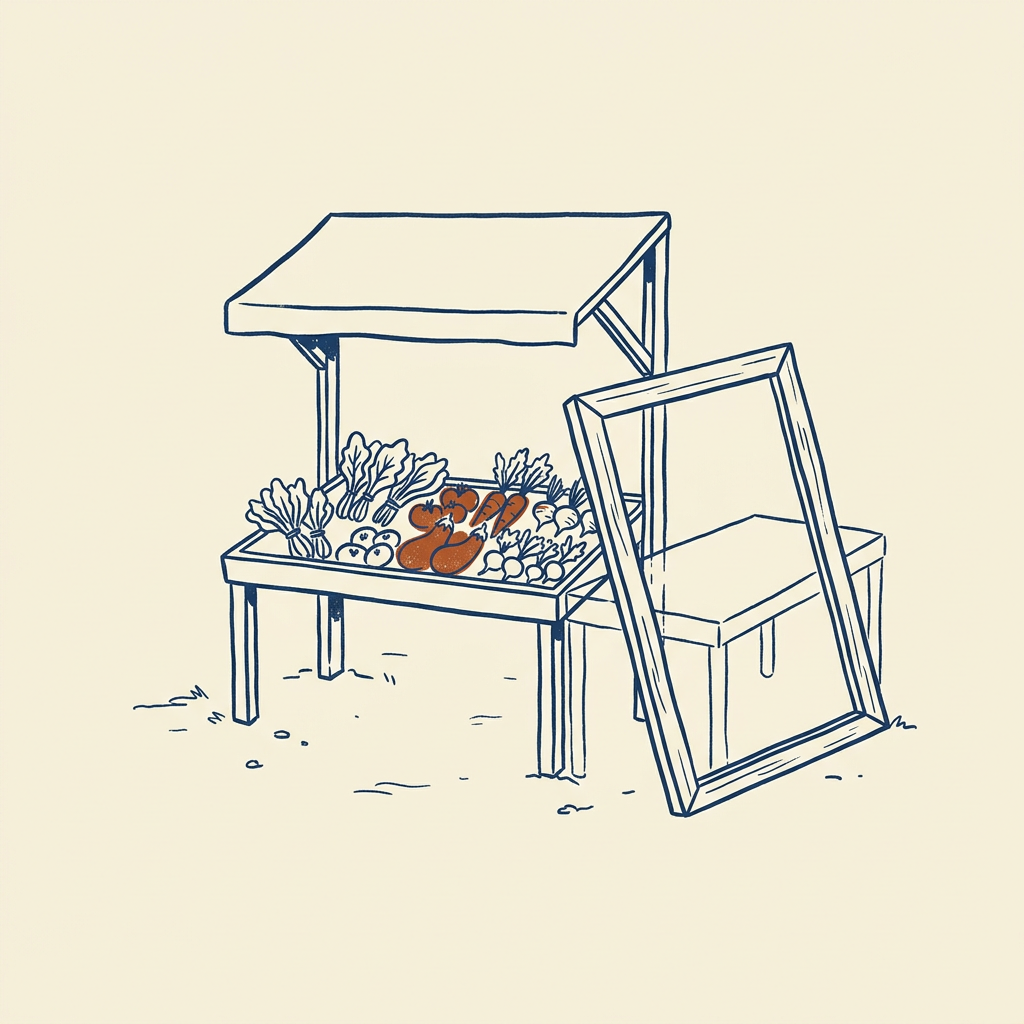
Most businesses run by the poor are disguised unemployment kept permanently small by a return-to-capital curve that only a lucky few ever cross with a large enough infusion.
A striking share of poor households run a vegetable stall, rickshaw, or one-room shop. That sight led some, notably Yunus, to cast the poor as natural entrepreneurs held back only by capital. Evidence complicates the picture.
Randomized grants to Sri Lankan microenterprises produced large returns to capital for many male-owned firms, sometimes matching or beating formal-sector returns, yet far weaker and often negligible returns for many women-run subsistence businesses. The authors read this less as ability than as scale: a single snack vendor at a crossroads faces a limited customer base no matter the inventory, so extra money raises stock without raising profit.
Plotted across many small firms, returns follow an S-shape—low at very small scale, rising through a middle range, attractive again only at a scale most poor households never reach without a large discontinuous injection. By their own account, most would prefer a stable wage job if one existed.
Genuine growth businesses are the exception. Policy that treats every stall as a seed of expansion misreads reluctant entrepreneurship for aspiration.
In practice: Sri Lankan cash and in-kind grants raised returns sharply for many male-owned microenterprises but often did little for subsistence businesses, especially those run by women facing thin local demand.
Key terms
- Randomized controlled trial Compare a treatment group given a specific program with a similar untreated group to see what actually changes behavior.
- Poverty trap The claim that the poor are stuck in a self-reinforcing cycle that only a large external push can break.
- Present bias Weighting today’s vivid costs far more than uncertain future benefits, so free prevention still goes unused.
- Teaching at the Right Level Group children by demonstrated skill rather than age or grade for part of the day so lessons match what they can actually do.
- Quantity-quality tradeoff As returns to educating one child rise, parents shift toward fewer children with heavier investment in each.
- Commitment device A lockbox, group pot, or timed offer that removes money from easy reach and protects a future plan from impulse or social pressure.
- Reluctant entrepreneurs People running tiny businesses mainly because stable wage work is missing, not because they aim to scale.
- S-shaped returns to capital Returns stay low at very small scale, rise in a middle band, then look good again only at a large scale most poor firms never reach.
- Informal risk-sharing Reciprocal gifts, labor help, and kin networks that spread small shocks but fail when a whole community is hit at once.
What to do
- Ask whether this specific intervention in this specific form changes behavior against a real comparison group, not whether aid works in the abstract.
- Before scaling, test whether a small design detail—price, timing, distance, or a modest incentive—is blocking uptake more than the big picture.
- Build a commitment mechanism into savings, health, or education programs: lockbox, automatic default, or offer timed to when self-control is easiest.
- Read local evidence on trust, prices, and infrastructure before importing a result from another place.
- Favor nutrition fixes that raise quality directly, such as fortification or iodization, over programs that only push more raw calories.
- In education work, group learners by actual skill and correct false beliefs about wage returns rather than only adding seats or shrinking classes.
Questions to think with
- Which specific friction—price, timing, trust, information, or incentives—is most likely blocking the program you care about?
- If a free high-return health measure still has low uptake, what small design change would you test first?
- Where does treating every micro-business as a budding enterprise mislead policy in your setting?
- What would have to be true about local trust and liquidity for a fairly priced insurance product to fail anyway?
- How should micro-level trial results sit alongside harder questions about courts, tax systems, and national growth?
The other side
Deaton notes a clean trial can show a program worked in one place and time without explaining why, so it travels poorly; Pritchett warns the method favors small measurable tweaks over the structural forces—courts, tax capacity, industrial policy, macro stability—that actually separate rich countries from poor ones. The book largely accepts it has little to say on trade, industrialization, or politics, leans on South Asia and East Africa, and skirts ethics of experimenting on households who cannot fully opt out; the Miguel-Kremer deworming study it cites later faced a 2015 re-analysis dispute, a reminder that celebrated trials are not immune to reproducibility problems.
Who it's for
Development workers who want evidence over ideology before designing a program, economics students curious how randomized trials reshaped the field, and anyone donating to global poverty causes who wants to know what actually works at household level.