




Smarter Faster Better treats productivity as learnable mental skills
Anyone tired of pure time-management tips gets a case-backed map of the cognitive habits that actually drive output.
IJR · Oct 28, 2026 · 10 min read
In 60 seconds
- Motivation is generated by making small choices that create a felt sense of control, not by waiting for willpower.
- Top teams depend on psychological safety and roughly equal speaking turns more than on star talent.
- Focus under pressure comes from narrating what should happen next so mismatches get noticed.
- Stretch goals only produce progress when broken into specific near-term SMART sub-goals.
- Workers given real authority to stop and fix problems outperform compliance-only systems with the same tools.
- Better decisions hold several probable futures at once instead of forcing false yes-or-no certainty.
The big idea
Duhigg argues that productivity is not about working harder or longer but about mastering learnable mental skills—motivation, focus, goal-setting, decision-making, and absorbing information. The most productive people and organizations succeed by building specific cognitive habits rather than relying on raw talent or effort.
The book in brief
Duhigg starts from a familiar bind: people and companies stay busy yet unproductive because they treat output as more hours or tougher grit. He reframes productivity as a set of mental skills that can be practiced, beginning with the internal sense that your own actions matter.
He first shows how motivation is manufactured through small acts of control rather than discovered as a fixed trait. From there the lens widens to groups, asking why average teams sometimes beat star teams, and lands on the unwritten norms that let every member keep a voice.
Pressure comes next. When attention collapses under stress, disasters follow, so he walks through the habit of building an internal story of what should happen so contradictions stand out in time. Goal-setting gets the same treatment: big ambitions without near-term concrete plans freeze organizations, while pairing the two creates checkpoints the mind can actually use.
Management culture is tested through a factory turnaround that hinged on real decision rights for line workers, not new machines. Decision-making under uncertainty pushes the theme further—holding multiple futures with rough odds instead of locking onto one story. The arc closes on innovation as forced recombination of existing ideas from separate fields when a deadline makes the old frame unusable.
Across the cases the throughline is agency. Individuals and groups that keep a felt sense of control, narrate expectations, and update under uncertainty can sustain the deeper cognitive work that pure effort never reaches.
Context
Charles Duhigg published Smarter Faster Better in 2016. He draws on Marine Corps training, Google's team research, GM's Fremont factory, airline cockpits, and other cases to argue that cognitive habits beat raw talent or longer hours.
The key ideas

1
Motivation as a choice
Motivation is generated by repeatedly choosing control over small decisions and linking them to what you value.
Duhigg treats motivation as a skill you practice, not a mood you wait to feel. The move is to turn a routine task into a moment of choice, then tell yourself why that choice matters before you begin.
The mechanism underneath is locus of control. People who believe their actions shape outcomes stick with hard work longer than people who think results are handed down from outside. Tiny, low-stakes decisions train that belief until it holds under bigger load.
Instructors use the pattern on purpose: hand someone a minor fork in the road and the brain shifts from passive obedience into self-directed action. The same shift appears far from boot camp whenever a dull task is prefaced with a deliberate why.
Without that base layer later skills stall. People default to reactive mode, and reactive people cannot sustain the focus, planning, or judgment the rest of the argument requires.
In practice: Nursing-home residents given control over small choices such as picking a houseplant or selecting movie nights showed better health and longer survival than residents whose lives were fully managed for them.

2
Norms beat star talent
High-performing teams are defined by psychological safety and equal voice, not by who is on the roster.
After individual agency, the question becomes why some groups with ordinary talent outrun groups packed with stars. Composition, tenure, and skill mattered less than expected.
Google's Project Aristotle kept returning to one factor across dozens of teams: psychological safety. Members had to believe they could admit a mistake or ask a basic question without punishment or embarrassment—a term Amy Edmondson developed earlier in hospital studies.
Teams where people spoke in roughly equal amounts and answered each other with acknowledgment rather than dismissal scored higher on both output and satisfaction. Rigid hierarchy that shut junior voices down produced weaker work even when the résumés looked strong.
Leaders who only optimize headcount miss the cheaper lever: how turns are taken and how errors are treated when they surface.
In practice: Two television comedy writing rooms with similar talent diverged because one let junior writers challenge senior producers while the other kept a rigid hierarchy that suppressed contribution.

3
Narrate what comes next
Sustained focus under pressure comes from the habit of mentally forecasting what should happen and testing reality against it.
- 1ForecastSay or think what should happen next
- 2CompareHold incoming data against that expectation
- 3Notice mismatchTreat contradiction as signal, not noise
- 4UpdateRevise the model before tunneling locks in
Motivation and safety still fail if attention collapses the moment signals conflict. Stress can narrow the mind onto one loud cue while the wider scene drops away.
That narrowing is cognitive tunneling. A second person's corrective move, or a quieter instrument, gets filtered out. Without a shared picture of what ought to be unfolding, no one catches the error in time.
The counter-habit is a running mental model: keep a quiet narrative of expected events and treat mismatch as a signal. Saying predictions aloud forces the brain to compare expectation with reality instead of reacting only to the loudest stimulus.
People who look naturally steady under pressure have usually practiced this forecasting loop. It can be taught, tested, and improved rather than left to temperament.
In practice: On Air France Flight 447 in 2009, after autopilot disconnected over the Atlantic, a junior pilot pulled the nose up under conflicting readings while the cockpit lacked a shared model, and the fatal error went uncorrected.
4
Stretch plus near-term plans
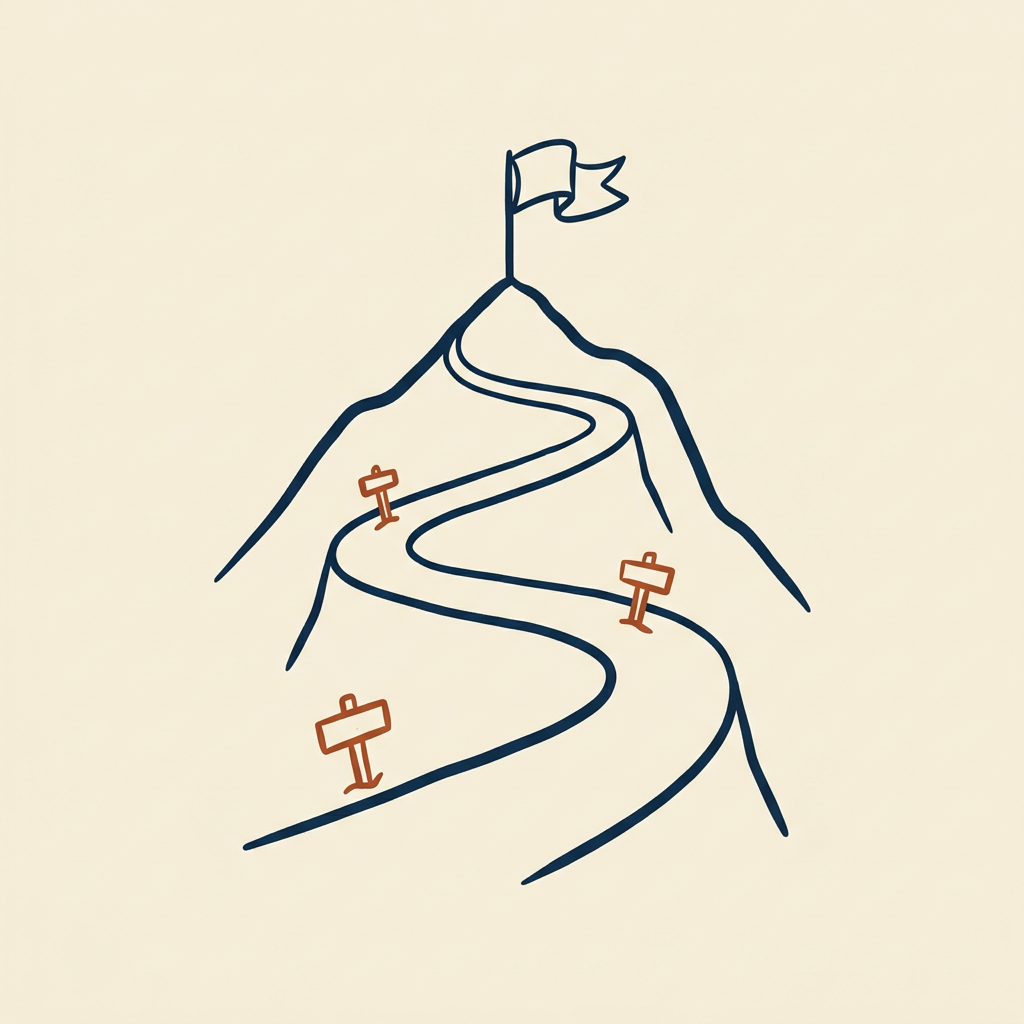
Audacious stretch goals drive progress only when broken into specific, measurable, near-term SMART sub-goals.
- Stretch goalAudacious long-term ambition that sets direction
- SMART sub-goalsSpecific, measurable, near-term tests of progress
- Weekly actionsConcrete behavior the ambition finally produces
Big vision and tidy checklists are often cast as rivals. Treated that way, each fails on its own.
A broad ambition with no triggers for action leaves people staring at ambiguous signals and freezing. Pure SMART goals, meanwhile, tend to stay incremental because they discourage risk.
The synthesis is pairing: set the audacious stretch, then translate it into SMART sub-goals that act as concrete near-term tests. Each finished sub-goal also reinforces the sense of control and supplies the mental-model checkpoints from earlier chapters.
Without that translation a bold mission stays a slogan. With it, the same mission becomes measurable weekly behavior.
In practice: Israeli military intelligence before the 1973 Yom Kippur War held raw signs of an impending attack but lacked a structured path from the vague aim of being prepared into specific evidence that should force a response.
5
Real authority to stop
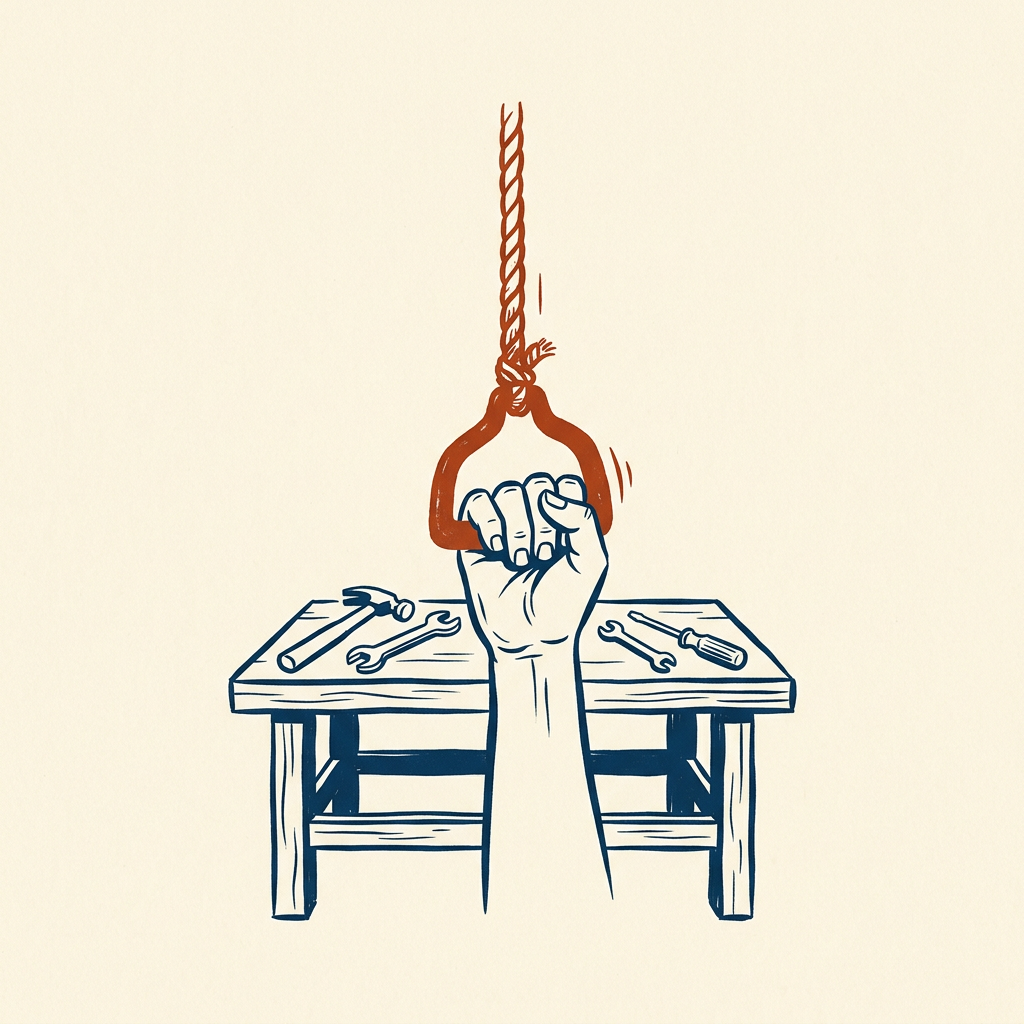
Output rises most when workers hold real power to halt work, question, and fix problems rather than only follow fixed procedure.
Compliance
Follow the procedure; only supervisors stop the line; defects travel farther
Commitment
Workers pull the cord; problems owned at the source; quality rises
Culture can outweigh equipment. The same plant and largely the same workforce can flip from worst to best when decision rights change.
At the NUMMI joint venture that opened in Fremont in 1984, line workers could pull an andon cord and stop the entire assembly line the moment they spotted a defect—authority once reserved for supervisors. That signal of trust turned order-followers into problem-owners.
Stopping the line is itself an agency-building choice, and it only survives if speaking up is rewarded. Lean tools worked because they sat on that safety, not because the tools alone were magic.
Commitment-based systems, where employees keep discretion over how work gets done, consistently beat compliance systems that demand pure execution—even when the technical process is identical. Management becomes the design of real decision rights.
In practice: GM's earlier Fremont plant had been plagued by absenteeism and poor quality; under the new authority rules the same unionized workforce became one of the most productive and highest-quality plants in the country.
6
Picture several futures
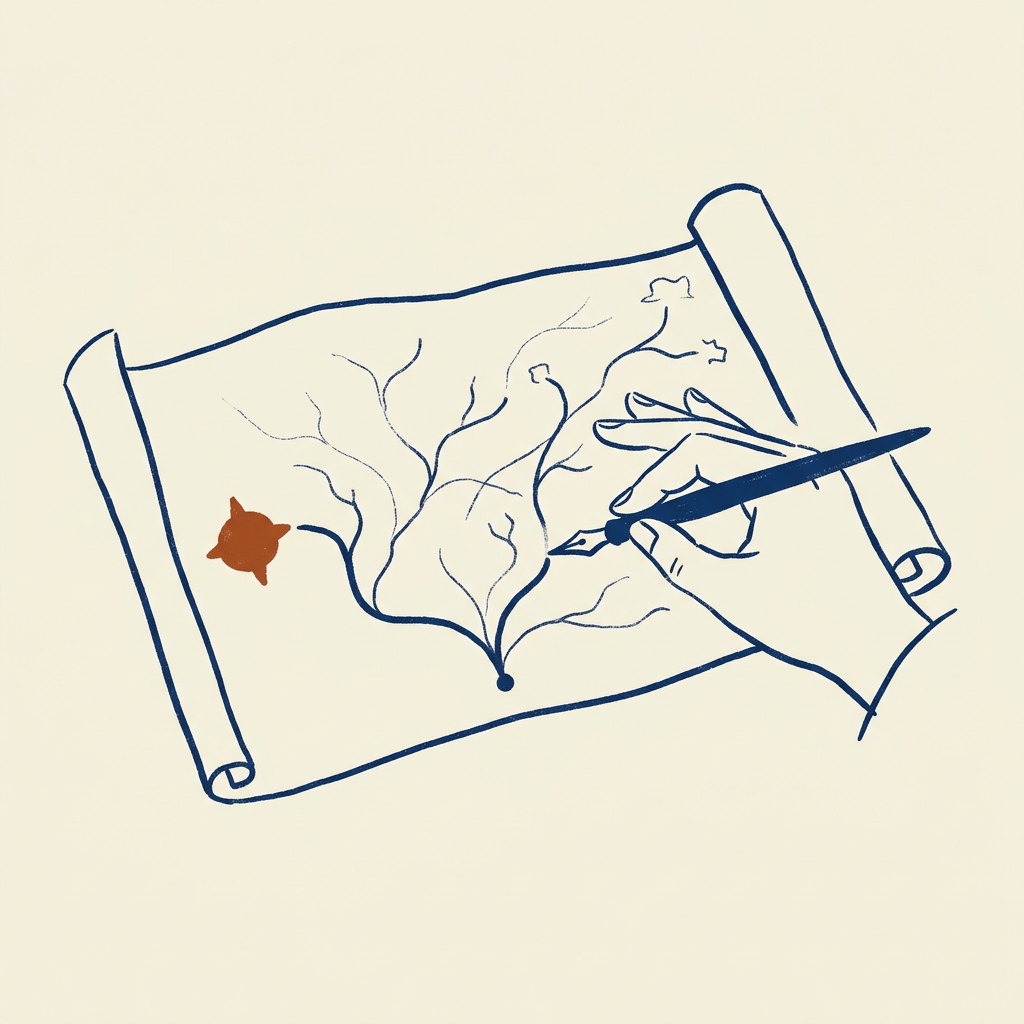
Strong decisions come from picturing several possible futures and updating their odds, not from waiting for certainty.
Under ambiguity the comforting move is to force a yes-or-no. Skilled deciders refuse that comfort and think in distributions instead.
Strong poker players build a range of outcomes for each hand and revise the odds as new cards and bets appear—a habit close to Bayesian updating without heavy math. They keep competing hypotheses alive on purpose.
Training that prizes fast either-or judgment leaves people without a frame for holding several stories at once. When data is messy and time is short, a single locked interpretation can turn catastrophic.
Practical moves include running a spread of future scenarios before choosing, assigning rough likelihoods, and naming what evidence would change your mind. Admitting uncertainty early builds the checks that catch errors before they compound.
In practice: In 1988 the USS Vincennes, under time pressure and ambiguous radar data, treated the situation as a binary threat-or-not choice and shot down Iran Air Flight 655, killing 290 civilians after misidentifying a civilian airliner.
7
Recombine under deadline
Innovation is less solitary genius than forcibly connecting existing ideas from disconnected fields under real time pressure.
- Years into developmentStory and characters fail to cohere despite talent
- BreakthroughSongwriters reframe the sisters via Broadway-style emotional logic
- 2013 releaseFilm rebuilt under compressed deadline around the new core
Creativity here is treated as structural reconnection rather than a lightning bolt of lone talent. Breakthroughs often arrive when an old frame has already failed.
A major animated feature nearly collapsed mid-development even with strong writers and animators on it for years. Story and characters simply would not cohere.
The turn came when the songwriting team reframed the central relationship by importing a structural idea closer to the emotional logic of Broadway musicals, then forced the visual and narrative teams to rebuild around that core under a compressed deadline.
People who work this way deliberately collide distant domains once the familiar approach is exhausted and the clock is real. Pressure becomes the tool that makes recombination unavoidable.
In practice: Disney's Frozen, released in 2013, turned around when a Broadway-style emotional structure for the two sisters replaced the stalled frame and the film was rebuilt around it under deadline.
Key terms
- locus of control The belief that your own actions, not outside forces, shape outcomes
- psychological safety A shared sense that you can speak up, ask, or admit error without punishment
- cognitive tunneling Under stress, attention locks onto one signal and filters out the wider picture
- mental models An ongoing internal story of what should be happening, used to spot mismatches
- stretch goal An audacious long-term ambition that sets direction beyond easy wins
- SMART goals Specific, measurable, achievable, relevant, time-bound near-term targets
- andon cord A line a worker can pull to stop production the moment a defect appears
- commitment-based system Management that gives employees real discretion over how work gets done
- probabilistic thinking Holding several possible futures with rough odds and updating them as evidence arrives
What to do
- Pick one dull task today and decide aloud why it connects to something you value before you start.
- In your next meeting, notice speaking shares and invite one quiet person to weigh in.
- Before a high-pressure block of work, verbalize three things you expect to happen next.
- Break one big ambition into three measurable checkpoints you can finish this week.
- Hand a teammate one real stop-or-fix right they do not currently have.
- For a pending decision, list three possible futures, rough odds, and what evidence would change your mind.
Questions to think with
- Where are you still waiting to feel motivated instead of making a small controlling choice?
- What unwritten team norm makes it costly to admit a mistake or ask a basic question?
- When reality last contradicted your expectations, did you update the story or tunnel harder?
- Is your boldest aim paired with concrete near-term tests, or is it still only a slogan?
- Do your hard calls treat uncertainty as a range of odds or as a forced yes-or-no?
The other side
The summary's critique section is undeveloped, so the book's string of vivid case studies goes without a clear accounting of counterexamples, failed transfers, or where the habits may not generalize.
Who it's for
Managers looking for evidence-based ways to improve team performance without adding headcount, and readers who want psychology research woven through business case studies, will get the most from the full book. It also fits anyone who feels busy yet unproductive and wants a framework beyond simple time-management tricks.