




Happiness is an equation you can solve by rewriting expectations
Systems thinkers, grievers, and anxious overthinkers get a secular method for interrogating thoughts instead of waiting on mood.
IJR · Oct 31, 2026 · 12 min read
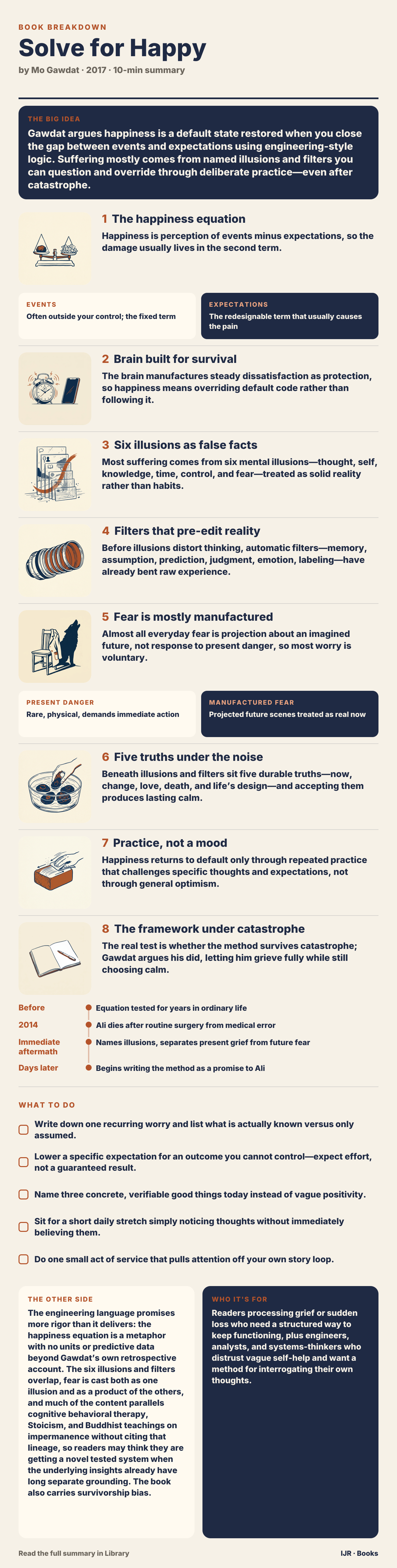
In 60 seconds
- Happiness is the gap between how you perceive events and what you expected, so you shrink suffering by adjusting expectations rather than controlling life.
- The brain evolved as a survival machine that manufactures dissatisfaction by default, running ancient threat code on modern life.
- Six illusions—thought, self, knowledge, time, control, and fear—make mental habits feel like solid facts.
- Automatic filters such as memory, assumption, prediction, judgment, emotion, and labeling distort raw experience before deliberate thought begins.
- Most everyday fear is a projection about an imagined future, not a response to present danger, and can be tested against the now.
- Lasting calm comes from accepting five durable truths and daily practice that challenges specific thoughts, not from optimism or getting more of what you want.
The big idea
Gawdat argues happiness is a default state restored when you close the gap between events and expectations using engineering-style logic. Suffering mostly comes from named illusions and filters you can question and override through deliberate practice—even after catastrophe.
The book in brief
Gawdat starts from a working formula he tested on himself for years: happiness is greater than or equal to your perception of life’s events minus your expectations of how life should behave. Events are often fixed; expectations are the variable that does the damage, yet most people experience event and judgment as one seamless fact.
He then explains why the mind inflates expectations so reliably. The brain is a survival machine, not a joy machine. An incident occurs, a thought about it appears, and only then does emotion follow—so the same rejection email yields panic or mild annoyance depending entirely on the thought layered on top.
Next he catalogs six illusions that sit on that chain—thought, self, knowledge, time, control, and fear—plus the faster filters that reshape raw data before conscious thought even starts: memory, assumption, prediction, judgment, emotion, and labeling. Together they manufacture suffering from often-neutral events. Fear, their most damaging product, is usually a projection about a future that has not happened, not a response to present danger.
He pivots to five things he treats as simply true beneath the noise: now, change, love, death, and the design of life. Accepting them rather than resisting them is what produces lasting calm. Insight alone is not enough; happiness returns only through repeated practice that catches thoughts, names the illusion or filter, and tests them against evidence.
The final movement returns to Ali’s death after routine surgery. Gawdat applies the same framework in real time—naming control and time illusions, separating manufactured future fear from present grief, holding the truths of change, death, and love—and argues the method let him grieve fully without adding a second layer of resistance. Happiness and grief, he claims, are not opposites fighting for the same space.
Context
Written after the death of his son Ali during routine surgery, the book offered a secular, structured alternative to positive-thinking cliché and clinical language. It mattered for readers who trust systems more than sentiment.
The key ideas

1
The happiness equation
Happiness is perception of events minus expectations, so the damage usually lives in the second term.
Events
Often outside your control; the fixed term
Expectations
The redesignable term that usually causes the pain
Gawdat treats happiness as a design problem rather than a mood handed out by circumstance. He built a formula and tracked his own happiness in spreadsheets for over a decade before he ever needed it under extreme pressure. The equation states that happiness is greater than or equal to how you perceive life’s events minus what you expected life to deliver.
This does two things at once. It moves the site of happiness from the outside world into the observer’s mind, and it makes plain that expectations—not events—are usually the variable doing the damage. Most people never separate the two terms. They experience an event and a judgment about that event as a single seamless fact, so they never notice the judgment is negotiable even when the event is not.
Lasting change, he argues, comes from working the expectation side, because the event side often sits outside control. Happiness becomes closer to a solvable engineering constraint than a personality trait or a stroke of luck. Everything that follows treats your own thinking as the object of study.
In practice: A delayed flight ruins the day only if punctuality felt like a right rather than a favor from a complex system.

2
Brain built for survival
The brain manufactures steady dissatisfaction as protection, so happiness means overriding default code rather than following it.
Building on the equation, Gawdat explains why the mind so reliably inflates expectations and distorts events: it was shaped by threats, not comfort. A negativity bias that once kept ancestors alert to predators now keeps people awake over emails.
He offers a simple chain. An incident occurs. A thought about the incident occurs. Only then does an emotional response follow. The same rejection email produces panic in one person and mild annoyance in another depending entirely on the thought layered onto it. Most people treat their thoughts as reliable narrators of reality when they are closer to an unedited stream generated by a brain optimized for scanning danger.
A missed text becomes evidence of abandonment. A critical comment from a boss becomes proof of incompetence. None of this is a conscious choice. The work is not suppressing thoughts but noticing the gap between incident and thought before the thought hardens into feeling. He likens it to ancient software running on modern hardware, constantly throwing false alarms.
In practice: A missed text message gets read as abandonment; a boss’s critical comment becomes proof of incompetence—both stories generated after the bare incident.

3
Six illusions as false facts
Most suffering comes from six mental illusions—thought, self, knowledge, time, control, and fear—treated as solid reality rather than habits.
Gawdat names six illusions that sit on top of the incident-thought-response chain, each adding a layer of false certainty. The thought illusion is believing every thought that arises is both true and is you, rather than one of thousands of passing signals. The self illusion builds identity out of job titles, possessions, and comparisons, so losing any of them feels like losing a piece of existence.
The knowledge illusion mistakes a partial, culturally shaped model of the world for the whole truth. The time illusion lives in regret over the past or anxiety about the future while treating the present as mere passage. The control illusion believes outcomes are fully within command when we only ever influence results. The fear illusion manufactures threats that exist only in projected scenarios.
These are learned early and reinforced by culture, language, and reward systems, which is why they feel like plain reality. Naming them is the first practical step: an illusion that has a name can be questioned in the moment it appears instead of obeyed automatically.
In practice: A senior executive experiences a layoff as collapse of self rather than a change in employment status.

4
Filters that pre-edit reality
Before illusions distort thinking, automatic filters—memory, assumption, prediction, judgment, emotion, labeling—have already bent raw experience.
This layer sits deeper than the illusions. Filters are the fast, largely unconscious edits the brain makes to incoming information before conscious thought begins. By the time you reflect on an event, it has already been distorted several times.
Memory recalls selectively, favoring emotionally charged events and discarding neutral ones, so your sense of history is already a curated story. Assumption fills gaps with the likeliest negative reading. Prediction projects current feelings forward and treats the guess as fact. Judgment sorts people and events into good and bad almost instantly. Emotion colors data before analysis. Labeling compresses complex situations into single heavy words—failure, disaster, betrayal—that carry more certainty than the situation warrants.
Catching a distorted thought therefore requires deliberately slowing down enough to ask which filter produced it. The filters combine with the illusions to manufacture suffering from what was often neutral information in the raw event.
In practice: Unanswered messages from a friend get read as rejection rather than a busy week; a stressful morning makes an ordinary colleague comment feel like an attack.

5
Fear is mostly manufactured
Almost all everyday fear is projection about an imagined future, not response to present danger, so most worry is voluntary.
Present danger
Rare, physical, demands immediate action
Manufactured fear
Projected future scenes treated as real now
Actual danger is rare and demands immediate physical response. Manufactured fear borrows the time illusion and the control illusion to build dread about events that have not happened and may never happen. Almost nothing in an ordinary present moment is genuinely threatening.
Public speaking anxiety is typical: the body reacts as though a predator were present when the actual stimulus is an imagined future scene of judgment the mind has rehearsed until it feels real. Repeated exposure trains the brain to treat imagined threats as credible, creating a loop where anxiety generates more anxious thought, which the brain then treats as further evidence of danger.
The practical test is simple. Ask whether the threat exists right now, in this specific moment, or only in a projected version of the future. In the overwhelming majority of cases the answer reveals the fear as constructed rather than found. That diagnostic habit becomes the bridge to trusting the present.
In practice: Public speaking anxiety floods the body as if a predator were present, yet the stimulus is only a rehearsed future scene of judgment.
6
Five truths under the noise
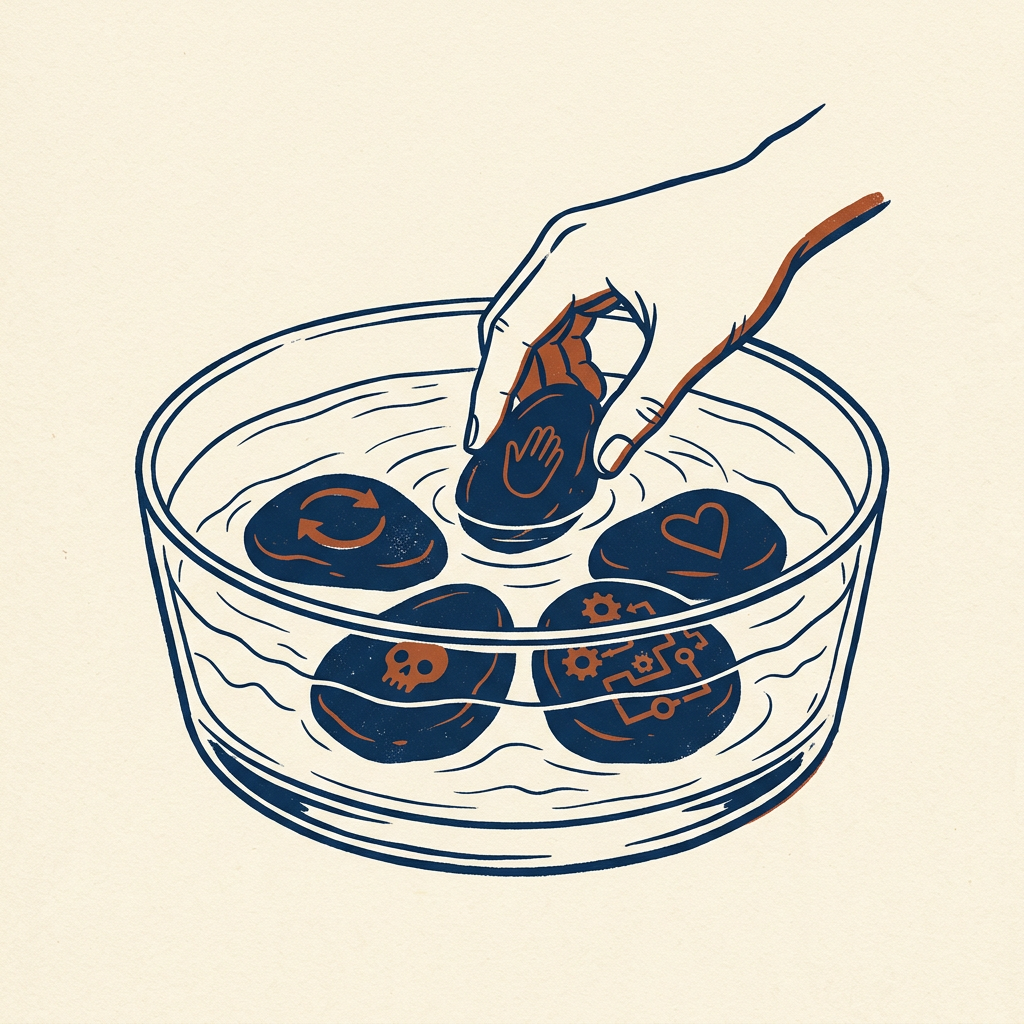
Beneath illusions and filters sit five durable truths—now, change, love, death, and life’s design—and accepting them produces lasting calm.
After cataloging what distorts perception, Gawdat turns to what he considers reliably real. Now is the only place life is actually lived; past exists only as memory, future only as prediction. Change means nothing—including comfort, pain, relationships, or health—stays fixed; resisting that fact turns ordinary loss into prolonged suffering.
Love names connection and care as an observable, near-universal drive he treats as functionally as gravity. Death names mortality as a guaranteed feature of every life rather than an exception or injustice; denying the fact, not the fact itself, produces most fear around aging and loss. Design of life means existence operates by consistent underlying rules and trade-offs larger than any individual’s preferences; suffering often comes from insisting reality should follow personal terms.
These are not comforting fictions but observable facts most people already sense and yet spend enormous energy avoiding. The avoidance itself, more than the facts, is the source of prolonged unhappiness. He applies them directly to his own grief.
In practice: Accepting death as a designed feature of life, rather than a betrayal, let Gawdat mourn his son without being destroyed by the mourning.
7
Practice, not a mood
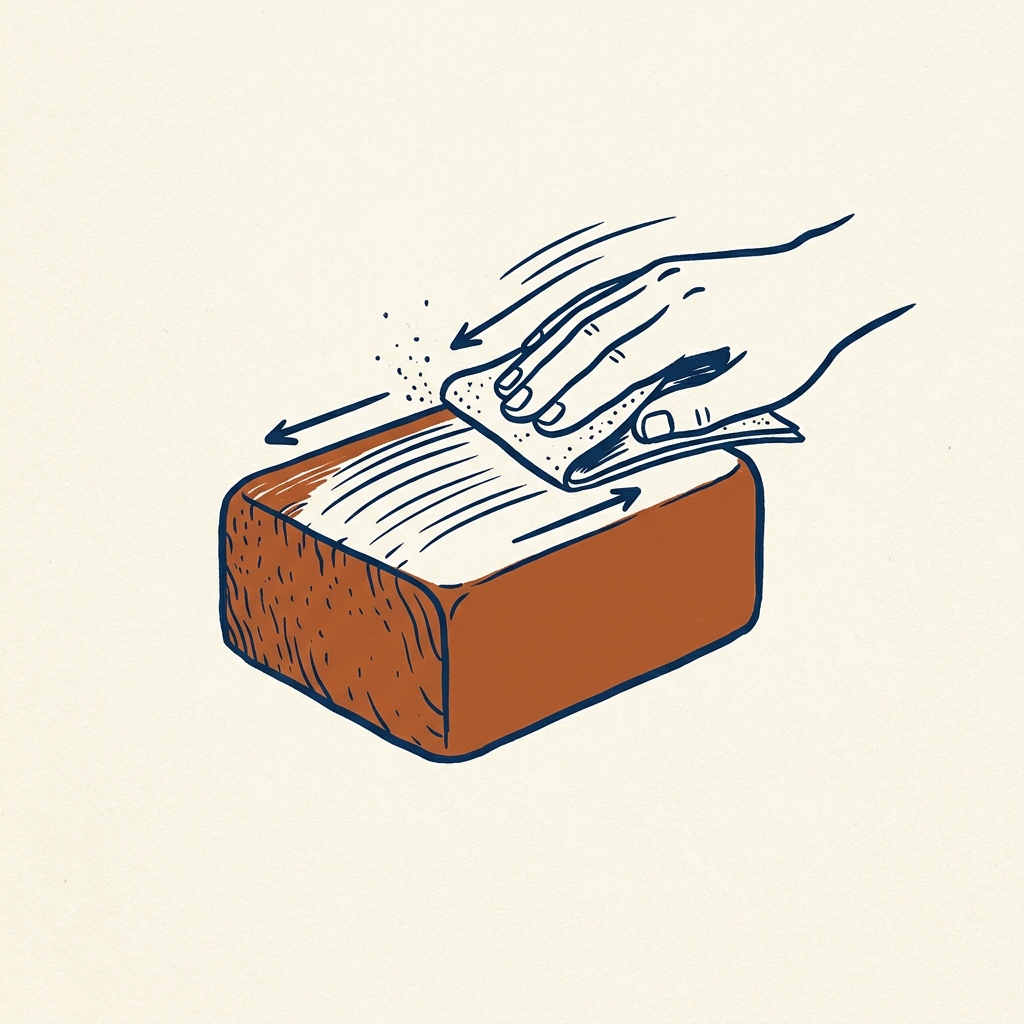
Happiness returns to default only through repeated practice that challenges specific thoughts and expectations, not through general optimism.
Insight into illusions and truths is necessary but not sufficient. Gawdat converts the earlier chapters into a working method: catch a thought as it arises, name which illusion or filter produced it, and test it against available evidence before allowing it to generate emotion.
Concrete techniques include writing down a recurring worry and listing what is actually known versus assumed; deliberately lowering the specificity of expectations for outcomes outside your control, such as expecting effort rather than a guaranteed result from a work project; practicing gratitude by naming specific, verifiable good things rather than vague positivity; short daily meditation aimed at noticing thoughts without immediately believing them; and small acts of service that interrupt self-referential thinking.
None of this produces permanent bliss. The goal is not eliminating negative events but shrinking the gap in the opening equation. He frames it as maintenance comparable to physical exercise: skip it for a week and the old patterns of assumption and fear reassert themselves quickly.
In practice: For a work project he recommends expecting effort rather than a guaranteed result, then writing a recurring worry and separating known facts from assumptions.

8
The framework under catastrophe
The real test is whether the method survives catastrophe; Gawdat argues his did, letting him grieve fully while still choosing calm.
- BeforeEquation tested for years in ordinary life
- 2014Ali dies after routine surgery from medical error
- Immediate aftermathNames illusions, separates present grief from future fear
- Days laterBegins writing the method as a promise to Ali
The final movement returns to Ali’s death in 2014 from complications after a routine appendix operation, the result of a medical error. Gawdat describes applying his own framework in real time: naming the illusions of control and time as they arose, distinguishing manufactured fear about the future from the actual grief of the present moment, and holding the truths of change, death, and love as steady ground.
He is careful. The framework did not remove his grief or make the death acceptable. It allowed him to experience the grief fully without adding a second layer of suffering built from resisting what had happened. Within days he chose to write down what he had learned as a promise to his son; that writing became the book and the One Billion Happy initiative.
Happiness and grief are not opposites competing for the same emotional space. A person can be devastated by loss and still return, deliberately, to a baseline of calm rather than staying lodged in denial or despair. The closing example answers the objection that the equation and illusions are too tidy for real suffering.
In practice: Days after Ali’s death Gawdat began writing what he had learned as a promise to his son, turning the same method into the book and a teaching initiative.
Key terms
- Happiness equation Happiness is greater than or equal to perception of events minus expectations of how life should behave.
- Incident-thought-response The chain where an event happens, a thought about it appears, and only then does emotion follow.
- Six illusions Thought, self, knowledge, time, control, and fear—mental habits mistaken for solid reality.
- Filters Fast unconscious edits—memory, assumption, prediction, judgment, emotion, labeling—that reshape experience before deliberate thought.
- Manufactured fear Dread built from projected future scenarios rather than present danger.
- Five truths Now, change, love, death, and the design of life—durable facts that calm when accepted.
- Design of life Existence runs by consistent rules and trade-offs larger than personal preferences.
- Expectation gap The difference between what happens and what you insisted should happen; the usual source of suffering.
What to do
- Write down one recurring worry and list what is actually known versus only assumed.
- Lower a specific expectation for an outcome you cannot control—expect effort, not a guaranteed result.
- Name three concrete, verifiable good things today instead of vague positivity.
- Sit for a short daily stretch simply noticing thoughts without immediately believing them.
- Do one small act of service that pulls attention off your own story loop.
Questions to think with
- Which of the six illusions shows up most often in your hardest recent week?
- When you feel fear right now, does the threat exist in this exact moment or only in a projected scene?
- What expectation could you deliberately make less specific this week without lowering your effort?
- Where are you still treating a job title, possession, or comparison as part of your actual self?
- If grief and calm can share the same space, what would “returning to baseline” look like after your own hardest loss?
The other side
The engineering language promises more rigor than it delivers: the happiness equation is a metaphor with no units or predictive data beyond Gawdat’s own retrospective account. The six illusions and filters overlap, fear is cast both as one illusion and as a product of the others, and much of the content parallels cognitive behavioral therapy, Stoicism, and Buddhist teachings on impermanence without citing that lineage, so readers may think they are getting a novel tested system when the underlying insights already have long separate grounding. The book also carries survivorship bias.
Who it's for
Readers processing grief or sudden loss who need a structured way to keep functioning, plus engineers, analysts, and systems-thinkers who distrust vague self-help and want a method for interrogating their own thoughts.