




Rome became Rome by arguing who counts as Roman
Eight centuries of Roman history read as contested stories about power, citizenship, and belonging rather than a clean rise or fall.
IJR · Oct 24, 2026 · 14 min read

In 60 seconds
- Beard opens in 63 BCE with Cicero and Catiline to show Romans already fighting over emergency power, due process, and the cost of breaking rules to save the state.
- Founding tales of Romulus, Remus, and the Sabine women are later inventions that justified a self-image built on violence and absorbing outsiders.
- Fear of kings after Tarquin shaped republican checks yet left a blind spot for one-man rule under other titles.
- Expansion worked by binding defeated peoples through treaties, partial rights, and shared military duty, not extraction alone.
- From the Gracchi to Caesar, elite conflict slid into political killing and armies loyal to generals; Augustus kept republican forms while holding sole power.
- Caracalla’s 212 CE edict granting citizenship to nearly all free inhabitants caps Rome’s lasting invention of expandable legal belonging.
The big idea
Beard treats Roman history as centuries of Romans contesting power, citizenship, and who belongs, filtered through self-interested sources rather than a triumphant or tragic arc. What holds the story together is a recurring habit of turning conquest into inclusion until political community could be defined by shared legal status at imperial scale.
The book in brief
Beard refuses the usual start at Romulus. She drops the reader into 63 BCE, when consul Cicero crushed Catiline’s plot, ordered executions without full trial, and later paid with exile. That crisis already carries the recurring fights over emergency power, legality, and who may break the rules to save the state.
She then works backward through the famous founding tales—the wolf, the murdered twin, the stolen Sabine women—as later inventions that let Romans explain themselves as a people made by violence and by taking outsiders in. The seven kings and Tarquin’s expulsion matter less as verified events than as the trauma that locked the Republic into horror of anyone called king, shaping term limits and shared offices while leaving room for equivalent power under other names.
Expansion across Italy and the Mediterranean rested less on pure force than on binding defeated communities through treaties, partial rights, and military service. That habit made fighting capacity grow with each win, yet also produced the land inequality the Gracchi tried to fix and paid for with their lives. After them, political killing left procedural bounds; generals from Marius to Caesar built armies loyal to themselves and hollowed out shared rule one expedient at a time.
Augustus solved the old problem of looking like a king by keeping republican titles and festivals while becoming the only real source of power. Most people in the empire—slaves, freedmen, women, soldiers, provincials—barely appear in elite texts; inscriptions, graffiti, and papyri offer only fragments of their lives. Beard closes in 212 CE with Caracalla’s grant of citizenship to nearly all free inhabitants, treating that act as the long logic of incorporation finally written into law and as the point where the distinctive story of Rome as an expanding legal community is essentially complete.
Context
Mary Beard’s 2015 account traces Rome from mythic beginnings to Caracalla’s citizenship edict in 212 CE. It offers a source-critical path for readers without classical training, replacing tidy rise-and-fall narratives with the ancient arguments about belonging that still echo in modern politics.
The key ideas

1
Begin with the conspiracy
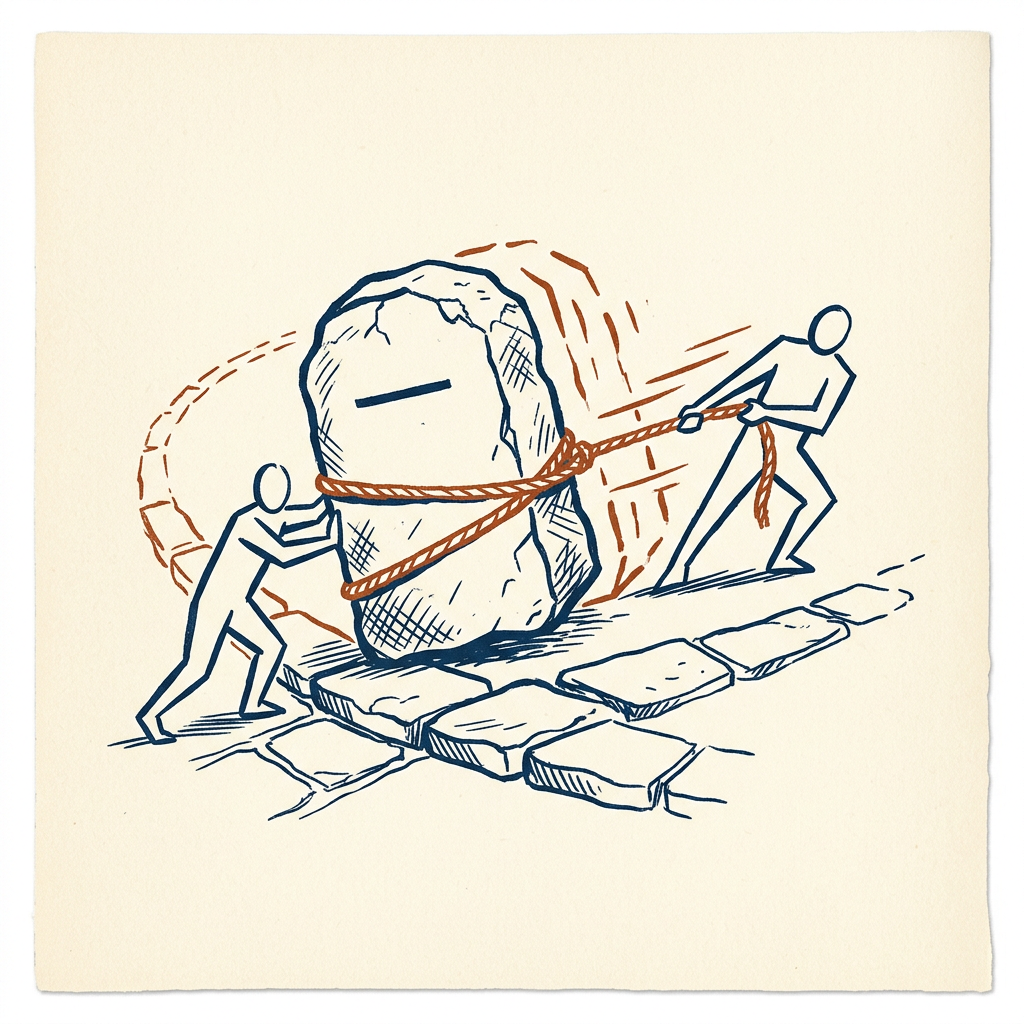
The Catiline crisis of 63 BCE is Beard’s doorway because it already shows Rome arguing about emergency power, due process, and the cost of saving the state by breaking its rules.
- 1Plot exposedCicero denounces Catiline in the Senate in 63 BCE
- 2Emergency executionsConspirators killed without formal trial to save the state
- 3Exile followsCicero is later punished for breaking ordinary process
Beard opens in the middle of the Republic rather than at the myths. Consul Cicero exposed Catiline’s plot to overthrow the Senate, denounced him in speeches in the chamber itself, and had several conspirators executed without formal trial as an emergency measure.
The aftermath proved it was never a simple win. Cicero was later exiled for those executions, so Romans themselves treated the legality and morality as open questions. Who decides a crisis is real, and what happens to the man who breaks the rules to preserve them, never left Roman politics.
By the first century BCE the city already had a sophisticated vocabulary of citizenship and law on record in speeches and letters. Starting here signals that documented Rome was already centuries into arguing about its own institutions, so any hunt for one clean Roman character or destiny is the wrong project.
In practice: Cicero’s executions without trial, followed by his own exile, show emergency measures stayed contested rather than celebrated.
2
Myths as political tools
Romulus, Remus, and the Sabine women are retrospective fictions composed centuries later to justify Rome’s self-image as a city founded on violence, asylum, and absorbing outsiders.
What readers often want
Dim memory of real events in 753 BCE to excavate as fact
What Beard treats them as
Later fictions showing what Romans needed to believe about violence and outsiders
No contemporary evidence supports Romulus founding Rome in 753 BCE. The stories survive mainly through writers such as Livy, working seven centuries later from oral tradition, lost historians, and invention.
Beard refuses to dig for garbled fact underneath. She asks what later Romans needed to believe. Twins raised by a wolf, the killing of Remus, and an asylum for runaway slaves and criminals encoded a community made by force yet open to outsiders. Seizing Sabine women to supply wives foreshadowed later habits of absorbing conquered peoples through marriage, treaty, and citizenship.
The myths stayed living tools. Augustus revived and monumentalized Romulus to cast his own rule as a second founding. Each generation reshaped the tales to justify present arrangements, so no single version counts as the original.
In practice: Augustus’s revival of the Romulus story centuries later repurposed a founding myth to legitimize one-man rule as renewal.
3
The lasting fear of kings
The seven kings and Tarquin’s expulsion in 509 BCE cannot be verified in detail, yet Republican identity was built on horror of one-man rule that shaped institutions and still failed to stop autocracy under other titles.
Tradition held that Tarquin the Proud was expelled after his son raped Lucretia, and that the Republic rose from that act. Archaeology supports some kind of early monarchy and Etruscan contact; the named kings, dates, and deeds are almost certainly later embellishment.
What counts historically is the anti-monarchical ideology built on the story. Romans designed annual collegial magistracies, term limits, and mutual checks because kingship had become the national political horror. The word rex was abuse any ambitious man had to dodge.
The same narrow definition created a blind spot. One-man rule meant wearing a crown and calling yourself king. Someone could gather equivalent power under different names, which is what Augustus later did. Founding trauma set taboos a clever operator could honor in letter and violate in spirit.
In practice: Julius Caesar’s reported public refusal of a crown in 44 BCE shows even a man accumulating supreme power still had to manage the stigma of the title king.

4
Growth by taking people in
Rome’s expansion succeeded less by military superiority than by extending rights, citizenship, and alliance to conquered peoples, turning former enemies into stakeholders.
- 1DefeatCommunity loses to Rome on the battlefield
- 2Treaty and partial rightsAllies supply troops and gain graded legal protection
- 3Larger manpowerRoman fighting capacity grows with the new stakeholders
- 4Next conquestExpanded force enables further incorporation
↻ and round again
By the third century BCE Rome held the Italian peninsula less by permanent garrisons than by treaties, partial citizenship, and shared military duty. Latin allies and other socii sent troops and received graded legal protection and access to Roman institutions.
That model differed from empires built on pure extraction or permanent exclusion. Fighting capacity grew with each conquest instead of draining into endless policing. Beard frames the habit as a pragmatic technology of rule, not modern tolerance, always granted from a position of Roman control.
Grievances remained real. Italian allies carried war burdens for generations without full citizenship until the Social War of 91 to 88 BCE forced Rome to extend citizenship to nearly all Italians rather than face continued revolt. The same pattern—incorporation as reward and safety valve—recurred at every later stage of expansion.
In practice: After the Social War of 91–88 BCE, Rome extended citizenship to nearly all Italians rather than risk further revolt.

5
Land, reform, and political murder
The Gracchi’s land reforms in the 130s and 120s BCE exposed a Republic unable to absorb the inequalities of its own conquests, and their deaths normalized killing over debate.
- 133 BCETiberius Gracchus killed after pushing land redistribution
- 120s BCEGaius Gracchus and thousands of supporters killed in organized violence
- AftermathExtra-legal killing becomes a usable political precedent
Conquest poured wealth and land into senatorial hands more than into the soldiers who won it. Tiberius Gracchus, tribune in 133 BCE, pushed redistribution of public land to poorer citizens through popular assemblies instead of senatorial consensus. Senators saw a populist grab for personal power; a senatorial mob killed him the same year.
Gaius Gracchus tried broader reforms a decade later and died with thousands of supporters in Senate-sanctioned violence. Before the brothers, elite competition had mostly stayed inside procedural bounds. After them, killing an opponent outside the law became a usable tool later figures could cite.
The underlying land hunger among citizen-soldiers never got solved. It returned generation after generation and fed the civil wars. Beard reads the failure as institutional: a system built for a small city-state could not manage imperial wealth and scale, and no peaceful reform path existed once elite interests were directly hit.
In practice: Tiberius Gracchus’s death at the hands of a senatorial mob in 133 BCE marks the turn from procedural rivalry to political killing.

6
Generals who owned their armies
The Republic eroded across Marius, Sulla, Pompey, and Caesar as commanders discovered that soldiers loyal to them personally could override Senate and law.
- 1Recruitment changeMarius lets landless citizens join; livelihood depends on the general
- 2March on RomeSulla uses personal armies twice and issues kill-lists
- 3Civil warCaesar crosses the Rubicon and ends as dictator for life
Marius, consul seven times between 107 and 86 BCE, opened the legions to landless citizens. Soldiers now depended on their general’s promises of land and reward, not on an abstract state. The manpower fix created personal loyalty as a new political fact.
Sulla marched on Rome in 88 and again in 82 BCE, made himself dictator, and ran proscriptions—published kill-lists whose victims could be murdered and stripped of property. Pompey and Caesar inherited the precedent. Caesar crossed the Rubicon in 49 BCE with his army, triggering civil war and leaving him dictator for life until assassination in 44 BCE.
Beard stresses that none set out to destroy the Republic from the start. Each managed ambition and survival with tools the system had made available. Checks built to stop kings had no answer for generals backed by loyal legions and conquest wealth. Collapse looks inevitable only in hindsight; at each step the choices were locally explicable.
In practice: Caesar’s crossing of the Rubicon in 49 BCE with troops forbidden to enter Italy proper turned a career crisis into civil war and dictatorship.
7
Monarchy in republican dress
Augustus’s lasting feat was institutional theater: he kept nearly every republican title and procedure while becoming the sole source of real power.
Outward form
Senate, consuls, elections, and republican festivals kept running
Real substance
One household as the sole source of military command and final decisions
After defeating Mark Antony in 31 BCE, Octavian faced Caesar’s old problem—how to hold supreme power without looking like a king. In 27 BCE he formally restored the republic, returning provinces and authority to the Senate, while taking permanent tribunician power and command of the key provinces and armies that made him unchallengeable.
He refused rex and dictator, preferring princeps, roughly first citizen, and the honorific Augustus. Elections continued, consuls took office, festivals ran on schedule, yet every meaningful decision ran through one household. Beard treats this as Rome’s most consequential political invention after citizenship itself: monarchy that could live inside republican vocabulary.
Visible continuity mattered. He restored temples, revived religious offices, and tied his line to Romulus and to Aeneas. Later emperors, whatever their character, worked inside the same fictions, including the Senate’s formal role in confirming each new ruler.
In practice: The settlement of 27 BCE returned legal authority to the Senate on paper while Augustus kept the armies and tribunician power that made opposition impossible.
8
Life outside the palace
Elite male writers dominate the evidence, so the lived experience of slaves, freedmen, women, soldiers, and provincials is harder to recover yet closer to ordinary Roman life than palace drama.
Most literary sources come from senators, politically invested historians, and satirists writing for peers. The vast majority of the empire’s people appear only as background or victims. Beard turns to inscriptions, tombstones, Pompeii graffiti, Egyptian papyri, and ordinary housing remains for a different texture.
Those fragments show freed slaves boasting of commercial success on funerary monuments, frontier soldiers writing home about supply requests, and women running businesses or managing property despite legal limits on independence. Slavery was foundational, not marginal: slaves did brutal labor and skilled administration, and manumission was common enough that many freeborn citizens descended from former slaves within a generation or two.
She refuses a neat parallel ordinary-Romans narrative because the evidence is too patchy for a continuous story. The fragments work as correctives. Political dramas of emperors and senators describe a small fraction of inhabitants; a picture drawn only from senatorial sources overstates stability and sameness.
In practice: Pompeii graffiti and tombstones of freed slaves advertising commercial success supply non-elite traces elite histories omit.
9
Citizenship at imperial scale
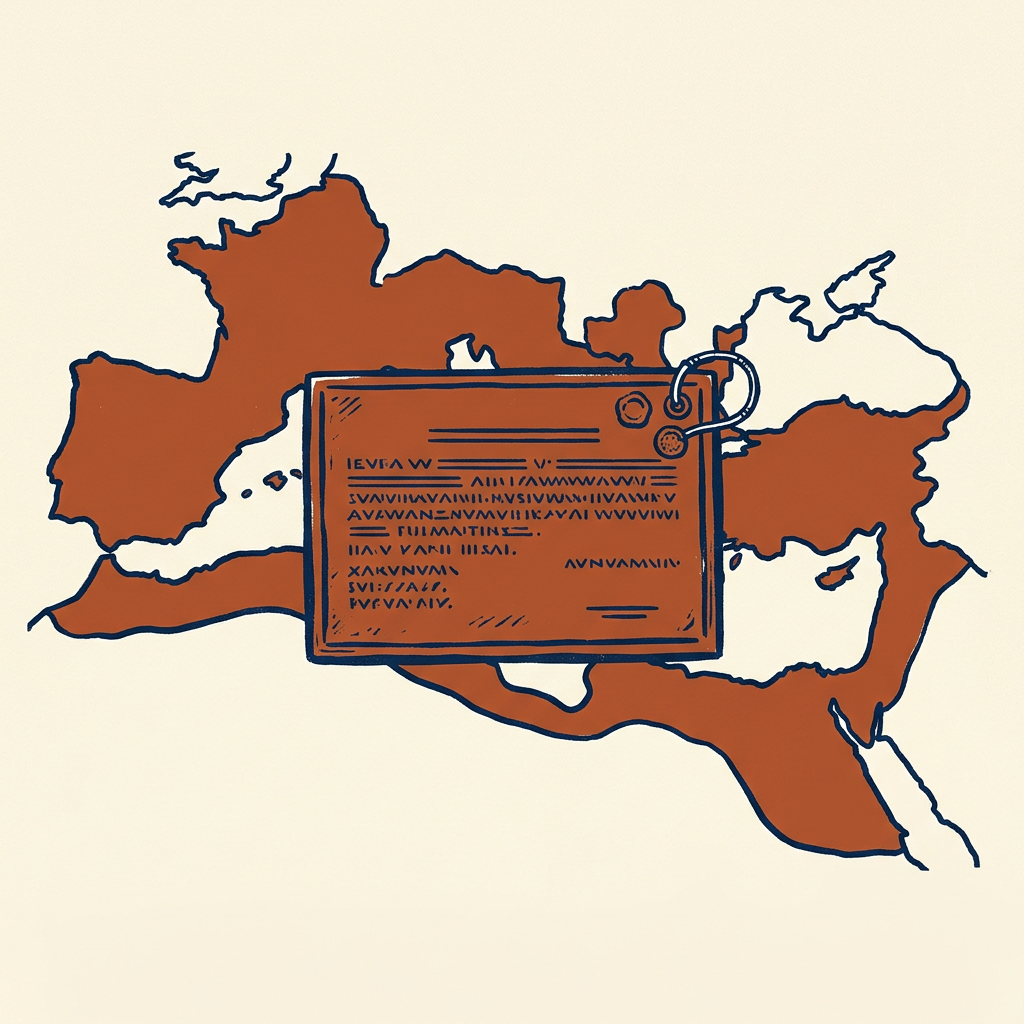
Beard ends in 212 CE with Caracalla’s edict granting citizenship to nearly all free inhabitants because it completes Rome’s most lasting invention: a political community defined by expandable legal status.
- Early RepublicCitizenship largely confined to the city of Rome
- After 91–88 BCECitizenship extended to nearly all Italians after the Social War
- 212 CECaracalla grants citizenship to nearly all free inhabitants of the empire
Citizenship had already moved from the city of Rome alone, to Italian allies after the Social War, to provincial elites, soldiers, and freed slaves across the empire. Caracalla’s edict extended it to virtually every free person inside Roman borders.
Beard reads the act as the delayed culmination of the incorporative logic present from the asylum and Sabine myths onward. The old line between Roman and foreigner that had structured law, tax, and status dissolved on paper. Ancient sources suggest a motive as practical as widening the base for an inheritance tax that fell on citizens; she holds that motive matters less than the structural result.
Rome had built, by accident and accumulation, a way for political identity to scale with empire—something no comparable ancient state matched. She stops here rather than following third-century crises, Christianization, or division because after 212 the distinctive story of how Rome became an ever-widening community bound by citizenship rather than ethnicity had been told.
In practice: Caracalla’s 212 CE edict, whatever its tax motives, turned nearly every free inhabitant into a citizen and closes the account of how Roman belonging scaled.
Key terms
- socii Italian allies who supplied troops to Rome and received graded legal protection and access without full equality at first
- rex The title king; under the Republic a term of political abuse any ambitious man had to avoid
- princeps Augustus’s preferred style, roughly first citizen, keeping supreme power without the banned title of king
- proscriptions Sulla’s published lists of enemies who could be killed with impunity and whose property could be seized
- manumission The freeing of slaves, common enough that many freeborn citizens descended from former slaves within a generation or two
- tribunician authority Powers Augustus held permanently that, with army command, made him unchallengeable while republican offices continued
- Social War The 91–88 BCE conflict after which Rome extended citizenship to nearly all Italians rather than face continued revolt
- Edict of Caracalla The 212 CE grant of citizenship to virtually every free person living within Roman borders
What to do
- Read any founding story—corporate, national, or personal—by asking what this version justifies now and who benefits if it is believed
- When judging why a long-lasting institution succeeded, look past official rules to the informal incentives that let ambitious people bend them
- Before accepting a dominant historical narrative built from documents of the powerful, ask whose experience is missing
- Seek overlooked evidence—inscriptions, receipts, graffiti, informal records—rather than relying only on official histories
- Trace how a modern political taboo is defined narrowly enough that someone could honor its letter while violating its spirit
Questions to think with
- When does an emergency truly justify suspending ordinary legal process, and who gets to decide?
- Can a political community keep expanding citizenship without hollowing out what membership means?
- How do you tell genuine institutional continuity from a costume that hides one-man rule?
- Whose lives disappear when history is written almost only from elite documents?
- What modern founding stories do the political work Beard assigns to Romulus and the Sabine women?
The other side
Ending in 212 CE before the third-century crises, Christianity, and the western fall keeps the focus on how Rome became Rome, but readers wanting a Gibbon-style decline will not find it; Beard also refuses any single thesis for Roman success or failure, which some found frustratingly open-ended, and despite her critique of elite bias the narrative spine still runs through senators, generals, and emperors because that is where continuous evidence exists, while her sound skepticism about early Rome can feel evasive to readers who want firmer answers about Romulus or the seven kings.
Who it's for
Readers who want a rigorous, accessible Roman history without prior classical training, especially anyone tired of tidy rise-and-fall arcs and students of politics curious how ancient fights over citizenship and power still shape modern ideas of political community.