




Your brain decides long before you invent the reason
Mlodinow shows that perception, memory, bias, and choice are built by a fast unconscious system before conscious thought can explain them.
IJR · Oct 30, 2026 · 13 min read
In 60 seconds
- The unconscious is a fast, largely rational partner that handles roughly eleven million sensory bits a second while conscious attention manages only a few dozen.
- What you see and remember is an active construction shaped by expectation and context, not a camera feed or stored file.
- Mild self-flattery, name-letter pull, and rewritten personal history keep people functional; unusually accurate self-views often track with depression.
- Automatic mimicry and mirror systems read others fast—and the same channel loads stereotypes that diverge from sincere stated beliefs.
- Anchors, decoy options, and price tags steer choices and can even change measured pleasure from identical wine.
- Raw bodily arousal gets a cause story after the fact, so fear on a high bridge can be felt as attraction.
The big idea
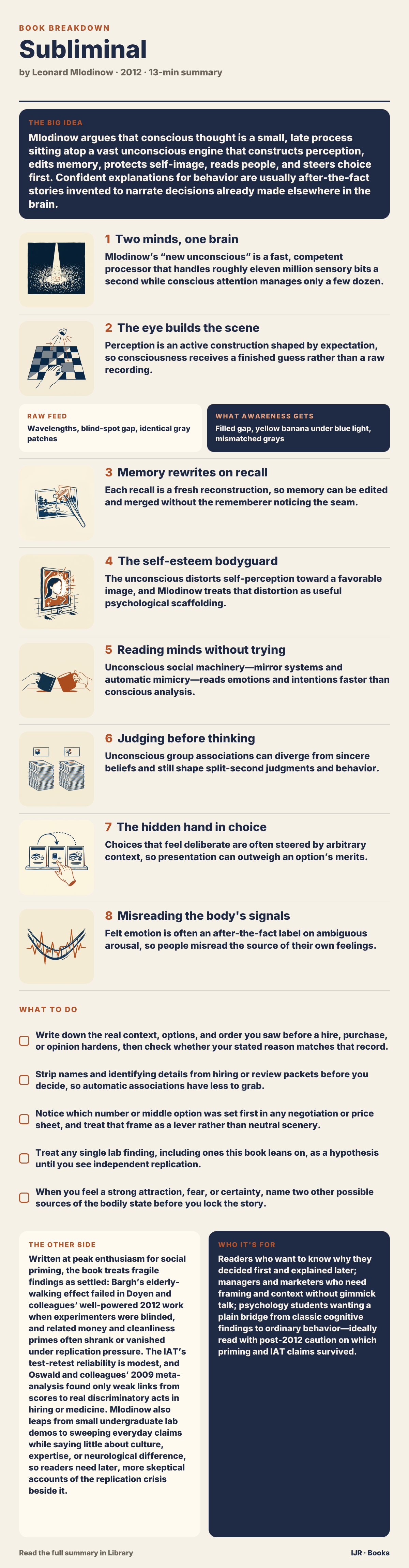
Mlodinow argues that conscious thought is a small, late process sitting atop a vast unconscious engine that constructs perception, edits memory, protects self-image, reads people, and steers choice first. Confident explanations for behavior are usually after-the-fact stories invented to narrate decisions already made elsewhere in the brain.
The book in brief
Mlodinow opens by swapping Freud’s swamp of repressed drives for a newer picture: a competent, associative processor that runs beside conscious thought and usually finishes first. Consciousness cannot run daily life alone given the sensory load, so people routinely credit deliberate reason for outputs that arrived from below.
He proves the point first with vision and then with memory. The brain fills gaps, compensates for light, and lets context decide what a shade “is,” so awareness receives a finished guess, never the raw feed. Memory inherits the same construction habit: each recall is rebuilt from fragments and expectation, and a left-hemisphere “interpreter” will invent a tidy reason for an action it never authorized.
Self-knowledge gets the same edit. People rate themselves above average on desirable traits, prefer letters in their own names, and rewrite their pasts to keep the self as hero. Mlodinow treats mild positive illusion as load-bearing for resilience, not a bug to debug away.
The same fast channel that supports empathy—mirroring, micro-cue reading—also absorbs cultural stereotypes and can prime behavior without permission from conscious values. Hiring callbacks, snap associations, and loosely activated concepts show how sincerity of belief fails to reach the system that often acts first.
Choice and emotion close the arc. Framing, anchors, and irrelevant context nudge what feels like free preference, and ambiguous arousal is labeled from whatever cause sits nearby. The book lands on a hard limit: the conscious mind is a poor judge of its own causes, useful only when readers also weigh which flagship lab findings later failed to hold up.
Context
Physicist-turned-writer Leonard Mlodinow published Subliminal in 2012 as a survey of cognitive-science findings on priming, framing, and implicit bias for general readers. It mattered because those lab results were just then entering business and policy conversations, and the book replaced the old Freudian unconscious with a mechanical, information-processing picture of what runs beneath awareness.
The key ideas
1
Two minds, one brain
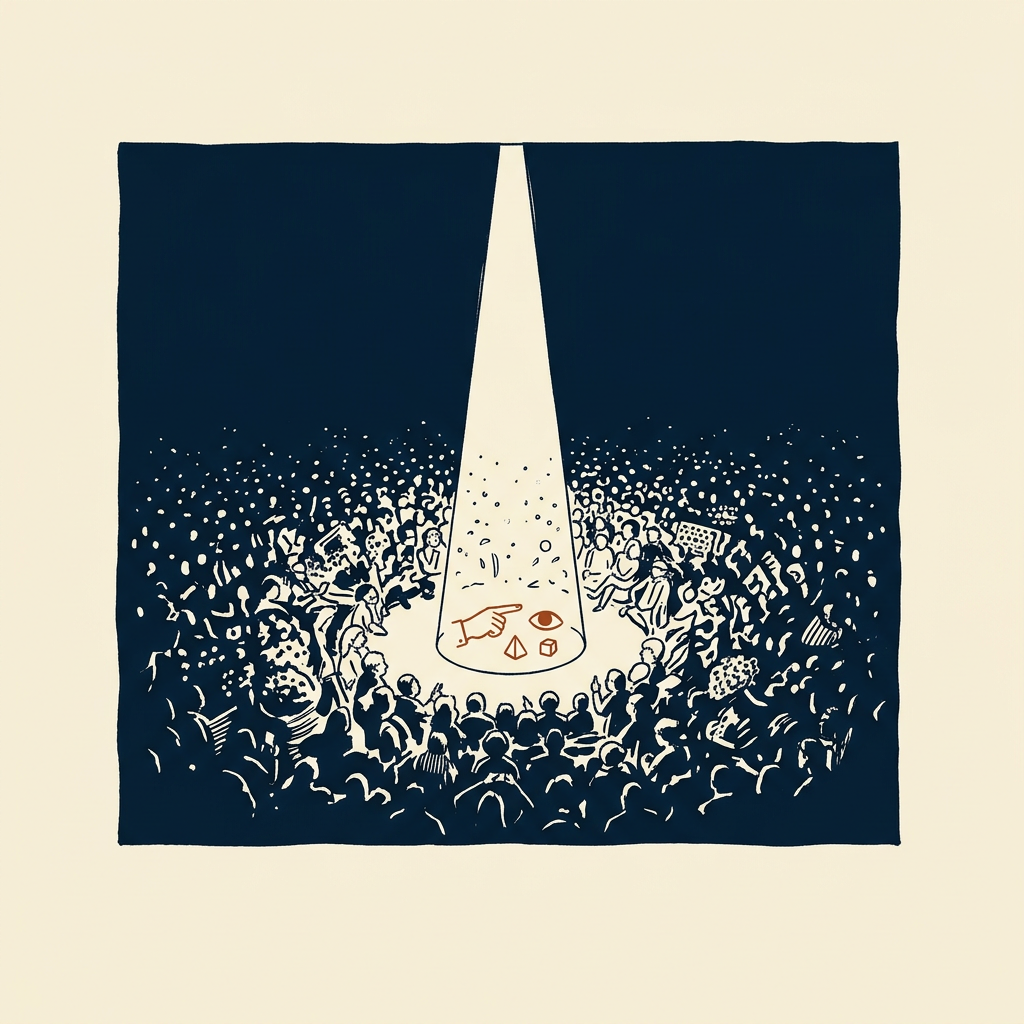
Mlodinow’s “new unconscious” is a fast, competent processor that handles roughly eleven million sensory bits a second while conscious attention manages only a few dozen.
Mlodinow opens by separating modern cognitive science from Freud. Freud’s unconscious was forbidden wishes held back by repression. The system labs study now processes sensory data, retrieves memories, monitors social cues, and generates gut feelings without announcing itself.
He treats this system as largely rational and evolved for speed. Waiting for full conscious analysis would have been too slow to survive. The brain runs the two streams as partners, not rivals; Mlodinow prefers that framing over a pure System 1 versus System 2 fight.
Given the bit gap, conscious thought could not possibly run daily life alone. The book’s through-line is misattribution: people explain a hire or a shelf pick as if conscious reason chose, when they are usually narrating a story invented after the unconscious already decided.
That is a structural feature, not a personal failing. Once a reader accepts the architecture, confident self-explanations become data to interrogate rather than proof of how a choice was made.
In practice: Someone recounts why they liked a job candidate or grabbed a product; Mlodinow says they are usually justifying a decision the unconscious already made.
2
The eye builds the scene
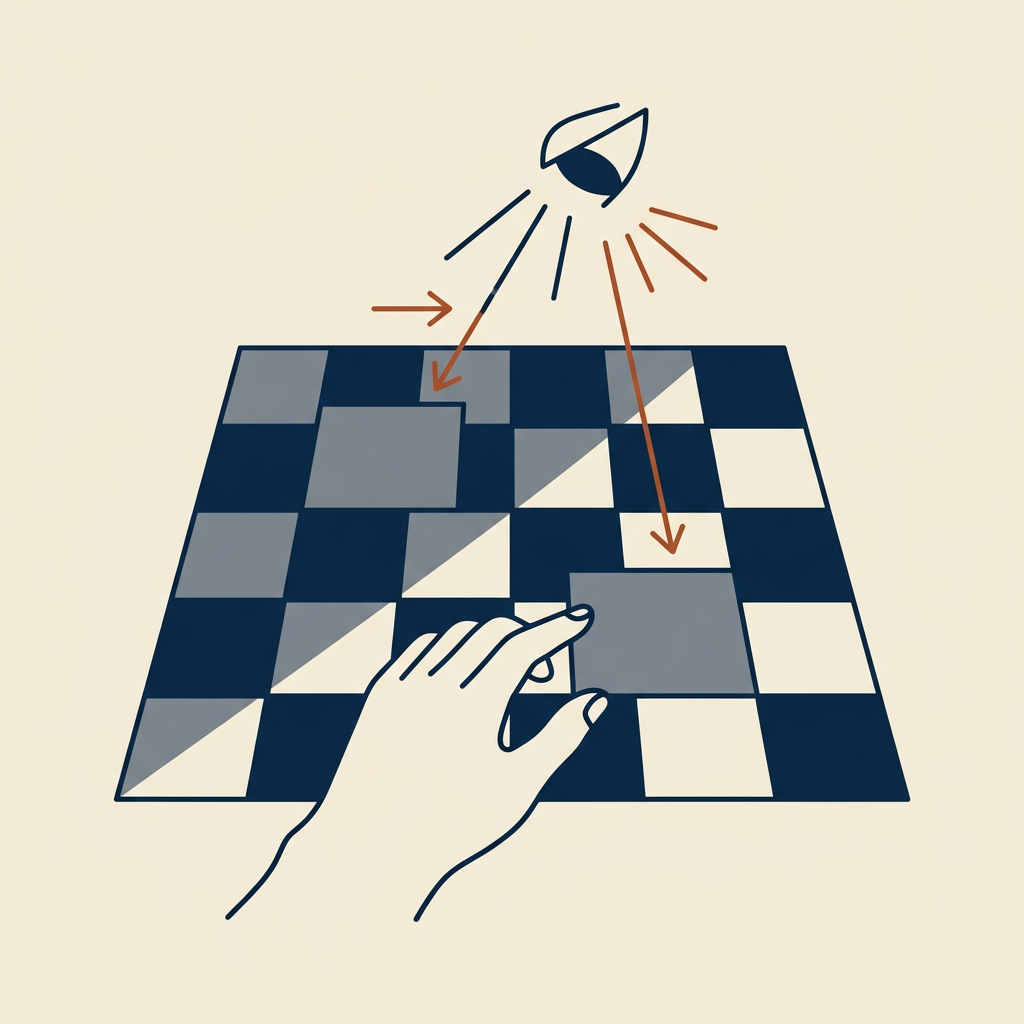
Perception is an active construction shaped by expectation, so consciousness receives a finished guess rather than a raw recording.
Raw feed
Wavelengths, blind-spot gap, identical gray patches
What awareness gets
Filled gap, yellow banana under blue light, mismatched grays
Vision is Mlodinow’s cleanest proof that the unconscious edits reality before awareness gets a look. The eye has a blind spot where the optic nerve exits, yet no hole appears in the field because the brain fills the gap from surroundings and plausible guesswork.
The same habit shows up in ordinary sight. Color constancy keeps a banana looking yellow under blue-tinted light because the brain compensates for the source, not because the wavelengths at the eye are yellow. Context, not raw data, decides what reaches consciousness.
The practical sting is eyewitness evidence. A witness does not replay a stored video; they reconstruct a scene from fragments, expectations, and later suggestions, including a detective’s leading question. The feeling of having “clearly seen” something is itself manufactured.
If perception is already a model, everything built on it—including memory—inherits the unreliability. Confidence is not a meter of accuracy.
In practice: Identical gray squares look different shades once a checkerboard shadow pattern is drawn around them, so context overrides the raw gray.

3
Memory rewrites on recall
Each recall is a fresh reconstruction, so memory can be edited and merged without the rememberer noticing the seam.
Mlodinow extends construction from sight to memory through split-brain work by Michael Gazzaniga. When the corpus callosum is severed, the speaking left hemisphere cannot see what the right hemisphere saw, yet it still invents a confident verbal reason for an action the right hand just performed.
Gazzaniga called that storyteller the brain’s interpreter. Mlodinow argues intact brains run the same interpreter constantly. Ordinary recall assembles fragments, current mood, and expectation; it is not a file replay.
That is why leading questions can plant false details and why people can hold vivid memories of events that never occurred, as in Elizabeth Loftus’s implanted-childhood-memory research. Certainty and accuracy travel on separate tracks: someone can be sure of a false memory and unsure of a true one because the feeling of certainty is generated by the same construction process.
The payoff is epistemic humility about “what really happened,” inside or outside the head. The conscious self has less direct access than it assumes.
In practice: Shown an image only the right hemisphere can see, a split-brain patient’s hand acts on it; the left hemisphere immediately fabricates a plausible reason and believes it.
4
The self-esteem bodyguard
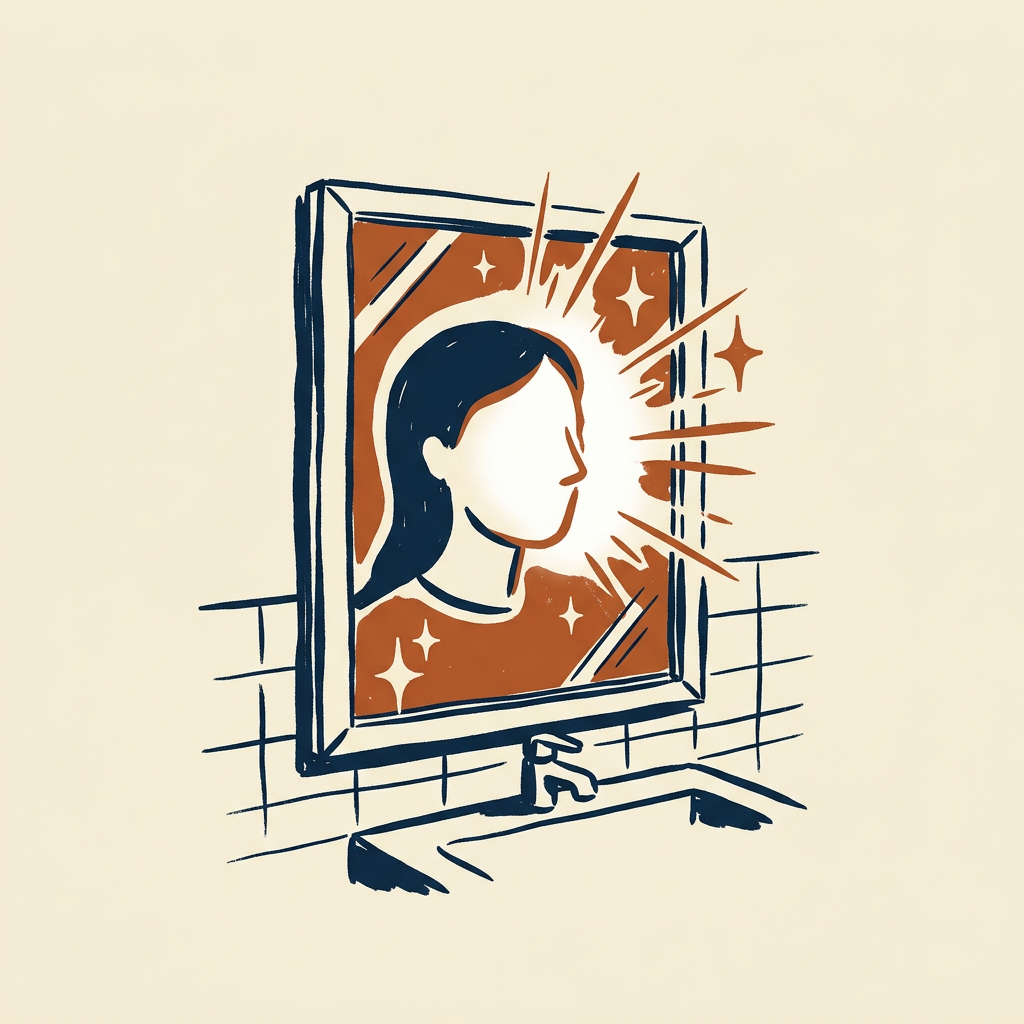
The unconscious distorts self-perception toward a favorable image, and Mlodinow treats that distortion as useful psychological scaffolding.
Once perception and memory are shown as constructed, Mlodinow turns the lens on self-knowledge. People rate themselves above average on nearly every desirable trait—an impossible pattern across a whole group, often called illusory superiority. Drivers claim above-median skill too often; professors rate their teaching above average at rates that cannot be true faculty-wide.
Self-liking also leaks into preference. Research by Jozef Nuttin and later Brett Pelham on the name-letter effect finds people favor letters in their own name and even gravitate toward careers or cities that echo their initials at rates too strong for chance.
Memory of one’s own past gets edited to fit a hero narrative, related to what Anthony Greenwald called the totalitarian ego. Mlodinow links mild positive illusion to better mental health, more persistence after failure, and greater resilience. People with clinical depression often show unusually accurate, undistorted self-assessment—sometimes labeled depressive realism.
Unconscious self-flattery is therefore framed as a load-bearing wall, not vanity to erase. The same machinery that protects the self will later shape how others are judged.
In practice: People prefer letters from their own name and lean toward jobs or places that share their initials more than chance predicts.
5
Reading minds without trying
Unconscious social machinery—mirror systems and automatic mimicry—reads emotions and intentions faster than conscious analysis.
Mlodinow moves from self to others. He describes mirror neurons identified in macaques by Giacomo Rizzolatti’s lab: cells that fire both when an animal acts and when it watches another perform the same act, a candidate basis for understanding by internal simulation.
In humans the related habit is unconscious mimicry. Tanya Chartrand and John Bargh’s chameleon-effect work showed people briefly copy a partner’s expressions, posture, and speech. Participants mimicked a confederate without noticing; when they were mimicked back, they rated the exchange smoother and liked the partner more.
Mlodinow treats this channel as the root of empathy. Infants cry in response to another infant’s cry before they can form theories of mind; adults wince at someone else’s injury as overlapping pain circuits fire at lower intensity. Micro-expressions, tone shifts, and posture changes are read continuously outside awareness.
The radar is generally adaptive—quick friend-foe and smile-fake reads aided survival—but the same automatic judgments also fire on race, accent, or dress, which opens the door to stereotyping.
In practice: People unconsciously mirrored a confederate’s mannerisms and, when mirrored themselves, liked the partner more without spotting the mimicry.
6
Judging before thinking
Unconscious group associations can diverge from sincere beliefs and still shape split-second judgments and behavior.
Mlodinow presents the Implicit Association Test, developed by Anthony Greenwald and Mahzarin Banaji in 1998, as a speed measure of how quickly people pair faces or words with positive or negative concepts. Millions of takers, including many who consciously reject racial or gender bias, still show faster links between certain groups and negative words. He reads this as the social radar absorbing cultural stereotypes without a vote from conscious values.
Field evidence sits beside the lab. In the Bertrand and Mullainathan experiment, thousands of fabricated applications went to real job postings: identical resumes with stereotypically white-sounding names drew significantly more callbacks than those with stereotypically Black-sounding names. The disparity tracked the label, not the credentials on the page.
Priming work supplies a third beat. In John Bargh’s 1996 study, participants who unscrambled sentences with elderly-linked words such as “Florida” and “bingo” later walked measurably slower down a hallway than those given neutral words, with no sense that the words had shaped their pace. Mlodinow treats the result as a flagship case of loosely activated concepts steering behavior.
His claim is blunt: stereotypes are not only chosen beliefs. They are automatic associations that can move judgment even in people who want to be fair, so sincerity is not a shield.
In practice: Identical resumes differed only in whether the name sounded stereotypically white or Black; the white-sounding names received significantly more callbacks.

7
The hidden hand in choice
Choices that feel deliberate are often steered by arbitrary context, so presentation can outweigh an option’s merits.
Mlodinow turns to consumer and economic decisions. He revisits anchoring from Amos Tversky and Daniel Kahneman: an arbitrary starting number, even one people know is random, shifts later estimates. In their wheel-of-fortune setup, landing on 10 versus 65 changed guesses about the percentage of African nations in the United Nations.
Dan Ariely’s decoy work shows a second lever. In the Economist subscription experiment, adding a clearly inferior print-only option priced the same as print-plus-web made the combined package look like the obvious deal and pushed most people toward the expensive choice, even though nobody picked the decoy itself.
Price can rewrite experience, not just talk. Antonio Rangel and Baba Shiv’s neuroeconomic work found that identical wine labeled at a higher price raised both enjoyment ratings and activity in brain regions tied to pleasure. The tag altered the bodily experience of taste.
Conscious deliberation over subscriptions or purchases is often downstream rationalization of a nudge the unconscious registered and attention never flagged. The opening claim about post-hoc stories now covers market behavior as readily as visual illusion.
In practice: Adding a print-only Economist option at the same price as print-plus-web made the bundle dominate, though the decoy itself was never chosen.
8
Misreading the body's signals
Felt emotion is often an after-the-fact label on ambiguous arousal, so people misread the source of their own feelings.
Mlodinow closes with emotion as another constructed experience. Donald Dutton and Arthur Aron’s 1974 bridge study had men cross a high swaying suspension bridge or a low stable one, then meet an attractive researcher. Men on the high bridge rated her more attractive and called more afterward; the real difference was fear-driven arousal misread as interest.
The pattern is general in his account: the unconscious emits a raw arousal signal, and consciousness hunts the immediate scene for a plausible cause, often picking the wrong one. Feeling sure about why you feel something is not the same as having access to the cause.
Antonio Damasio’s somatic-marker hypothesis supplies the functional half. Unconscious bodily signals guide choice before conscious reasoning engages. Patients with ventromedial prefrontal damage who cannot generate those markers become stuck on trivial decisions despite intact logic—evidence that pure conscious rationality without unconscious emotional input produces worse outcomes.
Emotion is not a contaminant to filter out; it is necessary input. The conscious mind remains a poor judge of emotional causes, building a story from whatever sits nearby—the same interpretive habit already shown in memory and self-image.
In practice: Men approached after a high swaying bridge found the researcher more attractive and called more than men approached after a low stable bridge.
Key terms
- new unconscious Fast, associative, largely rational processing that builds experience before conscious thought weighs in—not Freud’s repressed drives.
- interpreter Gazzaniga’s label for the left-hemisphere habit of inventing tidy verbal reasons for actions it did not initiate.
- illusory superiority The statistically impossible pattern of most people rating themselves above average on desirable traits.
- name-letter effect Unconscious preference for letters in one’s own name that can tug career and place choices.
- totalitarian ego Greenwald’s term for the self editing personal history to stay the hero.
- chameleon effect Automatic, unnoticed mimicry of another’s mannerisms that often increases liking when returned.
- Implicit Association Test A 1998 speed task pairing faces or words with good or bad concepts to surface automatic associations.
- anchoring An arbitrary starting number that pulls later numeric estimates even when people know it is random.
- decoy effect Adding a clearly inferior third option to make one of the original options look like the obvious best deal.
- somatic marker Damasio’s unconscious bodily feeling that guides decisions before conscious reasoning starts.
What to do
- Write down the real context, options, and order you saw before a hire, purchase, or opinion hardens, then check whether your stated reason matches that record.
- Strip names and identifying details from hiring or review packets before you decide, so automatic associations have less to grab.
- Notice which number or middle option was set first in any negotiation or price sheet, and treat that frame as a lever rather than neutral scenery.
- Treat any single lab finding, including ones this book leans on, as a hypothesis until you see independent replication.
- When you feel a strong attraction, fear, or certainty, name two other possible sources of the bodily state before you lock the story.
Questions to think with
- When did you last give a crisp reason for a choice that might have been built after the fact?
- Which name, price, or default in your workplace quietly does the work of a decoy or anchor?
- If mild self-flattery supports resilience, where should you still demand undistorted feedback?
- How would your hiring process change if sincerity of anti-bias belief is not enough?
- Which claim in this book would you refuse to act on until a replication lands?
The other side
Written at peak enthusiasm for social priming, the book treats fragile findings as settled: Bargh’s elderly-walking effect failed in Doyen and colleagues’ well-powered 2012 work when experimenters were blinded, and related money and cleanliness primes often shrank or vanished under replication pressure. The IAT’s test-retest reliability is modest, and Oswald and colleagues’ 2009 meta-analysis found only weak links from scores to real discriminatory acts in hiring or medicine. Mlodinow also leaps from small undergraduate lab demos to sweeping everyday claims while saying little about culture, expertise, or neurological difference, so readers need later, more skeptical accounts of the replication crisis beside it.
Who it's for
Readers who want to know why they decided first and explained later; managers and marketers who need framing and context without gimmick talk; psychology students wanting a plain bridge from classic cognitive findings to ordinary behavior—ideally read with post-2012 caution on which priming and IAT claims survived.