




Shared information and pushed decisions beat rigid command
Organizations built for efficiency collapse when conditions change faster than orders can climb a hierarchy and return.
IJR · Oct 19, 2026 · 13 min read

In 60 seconds
- Hierarchies rooted in Taylor’s scientific management treat problems as stable and create bottlenecks once environments shift hourly.
- Complicated machines have knowable parts; complex systems of adapting agents produce unpredictable cascades no better plan can lock down.
- Al Qaeda in Iraq outpaced a far better-resourced task force because its cells already decided at the edge while raid approval stayed centralized.
- Daily cross-agency briefings and personnel embeds created shared consciousness and cross-boundary trust the old need-to-know culture blocked.
- Authority must move to whoever holds the freshest information, accepting some mistakes to avoid stale intelligence and missed chances.
- Senior leaders stop playing chess master and become gardeners who set purpose, open information flow, and interpersonal trust.
The big idea
McChrystal argues that efficiency-optimized hierarchies cannot cope once the environment changes faster than information can travel up a chain of command and orders can travel back down. His Joint Special Operations Task Force only matched a decentralized enemy after it rebuilt itself around shared information, cross-team trust, and decision rights pushed to the edge.
The book in brief
Team of Teams opens with the industrial inheritance that still shapes large organizations. McChrystal traces the model to Frederick Taylor and Henry Ford: break work into repeatable steps, push information up, send decisions down, and measure success by efficiency. That machine delivered huge gains in factories and in military command structures built the same way. It works only while yesterday’s plan still fits tomorrow. Global supply chains, markets, and modern war stopped meeting that condition; the pre-9/11 U.S. intelligence apparatus, siloed and slow, stands as the cautionary case.
He then separates complicated problems from complex ones. A jet engine has many parts yet a knowable structure; enough experts can predict outputs from inputs. An insurgency, a market, or an ecosystem is different: independent agents adapt to one another in real time, so the same input yields different results and small moves cascade. Institutions still hire better planners and draw denser org charts as if complexity were merely complication. Counterinsurgency in Iraq was complex in this sense; treating it as a puzzle for tighter analysis was the early failure mode.
The turning point is structural, not material. Task Force 714 had satellites, drones, elite operators, and firepower; AQI had small cells, couriers, and cheap phones. Yet cells could form, strike, and vanish before the task force’s intelligence-and-approval cycle finished processing the last attack. Tactical wins did not shrink a self-healing network that had no headquarters to decapitate. McChrystal concludes the gap was architecture, not resources.
The fix, he shows, was already visible in 1940. Britain’s Dowding System fed radar and observer data into an operations room that pushed just enough context to squadron commanders for split-second local judgment. Speed of shared picture, not centralized brilliance, let an outnumbered force survive. McChrystal treats this as early proof of shared consciousness: not equal authority, but roughly the same real-time picture for everyone with a stake.
In Iraq that principle became a daily Operations and Intelligence briefing grown from a small staff meeting into a multi-agency, multi-time-zone forum of thousands. Need-to-know walls came down so a CIA analyst, a Delta team, and a State officer could supply missing pieces the same morning. Risk of leaks rose; blindness fell. The same logic drove personnel swaps—analysts embedded with Rangers, operators inside fusion cells—so trust crossed formal lines. Small teams kept their cohesion; embeds and shared information stitched them into a team of teams. Authority followed information: subordinate leaders launched raids without waiting for the commander’s personal sign-off. Mistakes increased; stale targets decreased. The leader’s job shifted from moving every piece to cultivating purpose, open information, and trust—the gardener, not the chess master.
Context
Stanley McChrystal commanded the Joint Special Operations Task Force fighting Al Qaeda in Iraq and published the book in 2015. It mattered because it offered a wartime-tested case for redesigning large organizations, not just small teams.
The key ideas
1
Efficiency hits its limit
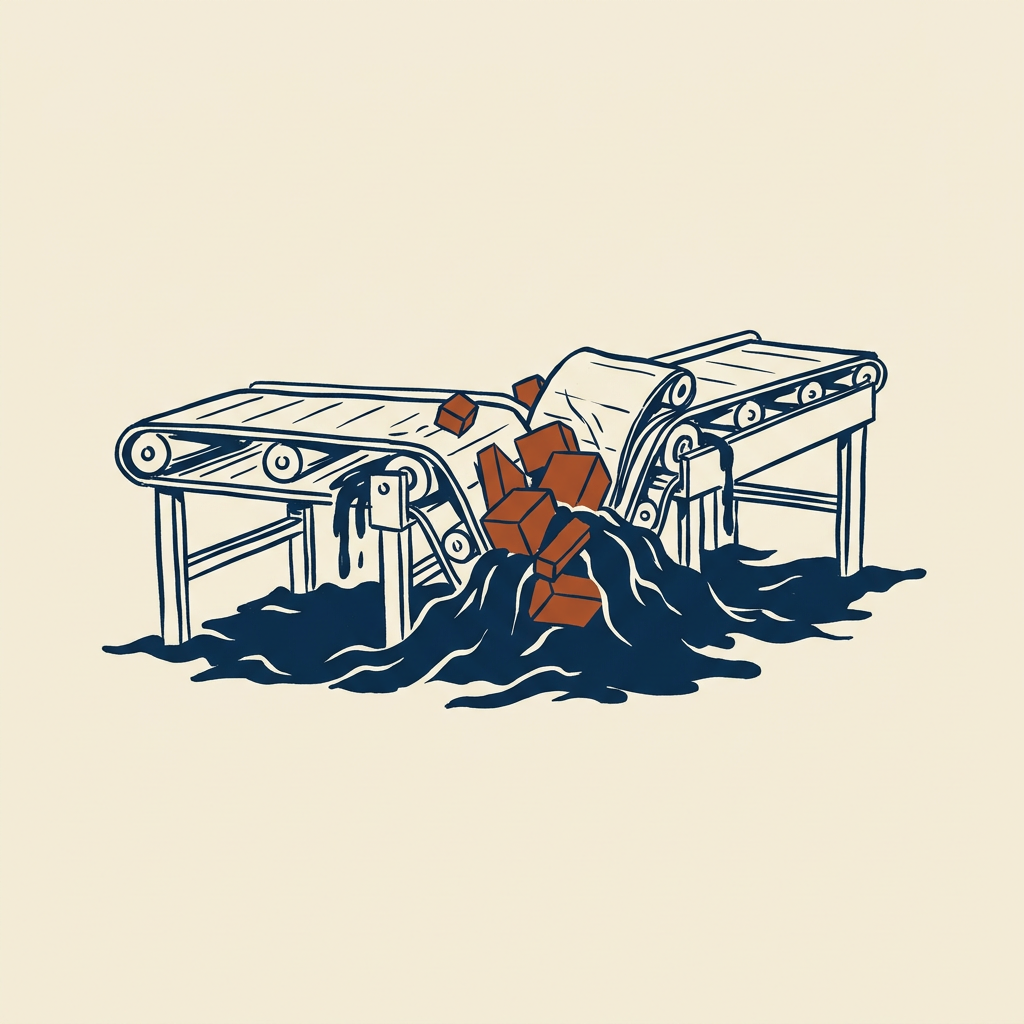
Taylorist hierarchies assume stable, repeatable problems and bottleneck the moment conditions change faster than reporting cycles.
Efficiency design
Break work into repeatable steps; push info up; send orders down; measure waste removed
Adaptability need
Sense and decide at the pace the environment actually moves, even if some waste returns
McChrystal traces modern organization to Taylor’s scientific management and Ford’s assembly line. Work is broken into predictable steps; information climbs layers of approval; decisions descend as orders; efficiency is the score. The design produced extraordinary manufacturing gains and shaped military command the same way.
The model holds only while the environment stays stable enough that yesterday’s plan still applies. Global supply chains, financial markets, and modern warfare began shifting faster than those reporting cycles could absorb. A structure that squeezes waste by centralizing judgment in a few seniors also creates a choke point: those few cannot process hourly change.
He is not claiming hierarchy is useless. He frames it as a tool built for complicated, solvable problems. By the time he took command in Iraq in 2003, that world was ending. Efficiency and adaptability are different goals; organizations tuned for one often fail the other.
In practice: The fragmented U.S. intelligence apparatus before September 11, 2001 held pieces of a picture no single hierarchy assembled in time.
2
Complicated versus complex
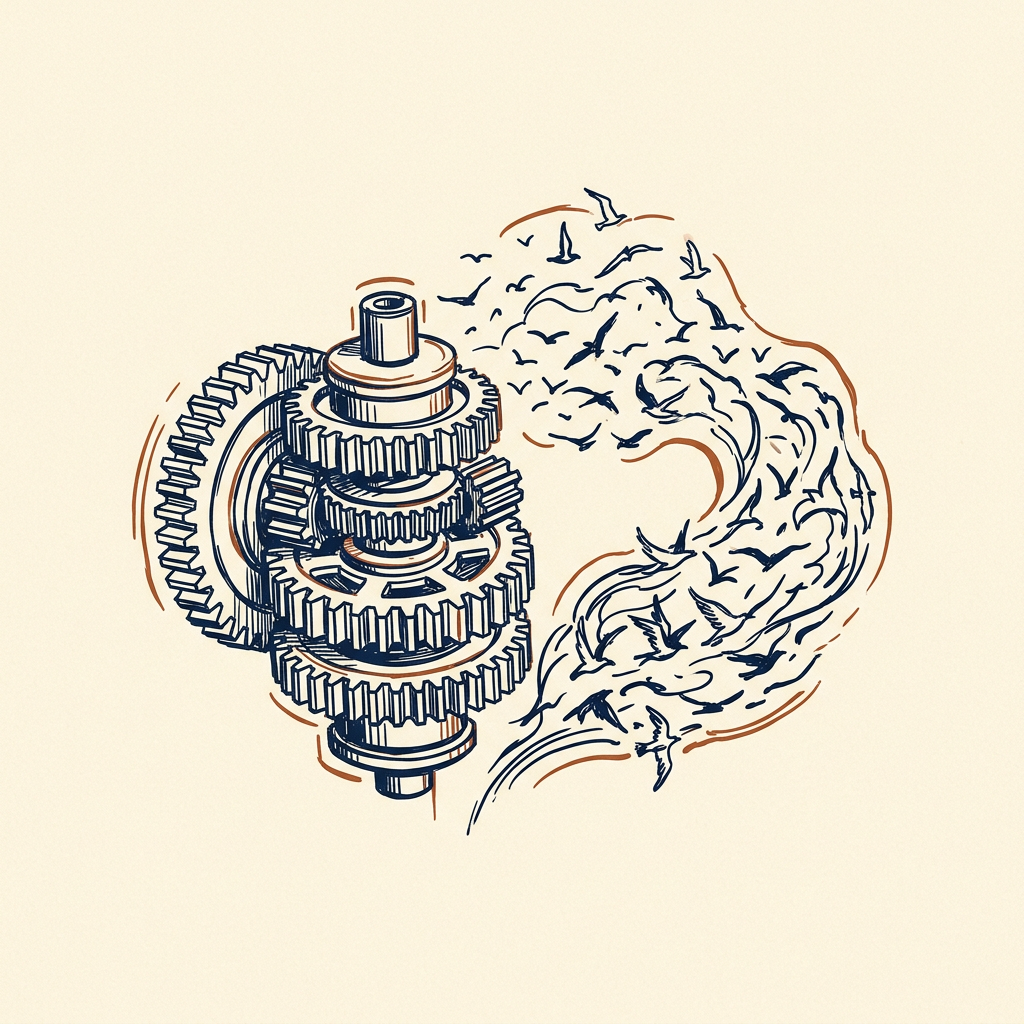
Complex systems of mutual adaptation cannot be solved by denser plans the way complicated machines can.
Complicated
Many parts, knowable structure; experts can predict outcome from input
Complex
Adapting agents; same input, different outputs; small moves cascade
McChrystal draws a hard line. A complicated problem—assembling a jet engine—has many parts but a knowable structure; enough expertise and time let you predict outputs from inputs. A complex problem—an insurgency, a market, an ecosystem—involves independent agents adapting to one another in real time. The same input can yield different outputs; small changes cascade.
Most institutions still treat the second kind as if it were the first. They hire sharper analysts and draw more detailed charts. The real requirement is continuous sensing and response, not a single plan-and-execute cycle.
The distinction reframes what leaders optimize. In a complicated world the prize is efficiency: fewer errors, tighter process, expertise at the top. In a complex world the prize is adaptability: faster sensing, faster local decisions, and tolerance for the unpredictability that comes with distributed control.
In practice: The 2008 financial crisis showed interconnected institutions collapsing in ways no single regulator’s model had anticipated, because the danger lived in the relationships.

3
A network outran an army
AQI beat a better-resourced force for years because its structure already matched environmental speed while the task force’s did not.
McChrystal commanded Task Force 714—Delta, SEAL Team Six, and supporting units—sent after 2003 to defeat Al Qaeda in Iraq. On paper the mismatch was absurd: satellites, drones, unlimited firepower, and elite operators against cells of a few fighters using couriers and cheap phones.
AQI still adapted faster. A cell could form, attack, and disperse before the task force’s intelligence cycle—raw data climbing through analysts, lawyers, and approval layers—finished the previous raid. Operations succeeded tactically while the network kept growing. The force was built to win engagements, not to keep pace with a self-healing organism.
Traditional decapitation failed because there was no headquarters and no single chain to cut. Each cell held local autonomy inside a loose shared ideology; intelligence and decisions already lived at the edge. The task force centralized raid authorization far from the soldiers holding the freshest information. Extra resources would not close an architectural gap.
In practice: AQI cells moved from attack to dispersal inside the time the task force still needed to authorize the next raid.
4
The 1940 proof of concept
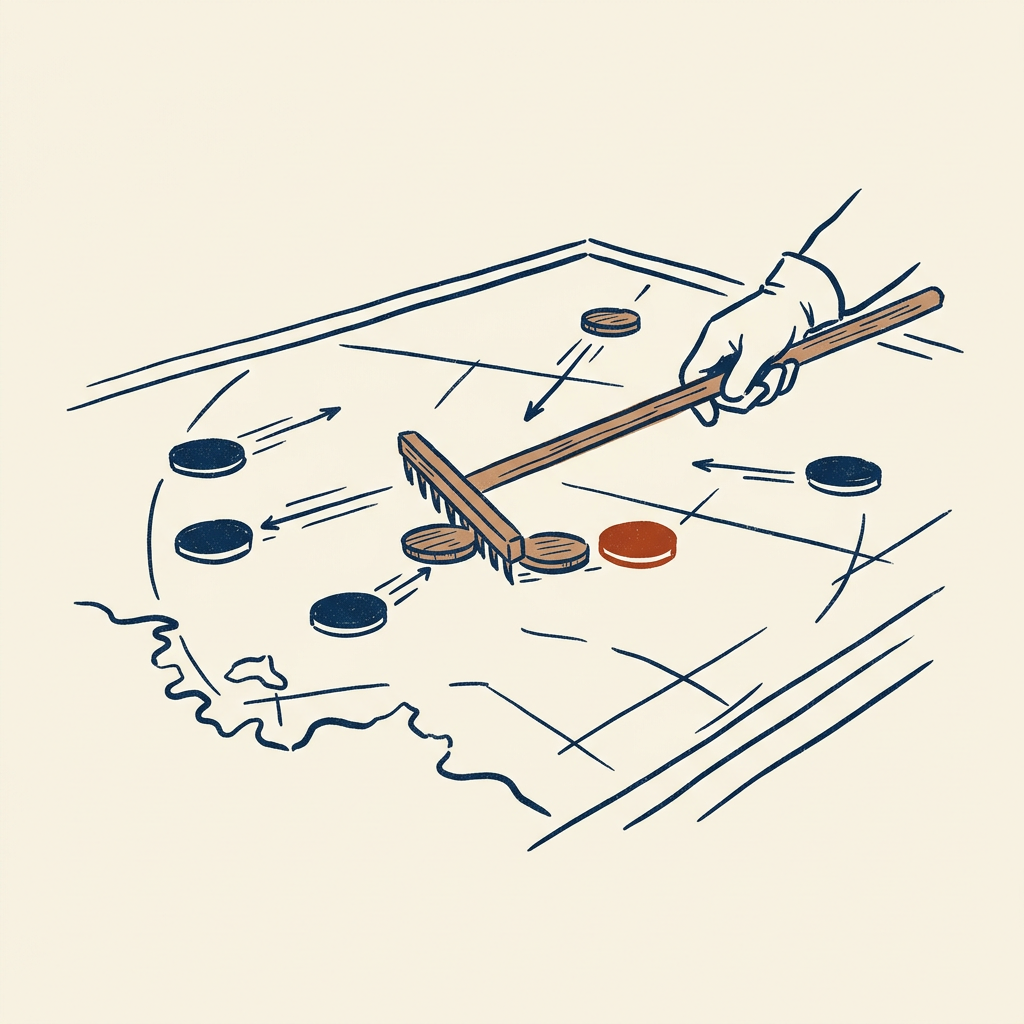
Britain’s Dowding System showed decades earlier that real-time shared picture at the edge beats funneling every decision up a chain.
- 1SenseRadar and ground observers feed live plots
- 2FuseOperations room builds one shared picture
- 3PushControllers send just enough context to squadrons
- 4Decide locallyPilots make split-second intercepts
McChrystal reaches back to the Battle of Britain to show the solution was not invented under fire in Iraq. Air Chief Marshal Hugh Dowding linked radar stations, ground observers, and fighter squadrons so real-time data reached a central operations room and then returned to squadron commanders fast enough to intercept raids.
What worked was speed of information, not centralized genius. Controllers pushed just enough context for local, split-second judgment instead of micromanaging every intercept from London. Britain, outnumbered in aircraft, used that structural edge to survive.
He frames this as early shared consciousness: not equal authority for everyone, but roughly the same picture at roughly the same time for everyone with a stake. German reporting was more rigid and slower to update pilots. Bureaucracies tend to forget the lesson once the crisis that forced adaptability passes; it had to be relearned sixty years later.
In practice: Radar plots and sighting reports reached controllers within minutes and were pushed outward as usable context rather than as remote orders.
5
Tell everyone everything
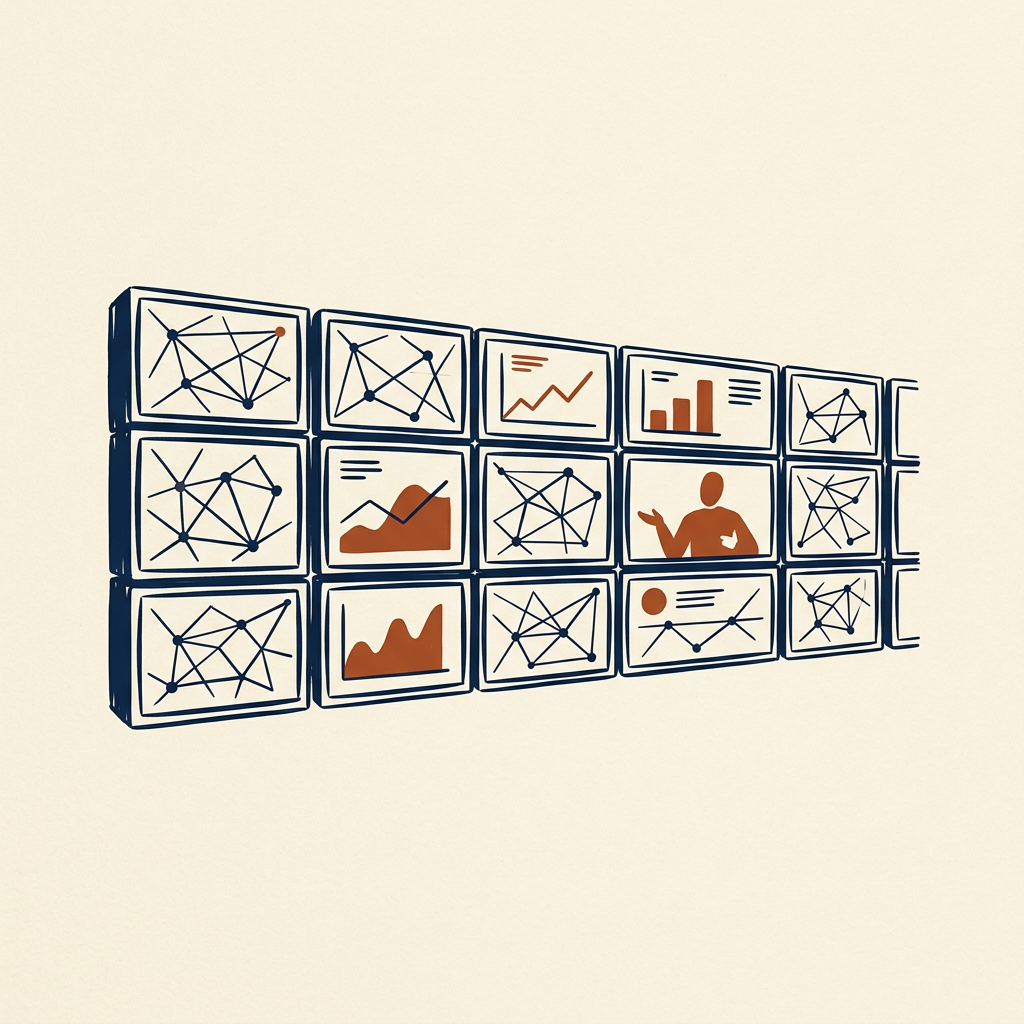
Widening the daily O&I briefing across agencies traded compartmentalized secrecy for near-real-time pattern recognition.
- 1CollectRaid takeaways, intel, diplomatic notes enter the same forum
- 2SurfaceSomeone in the room supplies the missing piece
- 3RecognizePattern becomes visible the next morning
- 4Act separatelyTeams decide from one shared picture
↻ and round again
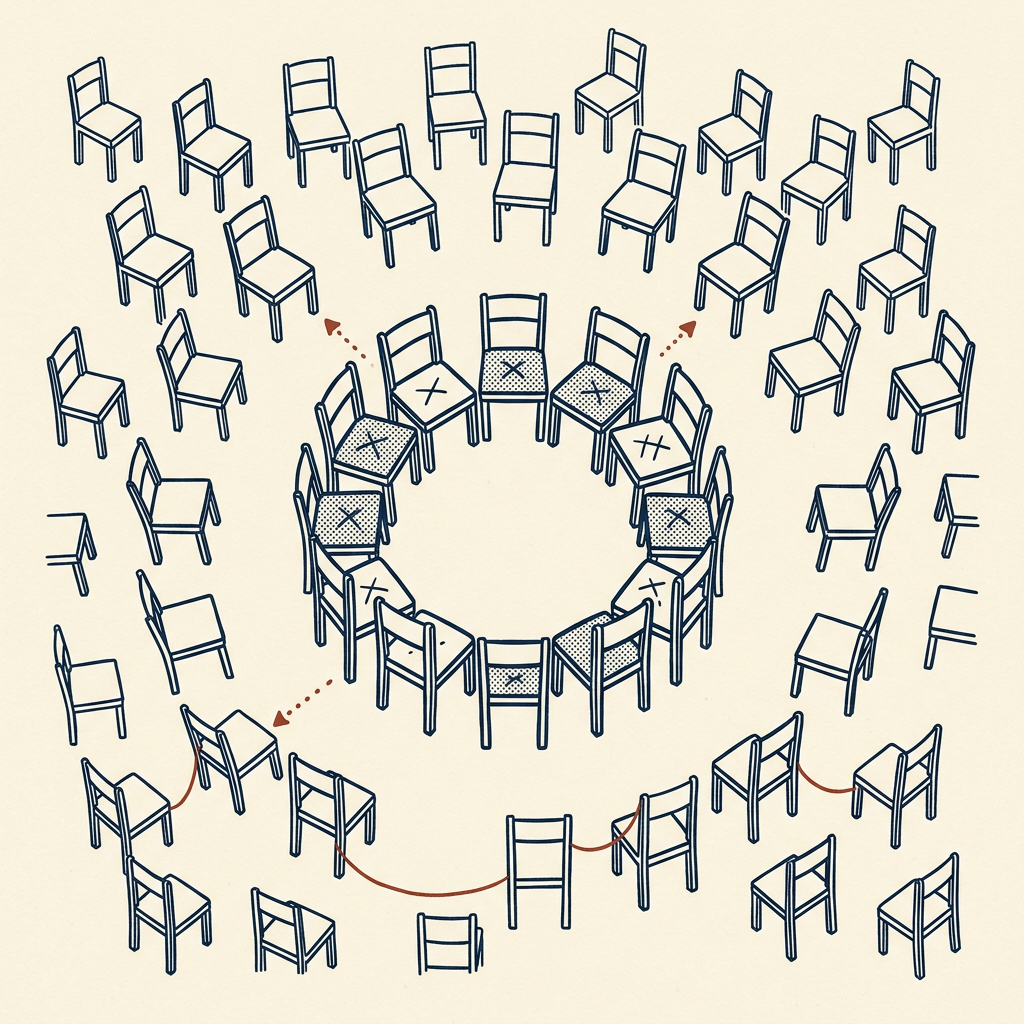
McChrystal’s central information fix was expanding the Operations and Intelligence briefing into a daily multi-agency forum. CIA, FBI, State, conventional units, and allies joined by video across time zones. Attendance grew from a small command staff to thousands, including people with no stake in that day’s specific raid who might still hold a missing piece of context.
Traditional need-to-know culture protected sources and also blocked a CIA analyst from learning what a Delta team had found an hour earlier, or a State officer from flagging a target’s cousin seeking a government contract. Flattening access meant patterns that once took weeks through formal channels surfaced the next morning.
He is candid about the bet: wider distribution raises leak and error risk. The wager was that occasional exposure cost less than continued blindness. Discipline kept the mechanism alive—the briefing stayed structured, time-limited, and focused on actionable patterns. Shared consciousness does not mean everyone decides together; it means everyone starts from the same picture before deciding separately.
In practice: A piece of context held by someone with no direct operational stake still completed a pattern inside the next morning’s briefing.
6
Trust’s natural ceiling
The intimacy and rapid feedback that make a twelve-person special-forces team adaptive stop scaling somewhere around a few dozen to roughly 150 people.
~150
approximate ceiling for dense high-trust relationships
Before scaling trust, McChrystal examines why small teams work. Special-operations teams train together for years, share mortal risk, and develop implicit communication; members anticipate moves without orders. Trust grows from repeated high-stakes contact, not from org charts. A bad call is visible within minutes and corrected on the spot.
Large organizations invoke this culture language yet almost never build the underlying conditions, because depth of trust cannot be mandated from above. Research on group cohesion points to a natural ceiling somewhere around a few dozen to roughly 150 people—well below a task force of thousands.
The task force already contained dozens of excellent small teams—Delta, SEALs, analysts, drone crews—each high-performing inside its boundary. Trust and information stopped cold at the edge. The whole still behaved like a lumbering hierarchy: a collection of great teams, not yet a team of teams.
In practice: Operators who would die for teammates still could not move information or trust across to an adjacent elite unit the same way.

7
Embed people, not memos
Physically swapping officers across rival units dissolves turf faster than reorganization charts because trust travels through relationships.
- 1SwapEmbed analysts, operators, and liaisons inside rival units for months
- 2TranslateEach embed explains home priorities and vouchsafes intent
- 3LatticePersonal ties cross formal org lines
- 4Handoff2 a.m. requests move at relationship speed
Once trust was diagnosed as stopping at team walls, the task force began deliberate personnel exchanges. An intelligence analyst sat with a Ranger platoon for months; a Delta operator rotated through a CIA fusion cell; liaisons lived inside sister squadron headquarters.
On a spreadsheet the move looked wasteful: a scarce operator pulled from combat rotation to sit in someone else’s office. McChrystal argues the opposite. Each embed became a conduit who could vouch for home-team intentions and translate jargon and priorities in ways no headquarters directive could.
Over time a lattice of personal relationships crossed formal lines. A 2 a.m. request from a SEAL team to an Army aviation unit traveled through people already known on both sides instead of a day-long chain of authorization. Small units kept internal cohesion and skill; embeds and shared information stitched them into a whole that could move at small-team speed. That lattice, not shared consciousness alone, is the structural answer to the scaling problem.
In practice: A SEAL request at 2 a.m. reached Army aviation through someone already trusted by both sides rather than through a full command chain.

8
Give authority away
A leader who signs every consequential decision becomes the slowest component; speed requires decision rights at the edge.
Shared consciousness and embeds only pay off if authority actually follows the freshest information. McChrystal loosened his own grip, authorizing subordinate commanders and even team leaders to launch raids without his personal sign-off—moves the prior culture would have called reckless.
If a team a thousand miles away holds better real-time data than headquarters, waiting for the commander’s approval adds delay while the target moves, not safety. He frames the shift as empowered execution: oversight remains, but the leader’s job becomes setting context so distant decisions are more likely to match what the leader would have chosen.
The tradeoff is explicit. Junior leaders will make some calls a more experienced commander would not; individual mistake rates rise. That cost, he argues, is still smaller than missed opportunities and stale intelligence against an enemy that does not wait. The pairing is non-negotiable: pushing authority to people who lack the shared picture is abdication, not empowerment. Wide information and pushed decisions have to arrive together.
In practice: Team leaders launched raids on fresh intelligence without waiting for four-star personal approval that would have arrived after the target had moved.

9
Chess master to gardener
The senior leader’s leverage shifts from moving every piece to cultivating purpose, open information, and trust so the organization can decide itself.
Chess master
One mind sees the board and moves every piece
Gardener
Shape purpose, information, and trust; let the organism act
McChrystal closes by reframing leadership. The familiar image is the chess master who sees the whole board and moves each piece. He argues the image was always partly false and became fully false in complex environments: no single mind processes distributed, fast-changing information quickly enough.
The replacement metaphor is the gardener. A gardener cannot command a plant to grow but can shape soil, water, and light, then step back. In organizations that means communicating purpose clearly enough for teams to improvise without permission, keeping information flowing instead of hoarding it as power, and tolerating decisions the leader did not personally make.
He describes his own discomfort: a four-star general accustomed to commanding spent much of his time listening and supplying context, a role that felt uncomfortably passive. He extends the claim, more tentatively, to civilian organizations facing rapid unpredictable change—the same underlying choice between an efficient hierarchy that cannot keep pace and an adaptive network that can. Here the war story becomes a general design theory, and the evidence thins.
In practice: McChrystal spent more time listening and broadcasting context than personally authorizing each next move on the board.
Key terms
- Shared consciousness Everyone with a stake sees roughly the same real-time picture before they decide separately.
- Empowered execution Decision rights sit with whoever is closest to the freshest information, inside a clear purpose set from above.
- Team of teams Small high-trust units keep their internal cohesion while embeds and shared information stitch them into one fast whole.
- Complicated problem Many parts but a knowable structure; experts can predict outputs from inputs.
- Complex problem Independent agents adapt to one another in real time; small changes cascade and outcomes stay unpredictable.
- Need-to-know culture Compartmentalized information rules that protect sources yet also block the missing piece from reaching the people who need it.
- Gardener leadership The senior job is cultivating conditions—purpose, open information, trust—rather than personally moving every piece.
- Dowding System 1940 British air-defense network that fused radar and observer data and pushed usable context to pilots for local intercepts.
What to do
- Invite one person from outside your immediate team who might hold relevant context into your next recurring operations meeting.
- Embed a colleague into another department or unit for a real stretch of shared work, not a single visit.
- Push one consequential decision you normally approve down to the person closest to the live information.
- List the team boundaries where information or trust currently stops cold inside your organization.
- Share one piece of useful information you would once have withheld on need-to-know grounds.
- Write a short purpose statement clear enough that a distant teammate could improvise without calling you.
Questions to think with
- Where does information in your organization still climb a chain that moves slower than the problem?
- Which of your current ‘complicated’ plans are actually aimed at complex, adapting systems?
- What would you have to stop approving personally for decisions to keep pace with the freshest data?
- How much secrecy are you willing to risk to let patterns surface a day later instead of weeks later?
- If your role shifted from chess master to gardener, what would you do less of this month?
The other side
The strongest material is a single case—one task force in Iraq roughly 2003–2008—so the claim that shared consciousness and empowered execution turned the tide is hard to isolate from the 2007 troop surge, the Sunni Awakening, and broader shifts in political support. There is no control group and success metrics appear anecdotally. Civilian examples late in the book are brief and secondhand, while companies and agencies face different constraints: no shared risk of death, weaker informal loyalty, and legal or competitive limits on radical information-sharing. The framework also has older intellectual predecessors the book does not engage closely.
Who it's for
Midlevel managers frustrated by decisions bottlenecked at the top, military or intelligence officers studying how JSOC adapted in Iraq, and executives trying to break silos between departments that hoard information will get the most from the full case.