




Leadership ability sets the ceiling on everything you build
Maxwell turns influence into a sequence of learnable laws that raise a personal ceiling on results.
IJR · Oct 20, 2026 · 14 min read
In 60 seconds
- A person's leadership ability, not talent or hustle, caps how far any effort can go.
- That ability rises only through years of small daily practice, not promotions or crises.
- Trust is the real foundation; one breach of honesty collapses authority faster than any mistake.
- People buy into the leader first; the vision only travels as far as that personal credit allows.
- Secure leaders hand real power away; insecurity, not logistics, is what usually blocks growth.
- True worth is measured by whether the organization thrives after the leader is gone.
The big idea
Maxwell argues leadership is not a title or birthright but a set of learnable, observable principles that hold across industry, culture, and era. Mastering them, he claims, is what determines how far any person's influence can actually reach.
The book in brief
Maxwell starts from a blunt diagnostic: two people can share talent, resources, and work ethic and still get wildly different results because one has more leadership capacity. He calls that capacity the lid. If it sits low, better products, harder effort, and smarter strategy still produce diminishing returns. The McDonald brothers had the superior system; Ray Kroc had the higher lid and turned it into a global franchise. Everything that follows is framed as a way to raise that ceiling.
Ability, he insists, is not installed by a promotion or a crisis. It accumulates through years of small, unseen practice. Visible leadership moments are only the surface of prior daily reps—hard calls, owned mistakes, run meetings, resolved conflicts. Theodore Roosevelt's wartime and political stage rested on decades as rancher, police commissioner, legislator, and naval official. Organizations that promote on technical merit alone, without that backlog of decision practice, install people who hit their lid almost immediately.
Once real ability exists, it shows up first as foresight. Maxwell separates people who keep a ship moving from leaders who chart the route before leaving base camp—cost, impact, worst case, fallback. Most operational failures, he claims, were navigation failures made months earlier. Navigation only works, though, if followers will take the route, and that willingness rests on trust. People forgive mistakes about competence far more readily than dishonesty about character. Nixon's authority evaporated once Watergate made the ground look false. Trust builds through small kept promises and honest admissions; one discovered lie can spend it down overnight.
With trust in place, the job becomes addition rather than extraction: leaders are measured by how much they improve the people under them. Herb Kelleher's visible investment in Southwest employees, low-status roles included, produced discretionary effort that kept the airline profitable while competitors failed. People then buy into the leader before the vision. The same plan gets enthusiasm from a trusted messenger and passive compliance from a distrusted one, because followers use the leader's credibility as a proxy when the future is uncertain.
That earned authority faces a psychological test. Maxwell argues leaders hoard power not because delegation is hard but because giving it away feels like a threat to their importance. Henry Ford's refusal to share decisions, even with Edsel, left the company stagnating while General Motors gained ground. Empowerment, in this frame, is a security capacity, not a technique. It has to be aimed at a small inner circle whose judgment extends the leader's own; loyal comfort-seekers do not raise the collective ceiling the way competent challengers do. The final test is legacy. A run that leaves no capable successor is failure at the deepest level, whatever the numbers looked like while the leader was still central. Roberto Goizueta's Coca-Cola value creation was followed by turmoil after his death because succession had not been built. The arc ends on whether the organization could survive a sudden departure without crisis.
Context
Maxwell, drawing on business, military, and religious history and writing from a pastoral background, published the book in 1998. It mattered because it repackaged leadership as a discipline anyone could study and practice rather than a trait reserved for the naturally charismatic.
The key ideas

1
The leadership lid
Leadership ability, not skill or effort, sets the hard ceiling on how much anyone can ultimately achieve.
McDonald brothers
Superior system; stayed at a handful of restaurants
Ray Kroc
Higher leadership lid; turned the same idea global
Maxwell opens by reframing success itself. Two people can have identical talent, resources, and work ethic yet produce wildly different outcomes because one simply has more leadership capacity. He calls that capacity the lid. On a ten-point scale, a lid of four caps effectiveness near four no matter how strong the product or idea is.
The practical implication is uncomfortable. Pouring more effort into skills, products, or strategy without raising leadership ability produces diminishing returns, because the lid—not the effort—is the constraint. When growth plateaus, the bottleneck is often the person leading, not the plan.
This law sets up the rest of the book. Every later principle functions as a lever for raising that ceiling. It forces a different diagnostic question whenever results stall: is the limit information and hustle, or leadership growth?
In practice: Dick and Maurice McDonald built a brilliant fast-food system in San Bernardino but never scaled past a handful of restaurants; Ray Kroc, lower on operational genius but far higher on leadership, bought the concept and built a global franchise.

2
Years of daily process
Leadership is built through years of small daily decisions, not a single defining moment or promotion.
If ability has a ceiling, Maxwell's next claim is how that ceiling rises: slowly, through repeated practice, not sudden insight. He rejects the born leader who emerges fully formed in a crisis. Visible moments are only the surface of years of unseen preparation.
The law demands a specific patience. Development runs on a timeline measured in years; intensity alone does not compress it. Promoting someone into authority does not install leadership ability—it only exposes whatever level prior daily practice already built.
Maxwell treats growth the way an athlete tracks training: consistent small reps such as making a hard call, owning a mistake publicly, running a meeting, or resolving a conflict. No single event matters much; the accumulation does. Companies that promote on technical merit without years of decision practice behind it install people who hit their lid almost at once.
In practice: By the time Theodore Roosevelt became a wartime and political leader he had already spent decades as a rancher, police commissioner, state legislator, and naval official, each role sharpening judgment before the bigger stage.

3
Chart the route first
Anyone can keep a team moving; only a leader who plans the actual route in advance keeps the group from running aground.
Once ability exists, Maxwell says it shows up first as foresight. He separates managers of momentum—people who keep the ship moving in whatever direction it already faces—from navigators who chart the course before the voyage, anticipating obstacles that have not appeared yet.
Most operational failures, he argues, trace back to a navigation failure made months earlier, not a crisis-management failure in the moment. The leader's real work therefore shifts earlier in the timeline. Teams in trouble often blame the person managing the crisis when the cause was a route chosen without the right upfront questions.
His practical test is that navigational leaders ask those questions out loud before commitment: what will this cost, who will it affect, what is the worst case, and what is the fallback. Planning is not a formality on the way to action everyone already wants. Paired with the earlier laws, raw ability and years of practice mean little if the leader habitually launches without mapping where the ship is going.
In practice: Expedition leaders who survive Everest-scale risk are the ones who planned contingencies for weather, oxygen, and turnaround times before leaving base camp, not the ones who only reacted well once trouble hit.
4
Trust is solid ground
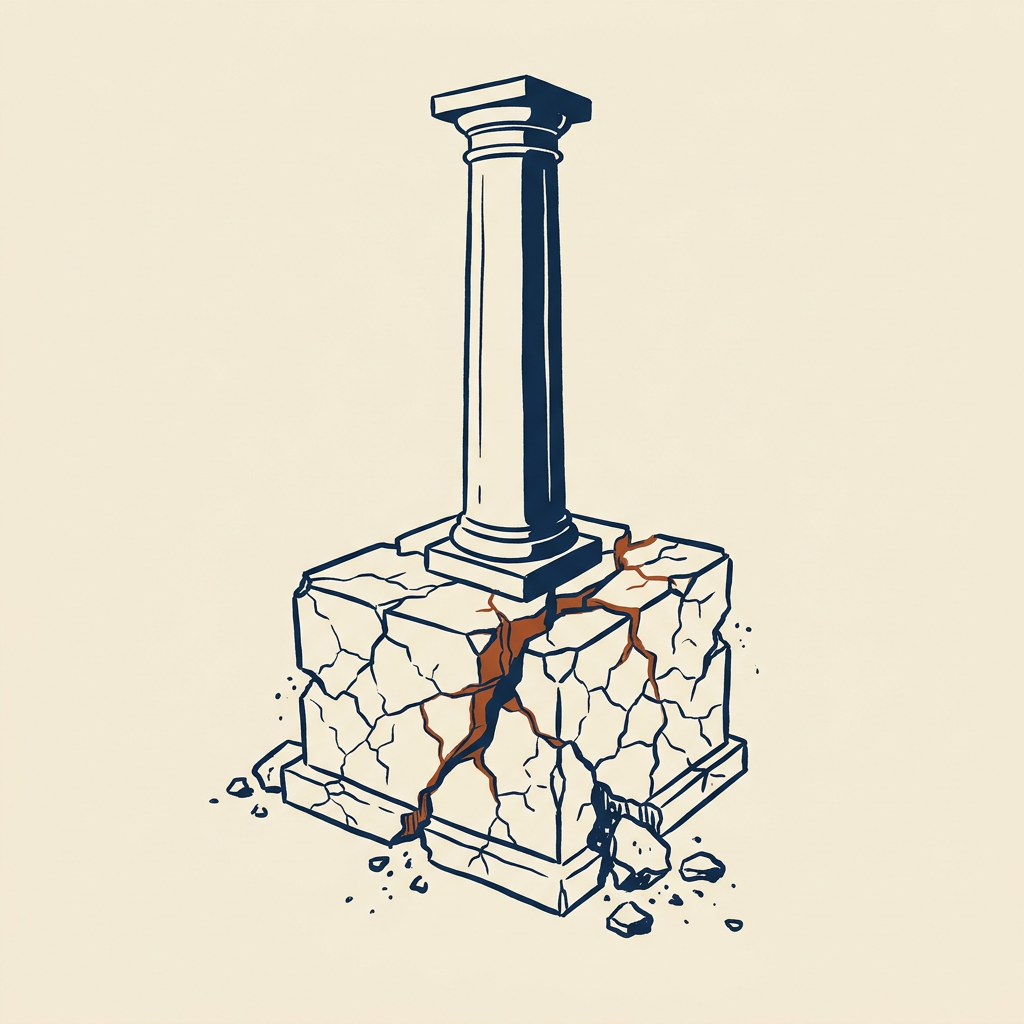
Trust, not vision or charisma, is the foundation a leader stands on; once it cracks, authority collapses.
Mistakes
About competence; followers forgive more readily
Dishonesty
About character; one breach can collapse authority
Navigation only matters if people will follow the route. Maxwell treats trust as a resource that accumulates through consistent character and competence and can be spent down fast through a single breach.
The core claim is an asymmetry leaders often misjudge. People forgive mistakes about competence far more readily than dishonesty about character, because character is what trust is actually built on. Leaders who worry more about looking capable than about being consistently truthful are tracking the wrong signal; followers watch the second far more closely.
Trust builds incrementally through small kept promises and honest admissions of error, and it can be destroyed by one discovered lie. Leaders who cut corners on honesty for short-term convenience make a trade that looks free in the moment and turns out enormously expensive. Years of developed ability and navigation skill count for nothing if the leader's word cannot be relied on.
In practice: Richard Nixon had real political skill and strategic intelligence, yet his authority evaporated almost overnight once Watergate revealed a pattern of deception and followers found the ground was not solid.

5
Leaders who add value
A leader's value is measured by how much they add to the people they lead, not by what they extract or accomplish alone.
Extraction
People treated as inputs for the leader's ends
Addition
People leave more skilled and resourced than they arrived
With trust established, Maxwell turns to what leaders should do with position. He argues the answer is to add value to others rather than use people as instruments for personal achievement. The job description shifts from command toward service.
This is presented as functional, not pure altruism. People give more, stay longer, and take more initiative for leaders who have demonstrably improved their jobs, skills, or lives, and they disengage from leaders who treat them as replaceable inputs. Extraction models lose the discretionary effort that separates mediocre teams from excellent ones.
The practical test is concrete: name specific ways each person on the team is better off, in skill or opportunity, for having worked under you this past year. Leaders who cannot answer are likely running extraction without realizing it. Aggressive results-only styles may post short-term numbers while eroding long-term loyalty and capability—a trade that looks like success on a quarterly report and failure on a five-year one.
In practice: Herb Kelleher's culture at Southwest Airlines visibly invested in employees, including low-status roles, and the airline stayed profitable through downturns that bankrupted competitors because value added to staff translated into value added to customers.

6
Buy-in to the person first
People commit to the leader personally before they commit to the vision, so a good plan from a distrusted leader fails.
Trusted messenger
Risky, unproven plan draws enthusiastic commitment
Distrusted messenger
Nearly identical plan draws passive compliance at best
Maxwell connects this law directly to solid ground and addition. Once trust and service are established, the vision itself becomes almost secondary to who is presenting it. Followers cannot fully evaluate a vision's soundness in advance when it involves real uncertainty, so they use the leader's credibility as a proxy.
The identical strategic plan, presented by two different leaders to the same audience, produces wildly different commitment depending on prior relationship with each speaker. A leader with a track record of trustworthy behavior and demonstrated investment can propose a risky direction and get enthusiasm; a leader without that history gets passive compliance at best for a nearly identical plan.
Leaders who skip the earlier work of building trust and adding value, then try to compensate with a more compelling pitch, are solving the wrong problem. The order matters: buy-in to the leader first, buy-in to the vision second. Resistance to a new initiative should first be checked for unresolved doubts about the leader's credibility, because pushing harder on the plan will not fix a trust problem.
In practice: Corporate change efforts often collapse when a technically sound restructuring plan meets employees who do not trust the executive proposing it, even though the same plan might have landed cleanly from a different messenger.

7
Security unlocks empowerment
Only leaders secure in their own position hand real power to others; insecurity, not incompetence, usually blocks delegation.
Secure leader
Shares credit, risk, and real decisions; others become assets
Insecure leader
Hoards control; capable people look like threats
Having earned buy-in, a leader faces a choice about accumulated authority. Maxwell argues the growth-limiting failure at this stage is almost always emotional rather than strategic. Leaders hoard power not because delegation is logistically hard but because giving away control feels like a threat to their own importance.
Empowerment, in this frame, is not primarily a management technique to be learned. It is a psychological capacity that depends on the leader not needing to be the smartest or most central person in every room. Secure leaders can let a subordinate get credit, take a visible risk, or make a decision the leader disagrees with, because their worth is not tied to being indispensable.
The connection to addition and buy-in is direct. A leader who has been genuinely investing in people's growth finds empowerment natural, since the point of that investment was to make others more capable. A leader running an extraction model finds it terrifying, because a more capable subordinate looks like a rival. Organizations often misdiagnose a delegation problem as a training or process gap when the real fix is the leader's own security.
In practice: Henry Ford built an industrial giant through the Model T, then refused to modernize or share decision authority even with his son Edsel; the company stagnated and lost massive ground to General Motors while his insecurity kept better-informed people from acting.

8
The inner circle ceiling
A leader's potential is bounded by the quality of the few people closest to them, so growth eventually means upgrading that circle.
Empowerment raises the question of who specifically gets the power. Maxwell argues a small number of close relationships, not the whole organization, determine how far a leader can go. No leader can personally cover every domain of judgment a growing enterprise requires.
The inner circle functions as an extension of the leader's own capability. A leader weak in finance but surrounded by a trusted financial mind effectively borrows that strength; a leader surrounded only by loyal but unskilled allies has no such extension and hits a personal lid sooner. Maxwell echoes the spirit of wanting to be surrounded by people wiser than oneself.
The uncomfortable audit is to list the four or five people whose judgment most shapes major decisions and ask whether they were chosen for competence and honest pushback or for loyalty and comfort. People who agree easily feel better to be around, yet the challengers are what raise the collective ceiling. Strengthening the people closest to the top has outsized leverage compared with spreading the same effort evenly across an entire organization.
In practice: Maxwell's frame asks leaders to separate the handful of voices that shape their biggest calls into those present for competence and disagreement versus those present for loyalty and ease, then aim real authority at the first group.
9
Legacy after departure
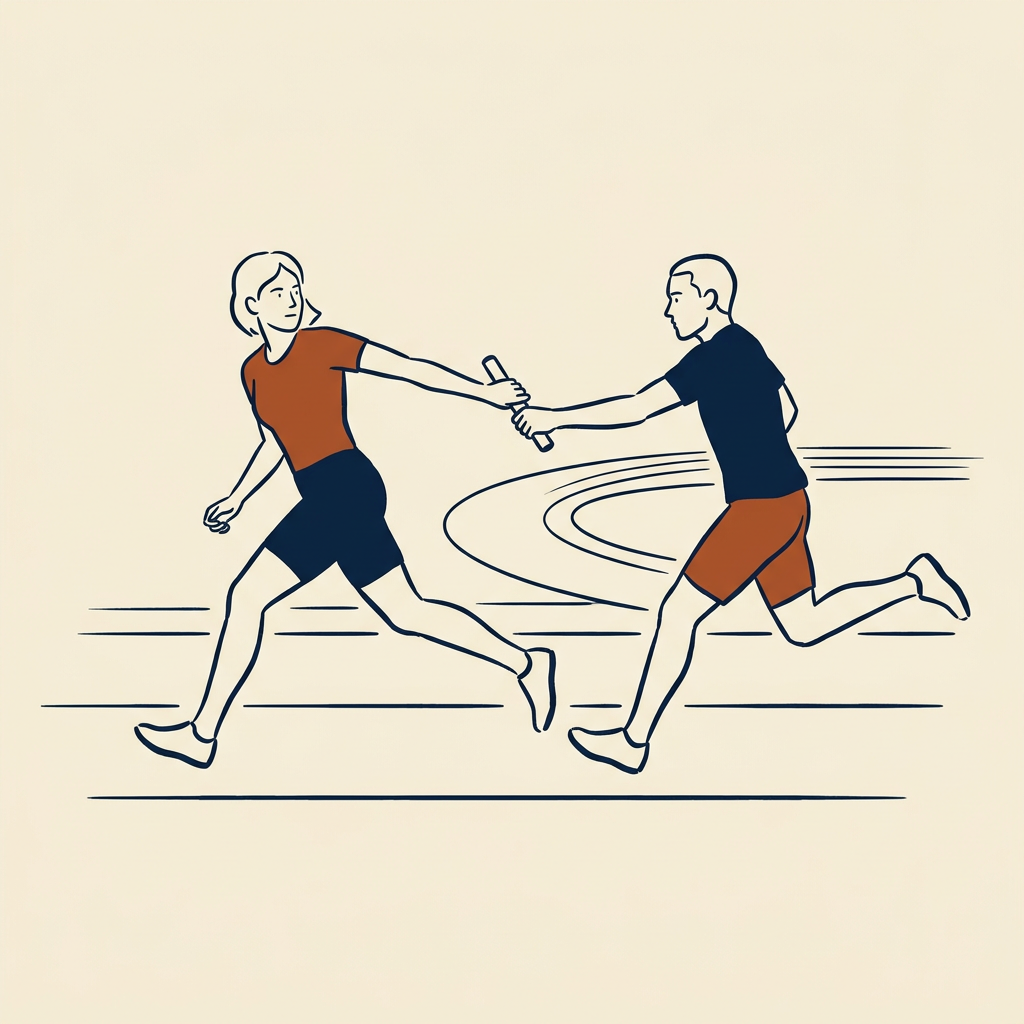
A leader's true worth is measured by what survives their departure, not by what they accomplished while personally in charge.
While in charge
Impressive personal run and central control of decisions
After departure
Turmoil if no capable successor was built
The final major law reframes success around succession. Maxwell argues that a leader who builds an impressive run but leaves no capable successor has failed at the deepest level of the job, regardless of numbers achieved while in office.
This pattern is presented as predictable, not bad luck. Leaders who build identity around being personally central to every major decision, rather than around empowering an inner circle capable of replacing them, optimize for a legacy that expires the day they leave. Charisma, vision, and short-term results can all look strong while this law is still being failed.
Every earlier law—lid, process, navigation, trust, addition, buy-in, empowerment, inner circle—matters in Maxwell's structure primarily because each is a mechanism for producing someone else who can carry the work forward. The blunt test: could the organization survive a sudden departure next month without crisis. If not, the work of leadership is not done, no matter how good this quarter looks. Legacy cannot be faked in the short term; it only becomes visible in hindsight.
In practice: Roberto Goizueta's tenure at Coca-Cola was celebrated for enormous shareholder value through the 1980s and 1990s, yet years of leadership turmoil and underperformance followed his death because no comparable successor had been developed.
Key terms
- Lid The leadership-ability ceiling that caps how far talent, effort, and strategy can go.
- Process The years of small daily practice that actually raise leadership ability.
- Navigation Charting the route—cost, impact, worst case, fallback—before the group commits.
- Solid ground Trust built on character and kept promises; the foundation authority stands on.
- Addition Measuring a leader by how much value they put into people rather than extract from them.
- Buy-in Personal commitment to the leader that must come before commitment to the vision.
- Empowerment Handing real power to others; possible only when the leader feels secure.
- Inner circle The small group closest to the leader whose quality bounds the leader's potential.
- Legacy What still works after the leader is gone; the final measure of the work.
What to do
- Pick one person on your team and write down specifically what they can do now that they could not do a year ago because of working with you.
- Before your next major decision, write the worst-case scenario and your fallback plan before you commit.
- List the four or five people whose judgment most shapes your biggest calls and mark which ones are there for competence and honest disagreement versus loyalty and comfort.
- Give real authority this week—not just tasks—to at least one person chosen for competence and pushback.
- Ask out loud, before the next launch, what the move will cost, who it will affect, and what happens if the first plan fails.
- Name one kept promise or public admission of error you can make this week to add a small deposit to trust.
Questions to think with
- If your results plateaued tomorrow, would you look first at the plan or at your own leadership lid?
- Which people closest to you were chosen for comfort, and what honest pushback are you missing because of that?
- Could your team survive your sudden departure next month without crisis—and what does that answer reveal?
- Where are you still hoarding decisions because sharing them would make you feel less central?
- When the last initiative met resistance, was the pushback really about the plan or about trust in the messenger?
The other side
The title's claim of irrefutable laws overreaches; Maxwell relies almost entirely on selective anecdote and survivorship bias with no systematic data, swapped and renamed laws in the 2007 revision, skews toward white American male hierarchical figures, ignores shared or non-Western models and constrained contexts, and states the laws so generally they are nearly impossible to falsify.
Who it's for
New managers promoted for technical skill who must now influence people, small-business owners whose companies have plateaued despite harder work, and pastors, coaches, or nonprofit directors building volunteer teams without formal authority to compel anyone.