


Marketing is won in minds, not factories
Brand managers and founders stuck in crowded categories get a blunt positioning checklist for competing on perception instead of specs.
IJR · Nov 2, 2026 · 14 min read

In 60 seconds
- Customers pick winners by what they already believe, not by lab tests or better engineering — Pepsi beat Coke blind, yet Coke kept outselling it for decades.
- The name that lodges first in a mind owns the category; a superior late entrant rarely overturns that habit, just as almost nobody recalls the second solo Atlantic pilot after Lindbergh.
- If the top rung is taken, invent a narrower category you can lead — 7Up as the Uncola, Schwab as discount brokerage, Miller Lite as light beer.
- Own one word only and refuse to share it; once a rival holds the slot, you cannot install the same claim, and stretching a strong name across products dilutes it.
- Mature categories collapse to two real contenders, so third-place brands should secure a niche rather than waste money unseating the leader.
- Success breeds the arrogance that wrecks later positioning; media hype is not a durable slot, and even a correct idea needs sustained funding to stick.
The big idea
Ries and Trout argue that marketing success has nothing to do with the best product and everything to do with owning a fixed slot in the customer's mind. From that premise they derive rules for being first, inventing categories, owning one word, matching strategy to actual rank, attacking through opposites, and sacrificing breadth so a name stays sharp.
The book in brief
The book opens by rejecting product-centered marketing. Blind taste tests favored Pepsi, yet Coke dominated sales because people drink the brand they already believe is better. Japanese cars once seemed cheap and unreliable regardless of engineering until Toyota and Honda shifted that belief through consistent positioning and language like quality. The authors treat the customer's mind as the actual battlefield: spending to improve a product does nothing for share if the improvement never changes what people think.
From there the argument builds a hierarchy of moves. Being first into a category lodges a name so firmly that a better latecomer rarely overturns it — Hertz before Avis, Lindbergh before every later pilot. Chronological market entry is worthless without mental entry. Xerox made photocopying synonymous with its name even though earlier plain-paper technology existed; when IBM later pushed into copiers with engineering muscle and brand trust, Xerox already owned the slot and IBM's division failed and was sold.
When first place is taken, the escape is category invention rather than a lesser rung on someone else's ladder. 7Up became the Uncola, Charles Schwab built discount brokerage instead of matching Merrill Lynch, and Miller Lite opened light beer and led the new shelf. A brand should compress into one ownable word — Volvo safety, FedEx overnight, Crest cavity prevention — because minds discard nuance under overload. Strategy must match actual ladder rank, because mature markets shrink to two-way contests such as Coke and Pepsi or Boeing and Airbus, and brands below second are fighting not to fall off.
Challengers should invert the leader's strength instead of copying it. Tylenol claimed it would not upset the stomach, flipping aspirin's known liability. Categories also divide over time — computers into mainframes, minis, PCs, and laptops; beer into regular, light, import, and craft — each slice with a new leader. Line extension is framed as a common damage habit: Cadillac's cheaper Cimarron muddied American luxury for a short sales bump. The cure is sacrifice, as Federal Express did by refusing everything except guaranteed overnight small packages so overnight stuck to the name.
Closing laws cover follow-through and traps. Claim an attribute the leader has not claimed, admit a real weakness before pivoting to a benefit, commit to one bold move customers can absorb rather than three at once, and refuse five-year plans built on forecasts. Success breeds overconfidence that overrides customer perception; failure should be admitted fast; early-1990s pen-based computing showed that press buzz is not a market position; fads burn out; and even a sound idea loses to a well-funded mediocre one without sustained money.
Context
Al Ries and Jack Trout drew on decades of consulting and dozens of brand case studies to codify positioning theory into twenty-two blunt rules, building on ideas they had already published in 1981. The 1993 book mattered because it gave managers a compact, quotable alternative to product-centered thinking and reframed competition as a fight for perception rather than objective quality.
The key ideas

1
Perception beats the lab
Marketing outcomes are decided by what customers believe, not by which product is objectively better.
Blind taste
Pepsi consistently beat Coke in unlabelled tests
Real purchase
Coke outsold Pepsi for decades on existing brand belief
Ries and Trout open by discarding the idea that markets reward the best product on a spec sheet. Whatever is already lodged in a customer's head is what a company must work with or against. A firm convinced its engineering will speak for itself is, in their view, marketing blind.
Quality still matters for running a business. It is irrelevant to winning a marketing fight unless the improvement actually shifts belief. The practical consequence is simple: money spent making a product better does nothing for share if people keep drinking, driving, or buying the name they already trust.
Every later rule in the book is really a tactic for managing this one fact. Being first, owning a word, picking the right fight, and knowing your rung all matter because minds, not factories, decide winners.
In practice: Pepsi consistently beat Coke in blind taste tests, yet Coke outsold Pepsi for decades because most people do not drink cola blind — they drink the brand they already believe is better.

2
First lodges, second chases
The company that enters a customer's mind first holds a durable advantage a technically superior late entrant usually cannot overturn.
Once a mind has assigned a category to a name, it resists reassigning it. Filling an empty slot is far easier than overturning an existing mental habit. That is why heavy spending by strong number-two and number-three players so often produces little share movement — they are arguing with a verdict already settled.
The commercial pattern matches the fame pattern. Hertz became the name for car rental by arriving first; Avis, despite decades of competent service, stayed defined in relation to Hertz. IBM is remembered as the first major commercial computer company even though other firms had earlier machines, because it occupied computer in the public mind.
Before pouring money into product improvement, the authors want a company to ask whether it is trying to become first in some meaningful category. That is the position that compounds. If it cannot be first in the existing field, the next move is to stop competing there altogether.
In practice: Charles Lindbergh is remembered as the first to fly solo across the Atlantic; almost nobody can name the second pilot, even though later pilots flew faster, safer routes with better equipment.

3
Invent the category you lead
A company boxed out of leadership should redefine the competitive field rather than fight for a lesser rung on someone else's ladder.
- 77UpBecame the Uncola instead of fighting Coke and Pepsi head-on
- CCharles SchwabCreated and led discount brokerage from the start
- MMiller LiteOpened the light-beer shelf and dominated it for years
Only one company can hold first place in a given category. Most firms, the authors argue, are better served inventing a new category where they can legitimately claim the top spot. A customer's mind has room for a leader in many small categories but only one leader per category, so a narrower first is often worth more than a large share of a category where you are second or third.
The move requires real subtraction, not just clever naming. The new frame has to be something buyers actually perceive as distinct, tied to a genuine difference in product or experience. A label without a following is the failure mode: a category too narrow to matter, or one customers never recognize as separate.
Done right, category creation is the standard escape for any company that arrives after the leader has already claimed the obvious ground.
In practice: 7Up did not try to out-cola Coke and Pepsi; it positioned as the Uncola and led that new frame. Charles Schwab built discount brokerage instead of matching Merrill Lynch full-service, and Miller Lite opened light beer rather than unseating Budweiser.

4
Own one word only
A brand that tries to stand for several attributes at once ends up standing for none, while a brand that claims a single word can defend it almost indefinitely.
One-word ownership
Volvo = safety; FedEx = overnight; Crest = cavity prevention
Scattered claims
Affordable, fun, and innovative at once — the mind keeps none
Minds simplify to survive information overload. They discard nuance and keep a compact tag. The marketing job is to identify the one word a company can plausibly own, then repeat it across every product decision, ad, and executive statement instead of also claiming to be affordable, fun, and innovative.
The companion rule is exclusivity: once a competitor genuinely owns a word, a second company cannot install the same word in the same mind. Copying a rival's successful message reads as an echo, not a threat, no matter how much supporting data you produce.
The blunt test is whether the company can name the one word and whether independent customer evidence — not internal meetings — confirms the word already belongs to it. If the answer is no, the budget is likely trying to say too many things to too many people, which the mind simply refuses to file.
In practice: Volvo means safety, Federal Express means overnight, and Crest meant cavity prevention. Mercedes could not credibly claim safety after Volvo already held the slot, regardless of crash-test data.

5
Mind first outranks market first
Entering a market chronologically before rivals is worthless unless the entrant is also first to register in customers' minds.
Earlier technology
Plain-paper copying existed before Xerox shipped
Mental ownership
Xerox made to xerox a verb and kept the category
What matters is the date of mental entry, not the shipping date. R&D leadership and marketing leadership are separate races; a company can win the first and still lose the second. Speed to a clear, simple claim in a customer's attention can beat a faster company that built the better product but marketed cautiously or unclearly.
The authors saw the pattern repeatedly in the 1970s and 1980s: a technically pioneering firm loses to a later entrant that simply gets into heads first. Every later rule about ladders, opposites, and division assumes the fight is over mental real estate claimed by communication, not by factory schedules.
The strategic reframe is sharp. First throughout the rest of the book means first to occupy the mind with a category-defining idea.
In practice: Xerox is remembered as inventing the photocopier and made to xerox a verb, though earlier plain-paper technology existed elsewhere. When IBM later moved into copiers with engineering resources and computing brand trust, Xerox already owned copier and IBM's division failed and was sold.

6
Stand on the rung you hold
Marketing strategy should follow a brand's actual rank in the customer's mental hierarchy, because most mature categories stabilize into a contest between only two real contenders.
- No. 1Owns the category name and defends the top claim
- No. 2Credible challenger that can lean into the underdog role
- No. 3 and belowFighting not to fall off; better off securing a niche than unseating the leader
Customers hold an implicit ranked list — a ladder — for each category. Cola has Coke at the top, Pepsi below, then a scattering further down. Pretending to occupy a higher rung than you hold wastes money arguing with a settled verdict.
Over time most categories shrink to a genuine two-way contest; the rest of the ladder becomes largely irrelevant to buyers. A brand in third place or lower is not really fighting for the top. It is fighting to avoid falling off altogether, which demands different moves than a number two challenging the leader.
The error the authors flag most often is a distant competitor spending as though it could unseat the leader when the same dollars would do more securing a defensible smaller category. Knowing the actual rung, not the wished-for one, decides whether spending builds a real position.
In practice: Avis built its campaign around being only No. 2 and trying harder because of that rank, which was more credible than false parity with Hertz. Coke and Pepsi, McDonald's and Burger King, and Boeing and Airbus show how mature categories collapse to two.

7
Flip the leader's fixed strength
A challenger gains more ground by inverting the leader's defining trait than by imitating it, and categories naturally fragment into narrower subcategories over time.
Leader strength
Aspirin as the established, familiar pain standard with known stomach irritation
Opposite claim
Tylenol as pain relief that would not upset your stomach
A leader's strength is usually also a fixed liability the leader cannot easily disown without undermining its own position. Studying that specific trade-off, not picking a generic point of contrast, is what makes the opposite move work.
The companion pattern is division. A market that starts as one category — computers, beer, automobiles — splits into distinct, separately led subcategories. Companies that keep fighting yesterday's undivided market miss the moment new leadership positions open.
Together the two moves describe a realistic challenger path: do not fight the leader on its own turf or copy its claim, and watch for the fracture where a broad category is breaking apart.
In practice: Tylenol did not claim to relieve pain better than aspirin; it positioned on aspirin's known stomach irritation as the pain reliever that would not upset your stomach. Computers later split into mainframes, minicomputers, personal computers, and laptops, each with its own leader.
8
Stretch the name, thin the meaning
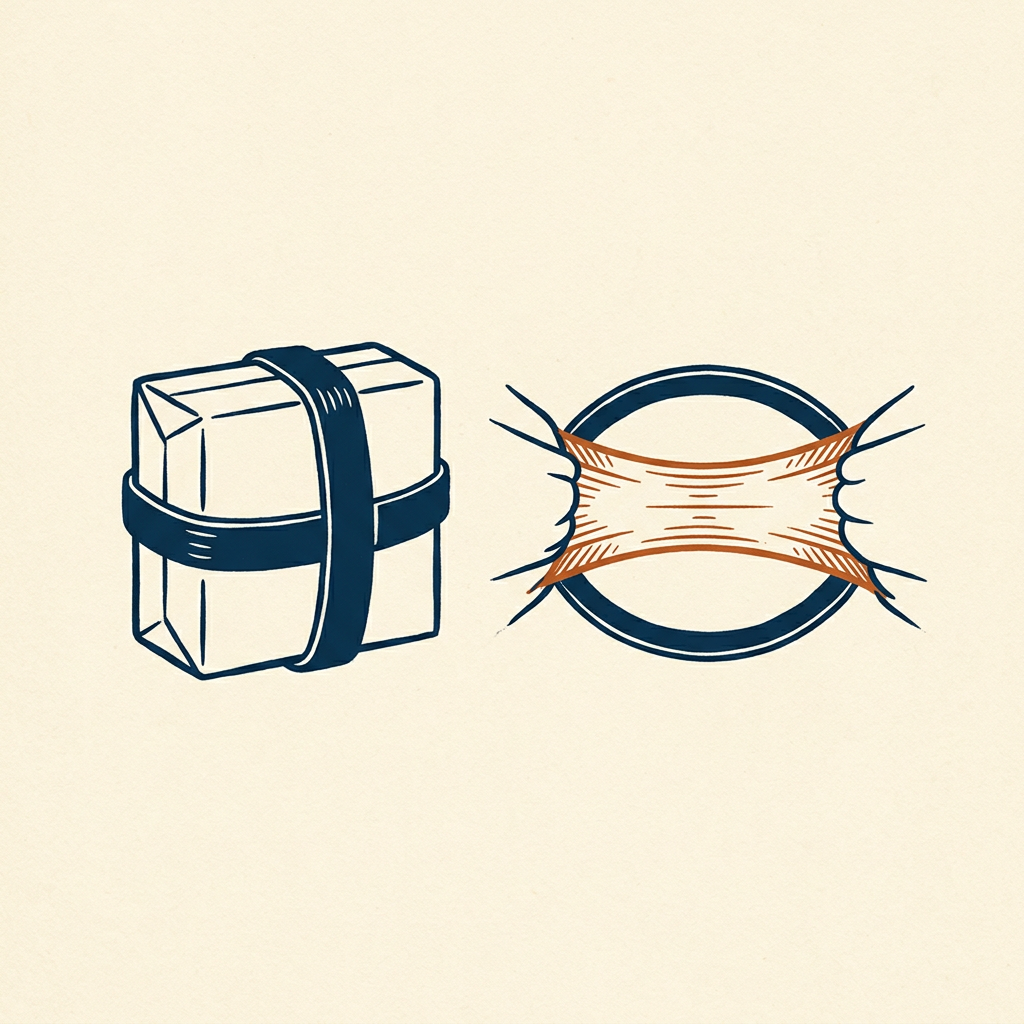
Extending a successful brand name across new products erodes what that name stands for, and the fix is to narrow the claim rather than broaden it.
Line extension
Cadillac Cimarron: short sales bump, long-term muddied luxury promise
Sacrifice
FedEx refused other shipping categories so overnight stuck to the name
Line-extension decisions usually look inward at manufacturing efficiency and existing brand equity. They ignore that a name's meaning in the customer's mind is a fixed, limited resource that gets thinner the more products it is asked to cover. A short-term sales bump can still weaken the flagship position that made the brand valuable.
The prescribed cure is sacrifice. Give up product-line breadth so the brand stands for one clear thing; give up chasing every customer segment; or give up constant change and resist updating a successful position every time a rival moves. Executives trained to see growth in every direction find this law among the hardest to follow.
Narrowing is presented as the discipline that protects the mental slot the earlier laws worked to win.
In practice: Cadillac extended American luxury onto the cheaper Cimarron in the 1980s and muddied what the name promised. Federal Express succeeded by refusing for years to expand beyond guaranteed overnight delivery of small packages, letting overnight become synonymous with the company.

9
One stroke, honest weakness
Beyond big positioning moves, marketing works through smaller disciplines: an unowned attribute, a real admission, a single decisive stroke, and no strategy built on long forecasts.
If the leader already owns an attribute, fighting for the identical claim on a weaker budget is usually wasted. Finding a meaningful opposite attribute is the cleaner path. Candor works for a related reason: customers are conditioned to discount pure boasting, so conceding a genuine shortcoming before pivoting to a benefit reads as more credible precisely because most advertising never does it.
Singularity argues that in any market situation only one bold, well-timed move produces real results. A new campaign, a price cut, and a product refresh launched together usually see none of them land clearly, because customers can absorb one signal, not a bundle. Finding that move requires looking from the customer's side, not the internal org chart.
Unpredictability closes the set. Assumptions overturn fast; lock into a five-year plan premised on the future looking like the present and you miss the sudden shift you could have exploited.
In practice: If Crest owns cavity prevention, a competitor is better served claiming whiter teeth or better taste than fighting for the identical claim with less money.

10
Arrogance, hype, and unpaid ideas
Corporate success tends to produce the arrogance that later causes marketing failure, and neither media buzz nor short-lived fads should be mistaken for a durable position.
Companies that win big often credit their own genius rather than the specific positioning discipline that produced the win. Overconfidence then leads executives to override customer perception with ego — extending the brand recklessly or ignoring warning signs — because past success feels like proof of infallibility.
The opposite habit should be cultivated: expect failure, recognize it quickly, and correct it instead of covering it up to protect earlier decisions. Delay compounds the cost. Heavy press coverage is not the same as a real market position; measuring success by media attention measures the wrong thing.
Marketers should build for gradually developing tastes rather than chase a spike that fades as fast as it rose, since a fad satisfied too well burns out its own audience. And even the best idea, positioned correctly, needs sustained funding to occupy a mind through repeated exposure; an undercapitalized sound idea tends to lose to a well-funded mediocre one.
In practice: Pen-based computing generated enormous media excitement in the early 1990s without building anything durable in customer minds.
Key terms
- Positioning Owning a clear, fixed slot in the customer's mind rather than winning on objective product quality.
- Law of exclusivity Once a competitor genuinely owns a word in the mind, a second company cannot install the same word there.
- Mental ladder The ranked list customers keep for a category; strategy should match the rung you actually hold.
- Law of duality Mature categories usually shrink to a real contest between only two brands; the rest become largely irrelevant.
- Law of the opposite A challenger gains more by claiming the flip side of the leader's strength than by copying that strength.
- Law of division Broad categories split over time into narrower subcategories, each able to have its own leader.
- Line extension Stretching a successful brand name onto new products, which thins what the name stands for.
- Law of sacrifice Giving up breadth, segments, or constant change so a brand can stand for one clear thing.
- Law of candor Admitting a genuine shortcoming can build more trust than a list of claimed strengths.
- Law of hype Heavy press coverage and industry buzz are not the same as a durable position in customers' minds.
What to do
- Write down the one word you want your product to own, then check it against what customers actually say, not what your team wishes they would say.
- If a competitor already owns that word, stop competing for it and name the opposite trait or narrower subcategory where you can plausibly be first.
- Audit every planned line extension this quarter by asking whether it strengthens or dilutes the single claim your main brand already owns.
- Kill or separately name any extension that dilutes the core claim.
- Before spending on a trend story or press coverage, ask whether that attention has actually changed what any customer believes about your product.
Questions to think with
- What single word do customers already attach to us, and does independent evidence confirm it?
- If we cannot be first in our current category, what narrower category could we legitimately lead?
- Which rung of the mental ladder do we actually occupy, and does our spending match that rung?
- What fixed liability is built into the leader's strength, and could we own its opposite?
- Which current or planned line extensions thin the meaning of our strongest name?
The other side
Calling the rules immutable laws invites a scientific standard the authors never meet: there is no controlled testing, only hand-picked anecdotes chosen after the fact, classic survivorship bias. Miller Lite is praised elsewhere as a successful line extension even as the book calls line extension a silent killer, and the authors never resolve the tension. Much of the framework repackages their 1981 Positioning book into a numbered list. Written in 1993, it has almost nothing to say about network effects, platforms, or data-driven targeting — Amazon expanded from books into cloud, groceries, and streaming without losing its core position, which the focus rules struggle to explain — and it largely ignores B2B, long sales cycles, and non-consumer buyers.
Who it's for
Brand managers launching into a crowded category, startup founders deciding whether to challenge an incumbent head-on or invent a niche, and marketing students who want the classic positioning framework before contemporary digital theory.