




Stoicism works as a daily operating system, not classroom theory
The Daily Stoic claims peace comes from controlling judgments and actions through 366 repeated drills, not from mastering events.
IJR · Oct 26, 2026 · 14 min read

In 60 seconds
- Holiday and Hanselman treat Stoicism as a working system drawn from Marcus Aurelius, Seneca, and Epictetus, valuable only through daily practice rather than theory.
- Most suffering is confused thinking layered on neutral events, so the first discipline is sorting raw fact from interpretation before any action.
- Peace requires the dichotomy of control: spend effort only on your judgments, desires, and actions, never on outcomes outside them.
- Character forms through a five-minute nightly audit of habits cured and faults resisted, without excuse-making.
- Virtue is demonstrated solely in consistent behavior under pressure; obstacles become the material action must use rather than excuses to stop.
- The arc ends in duty to others, amor fati, and memento mori so that a life is measured by what it enables afterward, not by comfort or reputation.
The big idea
Holiday and Hanselman argue Stoicism is a practical operating system for daily life built from the writings of Marcus Aurelius, Seneca, and Epictetus. Its value lies in repeated practice of controlling judgments and actions, not in theory or in trying to control events.
The book in brief
The book opens with the Stoic starting point: the mind's judgments, not the world's events. Marcus wrote private reminders to see clearly enough to rule and stay sane; a traffic delay is neutral until the mind adds the story that it ruins the day. Holiday and Hanselman frame this as the discipline of perception, first of the three traditional disciplines, and offer a repeatable test: separate the actual event from your interpretation.
That clarity feeds Epictetus's dichotomy of control. Born a slave with almost no external power, he insisted the only thing truly ours is judgment. Every worry is sorted into mine-to-influence or not-mine; energy spent on a colleague's opinion is wasted, energy spent preparing for the meeting is not. The boundary then gets enforced by Seneca's nightly audit: before sleep, review what habit was cured, what fault resisted, where improvement occurred. Writing forces honesty mere thinking does not, and even an emperor needed the checklist because power removes external checks.
The same scrutiny turns outward. Snap judgments about others mistake first impressions for whole truth; anger is almost always downstream of an unexamined assumption. A pause before judgment defuses most friction, though the authors note Cato's rigidity sometimes produced political failure. Everything internal exists to enable right action: virtue is doing, not declaring. Small modern tests—keeping an inconvenient promise, telling an unwelcome truth, finishing work no one watches—are where character is built or eroded.
When action meets resistance, the impediment becomes the material. Premeditatio malorum rehearses setbacks so a late shipment or blocked plan meets a prepared response rather than panic. This is not pretend-the-problem-is-good; it is refusal to let the setback become an excuse to quit. The book then answers the charge of self-absorption: personal freedom exists to serve family, community, and role. Marcus reminded himself daily that the emperor serves Rome; humans are social beings whose true community is humanity. Right action is judged partly by whether it serves beyond the self.
Pragmatism becomes the filter: an idea counts as philosophy only if it holds under real pressure. Seneca tested his against exile threats and forced suicide; the tradition was field-tested by generals and later by officers and executives. The metaphysical claim follows: virtue alone is good, everything else—wealth, health, status, life itself—is indifferent, usable well or badly. Prefer good outcomes without depending on them for worth. The most demanding move is amor fati: not mere tolerance of fate but active wanting of what occurs, including pain, because resistance wastes energy. Memento mori then sharpens the whole practice; mortality gives daily choices weight and prevents the complacency that undoes self-review and service. The book closes on legacy measured by what a life makes possible for others afterward, tying clarity, control, virtue, duty, and acceptance into one sustained daily habit.
Context
Ryan Holiday and Stephen Hanselman published the book in 2016 as 366 short daily readings grouped by theme. It mattered because it helped move Stoicism out of classrooms into boardrooms, locker rooms, and military units, fueling a modern revival of ancient ethics as a self-management tool rather than an academic subject.
The key ideas

1
Clarity before action
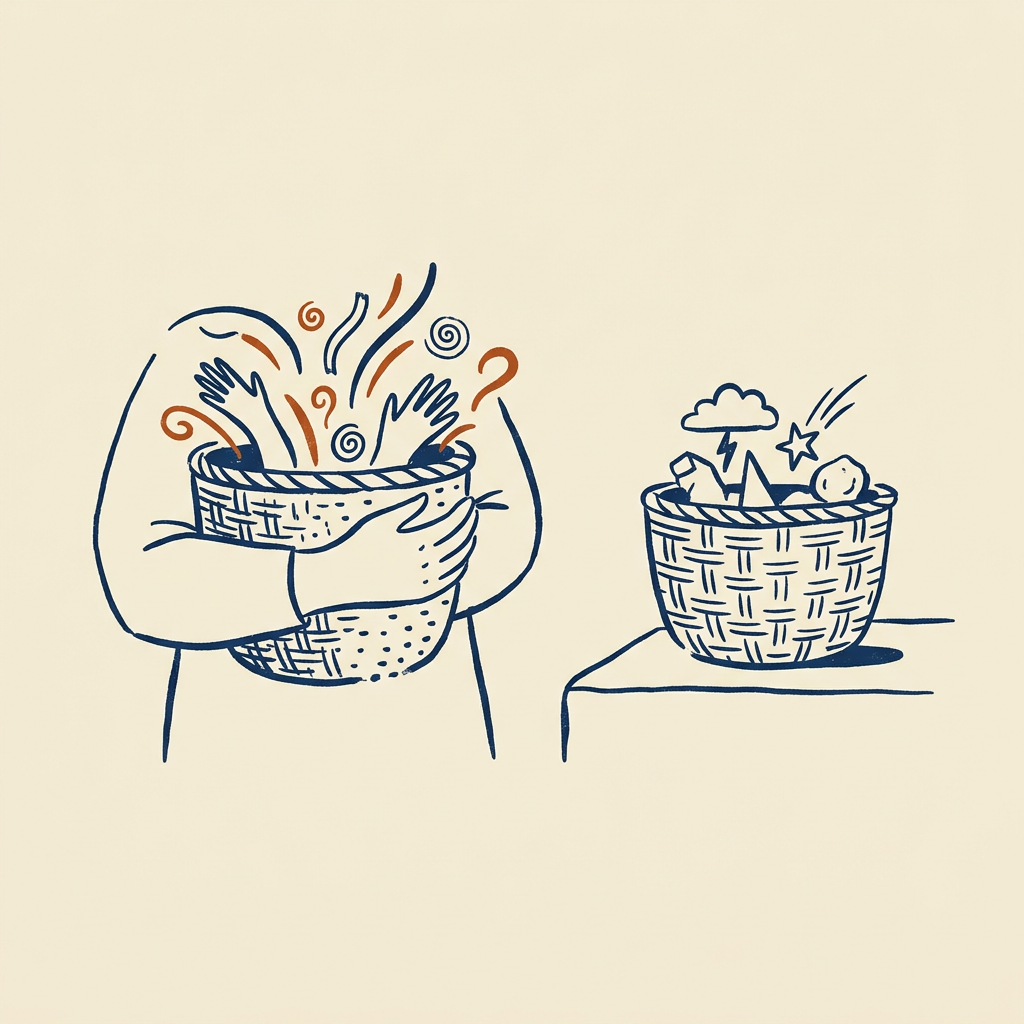
Most suffering is confused thinking layered on neutral events, so philosophy's first job is sorting perception from reality.
Raw event
Traffic delay, neutral fact
Added judgment
Belief that it ruins the day
Holiday and Hanselman open where the Stoics started: with the mind's judgments. Marcus wrote Meditations as private reminders, often between campaigns and during plague, not for abstract truth but to see clearly enough to rule and stay sane. A traffic delay is neutral; the belief it ruins the day is added by the mind.
The practical drill is simple and repeatable: when something upsets you, ask what part is the actual event and what part is interpretation. Seneca's letters show this as active daily editing of one's own mind, the way an athlete trains a body. The authors frame it as the discipline of perception, first of the three traditional Stoic disciplines that structure early months of the readings.
They claim emotional reactions are optional and trainable, not fixed responses to circumstance. The 366-day format trusts the reader to test the claim against ordinary days rather than settle it in one argument.
In practice: A traffic delay stays neutral until the mind adds the story that the whole day is ruined; the discipline separates those two layers before any response.
2
What is up to us
Peace is possible only once effort is restricted to judgments, desires, and actions you control, never to outcomes.
Up to us
Judgments, desires, actions, preparation
Not up to us
Outcomes, others' opinions, external events
Building on perception, the book turns to Epictetus's foundational split between what is up to us and what is not. Born a slave with almost no control over body, property, or legal status, he still insisted the only thing truly ours is the mind's judgment. Holiday and Hanselman use the biography deliberately: if he could build a stable inner life, the excuse of circumstance loses force for freer readers.
The tool is the dichotomy of control. Sort every worry into mine-to-influence or not-mine and stop spending energy on the second. Anxiety about a colleague's opinion spends effort outside control; focus on preparing well for the meeting spends it correctly.
The chapter depends on prior clarity, since sorting requires it, and it sets the boundary for later action and duty. The authors gesture at modern pushback—that health, relationships, and economic conditions still deserve strategic attention—but resolve mostly by emphasis, trusting readers to find the middle ground.
In practice: A person fretting over a colleague's opinion wastes effort; the same person preparing thoroughly for the meeting spends it inside the controllable boundary.

3
The nightly audit
Character is built less by grand decisions than by daily honest review of conduct without excuse-making.
- 1Pause before sleepSet aside five uninterrupted minutes
- 2Name the dayWhat habit cured, what fault resisted, where improved
- 3Record without excuseWrite the patterns honestly so they become visible
With the control boundary set, the book turns to the practice that enforces it. Seneca reviewed his day each night before sleep, asking what habit he had cured, what fault resisted, and where he had improved. The authors present this as maintenance, comparable to a pilot's checklist, not guilt-driven flagellation.
Awareness of patterns—irritability, procrastination, flattery, cowardice—develops only through repetition and honest recording. Marcus's private journal is evidence that even an emperor with total external power needed a structured method for catching worse instincts, because power removes the external checks ordinary people rely on.
Most people overestimate their objectivity about themselves; writing forces a level of honesty mere thinking does not. Clarity and control are sustained only through nightly review, or old habits reassert themselves. The implicit claim that five minutes nightly changes character over years rests on ancient testimony, not controlled studies.
In practice: Seneca's nightly questions—what habit cured, what fault resisted, where improved—function like a pilot checklist rather than self-punishment.

4
Withhold the snap judgment
First impressions mistake a partial view for the whole truth; training a pause before judgment produces better decisions and less friction.
Self-review next turns outward onto judgments about people and events as they happen. The Stoics called this avoiding prejudgment—treating an initial impression as settled fact. Marcus repeatedly reminded himself, when insulted or crossed in the Senate or army, to consider fuller context: exhaustion, ignorance, competing pressures, or misunderstanding.
Anger is almost always downstream of an unexamined assumption; a pause defuses most conflict before it starts. Clarity and controlled reaction are wasted if immediately overridden by reflexive stories about other people's motives.
Cato the Younger appears as both model and caution: his rigid consistency sometimes made him inflexible to the point of political failure. The broader claim—that most interpersonal friction is misperception rather than genuine incompatible interests—is strong and debatable; the book tends to treat almost all friction as a perception problem.
In practice: When crossed by a colleague, Marcus trained himself to weigh exhaustion, ignorance, or competing pressures before settling on insult as the full story.
5
Virtue only in action
Good intentions and private beliefs mean nothing until converted into consistent behavior; character is visible only through what is done.
- Stated principlePrivate belief or declared intention
- Inconvenient testPromise, truth, or task when no one watches
- Visible characterConsistent behavior under real pressure
The book shifts from internal discipline to external conduct. Everything built so far—clarity, control, self-review, restrained judgment—exists only to enable right action. The Stoics held virtue is not a feeling but a doing. Cato refused bribes and resisted Caesar's growing power even when it cost allies and eventually his life; the point is not tactical perfection but actions that matched stated principles.
Epictetus insisted philosophers should be known by conduct, not vocabulary, because talking about wisdom is cheap. Without clear perception and controlled judgment, action stays reactive; with them it can be deliberate.
The authors extend the standard into ordinary tests: keeping a promise when inconvenient, telling an unwelcome truth to a superior, finishing a task properly when no one is watching. These small moments are where character is actually built or eroded. The claim gives no credit for struggle or good motives that fail to become action.
In practice: Cato's refusal of bribes and resistance to Caesar, even at the cost of allies and life, is offered as evidence that principles only count when enacted.

6
Obstacle as raw material
Difficulties are not interruptions to the plan but the medium the plan must be built from; resistance itself can be turned to use.
Building on virtue-as-action, the book addresses what happens when action meets resistance. Marcus's line that the impediment to action becomes the action itself is the anchor. Obstacles are neither good nor bad in themselves; they are the medium through which approach is tested and revealed.
The practical exercise is premeditatio malorum: review possible setbacks in advance so that when a shipment is late, a deal falls through, or a plan is blocked, the response is already rehearsed rather than improvised in panic. An obstacle is only a crisis if judged as one, and it remains one only if action stops instead of adapting.
The authors stress this is not pretending problems are secretly good; it is refusing to let a setback become an excuse to quit. The underlying claim—that almost any obstacle converts into useful information or leverage—is optimistic; some paths end with no usable byproduct, and the inspirational reading is where the chapter is most vulnerable.
In practice: Premeditatio malorum rehearses a late shipment or collapsed deal in advance so the actual event meets a prepared response instead of panic.
7
Freedom serves duty
Inner discipline and personal freedom exist to make a person more capable of serving family, community, and role, not less obligated.
- Inner disciplineClarity, control, self-review secured
- Capable agentFreedom and steadiness ready for use
- Service beyond selfFamily, community, role, common good
The book answers the charge that focusing only on one's own judgments makes Stoicism self-absorbed. Marcus's daily reminders to himself about imperial duties argue the opposite: the role exists to serve Rome, not the reverse, and personal comfort is never the measure of whether the job is done.
The Stoics saw humans as fundamentally social and rational beings meant to work for the common good—sometimes called cosmopolitanism, the idea that one's true community is all humanity. Right action is judged partly by whether it serves beyond the self.
Holiday and Hanselman push back against a pure self-help reading. The tradition demands active service: Marcus governing, Cato opposing corruption, Epictetus teaching students for free. This is one of the stronger correctives to how Stoicism is often marketed, though it sits uneasily beside the earlier emphasis on individual control and is not fully resolved.
In practice: Marcus reminded himself that the emperor serves Rome rather than the reverse, so personal comfort never decided whether the duty was met.

8
Virtue the only good
Money, reputation, comfort, even life and death are indifferent; only virtuous character determines whether a life has gone well.
Character use ↑ · External outcome →
Wealth used well
Preferred indifferent, virtue intact
Wealth depended on
Worth outsourced, virtue at risk
Hardship met with virtue
Indifferent event, life still good
Hardship met with vice
Indifferent event, life goes badly
This chapter states directly what earlier chapters implied. The Stoics held virtue alone is good, vice alone is bad, and everything else is indifferent—usable well or badly but not itself making a life good or bad. Cato refused bribes that would have secured his family's comfort because the money would corrupt the only thing that mattered: integrity.
This is not an argument for poverty. Seneca was rich; the Stoics generally approved of using wealth well rather than rejecting it. The distinction is between preferring good outcomes and depending on them for one's sense of worth.
The demand is genuinely difficult: readers are asked to hold career success, financial security, even children's wellbeing as indifferent in the technical sense. The authors do not fully wrestle with how a parent treats a child's suffering as indifferent, a frequent weakness of Stoic ethics. The chapter's function is to justify why earlier discipline is worth the effort: if virtue is the only real good, the practices aim at the only thing worth optimizing.
In practice: Cato refused bribes that would have eased his family's comfort on the grounds that the money would corrupt the integrity that alone measured a life.

9
Want what happens
Full peace requires actively wanting the events that occur, including painful ones, because resistance to reality wastes energy.
Having set virtue as the sole good, the book pushes to its most demanding claim: not mere acceptance of misfortune but embrace of it—later called amor fati, though the phrase is Nietzsche's rather than the ancients'. Marcus, ruling during plague that killed a significant portion of the population and fighting unwanted wars, tried to treat these not as tragedies happening to him but as the material his character had to work with.
This depends on the whole prior arc: clarity, control, virtue as only good, and pragmatic testing converge into the claim that a person can genuinely welcome hardship rather than merely endure it. Critics note amor fati can slide into excusing injustice by asking victims to embrace circumstances rather than change them, sharpened by the fact that Marcus owned slaves and ruled a conquest empire while Epictetus preached the same acceptance from powerlessness.
The authors do not address the contradiction directly. Readers receive the tool without a full reckoning of who benefits most from being told to accept things as they are.
In practice: Marcus treated plague and unwanted wars as the material character had to work with, aiming at active welcome rather than endurance alone.
10
Death as daily instrument
Deliberately thinking about your own death is clarifying, not morbid, because mortality gives ordinary choices their weight.
Later chapters turn to memento mori as a tool. Seneca's essay on the shortness of life argues most people live as though time is unlimited and discover otherwise only near the end, wasting decades on distraction. Nothing sharpens perception of what matters faster than reckoning with a limited number of days.
Roman households sometimes kept skull imagery visible to keep the awareness active; gladiators lived with mortality made unavoidably concrete. Done daily rather than only in crisis, the practice prevents the complacency that undermines self-review, right action, and service.
The claim that regular death-thinking improves rather than depresses functioning rests on ancient testimony and modern anecdote. The book's method—stacking historical example—substitutes for the evidence an academic treatment might supply, a pattern across the whole text. The closing move measures a life by what it makes possible for others afterward, not by how it felt or what it accumulated, even while earlier chapters call reputation indifferent.
In practice: Seneca argued people waste decades on distraction by living as if time is unlimited, discovering the limit only when too late to use it.
Key terms
- Discipline of perception Sorting raw events from the interpretations the mind adds before any action
- Dichotomy of control Sorting every concern into what is up to you (judgments, actions) versus what is not (outcomes, others)
- Nightly audit Seneca's end-of-day review of habits cured, faults resisted, and improvements made, without excuses
- Premeditatio malorum Rehearsing possible setbacks in advance so the real event meets a prepared response
- Indifferents Externals such as wealth, health, status, or even life that can be used well or badly but do not themselves make a life good
- Amor fati Actively wanting the events that occur, including painful ones, rather than merely enduring them
- Memento mori Deliberate daily remembrance of one's own death used to clarify what deserves attention
- Cosmopolitanism The Stoic view that one's true community is all humanity, grounding duty beyond tribe or self
What to do
- Write three lines before checking your phone: what you actually control today, one weekend event still misjudged as worse than it was, and one small action that matches a claimed value.
- Spend five minutes at day's end reviewing where you reacted well and where you did not, without excuse-making.
- When a real setback hits, pause and ask what the obstacle makes possible rather than only what it ruins.
- Practice one withheld snap judgment in a real conversation by waiting for fuller context before deciding motives.
- Keep a visible daily reminder that time is limited and use it only to choose the next right action, not to brood.
Questions to think with
- Where in the last week did you treat an interpretation as if it were the raw event itself?
- Which current worry sits clearly outside your control, and what controllable preparation are you avoiding by dwelling on it?
- If virtue is visible only in behavior, what inconvenient action would match a value you already claim?
- Does welcoming fate help you act, or does it risk quieting a change you could still make?
- What would measuring this month by what it enables for others, rather than by how it felt, change about your choices?
The other side
The strongest fair criticism is structural and ethical at once: the book is an anthology of short, confident maxims drawn almost entirely from three elite or formerly elite men in a slave-owning empire, filtered for daily practicality while leaving aside Stoic cosmology, logic, and physics. It treats advice from a slave-owning emperor and a former slave as interchangeable, underplays how acceptance may serve the powerful and the powerless differently, and markets easily as a resilience hack for the already comfortable, gesturing at duty and justice without sustaining them.
Who it's for
Professionals under daily stress who want structured, bite-sized practice rather than a dense philosophy course, plus readers of Holiday's other work who want the source material and people already drawn to journaling or morning rituals who need ancient content to anchor the habit. Those seeking rigorous metaphysics or a full reckoning with Stoicism's political blind spots will need academic companions.